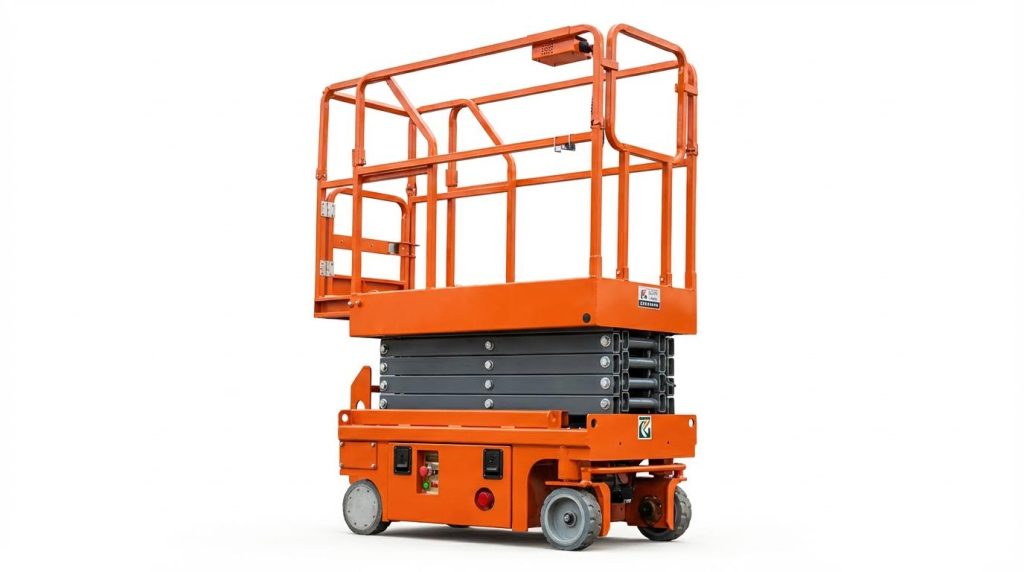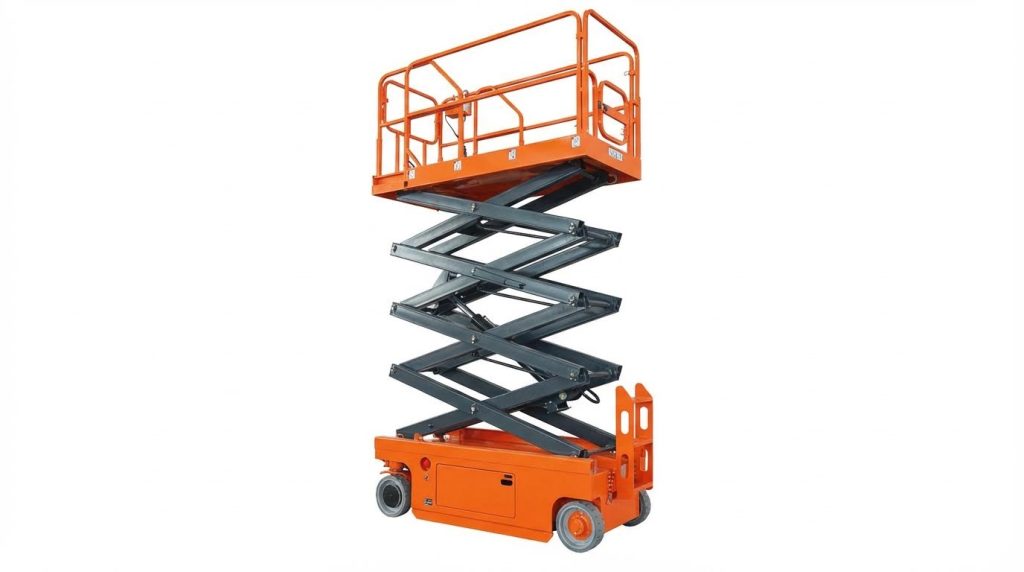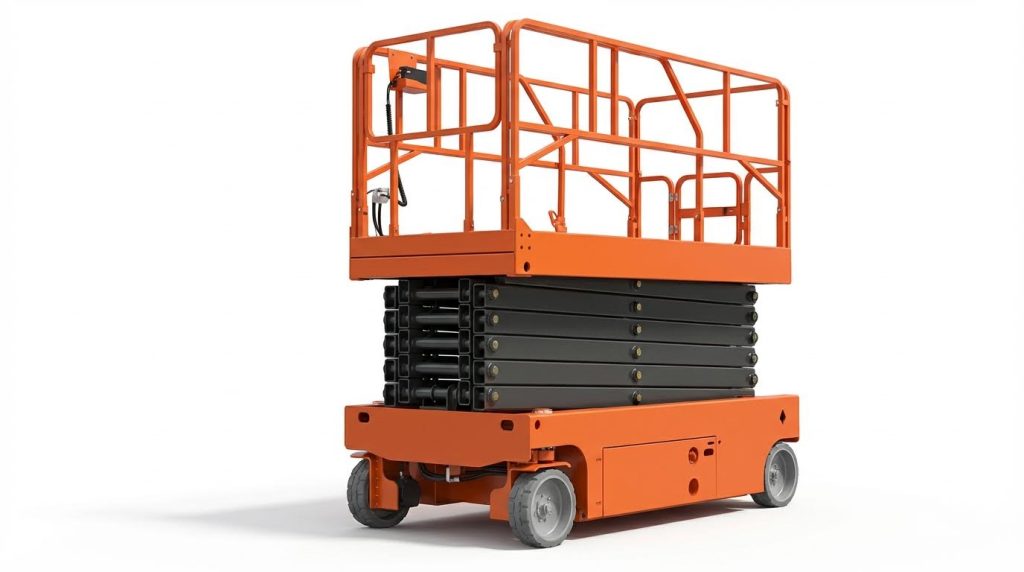
If you are asking “is harness required in a scissor lift,” the honest answer is: sometimes yes, sometimes no. This guide explains when guardrails are enough, when a full-body harness becomes mandatory, and how rules change between OSHA, state regulations, and EU-style requirements. You will see how design limits, anchor ratings, and site policies interact so you can choose the right protection for each job, not just follow habits. By the end, you will know how to write clear site rules that keep operators safe and compliant without slowing work down.
When Is A Harness Required In A Scissor Lift?
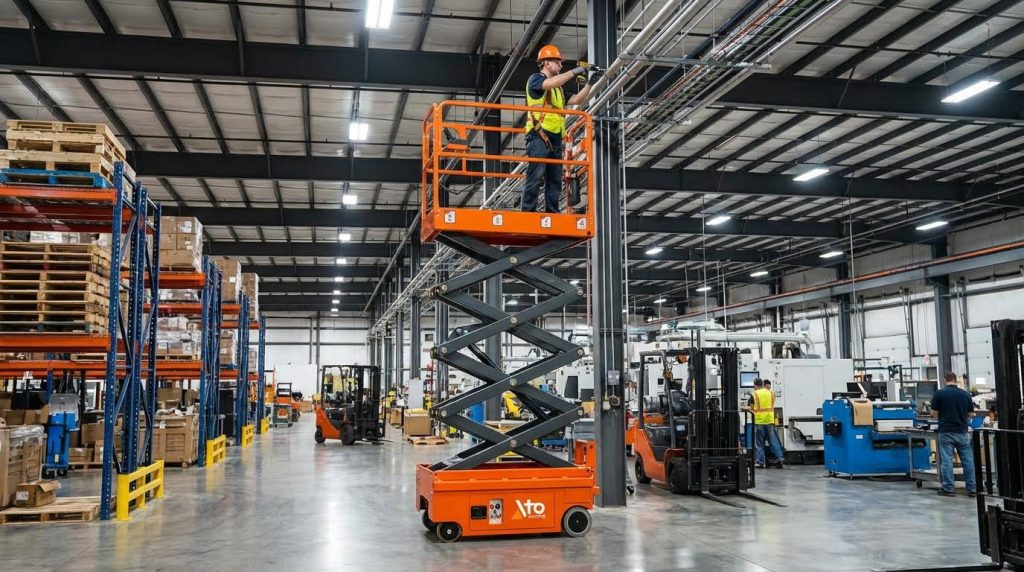
A harness in a scissor lift is required only in specific high‑risk or non‑standard situations; under normal conditions, compliant guardrails are the primary fall protection system, not personal fall arrest.
If you are asking “is harness required in a scissor lift,” the starting point is how regulations classify the machine. Under federal rules, most scissor lifts are treated as mobile scaffolds, not aerial lifts, so the fall protection logic follows scaffold rules instead of boom‑lift rules. That difference drives when a harness is optional, recommended, or mandatory.
- Normal use: No harness required – As long as the platform has a complete, compliant guardrail system and you work inside it.
- Non‑standard / damaged: Harness often required – When guardrails are missing, altered, or cannot meet OSHA guardrail criteria.
- Policy‑driven: Harness required by site rule – Some employers or local authorities mandate harnesses on all elevated work platforms.
💡 Field Engineer’s Note: When you see operators climbing rails or leaning out with heavy tools, you are already beyond what guardrails were designed to control; at that point, a properly anchored harness is no longer “extra,” it is your only remaining margin.
How OSHA Classifies Scissor Lifts Versus Aerial Lifts
OSHA treats scissor lifts as mobile scaffolds, while boom lifts and buckets are classified as aerial lifts, and this split changes the fall‑protection requirements.
Under OSHA construction rules, boom‑type aerial lifts fall under 29 CFR 1926.453. Workers in these lifts must use a personal fall arrest or restraint system attached to the basket or boom at all times per 1926.453(b)(2)(v). In contrast, scissor lifts move straight up and down on a criss‑cross (scissor) mechanism and are regulated as mobile scaffolds under 1926.452(w), provided they have compliant guardrails and are used as designed according to OSHA’s scissor‑lift hazard alert.
| Feature | Scissor Lift (Mobile Scaffold) | Boom / Bucket (Aerial Lift) | Operational Impact |
|---|---|---|---|
| OSHA primary standard | 1926.452(w) – mobile scaffolds | 1926.453 – aerial lifts | Determines whether guardrails alone are acceptable fall protection. |
| Vertical vs. articulated movement | Vertical, straight up/down | Articulated / telescopic boom | Boom swing increases catapult risk, so harness is always required. |
| Baseline fall protection | Guardrail system around platform | PFAS or restraint plus guardrails | Scissor lift can rely on rails; boom lift cannot. |
| Harness requirement | Not required if guardrails are compliant | Required at all times when elevated | Directly answers “is harness required in a scissor lift” vs. boom lift. |
| Typical platform height | Up to ~12–18 m, depending on model | Up to ~40 m or more | Higher reach and boom dynamics increase fall severity on aerial lifts. |
Because scissor lifts are treated as scaffolds, OSHA focuses on guardrail integrity and correct use: workers must stand on the platform floor, not on rails or added devices, and must keep work within easy reach to avoid leaning out per OSHA guidance. Once you start working outside those assumptions, the risk picture changes, and a harness quickly shifts from optional to necessary.
- Scissor lift = scaffold logic: Guardrails are the primary system – Harness is a secondary or situational control.
- Boom lift = aerial logic: Harness is mandatory – Because swing, bounce, and catapult effects can eject workers even with rails.
- Classification drives training: Operators must understand whether their platform is treated as a scaffold or aerial device – This prevents copying the wrong rule set between machines.
Situations Where A Harness Becomes Mandatory
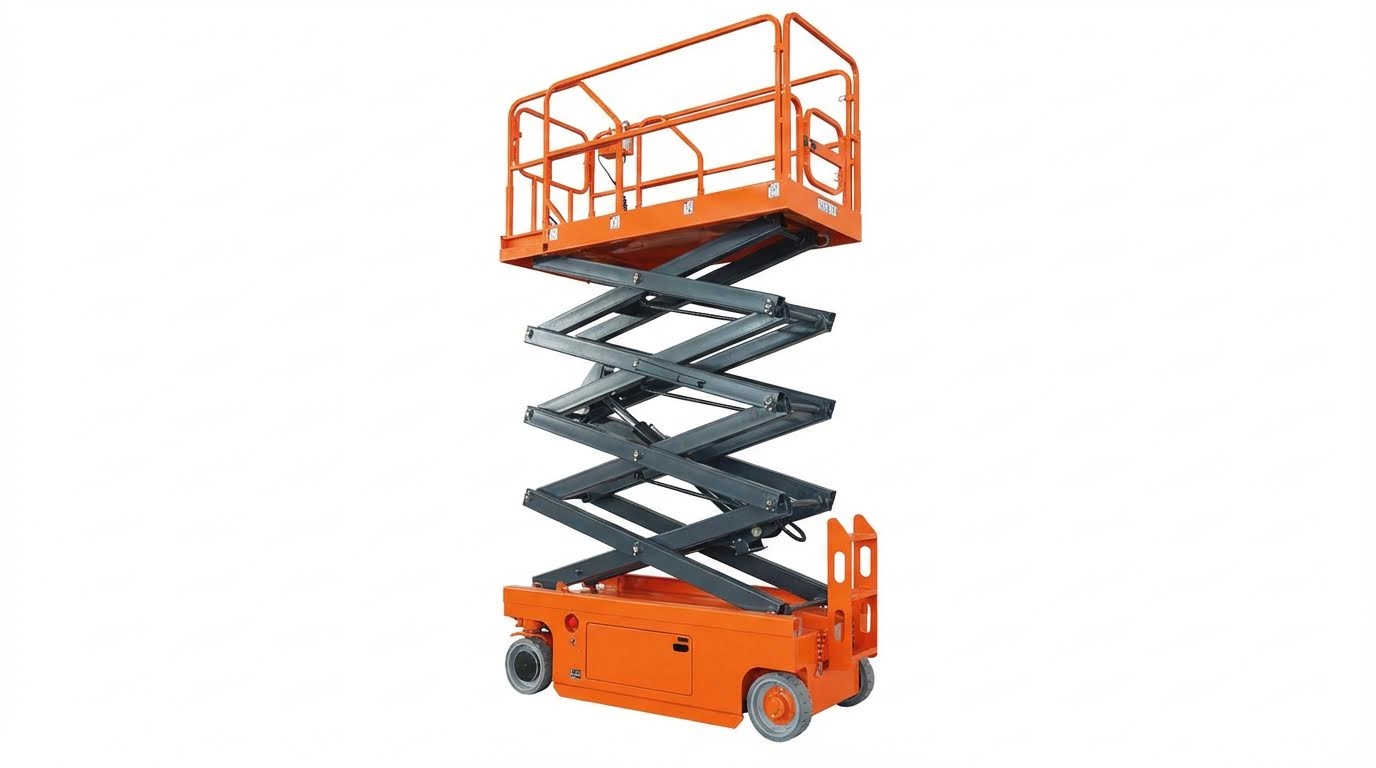
A harness in a scissor lift becomes mandatory when guardrails are missing or compromised, when site or state rules require PFAS, or when unusual tasks increase fall risk beyond what guardrails can safely manage.
OSHA’s own interpretation notes that, unlike aerial lifts, scissor lifts do not require personal fall arrest if they have a proper guardrail system and are used as mobile scaffolds under 1926.452(w). However, real sites rarely operate in perfect conditions, and several common scenarios push you into “harness required” territory even on a scissor lift.
| Scenario | Why Guardrails Are Not Enough | Harness / PFAS Expectation | Operational Impact |
|---|---|---|---|
| Missing or damaged guardrail, mid‑rail, or toe‑board | Open edges or weak components create uncontrolled fall paths. | Harness with certified anchor is effectively mandatory until repaired. | Lift may need to be tagged out or restricted to harness‑equipped work only. |
| Working above or through openings (e.g., ceiling grids, shafts) | Fall path may bypass platform rails completely. | Harness strongly recommended or required by safety plans. | Requires planning for suitable anchor points and rescue. |
| Leaning or reaching far outside the guardrails | Center of mass can move beyond rail line; risk of toppling or ejection. | Harness may be required by employer policy and competent person. | Often a sign that the wrong equipment size or type was selected. |
| Local/state rules more stringent than federal OSHA | Some jurisdictions treat more platforms like aerial devices. | Harness required whenever platform is elevated. | Fleet rules must follow the strictest applicable standard. |
| Employer or client policy: “100% tie‑off on all lifts” | Corporate risk tolerance is lower than bare legal minimum. | Harness and lanyard mandatory in every scissor lift. | Simplifies training across mixed fleets; increases equipment and inspection load. |
| Use in high‑exposure zones (traffic, overhead obstructions) | Collision or snag can jolt the platform and eject occupants. | Harness often specified in job hazard analysis. | Requires pre‑task planning and stricter approach distances. |
Beyond fall protection, OSHA stresses that scissor lifts must be used on firm, level ground, not moved while elevated, and kept clear of drop‑offs and overhead power lines to avoid collapse or electrocution per OSHA’s hazard alert. When those conditions cannot be fully controlled, a harness becomes part of a layered defense, not a substitute for good setup.
- Damaged or incomplete rails: Do not operate without either full repair or PFAS – A missing mid‑rail turns a minor stumble into a full fall.
- Policy‑driven harness use: Treat “100% tie‑off” rules as hard requirements – They are often responses to previous incidents.
- Wrong task / wrong machine: If workers must climb, sit on rails, or add ladders, stop – Choose a different lift or add PFAS and re‑engineer the task.
How to decide quickly if a harness is required in a scissor lift
Ask three questions before elevating: 1) Are all guardrails complete and to standard? 2) Does any rule on this site or in this jurisdiction require PFAS on all lifts? 3) Will the planned work keep every worker’s feet flat on the platform, inside the rails, without climbing or leaning? If any answer is “no,” treat a harness and proper anchor point as required, not optional.
💡 Field Engineer’s Note: In practice, most serious scissor‑lift falls I have seen did not come from rail failure; they came from people trying to get “just a bit more reach.” If your task plan forces that kind of behavior, fix the plan or treat the job like aerial‑lift work and enforce full harness use.
Technical Fall Protection Rules And Design Limits
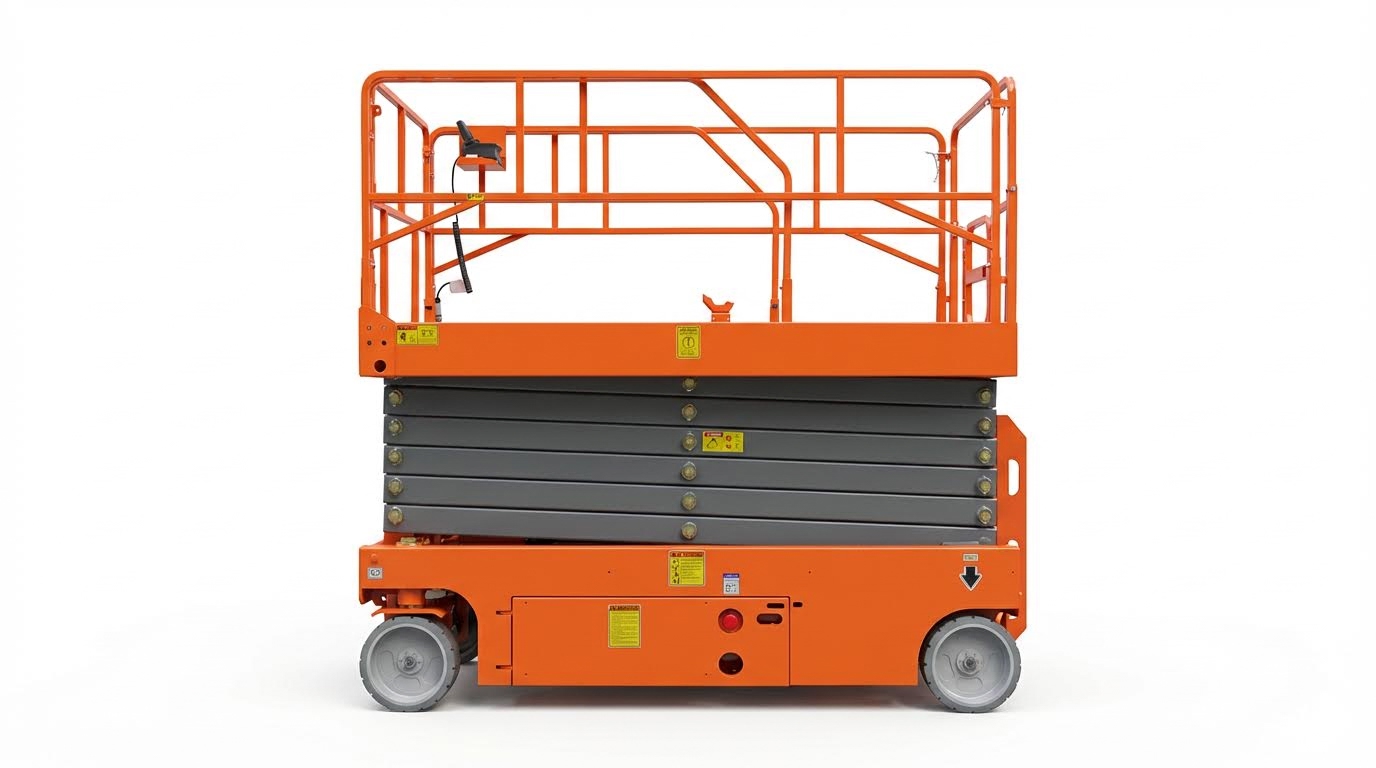
Technical fall protection rules for scissor lifts define what guardrails must withstand, when a harness is needed, and why only certified anchor points can be used. These design limits answer “is harness required in a scissor lift” in engineering terms, not opinion.
- Key Point: Scissor lifts are treated as mobile scaffolds – guardrails are the primary fall protection, not the harness, when they are compliant.
- Design Driven: Every rule links to a load, height, or geometry limit – if you exceed it, you move from “restraint” to “fall arrest.”
- Harness Logic: A harness is only effective when tied to a rated anchor – wrong tie‑off can be more dangerous than no harness.
💡 Field Engineer’s Note: When I audit sites, 80% of bad harness use on scissor lifts comes from guessing at anchor capacity. Treat anchor choice as a calculation problem, not a convenience decision.
Guardrail Design, Height, And Load Requirements
Guardrails on scissor lifts are engineered to prevent falls by restraint, not to catch a free fall. If the guardrail system is complete and used correctly, OSHA does not require a harness on a scissor lift in most cases.
OSHA treats scissor lifts as mobile scaffolds, so the platform guardrail is the primary fall protection system. Standards require a guardrail system to be installed and in place before work starts, and workers must stand only on the platform floor and keep work within easy reach to avoid leaning out. OSHA’s scissor lift guidance points back to guardrail rules in 29 CFR 1926.451(g) and 1910.29.
Typical guardrail geometry and what it means in practice
Most compliant scissor‑lift guardrails follow scaffold‑style dimensions: a top rail near 1,070 mm above the platform, mid‑rail around half‑height, and toe‑board to stop tools sliding off. Exact millimeter values come from the applicable scaffold or walking‑working surface standard, but the intent is the same: keep the worker’s center of gravity inside the rail when they stand flat on the deck.
| Guardrail Feature | Typical Requirement / Behavior | Operational Impact |
|---|---|---|
| Presence of guardrail system | Guardrails must be installed and checked before use on the scissor lift platform OSHA3842 | If any rail is missing or lowered, treat the platform as “unprotected edge” and reassess harness needs. |
| Worker position | Stand only on the work platform; do not climb or sit on the guardrail or use planks or ladders for extra height OSHA3842 | Prevents raising the body’s center of gravity above the rail, which would defeat the guardrail design. |
| Fall protection role | Guardrails serve as fall restraint for workers on scissor lifts treated as mobile scaffolds under 1926.452(w) | When rails are complete and used properly, OSHA does not require PFAS, which directly affects whether a harness is required in a scissor lift. |
- No climbing: Standing on rails or objects changes a 1,070 mm guardrail into a trip point – you can topple over it instead of being restrained by it.
- No leaning out: Reaching far outside the rail moves your center of gravity beyond the base – this can cause both a person fall and a tip‑over.
- Inspection routine: Bent, missing, or unpinned rails break the protection system – treat that condition as if no guardrail exists.
💡 Field Engineer’s Note: In real jobs, the first guardrail damage usually shows up at gate sections and corners after material impacts. Make those your “critical check points” in pre‑use inspections.
PFAS Anchor Points And 5,000 lb Rating Criteria
Personal fall arrest system (PFAS) anchor points on scissor lifts must be specifically designed and rated for fall arrest loads, typically 22.2 kN (5,000 lbf) per worker. A harness only adds real protection on a scissor lift when it is clipped to one of these rated anchors.
OSHA guidance makes a clear distinction between aerial lifts, where workers must be tied off, and scissor lifts, which rely on guardrails and only need PFAS in special cases, such as missing rails or employer policy. An OSHA interpretation letter explains that scissor lifts are treated as mobile scaffolds under 1926.452(w), so compliant guardrails are normally enough. However, when a PFAS is used, anchorages must be capable of supporting at least 5,000 pounds-force (22.2 kN) per employee, and they must be purpose‑built and verified, not improvised points on the structure. OSHA’s scissor lift fact sheet reinforces that dedicated tie‑off hardware must be provided and validated.
| PFAS Design Element | OSHA Expectation | Operational Impact / “Is harness required in a scissor lift?” |
|---|---|---|
| Anchor strength | 5,000 lbf (≈22.2 kN) minimum per attached worker for fall arrest anchorages | Only tie off where the manufacturer labels an anchor; anything else likely cannot withstand arrest loads. |
| Anchor verification | Anchors must be validated by engineering calculation or physical testing OSHA3842 | Site managers cannot “guess” at anchor capacity; use only documented anchor points on the lift. |
| Dedicated hardware | Purpose‑designed tie‑off rings or brackets, clearly labeled for PFAS use | If the lift has no labeled anchor, you normally operate with guardrail protection only. |
| Number of users | Rating is per worker; two workers need 2 × 22.2 kN capacity | Do not double‑clip to a single‑user anchor; that can overload the structure during a fall. |
- Harness without anchor: Wearing a harness but clipping to a non‑rated point is a false sense of security – the structure can fail before the lanyard engages properly.
- Restraint vs arrest: Short lanyards that prevent reaching the edge are “restraint”; long lanyards that allow a fall require full arrest‑rated anchors – choose length based on platform size.
- Manufacturer’s instructions: Many scissor lifts specify if PFAS anchors are for restraint only, not full arrest – this directly affects how you write site rules on harness use.
💡 Field Engineer’s Note: In cold storage or outdoor winter work, lanyard materials stiffen and shock absorbers behave differently. Always check manufacturer temperature limits before assuming a 5,000 lbf rating still applies in sub‑zero conditions.
Why Guardrails Cannot Be Used As Tie‑Off Points
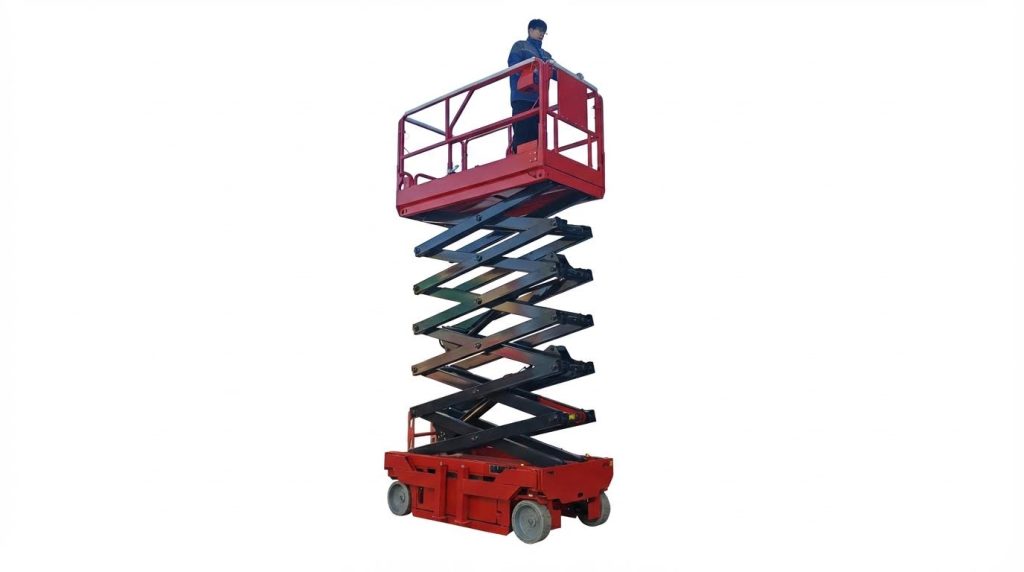
Guardrails on scissor lifts are not designed or rated as PFAS anchorages and must not be used as tie‑off points. They are engineered for static side loads from leaning, not the dynamic shock loads of a falling worker on a harness.
OSHA’s fall protection rules require PFAS anchorages to support at least 5,000 lbf (22.2 kN) per worker, and scissor‑lift guidance explicitly notes that guardrails cannot be used as anchor points because they cannot withstand these dynamic loads. The OSHA fact sheet emphasizes that dedicated tie‑off hardware is required when PFAS is used. This means that even if a worker decides to wear a harness on a scissor lift, clipping to the nearest rail is both non‑compliant and mechanically unsafe.
| Item | Guardrail Capability | PFAS Requirement | Result If Used As Anchor |
|---|---|---|---|
| Design load type | Primarily static and limited impact from a person leaning or slipping against the rail | High‑energy dynamic load from a falling worker arrested over a short distance | Rail or its posts can deform or tear out, leading to complete fall. |
| Load magnitude | Lower lateral loads consistent with scaffold guardrail rules | 5,000 lbf (≈22.2 kN) per worker for arrest anchors | Structure is not sized for this; bolts or welds can fail suddenly. |
| Labeling | No PFAS anchor marking | Anchor points must be clearly identified and documented | If it is not labeled as an anchor, you should assume it is not one. |
- Side‑load vs shock‑load: Guardrails are meant to stop slow movement at waist height – not a 100 kg worker falling 1–2 m on a lanyard.
- Failure mode: When a rail fails under arrest load, it often takes part of the platform edge with it – this can worsen the fall path and injury.
- Policy implication: Site rules should explicitly ban clipping to rails – and train operators where the real anchors are, if present.
💡 Field Engineer’s Note: During investigations, I have seen “near misses” where a rail did not fully detach but bent enough to drop a worker’s feet below deck level. That kind of partial failure is a red flag that the entire guardrail system needs engineering review, not just a quick bend‑back with a bar.
Regional Practices, Site Policies, And Equipment Selection
Regional rules, site policies, and mixed-fleet choices decide when a harness is required in a scissor platform, even when OSHA does not mandate it by default. The safest programs align legal minimums with consistent, simple rules for operators.
Comparing OSHA, State, And EU-Style Requirements
OSHA usually treats compliant scissor lifts like mobile scaffolds, while some state and EU-style regimes lean toward stricter harness and operation rules around elevated work platforms.
Under federal OSHA, scissor lifts that have a compliant guardrail system are treated as mobile scaffolds under 29 CFR 1926.452(w). In that case, a personal fall arrest system (PFAS) is not automatically required, so the answer to “is harness required in a scissor platform lift” is usually “no” if guardrails meet the standard and are used correctly. Aerial lifts, by contrast, do require tie-off under 1926.453(b)(2)(v). OSHA’s interpretation letter clarifies this difference.
OSHA also requires that scissor lifts have guardrails installed and that workers stand only on the work platform, keep work within easy reach, and never climb or lean out of the lift. These rules come from scaffold and fall protection provisions such as 29 CFR 1926.451(g) and 1910.29(a)(3)(vii). OSHA’s scissor lift fact sheet stresses guardrails as the primary fall protection.
| Regime / Rule Set | Default Harness Rule For Scissor Lifts | Key Focus Areas | Operational Impact |
|---|---|---|---|
| Federal OSHA (USA) | No PFAS required if guardrails are complete and compliant; PFAS required if guardrails are missing, removed, or if employer policy mandates it. | Guardrail presence and use, platform behavior (no climbing, no leaning), correct classification vs aerial lifts. | Most indoor scissor lift work can run “no harness” if the platform and rails are in good order and workers stay inside the rails. |
| State-Level Rules (e.g., California) | State rules for aerial devices can be stricter on PFAS, movement, and operation, especially for boom-type platforms; they influence many site policies that also cover scissor lifts. | Operator authorization, control testing, movement limits with elevated platforms, mandatory belts/harnesses in aerial devices. California’s aerial device rules are an example. | Companies that work across states often adopt a single higher standard (e.g., always wear a harness in any MEWP) to avoid confusion. |
| EU-Style / International Practice (generalized) | Often more conservative in practice: many employers require harnesses on all MEWPs, especially outdoors or near edges, even when guardrails exist. | Risk assessment culture, wind and stability limits, prevention of ejection in case of impact or collapse. | Operators expect to clip on more frequently; equipment selection favors platforms with certified anchor points and clear PFAS labeling. |
- Regulatory Minimum vs. Site Rule: OSHA sets the floor, not the ceiling – many companies voluntarily go beyond it.
- Mixed Jurisdictions: Contractors working in several states or countries simplify by picking one strict rule – this reduces training errors.
- Classification Clarity: Distinguish scissor lifts (mobile scaffold logic) from boom lifts (aerial device logic) – this prevents over- or under-use of harnesses.
- Guardrail Condition: Damaged or missing rails make PFAS effectively mandatory – you have lost your primary fall barrier.
- Anchor Availability: Harness rules only work if the platform has rated anchor points – otherwise you risk false compliance and real danger.
Why some sites say “harness always” on scissor lifts
Many safety managers decide it is easier and safer to say “you always wear a harness in any lift” than to explain the difference between aerial lifts and scissor lifts to every new worker. This is a policy choice, not an OSHA requirement, but it often reduces behavioral errors in fast-paced work.
💡 Field Engineer’s Note: On busy industrial sites with both boom lifts and scissor lifts, I have seen more incidents from confusion than from lack of PPE. A single, conservative rule (“clip in any time you leave the ground”) plus clear labeling on platforms usually beats a complex matrix of “sometimes yes, sometimes no.”
Writing Site Rules And Training For Mixed Fleets
Clear, simple site rules and consistent training are essential when you run mixed fleets of scissor lifts and aerial lifts so operators always know when a harness is required in a aerial platform versus when guardrails alone are acceptable.
Federal OSHA allows scissor lifts to operate without PFAS when guardrails are present and used correctly, but the same worker may have to tie off 100% of the time in a boom-type aerial lift on the next task. OSHA’s interpretation letter makes this difference explicit. State rules for aerial devices, such as those that require workers in an elevated aerial basket to be secured to the boom, basket, or tub with a belt or harness and lanyard, add another layer of complexity. California’s rules for aerial devices are a good example.
Training and written procedures must also reinforce basic platform behavior: workers should not sit or climb on basket edges, use planks or ladders to gain extra height, or belt off to adjacent structures. These behaviors are explicitly prohibited for aerial devices in some state rules and mirror OSHA guidance for scissor lifts, which stresses staying inside guardrails and keeping work within easy reach. OSHA’s scissor lift fact sheet describes these expectations.
- Define One Policy Statement: Decide your default: “Harness always in any MEWP” or “Harness only when…” – then apply it across all sites.
- Separate By Equipment Type: Use simple language like “boom = always clipped” and “scissor = rails OK unless…” – this matches how operators think.
- Use Visual Labels: Put decals at eye level in the platform stating “HARNESS REQUIRED” or “HARNESS OPTIONAL WITH INTACT RAILS” – this backs up classroom training.
- Align With Regulations: Cross-check your policy against OSHA and stricter state rules – you avoid writing a policy that conflicts with the law.
- Integrate With Pre-Use Checks: Make “Are rails complete?” and “Is there a rated anchor?” part of every pre-start inspection – this links equipment condition to harness decisions.
- Scenario-Based Training: Train specific cases: near roof edges, on ramps, in high wind, or with missing components – operators learn when a “no-harness” scissor job suddenly becomes a “harness now” job.
- Step 1: Map Your Fleet – List all scissor lifts and aerial lifts, noting which have certified anchor points and what standards they follow.
- Step 2: Decide The Default Rule – Choose the simplest rule that still meets or exceeds OSHA and any state requirements.
- Step 3: Write A One-Page Policy – Cover when a harness is required in a scissor lift, when guardrails are enough, and who can authorize exceptions.
- Step 4: Update Induction Training – Include pictures of your actual equipment and short quizzes on “harness or not?” scenarios.
- Step 5: Label The Machines – Apply consistent decals on all platforms so the rule is visible at the point of use.
- Step 6: Audit And Correct – Observe real jobs, correct misuse on the spot, and update training where you see recurring confusion.
Choosing equipment to match your harness policy
If your policy is “harness always,” favor scissor lifts with factory-rated anchor points and clear PFAS markings. If you keep the OSHA-minimum approach, prioritize models with robust, fully enclosed guardrail systems and easy inspection of rails and gates, since those rails are your primary fall protection.
💡 Field Engineer’s Note: I have seen policies fail when they ignore how operators actually move between machines. The best programs standardize harness expectations across all MEWPs, then let equipment selection (rails, anchors, platform size) support that rule instead of fighting it.

Final Thoughts On Harness Use In Scissor Lifts
Guardrails, platform geometry, and anchor design all work together to answer when a harness is required in a scissor lift. When guardrails are complete, at the right height, and used as restraint, they keep a worker’s center of gravity safely inside the platform. In that condition, regulations treat scissor lifts like mobile scaffolds, so a harness is usually optional, not automatic.
The picture changes as soon as you leave those design limits. Damaged or missing rails, overreaching, work through openings, or movement near impact hazards all push the lift beyond its restraint design. At that point, a harness tied to a rated 5,000 lbf anchor becomes a critical second layer, not a “nice extra.” Guardrails still control normal movement, but PFAS now protects against error, shock, and unexpected events.
Regional rules and site policies must sit on top of this engineering logic. The safest approach is to pick one clear rule set, label every platform, and train to real scenarios. Treat guardrails as your primary system, PFAS as engineered backup, and never improvise tie-off points. When in doubt, stop, reassess the task, and choose either a different lift or a fully engineered harness solution from Atomoving that matches the risk.
Frequently Asked Questions
Is a Harness Required When Using a Scissor Lift?
No, wearing a harness is not legally required when using a scissor lift under general OSHA or ANSI standards. However, site-specific rules may require it. Some scissor lifts are not designed to accommodate fall-arrest systems, so always check the operator’s manual for guidance. Scissor Lift Safety FAQ.
What Are the General Safety Recommendations for Scissor Lifts?
While harnesses are not mandatory in most cases, they are recommended for added safety. If used, ensure the scissor lift model supports a fall-arrest system and that the lanyard length does not exceed 76 cm (30 inches). Always prioritize proper training and adherence to manufacturer guidelines. IPAF Fall Protection Guidelines.