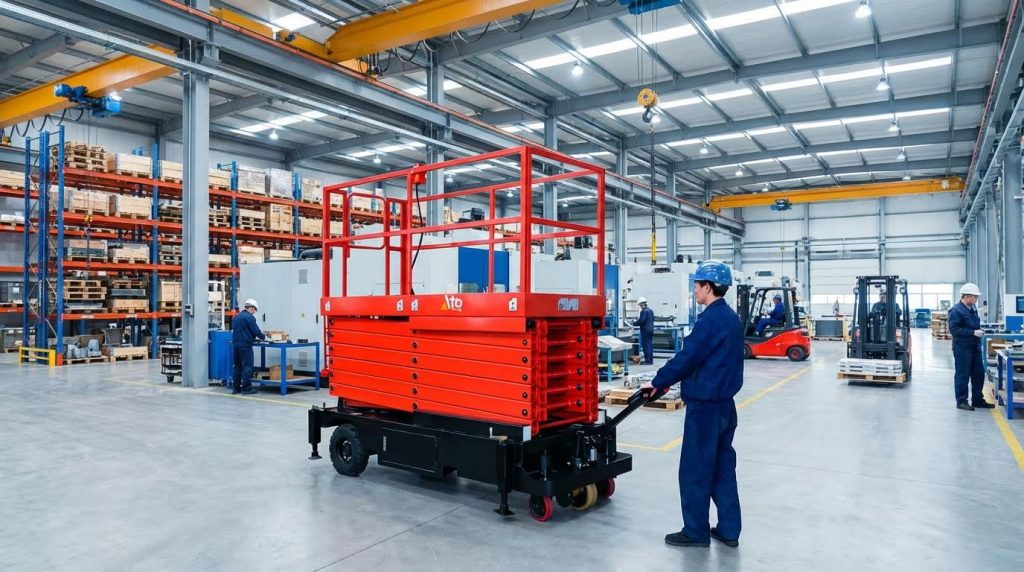
Knowing how long do scissor lifts take to charge is the first step to keeping your machines ready, safe, and productive. This guide explains real-world charging times, what changes them, and the safest way to charge in any facility. You will see how battery type, charger selection, and temperature affect both uptime and battery life. Use it to set charging policies that reduce failures, protect operators, and maximize total cost of ownership.

How Scissor Lift Battery Charging Really Works
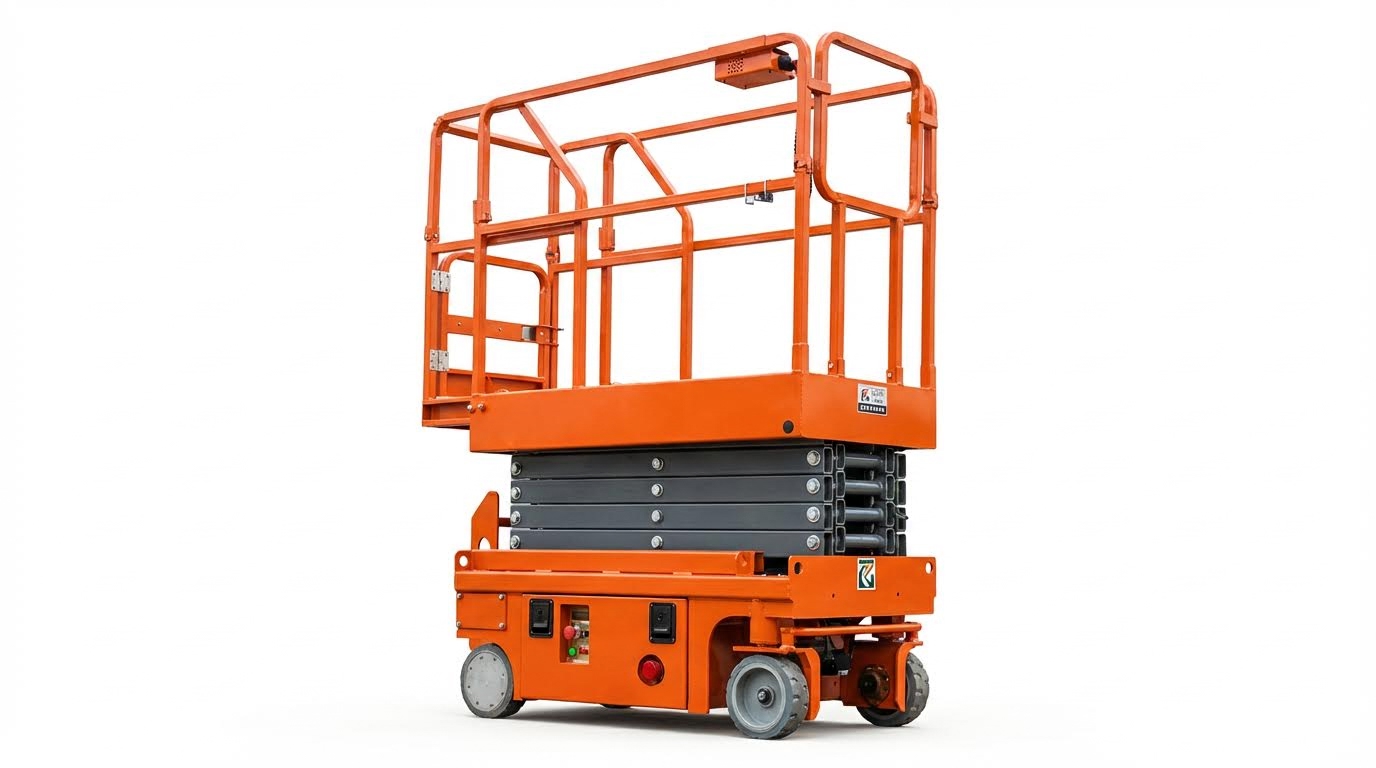
Scissor lift battery charging is a controlled energy transfer process where the charger pushes current into the battery until it reaches a safe, usable state of charge. To answer “how long do scissor lifts take to charge,” you must first know the battery chemistry, capacity, and charger size.
Typical charge times by battery type
Typical scissor lift charge times range from about 6–8 hours for lead-acid batteries to roughly 1–2.5 hours for lithium systems when paired with the correct charger. This is the core driver behind real-world overnight vs fast-charge strategies.
| Battery Type | Typical Full Charge Time | Charging Pattern | Cycle Life (Typical Range) | Operational Impact |
|---|---|---|---|---|
| Flooded lead-acid (24–48 V) | ≈ 6–8 hours, up to ≈ 16 hours for some packs for certain models | Full overnight charge after each shift | ≈ 300–400 cycles at 80% DoD (typical range) | Best for single-shift operations; park at night, ready after 1 full workday. |
| Sealed lead-acid (AGM / Gel) | ≈ 6–10 hours depending on charger rating | Similar to flooded; avoid repeated short “top-ups” to limit sulfation | ≈ 400–600 cycles (typical range) | Suited to indoor fleets needing low maintenance and overnight charging. |
| Lithium-ion (e.g. LiFePO₄) | ≈ 1–2.5 hours with appropriately sized charger under optimal conditions | Fast full charge or partial “top-up” during breaks | Up to ≈ 5,000 cycles under controlled conditions | Supports multi-shift use with short breaks; reduces downtime and charger bays. |
From an operator’s point of view, “how long do scissor lifts take to charge” usually means: will it be ready next shift. With lead-acid, you plan around a full night. With lithium, you can often restore most capacity in a lunch break.
- Lead-acid (flooded/AGM): 6–8 hours covers most standard packs – ideal for one-shift-per-day sites.
- Slowest cases: High-capacity packs or undersized chargers can stretch toward 10–16 hours – risk of machines not ready by morning.
- Lithium-ion: Around 1–2.5 hours with the right charger – supports near-continuous operation with planned breaks.
Why you can’t quote one universal “scissor lift charge time”
Battery capacity (Ah), charger current (A), and chemistry all change the math. A 24 V, 200 Ah lead-acid pack on a 25 A charger simply needs longer than a 24 V, 100 Ah lithium pack on a 70 A fast charger, even on the same lift chassis.
💡 Field Engineer’s Note: When planning night shifts, assume at least 8 hours of uninterrupted plug-in time for lead-acid units. If your site regularly turns machines around faster than that, you either need more lifts, higher-output chargers, or a move toward lithium packs to avoid chronic undercharging and early battery failures.
Factors that change real-world charge duration
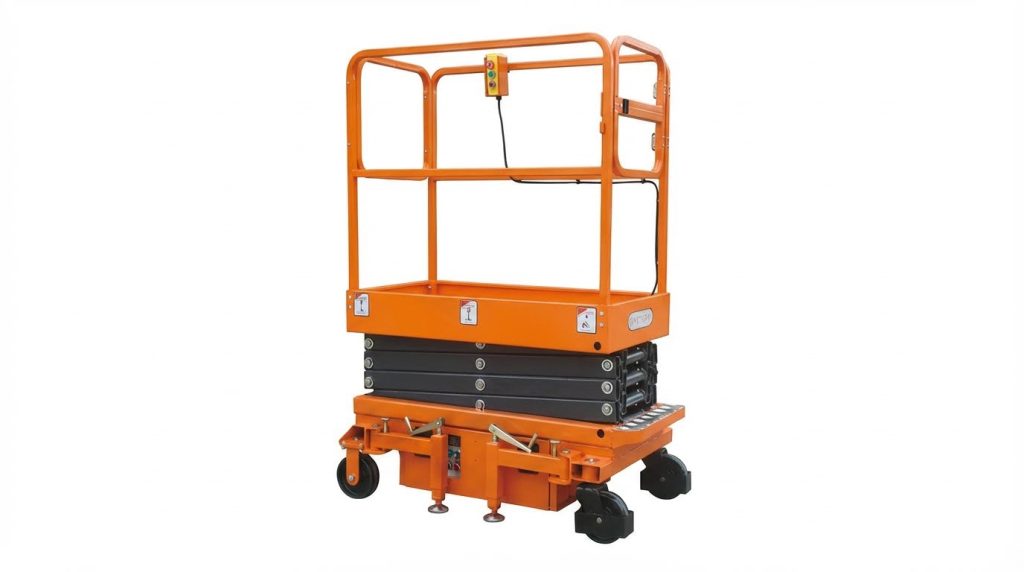
Real-world scissor lift charge time often differs from brochure values because temperature, depth of discharge, charger sizing, and battery age all change how long the charger stays in each stage. Understanding these factors lets you predict when a lift will actually be ready.
- Depth of discharge (how empty the pack is): Deeper discharge needs more ampere-hours replaced – turns a “6-hour” charge into 8+ hours.
- Charger current rating: Undersized chargers extend bulk charge time – machines may still be charging when the next shift starts.
- Battery age and health: Sulfated or worn lead-acid batteries charge slower and hold less – you see “full” on the charger but short runtime on the lift.
- Temperature: Cold slows chemical reactions; heat forces the charger to taper earlier – either way, effective charge time lengthens and usable capacity drops.
- Chemistry-specific limits: Lithium packs use a BMS that may throttle charge in cold or hot conditions – fast-charge promises only hold inside the safe temperature window.
| Factor | Effect on Charge Time | Typical Real-World Outcome | Operational Impact |
|---|---|---|---|
| Cold ambient (≈ 0°C) | Battery capacity drops to ≈ 65% of rated compared with ≈ 27°C | Lift seems to “run out” faster; operators plug in more often | More frequent, longer charges; need extra units in cold storage or outdoor winter work. |
| Very cold (≈ -18°C) | Usable capacity can fall toward ≈ 40% of nominal capacity | Lithium systems may refuse fast charging; lead-acid charges very slowly | Plan heated charging areas or battery heaters; extend downtime between uses. |
| Opportunity charging (lead-acid) | Short top-ups interrupt full algorithms and promote sulfation | Battery reaches “full” voltage quickly but with reduced true capacity | Apparent fast charge now; expensive early replacement later. |
| Deep discharge below ≈ 20% SoC | More energy to replace and higher internal heating during recharge | Charger may extend absorption stage to recover plates | Longer-than-normal charge times and accelerated wear; risk of not being ready next shift. |
| Battery age / sulfation | Higher internal resistance slows current flow | Charger reaches voltage limits sooner and tapers earlier | “Full” light comes on, but runtime is short; operators think charge was too quick. |
From a fleet-management standpoint, the honest answer to “how long do scissor lifts take to charge” is a range, not a single number. For a healthy lead-acid pack discharged to about 80% depth of discharge and charged at the correct current in a 20–30°C shop, 6–8 hours remains realistic. The moment you add cold, deep discharges, or tired batteries, that window stretches.
Rule-of-thumb to estimate your own charge time
Take the battery capacity in ampere-hours (Ah), multiply by 1.1–1.2 to account for charging inefficiency, then divide by the charger’s output current (A). That gives a rough bulk-charge time in hours. Add 1–2 hours for absorption/finishing stages on lead-acid. Lithium systems shorten that tail significantly because of higher coulombic efficiency and tighter BMS control.
💡 Field Engineer’s Note: If you consistently see lifts still on charge when a shift starts, don’t blame the operators first. Check the charger nameplate current, ambient temperature, and how deep the batteries are being discharged. Upsizing chargers or tightening “plug-in immediately after shift” discipline often recovers more uptime than buying extra machines.
Technical Best Practices For Safe, Efficient Charging
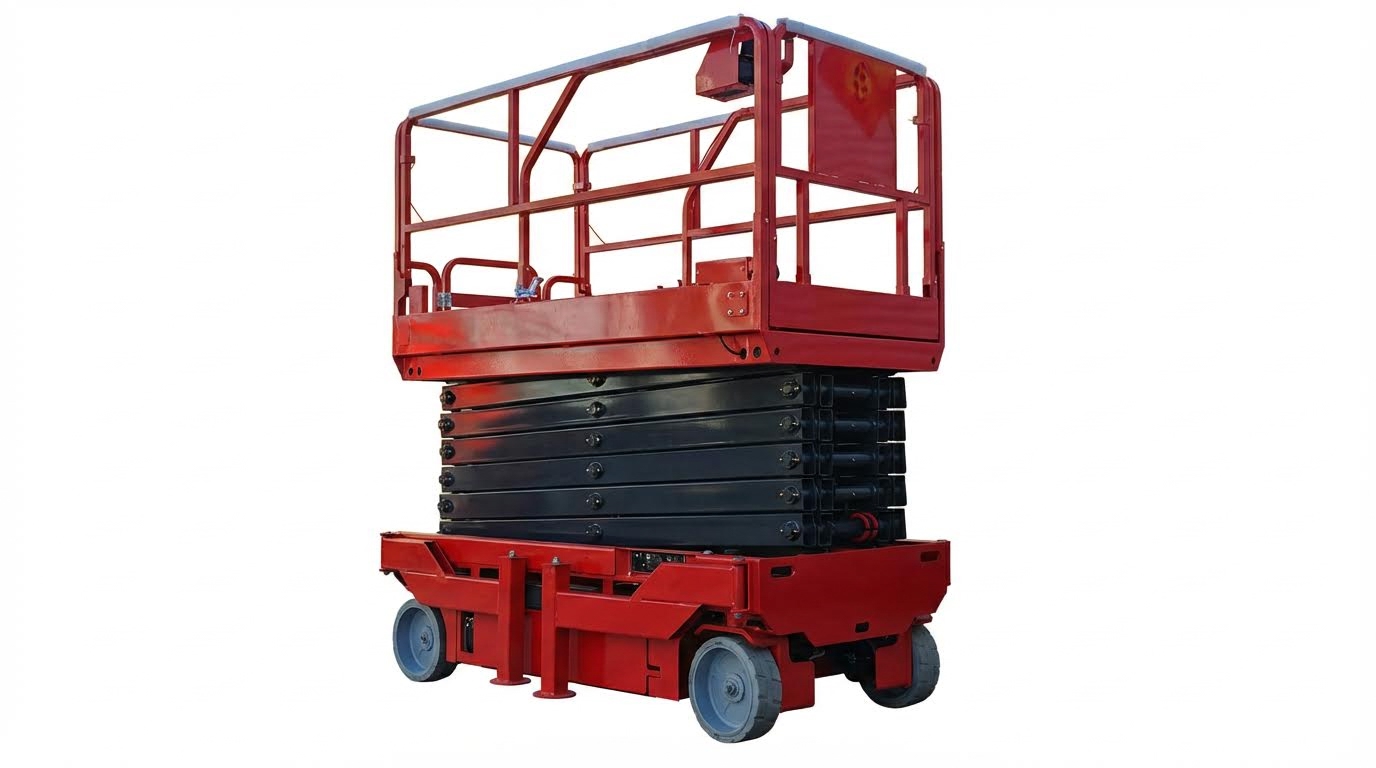
Technical best practices for scissor lift charging focus on matching charger and battery, controlling charge profiles, and managing temperature and ventilation so you safely minimize charge time and maximize battery life.
These practices directly affect how long do scissor platform lifts take to charge in real-world conditions, not just on paper specifications.
Matching chargers to voltage and chemistry
Matching the charger to the lift’s battery voltage and chemistry is the first safety and efficiency rule for scissor lift charging.
Using the wrong charger can overheat batteries, extend charge time, or permanently damage cells.
- Correct voltage: Match charger output (e.g., 24 V, 36 V, 48 V) to the battery pack – Prevents undercharge, overcharge, and control system faults.
- Correct chemistry: Use a lead-acid charger only for flooded/AGM/gel, and lithium-specific chargers for Li-ion – Each chemistry needs a different charge profile.
- Approved equipment: Use chargers approved by the lift or battery manufacturer – Ensures tested compatibility and safety margins.
- Cable and connector integrity: Inspect plugs, cables, and contacts before each charge – Reduces resistance that slows charging and creates heat.
- Dedicated circuits: Use properly rated electrical circuits for chargers – Prevents nuisance trips and incomplete charge cycles.
Typical lead-acid scissor lift batteries need about 6–8 hours for a full charge, with some packs requiring up to 16 hours when deeply discharged or older. Lithium systems can recharge in roughly 1–2.5 hours with a correctly sized charger, but only if voltage and chemistry are properly matched. Charge-time ranges and charger requirements
💡 Field Engineer’s Note: If a scissor lift suddenly “starts taking longer to charge,” check the connector and cable first. Burned or loose contacts add resistance, so the charger throttles current and stretch a 6–8 hour charge toward 10–12 hours.
How to quickly confirm charger–battery compatibility
Check the lift’s nameplate or battery label for system voltage (for example 24 V) and chemistry (flooded lead-acid, AGM, gel, or lithium). Then confirm the charger’s output voltage and chemistry settings match exactly. If in doubt, do not plug in and consult the technical manual.
Charge profiles, stages, and smart chargers
Modern scissor lift chargers use multi-stage charge profiles to safely reach full charge in the shortest practical time.
Understanding these stages helps you interpret “how long do scissor platform lift lifts take to charge” beyond a single time number.
- Bulk stage: Charger supplies maximum safe current until voltage rises – Restores most capacity quickly (often 70–80%).
- Absorption stage: Current tapers while voltage is held – Gently finishes charging without overheating plates or cells.
- Float or standby stage (lead-acid): Low current maintains full charge – Prevents self-discharge when the lift sits overnight or longer.
- Equalization (flooded lead-acid only): Controlled overcharge at set intervals – Balances cell voltages and reduces sulfation, extending life.
- CC/CV (lithium): Constant current then constant voltage – Protects lithium cells from overcharge and thermal stress.
Smart chargers automatically manage these stages based on battery type and condition, and they log charge duration, ampere-hours delivered, and fault codes. This data shows whether batteries regularly hit full charge or are frequently interrupted, which strongly affects lifespan. Multi-stage charging and logging functions
- Do not unplug early: Let the charger complete its full algorithm – Prevents chronic undercharging that shortens runtime.
- Avoid “opportunity charging” for lead-acid: Do not keep topping up during short breaks – Reduces sulfation that cuts capacity.
- End-of-shift rule for lead-acid: Start a full charge after each shift – Keeps daily depth of discharge under control.
- Flexible charging for lithium: Lithium can handle partial charges better – Makes quick top-ups practical without heavy life penalty.
💡 Field Engineer’s Note: If your fleet “never seems fully charged” in the morning, check how often operators unplug early to move a lift. Even a few missed absorption stages per week can shave 10–20% off available runtime within months.
Typical real-world charge durations by profile
For a healthy lead-acid pack, the bulk stage often completes in 3–5 hours, with absorption and finishing stages taking another 2–4 hours, leading to a common 6–8 hour total. Older or heavily cycled batteries may spend longer in absorption as internal resistance increases. Lithium packs, using higher charge rates and optimized CC/CV control, typically complete in 1–2.5 hours if the charger and AC supply are correctly sized.
Temperature, ventilation, and safety compliance
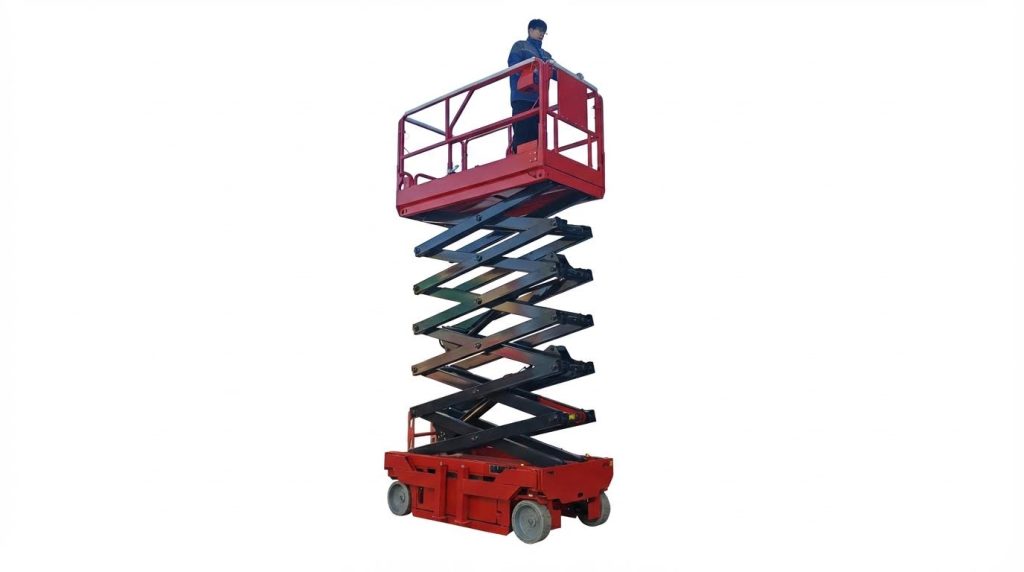
Temperature control, good ventilation, and proper PPE are critical to safe scissor lift battery charging.
Ignoring these conditions can turn a normal 6–8 hour charge into a safety risk, especially with lead-acid batteries.
- Ventilated charging area: Charge lead-acid batteries where hydrogen gas can disperse – Reduces explosion risk.
- Personal protective equipment: Use goggles, acid-resistant gloves, and protective clothing – Protects against splashes and short-circuit burns.
- No ignition sources: Keep sparks, flames, and smoking away from charging bays – Prevents gas ignition.
- Cable and plug checks: Inspect for cuts, burns, or looseness before charging – Prevents hot spots and fire risk.
- Correct temperature range: Avoid charging at extreme hot or cold temperatures – Protects capacity and prevents thermal events.
A battery that delivers 100% capacity at about 27°C may drop to roughly 65% at 0°C and near 40% at -18°C, which means lifts “run out of charge faster” even if charge time stays similar. Lithium systems often use pack heaters to allow safer charging down to around -20°C, while in hot climates forced-air cooling around chargers helps avoid overheating. Temperature–capacity relationships and cooling guidance
- Cold environments: Expect shorter runtime per charge and plan more frequent charging – Prevents deep discharges below 20% state of charge.
- Hot environments: Avoid charging batteries that already feel hot – Reduces risk of thermal runaway and plate shedding.
- Storage practices: Store lead-acid fully charged and lithium around 50–60% in cool, dry areas – Limits sulfation and voltage imbalance during downtime.
💡 Field Engineer’s Note: In cold warehouses, operators often blame “bad batteries” when lifts die early. In many cases, the pack is fine; the combination of low temperature and repeated deep discharges is the real killer. Shorter shifts or mid-shift charging policies can save batteries and uptime.
Safety standards and compliance considerations
Many regions reference general electrical safety and industrial truck standards (such as ANSI/ITSDF B56-series and local occupational safety rules) for battery charging areas. Typical expectations include clearly marked charging zones, eye-wash access for lead-acid fleets, adequate ventilation, and documented training on PPE and emergency procedures. Always follow your local regulations and the lift manufacturer’s manual when designing or upgrading a charging bay.
Choosing The Right Battery Strategy For Your Fleet
The right scissor lift battery strategy balances how long do scissor lifts take to charge with runtime, safety, and total cost over the fleet life. This section helps you match chemistry and charging policy to your duty cycles.
- Start with duty cycle: Define hours of use per shift and per day – this sets minimum runtime and required recharge window.
- Check power access: Map where and when 230–400 V charging is available – this limits how aggressively you can recharge between shifts.
- Consider environment: Note cold storage, outdoor winter work, or hot factories – temperature strongly affects runtime and charge acceptance.
- Assess maintenance skills: Decide if your team can manage watering and inspections – this often decides between flooded lead-acid and maintenance‑free options.
- Plan for lifecycle: Look at 5–10 year horizons, not purchase price – battery replacement and downtime usually dominate total cost.
💡 Field Engineer’s Note: When I size fleets, I first lock in “hours of lift per 24 h” and “available charging hours.” Chemistry and charger sizing then become a math problem, not a guessing game.
Lead-acid vs. lithium for duty cycle and uptime
Lead-acid suits low to medium duty fleets with long overnight charge windows, while lithium fits high-utilization fleets needing fast turnaround and maximum uptime.
From an operations point of view, your choice is less about chemistry and more about how many hours you must be in the air before you can plug in, and for how long.
| Parameter | Flooded / AGM Lead-acid | Lithium-ion (e.g. LiFePO4) | Operational Impact |
|---|---|---|---|
| Typical full charge time | 6–8 h (some up to 16 h) | ≈1–2.5 h with correct charger | Defines how long do scissor lifts take to charge between shifts and how fast you recover for the next job |
| Cycle life at ~80% DoD | ≈300–400 cycles | Up to ≈5,000 cycles under good control | Determines how often you buy new packs and how much downtime you schedule |
| Daily charging pattern | Best: 1 full charge after shift; avoid short “top-ups” | Flexible; partial charges acceptable if within recommended SoC window | Lead-acid needs disciplined end-of-shift charging; lithium supports irregular use |
| Maintenance | Flooded: watering, cleaning, equalization; AGM: lower but still inspections | Maintenance‑free; rely on BMS and correct chargers | Lead-acid needs trained staff and time; lithium shifts work to electronics and monitoring |
| Energy density | Lower; heavier for same kWh | ≈3× higher per kg | Lithium can reduce machine weight and improve maneuverability and floor loading |
| Cold performance | Capacity drops sharply below 0°C | Better with heaters; can charge at lower temperatures with controls | Cold warehouses often justify lithium with heated packs |
| Upfront cost | Low to medium | High | Lithium usually wins on total cost only in high‑utilization or multi‑shift fleets |
- Low-intensity, single-shift sites: Lead-acid usually suffices – overnight gives 6–8 hours to recharge fully.
- Multi-shift or rental fleets: Lithium often wins – 1–2.5 hour recharge supports near-continuous operation.
- Rough or dirty environments: Sealed AGM or lithium reduce corrosion and watering tasks – better reliability with less supervision.
- Short-term projects: Lead-acid minimizes capital outlay – you avoid paying for lithium cycles you never use.
How battery choice changes “how long do scissor lifts take to charge”
On a typical 24 V or 48 V lead-acid pack, you plan for a full 6–8 h overnight charge. With a correctly sized lithium system, you can often bring a machine from low state of charge to near full in about 1–2.5 h, which supports opportunity charging during breaks or between jobs without the life penalties that lead-acid suffers.
Charging policies, shift patterns, and TCO
Charging policy and shift pattern often decide total cost of ownership (TCO) more than chemistry alone.
If operators plug in at the wrong times or cut charge cycles short, you shorten battery life and create unplanned downtime, regardless of technology.
- Define a standard charge window: For lead-acid, charge once per day after use – this lets the charger complete its full algorithm and reduces sulfation.
- Avoid deep discharges: Keep state of charge above ≈20% – deep cycling accelerates plate shedding and grid corrosion in lead-acid and stresses lithium cells.
- Control opportunity charging: For lead-acid, avoid frequent short top-ups – they promote sulfation and reduce usable capacity over time.
- Use opportunity charging smartly with lithium: Short partial charges are acceptable – they help keep SoC between about 20–80% for long life.
- Align shifts with charger availability: Make sure the machine can stand idle while charging – this avoids operators unplugging early “just to get the job done.”
| Scenario | Typical Shift Pattern | Recommended Battery | Charging Policy | Fleet-Level Effect |
|---|---|---|---|---|
| Light construction or facility maintenance | 1 shift, 4–6 h actual lift use | Lead-acid (flooded or AGM) | Full 6–8 h overnight charge; no mid‑shift top‑ups | Low capital cost; predictable overnight charging; batteries may last several years |
| Warehouse / logistics, 2 shifts | 2 shifts, 8–12 h use with breaks | Lithium-ion | Top up during breaks and shift change; keep SoC 20–80% | High uptime; fewer spare machines; higher purchase but lower cost per operating hour |
| Rental fleet with varied users | Irregular, sometimes abusive use | AGM or lithium | Simple, automated charging instructions; smart chargers and telematics | Less damage from poor maintenance; easier remote monitoring and billing |
| Outdoor seasonal work | Intense use in season, idle off‑season | Lead-acid or lithium depending on budget | Strict storage rules; periodic top‑up charges in storage | Good storage prevents premature failure before next season |
- Step 1: Map real machine hours per day – this reveals whether you need fast charging or just consistent overnight charging.
- Step 2: Check how long chargers can stay connected – if you rarely get a full 6–8 h window, lead-acid will struggle.
- Step 3: Choose chemistry to fit the pattern – low hours favor lead-acid; high hours and short breaks favor lithium.
- Step 4: Standardize operator rules – clear “when to plug in” instructions protect battery life and uptime.
- Step 5: Monitor and adjust – use charger logs or telematics to see real charge times and tweak policy.
💡 Field Engineer’s Note: When a site complains that “batteries don’t last,” I pull charger logs. In most cases, lifts only get 2–4 hours on charge because operators unplug early. Fixing policy often adds more runtime than changing chemistry.
Answering “how long do scissor lifts take to charge” for your exact site
For a standard lead-acid powered scissor lift, budget a full 6–8 hours on charge after each workday to start the next shift at 100% state of charge. For lithium-equipped units with correctly sized chargers, plan for roughly 1–2.5 hours to recover from a typical work shift. The right policy is to design shifts and breaks so that your scissor lifts either get one uninterrupted overnight charge (lead-acid) or several planned fast charges (lithium) instead of random, operator-driven plug‑ins.

Final Thoughts On Scissor Lift Battery Charging
Safe, efficient scissor lift charging depends on one clear idea: treat batteries and chargers as a matched system, not as separate parts. Charge time, runtime, and service life all flow from that match. When you size chargers correctly, respect chemistry limits, and control temperature, you cut downtime and avoid hidden damage.
Lead-acid batteries reward disciplined overnight charging and protection from deep discharge. Lithium rewards planned fast top-ups and good BMS integration. In both cases, operators must let the full charge profile run, in a ventilated, well-controlled area, with regular checks on cables, connectors, and charge logs. This turns “how long do scissor lifts take to charge” from guesswork into a predictable planning number.
The best practice for operations and engineering teams is to start with duty cycle and available charge windows, then choose chemistry, charger rating, and charging policy to fit. Standardize “when to plug in,” train operators, and verify behavior with data from smart chargers or telematics. When you follow these rules, your Atomoving scissor lifts stay ready for work, batteries last closer to their design life, and your fleet delivers safer, more reliable uptime at the lowest total cost.
Frequently Asked Questions
How Long Does It Take to Charge a Scissor Lift?
Most electric scissor lifts take between 8 to 10 hours to fully charge. However, some models may require up to 12 hours for a complete charge. For optimal battery life, it’s recommended to follow the 8-8-8 Rule: 8 hours of operation, 8 hours of charging, and 8 hours of cooling. Forklift Battery Guide.
Can You Use a Scissor Lift While Charging?
Yes, you can use a scissor lift while it is charging, but precautions must be taken. Ensure the red emergency shut-off button is pulled out, and have someone guide the extension cord away from the wheels to prevent damage. Always prioritize safety during operation. Scissor Lift Charging Tips.