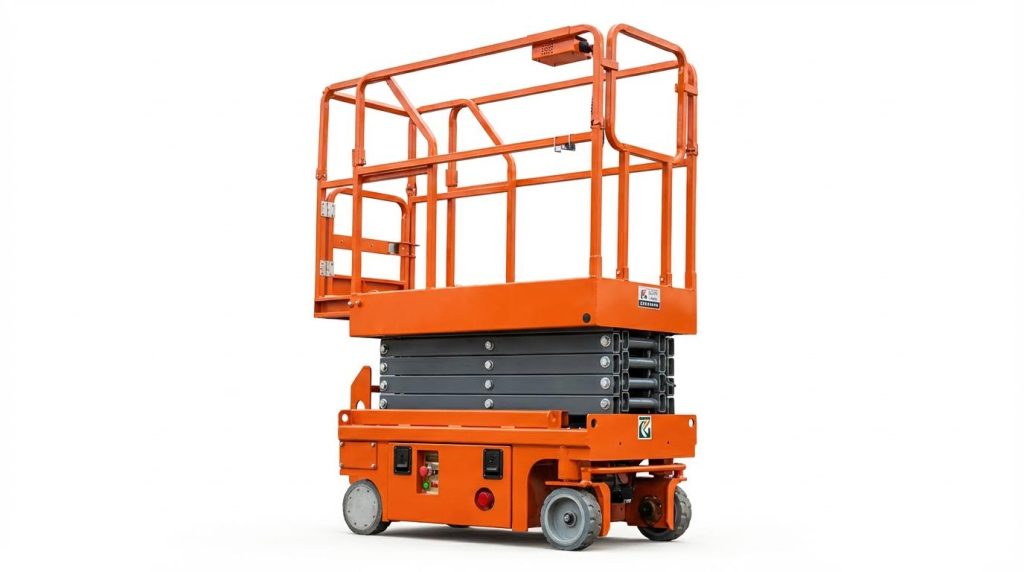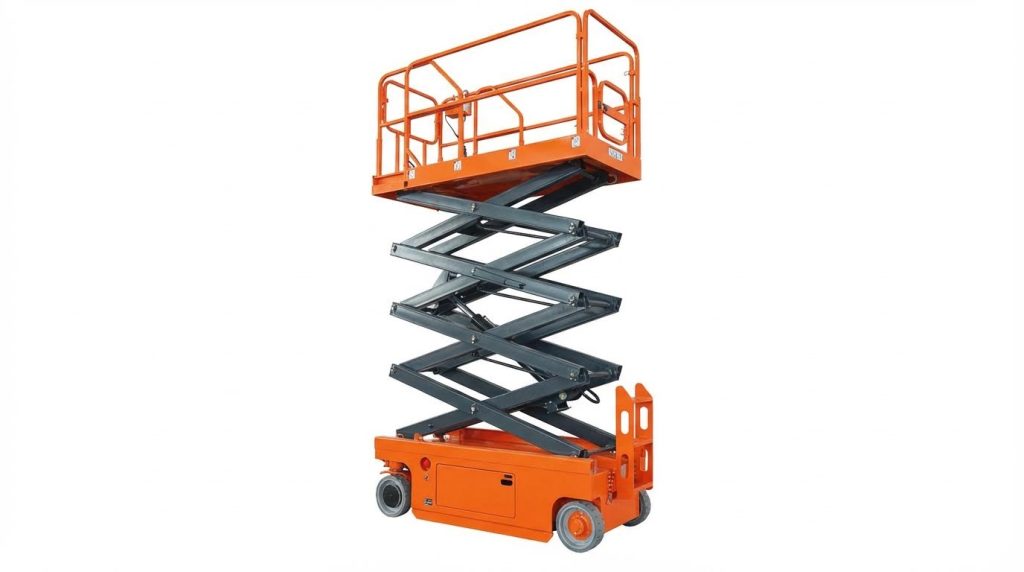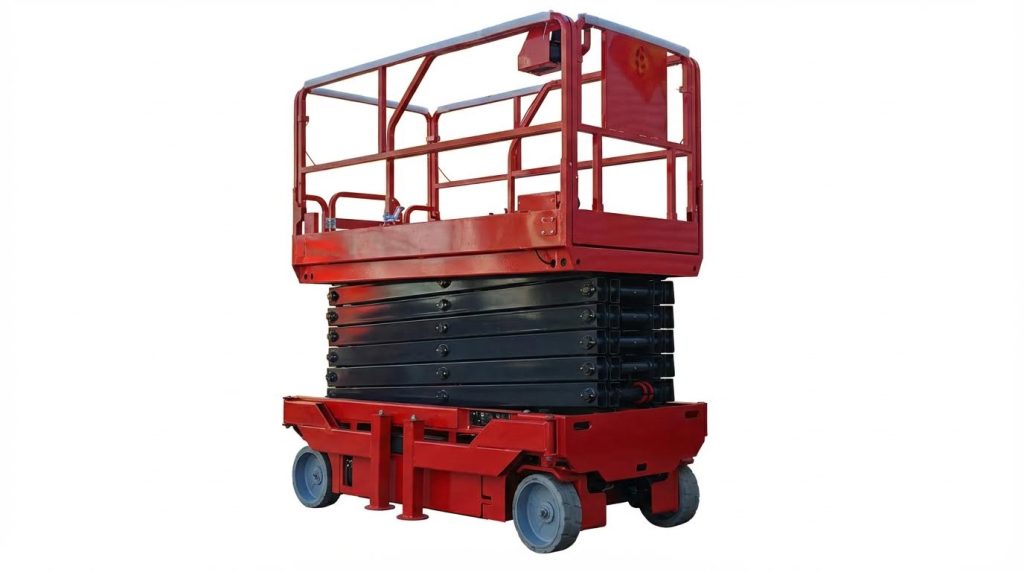
Scissor lift height limits are defined by platform height, working height, and stability constraints, not just “how high can a scissor lift reach.” This guide explains typical height ranges by class and how standards convert platform height into safe working height so you can match the right lift to your job and building.
Defining Scissor Lift Heights And Rating Methods
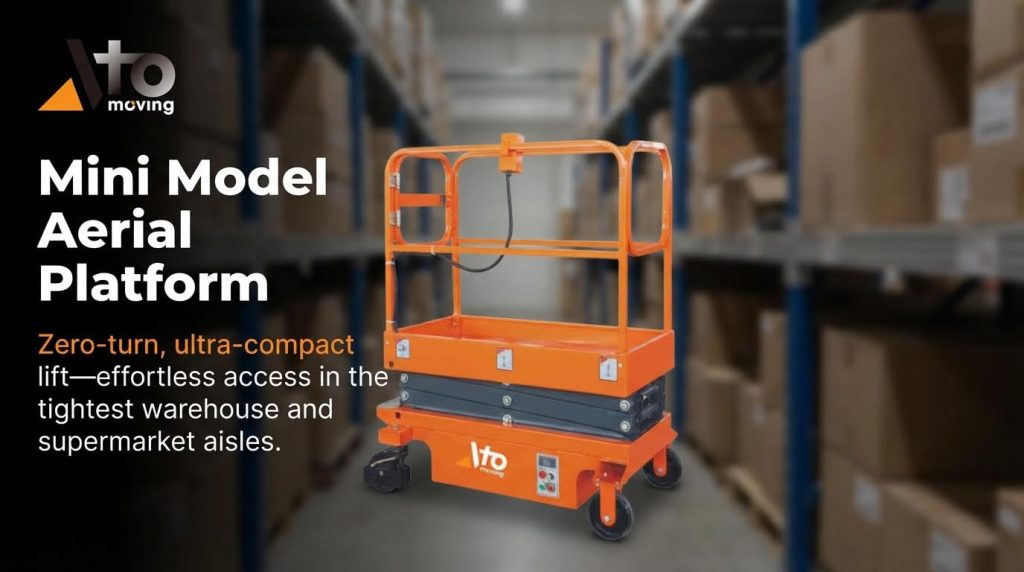
Scissor lift height is defined using platform height and working height, with standards prescribing how these values and load ratings are tested and marked. Understanding these terms is the starting point for answering “how high can a scissor platform lift reach” in real sites.
💡 Field Engineer’s Note: When planning jobs, always work from platform height backward from your ceiling and obstructions, then check the working height covers the task; never size a lift from brochure working height alone.
Platform Height, Working Height, And Operator Reach
Platform height is the vertical distance from floor to platform deck at full elevation, while working height adds about 2.0 m of assumed operator reach. This simple relation is what most people really mean when they ask how high can a scissor platform reach.
| Term | Definition | Typical Value / Relation | Operational Impact |
|---|---|---|---|
| Platform height | Vertical distance from ground to platform floor at full elevation | Design value used for clearance checks | Determines if the lift physically fits under ceilings and services |
| Working height | Platform height plus assumed operator reach | ≈ Platform height + 2.0 m | Used to judge if the operator can actually reach the work surface |
| Operator reach allowance | Assumed standing reach above platform floor | ≈ 2.0 m | Standardized value; avoids guessing based on individual worker height |
Engineers and safety officers use platform height for geometry and clearance, and working height for task feasibility. For example, a platform height of 3.9 m corresponds to a working height of about 5.9 m, assuming a 2.0 m reach allowance. This convention is used across low-level access, slab, and rough-terrain classes.
- Low-level access example: Platform 3–4 m → working height up to ≈5.9 m – Ideal for low-ceiling maintenance.
- Standard slab example: Platform ≈12 m → working height ≈14 m – Covers most warehouse and light industrial roofs.
- High RT example: Platform ≈19 m → working height ≈21 m+ – Suited to façades and high external cladding.
How this affects “how high can a scissor lift reach” in practice
When a datasheet lists “working height 10 m,” the platform is only about 8 m high. You must check both numbers: the platform height for clearance under beams, and the working height for whether the operator can reach the job.
How Standards (ANSI/CE) Define And Mark Heights
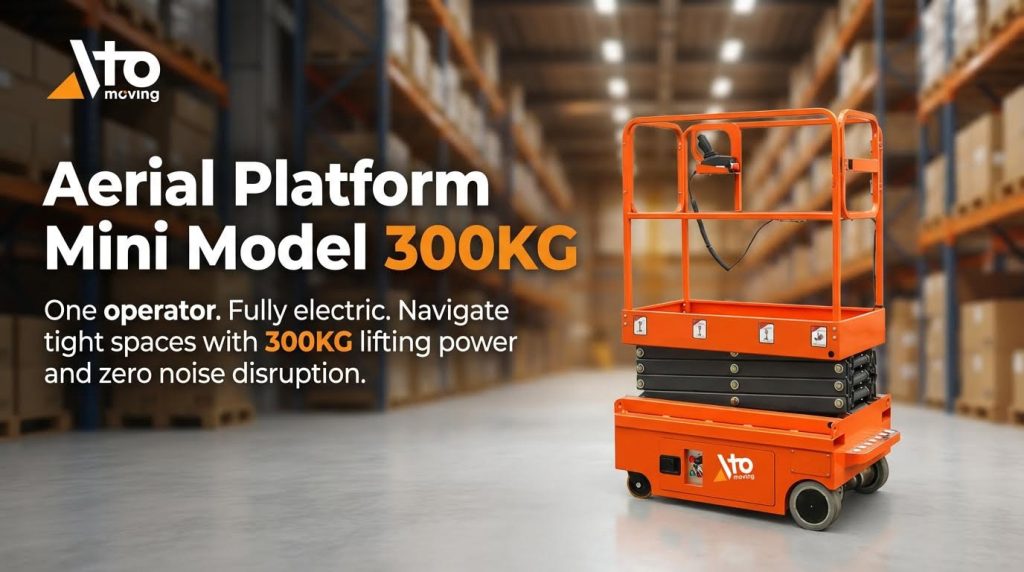
ANSI and CE standards define how manufacturers determine, test, and label maximum platform height, working height, and load so that “how high can a aerial platform reach” is a controlled, verified value, not a marketing guess.
- Height definition: Standards fix how to measure platform height from a level reference plane – Ensures different brands remain comparable.
- Working height convention: They accept a fixed reach allowance (≈2.0 m) – Prevents inflated claims based on tall operators.
- Capacity marking: They require separate ratings for main deck and extensions – Avoids overloading when the deck is extended.
- Stability testing: Test procedures check stability at rated height under wind and slope – Limits maximum height before tipping risk becomes excessive.
- Operating limits: Rules cap drive speed (often <0.8 km/h) with platform raised and restrict occupants indoors vs outdoors – Controls dynamic and wind-induced loads at height.
Standards-based rating methods force manufacturers to prove that the lift remains stable at its stated maximum platform height under specified wind speeds, slopes, and load distributions. Compliance labels, manuals, and load charts then carry these verified values to the user.
| Rated Item | What Standards Require | Typical Limit / Condition | Operational Impact |
|---|---|---|---|
| Platform & working height | Measured from level ground and marked clearly | Working height = platform height + 2.0 m | Lets planners answer “how high can a scissor lift reach” with a consistent rule |
| Platform capacity | Tested for both main deck and extension | Example: 230–450 kg on deck, lower on extension | Prevents overload that could reduce safe height margin |
| Occupant count | Linked to floor area, guardrails, and evacuation | Typically 2 indoors, 1 outdoors | Reduces total mass and wind sail area at full height outdoors |
| Drive speed at height | Limited to control dynamic loads | Often <0.8 km/h with platform raised | Mitigates tipping risk when moving at maximum height |
Why maximum height is often lower outdoors
Outdoors, wind and slope add overturning moments. Standards therefore restrict occupants, drive speed, and sometimes effective working height compared with indoor ratings, even though the mechanical platform height does not change.
Height Ranges By Scissor Lift Class And Engineering Limits
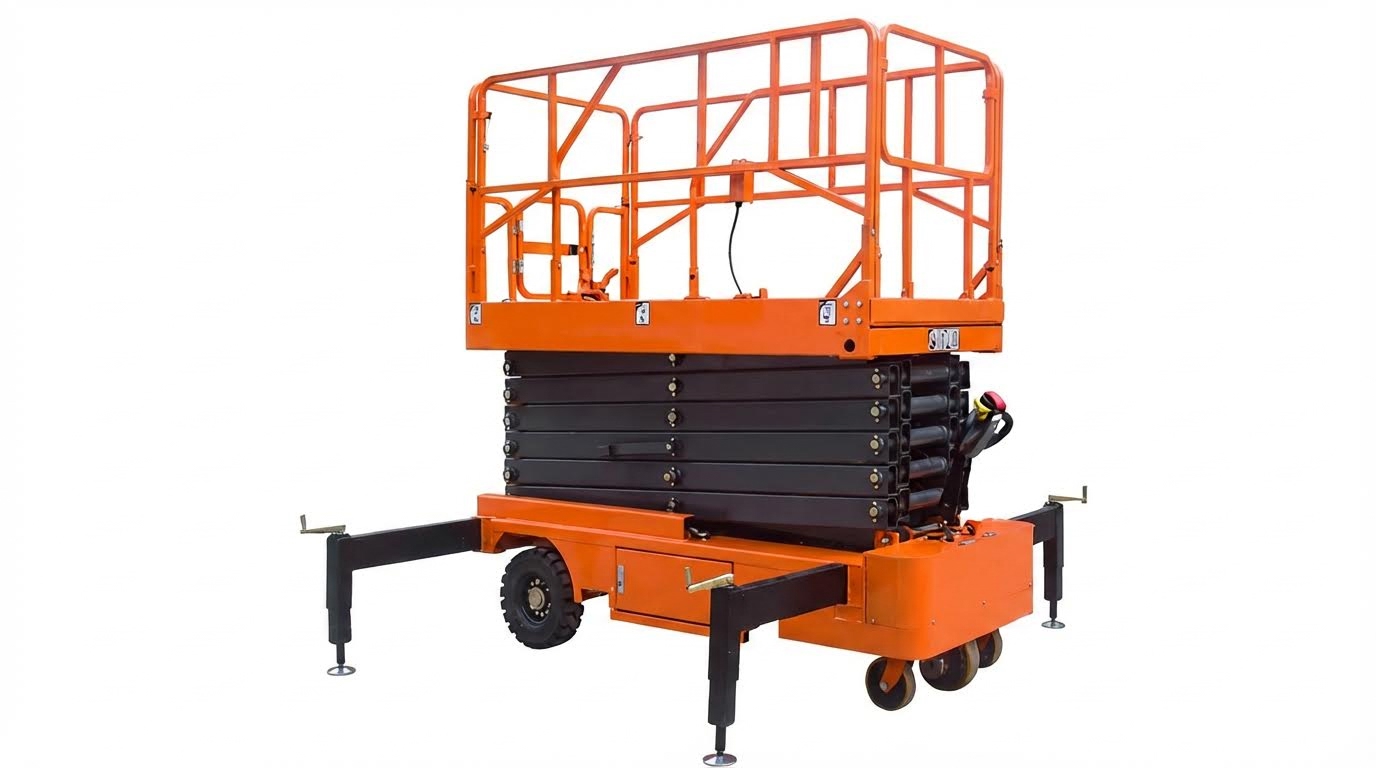
Scissor lift height ranges are grouped by class, and the hard limit on how high can a scissor lift reach is set by stability, structural loading, and drive system capacity rather than pure material strength. Understanding these engineering limits helps you choose a safe working envelope instead of chasing maximum numbers on a spec sheet.
| Lift Class | Typical Platform Height (m) | Typical Working Height (m) | Typical Capacity (kg) | Best For… | Key Engineering Constraint |
|---|---|---|---|---|---|
| Low-level access | 3–4 | Up to ≈5.9 | Light loads | Indoor maintenance, fit-out below 6 m | Compact footprint on finished floors |
| Standard electric slab | ≈4–12 | ≈6–14 | ≈250–450 | General indoor trades, light outdoor use | Battery energy, aisle width, floor capacity |
| High-capacity rough-terrain | ≈12–19+ | ≈14–21+ | Up to ≈750 | Large outdoor sites, heavy materials | Stability in wind, gradeability, wide wheelbase |
Across all classes, maximum working height is defined as platform height plus about 2.0 m of assumed operator reach, so a 12 m platform yields roughly 14 m working height. This is how standards and manufacturers answer how high can a scissor lift reach in practice, while still staying within overturning and structural limits. Reference: platform vs working height and class ranges
💡 Field Engineer’s Note: Once you go past about 14 m working height, the wheelbase and chassis mass must grow fast to keep the same safety margin. That is why very tall scissor lifts are almost always rough-terrain units with wide axles and stabilizers instead of compact electric slab machines.
Low-Level Access Lifts Under 6 m Working Height
Low-level access scissor lifts answer how high can a scissor lift reach for interior work below 6 m by using short scissor stacks, light capacities, and very compact bases optimized for finished floors.
These units typically offer platform heights around 3–4 m, giving working heights up to about 5.9 m once you add the standard 2.0 m operator reach. Reference: low-level access height range
| Parameter | Typical Range / Description | Operational Impact |
|---|---|---|
| Platform height | ≈3–4 m | Access to ceilings around 5–6 m working height in offices and light industrial spaces. |
| Working height | Up to ≈5.9 m | Covers lighting, duct drops, signage, and low racking without ladders. |
| Capacity | Light-duty (person + tools) | Suited to maintenance tasks rather than heavy installation work. |
| Footprint | Very compact | Fits narrow corridors and congested plant areas with tight turning radii. |
| Floor requirement | Flat, finished slab | Relies on smooth, level floors; not suitable for rough or unfinished ground. |
- Short scissor stack: Reduced arm length and pin load – Lowers compressive forces and improves long-term structural life.
- Light overall weight: Smaller base frame and cylinders – Reduces floor loading in office or mezzanine areas.
- Low center of gravity: Short mast and small platform – High stability margin with minimal wind or side loading indoors.
- Simple drive or push-around: Limited or no self-propelled system – Lower energy use and easier maintenance.
When a ladder is still acceptable instead of a low-level lift
For very short, infrequent tasks below roughly 3 m working height, a compliant ladder may remain acceptable. Once you need both hands free, repeated access, or tools and materials at height, low-level scissor lifts greatly reduce fall risk and fatigue compared with ladders or podium steps.
💡 Field Engineer’s Note: In many plants, the “real” limit on low-level lifts is door height and elevator size, not the scissor mechanism. Always check that the stowed height clears 2.0–2.1 m doors and that the total mass is acceptable for upper-floor slabs before you order a fleet.
Standard Electric Slab Lifts Up To 14 m Working Height
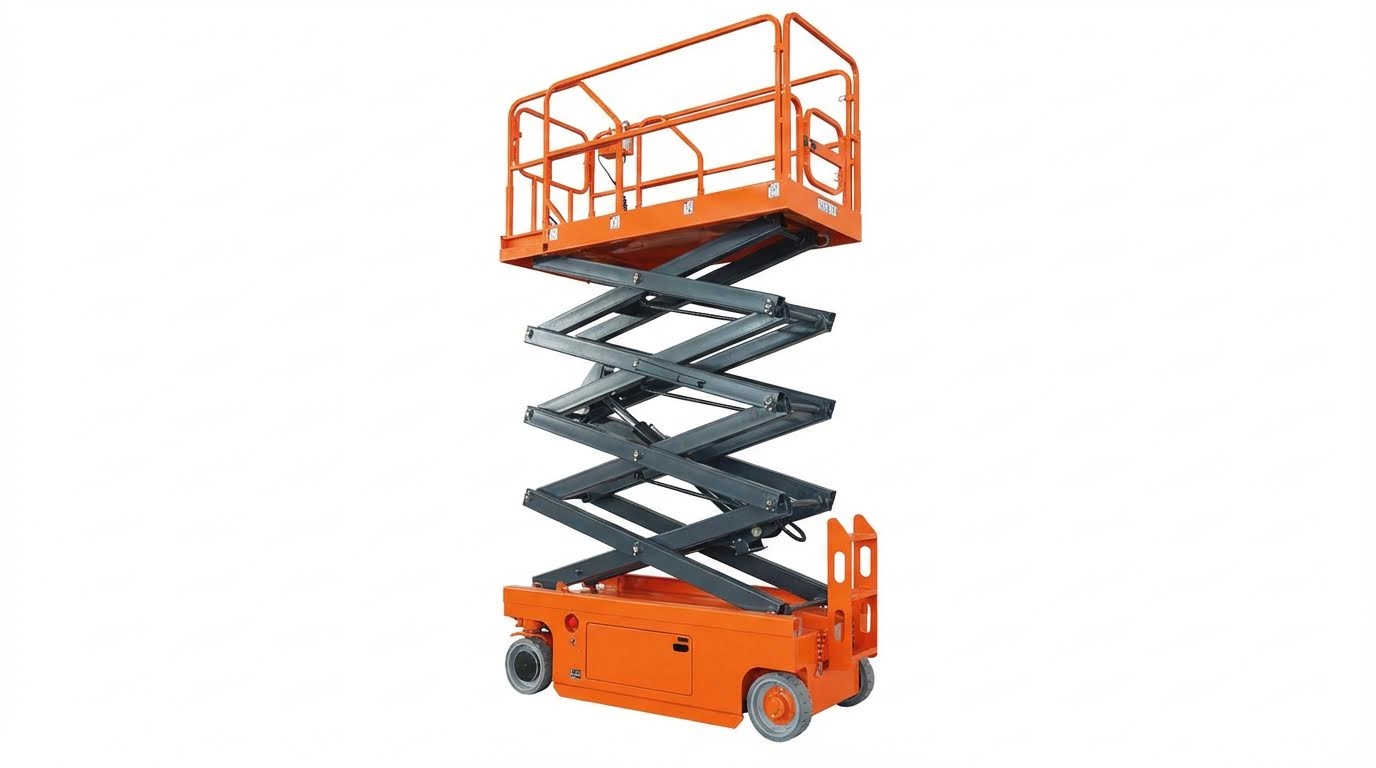
Standard electric slab scissor lifts define how high can a scissor lift reach for most warehouses and commercial buildings, typically covering about 6–14 m working height with moderate capacities and compact, battery-powered chassis.
These machines usually offer around 4–12 m platform height, translating to roughly 6–14 m working height when you add the 2.0 m operator reach used in rating methods. Reference: slab lift height envelope and capacities
| Parameter | Typical Range / Feature | Best For… |
|---|---|---|
| Working height | ≈6–14 m | Most warehouse, retail, and plant ceiling heights. |
| Platform height | ≈4–12 m | Electrical, sprinkler, HVAC, and drywall installation. |
| Capacity | ≈250–450 kg | One or two workers plus tools and light materials. |
| Drive system | Electric, battery-powered | Low emissions and noise indoors. |
| Operating surface | Firm, level slab | Indoor floors and some smooth outdoor aprons. |
- Battery and hydraulics: Stroke length and duty cycle limit – Higher lifts need larger batteries and efficient hydraulics to maintain cycle counts per charge.
- Base vs height ratio: Fixed chassis width vs. taller scissor stack – Stability, not steel strength, usually caps maximum working height.
- Wind and side loads: Rated mainly for indoor or light outdoor use – Driving elevated and pushing against walls must stay within standard side-load limits.
- Platform extensions: 0.9 m typical extension with derated load – Improves reach to façades or racks without moving the chassis, but with lower capacity on the extension.
How to choose between 10 m and 12 m platform height
If your highest task is around 10–11 m, a 10 m platform (≈12 m working height) may be enough. Add at least 0.5–1.0 m extra working height for uneven floors, thicker ceiling build-ups, or future services. Overspec slightly on height, but check aisle width, turning radius, and floor bearing capacity so the machine can actually reach the work area.
💡 Field Engineer’s Note: Above roughly 10–11 m platform height, even small floor slopes become critical. A 1–2% gradient that felt harmless at 6 m can eat a big chunk of your stability margin at 12 m, so enforce tight “firm and level” rules and avoid loading materials against one guardrail.
Rough-Terrain And High-Capacity Lifts Above 14 m
High-capacity rough-terrain scissor lifts push how high can a scissor lift reach into the 14–21+ m working height range by using wide wheelbases, heavy chassis, and stabilizers to handle wind, slope, and large loads outdoors.
These machines typically operate in the 14–21 m working height band and beyond, with platform capacities around 750 kg and four-wheel drive for unfinished ground. Reference: rough-terrain range and capacity
| Parameter | Typical Value / Feature | Operational Impact |
|---|---|---|
| Working height | ≈14–21+ m | Reaches high façades, stadiums, and tall industrial structures. |
| Capacity | ≈750 kg | Supports multiple workers plus heavy cladding, pipe, or steelwork. |
| Drive | Four-wheel drive, rough-terrain | Handles gravel, compacted soil, and unfinished slabs. |
| Ground clearance | ≈0.2 m | Clears ruts and debris without grounding the chassis. |
| Stability aids | Wide axles, stabilizers | Resists overturning from wind and slope at full height. |
- Wind limits: Outdoor ratings assume specific maximum wind speeds – Strong gusts can force derating of allowable working height.
- Gradeability: Typically around 25–30% – Allows travel on ramps and rough ground, but work at height still requires near-level conditions.
- Chassis mass and width: Heavier, wider base – Counters the high center of gravity from tall scissor stacks and heavy loads.
- Drive speed at height: Limited to about 0.8 km/h raised – Controls dynamic loads and prevents sudden lateral shocks.
Why not just build a 30 m scissor lift?
Beyond roughly the low-20 m working height range, the base would need to become extremely wide and heavy to resist overturning from wind, slope, and side loads. At that point, boom or truck-mounted platforms are usually more efficient. Stability, transport logistics, and ground bearing pressure, not just steel strength, set the practical ceiling for scissor lift height.
💡 Field Engineer’s Note: On rough-terrain jobs, most “near-miss” tip events I investigated were a mix of small slope, soft fill under one tyre, and wind hitting stacked materials on the platform. Treat the published maximum working height as conditional on perfect ground; derate aggressively when the site is marginal.
Selecting The Right Lift Height For Your Facility
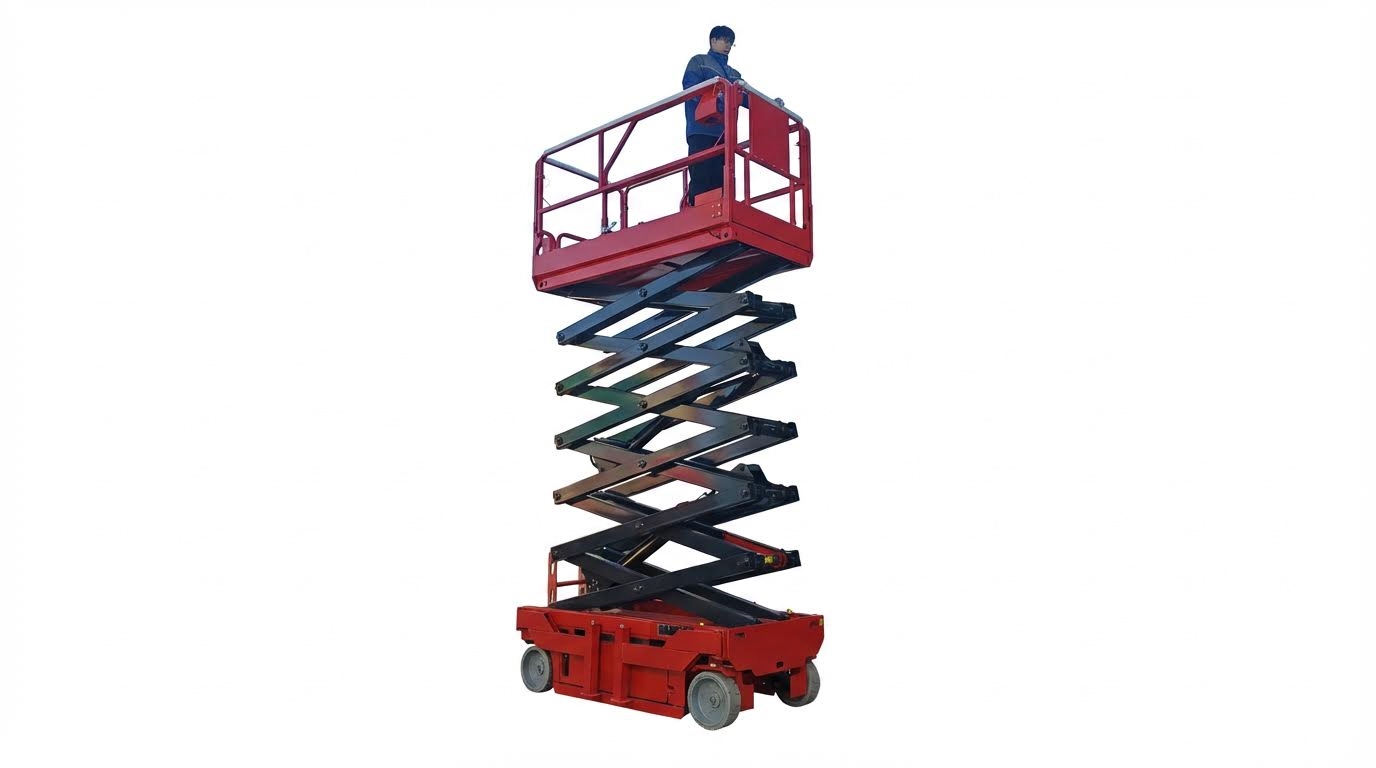
Selecting the right scissor lift height starts with the job, not the machine, then checks stability, floors, and indoor/outdoor limits to answer “how high can a scissor lift reach” safely for your site.
- Start From The Task: Define exact working height and reach – prevents over‑ or under‑specifying the lift.
- Check The Building: Measure ceiling, obstructions, and aisles – avoids clashes with beams, ducts, and racks.
- Match Class To Environment: Choose low‑level, slab, or rough‑terrain – aligns height with floor and weather conditions.
- Include Load And People: Count operators, tools, and materials – keeps within rated capacity at full height.
- Apply Standards: Use marked platform and working heights – stays inside ANSI/CE‑tested envelopes.
💡 Field Engineer’s Note: When planning a fleet, size 70–80% of your units for everyday work heights and rent the extreme‑height machines only when peak projects demand them. This cuts idle capital while keeping you compliant.
Matching Tasks To Platform Height And Working Height
Matching tasks to platform height and working height means converting “where the hands must reach” into a platform height band, then checking which scissor class can safely deliver that reach in your building.
Engineers answer “how high can a scissor lift reach” by splitting it into platform height and working height. Working height is platform height plus about 2.0 m of operator reach, so a 12 m platform gives roughly 14 m working height. Standards and manufacturers use this convention in rating charts. You plan tasks around working height, but you buy equipment by platform height.
| Typical Task | Approx. Working Height Needed (m) | Indicative Platform Height (m) | Suitable Lift Class | Operational Impact |
|---|---|---|---|---|
| Office lighting, ceiling tiles, low warehouses | 4–6 | 2–4 | Low-level access | Passes through standard 2.1 m doors; ideal for finished floors. |
| Retail, small industrial, mezzanine work | 6–9 | 4–7 | Low-level / small slab | Covers most fit-out and MEP without overheight units. |
| Standard warehouse racking, ductwork, sprinklers | 9–12 | 7–10 | Standard electric slab | Balances reach with narrow-aisle maneuverability. |
| High bay warehouses, tall façades | 12–16 | 10–14 | Large slab / small rough-terrain | Requires careful check of floor capacity and obstructions. |
| Stadiums, plants, external cladding | 16–21+ | 14–19+ | High-capacity rough-terrain | Needs outdoor space, higher wind and slope controls. |
- Clarify Hand Height: Measure the highest point the operator’s hands or tools must reach – this is your working height target.
- Back-Calculate Platform Height: Subtract 2.0 m from working height – gives a realistic platform height band.
- Check Horizontal Reach: Factor in any 0.65–0.9 m deck extension – may avoid repositioning the chassis at height.
- Align With Lift Class: Choose low-level, slab, or rough-terrain ranges that cover the platform height and load – keeps you inside tested envelopes.
- Respect Capacity Changes: Remember that extensions can derate capacity – prevents overload when reaching over obstacles.
How to quickly estimate if an existing lift is tall enough
Measure the task height from floor to work point. Subtract 2.0 m to estimate the minimum platform height. If your lift’s rated platform height is below this number, it will not safely reach. If it is slightly above, check for ceiling obstructions and confirm that capacity and indoor/outdoor ratings match your job.
Platform extensions add horizontal reach and floor area without changing base footprint, but they often reduce rated capacity when extended. A typical 0.9 m extension can cut platform capacity roughly in half while in use. Engineers balance deck length, extension travel, and guardrail design to keep stability margins. When you ask how high can a scissor lift reach, also ask how far it must reach horizontally without side‑loading the guardrails.
💡 Field Engineer’s Note: For repetitive tasks like racking or duct runs, mock up one bay on the floor with tape. Stand a worker at the proposed platform height using a ladder just for measurement, not work. If they are stretching or leaning, you need the next height class up; if elbows stay comfortably bent, the chosen height is efficient and safer.
Stability, Ground Conditions, And Indoor/Outdoor Limits
Stability, ground conditions, and indoor/outdoor limits cap how high a scissor lift can reach on your site, even if the nameplate working height looks sufficient on paper.
Structural stability depends on the relationship between base footprint and maximum platform height. Taller lifts need longer wheelbases, wider frames, and stiffer scissor arms to resist overturning. Self-propelled and rough-terrain units rely on chassis geometry, tire contact area, and ground clearance to stay stable on uneven ground. Indoors, you usually use slab machines on firm, level floors; outdoors, you may need rough‑terrain models with higher gradeability and wind ratings, but you must accept stricter derating at height.
| Condition / Factor | Typical Range / Constraint | Effect On Usable Height | Operational Impact |
|---|---|---|---|
| Wind speed (outdoors) | Derating starts at moderate winds per standard | Reduces safe working height compared with indoor rating | Plan façade work for low‑wind windows or use alternative access. |
| Floor flatness and strength | Flat, prepared slab vs. compacted gravel | Poor surfaces limit maximum raised height or require RT units | Check floor bearing capacity before using heavy rough‑terrain lifts. |
| Gradeability / slope | Rough-terrain 25–30% gradeability, but level at work zone | Lift must be level when raised; slope limits working positions | May need ground preparation or different access method on steep sites. |
| Indoor vs outdoor occupancy | Typically 2 persons indoors, 1 outdoors | Outdoor use may reduce allowed load and tools at height | Adjust crew planning and tool staging for façade or yard work. |
| Drive speed at height | Often limited below 0.8 km/h when elevated | Slow repositioning increases cycle time at maximum height | Account for travel time in project schedules for large sites. |
- Keep Lifts Level: Only raise on firm, level surfaces – prevents reaction forces from shifting toward one wheel line.
- Respect Wind Limits: Follow the outdoor wind rating on the data plate – side loads from wind can exceed overturning margins.
- Match Tires To Floor: Use slab tires on finished floors and larger rough‑terrain tires outdoors – balances ground pressure and traction.
- Control Side Loads: Avoid pushing off walls or steelwork at height – side loading is not reflected in simple vertical capacity figures.
- Follow Occupant Limits: Apply the one‑person outdoor rule where specified – reduces mass and sail area in wind.
Indoor vs outdoor selection checklist
For indoor work, prioritize electric slab lifts with non‑marking tires, low emissions, and platform heights that clear ceilings by at least 0.5 m. Confirm floor capacity and aisle width. For outdoor work, choose rough‑terrain models with sufficient working height, 0.2 m ground clearance, and 25–30% gradeability, but plan for derated height and load when wind picks up. Always compare the indoor and outdoor ratings on the same machine; they are not identical.
Standards require stability tests under specified wind speeds, slopes, and drive speeds below about 0.8 km/h with the platform raised. This is why the practical answer to how high can a scissor lift reach in your facility is often “lower than the catalog maximum” once you account for wind, floor quality, and whether you are indoors or outdoors.
💡 Field Engineer’s Note: On mixed-use sites, I always set two height limits: the nameplate working height for ideal conditions, and a “site maximum” that is 1–2 m lower for days with wind, uneven ground, or heavy tooling. Train operators to use the lower number unless a supervisor signs off on the full rating.
Final Thoughts On Scissor Lift Height Selection
Scissor lift height selection is not about chasing the tallest catalog number. It is about matching platform height, working height, and class to your real tasks and site limits. Platform height governs clearances and geometry. Working height translates that into what the operator’s hands can reach. Standards then tie these values to proven stability under load, wind, and slope. Together, they define a safe working envelope, not just a reach figure.
Engineering limits change with class. Low-level units favor light weight and small footprints for finished floors. Slab lifts balance reach, aisle width, and battery capacity for typical warehouses. Rough-terrain machines trade compactness for wide bases, heavy chassis, and stabilizers to stay upright at 20 m with big loads. Ground quality, floor strength, and wind can all force you to use less than the nameplate height.
For operations and engineering teams, the best practice is simple. Start from task hand height, back-calculate platform height, then pick the class that stays stable on your ground. Derate for wind, slope, and heavy tooling. Use standards-based ratings, not guesses, and set a conservative “site maximum” height. This approach keeps your people productive and your Atomoving fleet within its engineered safety margins.
Frequently Asked Questions
How High Can a Scissor Lift Reach?
A scissor lift’s maximum height depends on the model and manufacturer. On average, most scissor lifts can reach platform heights of 10 to 18 meters (33 to 60 feet), with working heights extending up to approximately 20 meters (65 feet). For example, some heavy-duty models can achieve a platform height of 10.06 meters (33 feet) and a working height of 11.89 meters (39 feet). Scissor Lift Specifications.
What Are the Risks of Operating a Scissor Lift at Maximum Height?
Operating a scissor lift at its maximum height increases risks such as tipping over due to wind, uneven ground, or improper load distribution. Other hazards include falling from the platform, entanglement, and electrocution if the lift contacts overhead power lines. Proper training and adherence to safety protocols are essential to mitigate these risks. Scissor Lift Safety Tips.