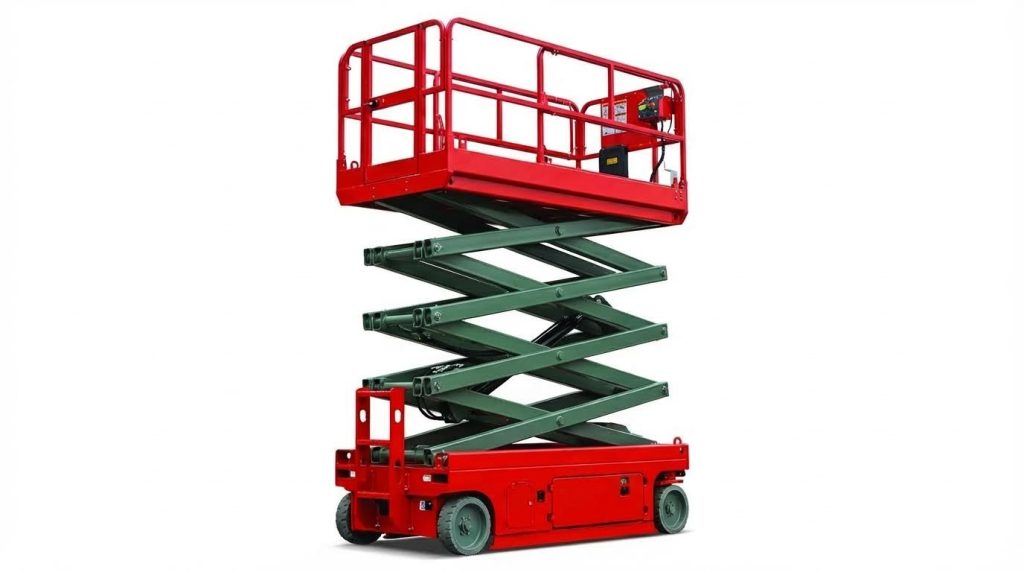
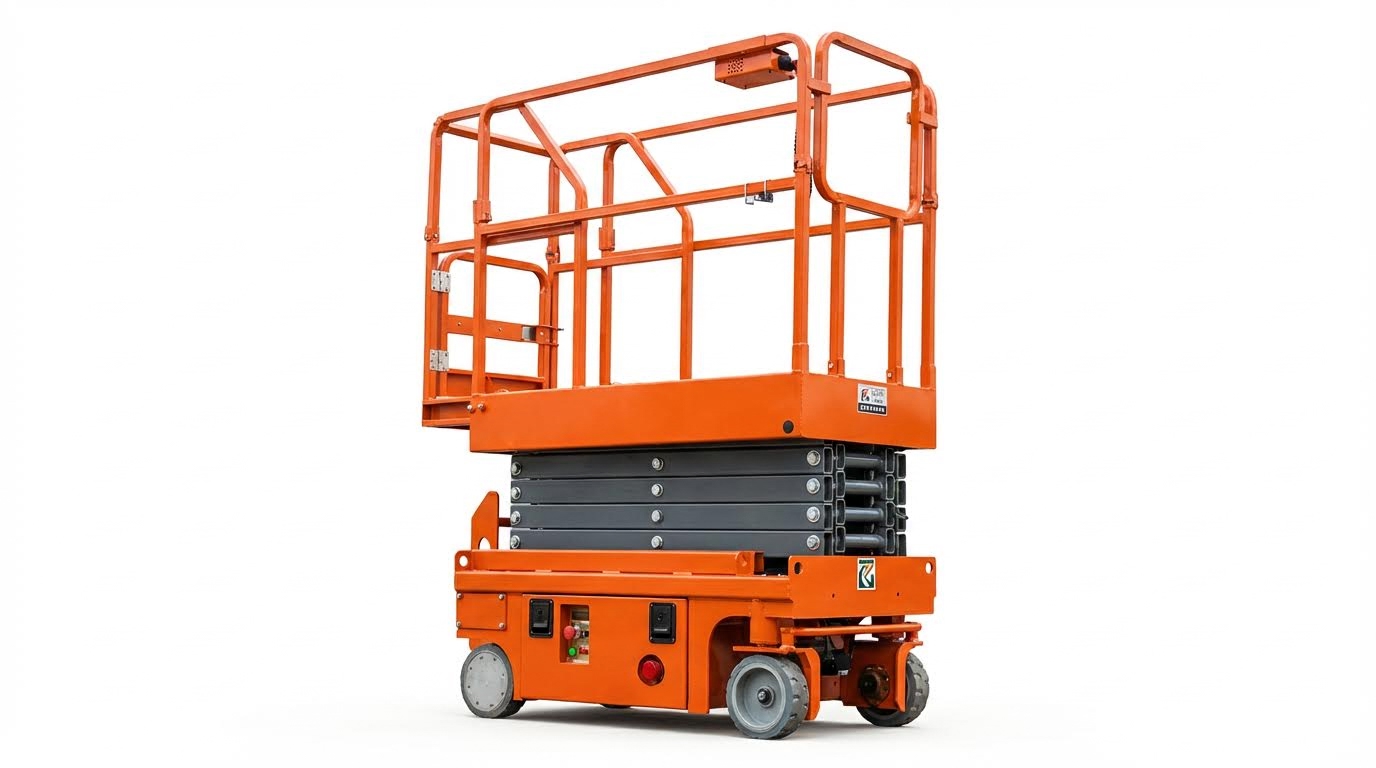
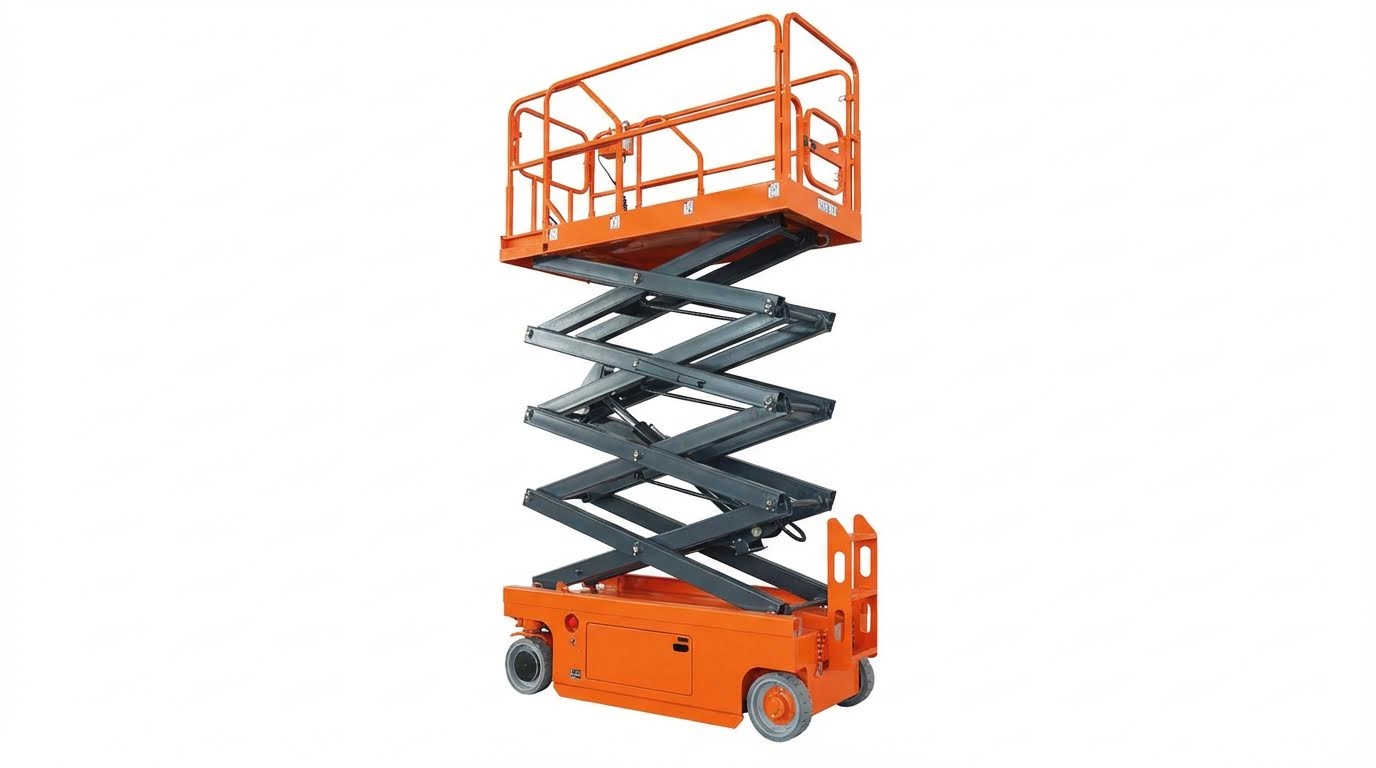
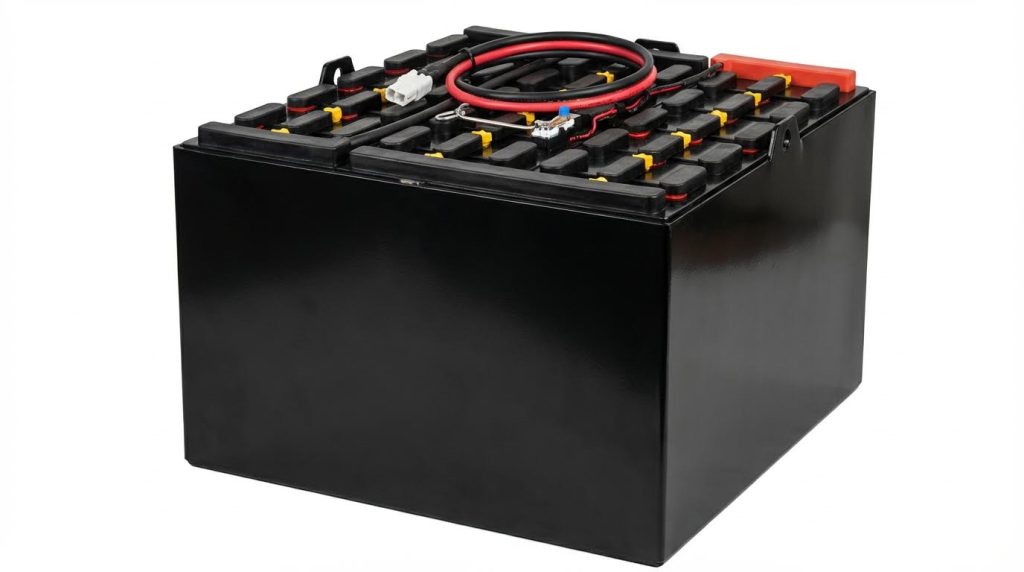
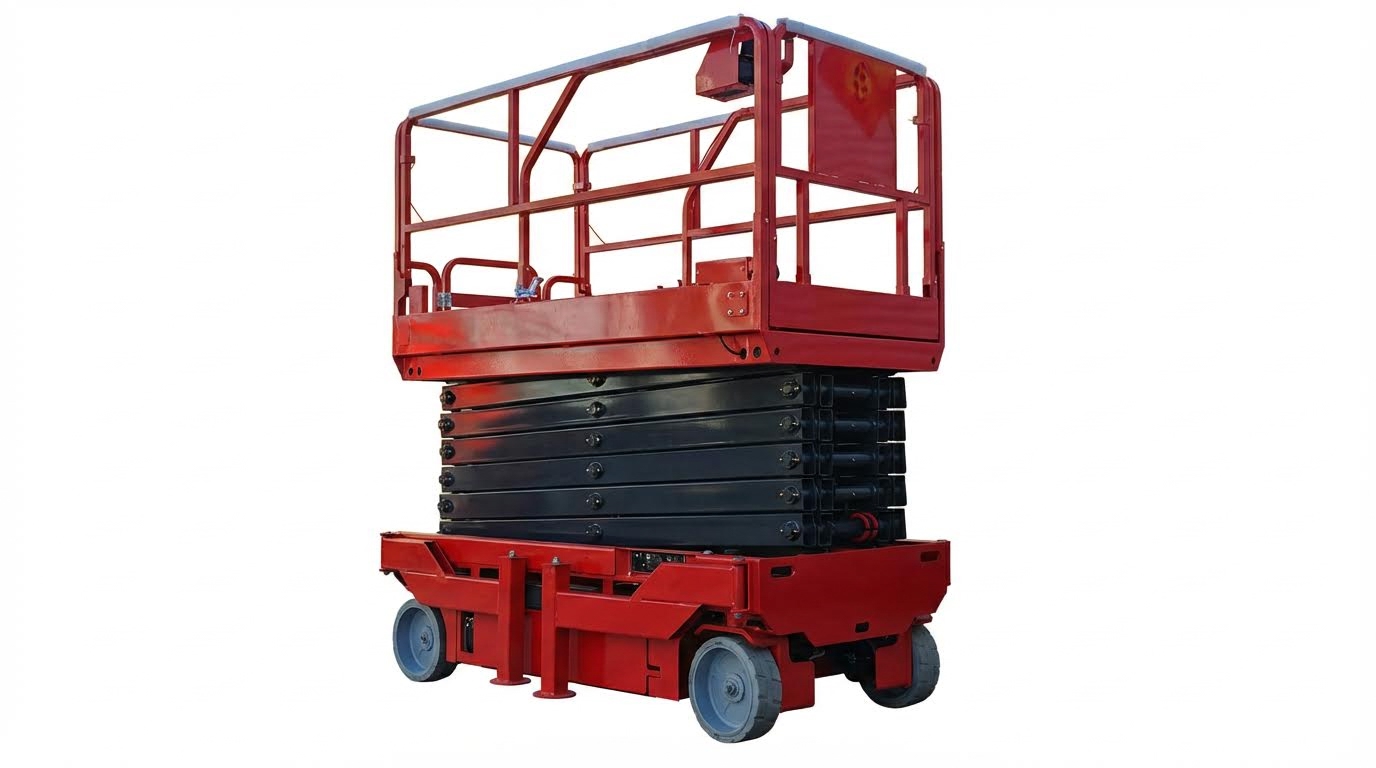
Scissor lift batteries typically deliver 4–8 hours of work per full charge and 3–5 years of service life when maintained correctly. This guide explains how long a scissor lift battery charge lasts, what controls cycle life, and which maintenance habits prevent early failure.
Using real runtime ranges, cycle counts, and environmental limits, we translate lab data into practical decisions for fleet managers and operators. You will see how chemistry choice, charging practice, and daily duty cycle combine to determine total cost per operating hour.
Understanding Scissor Lift Battery Runtime And Lifespan
Scissor lift batteries typically provide 4–8 hours of usable work per full charge and 3–5 years of service life when operators charge and maintain them correctly. Poor duty cycles, deep discharges, and harsh temperatures shorten both runtime and lifespan.
Typical hours of runtime per full charge
For anyone asking how long does a scissor platform lift battery charge last, most fleets see 4–8 hours of productive work from a full charge under normal conditions. Actual runtime depends heavily on how hard you drive, lift, and steer the machine.
Use pattern / application
Typical effective runtime per full charge
Key drivers
Operational impact
Heavy construction use (continuous drive + lift at rated load)
4–6 hours
High current draw from frequent driving, steering, and lifting near capacity
Plan for one full shift with strong batteries or schedule mid‑shift charging
More idle time, lighter platform loads, smoother floors
Comfortably covers a standard shift with proper overnight charging
Cold warehouse at 0 °C
Runtime reduced to roughly 65% of room‑temperature capacity
Lead‑acid capacity drops as temperature falls
Expect shorter shifts or more frequent opportunity charging in cold rooms
Freezer storage at −18 °C
Runtime reduced to about 40% of rated capacity
Severe capacity loss from low temperature
Requires warm‑up areas, battery rotation, or cold‑rated chemistry
Driving vs. lifting balance: Continuous driving on rough or sloped ground draws more current than occasional lifts – this can cut runtime by several hours.
Platform load: Working near rated capacity raises current and heat – runtime drops and batteries age faster.
Idle time: More pauses between movements reduce average current – runtime stretches toward the upper 8–10 hour range.
How to translate “hours” into a work plan
To plan shifts, treat the 4–6 hour figure as a realistic minimum for hard outdoor work and 6–8 hours for indoor maintenance. If your site demands constant driving or cold‑store operation, schedule opportunity charging during breaks or rotate machines to avoid deep discharges below about 30% state of charge.
💡 Field Engineer’s Note: When operators complain that “the lift dies after lunch,” I first check floor conditions and driving habits. Long runs on rough concrete with the platform raised can halve runtime compared with the same lift used on smooth floors with the platform lowered between moves.
Service life in years and charge cycles
In real fleets, manual pallet jack batteries usually last 3–5 years and a few hundred to a few thousand charge cycles, depending on chemistry, depth of discharge, and maintenance quality.
Battery type
Typical cycle life (to ~80% capacity)
Approximate service life in fleets
Best use case / operational impact
Flooded lead‑acid (standard industrial)
≈300–500 full cycles with regular watering and cleaning
Typically 3–5 years in controlled, single‑shift use; can fall to 1–2 years with neglect or chronic deep discharges
Lowest purchase cost for single‑shift fleets that can support watering and cleaning routines
AGM lead‑acid
≈500–1,000 cycles; some VRLA designs up to ≈1,200 cycles at 50% depth of discharge
Often 4–6 years with correct charging and moderate duty
Good for sites wanting reduced maintenance and better cold performance without moving to lithium
Gel lead‑acid
Similar to AGM but optimized for slower discharge profiles
4–6 years in suitable low‑rate applications
Best where lifts move slowly and run long, steady duty cycles with minimal high‑current surges
Lithium‑ion / LiFePO4
≈1,000–2,000+ cycles, often 2–4× lead‑acid cycle life
Frequently up to 8–10 years in multi‑shift fleets with proper BMS and chargers
Best for high‑duty, multi‑shift operations needing fast charging and long life
Depth of discharge (DoD): Regularly running lead‑acid down to 80% DoD slashes cycle life, while keeping discharge in the 20–50% band can double or triple total cycles – this directly affects how many years you get from a pack.
Temperature: High heat speeds up grid corrosion and water loss in lead‑acid cells – hot yards often see the low end of the 3–5 year range.
Maintenance quality: Skipped watering, dirty terminals, and chronic undercharging can pull life down to 1–2 years in harsh duty – maintenance is a direct cost lever.
How to estimate remaining life on an existing pack
Check age from installation records, then compare daily runtime to when the pack was new. If you now get less than half the original hours from a full charge and need frequent boosts to finish a shift, the pack is likely below 80% of original capacity and near end of life. For lead‑acid, also inspect for low electrolyte, corrosion, or bulging cases.
💡 Field Engineer’s Note: When budgeting, I assume 3 years for hard‑used flooded lead‑acid and 5 years for well‑maintained units in clean, indoor work. If your operation cannot control depth of discharge or temperature, upgrading chemistry often saves more in downtime and replacements than it costs upfront.
Technical Factors That Control Battery Performance
Battery chemistry, loading, environment, and charging habits together decide how long does a scissor platform lift battery charge last and how many years of service you get from the pack. Understanding these factors lets you predict runtime and plan replacements instead of reacting to failures.
Battery chemistry: flooded, AGM, gel, lithium-ion
Battery chemistry is the starting point because it sets energy density, cycle life, maintenance needs, and safe charging limits for your scissor lift.
≈1,000–2,000+ cycles; often 2–4× lead-acid life (cycles)
Low – electronics handle balancing and protection
Higher usable capacity per kg and deeper discharge tolerance; supports fast opportunity charging, ideal for multi-shift fleets.
Energy density: Higher Wh/kg means more work hours from the same battery compartment – critical when you need 8–10 h runtime without upsizing the lift.
Cycle life: More cycles at your typical depth of discharge (DoD) reduce annual battery spend – important for high-utilization fleets.
Maintenance demand: Watering and cleaning add labor and risk – sealed or lithium options cut downtime in tight maintenance budgets.
Charging flexibility: Lithium tolerates fast and partial charges better – ideal when lifts must be ready after short breaks.
💡 Field Engineer’s Note: In rental fleets, I often saw flooded packs fail early not because of bad cells, but because watering was skipped in peak season. Once plates are exposed and sulfated, no charger profile will bring the original runtime back.
Load, terrain, temperature, and duty cycle effects
Real-world runtime per charge depends heavily on how hard you work the lift: platform load, floor conditions, temperature, and how often you drive and lift all change current draw and heating.
Factor
Condition
Effect on runtime per charge
Effect on battery life (years/cycles)
Operational impact
Platform load
Near rated capacity for long periods
Shortens runtime; more current for lifting and steering (load impact)
Higher internal temperature and plate corrosion; life tends toward 2–3 years instead of 3–5 years (lifespan)
Plan shorter work windows between charges when carrying heavy materials all day.
Terrain
Rough or sloped outdoor ground
Higher traction power demand; more energy lost to rolling resistance and constant steering corrections (terrain)
Extra heat and vibration accelerate wear, especially for flooded lead-acid.
Expect the low end of the 4–8 h runtime range on construction sites.
Duty cycle
Frequent short moves with many lifts/lowers
Runtime shifts toward 4–6 h instead of 8–10 h because motors rarely cool (runtime)
More thermal cycling; plates shed active material faster.
High-cycling indoor picking or maintenance should size fleets assuming lower runtime per shift.
Ambient temperature
0 °C vs 27 °C vs −18 °C
Capacity falls to ≈65% at 0 °C and ≈40% at −18 °C compared with 27 °C (temperature effect)
High heat speeds grid corrosion and water loss; chronic cold raises internal resistance and stresses cells.
Cold stores may see runtime cut almost in half; hot outdoor yards burn through batteries in fewer seasons.
Indoor, light-load use: Lifts doing occasional moves and light maintenance often reach 8–10 h from a full charge – ideal when you ask how long does a scissor platform battery charge last in a mall or warehouse setting.
Heavy construction use: Continuous driving and lifting on rough slabs usually limits runtime to 4–6 h – plan mid-shift charging or extra machines.
Cold storage: At 0 °C, a pack that gave 8 h at 27 °C may give closer to 5 h – you must derate runtime in chilled environments.
💡 Field Engineer’s Note: When customers complained that “new batteries don’t last,” I often found two culprits: running fully loaded on rough ramps all day and parking lifts outside in the sun. Their meter hours were normal, but thermal abuse killed capacity early.
Charging practices, depth of discharge, and fast charging
Charging strategy and depth of discharge determine whether your pack dies in 1–2 years or delivers 3–5 years of predictable runtime per charge.
Parameter
Typical range
Effect on runtime per charge
Effect on total cycles / life
Practical guidance
Depth of discharge (DoD)
Shallow: 20–30% DoD; Deep: ≈80% DoD
Deeper DoD gives more hours in a single shift but leaves less voltage headroom at the end of the day.
Deep discharges shorten life; shallow discharges can double or triple cycle count (DoD impact)
Recharge around 30–40% state of charge to balance daily runtime and long service life.
Charging pattern – lead-acid
Full overnight vs frequent short “opportunity” charges
Smart chargers with auto-cutoff and temperature compensation minimize overcharge and extend life.
Always pair charger to chemistry; mismatched chargers quietly destroy packs over months, not days.
Lead-acid best practice: Run a full shift toward 50–80% DoD, then perform a full overnight charge – this supports the typical 3–5 year life window in industrial fleets.
Lithium best practice: Use opportunity charging during breaks to keep DoD moderate – this keeps runtime high without sacrificing cycle life.
Answering runtime questions: With proper charging, most scissor lifts still deliver about 4–8 hours of work per full charge several years into life (runtime data) – this is the practical basis when someone asks how long does a manual pallet jack battery charge last.
Why fast charging can be risky for lead-acid
Fast charging forces high current into plates that are already warm from work. In flooded batteries this accelerates gassing, water loss, and grid corrosion. Over months, you see more topping-up, more corrosion on terminals, and earlier capacity loss compared with standard-rate overnight charges.
💡 Field Engineer’s Note: In multi-shift warehouses, every time we tried to “treat
Maintenance And Selection For Lower Total Cost Of Ownership
Maintenance quality and battery chemistry choice largely decide how long a scissor lift battery charge lasts, how many years the pack survives, and your true cost per operating hour.
In this section we focus on two levers you fully control: day‑to‑day care of flooded lead‑acid batteries and smart upgrades to AGM, gel, or lithium‑ion when the duty cycle justifies the higher capital cost.
Preventive maintenance for lead-acid batteries
Preventive maintenance on flooded lead-acid scissor lift batteries protects runtime per charge and extends service life from as little as 1–2 years to roughly 3–5 years in real fleets. Consistent care directly reduces the cost per hour of lift operation.
Temperature management: Store and charge in a cool, ventilated area, away from extreme heat or freezing – Moderate temperatures near 27°C preserve capacity and lifespan.Capacity can drop to ~65% at 0°C and ~40% at −18°C.
Regular inspections and testing: Check for cracks, leaks, swelling, loose connections, and corrosion monthly – Finds failing cells before they cause sudden runtime loss or breakdowns.Visual and electrical tests support safe, reliable operation.
When these practices are followed, scissor lift batteries in light‑duty fleets often stayed close to the upper end of the 3–5 year life window, instead of failing in 1–2 years under neglect. That means fewer replacements, more consistent 4–8 hour runtime per charge, and lower total cost per shift. Good maintenance supports both runtime and multi‑year service life.
💡 Field Engineer’s Note: If operators keep asking “how long does a scissor lift battery charge last” and runtime is shrinking month by month, check watering and charge records first; chronic undercharging and dry plates kill capacity long before the calendar says the pack is “old.”
Safe replacement checklist for heavy lead-acid packs
Scissor lift batteries often exceed 50 kg, so technicians should power down the lift, remove keys, and disconnect AC before work. Disconnect the negative terminal first to reduce short‑circuit risk, use mechanical aids for lifting, then connect the positive terminal before the negative on installation, routing cables away from pinch points. Following proper sequence reduces arc and crush hazards.
When to consider AGM, gel, or lithium-ion upgrades
Upgrading from flooded lead-acid to AGM, gel, or lithium-ion makes sense when maintenance labor, downtime, or multi‑shift duty drive your cost per operating hour higher than the premium for advanced chemistries.
High-duty, multi‑shift fleets needing fast opportunity charging and consistent 4–8+ hours runtime per charge even at higher DoD.
AGM or gel upgrade triggers: Consider sealed lead-acid when watering is routinely missed, compartments are cramped, or acid exposure is a safety concern – Reduces labor and chemical risk while improving reliability.AGM and gel eliminate routine watering and improve safety.
Lithium-ion upgrade triggers: Move to lithium when lifts run multiple shifts, fast turnarounds are critical, or batteries fail early from deep cycling – Higher energy density and 2–4× cycle life lower cost per operating hour over time.Lithium can deliver the lowest cost per operating hour in multi-shift fleets.
Duty cycle alignment: For single-shift, overnight-charged fleets, well-maintained flooded batteries remain cost-effective – You avoid paying for cycle life and fast charging you never use.Duty cycle should dictate chemistry choice.
Environmental and safety needs: Cold storage, strict spill rules, or heavy-metal restrictions favor LiFePO4 – Stable chemistry, wide −20°C to +75°C operating window, and no free liquid acid improve safety compliance.LiFePO4 meets demanding environmental conditions.
Charger compatibility and infrastructure: Budget for correct chargers and wiring when changing chemistry – Matched chargers and BMS are essential to unlock cycle life and protect the pack.Manufacturer-defined charging profiles maximize life.
From a total cost of ownership view, flooded lead-acid looks cheapest at purchase but demands ongoing labor and suffers if operators abuse depth of discharge or skip watering. AGM and gel reduce that labor and extend replacement intervals, while lithium-ion and LiFePO4, though capital-intensive, often delivered the lowest cost per operating hour in high‑duty, multi‑shift fleets thanks to long cycle life and fast charging. Lifecycle analysis shows chemistry choice strongly affects operating cost.
💡 Field Engineer’s Note: When you calculate payback, include lost production from mid‑shift battery swaps; on busy sites, avoiding one 30‑minute changeout per day with lithium or well-sized AGM often justifies the upgrade faster than the finance team expects.
Final Thoughts On Maximizing Scissor Lift Battery Life
Scissor lift battery life is not random. Chemistry choice, duty cycle, temperature, and charging habits work together to set both runtime and years of service. When you control these factors, you turn “how long will it last?” into a predictable engineering outcome.
Flooded lead-acid suits single-shift fleets that can water, clean, and charge overnight. AGM and gel fit sites that struggle with maintenance or need cleaner, sealed packs. Lithium-ion and LiFePO4 deliver the strongest value in high-duty, multi-shift work where fast charging and long cycle life cut downtime. The right pick depends on measured runtime needs, shift patterns, and labor costs, not on purchase price alone.
For operations teams, the best practice is clear. Specify chemistry to match duty cycle. Limit depth of discharge, avoid hot or freezing charge conditions, and use profile-matched smart chargers. Build simple checklists for watering, cleaning, and inspections, and track runtime trends per machine. When you apply these rules, fleets from Atomoving or any other supplier hold 4–8 hours per charge for more years, with fewer unexpected failures and a lower cost per operating hour.
Frequently Asked Questions
How long does a scissor lift battery charge last?
A fully charged scissor lift battery typically provides 6–8 hours of continuous use, depending on factors like usage intensity and maintenance quality. Light usage with proper care can extend the battery life up to 5 years, while heavy daily use may reduce it to around 2–3 years. Poorly maintained batteries might fail within 1–2 years. For optimal performance, ensure regular inspections and avoid overcharging. Battery Lifespan Guide.
Can you operate a scissor lift while charging?
Operating a scissor lift while it’s charging is not recommended due to potential safety risks and damage to the battery. Charging systems are designed to replenish the battery efficiently without additional load from operation. Always follow manufacturer guidelines for safe charging practices. Scissor Lift Safety Tips.