Exiting a scissor lift at height is a high‑risk maneuver that is tightly controlled by OSHA and ANSI rules, and often prohibited in normal work. This guide explains when and how it can be done safely, what engineering limits apply, and how to build a compliant procedure. If you are asking “can you exit a scissor platform lift at height,” you will find clear answers on legal requirements, fall protection, stability, and real‑world work methods here. All recommendations focus on metric dimensions, practical risk reduction, and alignment with current U.S. regulatory guidance.
When You May Exit a Scissor Lift at Height
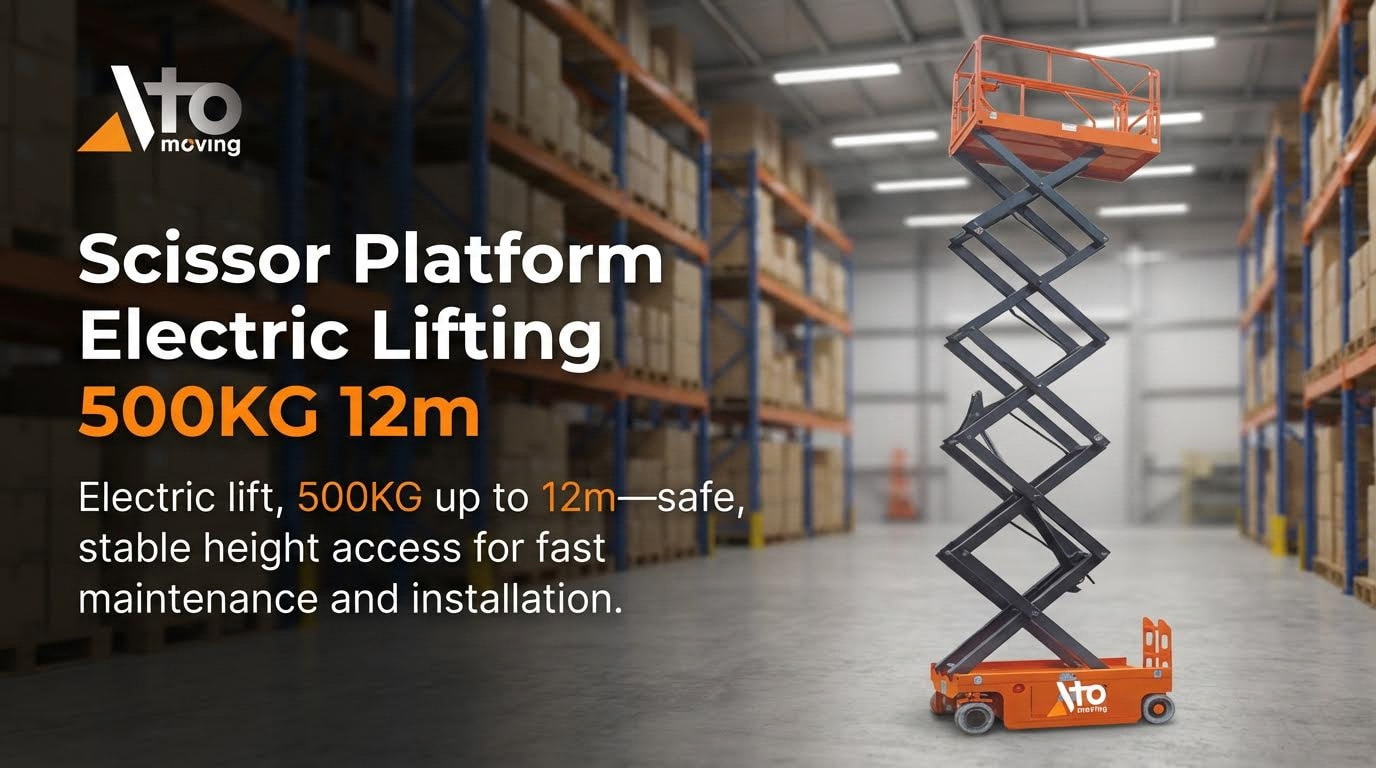
The short legal answer to “can you exit a scissor lift at height” is: only in tightly controlled situations, with compliant fall protection, and usually as an exception to normal practice—not standard procedure.
Scissor lifts are treated as mobile supported scaffolds, so any transfer at height must comply with OSHA scaffold rules, fall‑protection rules, and the lift manufacturer’s limits. In most day‑to‑day work, you should plan to enter and exit only when the platform is fully lowered, and treat elevated exits as a special, risk‑assessed operation.
OSHA and ANSI rules that govern exiting at height
OSHA allows exiting a scissor platform at height only when scaffold and fall‑protection rules are met, and ANSI design standards for the machine are respected.
OSHA classifies scissor lifts as “mobile supported scaffold work platforms” and applies scaffold standards such as 29 CFR 1926.451, 1926.452(w), and related training and fall‑protection provisions. OSHA’s scissor lift guidance confirms they must have guardrails and comply with scaffold rules rather than aerial‑lift rules.
- Scaffold classification: Scissor lifts are mobile supported scaffolds – this brings in 1926.451 general scaffold requirements.
- Mobile scaffold rules: 1926.452(w) governs use and movement of mobile scaffolds – relevant when the platform is elevated and workers transfer to fixed structures.
- Fall protection duty: For construction, 29 CFR 1926.451(g) and 1926.502(d) apply to guardrails and personal fall arrest systems when moving between the lift and another surface. OSHA interpretation letters make clear that fall protection must cover the entire transfer path.
- General industry rules: In non‑construction settings, employers must meet 29 CFR 1910.27, 1910.28(b)(12), and 1910.29(b) for scaffolds and fall protection. These sections require either compliant guardrails or personal fall‑arrest systems wherever workers are exposed to falls.
- ANSI design standards: ANSI A92.3-2006 and A92.6-2006 set how scissor lifts are designed, including guardrails, anchors, and stability. These standards influence whether the platform and anchor points are suitable for tying off during a transfer.
OSHA also states that guardrails must be in place, and workers must stand only on the platform and avoid leaning away from the lift during normal use. Their fall‑protection guidance underlines that if a worker exits above 1.8 m (6 ft), a compliant fall‑protection system must protect the entire movement between the lift and the working surface.
💡 Field Engineer’s Note: Before planning any elevated exit, check the lift’s manual for explicit instructions on tying off and transferring at height; many models are not rated for arrested‑fall loads at the guardrail or mid‑rail, which changes what is legally and physically safe.
Key standards that affect exiting at height
For construction work, expect 1926.451, 1926.452(w), 1926.454, and 1926.502(d) to apply. For general industry, focus on 1910.27, 1910.28(b)(12), and 1910.29(b). ANSI A92.3 and A92.6 set the design envelope that the manufacturer’s manual reflects.
When exiting at height is prohibited vs. permitted
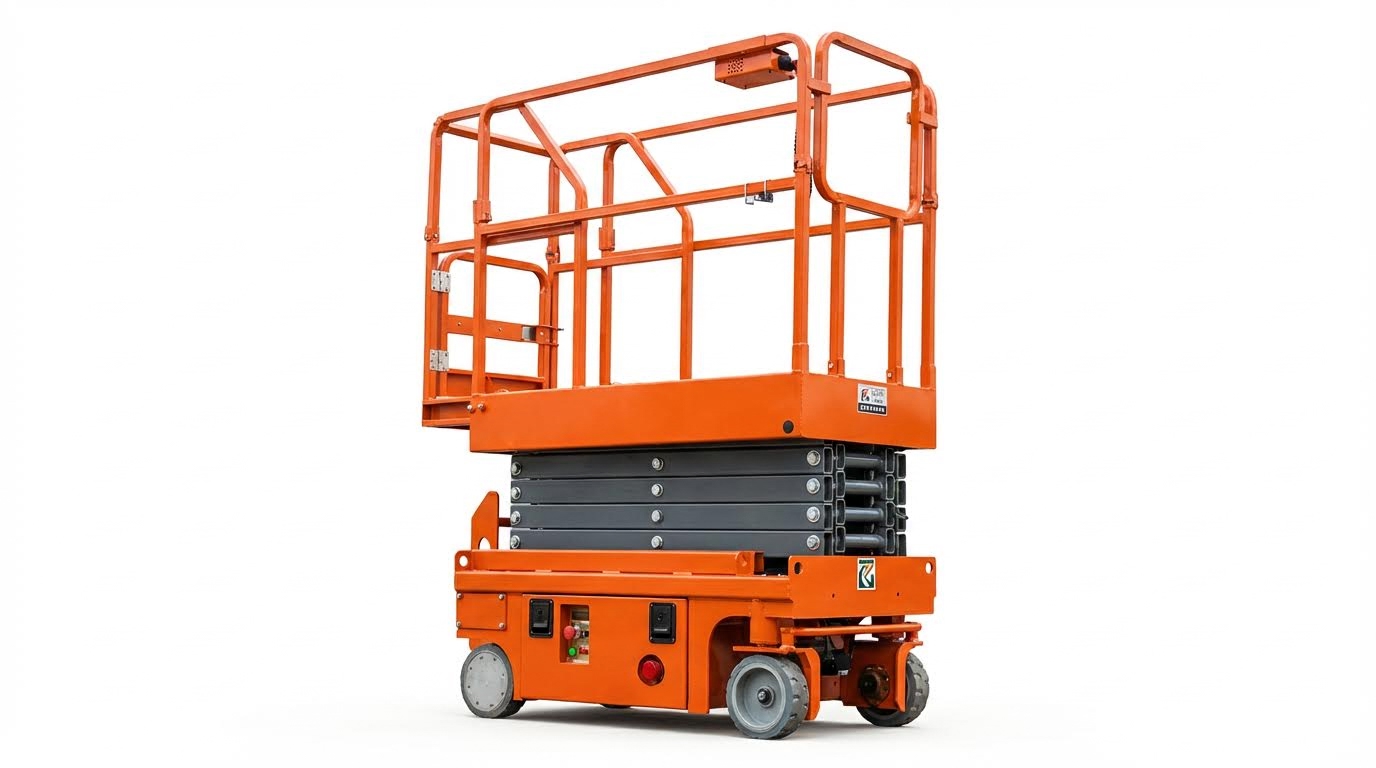
Exiting a aerial platform at height is normally prohibited in routine work, and only permitted when it is clearly planned, justified, and fully protected by engineering controls and fall‑protection systems.
Most practical guidance says to enter and exit only when the platform is fully lowered. One industry guide states that workers should “enter and exit the platform only when it is fully lowered” and to “never attempt to exit an elevated platform except in emergencies with proper fall protection equipment.” This reflects best practice under OSHA rules.
| Scenario | Status (Typical) | Key Conditions / Rules | Operational Impact |
|---|---|---|---|
| Routine work: accessing a roof, mezzanine, or floor | Prohibited to exit at height | Use lift only as a work platform. Enter/exit when fully lowered per safe‑use guidance. Guidance discourages elevated exits except emergencies. | Plan permanent access (stairs, ladders) instead of transfers from the lift. |
| Emergency evacuation (fire, structural risk, power failure) | Conditionally permitted | Exit may be necessary if lowering is impossible. Must use available fall protection and maintain three points of contact where feasible. | Treat as last resort. Debrief and revise procedures after any such event. |
| Planned transfer to a fixed structure with full fall‑arrest | Conditionally permitted | Requires guardrails in place, compliant fall‑arrest system per 1926.502(d), and design‑rated anchor points. OSHA letters allow tie‑off to the lift if it is designed for those loads. | Use only after a task‑specific risk assessment and written method statement. |
| Exiting while lift is on soft, sloped, or debris‑covered ground | Prohibited | OSHA requires firm, level surfaces free of drop‑offs, holes, or debris. Unstable ground makes any elevated exit unsafe. | Reposition the lift or improve the ground before work; do not transfer at height. |
| Exiting at height while lift is being moved | Strictly prohibited | Scissor lifts must not be moved while elevated except where the manufacturer explicitly allows it, and even then, transfers at height are not part of normal operation. OSHA guidance stresses stability during movement. | Always lower fully before driving; never step off or on a moving elevated platform. |
| Exiting near overhead power lines or structures | Effectively prohibited | Must maintain at least 3.0 m (10 ft) from power lines up to 50 kV. OSHA and other guidance require strict clearance; adding a transfer movement increases electrocution and crushing risk. | Re‑plan the job with de‑energised lines or alternative access equipment. |
From a compliance and engineering standpoint, the default safe answer to “can you exit a scissor lift at height” is “no, not in normal operations.” Transfers at height become justifiable only when:
- Lowering is impossible or creates greater risk: For example, an emergency where the lower level is compromised – the elevated exit is the lesser of two dangers.
- A task‑specific method statement exists: The work plan describes anchor points, lanyard types, step sequence, and communication – this shows the exit is controlled, not improvised.
- The lift and anchor are designed for tie‑off: The manufacturer states that the structure can withstand the vertical and lateral loads of a fall arrest – this avoids overloading the guardrail or chassis.
- All other OSHA requirements are met: Stable ground, no movement while elevated, wind within limits, and workers properly trained and equipped. OSHA’s guidance stresses training, inspection, and environmental control as foundations for any elevated work.
Why most sites simply ban elevated exits
Even when technically possible, elevated exits combine multiple high‑risk elements: working at height, edge transitions, potential for platform sway, and human error. Many employers therefore adopt a simple rule: no stepping off or onto an elevated scissor lift, except under a written, management‑approved rescue or special‑access plan.
Engineering And Safety Controls For Exiting At Height
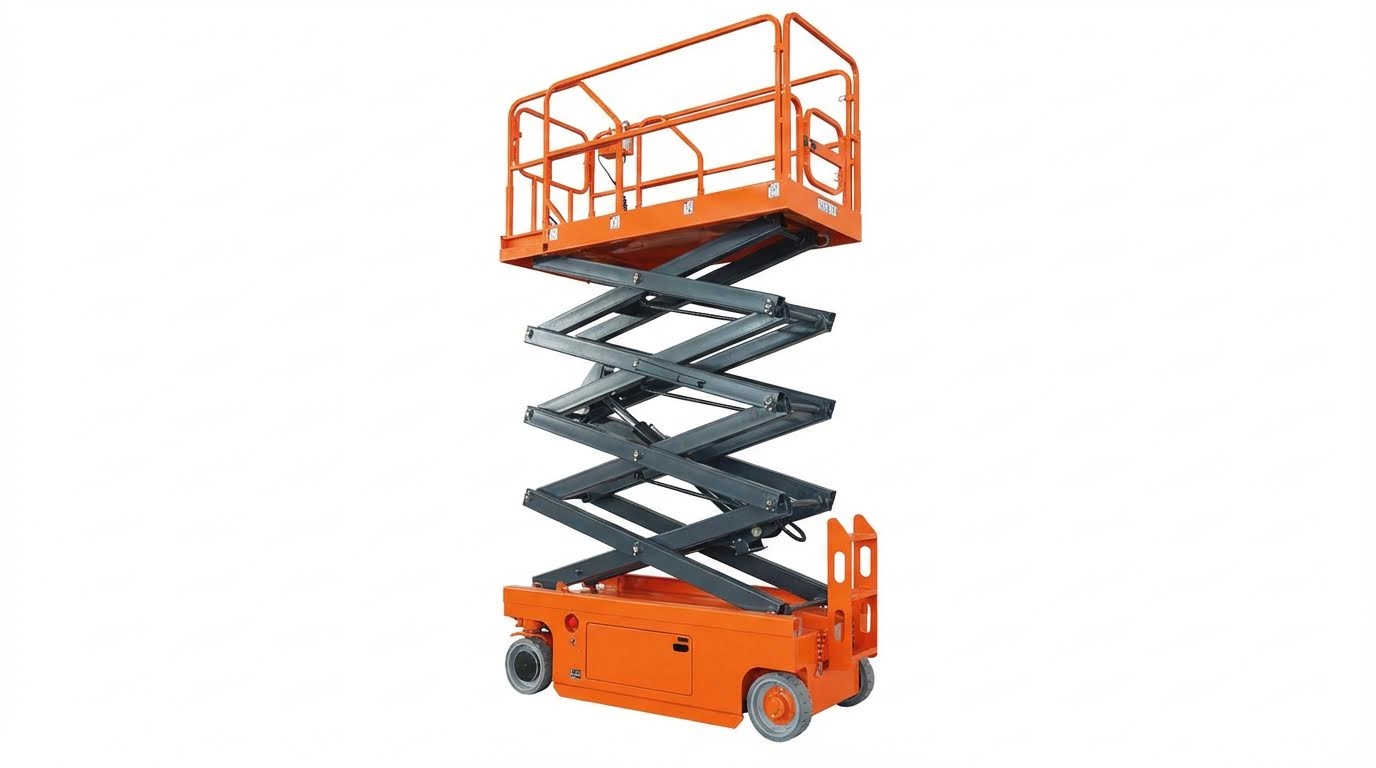
Engineering controls determine when the answer to “can you exit a scissor platform at height” changes from flat “no” to a tightly controlled “yes, under strict conditions.” This section links platform design, fall protection, and stability limits into one practical decision framework.
Platform, guardrail, and anchor point design limits
Platform geometry, guardrail strength, and anchor point design set the hard engineering limits on whether you can exit a scissor platform lift at height without creating an uncontrolled fall risk.
- Platform classification: Scissor lifts are treated as mobile supported scaffolds – their platforms and guardrails must meet scaffold rules, not boom-lift rules. Regulatory overview
- Guardrail requirement: Full guardrails are mandatory on the platform – exiting at height is never allowed by simply stepping over a missing or lowered rail. Guardrail rules
- Entry gate integrity: The gate must latch and be equivalent in height and strength to the guardrail – using a half-height or unsecured gate as a “doorway” at height is unsafe. Entry/exit guidance
- Anchor point design: You may only tie off to the lift where the manufacturer provides an anchor designed for fall arrest or restraint – random rail tie-off can overload the structure during a fall. Tie-off interpretation
- Load path and rail strength: Guardrails are primarily designed as fall prevention, not as primary arrest points – they must not be used as improvised anchor beams unless rated and marked.
- Platform size and step geometry: Safe transfer needs enough clear floor area (typically ≥600–700 mm from rail to obstruction) – tight platforms force twisting moves that increase trip and swing-fall risk.
| Design Element | Typical Engineering Role | Impact on Exiting at Height | Operational Impact |
|---|---|---|---|
| Platform guardrails | Primary fall prevention per scaffold rules | Must remain in place; cannot be removed just to step off | Plan exits only where guardrails can stay closed or be briefly opened under control |
| Entry gate | Controlled access point | Only safe “doorway” for any planned transfer | Position lift so gate aligns within 100–200 mm of landing surface |
| Built-in anchor point | Fall restraint/arrest connection | Required if workers tie off to the lift during transfer | Verify rating and lanyard type before allowing exit at height |
| Platform load rating | Limits total mass on deck | Extra worker + PPE + tools for transfer must remain within rating | Account for 80–120 kg per person plus 10–20 kg gear when planning |
Why most manuals say “enter/exit only when fully lowered”
Manufacturer instructions commonly require workers to enter and exit only when the platform is fully lowered, and to “never attempt to exit an elevated platform except in emergencies with proper fall protection equipment.” This conservative baseline means any planned exit at height must be treated as a special engineered method, not routine access. Manufacturer-style guidance
💡 Field Engineer’s Note: Before asking “can you exit a aerial platform at height,” check the data plate and manual for any mention of transfer-at-height procedures or anchor ratings. If the documentation is silent, assume the design does not support routine exits and require an engineered alternative like fixed scaffolding or a different access system.
Fall protection configurations for transfer at height
The only defensible “yes” to can you exit a scissor platform lift at height is when a continuous, standards-compliant fall protection system covers both the lift and the landing surface during the entire transfer.
- Baseline rule: Above 1.8 m, workers moving between the lift and a structure must be protected by guardrails or a personal fall arrest system that meets 29 CFR 1926.502(d) – no unprotected gap is allowed. Fall protection requirement
- Scissor lift as anchor: Workers may tie off to the lift only if it is designed to withstand the vertical and lateral loads from movement or an arrested fall – this must be confirmed in the manual or by the manufacturer. Tie-off criteria
- Receiving structure anchorage: The landing area (roof, deck, platform) must have its own certified anchor or guardrail system – tying only to the lift leaves the worker unprotected once they step off.
- Continuous connection: Use double-leg lanyards or a combination of restraint and arrest so that at least one leg is always connected – this avoids a “no-hook” moment mid-step.
- Restraint vs arrest: Where possible, configure fall restraint that physically prevents reaching an edge, rather than relying on fall arrest – restraint reduces swing falls and clearance needs.
- Clearance and swing-fall: Check that there is enough vertical clearance under the landing and that any potential fall path is free of obstructions – on low roofs or mezzanines, arrest systems can bottom out on the ground or lower levels.
| Configuration | Description | Suitable for Exiting at Height? | Best For… |
|---|---|---|---|
| Guardrails only on lift | Standard scissor lift rails, no harness | No | Working from the platform without transfer |
| Harness tied to lift anchor only | Fall arrest/ restraint connected to rated lift anchor | Partially | Short reach onto structure where worker remains mostly on platform |
| Harness with double-leg lanyard | One leg on lift anchor, one on structure anchor | Yes, if both anchors are rated and geometry works | Planned transfers between lift and fixed platform |
| Full guardrails on receiving platform | Fixed guardrails around landing area | Yes, with controlled gate alignment | Regular access to mezzanines, roofs, or stages |
Key standards that influence transfer-at-height setups
Scissor lifts fall under scaffold rules such as 29 CFR 1926.451 and 1926.452(w), along with fall protection provisions like 1926.451(g) and 29 CFR 1910.29(b) for guardrails. Additional duties to provide fall protection and training appear in 1910.28 and 1926.454. Together, these standards push employers to engineer transfers so that workers are never exposed to unprotected edges. Standards overview
💡 Field Engineer’s Note: On many jobs, the limiting factor is not the harness or the lanyard; it is the lack of a proper anchor on the structure you want to step onto. If you cannot provide a certified anchor or fully compliant guardrail at the landing, the safest and most compliant answer to “can you exit a aerial platform at height” is still “no.”
Stability, wind, and load factors during exit
Even with perfect fall protection, you cannot safely exit a scissor platform at height if stability, wind, and load conditions push the machine outside its engineered envelope.
- Firm, level support: Scissor lifts must sit on firm, level surfaces free of drop-offs, holes, or debris – any tilt or soft ground increases tipping risk when a worker steps toward the edge. Surface requirements
- No movement while elevated: Lifts must not be moved while elevated unless the manufacturer explicitly allows it – never attempt to “creep” the lift into position with a worker half on, half off the platform. Movement restrictions
- Wind limits: Outdoor-rated scissor lifts should not operate in winds above about 12.5 m/s (28 mph) – gusts at height can amplify side loading right when a worker shifts weight during exit. Wind restrictions
- Load rating compliance: Platform weight, including workers, tools, and materials, must stay within the manufacturer’s capacity – adding an extra person to “help” during transfer can quietly push the system over its limit. Load capacity guidance
- Dynamic effects of stepping off: When a 90 kg worker steps from the platform to a structure, the center of gravity of the lift–worker system shifts – if the platform is already at its outreach or load limit, this can be the final push toward instability.
- Nearby hazards: Crushing and electrical hazards near fixed objects and power lines remain critical during exit – a worker leaning out to reach a landing can be trapped between the rail and a beam or energized conductor. Positioning hazards
| Factor | Typical Safe Condition | Risk if Ignored During Exit | Operational Impact |
|---|---|---|---|
| Ground condition | Firm, level, no voids or soft spots | Platform lean, sudden settlement, tip-over | Inspect within ~1–2 m around all wheels before planning exit |
| Wind speed | Below 12.5 m/s (28 mph) for outdoor lifts | Oscillation, loss of balance, increased side load | Use anemometer on exposed sites; postpone transfer in gusty weather |
| Platform load | Within rated capacity (typically 225–680 kg) | Structural overload, reduced stability margin | Account for workers, tools, and any materials staged for the transfer |
| Lift movement | Lift stationary, brakes set, no travel at height | Unexpected motion during step, leading to falls or crush injuries | Lock out drive controls during transfer if possible |
Why stability rules matter more during transfer than normal work
During normal work, workers stand with feet flat on the platform and their center of mass stays within the guardrail envelope. During exit, they shift weight to one side, step onto another surface, and may temporarily hold onto external structures. These motions add side loads and dynamic effects that the stability calculations for routine vertical work may not fully cover, especially in wind or near maximum platform height.
💡 Field Engineer’s Note: When planning any transfer at height, treat the scissor lift like a crane: verify ground bearing, wind, and load charts before you even discuss harness setups. If you would not be comfortable lifting that combined mass at that outreach with a crane, you should not be asking a worker to step off the platform there either.
Safe Work Procedures And Risk Assessment In Practice
This section explains how to turn the question “can you exit a scissor lift at height” into a controlled, documented procedure with clear risk assessment, supervision, and operator training requirements.
Step‑by‑step method statement for planned exits
A planned exit at height from a scissor lift must follow a strict, written method statement that controls fall, stability, electrical, and crushing risks at every step.
- Step 1: Confirm that exiting at height is actually necessary: Challenge the task – Most jobs can be done from the guarded platform, removing transfer risk entirely.
- Step 2: Verify manufacturer and site authorization: Check the manual and site rules – If either prohibits exiting at height, the answer to “can you exit a scissor lift at height” is no for that task.
- Step 3: Define transfer point and receiving surface: Measure the gap and level difference – Controls trip risk and over‑reaching when stepping off the platform.
- Step 4: Complete a task‑specific risk assessment: Identify fall, crush, electrical, and wind hazards – Aligns with OSHA’s duty to assess worksite hazards before using scissor lifts. OSHA scissor lift guidance
- Step 5: Specify fall protection configuration: Decide guardrail use, harness, and anchor points – Ensures continuous protection during the move between platform and structure. OSHA fall protection interpretation
- Step 6: Check platform load and equipment: Add up body weight, tools, and PPE – Stays within the manufacturer’s rated platform capacity to avoid instability or structural overload. Typical load capacity guidance
- Step 7: Verify ground, gradient, and wind limits: Confirm firm, level support and acceptable wind speed – Prevents tip‑over while the platform is elevated for the transfer. OSHA stability guidance
- Step 8: Isolate the work area: Barricade below and around the lift – Controls struck‑by and falling‑object risk while the operator moves at height. Positioning hazard controls
- Step 9: Pre‑use inspection and function test: Inspect structure, platform, guardrails, and controls – Ensures that all engineered safeguards are intact before committing to a transfer. Pre‑operation inspection steps
- Step 10: Brief the team and assign roles: Name the operator, spotter, and supervisor – Everyone knows when the transfer happens and what to watch for.
- Step 11: Position the lift for transfer: Approach slowly, stop short of crush points, and fine‑adjust – Reduces collision and overhead impact risk near structures or ceilings. OSHA positioning guidance
- Step 12: Lock out movement: Apply brakes and controls discipline – No driving or repositioning while the worker is mid‑transfer. Restriction on moving while elevated
- Step 13: Execute the transfer: Maintain three points of contact and face the structure – Minimizes slip and mis‑step risk over the gap.
- Step 14: Confirm safe position and communication: Get a verbal “on” or “clear” from the worker – Prevents premature lowering or movement of the lift.
- Step 15: Reverse transfer or rescue planning: Document how the worker will return or be rescued – Ensures there is a controlled way back down if the lift fails.
💡 Field Engineer’s Note: For any planned exit at height, I treat the scissor lift like a temporary scaffold bay: if I cannot provide a guarded, near‑flush landing with controlled access and a documented rescue plan, I do not permit the transfer.
Key checks before allowing a planned exit
Before you answer “yes” to can you exit a scissor lift at height for a specific job, confirm: the manufacturer does not forbid it, the risk assessment is task‑specific, fall protection is continuous, the gap is minimized, and the platform is stable on firm, level ground with wind inside limits.
Site planning, supervision, and operator training needs
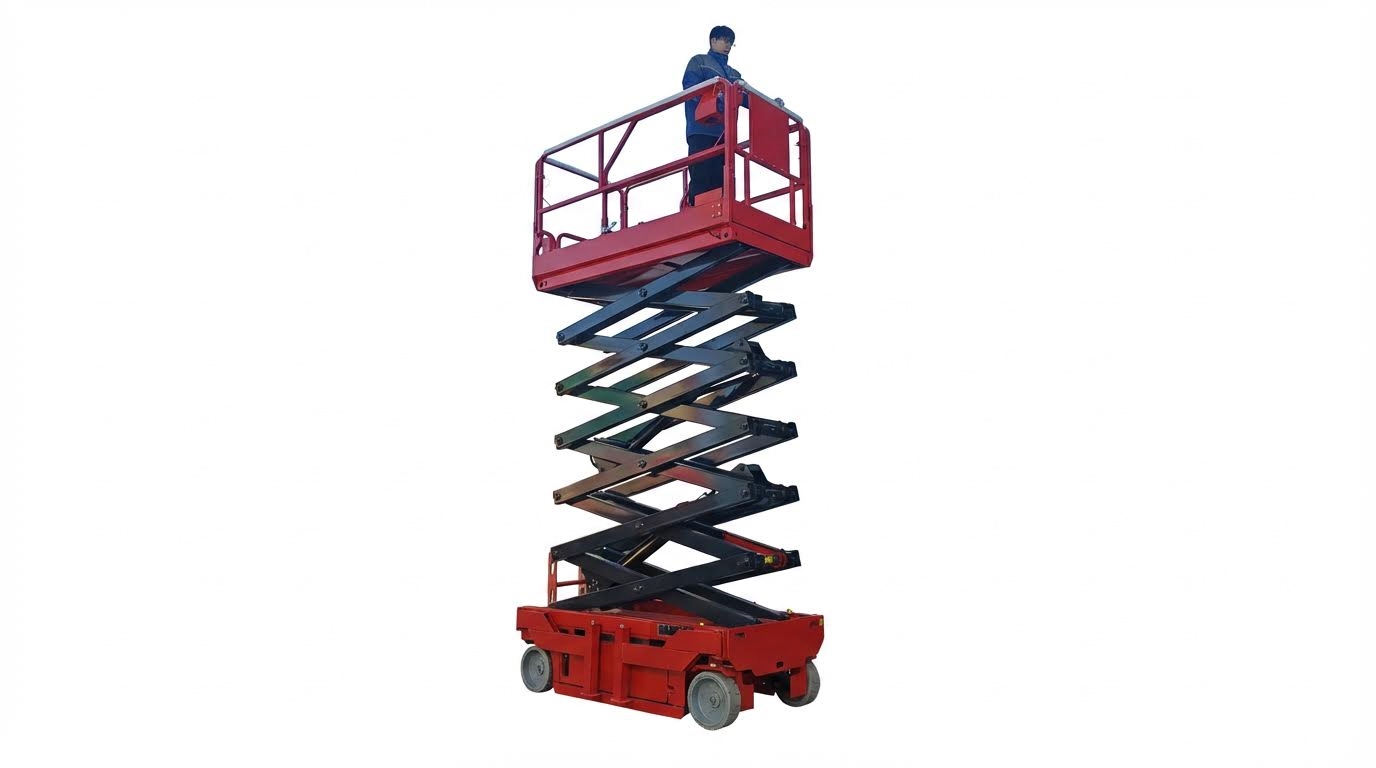
Safe exits at height depend on front‑loaded planning, competent supervision, and operators trained beyond basic driving to understand fall protection, positioning hazards, and emergency procedures.
- Site planning: define where, when, and why: Map every location where transfer is contemplated – Allows you to engineer anchor points, guardrails, and access in advance instead of improvising at height.
- Site planning: ground and access routes: Specify firm, level travel paths and set up exclusion zones – Aligns with OSHA advice to use scissor lifts only on stable, hazard‑free surfaces. Ground and stability guidance
- Site planning: environmental limits: Establish maximum wind speeds and weather conditions – Prevents transfers when gusts could destabilize an elevated platform. Outdoor wind limits
- Supervision: competent person oversight: Assign a supervisor familiar with OSHA 1926.451 and 1926.452(w) – Ensures scissor lift use and any exit at height comply with scaffold and mobile scaffold rules. Applicable OSHA standards
- Supervision: permit or authorization system: Use a written permit for any planned exit at height – Forces review of risk assessment, method statement, and rescue plan before work starts.
- Supervision: real‑time monitoring: Require the supervisor or spotter to be present during the transfer – Allows immediate stop if conditions change or unsafe behavior appears.
- Operator training: regulatory content: Train operators to OSHA 1926.454 or 1910.29(b) requirements for scaffolds and fall protection – Covers hazard recognition, safe use, and limitations. Training requirements
- Operator training: entering and exiting rules: Emphasize that normal entry/exit happens only when fully lowered – Reinforces that exiting at height is an exception requiring special controls. Standard entering/exiting practice
- Operator training: positioning and electrical hazards: Teach safe distances from fixed objects and power lines – Reduces crush and electrocution risk while maneuvering near the transfer point. Electrical and positioning hazards
- Operator training: emergency procedures: Drill emergency lowering, platform entrapment, and rescue from an alternate access – Ensures the team can respond if a transfer at height goes wrong.
- Operator training: PPE and fall protection: Cover harness use, anchor selection, and lanyard management – Supports compliant use of personal fall arrest if required by the risk assessment. Working at heights PPE guidance
Minimum training topics before allowing exits at height
At a minimum, operators who may exit at height should receive training on: scissor lift classification and limits, OSHA and ANSI rules, standard “no exit while elevated” policy and exceptions, fall protection systems, electrical and crushing hazards, wind and weather limits, pre‑use inspection, and emergency response.
💡 Field Engineer’s Note: When I audit sites that allow transfers at height, the biggest gap is usually training depth: operators know how to drive the lift, but not how scaffold rules, electrical clearances, and fall arrest dynamics change the risk the moment they step off the platform.
Final Thoughts On Exiting Scissor Lifts At Height
Exiting a scissor lift at height sits at the intersection of strict regulation and hard engineering limits. OSHA scaffold rules, ANSI design standards, and the manufacturer’s manual work together to define a narrow window where transfer is even possible. Platform geometry, guardrail strength, anchor ratings, and stability under load all decide if the structure can safely carry fall‑arrest forces and shifting weight during a step off.
Fall protection must close every gap in that movement. That means continuous connection, rated anchors on both the lift and the landing, and guarded receiving platforms wherever you can provide them. At the same time, ground bearing, wind, and platform load must stay well inside the design envelope, because transfer amplifies side loads and tipping forces.
For most sites, the best answer is clear. Treat elevated exits as abnormal work, allowed only under a written method statement, permit, and competent supervision. Plan permanent access where possible and use the scissor lift as a work platform, not a ladder replacement. When a transfer at height is truly necessary, design it like any other engineered system: verify every assumption, document each control, train your people, and be ready to say “stop” if one condition changes. This is how Atomoving and responsible operators keep high‑risk access within a safe, predictable envelope.
Frequently Asked Questions
Can you exit a scissor lift at height?
No, you should not exit a scissor lift while elevated unless a detailed risk assessment confirms it is the safest option. This assessment must consider the availability of other access equipment and the practicality of using them IPAF Safety Guidelines. Exiting a scissor lift at height increases the risk of falls and other hazards.
What safety measures are required if exiting a scissor lift at height is necessary?
If exiting a scissor lift at height is unavoidable, proper fall protection such as guardrails or a fall arrest system must be used. The components of the fall arrest system must comply with safety standards like §1926.502(d) OSHA Safety Standards.
What are the OSHA rules for operating scissor lifts safely?
OSHA requires that scissor lifts have guardrails installed to prevent falls. Workers should be trained to check that the guardrail system is in place before using the lift and to never stand on the guardrails. Additionally, ideal conditions for elevated travel include clear driving surfaces free from obstacles OSHA Scissor Lift Safety.