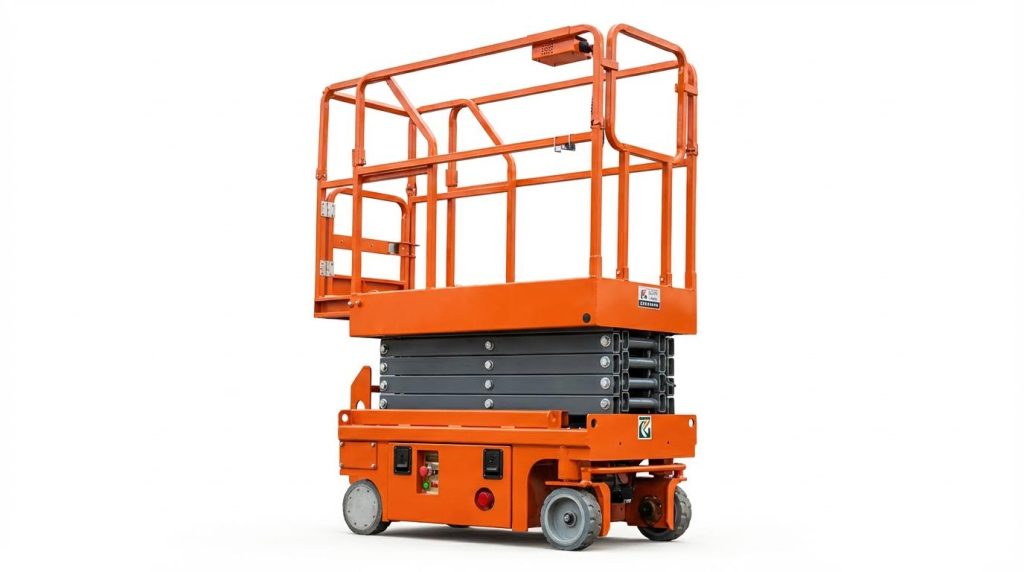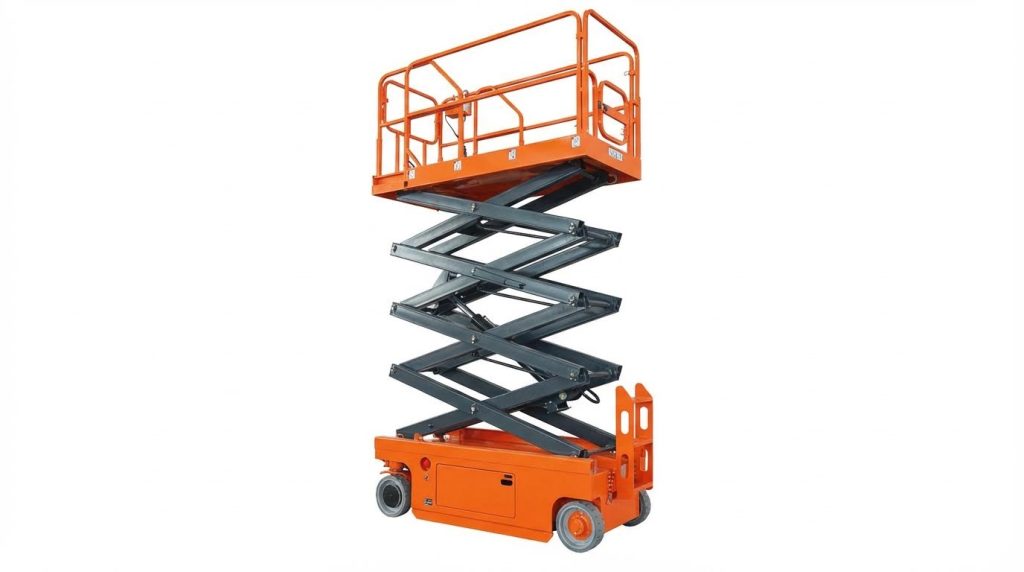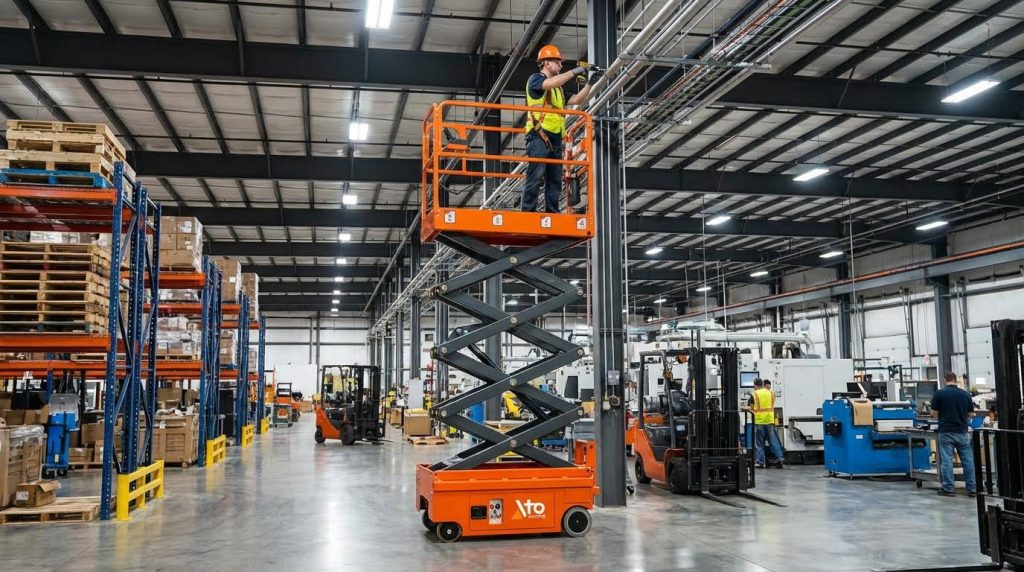
A 19-foot electric scissor lift typically weighs 1,180–1,477 kg, and that single fact drives your floor loading, transport, and safety planning. This guide translates raw specs into clear answers on how much a 19 foot scissor lift weighs, what it does to your slab, and what you need to move it safely. You will see the key dimensions, wheel loads, and trailer implications in simple tables, with practical engineering notes for real job sites. Use this as a planning checklist before you sign a rental, move a machine, or roll onto a mezzanine.
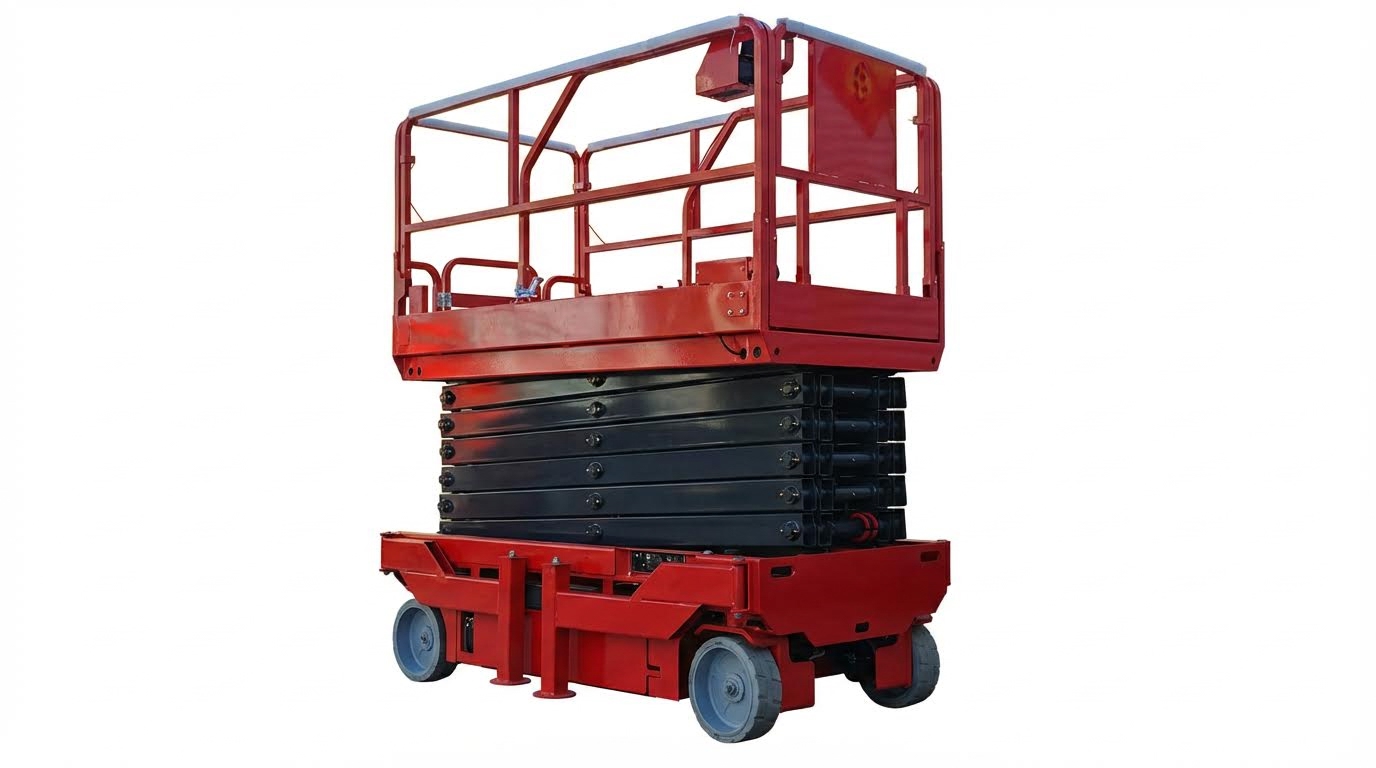
Key Specs Of 19-Foot Electric Scissor Lifts
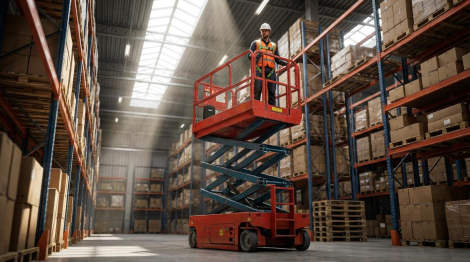
Key specs of 19-foot electric scissor lifts center on weight, footprint, and platform capacity so you can match the machine to floor loads, doorways, and working height needs. This section translates brochure numbers into real-world jobsite implications.
Typical machine weight and dimensions
For anyone asking how much does a 19 foot scissor lift weigh, most 19-foot electric units weigh about 1,180 kg to 1,477 kg, with a very compact chassis that still fits through standard doors. That weight drives your floor loading, trailer choice, and ramp design.
| Spec | Typical Range / Value | Metric | Operational Impact |
|---|---|---|---|
| Typical machine weight | 2,600–3,255 lbs | 1,180–1,477 kg | Determines trailer rating and slab / mezzanine point loads |
| Overall width | 30–32 in | 0.76–0.81 m | Passes through standard 910 mm (36 in) doorways per typical specs |
| Overall length | 72–74 in | 1.83–1.88 m | Sets turning radius in corridors and trailer deck space |
| Stowed height (rails folded) | 65–79.6 in | 1.65–2.02 m | Clears low door headers and fits inside standard box trucks |
| Platform size | 30 × 72 in | 0.76 × 1.83 m | Comfortable for two people plus tools as commonly specified |
| Deck extension travel | 36 in | 0.91 m | Reaches over obstacles without repositioning the base |
- Weight range: 1,180–1,477 kg – Use this to check slab design loads and pick the right trailer axle rating.
- Narrow width: 0.76–0.81 m – Lets you work in office corridors and through internal doors without demolition.
- Short length: 1.83–1.88 m – Improves maneuvering in 2.0–2.5 m wide aisles and on small platforms.
- Low stowed height: 1.65–2.02 m – Reduces collision risk with overhead ducts and beams when traveling.
- Deck extension: 0.91 m travel – Cuts the number of lift relocations when working along walls or facades.
💡 Field Engineer’s Note: When checking how much does a 19 foot scissor lift weigh for an elevated slab, do not just divide total weight by four wheels. Wheel contact patches are small, so point loads can exceed 20–30 kN at each tire even on a “light” 1,300 kg machine.
How to quickly estimate trailer needs from lift weight
Take the upper-end typical weight of 1,500 kg for safety. Add 10–15% for tools and accessories, giving about 1,650–1,725 kg. Your trailer’s rated payload must exceed this, and the combined tow vehicle and trailer gross weight must stay under your local licensing limits.
Platform height, reach, and capacity
Platform height, reach, and capacity define what work a 19-foot scissor lift can safely do and how many people and materials you can lift in one trip. These numbers also drive fall protection planning and task sequencing.
| Spec | Typical Value / Range | Metric | Operational Impact |
|---|---|---|---|
| Maximum platform height | 19 ft | 5.79 m | Top of floor; sets maximum ceiling height you can work on comfortably per typical spec |
| Maximum working height | 25 ft | 7.79 m | Approximate reach including operator standing height |
| Main platform capacity | 500–550 lbs | 227–250 kg | Usually supports two workers plus tools and light materials |
| Extension deck capacity | 250 lbs | 113 kg | Limits how much load you can push out on the extension |
| Gradeability (stowed) | 20–25% | ~11–14° | Controls maximum safe ramp and driveway slopes while traveling |
| Drive speed (stowed) | 3.0 mph | 4.8 km/h | Affects how quickly you can reposition across large sites |
| Power source | 24–48 V DC battery | Electric | Quiet, zero on-site emissions; ideal for indoor work |
- Platform height 5.79 m: – Comfortable for 4.5–5.5 m ceiling work like lights, ducting, and sprinklers.
- Working height 7.79 m: – Used for selecting between 19 ft and taller 26–32 ft classes.
- Capacity 227–250 kg: – Plan for two people plus about 60–80 kg of tools and materials.
- Extension capacity 113 kg: – Keep heavy items inboard; only lighter tools or small fixtures go on the slide-out deck.
- Gradeability 20–25%: – Ramps steeper than about 1:4.5 are typically unsafe for self-driving in stowed mode.
These platform and capacity numbers come from commonly published 19 ft electric scissor lift data summarized here, and they are broadly similar across major manufacturers.
💡 Field Engineer’s Note: Treat the extension deck capacity as a hard limit, not a suggestion. Overloading the 113 kg extension can twist the scissor pack, increase tipping risk at full height, and overload floor slabs under the front wheels.
Quick way to choose the right height class
Measure the highest work point (ceiling, duct, or cable tray) from finished floor. Add 1.5–2.0 m for worker reach. If that result is under 7.8 m, a 19 ft (5.79 m platform) lift is usually enough. If it is higher, move to the next height class instead of stretching tasks or misusing ladders.
Floor Loading, Batteries, And Structural Impacts
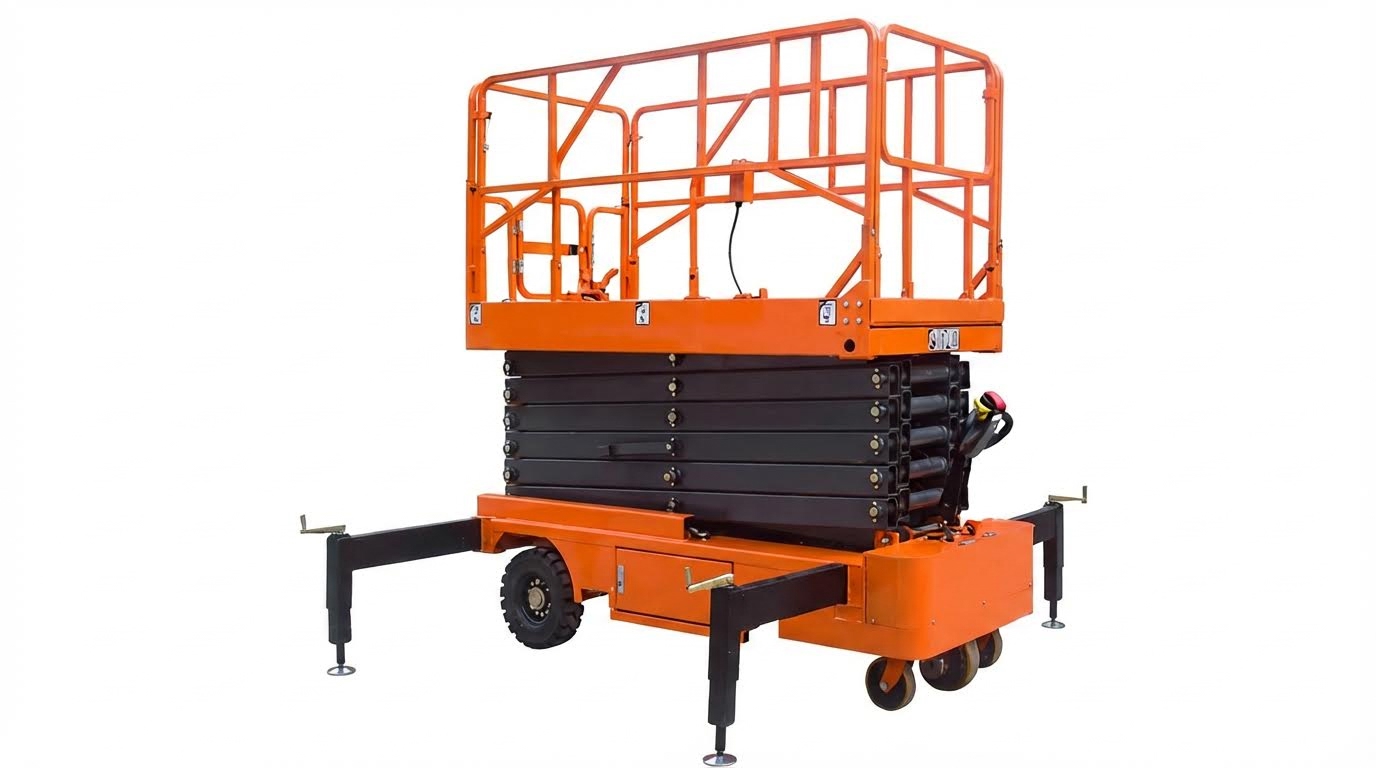
Floor loading, tire contact, and battery choice determine whether a 19-foot scissor platform works safely on your slab, mezzanine, or roof, and how much it really costs to run over its life.
When people ask how much does a 19 foot scissor lift weigh, they usually want to know if their floor, structure, or trailer can safely carry it. A typical 19-foot electric scissor lift weighs about 1,180 to 1,477 kg (2,600 to 3,255 lbs), and that full mass ends up on four small wheel patches, so point loads and battery mass matter as much as total weight. Typical 19-foot scissor lift specs show why engineers must check wheel loads, not just overall machine weight.
Point loads on slabs, mezzanines, and roofs
Point loads from a 19-foot scissor platform lift concentrate several hundred kilograms on each wheel, which can overstress thin slabs, mezzanines, or roof decks if you do not verify capacity.
The machine’s curb weight of roughly 1,180 to 1,477 kg typically splits across four wheels, but each wheel contacts only a small patch of concrete or steel deck. On-grade slabs usually tolerate this, but light mezzanines or roofs often do not without checks. Where the structure is marginal, you must either spread the load with mats or move to a different access method.
| Parameter | Typical Value / Range | What It Means Structurally |
|---|---|---|
| Typical 19 ft lift weight | 1,180–1,477 kg (2,600–3,255 lbs) Weight range data | Determines total gravity load on slab, mezzanine, or roof. |
| Number of wheels | 4 (typical for electric slab scissors) | Weight splits into 4 point loads, not a uniform area load. |
| Typical wheel spacing | Length ≈ 1.83–1.88 m; width ≈ 0.76–0.81 m Chassis dimensions | Concentrates load into a small footprint; critical for beam and deck design. |
| Platform capacity | 227–250 kg (500–550 lbs) payload Platform rating | Adds to machine weight; worst case is full platform plus machine. |
| Use on elevated floors/roofs | Requires point-load evaluation Floor loading note | Engineer must verify wheel reactions vs slab and beam capacity. |
- Check total load: Machine weight + operators + tools – This is the real load your structure sees, not just the published curb weight.
- Convert to kN or kg/m²: Compare to design live load – Prevents overstressing light mezzanines or roof decks.
- Assess wheel positions vs beams: Avoid wheel lines over weak deck bays – Reduces risk of local deck punching or excessive deflection.
- Use load-spreading mats where needed: Timber or steel plates under wheels – Turns point loads into lower-intensity area loads the slab can handle.
- Limit simultaneous lifts: One lift per bay on light structures – Controls cumulative load on beams and joists.
How structural engineers typically check a 19 ft lift on a mezzanine
Engineers usually model the lift as four point loads at wheel locations, using the worst-case total mass (machine + full platform load). They compare resulting bending moments, shear, and deflection in the supporting beams and deck against design limits. If margins are low, they may require temporary shoring or load-spreading mats.
💡 Field Engineer’s Note: On light mezzanines and roofs, I always assume the lift weight plus a full 250 kg platform load, then add at least 10–15% for dynamic effects from starting, stopping, or small bumps. If that worst case is close to the structure’s limit, I either move the work to a stiffer bay or specify mats under each wheel to drop contact pressure.
Tire types, wheel contact area, and floor protection
Tire type and wheel contact area control how that 1,200–1,500 kg mass interacts with your floor, affecting both structural stress and surface damage.
Most 19-foot electric scissor lifts use solid, non-marking tires to protect indoor floors, but the actual contact patch is still small. Efficient AC drive systems with independent wheel motors can also reduce tire scrub and floor wear on sensitive surfaces. High-efficiency drive systems help limit damage, but they do not change the underlying point load physics.
| Tire / Wheel Factor | Typical Characteristic | Operational Impact On Floors |
|---|---|---|
| Tire construction | Solid, non-marking rubber (typical for indoor 19 ft units) | Protects against black marks; does not significantly increase contact area. |
| Contact area per wheel | Small patch under each tire (exact size model-dependent) | Creates high local pressure; critical for tile, epoxy, or light deck systems. |
| Drive system | Efficient AC motors with independent wheel control Drive system description | Reduces tire scrub in turns and helps prevent surface scuffing. |
| Floor type | Concrete, epoxy, tile, steel deck with thin topping | Hard, brittle surfaces are more prone to cracking or chipping under point loads. |
| Outdoor use | Firm, level concrete or asphalt only Outdoor use guidance | Unsuitable for soft or uneven ground; risk of sinking or tipping. |
- Match tire to floor finish: Use non-marking tires on polished or coated floors – Prevents cosmetic damage and customer complaints.
- Avoid sharp turns at full load: Turn slowly when platform is raised – Reduces lateral shear on brittle toppings and tiles.
- Check expansion joints and trench covers: Approach at low speed and square-on – Prevents edge chipping and cover deformation.
- Use protective sheets on delicate surfaces: Ply or rubber mats in high-end interiors – Spreads load and avoids point impressions in soft finishes.
- Respect “firm, level” requirement outdoors: No operation on gravel, soil, or pavers – Prevents ruts, sinkage, and stability loss.
How to estimate contact pressure under a wheel
For quick checks, divide the wheel load (about one-quarter of total mass, plus some allowance for load shift) by an estimated contact area based on tire width and flattened length. Even a rough estimate shows why a 1,400 kg lift can produce higher local pressure than a light vehicle tire, especially on narrow, solid tires.
💡 Field Engineer’s Note: On epoxy and tiled floors, I tell crews to keep the platform low when turning and to avoid “dry steering” in place. Independent wheel drives help, but a 1,300 kg machine pivoting on a small tire patch can still crack tiles at slab discontinuities or around floor drains.
Battery technologies, runtime, and TCO impact
Battery technology in a 19-foot scissor lift affects runtime, floor loading, and total cost of ownership, because heavier lead-acid packs increase mass while modern lithium packs cut weight and maintenance.
Standard 19-foot electric scissor lifts typically use 24–48 V DC battery systems, traditionally lead-acid. Typical power source specs show the voltage range, but not battery chemistry. Newer designs use a single lithium-ion battery sized to last the life of the machine, with very fast partial charging and high drive efficiency. Lithium system example data notes that about five minutes of charge can power 30 m (100 ft) of driving with enough torque for loading.
| Battery Aspect | Typical Detail | Operational / TCO Impact |
|---|---|---|
| System voltage | 24–48 V DC on electric scissor lifts Power source spec | Higher voltage improves efficiency and reduces current in cables. |
| Traditional chemistry | Lead-acid battery banks (flooded or AGM, typical industry practice) | Heavier, needs watering and equalizing; adds to total machine mass. |
| Modern chemistry | Single lithium-ion battery sized for machine life Lithium longevity | Lower maintenance, better energy efficiency; can reduce overall weight. |
| Fast charge capability | ≈5 min charge → ≈30 m (100 ft) of drive distance Runtime example | Enables opportunity charging during breaks; reduces need for spare units. |
| Drive efficiency | Efficient AC drive motors with independent wheel control Drive efficiency | Extends runtime per charge and reduces tire wear and floor damage. |
| Noise and emissions | Zero tailpipe emissions, quiet operation indoors Electric operation | Suitable for warehouses, retail, and healthcare facilities. |
- Factor battery mass into “how much does it weigh”: Battery chemistry and size shift machine weight – Critical when checking floor capacity or transport limits.
- Use lithium where downtime is costly: Faster charging and longer life – Reduces rental extensions and spare-unit needs.
- Plan for opportunity charging: Charge during breaks and shift changes – Keeps 19 ft lifts available without oversizing the fleet.
- Account for cold environments: Battery performance drops in refrigerated areas – May require more frequent charging or heated storage.
- Include maintenance in TCO: Lead-acid needs watering and periodic replacement – Lithium’s higher upfront cost can be offset by lower lifecycle costs.
How batteries influence structural and logistics planning
Heavier lead-acid configurations push the machine toward the top of the 1,180–1,477 kg range, which increases wheel loads on slabs and ramps and may push some trailers over their comfortable working limit. Lighter lithium packages can pull the weight down within that range, easing floor loading, improving gradeability on 20–25% slopes, and making manual winching or pushing in tight spaces more practical.
💡 Field Engineer’s Note: When I review floor loads and transport plans, I always confirm the exact battery setup on the 19 ft scissors being supplied. A fleet with older, heavy lead-acid packs can weigh several hundred kilograms more than a modern lithium fleet, which is the difference between a safe mezzanine job and cracked concrete or an overstressed trailer.
Transport, Site Logistics, And Safety Planning
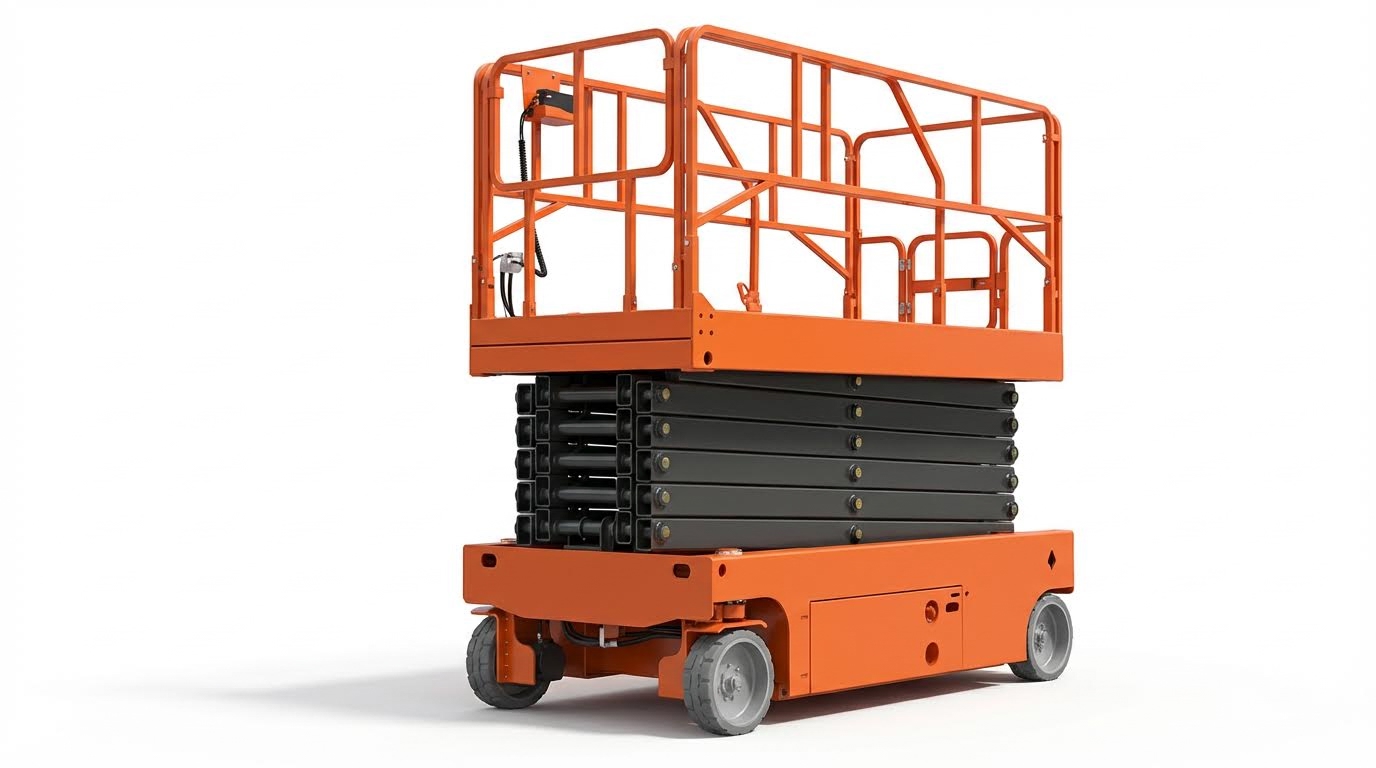
Transporting a 19-foot scissor lift safely comes down to one thing: matching its real weight and size to the right trailer, ramp slope, and tie-down plan so nothing bends, tips, or breaks in transit.
Trailer and truck selection by weight and size
Trailer and truck selection for a 19-foot scissor lift starts with its true curb weight, then checks deck length, width, and legal axle limits so you don’t overload or run out of space.
Most 19-foot electric scissors weigh around 1,180–1,477 kg, so when people ask “how much does a 19 foot scissor lift weigh,” the safe planning answer is “about 1.2–1.5 tonnes including batteries and options.” The narrow chassis, typically 0.76–0.81 m wide and 1.83–1.88 m long, plus 1.65–2.02 m stowed height, fits easily on light trailers and small flatbeds when rails are folded. Typical 19-foot electric scissor dimensions and weights give the baseline envelope you must match.
| Key Parameter | Typical Range | Why It Matters For Transport | Operational Impact |
|---|---|---|---|
| Machine weight | 1,180–1,477 kg (2,600–3,255 lbs) | Determines trailer/truck payload and tie-down rating | Most 2,700–3,500 kg GVW equipment trailers can handle one unit with margin |
| Overall width | 0.76–0.81 m | Defines minimum deck width and ramp spacing | Easily fits between 1.5–2.0 m trailer fenders; generous clearance for side guards |
| Overall length | 1.83–1.88 m | Defines usable deck length | Fits on short 2.4–3.0 m single-axle trailers or in small flatbed trucks |
| Stowed height (rails folded) | 1.65–2.02 m | Determines vertical clearance in trucks/containers | Fits inside most 2.3–2.6 m high box bodies and shipping containers |
| Gradeability (stowed) | 20–25% | Limits ramp steepness you can safely climb | Requires relatively shallow ramps to avoid stalling or loss of control |
For compact 19-foot electric lifts under roughly 1,500 kg, a braked single- or tandem-axle equipment trailer with a 2.5–3.0 m deck is usually sufficient, provided its rated payload exceeds the lift weight plus 10–20% safety margin. Medium flatbed trucks with wide decks and strong ramps are better suited if you move multiple lifts or combine the lift with pallets of materials, as they offer more axle capacity and tie-down points. Guidance on transport methods for medium-size lifts emphasizes matching truck class and ramp strength to machine weight.
- Check actual curb weight: Use the lift’s data plate – spec ranges vary 1,180–1,477 kg, and 200–300 kg error can overload a small trailer.
- Match deck length to machine length: Aim for at least 300–500 mm spare deck – this leaves space for chocks and tie-down angles.
- Confirm payload and axle ratings: Compare lift weight + trailer tare to axle limits – prevents tire blowouts and frame fatigue.
- Consider stowed height: If using a box truck or container, verify internal height – prevents bent rails or overhead impacts.
- Plan approach geometry: Combine ramp length and deck height with the lift’s ground clearance – avoids belly scraping and damage to scissor arms.
💡 Field Engineer’s Note: On mixed fleets, I always standardize trailers to comfortably handle the heaviest 19-foot unit in the yard. The “light” 1,180 kg machines hide the fact that some options, solid tires, or bigger batteries push others close to 1,500 kg, which is where many light-duty trailers quietly run out of payload.
How to quickly sanity-check a trailer choice
Add the trailer’s tare weight and the scissor lift’s curb weight, then compare that total to the trailer’s Gross Vehicle Weight Rating (GVWR). If the total is more than 80–85% of GVWR, move up a trailer class or reduce other cargo. Also confirm each axle’s rating, as overloading a single axle is just as risky as overloading the whole trailer.
Loading, securing, and ramp slope considerations
Safe loading of a 19-foot scissor lift is about controlling slope, traction, and restraint so the machine stays upright on the ramp and absolutely still on the road.
These lifts can climb 20–25% grades in the stowed position, but that does not mean you should load them on a 1:4 ramp if the surface is wet, dirty, or marginal. Typical gradeability ratings assume good traction and a competent operator. In practice, you keep loading ramps as shallow as site conditions allow and use a spotter to control alignment. Poor ramp selection and rushed loading are a major cause of bent guardrails, cracked platforms, and undercarriage damage during transport. Documented transport damage patterns highlight this risk.
- Pre-load prep: Fully lower the platform, fold guardrails, retract deck, remove loose tools – reduces height and eliminates projectiles.
- Inspect ramps: Check capacity, pins, and traction surface – prevents ramp collapse or wheel spin.
- Use a spotter: One person drives, one guides – keeps wheels centered and stops drift off the ramp edge.
- Avoid sudden inputs: No quick turns or hard braking on ramps – reduces side-loads that can tip or twist the scissor stack.
- Lock and chock: Once on deck, apply brakes, use wheel chocks, then tie down – creates layered protection if a strap loosens.
| Ramp / Loading Factor | Good Practice | Risk If Ignored | Operational Impact |
|---|---|---|---|
| Ramp slope vs. 20–25% gradeability | Keep ramp angles comfortably below rated grade | Lift may stall or spin tires mid-ramp | Higher chance of rollback or sideways slip |
| Ramp surface | Use textured steel, cleats, or anti-slip mats | Wet smooth ramps act like ice | Loss of control, sideways slide, impact damage |
| Platform position | Always fully lowered before loading | Raised center of gravity | Much higher tip risk if something goes wrong |
| Tie-down method | Use rated chains/ratchet straps to chassis points | Straps on rails or platform can bend them | Structural damage and non-compliant restraint |
| Inspection of straps/chains | Check for cuts, kinks, deformation | Hidden weak points can fail in transit | Lift can shift, roll, or leave the deck |
- Step 1: Pre-inspect the lift – check for hydraulic leaks, tire condition, and battery charge to avoid failures halfway up the ramp.
- Step 2: Position trailer on level, firm ground – reduces effective ramp angle and prevents trailer roll or twist.
- Step 3: Attach and secure ramps fully – prevents ramps from kicking out under the 1.2–1.5 tonne rolling load.
- Step 4: Drive up slowly in stowed mode with a spotter – controls speed and keeps steering corrections small.
- Step 5: Park over axles, brake, and chock wheels – places weight where the deck is strongest and locks the machine in place.
- Step 6: Apply at least four tie-downs to the chassis – two forward, two rear, pulling in opposing directions for redundancy.
- Step 7: Re-check tension after a short distance – straps settle as the lift and trailer flex; a second check prevents loosening.
Guides on transporting scissor lifts stress lowering platforms, folding rails, using proper ramps, and securing with rated ratchet straps or chains anchored to structural points, not handrails or deck edges. Best-practice loading and securing methods also remind you to check road regulations, permits for oversized loads, and route constraints like low bridges or narrow roads.
💡 Field Engineer’s Note: If you ever feel the lift hesitate or spin on the ramp, stop, back down carefully, and rethink the setup. Increasing ramp length by even 0.5–1.0 m or moving the trailer to flatter ground can turn a marginal, high-risk climb into a controlled, low-stress operation that saves you from bent steel and insurance paperwork.
Weather and timing tips for safer transport
Avoid loading in heavy rain, storms, or strong winds, as tall lifts act like sails and wet ramps cut friction dramatically. In very hot conditions, give electric units time to cool and consider shading or tarping the machine to protect electronics and hydraulic hoses during long highway runs. Weather-related transport guidance underlines how timing your moves can prevent avoidable incidents.
Final Thoughts On Selecting A 19-Foot Scissor Lift
Choosing a 19-foot scissor lift is not only about reach. You must treat weight, floor capacity, and transport as one linked system. Machine weight plus payload turns into four high point loads, so engineers and site managers must check slabs, mezzanines, and roofs for wheel reactions, not just uniform live load. Tire type and contact area then decide whether that load only stresses the structure or also chips tiles and coatings.
Battery choice shifts total mass and runtime. Heavy lead-acid packs push you toward the top of the 1,180–1,477 kg range, which tightens floor, ramp, and trailer margins. Lighter lithium options ease structural demands and cut downtime, which often offsets higher purchase price over the life of the lift.
Transport planning closes the loop. Correct trailer class, gentle ramp slopes, and proper tie-downs keep a 1.2–1.5 tonne machine from becoming a road hazard. For best results, standardize your checks: confirm exact curb weight and battery type, verify floor and ramp capacities, protect delicate finishes, and train crews on disciplined loading and securing. If you want a simple rule, follow this: match every 19-foot lift to a verified structure, a rated trailer, and a written procedure. That is how Atomoving fleets stay productive without cracked slabs, damaged trailers, or near-miss reports.
Frequently Asked Questions
How much does a 19-foot scissor lift weigh?
A 19-foot scissor lift typically weighs between 1,987 lbs and 3,800 lbs. The exact weight depends on the model and its features. For example, the Pro Series PS-1930 weighs approximately 1,987 lbs and is rated for both indoor and outdoor use. Scissor Lift Weight Guide.
What factors influence the weight of a scissor lift?
The weight of a scissor lift is influenced by several factors, including the materials used in construction, the type of power source (electric or fuel-powered), and additional features such as platform size and safety equipment. Heavier models often provide greater stability and lifting capacity but may be harder to transport. Electric Scissor Lift Details.