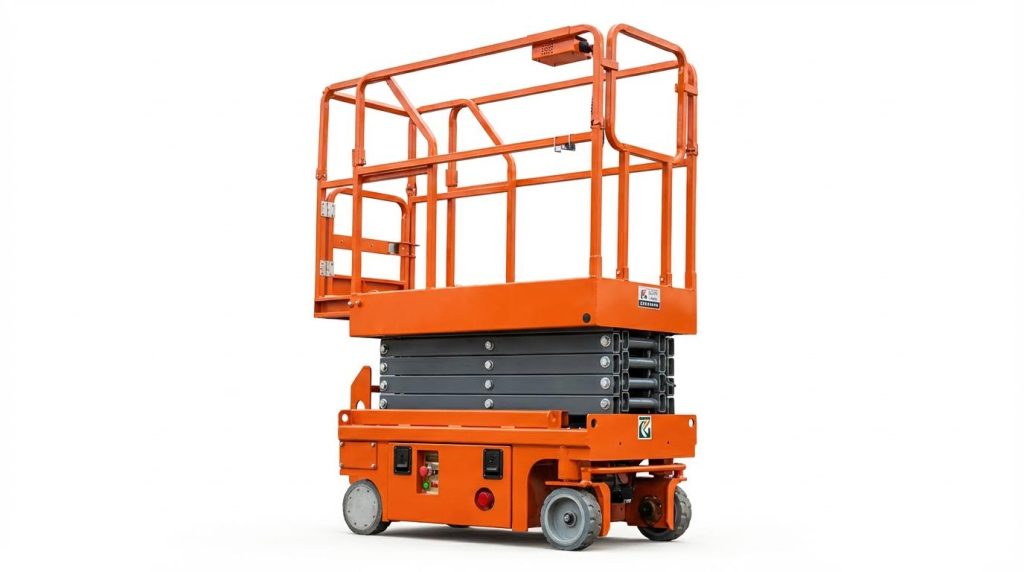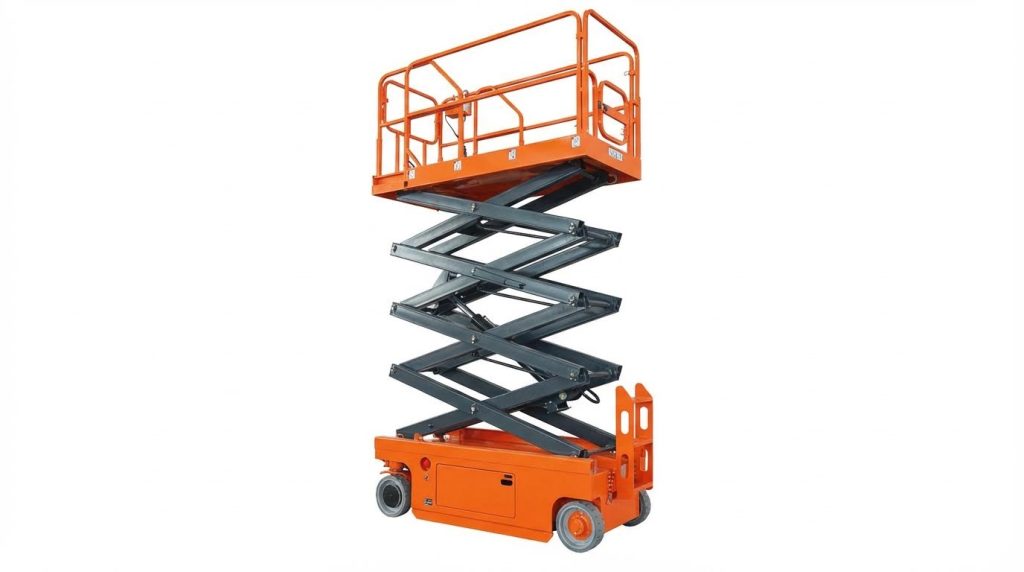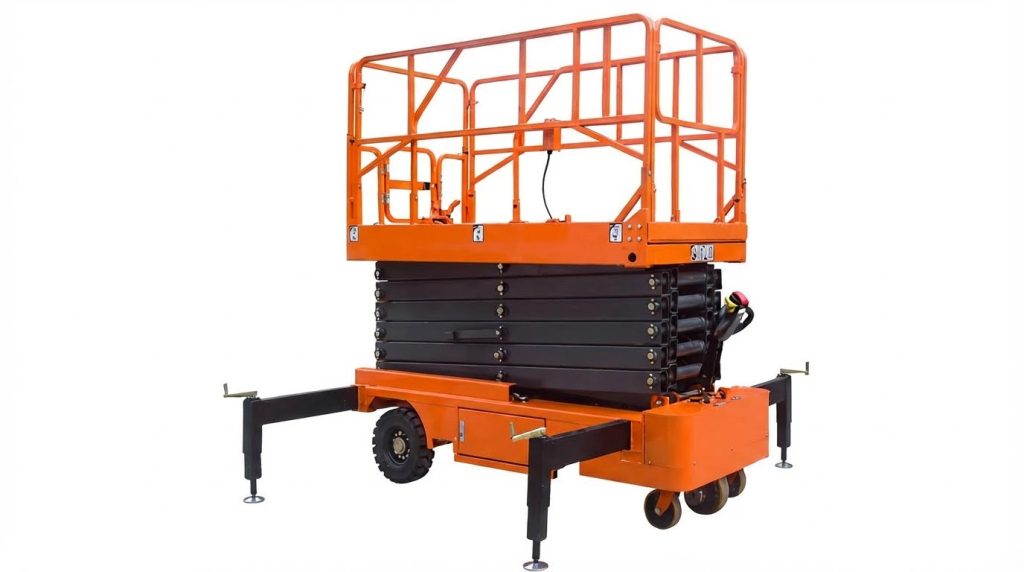
Electric compact scissor lifts are narrow, battery-powered access platforms designed for safe work at height in tight indoor and mixed-use spaces. This guide explains what are the applications of an electric compact scissor platform, how they improve safety and efficiency, and where their engineering limits sit so B2B buyers can spec the right machine for real sites and duty cycles.
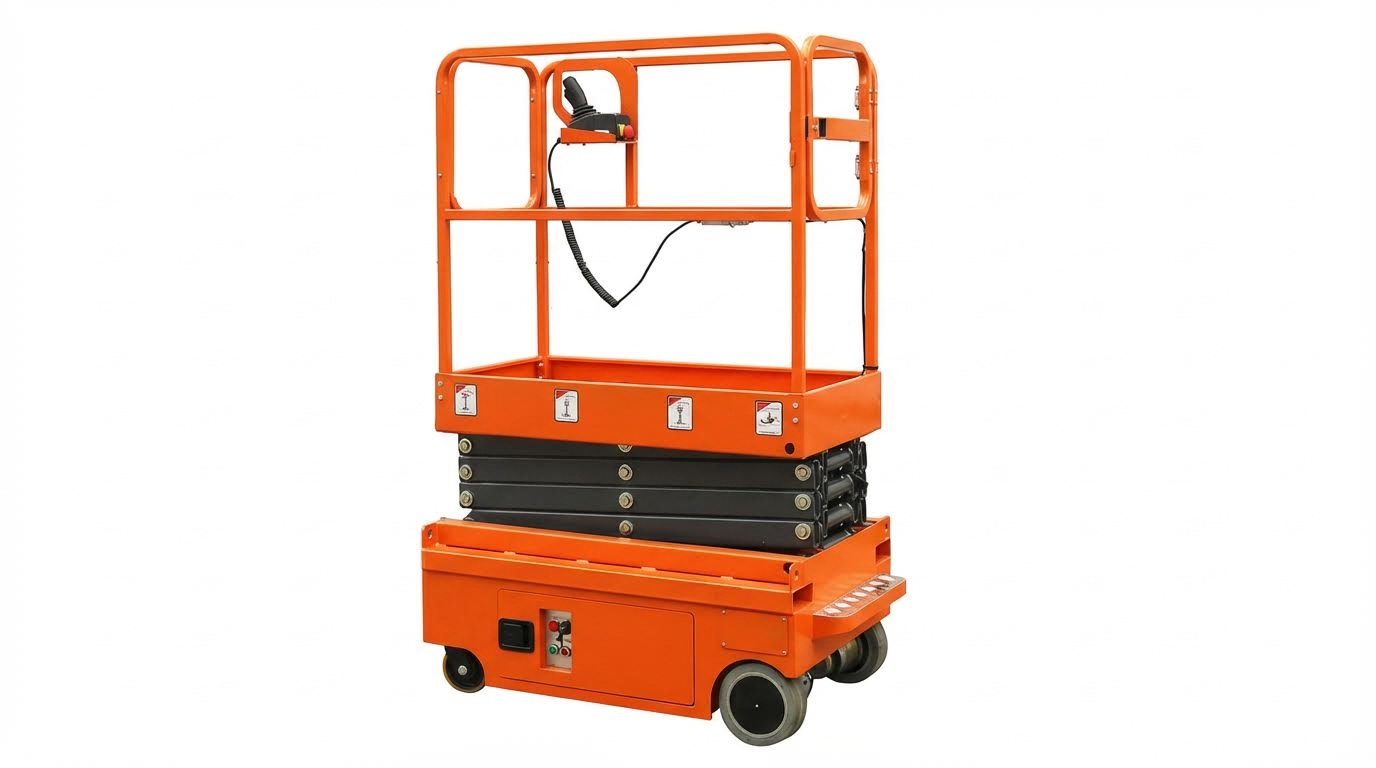
What Defines An Electric Compact Scissor Lift
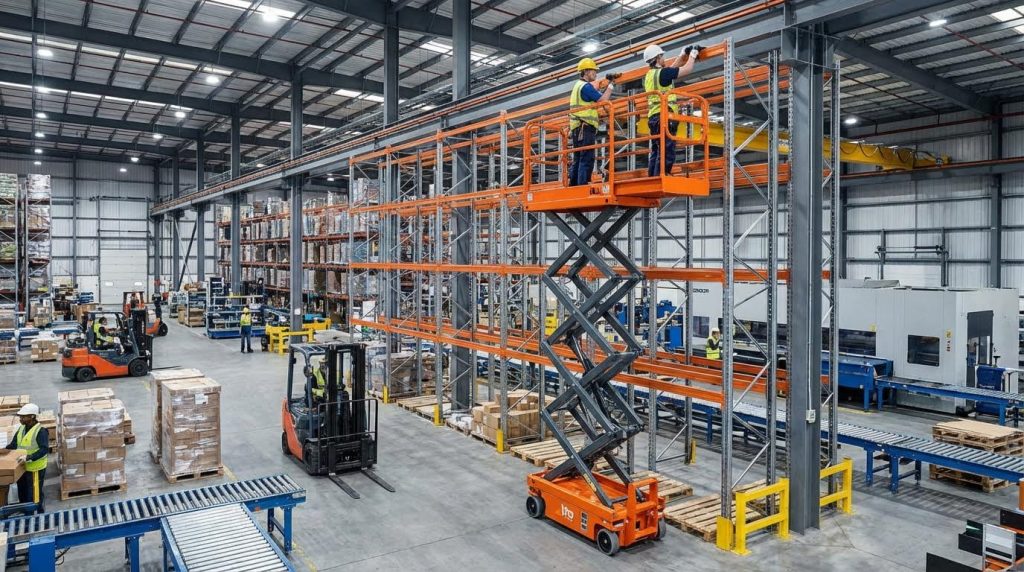
An electric compact scissor lift is a battery-powered, vertical‑mast platform on a narrow chassis, engineered for safe work at height in tight indoor or mixed‑use spaces. It trades outreach and rough‑terrain capability for clean, quiet operation and excellent maneuverability, which directly shapes what are the applications of an electric compact scissor platform lift across warehousing, retail, and maintenance environments.
These machines use an electric drive and hydraulic lifting circuit to raise a guarded work platform straight up. Their compact footprint, tight turning radius, and non‑marking tyres let them work where larger MEWPs or scaffolds simply do not fit.
Core design and working principle
An electric compact scissor lift uses a criss‑crossed steel scissor stack, hydraulic cylinders, and an electric power pack to lift a guarded work platform vertically. The geometry keeps the platform directly above the chassis, which simplifies stability control and allows safe, repeatable elevation cycles.
- Scissor mechanism: Interlinked steel arms hinge in an “X” pattern – converts cylinder stroke into vertical lift with high stiffness.
- Hydraulic actuation: One or more cylinders push the scissor stack via pins – provides smooth, controllable lifting and lowering.
- Electric power source: 24 V traction battery pack typically around 225–255 Ah supports quiet indoor operation.
- Hydraulic power unit: Electric motor drives a pump feeding the cylinders – separates traction and lift power for reliability.
- Guarded work platform: Full‑height rails, toe‑boards, and non‑slip floor – reduces fall and slip risks at height.
- Chassis and drive: Narrow wheelbase with electric drive motors – enables tight turns in narrow aisles and confined areas.
- Integrated safety systems: Tilt sensors, load management, pothole protection, and automatic braking ensure controlled operation.
In operation, the operator stands on the platform and uses proportional controls to drive and elevate. Electric traction motors move the chassis, while the hydraulic circuit lifts the platform; both are interlocked so speed and elevation stay within safe limits for the surface and height.
How the vertical lift geometry affects stability
Because the platform stays within the footprint of the chassis, the centre of gravity moves mainly upward, not outward. This is why compact scissor lifts can remain stable on level floors even at 12–18 m working height, provided load and slope limits are respected.
💡 Field Engineer’s Note: On polished concrete or epoxy floors, compact scissor lifts rely heavily on automatic brakes and tyre grip. Dust, oil, or paint overspray can reduce traction, so always check floor cleanliness before driving at height, especially when close to racking or glazing.
Key performance ranges and dimensions
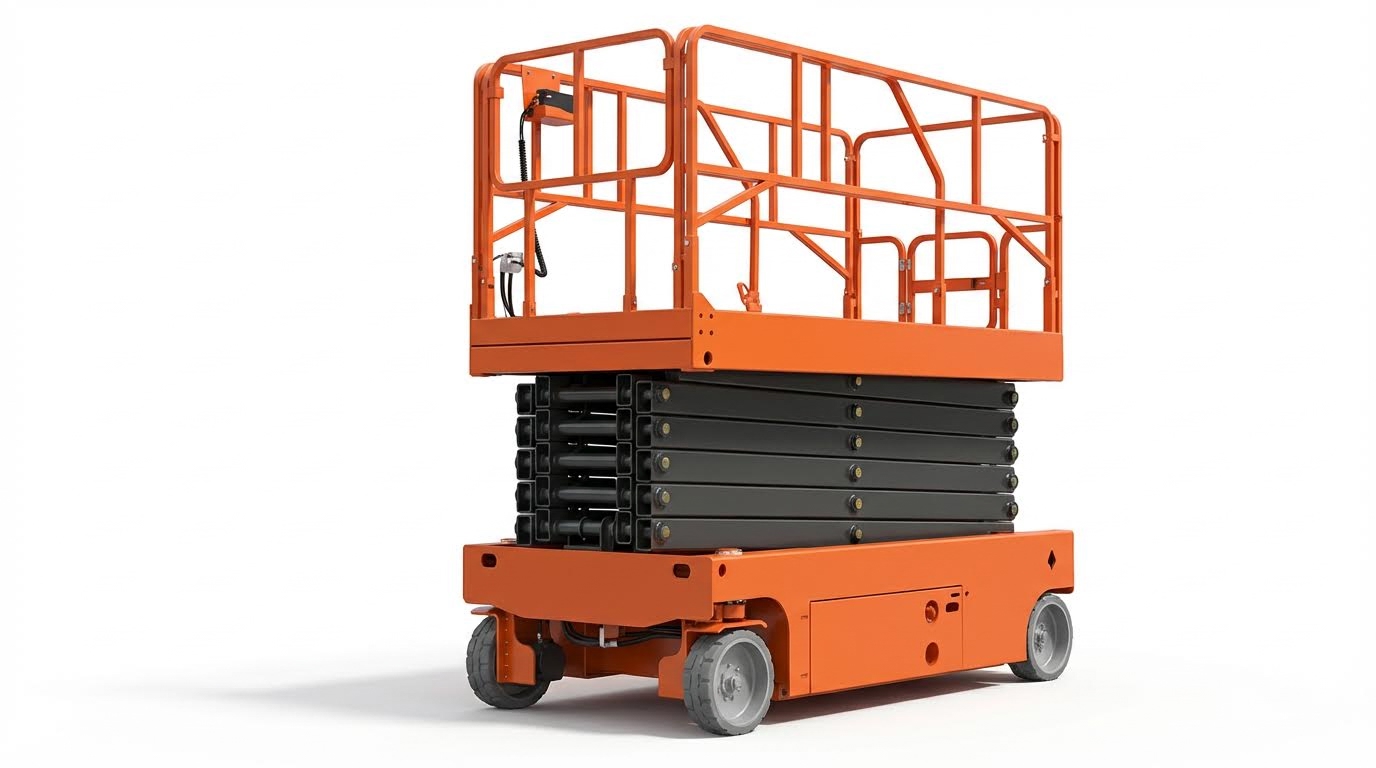
Electric compact scissor lifts typically offer 8–18 m working height, 230–750 kg platform capacity, and platform widths near 1.2 m, making them ideal for indoor aisles and multi‑sector access tasks. Understanding these ranges is essential when assessing what are the applications of an electric compact aerial platform for your site, from warehouse inventory to retail maintenance.
| Parameter | Typical Range / Example | Operational Impact / Best For… |
|---|---|---|
| Working height | 8–18 m; models around 14 m and 18 m are common across compact lines. | Covers everything from low‑bay retail ceilings (~6–8 m) to high warehouse racking and light industrial roofs. |
| Platform capacity (indoor) | Approx. 230–750 kg depending on model. | Supports 2–3 people plus tools and materials; fits maintenance, MEP install, and inventory work. |
| Platform capacity (outdoor) | Up to about 750 kg on rated outdoor models subject to wind limits. | Allows façade work, signage, and external services when wind and ground conditions comply with the manual. |
| Platform length | Approx. 2.3–2.39 m retracted, up to ~3.22–3.33 m extended with sliding deck. | Extended length lets you bridge small gaps or work along façades without constant repositioning. |
| Platform width | Typically around 1.2 m across many compact models for indoor use. | Fits standard warehouse aisles and retail corridors without redesigning racking or fixtures. |
| Drive speed | Approx. 0.7–3.5 km/h (0.43–2.17 mph) depending on elevation. | Slow, controlled travel at height; faster transit at stowed height for moving between work zones. |
| Gradeability | About 23–25% on rated models on firm surfaces. | Sufficient for loading ramps and gentle slopes, but work at height still requires near‑level ground. |
| Turning radius | Approx. 2.04–2.5 m inside turning radius for compact models. | Allows U‑turns in narrow aisles and confined service corridors without multi‑point manoeuvres. |
| Battery system | 24 V, typically 225–255 Ah deep‑cycle pack with onboard charger. | Delivers a full shift of typical duty with low noise and zero local emissions, ideal for indoor work. |
| Hydraulic oil volume | Approx. 11–12 L on small units up to around 250 L on larger platforms depending on design. | Affects lift speed and thermal performance on intensive duty cycles such as continuous picking or installation work. |
- Compact chassis: Narrow frame and small turning radius – optimised for narrow aisles, plant rooms, and back‑of‑house corridors.
- Non‑marking tyres: Solid, non‑marking wheels as standard protect finished floors – critical for retail and commercial interiors.
- Standard safety kit: Pothole guards, tilt control, load management, emergency lowering, and automatic brakes built in – keeps operation predictable for non‑specialist users.
- Optional add‑ons: Flashing beacons, travel alarms, work lights, power to platform, folding guardrails, and eco hydraulic oil tailor the lift to site rules – supports sectors from food plants to public malls.
Clearances and confined‑space considerations
Platform size and turning radius must match aisle width and overhead clearance. Guidance for scissor tables stresses that platform dimensions, minimum turning radius, and height clearance all need checking in confined spaces, with level ground and clear access paths required for safe entry and exit before deployment.
💡 Field Engineer’s Note: When you spec a “compact” unit, check not just aisle width but door and lift car sizes. A platform that fits between racks can still get stuck at a 2.0 m x 0.9 m doorway, killing the very flexibility you bought it for.
“”
Typical Applications And Selection Criteria
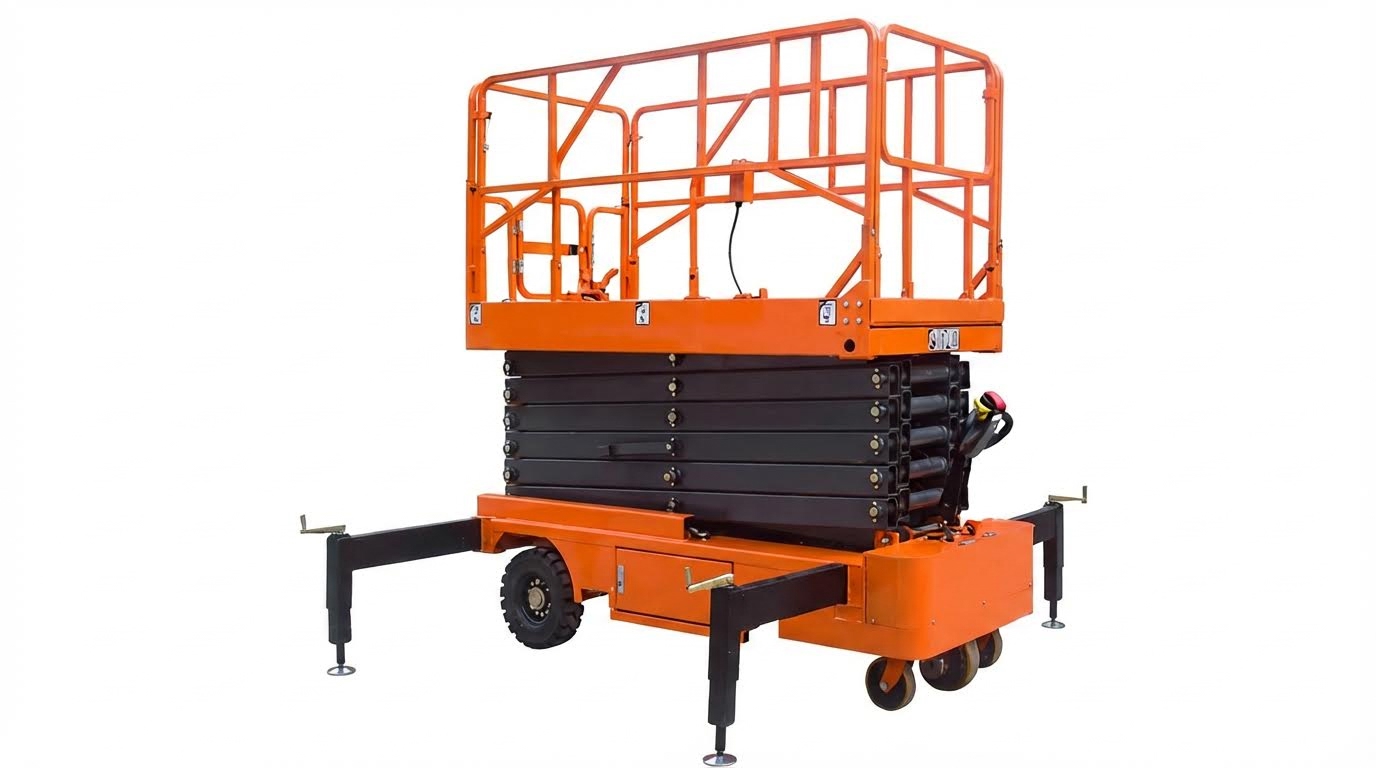
This section explains what are the applications of an electric compact scissor lift and shows how to match real site conditions with the right height, capacity, and cost profile.
In practice, you select a compact electric scissor lift by mapping working height, aisle width, floor quality, duty cycle, and ownership cost against your tasks and environment.
💡 Field Engineer’s Note: When shortlisting models, I always overlay the machine’s turning radius and platform length on the narrowest aisle and lowest doorway in CAD. This avoids discovering “it doesn’t actually fit” after delivery.
Indoor, narrow‑aisle, and multi‑sector use cases
Electric compact scissor lifts are primarily used indoors in narrow aisles and clean environments where low noise, zero emissions, and tight maneuvering are critical.
They cover a wide band of vertical work, with working heights from about 8 m to 18 m, and platform capacities from roughly 230 kg to 750 kg for indoor and outdoor models. Working height ranges and capacity data define which sectors they fit best.
| Typical Sector | Representative Tasks | Key Specs That Matter | Operational Impact / Best For… |
|---|---|---|---|
| Warehousing & logistics | Inventory counts, rack labeling, light maintenance on sprinklers and lights | Working height 8–14 m; capacity 230–450 kg; turning radius ≈2.0–2.5 m | Fits between racking, replaces ladders, enables two workers plus parts on the platform. |
| Retail & commercial spaces | Signage install, window cleaning, lamp replacement, décor changes | Quiet electric drive; non‑marking tyres; platform width ≈1.2 m | Low noise and clean tyres avoid disturbing customers or damaging finished floors. |
| Light industrial & manufacturing | Access to production lines, ducting, cable trays, machine installs | Capacity 300–750 kg; platform length 2.3–3.2 m (extended) | Handles workers, tools, and small components in one lift cycle to cut downtime. |
| Facility management & campuses | HVAC servicing, painting, façade cleaning, security camera work | Working height up to 18 m; drive speed up to 3.5 km/h | Covers multiple buildings with one machine, reduces scaffolding requirements. |
| Events, exhibition halls, airports | Rigging lights, banners, AV equipment, ceiling inspections | Narrow chassis; tight turning radius ≈2.0 m; folding guardrails (optional) | Moves through doorways and around stands without dismantling structures. |
Most compact platforms are about 1.2 m wide, with extended lengths from roughly 2.3 m to 3.22 m. This lets them pass through standard industrial doors and operate in aisles that are only slightly wider than the machine. Platform dimensions and narrow‑aisle guidance show why they are popular in dense storage layouts.
- Warehouses: Inventory access and small repairs – Reaches upper racks without reconfiguring aisles.
- Retail stores: Lighting and signage changes – Quiet operation keeps trading areas open.
- Shopping centres & airports: Atrium and ceiling work – Long service life (≈8–10 years) supports recurring maintenance cycles. Service life data
- Manufacturing plants: Line changeovers and overhead utilities – Higher capacities carry tools, cable drums, and duct sections safely.
How confined‑space constraints shape applications
In very tight aisles, you must check three constraints: platform size, turning radius, and overhead clearance. Smaller units have tighter turning radii, which makes them more suitable for confined spaces, but you still need extra clearance to swing and align with the workface. Confined‑space guidelines also stress stable, level floors and clear entry/exit paths.
Matching specs to task, site, and TCO targets
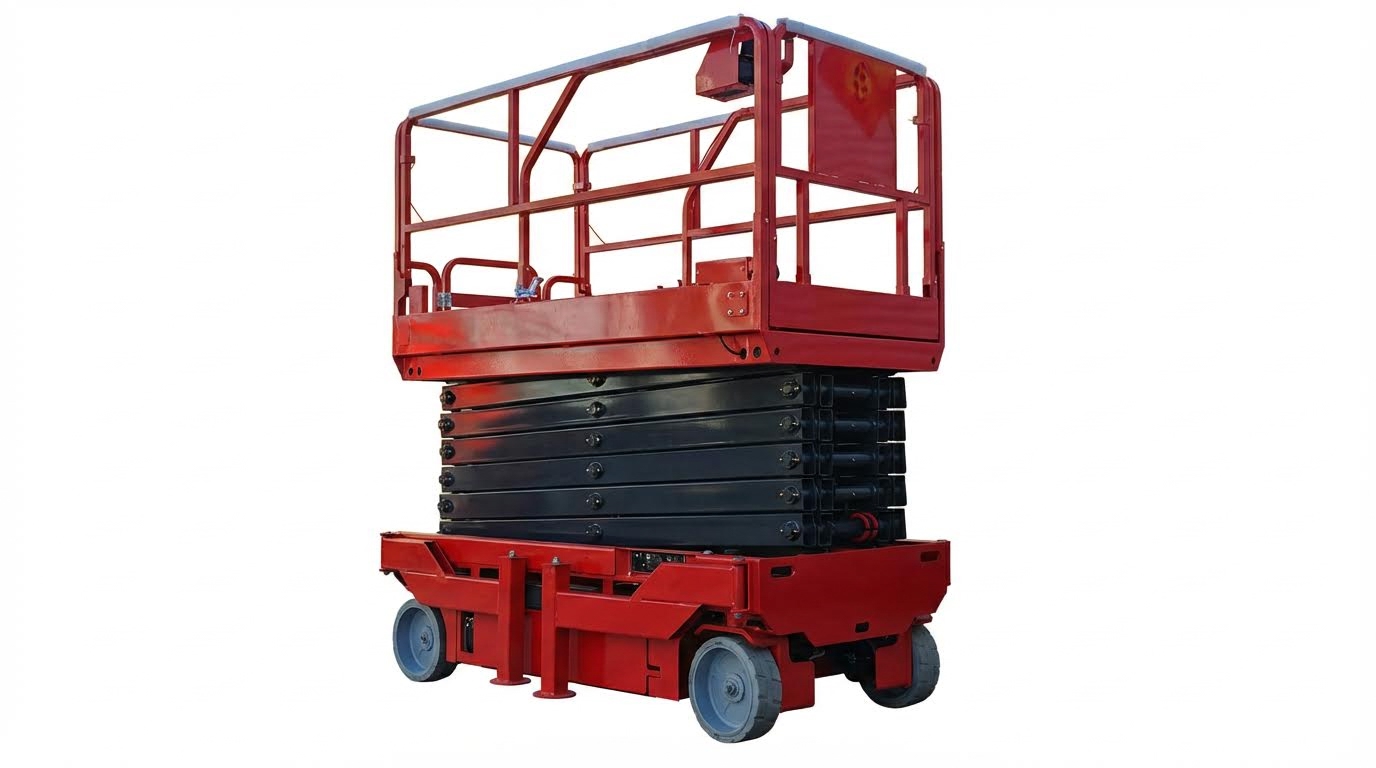
Correctly matching scissor lift specifications to your tasks and site conditions is the fastest way to cut accidents and total cost of ownership (TCO).
Instead of asking only “what are the applications of an electric compact scissor lift,” you should translate each application into numeric requirements: height, load, aisle width, floor conditions, and usage frequency. The ranges in the data help you set realistic bands rather than guessing.
| Selection Factor | Typical Spec Range | How to Interpret | Operational Impact / Best For… |
|---|---|---|---|
| Working height | 8–18 m working height | Add at least 1.0 m to the highest hand‑working point for ergonomics. | 8–10 m: low mezzanines; 12–14 m: most warehouses; 16–18 m: large atriums. |
| Platform capacity | ≈230–750 kg | Sum worker weight, tools, and materials plus a 25–30% safety margin. | 230–300 kg: one worker + tools; 450–750 kg: two workers + materials. |
| Platform size | Length 2.3–3.22 m, width ≈1.2 m | Compare platform plus clearance against aisle width and obstructions. | 1.2 m width fits many 2.1–2.4 m aisles and standard door frames. |
| Turning radius | ≈2.0–2.5 m (up to ≈2.04 m quoted) | Check that the narrowest aisle is wider than machine width plus turning allowance. | Allows turning in typical warehouse cross‑aisles and retail corridors. |
| Drive speed | Up to 3.5 km/h | Higher speed improves productivity over long runs but must remain safe indoors. | Useful in large plants and campuses where travel distance is significant. |
| Gradeability | 23–25% | Indicates ability to climb ramps; indoor work still requires level surfaces when elevated. | Handles loading‑bay ramps but should not be raised on slopes. |
| Battery system | 24 V, ≈225–255 Ah | Higher Ah supports longer duty cycles; check charger compatibility and access. | Suited to one shift of intermittent use with overnight charging. |
For multi‑year projects, TCO is heavily influenced by battery type and usage frequency. Lead‑acid batteries last about 2–3 years (~500 cycles), while lithium batteries can run 5–8 years with 2,500–3,000 cycles, significantly cutting long‑term operating cost. Battery lifespan data and the overall machine life of about 8–10 years frame your buy‑vs‑rent strategy.
- Usage 1–2 times per year: Rent – Ownership costs and maintenance overhead are hard to justify.
- Usage 3–5 times per year: Analyse project duration – Short projects favour rental; long projects can justify purchase.
- Monthly or continuous use: Purchase – Costs spread over many cycles; becomes cheaper after 2–3 similar projects. Cost comparison
Maintenance and inspection load in TCO
Beyond purchase price, factor in predictable maintenance: hydraulic oil changes about every 100 working hours, plus monthly inspections of hoses, batteries, electrical components, and cleanliness. Hydraulic oil intervals and inspection guidance show that a well‑maintained lift delivers stable performance over most of its 8–10 year life.
- Step 1: Define max working height – Set a numeric target (e.g., 12 m) rather than “high bay.”
- Step 2: Measure aisles and doorways – Confirm width and turning space against machine dimensions and radius.
- Step 3: Calculate live load on platform – Include people, tools, and materials with margin.
- Step 4: Assess floor and ramps – Check for levelness and slopes vs the 23–25% gradeability rating.
- Step 5: Estimate duty cycle and choose battery – Match Ah and chemistry to shifts and charging windows.
- Step 6: Decide buy vs rent from usage frequency – Align capital spend with how often you truly need the machine.
Final Considerations For B2B Decision Makers
Electric compact scissor lifts deliver safe, repeatable access at height when you respect their geometric and structural limits. The vertical scissor geometry keeps the platform over the chassis, so stability depends on load, floor levelness, and clean, grippy surfaces. Integrated systems such as tilt sensors, load control, pothole guards, and automatic brakes only work as intended when you match machine dimensions to aisles, doors, and clearances with real measurements, not estimates.
For engineering and operations teams, the core task is translation. Convert each application into numbers: working height, platform load, aisle width, turning radius, ramp gradients, and duty cycle. Then align those values with the lift’s rated ranges and battery capacity. This approach cuts accident risk, avoids “it does not fit” surprises, and reduces total cost of ownership.
As a final rule, treat compact scissor lifts as precision tools, not generic access gear. Use them on level, verified floors, keep loads within rating, and plan charging and maintenance as part of the workflow. When you follow these principles and partner with a specialist supplier such as Atomoving, electric compact platforms become a low‑risk, high‑productivity asset over their full service life.
Frequently Asked Questions
What are the applications of an electric compact scissor lift?
Electric compact scissor lifts are versatile tools used in various industries. They are ideal for indoor applications due to their quiet operation and zero emissions. Common uses include:
- Warehousing: For inventory management and reaching high shelves.
- Construction: To access elevated areas in confined spaces.
- Manufacturing: Assisting with maintenance and assembly tasks.
- Retail: Stocking shelves and setting up displays.
- Facility Management: Performing maintenance work like lighting or HVAC repairs Scissor Lift Comparison.
What makes electric scissor lifts suitable for indoor use?
Electric scissor lifts are preferred indoors because they run on batteries, produce no fumes, and operate quietly. These features make them safe for enclosed environments such as warehouses, retail stores, and manufacturing plants. Additionally, their compact design allows them to navigate tight spaces easily Electric Lift Applications.