Safe drum stacking is never just about saving floor space; it is a structural, regulatory, and fire-protection problem that needs engineering-level thinking. This guide explains when it is actually safe to stack drums, how high you can go, and what pallets, floors, and sprinkler systems you need to stay compliant. If you have ever asked “is it ok to stack drums?” we walk through the conditions that make the answer yes—or firmly no. You will also get practical checklists for handling, inspection, FIFO rotation, and secondary containment so your storage policy is both efficient and defensible in an audit.
Core Rules For Safe, Compliant Drum Stacking
When Is It Actually Safe To Stack Drums?
If you are asking “is it ok to stack drums,” the answer depends on drum condition, closure integrity, product density, and the stability of the support surface. Drums must be structurally sound, with no significant rust, dents, bulging, or distorted lids, and closures must be fully installed and tightened to the torque specified in the closure instructions required by 49 CFR §178.2(c) for UN-rated steel drums. It is only safe to stack when the floor or pallet provides a flat, solid, undamaged surface that will not introduce tilt or point loading under the drum chimes (e.g., sound concrete floor or good 48″ x 48″ pallet). To satisfy OSHA’s general material storage rules, stacked drums must be blocked, chocked, interlocked, or otherwise secured to prevent sliding, falling, or collapse when stored in tiers.
- Stack drums, barrels, and kegs symmetrically so loads transfer vertically through the chimes, not through the sidewall. Place planks, plywood, or pallets between tiers when stacking on end to create a firm, flat interface and distribute load evenly across all drums in the tier for better stability.
- When stacking two or more tiers high, chock the bottom tier on each side to prevent shifting, and if drums are stored on their sides, block the bottom row to prevent rolling as required by safe material stacking practices.
- Never stack drums that are pressurized, exposed to open flame or hot metal, or subject to artificial heat sources when containing toxic or flammable liquids or gases, because this increases rupture and release risk under OSHA shipyard rules that reflect good practice for any facility.
In engineering terms, it is ok to stack drums only when the stack can resist tipping moments from minor impacts, floor unevenness, and thermal expansion without exceeding drum structural limits or losing frictional resistance at the interfaces. If any of these conditions is not met, drums should be stored in a single tier, in racks, or with additional restraints instead of free-stacked.
Regulatory Limits On Drum Height And Load
Regulatory and industry guidance answer “is it ok to stack drums” by tying maximum height to both product density (specific gravity) and fire protection. For typical UN-rated steel drums with hazardous materials, stacks up to four-high are acceptable only if the specific gravity of the contents does not exceed 1.5; if the specific gravity is higher than 1.5 or ambient temperature is expected to exceed 30 °C (86 °F) for long periods, stacking should be restricted to three-high to keep compressive and bulging stresses within design limits. For flammable materials, recommended palletized stack heights are no more than 10 ft for three-high stacks and 13 ft 9 in for four-high stacks, measured from floor to top of load to maintain sprinkler effectiveness and structural safety.
| Condition | Max Drum Tiers | Typical Max Palletized Height* |
|---|---|---|
| Hazardous product, specific gravity ≤ 1.5 | 4-high | Up to about 13 ft 9 in for flammables |
| Specific gravity > 1.5 or ambient > 30 °C for long periods | 3-high | Up to about 10 ft for flammables |
*Values based on steel drum industry fire-protection guidance for palletized stacks of flammable contents.
OSHA’s general material storage rules also require that all materials stored in tiers be stacked, racked, blocked, interlocked, or otherwise secured to prevent sliding, falling, or collapse, and that the weight of stored materials on floors not exceed posted safe load limits in pounds per square foot for the storage area. For stacks of steel drums containing flammable materials, foam‑water sprinkler systems should provide at least 0.45 gpm/ft² discharge density for three‑high stacks and 0.60 gpm/ft² for four‑high stacks, with pendant extra‑large orifice heads to control a potential fire plume through the stack height in line with recognized fire protection practice.
Practical policy tips for drum height limits
In most plants, a conservative internal rule is to limit general warehouse stacking of liquid-filled 55‑gallon steel drums to three-high unless a specific engineering and fire-protection review supports four-high. Document the maximum allowed tiers for each product based on specific gravity, drum type, and storage zone, and train operators to verify both the number of tiers and approximate overall height before adding another layer. Combine these limits with posted floor load ratings and clear aisle, egress, and sprinkler clearance requirements to keep stacks both compliant and operationally safe.
Engineering The Stack: Design, Pallets, Floors And Fire Safety
Pallet, Floor And Chocking Requirements
When asking is it ok to stack drums, start with the support system under the load. Pallets must be sound, with intact stringers, no loose boards, and no protruding nails that can puncture drum shells or destabilize the stack. A typical safe configuration is four drums on a 48″ x 48″ pallet, with 46″ x 46″ as the minimum size and a four‑way entry design for consistent forklift handling pallet specifications for drum stacking. If drums are stored directly on the floor, the surface should be flat, non-settling, and in good condition, with concrete preferred for bearing capacity and fire resistance floor storage conditions.
- Keep within posted floor load limits in pounds per square foot to avoid structural overstress general storage requirements.
- Chock the bottom tier on each side when stacking two or more tiers high to prevent shifting in any direction chocking requirements.
- If drums are stored on their sides, block the bottom tier to prevent rolling and spreading drum stacking stability.
All tiers must be stacked, blocked, and limited in height to prevent sliding or collapse under OSHA’s general material storage rules OSHA 1910.176(b). This combination of sound drum dolly, adequate floor capacity, and positive chocking is what turns a theoretical “yes” to is it ok to stack drums into a practically safe and compliant answer.
Stack Geometry, Drum Orientation And Stability
Stack geometry directly controls whether a drum pile is stable under impact, vibration, and minor settlement. Drums, barrels, and kegs should be stacked symmetrically so vertical load paths align and side forces cancel out drum stacking guidance. When stacking on end, place planks, plywood sheets, or pallets between tiers to create a firm, flat surface and distribute point loads from chimes use of dunnage between tiers. If drums are on their sides, the bottom tier must be blocked to prevent rolling, and higher tiers should nest into saddles or chocks to resist spreading drum stacking stability.
Key stability design points
- Use straight, vertical stacks instead of pyramids when drums are palletized, so loads transfer axially.
- Keep the center of gravity low by limiting tiers and avoiding mixed heights within the same stack.
- Apply OSHA’s requirement that materials stored in tiers be interlocked or otherwise secured against sliding, falling, or collapse tiered storage stability.
From an engineering view, is it ok to stack drums only if the geometry keeps every drum in compression, with no unsupported overhangs or point contacts that could dent shells or buckle chimes. Symmetry, firm tier interfaces, and positive blocking are the core design tools to achieve that.
Fire Protection, Sprinklers And Temperature Effects
For flammable contents, fire protection and ambient temperature limits are as important as mechanical stability. Where steel drums contain flammable materials and are stacked three‑high, the palletized stack height should not exceed 10 ft; for four‑high stacks, it should not exceed 13 ft 9 in maximum stack height for flammable materials. Drum design also limits how high you can go: if the specific gravity of the contents is ≤ 1.5, stacks up to four‑high are typical; above 1.5 or when ambient temperatures may exceed 30 °C (86 °F) for prolonged periods, stacks should be restricted to three‑high stacking height for steel drums.
| Condition | Typical Limit |
|---|---|
| Specific gravity ≤ 1.5 | Up to 4 drums high |
| Specific gravity > 1.5 or > 30 °C long term | Limit to 3 drums high |
| Flammable, 3‑high palletized stack | Max stack height 10 ft |
| Flammable, 4‑high palletized stack | Max stack height 13 ft 9 in |
Stacks of flammable drum storage should be protected by foam‑water sprinkler systems capable of at least 0.45 gpm/ft² for three‑high stacks and 0.60 gpm/ft² for four‑high stacks, with pendant extra‑large orifice heads to penetrate the array sprinkler system requirements. Drums containing toxic or flammable liquids or gases should not be stored where they are exposed to open flame, hot metal, or other artificial heat sources that could raise internal pressure or compromise closures drums and containers requirements. When you evaluate is it ok to stack drums, you must therefore check not only structural capacity and layout, but also fire protection density, sprinkler clearance, and temperature exposure to remain compliant and safe.
“`html
Operational Best Practices, Inspections And Equipment

Handling Drums With Forklifts And Attachments
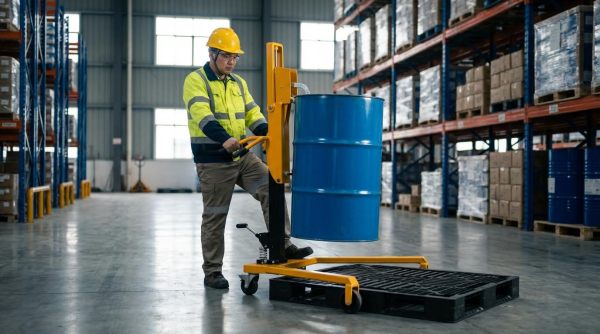
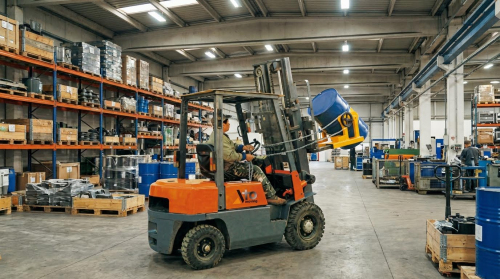
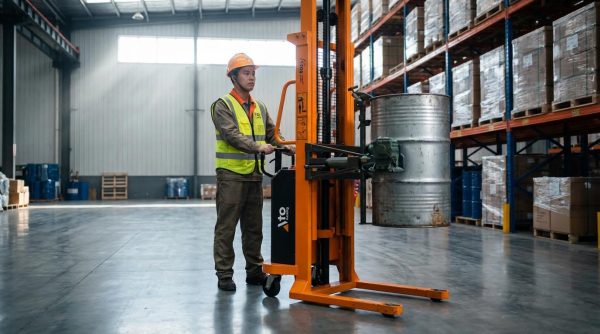
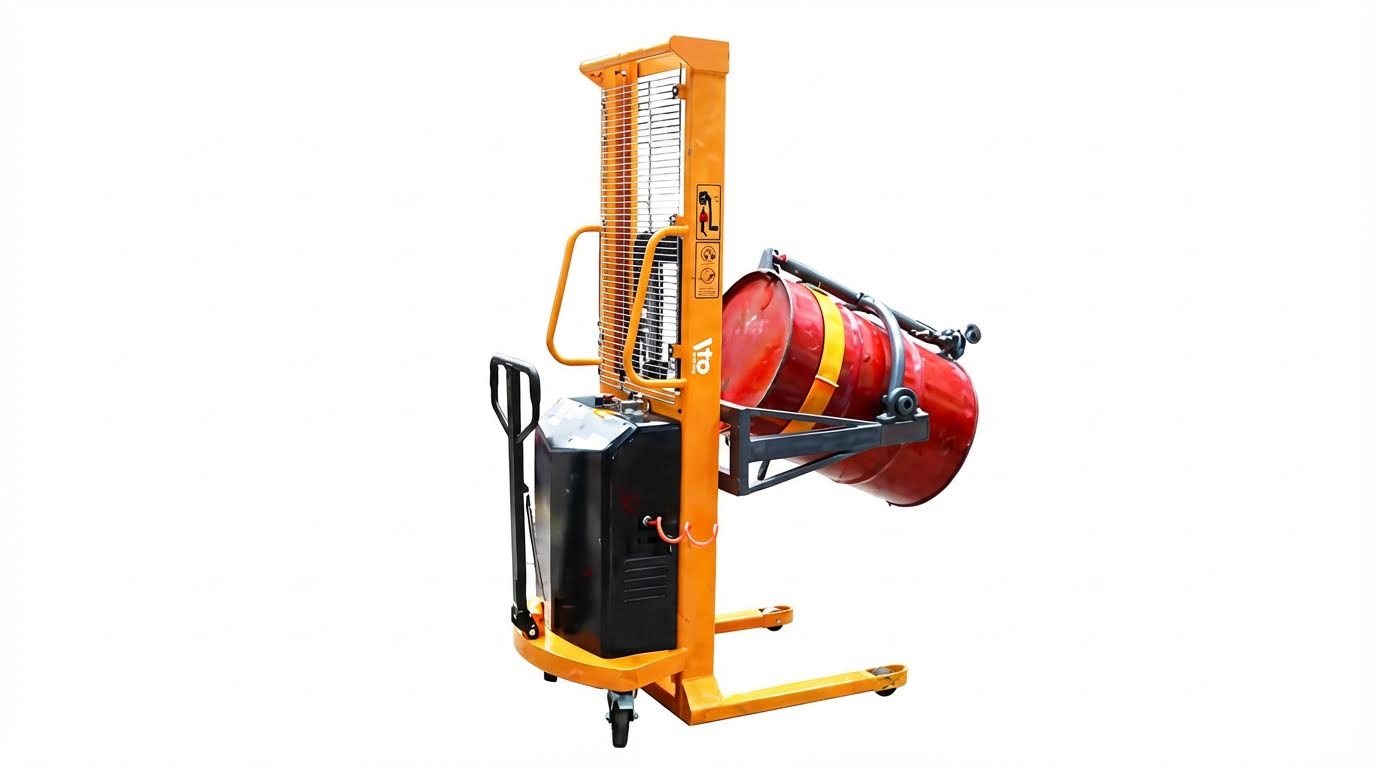
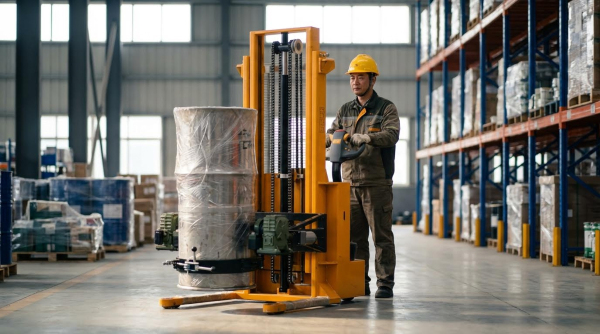
When operators ask “is it ok to stack drums with a forklift?”, the answer is yes only if the truck, attachment, and procedures are all suited to drum handling. Use forklift drum attachments, clamps, or specialized forks that can positively secure the drum body, not just the chime, to avoid slippage during lifting and stacking. Keep the load centered and as close to the mast as possible, and always travel with drums in the lowest practical position to reduce tipping risk. Powered industrial truck guidance emphasized centering the load near the mast and avoiding overloading to maintain stability. Material handling equipment usage guidelines for powered industrial trucks
- Approach stacks squarely, with forks level and at the correct height, to avoid striking or pushing drums out of alignment.
- Never use impact (ramming pallets or tiers) to straighten a stack; adjust tiers one drum at a time.
- Do not drag or push drums across pallets or floors with the forks; this can damage chimes and compromise stack stability.
- Observe posted floor load limits in storage areas so the combined weight of stacked drums and equipment does not exceed the safe capacity. General storage requirements and maximum safe load limits for floors
Forklift operators should receive task-specific training on drum stacking, including how stack height, drum contents, and aisle conditions affect the answer to “is it ok to stack drums here?”. Maintain clear aisles and passageways so trucks can maneuver without clipping stacks or emergency equipment. Guidance on keeping aisles and passageways clear for safe material handling
Inspection, FIFO Rotation And Secondary Containment
Even when engineering and handling are correct, “is it ok to stack drums” still depends on ongoing inspections and inventory control. Drums in stacks should be inspected on a defined schedule for rust, dents, seam damage, bulging from internal pressure, bung or lid distortion, and faded or illegible UN/DOT markings. Inspection criteria for drum replacement and storage best practices Drums that show structural damage or compromised markings should be removed from stacks and evaluated before further use.
Use a clear First-In, First-Out (FIFO) rotation system so older containers are used first and do not remain buried in the bottom tiers of long-term stacks. Tracking storage dates and locations reduces the chance that weakened drums stay in high stacks where a failure would have the greatest impact. FIFO inventory rotation recommendations for drum storage
Where drums contain hazardous or polluting substances, secondary containment is a key condition for deciding if it is ok to stack drums in a given area. Use spill pallets, berms, or other containment systems sized to capture a reasonable worst-case release, and ensure labels and UN markings remain visible from the aisle. Keep Safety Data Sheets (SDS) accessible near the storage zone so responders can quickly assess risks if a stacked drum leaks or fails. Secondary containment and SDS access recommendations for hazardous drum storage
Checklist: Operational Controls Before Stacking Drums
- Forklift and drum attachments inspected and rated for the intended load.
- Aisles clear, floor condition sound, and posted load limits understood. General material storage and housekeeping requirements
- Drums visually inspected for damage, bulging, or compromised closures.
- FIFO rotation plan in place so older drums are not trapped in lower tiers.
- Secondary containment installed and capacity verified for the stored materials.
“`
“”
Key Takeaways For Drum Stacking Policies
Safe drum stacking depends on treating every stack as a small structure that must carry load, resist impact, and survive a fire. Drum condition, closure torque, and product density set the basic structural limit. Pallets, floors, and chocking then control how that load transfers into the building without tilt, overhang, or point loading. Geometry keeps the center of gravity low and vertical, while blocking and interlocking preserve friction and prevent progressive collapse.
Fire protection and temperature are just as important. Stack height, aisle width, and sprinkler density must match the actual drum contents, not a generic rule of thumb. Higher specific gravity, flammables, or hot storage zones all argue for lower stacks and tighter controls. Forklift methods, attachments, and inspection routines then decide whether those engineered limits hold up in daily work.
The best policy is simple but strict. Engineer and document limits by product, zone, and equipment. Use conservative tier heights unless a detailed review supports more. Train operators to verify conditions before stacking and to treat damage, heat, and poor floors as automatic “no‑stack” triggers. With that discipline, you turn “is it ok to stack drums?” into a repeatable, defensible decision that protects people, property, and compliance for every Atomoving-equipped facility.
Frequently Asked Questions
Is it okay to stack drums on top of each other?
Stacking drums is possible, but it depends on the type of drums and the conditions. For material handling purposes, always follow manufacturer guidelines and safety standards. Drums should be stacked in a stable manner, with heavier drums at the bottom and lighter ones on top. Plastic Drum Stacking Guidelines recommend that filled drums stored horizontally should not be directly stacked and must be individually supported.
How high can you stack drums containing flammable liquids?
When stacking drums containing flammable liquids, safety is critical. The height of the stack should comply with local regulations and industry best practices. Typically, stacks should not exceed 3-4 drums high unless using specialized racking systems designed for such loads. Ensure the surface is level and stable to prevent tipping or collapse. Always refer to Safety Recommendations for specific scenarios and never stack drums in a way that compromises their integrity.