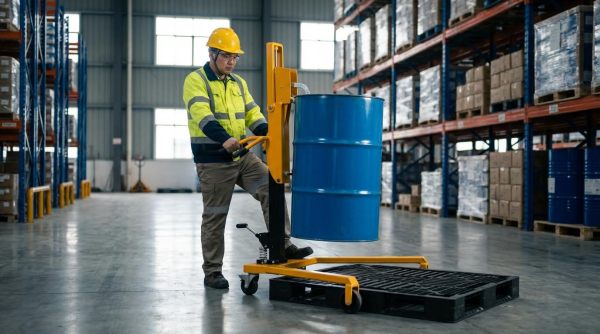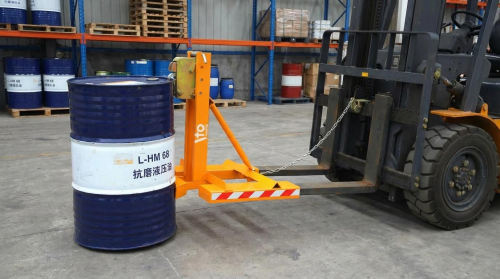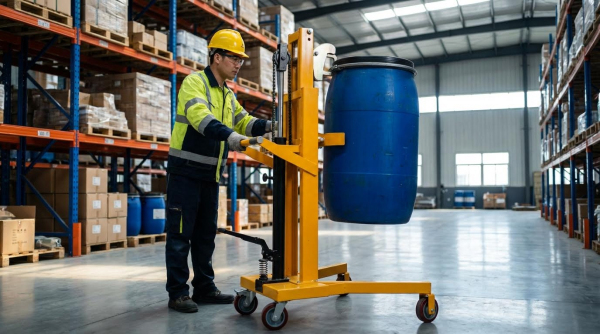
Safe handling of 55-gallon drums means controlling high weights (typically 180–360 kg per full drum) with methods that prevent musculoskeletal injury, spills, and tip-overs. This guide explains how to lift 55 gallon drum safely using manual techniques, mechanical drum stacker, and route/layout planning that align with OSHA expectations. You will learn practical one- and two-person methods, how to choose the right drum dolly and lifters, and how to design ergonomic workflows that keep ground forces, posture, and stability within safe limits. By the end, you can build a drum-handling program that cuts injury risk, reduces product damage, and improves throughput without violating safety regulations.
Understanding 55-Gallon Drum Hazards And Regulations
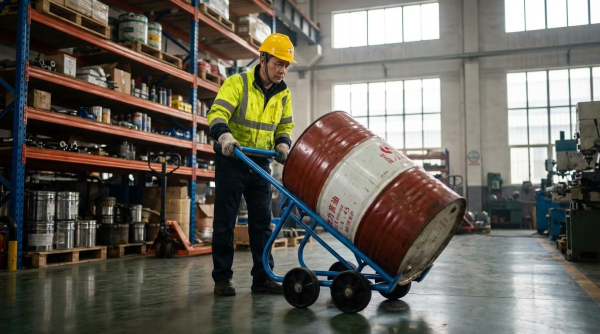
Understanding 55-gallon drum hazards means recognizing that a “single container” can weigh 180–360 kg, behave like a rolling battering ram, and trigger OSHA obligations for training, PPE, and mechanical aids before anyone decides how to lift 55 gallon drum safely.
This section explains the real weights and stability risks, OSHA’s expectations for drum handling, and the exact checks, labels, and PPE you need in place before any movement. It connects everyday shop-floor tasks—tilting, rolling, staging—to regulatory language so your procedures are both practical and compliant.
💡 Field Engineer’s Note: Treat every closed drum as “live load plus unknowns.” Even if you “know” the product, assume internal pressure, shifted center of gravity, or corrosion until inspection proves otherwise.
Typical Drum Weights And Stability Risks
Typical 55-gallon drum weights range roughly 180–360 kg (400–800 lbs), which makes full manual lifting unacceptable and shifts the safety focus to controlled tilting, rolling, and mechanical aids to prevent tip-overs and crush injuries.
| Parameter | Typical Range / Condition | Hazard Created | Field Impact For Operators |
|---|---|---|---|
| Full 55-gallon drum mass | ≈180–360 kg (400–800 lbs) depending on contents | Excessive spinal compression, crush risk if drum tips | Manual “dead lifting” is out of scope; plan mechanical aids or rolling on chime only. |
| Empty or lightly contaminated drum | Typically 18–25 kg (40–55 lbs) steel/plastic shell | Still awkward bulk; finger and toe pinch points | Team lift or mechanical aid preferred; if solo, strict technique and very short lift distances. |
| Center of gravity (CoG) | High and central for full drums; can shift with sloshing | Sudden roll, “runaway” on slopes, or snap-back when tilting | Always control top rim; avoid steep slopes and uncontrolled ramps. |
| Rolling on lower chime | Standard safe method for one-person movement when done correctly | Pinch points at hands and feet; drift into obstacles | Keep hands off direct pinch lines; maintain clear, dry path and use controlled pace. |
| Tip-over and “domino” risk | Greater with stacked or closely nested drums | Multiple drum fall, spill, and crush injuries | Limit stacking to two high and two wide per row to maintain stability and inspection access as recommended. |
From an ergonomic standpoint, even the low end of the 400–800 lbs range exceeds safe manual lift limits, so “how to lift 55 gallon drum” should really mean “how to avoid lifting and instead control movement with leverage and equipment.” Manual attempts to pick a full drum off the floor create peak spinal loads well above common ergonomic guidelines and invite acute back injuries or hernias.
Why stability changes with floor and gradient
On smooth, dry concrete, rolling resistance is low; a small push can accelerate a 300 kg drum faster than expected. On rough or sloped floors, the CoG can move outside the drum’s footprint during tilting, especially at thresholds or drain grates, dramatically increasing tip-over probability.
💡 Field Engineer’s Note: Never “catch” a tipping drum. The rotational energy of a 250–350 kg drum will overpower even a strong operator; step away, control the area, and reassess handling method.
OSHA Expectations For Drum Handling Safety
OSHA expectations for drum handling require employers to control heavy-load and chemical exposure risks by using mechanical aids, training workers, providing PPE, and inspecting drums before movement, even though no single numeric weight limit is specified.
- Minimize manual heavy lifting: OSHA requires employers to reduce exposure to heavy-load handling and musculoskeletal hazards; for drums in the 180–360 kg range, this means engineered and administrative controls, not brute force through mechanical aids.
- Use mechanical drum-handling equipment: Lever bars, drum trucks, lifters, and rotators are explicitly recommended to cut physical strain and improve control when moving or tipping drums for pouring or mixing in OSHA-aligned guidance.
- Inspect drums before handling: OSHA-consistent guidance stresses checking for leaks, corrosion, bulging, or missing/loose bungs to prevent spills and unexpected releases during movement before any lift or roll.
- Provide training in safe techniques: Staff must be trained in proper tilting, rolling, and team-lift methods for lighter drums, with emphasis on leg use, neutral spine, and avoiding hand crossing over pinch points for manual handling.
- Mandate appropriate PPE: Depending on contents, OSHA expects suitable PPE—gloves, eye/face protection, and protective footwear as a baseline—with chemical-resistant clothing and respiratory protection where hazardous or volatile chemicals are present for chemical drums.
- Control storage and stacking: OSHA-aligned best practice limits floor stacking of drums to two high and two wide per row to maintain stability and inspection access, reducing collapse and spill risks in storage areas.
In practical terms, OSHA’s general duty clauses and materials-handling rules mean your written procedure for how to lift 55 gallon drum must default to “use a mechanical aid” for full drums, and reserve manual techniques for very short, low-risk moves with light or empty containers. Failing to provide equipment and training shifts the risk—and liability—directly onto the employer.
💡 Field Engineer’s Note: During audits, regulators often walk the route from storage to point-of-use. If they see drums being “wrestled” by hand where a drum truck or lifter should exist, expect findings—even if no injury has occurred yet.
Pre-Handling Checks, Labeling, And PPE
Pre-handling checks, labeling, and PPE create the safety “envelope” around drum work by confirming what’s inside, whether the container is sound, and how well the operator is protected before any tilt, roll, or lift begins.
- Read labels and hazard information: Before touching a drum, operators should read the label to identify contents and hazards, including flammability, toxicity, and reactivity, so they can choose the correct handling method and PPE before movement.
- Inspect for leaks, corrosion, or damage: Visual checks for wet spots, rust, bulging, dents, or compromised seams help prevent spills and sudden structural failures while moving the drum as part of pre-handling.
- Verify bungs and lids are secure: Operators must ensure all bungs and lids are present and tight; missing or loose closures should be replaced or corrected before transport to avoid spills from sloshing or tipping during handling.
- Select baseline PPE: For non-hazardous contents, recommended PPE includes safety shoes with toe protection, durable work gloves, and eye protection to mitigate crush and splash risks in general drum work.
- Upgrade PPE for chemicals: For hazardous chemicals, operators may need chemical-resistant gloves, splash goggles, face shields, protective clothing, and sometimes respiratory protection where vapors or corrosive mists are possible based on contents.
- Confirm route and housekeeping: Before moving, verify that floors are level, dry, and free of hoses, debris, or obstructions, and that lighting is adequate along the planned path to prevent trips and destabilization during rolling or truck use on drum routes.
Quick pre-move checklist for supervisors
- Verify labeling: Product name, hazard class, and any special handling instructions present and legible.
- Assess drum condition: No bulging, severe dents, or visible leaks; closures intact.
- Confirm PPE: Operators wearing footwear, gloves, and eye/face protection appropriate to contents.
- Check equipment: Drum truck or lifter capacity adequate for estimated drum mass, with safety margin.
- Clear route: Path inspected end-to-end for slopes, thresholds, and obstructions.
💡 Field Engineer’s Note: Most “mystery leaks” found under drum racks trace back to missing bungs or hairline corrosion that was visible days earlier. Building a 30-second pre-move check into your SOP eliminates the majority of these incidents.
Manual Drum Handling And Ergonomic Techniques
Manual drum handling ergonomics means using body mechanics, team techniques, and route planning so operators control a 55-gallon drum’s mass without exceeding safe spinal loads or losing stability during movement.
Manual techniques are only appropriate for empty or light drums; a full 55-gallon drum can weigh 180–360 kg (400–800 lbs), so most “how to lift 55 gallon drum” questions should be answered with “use mechanical aids,” not raw muscle for typical drum weights and risks. When you must handle lighter drums manually, the goal is to keep the drum rolling on its chime, keep your spine neutral, and avoid twisting or crossing hands near pinch points per manual handling best practices. Route planning and storage layout then complete the system by reducing pushes, pulls, and sudden corrections that drive up musculoskeletal injury rates.
💡 Field Engineer’s Note: If a single person cannot rock the drum slightly with their legs (not their back), treat it as “mechanical aid only.” Struggling manually is where slipped discs and crushed toes happen.
One-Person Tilting, Rolling, And Chime Handling
One-person drum handling is limited to tilting and rolling light or empty drums on the lower chime, never dead-lifting the full weight of a 55-gallon drum off the floor.
- Confirm the drum is light enough: Verify the drum is empty or very light; full drums at 180–360 kg are beyond safe one-person manual lifting and should use trucks or lifters instead due to injury risk.
- Set your stance and PPE: Wear safety shoes and gloves, stand close with feet shoulder-width apart, one foot slightly forward, and keep the drum centered in front of your body for balance.
- Rock, don’t lift, to start movement: Place hands on the upper chime, keep your back straight, bend at the knees, and use your legs and body weight to rock the drum toward you instead of pulling with your back.
- Bring the drum to chime-rolling angle: Tilt the drum just enough so it balances on the lower chime edge; this converts a heavy vertical lift into a rolling motion with far lower spinal compression.
- Roll on the lower chime: Walk forward, guiding the drum by the top chime, using small pushes; avoid fast spins, and keep the drum close to your body to maintain control on flat, clear floors as recommended for one-person rolling.
- Avoid crossing hands at pinch points: When turning or parking the drum, never cross your hands over each other on the chime; crossed arms reduce reaction time and put fingers directly in crush zones.
- Lower the drum under control: To set the drum upright, reverse the tilt by stepping back and lowering with your legs, keeping hands on the upper chime and fingers clear of the floor contact area.
- Use simple aids whenever possible: For small repositioning, use a lever bar or pry bar to edge the drum instead of straining to lift or drag it by hand, which aligns with OSHA’s push to minimize heavy manual handling.
When is one-person handling acceptable?
One-person handling is only acceptable when the drum is empty or very light, contents are known and non-hazardous, the floor is level and dry, and the operator is trained and wearing PPE. Any doubt on weight or stability means switching to a drum truck or lifter.
💡 Field Engineer’s Note: A quick field test: if you need to “jerk” the drum to get it moving, it’s too heavy for solo manual handling. Jerking multiplies peak load on the spine and often causes sudden strains.
Two-Person Coordination And Load Sharing
Two-person drum handling uses synchronized movements and shared load paths so no single worker absorbs the full force of tilting, catching, or stabilizing a 55-gallon drum.
- Agree on a leader and commands: Designate one person as the caller (“tilt,” “roll,” “stop”) and rehearse commands; miscommunication is a primary cause of awkward twists and dropped drums during team lifts.
- Assess drum weight and contents together: Both workers confirm labeling, approximate weight, and any hazards before moving; if either doubts manual handling, escalate to mechanical equipment in line with OSHA’s preference for aids.
- Use mirrored stances for tilting: Stand on opposite sides or both behind the drum, feet staggered, backs straight, knees bent; push or pull in unison using leg power, not back flexion, to bring the drum onto its chime.
- Share control when rolling: One worker steers at the front chime while the other stabilizes from behind or the side; this reduces side loads and prevents sudden tipping if the drum encounters a floor defect.
- Coordinate turns and stops: The leader calls out turns and halts so both workers adjust their footwork simultaneously, preventing one person from twisting under load while the other is still pushing.
- Team handling at thresholds: At small lips or door sills, one worker lifts slightly on the chime while the other pushes; if the drum cannot clear a threshold smoothly, stop and use a drum truck or ramp.
- Lift only light drums together: For genuinely light drums, both workers should stay close, keep the drum between them, bend knees, and lift smoothly without jerking, keeping the drum close to their centers of gravity.
Common two-person mistakes to avoid
- Asynchronous lifting: One person lifts early, forcing the other to catch up with a twist.
- Side pulling: Workers at 90° angles pulling sideways into each other, increasing lateral shear on the spine.
- Silent moves: No verbal cues, so one person stops while the other is still pushing.
💡 Field Engineer’s Note: Two people do not double safe capacity if they’re out of sync; poor coordination often creates higher peak forces than a slow, controlled solo move with a lighter drum.
Route Planning, Housekeeping, And Storage Layout
Route planning and layout reduce drum-handling risk by shortening travel distances, eliminating trip hazards, and keeping stacks low and accessible so operators rarely need to “rescue” unstable drums manually.
- Plan the path before moving: Walk the intended route, checking for tight turns, slopes, thresholds, and congestion; pre-planning is a core control for trips and collisions during drum handling per route planning guidance.
- Maintain clean, dry walking surfaces: Remove debris, hoses, and loose materials, and clean up liquids; rolling a drum over wet or cluttered floors drastically increases slip and tip-over risk.
- Ensure adequate lighting and visibility: Keep aisles and doorways well lit so operators can see floor defects, labels, and other traffic, reducing sudden evasive moves while controlling a heavy drum.
- Control slopes and transitions: Identify ramps, dock plates, and floor level changes; use mechanical aids or additional help at these points, as manual chime rolling is only safe on relatively level surfaces.
- Designate clear drum aisles: Mark drum routes with floor paint or signage to separate pedestrian, forklift, and drum-rolling paths, reducing interaction points and near-misses.
- Follow conservative stacking limits: Store 55-gallon drums no more than two high and two wide per row to maintain stability and allow inspection access to each drum surface as recommended for safe stacking.
- Provide space for equipment use: Lay out storage rows with enough aisle width for drum trucks, lifters, or pallet jacks so operators are not forced into unsafe manual lifts due to poor access.
Layout tips that reduce manual lifting
Place high-turnover drums closest to points of use, keep hazardous drums in bunded areas with direct equipment access, and avoid deep floor stacks that require rolling drums out from the middle. Every extra push, pull, or twist is another opportunity for injury.
💡 Field Engineer’s Note: The cheapest ergonomic win is often paint and housekeeping, not equipment—clear, short, dry routes can remove half the risky manual movements before you even buy a drum lifter.
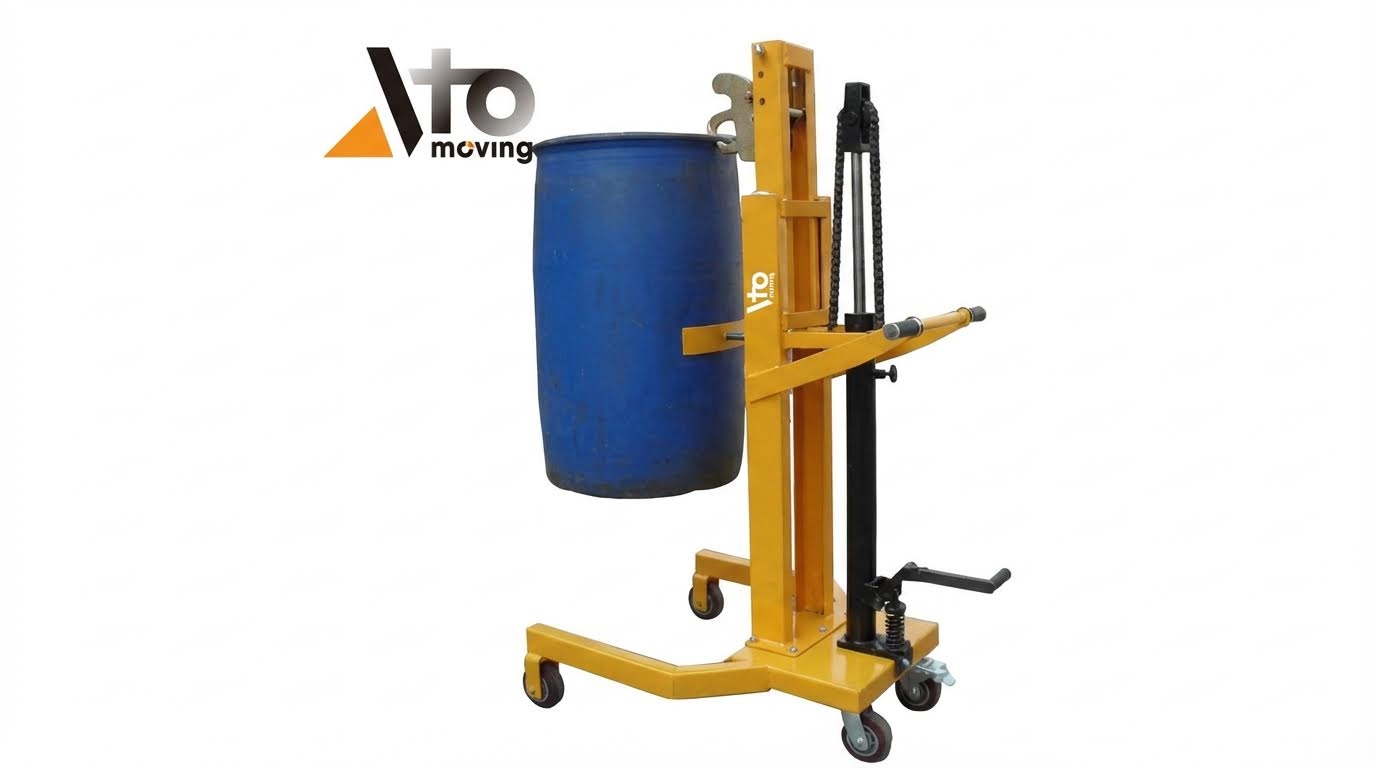
Selecting Mechanical Aids And Drum Lifters
Mechanical drum aids are the safest answer to how to lift 55 gallon drum loads because they transfer the 180–360 kg mass to engineered devices instead of the operator’s spine, hands, and feet.
When you choose mechanical aids, you are really deciding how much human force, floor space, and capital you will trade to move a 400–800 lbs (180–360 kg) drum safely per move. The right device cuts musculoskeletal risk, improves control on slopes, and standardizes how operators handle hazardous contents.
💡 Field Engineer’s Note: Every serious injury I’ve investigated with drums had the same root cause: someone tried to “just muscle it.” If a drum is more than one-third full, assume you need a mechanical aid.
Types Of Drum Lifters, Trucks, And Rotators
Drum lifters, trucks, and rotators are specialized tools that clamp, cradle, or grip the drum so operators can lift, transport, and pour without manually bearing the 55-gallon drum weight.
Understanding the main equipment families is the first step in deciding how to lift 55 gallon drum loads in your facility. Each type targets a different motion: vertical lifting, horizontal transport, or controlled tipping/rotating for decanting.
| Equipment Type | Typical Use Case | How It Grips The Drum | Best For Distance / Height | Field Impact On Operators |
|---|---|---|---|---|
| Lever bars / pry bars | Small repositioning, edging drums onto pallets | Uses bar under drum edge as a fulcrum | Minimal lift, short moves | Reduces initial “breakaway” force but still needs other equipment for full transport in practice. |
| Drum hand trucks / trolleys | Manual moving of single drums on flat floors | Curved backrest and hooks at the drum chime | Short to medium distances at floor level | Takes almost all weight off the operator; still requires push/pull force and good housekeeping. |
| Drum lifters (manual or hydraulic) | Raising drums onto pallets, scales, or low racks | Clamp under chime or around drum body | Vertical lift up to ~1,500 mm depending on model | Allows one person to lift a full drum with minimal effort; main risk shifts to stability and floor condition. |
| Drum rotators / tilters | Pouring or decanting contents from drums | Band clamp or jaws around drum circumference | Rotation 120–180° with moderate lift | Controls flow during tipping, preventing sudden surge and splash exposure for hazardous liquids. |
| Forklift‑attached drum handlers | Moving multiple drums, loading trucks, higher stacking | Fork-mounted clamps or pockets that grab drum chimes | Longer distances and higher lifts (per forklift rating) | Greatly increases throughput but needs trained operators and strict traffic control to avoid tip-overs. |
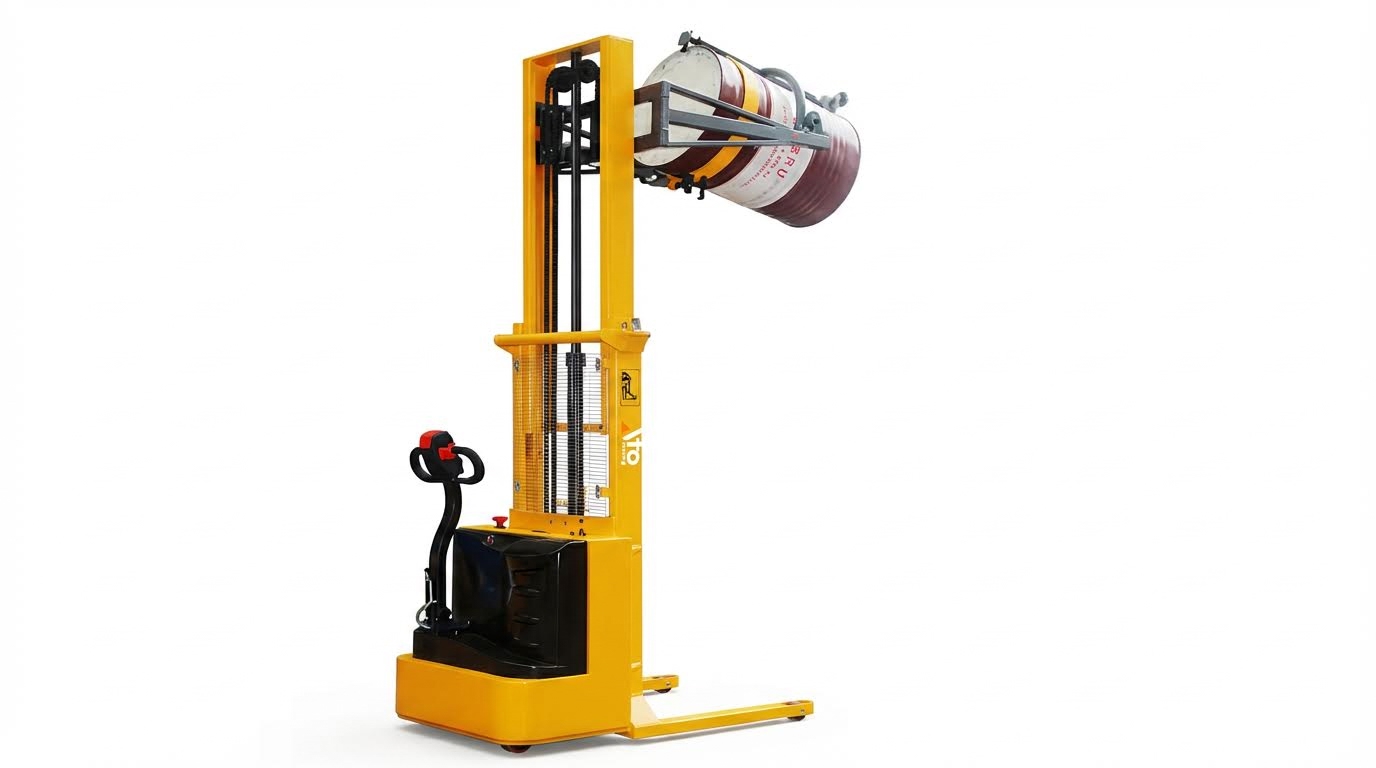
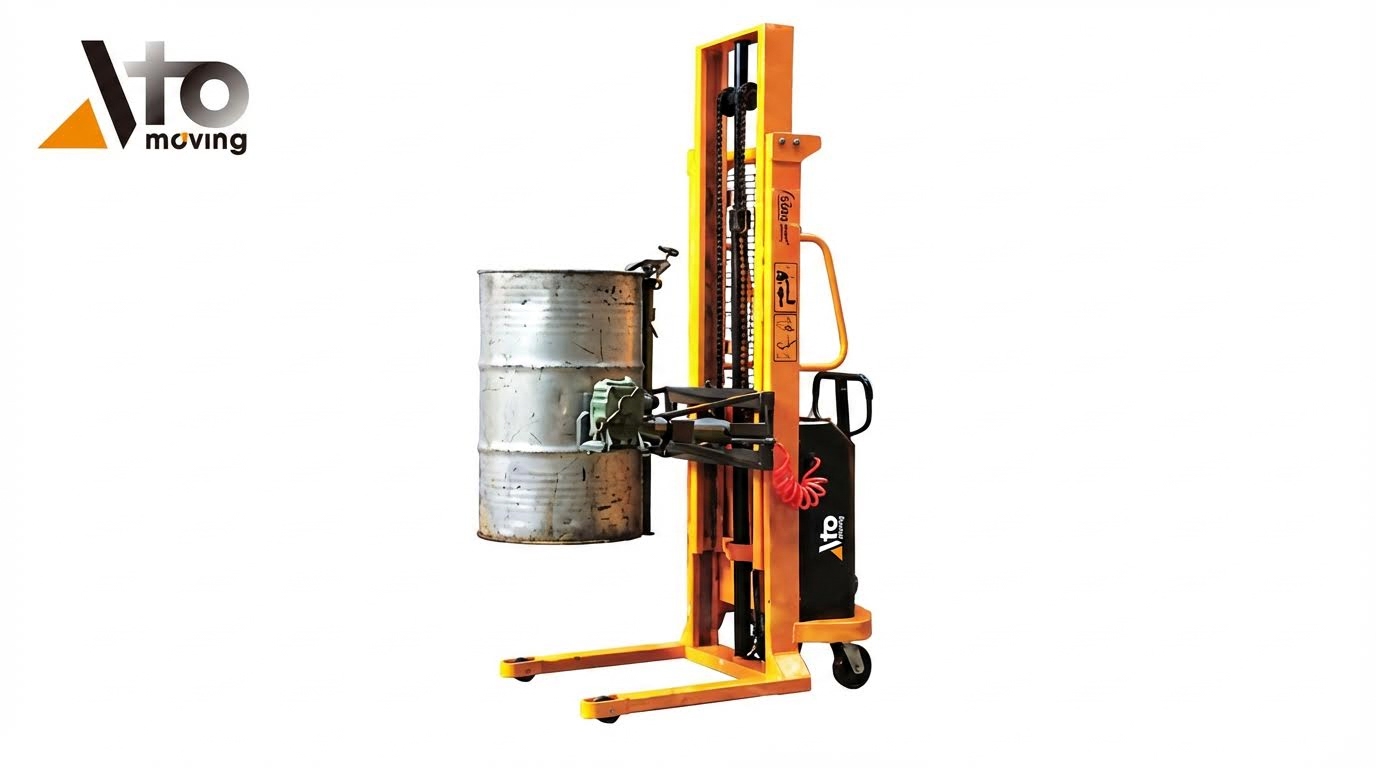
| Powered drum lifter/transporters | Frequent moves, mixed gradients, or long routes | Powered clamp with integrated lift mast | Up to ~1,500 mm lift and tens of meters travel | Minimizes push/pull forces and strain; ideal where manual trucks are marginal or routes include slopes. |
When is a simple drum truck enough?
Use a manual drum truck when drums move occasionally, routes are short and flat, and contents are non‑hazardous. Once you see daily moves, slopes, or chemical exposure, step up to lifters or powered aids.
💡 Field Engineer’s Note: If you routinely “walk” drums by tilting and rolling on the chime, you already have the volume to justify at least drum trucks. The payback is usually under 12–18 months just from reduced injuries and time.
Key Capacity, Lift Height, And Stability Criteria
Capacity, lift height, and stability are the three core engineering checks that determine whether a drum lifter is safe for your heaviest 55-gallon drums and your actual floor conditions.
Because a full 55-gallon drum can weigh 180–360 kg, OSHA-aligned best practice is to choose mechanical aids with a comfortable safety margin and geometry that resists tipping during travel and tilting over real floors. This is the “physics” answer to how to lift 55 gallon drum loads without surprises.
| Selection Factor | Typical Value / Example | What To Verify | Field Impact On Safety & Usability |
|---|---|---|---|
| Rated capacity | Many drum lifters are rated around 400–500 kg; some powered units list 1,144 lbs (≈ 520 kg) capacity per spec. | Max drum weight in your facility plus at least 25% safety margin for dynamic loads and sloshing. | Prevents overloading when contents are denser than water or when drums are slightly overfilled or moving over rough floors. |
| Lift height | Common ranges: 1,000–1,500 mm (e.g., ~1,500 mm / 59 in for some electric lifters) on product data. | Required height to clear pallets, bund walls, scales, or first beam level of racking. | Too little height forces unsafe improvisations like double‑stacking pallets or partial lifts to “just make it.” |
| Stability geometry | Longer wheelbase, wider track width, and larger wheels are preferred for drums. | Check that the drum’s centre of gravity stays inside the wheel polygon at full tilt and at max height. | Directly reduces tip‑over risk when turning, crossing thresholds, or operating on slight slopes. |
| Floor and gradient limits | Most manual devices assume near‑level, smooth floors; slopes and drains change the game. | Maximum allowed slope and surface type (concrete, asphalt, grating). Avoid use on steep ramps. | On grades, the effective load feels much heavier, and stopping distance increases, especially with wet or dusty floors. |
| Drum compatibility | Some hydraulic lifters handle 30, 55, and 85‑gallon drums up to 990 lbs (≈ 450 kg) per example. | Steel vs plastic drums, open‑head vs tight‑head, and different diameters or chime profiles. | Wrong clamp profile can slip off plastic or damaged chimes, causing sudden drops or spills. |
| Environment & contents | Hazardous chemicals, flammables, or food‑grade products. | Need for spark‑resistant materials, corrosion resistance, and compatibility with PPE and spill controls. | Aligns with OSHA expectations to minimize exposure to hazardous substances during drum handling. |
💡 Field Engineer’s Note: The most common mistake I see is buying to today’s average drum weight. Always size equipment to your heaviest, densest product plus a margin; chemistry changes faster than equipment budgets.
Integrating Powered Aids And Future Automation
Powered aids and automation turn drum handling from a high‑risk manual job into a controlled, repeatable material flow that supports future robotics and higher throughput.
Once you map routes, gradients, and touchpoints, powered drum lifters, stackers, and lift tables can be slotted in where manual force is highest and incident risk is greatest per OSHA-aligned guidance. This is the long-term, systems-level answer to how to lift 55 gallon drum loads consistently across shifts and operators.
- Powered drum lifter/transporters: Reduce push/pull forces on long routes and ramps, standardize clamping force, and allow controlled lift/tilt via buttons rather than body weight.
- Scissor lift tables and platforms: Bring drums to ergonomic working height (≈ 700–1,000 mm) for sampling, bung removal, and pump installation, cutting awkward bending and reach.
- Integration with pallet flow and conveyors: Position lifters at infeed/outfeed points so drums are only manually touched for identification and connection, not for brute lifting.
- Future AGV/AMR compatibility: Choose drum stations and pallets that an automated guided vehicle or mobile robot can interface with later, avoiding costly re‑layout.
- Training and lock‑in of safe methods: Use SOPs and checklists so operators always choose the mechanical aid first, aligning with OSHA’s expectation to minimize manual heavy-load handling.
Where to start if your budget is limited
Start by upgrading the highest‑risk tasks: decanting (add drum rotators) and long pushes (add powered drum movers or tuggers). You can phase in lift tables and higher‑reach equipment later as volumes grow.
💡 Field Engineer’s Note: Think of powered drum equipment as “exoskeletons on wheels.” You’re not just lifting a drum; you’re engineering out the decision point where someone might choose their back over the right tool.

Final Considerations For Safe Drum Handling Programs
Safe 55-gallon drum handling is a design problem, not a strength test. The program works when weight, geometry, and human limits all line up. You start by treating every drum as a heavy, unstable load with unknowns. Pre-move checks, clear labels, and proper PPE then close off the main failure paths: surprise contents, weak shells, and unprotected operators.
Manual methods have a narrow, well-defined role. Use them only for empty or light drums, on short, flat, clean routes, with trained staff and strict technique. For full drums, the default must be mechanical aids sized for your heaviest product, required lift height, and real floor conditions. Stable wheelbase geometry and controlled rotation turn tip-over energy into predictable motion.
Route planning and storage layout complete the system. Short, dry, well-lit paths and conservative stacking remove many risky moves before they start. Over time, powered drum lifters, rotators, and lift platforms—such as those from Atomoving—let you lock in low forces and repeatable handling. The best practice is clear: write procedures that always choose equipment over muscle, verify conditions before every move, and audit routes and gear regularly. That is how you keep drums upright, operators uninjured, and operations compliant.
Frequently Asked Questions
How do you lift a 55-gallon drum?
Lifting a 55-gallon drum safely requires using equipment designed for the drum’s weight. Position the lifter around the drum’s center of gravity, typically at the upper third. Fully engage the lifting mechanism before raising the drum and move slowly to maintain control. Drum Lifting Guide.
How heavy is a full 55-gallon drum?
The weight of a full 55-gallon drum depends on its contents. For example, a drum filled with water weighs approximately 220 kg, while one filled with concrete can weigh around 517 kg. Always check the material inside before choosing lifting equipment. Weight Calculation Tips.
What safety precautions should you follow when lifting heavy objects like drums?
To lift heavy objects safely, get as close to the load as possible and keep your back straight. Bend at the knees, tighten your stomach muscles, and avoid twisting while lifting. Use proper equipment rated for the weight and ensure good handholds. Lifting Safety Tips.