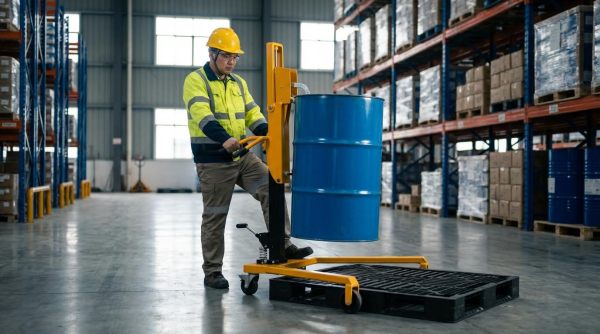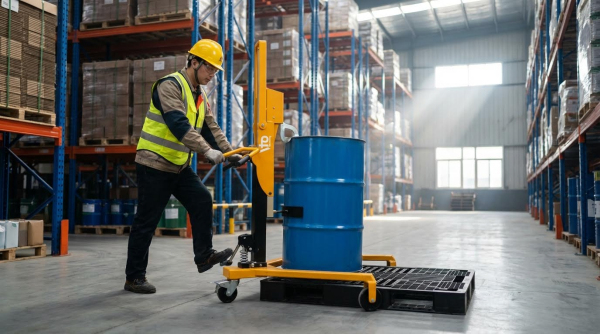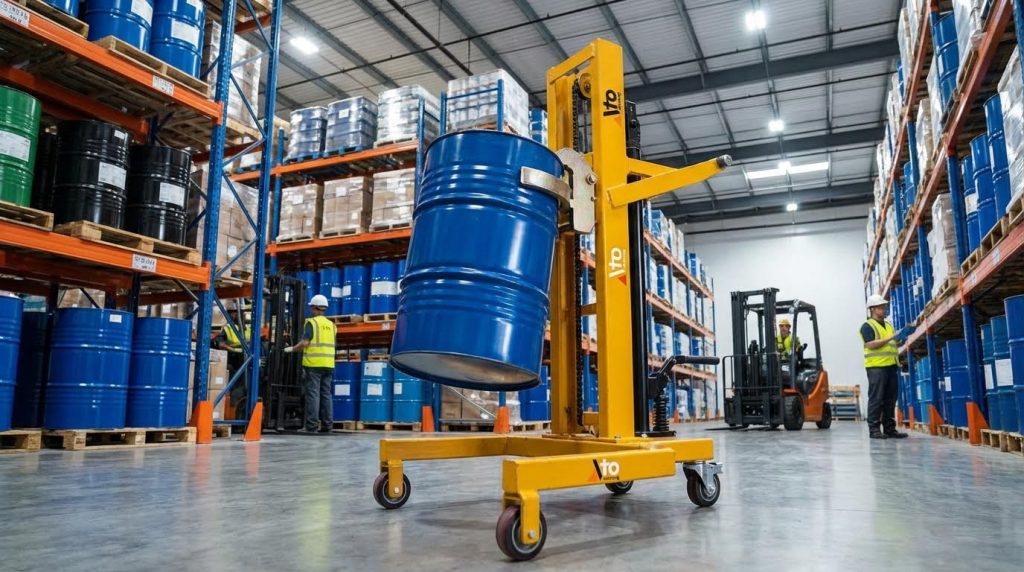
Safe road transport of 55-gallon (200 L) drums depends on engineering-grade securement using straps, blocking, and palletization that can resist real braking and cornering forces. This guide explains how to transport 55 gallon drums using correct drum types, layouts, and lashing so loads stay stable, compliant, and predictable from warehouse to delivery point.
Engineering Basics Of Securing 55-Gallon Drums
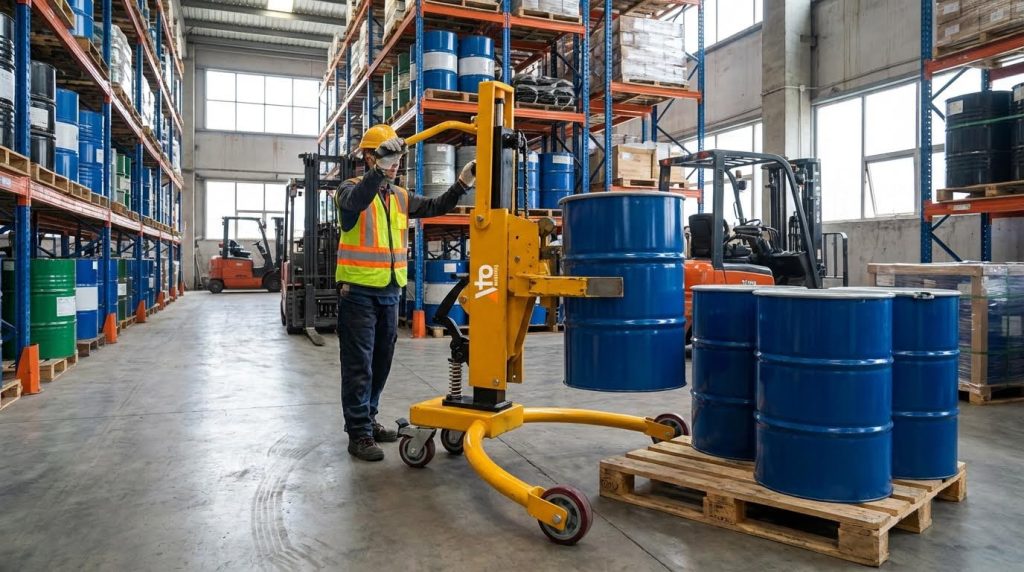
Engineering basics for how to transport 55 gallon drums safely focus on drum mass, inertia, regulatory design accelerations, and drum/closure ratings. These fundamentals drive strap sizing, blocking design, and pallet layouts that actually survive real road forces.
Drum mass, inertia, and load cases
Drum mass and inertia determine the minimum forces your securement system must resist in every direction during transport. A full 200 L (55-gallon) drum often exceeds 170 kg, so even “small” accelerations create very high loads. Reference
| Parameter | Typical Value / Range | Operational Impact |
|---|---|---|
| Nominal drum capacity | 200 L (55 gallons) | Defines liquid volume and potential spill magnitude. |
| Typical full drum mass | >170 kg | Drives strap WLL, pallet rating, and handling equipment choice. |
| Number of drums per common pallet | 4 on 1200 mm × 1200 mm pallet | Unit load mass easily exceeds 680 kg; forklift rating must match. |
| Primary load directions | Forward, rearward, lateral, vertical | Securement must work in braking, acceleration, cornering, and bounce. |
For a 170 kg drum, a forward deceleration of 0.8 g creates a design force of roughly 1,330 N acting on the securement system. When drums are palletized in groups of four, the effective load on straps and blocking multiplies quickly, which is why one of the first rules in how to transport 55 gallon drums is to think in terms of “unit loads” rather than single containers.
- Mass: Full drum mass sets baseline inertia – heavier contents mean higher braking and cornering forces.
- Center of gravity: Typically above mid-height – increases tipping risk in side impacts and on uneven roads.
- Load cases: Braking, acceleration, cornering, vibration – your design must survive all, not just straight-line braking.
- Single vs palletized drums: Single drums can roll; palletized drums can slide or topple – different failure modes require different controls.
How engineers idealize drum loads
Engineers often model a drum as a rigid cylinder with lumped mass at its center of gravity. For securement, this is conservative enough, because the liquid slosh and shell flexibility are usually second-order effects compared to the gross inertial forces from vehicle motion.
💡 Field Engineer’s Note: When drums are not filled to a consistent level, sloshing can shift the effective center of gravity by several tens of millimeters. In marginal designs, that extra moment is enough to walk straps loose or start a slow topple in long corners.
Regulatory forces and design accelerations
Regulatory design accelerations specify the minimum inertial forces that straps, blocking, and pallets must resist for compliant drum transport. For road vehicles, engineers typically design for about 0.8 g forward, 0.5 g rearward, and 0.5 g lateral accelerations. Reference Reference
| Direction | Design acceleration | Force on 170 kg drum | Best For… |
|---|---|---|---|
| Forward (braking) | ≈0.8 g | ≈1,330 N | Hard braking and emergency stops. |
| Rearward (acceleration) | ≈0.5 g | ≈830 N | Hill starts, aggressive acceleration. |
| Lateral (cornering) | ≈0.5 g | ≈830 N | Roundabouts, lane changes, curves. |
These accelerations come from transport and cargo-securing standards that underpin DOT, PHMSA, and FMCSA expectations for how to transport 55 gallon drums on public roads. Reference Engineers then size straps, chains, and blocking so that the sum of their working load limits (WLL) in each principal direction exceeds these forces with a safety margin.
- Forward load (0.8 g): Dominates strap design – controls minimum number and strength of tie-downs.
- Rearward and lateral loads (0.5 g): Critical for blocking – prevent slow creep into doors or side walls.
- Vertical dynamics: Not always explicit in g-values – but bumps and potholes can unload friction, so you never rely on friction alone.
- System approach: Straps, pallets, and vehicle body share loads – weakest link (often pallet deck) sets real capacity.
Regulations for drum transport also require that packaging and securement methods withstand standardized mechanical tests such as drop, stack, leakproofness, and vibration, which reflect these same accelerations in a controlled way. Reference
Why safety margins matter in tie-down calculations
Engineers do not size straps exactly to the calculated inertial forces. They add safety margins to cover real-world factors like strap wear, angle effects, and uneven load sharing between tie-downs. This is especially important when drums of different fill levels share the same pallet.
💡 Field Engineer’s Note: In practice, lateral forces from a badly cambered or potholed road can exceed the nominal 0.5 g for a moment. That is why I treat 0.5 g as a minimum and always check that blocking and pallets can take brief spikes above that level without crushing drum sidewalls.
Drum types, UN ratings, and closures
Drum types, UN ratings, and closure systems define which drums are legally and mechanically suitable for specific contents and transport conditions. For safe road transport of 55-gallon drums, you must match drum construction and UN code to the product hazard and route risk. Reference
| Drum type / UN code example | Typical construction | Key features for transport | Operational Impact |
|---|---|---|---|
| 1A1 / 1A2 (steel drums) | Rigid steel shell, non-removable or removable head | High mechanical strength, good for many hazardous liquids. | Better resistance to strap pressure and stacking loads. |
| 1H1 / 1H2 (plastic drums) | UV-resistant polyethylene, tight or open head | Resist corrosion and many chemicals, but deform more under load. | Require careful strap tension and corner protection. |
| 1G (fiber drums) | Fiber body with metal or plastic ends | Lighter, lower mechanical strength. | More sensitive to crushing and moisture; not ideal for harsh routes. |
UN/DOT regulations limit drum capacity to 450 L and net mass to 400 kg for drums, with detailed performance tests for stacking, dropping, vibration, and leakproofness. Reference For 200 L (55-gallon) sizes, this means that a compliant, UN-rated design already has a built-in strength envelope, but only if closures are assembled to specification.
- UN ratings: Encode drum material, type, performance level – ensure the drum can legally carry the intended hazard class.
- Closures and gaskets: Must match chemical and reuse pattern – prevent leaks during vibration and thermal cycling.
- Torque and sealing: Regulations call for documented closure torque – under-torque leaks, over-torque damages threads or gaskets.
- Labeling and hazard marks: Labels, UN numbers, and placards must reflect actual contents – critical for emergency response and regulatory compliance. Reference
For anyone planning how to transport 55 gallon drums on public roads, regulations also require pre-trip inspections to confirm drum integrity, leak-tight closures, and legible labels before loading. Reference This inspection step closes the loop between theoretical UN performance and the real, sometimes damaged, drums you actually load.
Understanding salvage and overpack drums
Salvage drums are UN-rated overpacks tested for leakproofness, stacking, dropping, and vibration to contain compromised drums with hazardous contents. They carry specific UN markings and the word “SALVAGE.” Overpack drums without salvage ratings provide secondary containment for intact drums but do not replace a damaged primary drum in regulated hazardous service. Reference
💡 Field Engineer’s Note: I treat lightly deformed drum rims as a red flag. Even if the shell passes a quick visual check, distorted chimes often prevent uniform gasket compression, which shows up later as seepage once the trailer hits real-world vibration.
Straps, Blocking, And Palletization Design
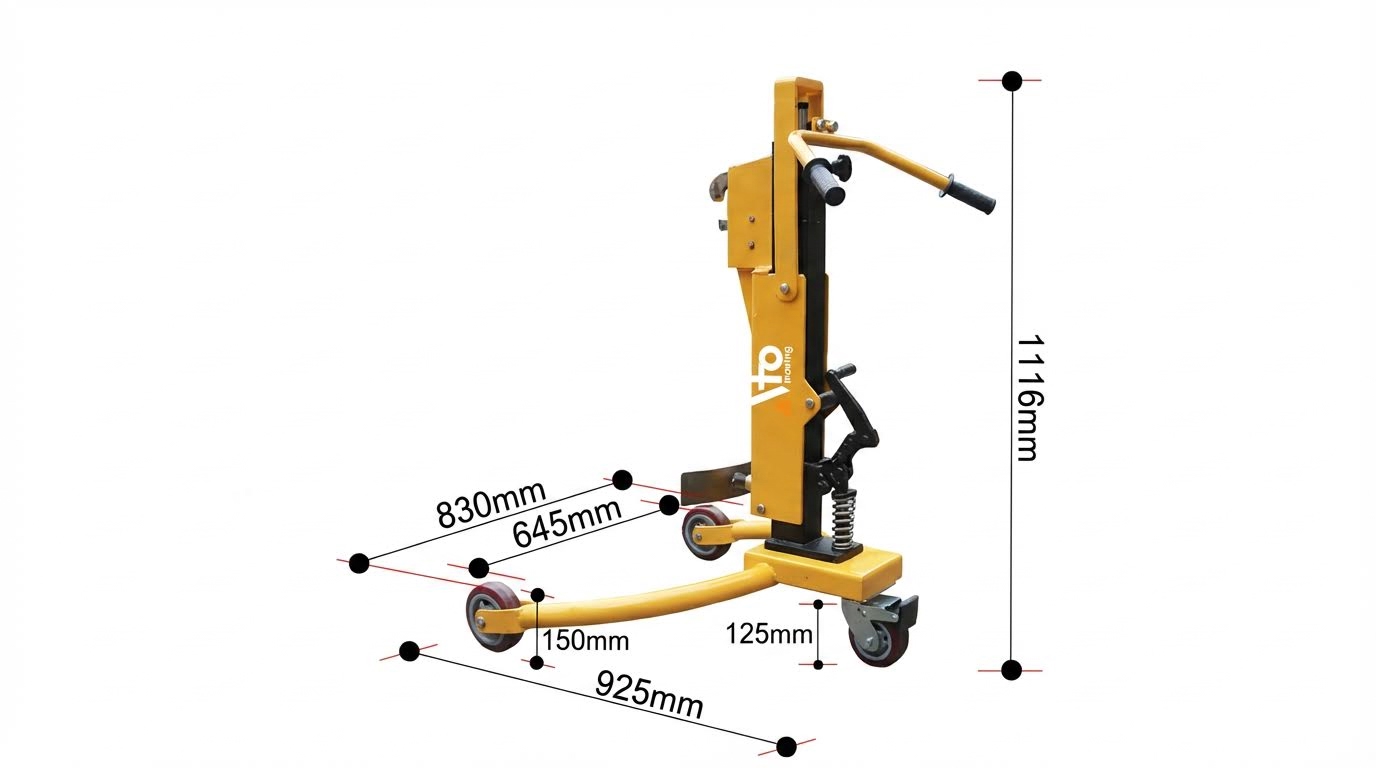
This section explains how to transport 55 gallon drums safely by engineering the right combination of straps, blocking, friction control, and pallet layouts so the load survives 0.5–0.8 g road forces without shifting or toppling.
Strap sizing, WLL, and tie-down geometry
Correct strap sizing and geometry ensure the lashing system can resist braking, cornering, and vibration loads with margin when transporting 55-gallon drums.
A full 55-gallon (200 L) drum often exceeds about 170 kg, so inertial forces during transport are significant. Design assumptions for road vehicles typically use forward loads of around 0.8 g during hard braking, 0.5 g rearward during acceleration, and 0.5 g laterally during cornering, and the sum of strap capacities in each direction must exceed these loads with safety margin. Engineering guidance describes these design accelerations and load paths. Straps used for drum transport commonly range from 25–50 mm in width and must have a working load limit (WLL) that exceeds the calculated design loads, while anchors, hooks, and rings must match or exceed the strap WLL to avoid weak links. Industry guidance highlights the need for WLL above design forces and compatible hardware.
| Design Parameter | Typical Value / Range | What It Controls | Operational Impact for 55-gallon Drums |
|---|---|---|---|
| Drum mass (full) | >170 kg | Base inertia in all directions | Determines minimum strap WLL and number of lashings needed per drum or pallet |
| Forward design acceleration | ≈0.8 g | Braking loads | Drums must not slide or tip during emergency stops |
| Rearward design acceleration | ≈0.5 g | Acceleration loads | Prevents rearward shift when truck pulls away or climbs grades |
| Lateral design acceleration | ≈0.5 g | Cornering loads | Controls side sway and pallet walking in bends or lane changes |
| Strap width | 25–50 mm | Contact area and tensile capacity | Wider straps reduce local pressure on drum chimes and closures |
| WLL vs design load | WLL > design force | Safety margin | Ensures straps stay elastic and do not yield under peak loads |
- Strap routing over drum tops: Pass straps over drum tops or chimes – limits tipping and keeps closures seated during 0.8 g braking.
- Direct vs indirect lashing: Tie straps directly to the chassis where possible – reduces slack and load path uncertainty.
- Angle of tie-down: Use low angles for frictional tie-down and steeper angles for direct restraint – balances vertical clamping with horizontal holding force.
- Hardware compatibility: Match hooks, buckles, and anchor points to strap WLL – avoids a single weak component failing first.
- Strap condition: Reject straps with cuts, burns, or deep abrasion – preserves real tensile capacity close to rated WLL.
How to estimate required strap capacity for a drum pallet
Multiply total pallet mass by design acceleration (e.g., 0.8 g) to get required force, then divide by the number of straps in that direction and ensure each strap’s WLL exceeds the resulting per-strap load with margin.
💡 Field Engineer’s Note: On mixed drum loads, avoid routing high-tension straps directly over plastic or fiber drum lids without corner protection. Concentrated strap pressure can ovalize closures, causing slow leaks that only appear after several hours of vibration.
Blocking, anti-roll devices, and friction control
Blocking and friction control prevent drums from rolling or sliding so straps only have to manage dynamic peaks, not continuous movement.
Blocking and bracing methods for 55-gallon drums include timber blocks, cross boards, side boards, and void fillers that eliminate gaps and lock drums in place. Guidance emphasizes using timber blocks, cross boards, and void fillers to prevent movement. For individual or mixed loads, anti-roll devices such as chocks, drum cradles, or wedges fixed to the deck stop circular drums from acting like rollers under lateral or longitudinal forces. Specialized anti-roll devices are recommended for mixed or non-palletized drums. Friction mats between drums and pallets raise the static friction coefficient, reducing the tendency to slide under 0.5–0.8 g accelerations, while shaped cradles or V-blocks support the drum curvature and transfer loads into the pallet instead of the drum wall. Engineering practice also uses friction mats and shaped cradles to increase stability.
| Control Element | Main Function | Typical Implementation | Operational Impact |
|---|---|---|---|
| Timber blocks / wedges | Prevent rolling | Fixed to deck against drum chimes | Stops individual drums from moving even if strap tension relaxes |
| Cross boards / side boards | Prevent sliding | Boards nailed or bolted across pallet or truck floor | Creates a rigid frame that drums push against under braking |
| Void fillers / dunnage bags | Eliminate gaps | Inflatable bags or foam between drum groups | Prevents drums from building momentum across open spaces |
| Anti-roll cradles / V-blocks | Support curvature | Shaped saddles under drum body | Transfers loads into pallet, reduces shell denting |
| Friction mats | Increase µ (friction) | High-friction sheets under drums or pallets | Reduces required lashing pretension for same stability |
- Edge blocking for palletized drums: Block pallet edges and corners – stops the entire unit from creeping across the trailer deck.
- Zero-gap principle: Design layouts with minimal free space – avoids drums gaining kinetic energy before hitting restraints.
- Load path clarity: Ensure blocking contacts pallet structure, not just drum walls – protects thin shells from crushing.
- Mixed loads: Use chocks or cradles for isolated drums – prevents them from rolling into adjacent freight.
- Deck condition: Keep floors clean and dry – maintains friction performance of mats and pallet timber.
When to add friction mats under drum pallets
Use friction mats when trailer decks are smooth steel or coated and when you cannot achieve enough strap pretension or blocking to resist 0.8 g braking without relying heavily on lashing forces.
💡 Field Engineer’s Note: On polished or painted trailer floors, even heavy drum pallets can slide several centimeters during a single hard brake. A thin friction mat under each pallet often gives more stability than adding one extra strap.
Pallet layouts, stack limits, and unitization
Correct pallet layouts, stack heights, and unitization methods create compact drum groups that stay stable as a single mass under road accelerations.
Pallets for 55-gallon drums should have tight deck gaps, typically limited to about 20 mm, so drum chimes cannot drop through under vibration or point loading. Operators commonly use 1200 mm × 1200 mm pallets carrying four drums in a square pattern, which provides symmetry and reduces eccentric loading compared with mixed layouts that increase gaps and movement during hard braking. Engineering references describe 1200 mm by 1200 mm pallets with four-drum square layouts and small deck gaps. Stack height limits depend on drum design, fill level, pallet strength, trailer floor rating, and stability under longitudinal decelerations of about 0.5–0.8 g; many operators therefore restrict drum stacks to one pallet high in road transport to reduce toppling risk. Guidance notes that stack limits are governed by compressive strength and 0.5–0.8 g deceleration. To form a stable unit load, at least two horizontal straps per pallet layer are recommended, passing over drum chimes or through pallet openings, with tension high enough to resist inertial forces but below strap yield; corner protectors distribute pressure and prevent cutting into drum shells or lids. Recommendations include at least two straps per layer and use of corner protection.
| Pallet / Unitization Aspect | Typical Practice | Engineering Purpose | Best For… |
|---|---|---|---|
| Pallet size | ≈1200 mm × 1200 mm | Symmetric drum layout | Standard trailers and containers with 4-drum square pattern |
| Deck gap | ≤20 mm | Prevent chime drop-through | Steel or plastic drums with narrow chimes |
| Drum pattern | Four-drum square | Low eccentricity, tight packing | General freight where stability is critical |
| Stack height | Often 1 pallet high for road | Reduce toppling under 0.8 g | Routes with harsh braking or uneven roads |
| Horizontal straps | ≥2 per pallet layer | Lock drums to pallet | Any route where drums must behave as single unit |
| Overpacks / slipcovers | 2–3 ply corrugated board | Flat surfaces for banding, abrasion protection | High-value or sensitive drum finishes |
| Stretch wrap overlap | ≈50% overlap | Continuous membrane from pallet to drum body | Vibration-heavy routes where wrap integrity matters |
- Overpacks and slipcovers: Use 2–3 ply corrugated slipcovers around drum clusters – protects against abrasion and creates a flat surface for banding. Guidance recommends such overpacks and vertical banding to form boxed unit loads.
- Stretch wrapping: Apply stretch wrap from pallet deck up the drum body with at least 50% overlap – forms a continuous skin that resists lateral pressure. Engineering practice describes this overlap and vertical tying.
- Top caps: Use top caps made from corrugated board, plywood, or high-density fiberboard – distributes vertical loads and protects drum closures. Top caps also support pallet-to-pallet tying.
- Pallet-to-pallet tying: For double stacks, use vertical straps connecting upper and lower pallets – prevents the upper pallet from walking off under vibration. This technique is highlighted for multi-pallet stacks.
- Avoid pyramid stacking: Keep drum layers uniform – irregular or pyramid stacks reduce lateral stability and complicate strapping geometry. Applying Best Practices In Real Operations

Applying best practices for how to transport 55 gallon drums means turning engineering rules into repeatable checklists, load recipes, and training so every trip meets the same safety and regulatory standard.
- Integrate engineering rules into SOPs: Use written loading and securing procedures – Prevents “seat-of-the-pants” decisions in the yard.
- Standardize pallet patterns and strap counts: Fix layouts by drum type and route – Makes stability predictable under 0.8 g braking.
- Train drivers and loaders together: Run joint toolbox talks – Aligns expectations about what a “safe load” looks like.
- Use visual checks and photos: Require pictures of each load side – Creates traceability after an incident or claim.
- Tie practices to regulations: Map each step to DOT/PHMSA/FMSCA or equivalent – Shows compliance and protects during audits.
💡 Field Engineer’s Note: The most stable drum loads I have seen in real fleets came from sites that locked in 2–3 approved “load recipes” per product and banned improvisation unless an engineer signed off.
How this section helps with how to transport 55 gallon drums
This section turns theory into checklists and workflows so supervisors can brief teams on exactly how to transport 55 gallon drums safely on day-to-day routes.
Pre-trip inspections and loading workflows
Pre-trip inspections and disciplined loading workflows catch drum, vehicle, and securement problems before motion turns them into spills, load shifts, or rollovers.
- Step 1: Verify documentation and labels: Check shipping papers, UN numbers, and hazard labels – Ensures the load plan matches actual contents.
- Step 2: Inspect each drum: Look for dents, corrosion, bulging, leaks – Removes weak containers before they fail in transit.
- Step 3: Confirm closures and torque: Check bungs, rings, and cap seals – Prevents slosh leaks and vapor releases.
- Step 4: Check pallets and dunnage: Inspect deck boards, gaps, and blocks – Stops chime drop-through and rolling.
- Step 5: Inspect vehicle condition: Verify tires, brakes, lights – Reduces the chance of emergency maneuvers that overload securement.
- Step 6: Load in a defined pattern: Use approved pallet layouts and blocking – Controls center of gravity and clearances.
- Step 7: Apply straps to a load recipe: Follow minimum strap count and routing – Ensures enough capacity in all directions.
- Step 8: Final walk-around and photo: Check for gaps, loose gear, labels – Provides last defense and documentation.
Regulatory guidance stresses container and vehicle checks before moving 55-gallon drums, including inspections for cracks, leaks, rust, secure closures, and clear labels, plus tire, brake, and lighting checks on the truck or trailer. Pre-trip inspections for drums and vehicles are a regulatory expectation.
Typical pre-trip inspection checklist items
Common items include: drum integrity, closure torque, pallet condition, blocking and dunnage, strap condition, working load limit tags, anchor points, vehicle brakes, tires, lights, and presence of spill kits and PPE.
Check Item What To Look For Risk If Missed Operational Impact Drum shell and welds No cracks, deep dents, corrosion, bulging Leak or rupture under vibration or impact Removes weak drums before loading, avoids en‑route spills Closures (bungs, rings) Fully seated, correct gaskets, cap seals if required Product seepage, vapor release, contamination Keeps load dry and compliant with hazmat rules Labels and placards Legible UN number, hazard symbols, orientation arrows Improper emergency response, regulatory fines Supports quick hazard ID at docks and in emergencies Pallet deck No broken boards, deck gaps ≤ 20 mm Chime drop-through, drum tilting Maintains stable base for 200 L (55-gallon) drums Blocking and dunnage Correct size, fixed, no missing pieces Drum rolling or sliding into voids Locks drums into a solid unit load Straps and hardware No cuts, burns, severe abrasion, correct WLL tags Strap snap, sudden load shift Ensures tie-down capacity for 0.8 g braking Vehicle brakes and tires Functional brakes, adequate tread, pressure Longer stopping distance, blowouts Reduces need for emergency maneuvers Spill kit and PPE Absorbents, neutralizers, gloves, goggles Slow or unsafe spill response Improves readiness for leaks or ruptures Engineering-based load securement rules assume forward loads of about 0.8 g during braking, 0.5 g rearward during acceleration, and 0.5 g laterally in cornering, so the sum of strap capacities in each direction must exceed these inertial forces with margin. Design accelerations for drum loads are typically 0.8 g forward and 0.5 g sideways.
- Loading sequence: Place heaviest pallets low and forward – Keeps center of gravity low and near the tractor.
- Gap control: Fill voids with blocking or dunnage bags – Prevents drums from gaining momentum before hitting restraints.
- Strap routing: Route straps over drum tops or through pallet – Controls both sliding and tipping.
- Re-check after short drive: Stop after 5–10 km to re‑inspect – Catches settling and strap relaxation.
💡 Field Engineer’s Note: On mixed routes with frequent stops, instruct drivers to re‑check strap tension after the first hard brake event or steep downhill; drums and pallets often “bed in” and lose pretension in the first 30 minutes.
How this workflow improves how to transport 55 gallon drums
By formalizing inspections, gap control, and strap routing, fleets reduce leaks, load shifts, and regulatory violations, making how to transport 55 gallon drums a repeatable, low-incident process.
Automated palletizing and securing technologies
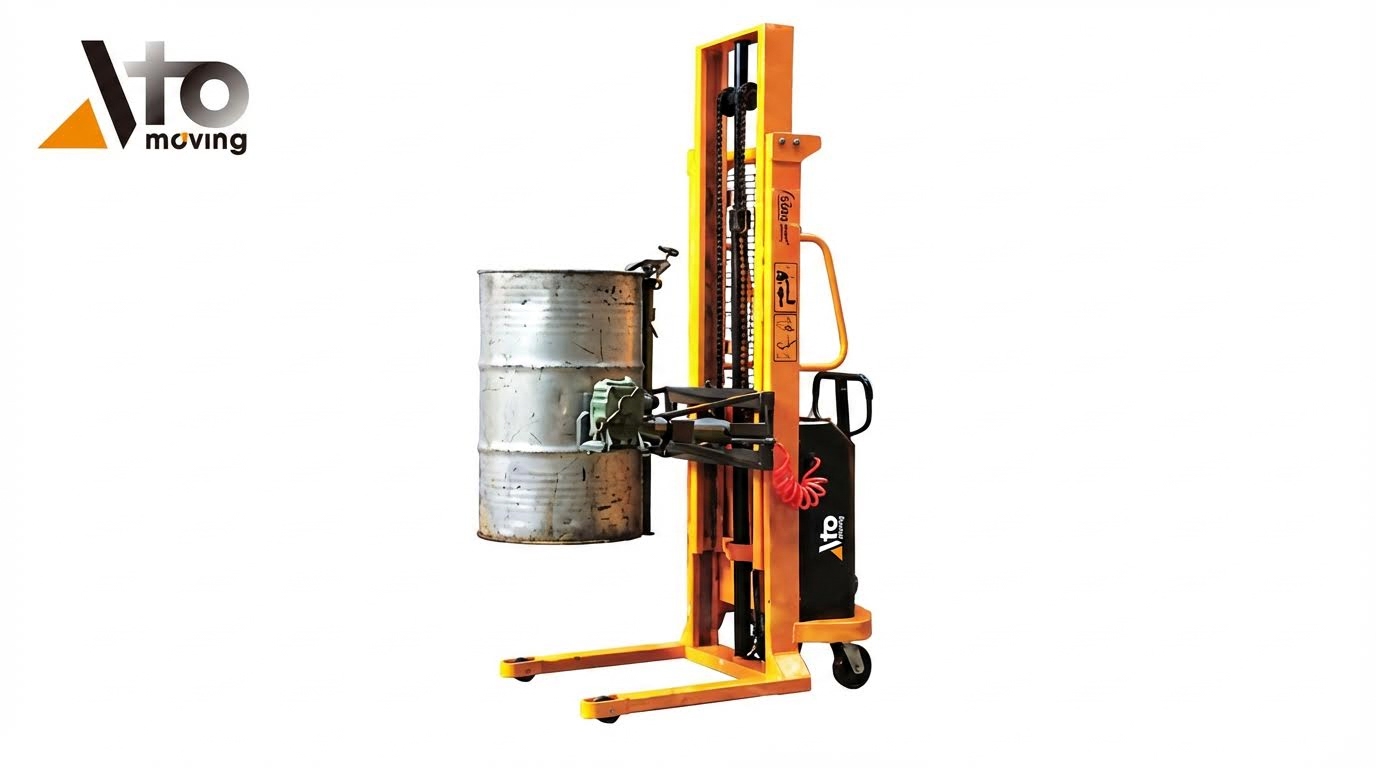
Automated palletizing and securing technologies bring repeatable positioning, tension, and wrap patterns that human crews rarely match, raising baseline safety for every drum load.
Robotic palletizers position drums with millimetric repeatability, allowing tighter dunnage and strap layouts and creating consistent pallet footprints for 200 L drums. Automated stretch wrappers and strapping machines then apply controlled tension and wrap patterns so each load meets a defined “recipe” for a given drum type and fill level. Automated systems provide repeatable tension and wrap coverage for palletized drums.
Technology Main Function Key Control Parameter Operational Impact Robotic palletizer Place drums on pallets in fixed patterns Position accuracy, pattern type Ensures consistent gaps and stable CG for transport Automatic stretch wrapper Wrap palletized drums with film Film tension, overlap %, wrap height Creates a continuous membrane from pallet to drum body Automatic strapping machine Apply horizontal/vertical straps Strap tension, quantity, routing Locks drums to pallet with repeatable pretension Conveyor and infeed controls Feed pallets to palletizer and wrapper Speed, spacing, orientation Prevents impacts and misalignment before securing Recipe management system Store load parameters by product Selected program per SKU Makes how to transport 55 gallon drums product-specific and traceable - Robotic placement: Keeps drum-to-drum gaps minimal and uniform – Improves friction and reduces need for excessive dunnage.
- Automated stretch wrap: Maintains at least 50% overlap from pallet to upper drum – Builds a shear-resistant shell around the load.
- Top caps and slipcovers: Adds flat bearing surfaces for straps and upper pallets – Protects closures and spreads vertical loads.
- Integrated quality checks: Sensors verify strap count and wrap pattern – Stops under‑secured pallets from leaving the line.
Engineering guidance shows that overpacks and corrugated slipcovers create a continuous outer surface around drum clusters, while vertical banding secures slipcovers to pallet and drums, forming a boxed unit load. Two- or three-ply slipcovers plus vertical bands significantly improve lateral stability.
When automation makes the biggest difference
Automation adds most value in high-throughput lanes, hazardous products, or long-haul routes where small reductions in failure rate justify capital cost. For low volume, semi-automatic wrappers and strappers still give better repeatability than manual methods.
💡 Field Engineer’s Note: If you can only automate one step, start with stretch wrapping; a consistent wrap from pallet to drum body with controlled tension often eliminates 80% of the “mystery” load shifts I see on incident investigations.
Bringing these automated tools into your loading bay turns how to transport 55 gallon drums from a manual art into a controlled, data-backed process that scales safely as volumes grow.

Final Considerations For Drum Transport Safety
Safe road transport of 55-gallon drums depends on treating every load as an engineered system, not a stack of barrels. Drum mass, center of gravity, and regulatory design accelerations define the real forces that straps, blocking, pallets, and vehicle structure must resist. When teams size tie-downs from these forces, choose UN-rated drums with correct closures, and keep deck gaps tight, loads stay stable even under 0.8 g braking and harsh lateral maneuvers.
Straps then work as designed only if pallets, blocking, and friction paths are sound. Good pallet layouts, zero-gap blocking, and friction mats prevent slow creep that can turn into a topple or leak hours into a trip. Pre-trip inspections, standard “load recipes,” and joint training for drivers and loaders turn these rules into repeatable practice. Automated palletizing and securing equipment from Atomoving can further lock in correct patterns, tensions, and wrap coverage.
The best practice is clear: engineer for worst-case accelerations, verify every component from drum shell to anchor point, and remove improvisation from the yard. Operations that follow this approach cut spills, claims, and downtime while keeping people, product, and roads safer on every run.
Frequently Asked Questions
How to safely move a 55-gallon drum?
Moving a 55-gallon drum requires the right equipment to ensure safety. Forklifts, pallet jacks, and drum dollies are essential tools for handling these heavy containers. Attempting to lift or roll the drums manually can lead to accidents and injuries. Drum Handling Tips.
What is the best way to transport full 55-gallon drums?
When transporting full 55-gallon drums, it’s important to brace the drum properly to avoid movement. You can use your foot to stabilize the drum while shifting your weight to move it gradually. Another method involves using both hands: one to pull the far edge and the other to push against a stable surface. For larger operations, mechanical equipment like forklifts should be used. USDA Drum Moving Guide.
Will a 55-gallon barrel fit in a car?
A standard 55-gallon barrel is approximately 0.85 meters (34 inches) tall and 0.61 meters (24 inches) wide, making it unlikely to fit in most cars. Transporting such a large container typically requires a truck or van with adequate space. Always secure the drum properly during transport to prevent it from rolling or tipping.