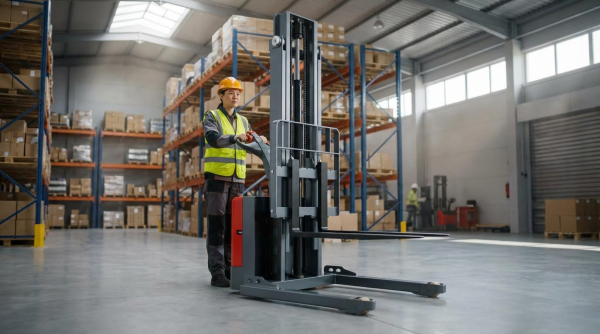
Knowing how to tell if a walkie stacker battery is bad is critical to prevent mid-lift shutdowns, damaged loads, and unsafe handling. This guide walks you through clear symptoms, test methods, and replacement decisions based on real, measurable battery behavior. You will learn what runtime loss really means in hours, how to interpret voltage sag and visual damage, and how to apply standards-based testing before you spend money on a new pack. Use it as a practical, shop-floor checklist to cut battery-related downtime and extend equipment life safely.
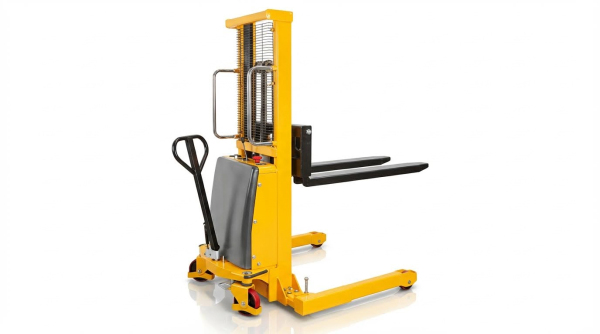
Key Signs Your Walkie Stacker Battery Is Failing
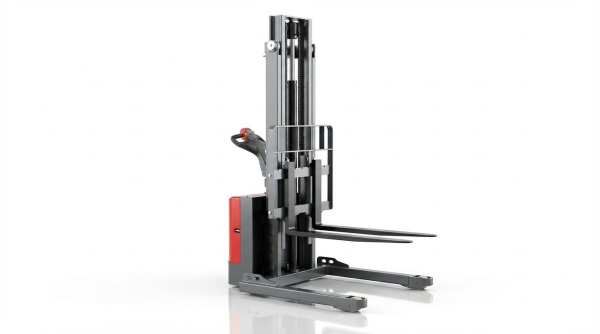
This section explains how to tell if a walkie stacker battery is bad by linking what operators feel (slow, weak truck) to measurable electrical and visual symptoms. Catching these signs early prevents mid-lift shutdowns and expensive unplanned downtime.
Runtime loss and performance slowdown
Runtime loss and sluggish performance are usually the first practical signs your walkie stacker battery is bad. You notice the truck no longer lasts a full shift, even though your routes and loads have not changed.
- Shorter runtime: A drop of about 30% in daily runtime versus past performance shows the battery is near its replacement threshold – you need more charges to cover the same hours. Runtime degradation data
- Slow travel speed: The truck accelerates slowly and struggles to reach normal walking speed – operators waste seconds on every move, which adds up across a shift. Observed operational symptoms
- Weak lift under load: Mast lift slows noticeably with 800–1,200 kg pallets or on ramps – hydraulic pump cannot get enough current because of high internal resistance. Performance under load
- Minimal gain from “top-up” charges: A 1–2 hour opportunity charge adds only a short extra runtime – this points to permanent capacity loss, not just undercharging. Opportunity charging behavior
| Symptom | Typical Observation | What It Implies | Operational Impact |
|---|---|---|---|
| Runtime drop | ~30% less runtime than before at same workload | Capacity loss, aging plates | Extra charge breaks, missed picks, overtime risk |
| Slow travel | Truck feels “heavy” even empty | High internal resistance, low voltage under load | Longer travel times in 30–60 m aisles |
| Slow/weak lift | Mast stalls or crawls with full pallets | Battery cannot supply peak current | Unsafe hesitation when lifting to 3–4 m racking |
| Poor recovery after charge | Short runtime even straight after charging | End-of-life capacity, not operator misuse | Charging bay congestion, schedule disruption |
💡 Field Engineer’s Note: When operators start “saving” the worst truck for last shift, that is often your earliest real-world indicator of a dying battery—log these complaints and compare them to runtime and charge data.
How to separate battery issues from truck mechanical issues
Swap the suspect battery into a known-good walkie stacker of the same voltage and capacity. If the slow performance follows the battery, the problem is electrical. If the truck stays weak with a known-good battery, investigate brakes dragging, gearbox, or hydraulic issues instead.
Voltage sag, shutdowns, and fault codes
Deep voltage sag, sudden shutdowns, and recurring fault codes are hard electrical signs that help you confirm how to tell if a walkie stacker battery is bad. These symptoms show that internal resistance and cell imbalance have moved beyond normal wear.
- Fast voltage sag under moderate load: Battery voltage quickly drops below the truck’s low-voltage cutoff when driving or lifting – internal resistance is high, so the battery “collapses” under current demand. Voltage sag reference
- Mid-lift or mid-ramp shutdowns: Truck stops or throws a low-voltage fault while lifting or climbing – controller is protecting itself and the motor from undervoltage. Safety risk discussion
- Block-to-block imbalance: In multi-block batteries, more than 0.7 V difference between blocks at rest points to a bad unit – one block is dragging the whole pack down. Imbalance threshold
- Frequent low-battery alarms despite full charge: The indicator or BMS drops to “low” much earlier than before – usable capacity has shrunk, even if open-circuit voltage still looks normal. Indicator and BMS explanation
- Controller overheat or undervoltage faults: The truck logs temperature or power-related errors when working hard – low voltage forces higher current draw, which heats the controller and cables. Controller fault behavior
| Electrical Symptom | Typical Measurement / Observation | Likely Root Cause | Operational Impact |
|---|---|---|---|
| Severe voltage sag | Voltage falls below cutoff shortly after starting lift/drive | High internal resistance, aged plates | Truck stalls in middle of 2–3 m lift or on 5–8% ramp |
| Block imbalance | >0.7 V difference between blocks at rest | One block sulfated or damaged | Pack trips early, even if other blocks are healthy |
| Frequent low-battery alarm | Indicator drops to 1 bar soon after start | Capacity <80% of nominal | Shift planning becomes unreliable |
| Controller overheat faults | Fault codes after repeated heavy lifts | High current due to low voltage | Forced cool-down periods, lost picks per hour |
💡 Field Engineer’s Note: When diagnosing shutdowns, always log battery voltage both at rest and during a heavy lift. A pack that looks fine at 24–25 V open-circuit but collapses several volts under load is a classic “looks good on paper, bad in the aisle” battery.
Quick voltage check workflow with a basic voltmeter
1) Fully charge the battery and let it rest for at least 1 hour. 2) Measure open-circuit pack voltage at the main terminals. 3) Drive or lift a typical pallet and measure voltage again under load. 4) For multi-block systems, measure each block at rest and compare; any block more than 0.7 V lower than the others is suspect.
Visual damage and overheating indicators
Visible damage, leaks, and overheating marks are strong, often final-stage clues that your walkie stacker battery is unsafe or at end of life. These signs matter as much for safety as for runtime.
- Cracked or warped cases: Any crack, bulge, or warped lid indicates mechanical or thermal stress – internal plates may be shorting, and the battery should be removed from service. Cracks and warping reference
- Swollen cases and leaks: Swelling or electrolyte on the tray shows gas buildup or overcharge – this is both an electrical fault and a chemical burn hazard. Replacement criteria
- Low electrolyte exposing plates (flooded lead-acid): Plates visible above the liquid level mean chronic overcharging or missed watering – exposed areas sulfate and lose capacity permanently. Electrolyte level guidance
- Corrosion and crystalline deposits: White or green deposits around terminals and vents show venting and poor cleaning – this increases resistance and heat at connections. Corrosion indicators
- Discolored or melted plastic: Browned covers, softened cable insulation, or melted intercell connectors indicate overheating – often from overcharging, loose connections, or internal shorts. Overheating risks
- Strong sulfur or “rotten egg” smell when charging: Heavy gassing and odor signal overcharge or high internal resistance – this raises explosion and fire risk in poorly ventilated rooms. Gas and odor safety
| Visual Symptom | What You See | Likely Cause | Best For / Required Action |
|---|---|---|---|
| Cracked or warped case | Visible cracks, lid not sitting flat | Impact, freeze damage, or internal short | Immediate removal from service, plan replacement |
| Swollen case | Sides bulging out of tray | Gas buildup, thermal stress, overcharge | Treat as unsafe; isolate and inspect before any reuse |
| Exposed plates (flooded) | Plates above electrolyte level | Missed watering, chronic overcharge | Top up with distilled water; expect reduced capacity |
| Heavy terminal corrosion | White/green crystals, dirty top | Vent gas, poor cleaning | Clean and neutralize; check torque and temperature |
| Melted plastic / discoloration | Browned covers, soft cable jackets | Overheating, loose lugs, internal fault | Stop use; inspect cables, connectors, and charger |
💡 Field Engineer’s Note: Any time you see swelling, cracks, or melted plastic, treat the battery as a safety incident, not just a maintenance issue—cordon off the area, ventilate, and follow your spill and fire procedures before touching anything.
Safe way to perform a quick visual inspection
Wear gloves and eye protection. Park the stacker on level ground, key off, and disconnect the battery connector. Open the battery compartment, use a hand lamp (no open flames), and inspect all visible sides and terminals. Never rest tools on the battery top, and avoid leaning over vent caps during or immediately after charging.
Technical Testing Methods For Battery Health

Technical testing methods for battery health use voltage, specific gravity, resistance, and self-discharge checks to quantify how to tell if a walkie stacker battery is bad before it fails in service.
These tests move you from “it feels weak” to hard numbers you can use for safety, maintenance planning, and replacement decisions.
💡 Field Engineer’s Note: Always test after the battery has rested and been fully charged. Testing straight off a charger or immediately after heavy use hides weak cells and gives you misleadingly “good” numbers.
Open-circuit and under-load voltage checks
Open-circuit and under-load voltage checks are the fastest quantitative way to tell if a walkie stacker battery is bad or just undercharged.
Use them first, before you invest time in deeper lab-style testing.
| Test Type | What You Measure | Typical Procedure | Indicative Thresholds | Operational Impact |
|---|---|---|---|---|
| Open-circuit voltage (OCV) | Total pack voltage at rest | Charge fully, rest ≥1 h, measure at terminals with voltmeter | Significantly below nominal float voltage indicates undercharge or capacity loss undercharge or capacity loss | Short runtime even after “full” charge; more frequent mid-shift charging |
| Under-load voltage | Voltage while truck is lifting/driving | Measure during moderate lift or travel after full charge | Rapid sag below low-voltage cutoff under moderate current shows high internal resistance high internal resistance | Truck slows or shuts down mid-lift; risk of dropped or unstable loads |
| Block-to-block comparison | Voltage of each battery block in the pack | Measure each 6 V / 12 V block at rest after charge | Difference >0.7 V between blocks at rest indicates a faulty unit faulty unit | One weak block drags down the whole pack; frequent low-voltage fault codes |
| Basic manual voltage check | Approximate state of charge | Turn off stacker, connect voltmeter to main terminals | For a nominal 24 V system, ~25–26 V when fully charged; <23 V needs charging 24-volt readings | Quick field check to rule out simple undercharge before deeper diagnostics |
- Measure at rest: Let the battery rest at least 1 hour after charging or heavy use – this removes surface charge and gives a stable OCV.
- Record both pack and block voltages: Always log total pack voltage and each block – this pinpoints one failing block instead of blaming the whole pack.
- Correlate with symptoms: Match low voltage readings with slow lift, travel, or shutdowns – this confirms the battery as the root cause, not the controller or motor.
How to safely perform an under-load voltage test
Use a calibrated voltmeter, secure the walkie stacker on a flat floor, and have an operator perform a typical lift (for example, raising 1,000–1,500 kg to about 2–3 m). Watch voltage at the main terminals. If it drops quickly near the truck’s cutout threshold and the truck slows or stops, you are seeing high internal resistance, which is a strong indicator the battery is nearing end of life.
Specific gravity, internal resistance, and capacity tests
Specific gravity, internal resistance, and capacity tests give the most reliable answer to how to tell if a walkie stacker battery is bad for heavy-duty industrial use.
They take longer but directly reveal sulfation, aging, and real usable capacity.
| Test | Applies To | Key Measurement | Failure Indicators | Best For… |
|---|---|---|---|---|
| Specific gravity (SG) | Flooded lead-acid cells | Electrolyte density in each cell with hydrometer | Persistently low SG in one or several cells even after equalization indicates irreversible sulfation or stratification low SG after equalization | Deciding if poor runtime is due to maintenance issues or permanent cell damage |
| Internal resistance | Lead-acid and lithium | Cell or block resistance with dedicated tester | High internal resistance causes more heat and larger voltage sag under load more heat and sag | Predicting which cells will fail next and planning proactive replacement |
| Capacity test (EN 60254-1) | Traction / industrial batteries | Ah delivered at controlled discharge | Fully charge, then discharge at 0.2 C to about 1.70 V per cell at 30°C; capacity <80% of nominal signals end-of-life for demanding use EN 60254-1 capacity threshold | Formal confirmation that a pack no longer meets multi-shift warehouse requirements |
- Step 1: Fully charge and equalize – this ensures SG and capacity readings reflect permanent damage, not simple imbalance.
- Step 2: Measure SG cell-by-cell (lead-acid) – spotting one or two low cells tells you where sulfation or stratification has set in.
- Step 3: Check internal resistance of blocks/cells – rising resistance over time is a clear aging trend, even before runtime collapses.
- Step 4: Run a controlled capacity test – this is the definitive proof for warranty or replacement budgeting.
Why the 80% capacity rule matters in real operations
Once measured capacity drops below about 80% of nominal under EN 60254-1 conditions, a walkie stacker battery may still move the truck, but it will not reliably cover a full shift with typical 1,000–1,500 kg pallet moves and frequent lifting. You see more opportunity charging, more low-voltage alarms, and higher risk of mid-lift shutdowns, which directly affects throughput and safety.
Self-discharge checks and block-to-block imbalance
Self-discharge checks and block-to-block imbalance measurements show hidden internal leakage and weak cells that make a walkie stacker battery unreliable even if it still seems to charge normally.
These tests are especially useful when the truck sits idle overnight or over weekends and then shows low charge unexpectedly.
| Condition | How to Test | Key Thresholds | What It Tells You | Operational Impact |
|---|---|---|---|---|
| Self-discharge | Fully charge, disconnect loads, measure cell or block voltage over days/weeks | Cells losing >0.1 V compared with neighbors indicate internal leakage or advanced aging >0.1 V loss | Confirms that the battery is draining itself even when parked | Truck starts the shift partially discharged; unexpected runtime loss despite “full” charge |
| Block-to-block imbalance at rest | Measure each block after rest | Voltage difference >0.7 V between blocks at rest shows a faulty unit >0.7 V difference | One block is failing and limits pack performance | Frequent low-voltage cutouts even after full charge; inconsistent battery gauge readings |
| Cell imbalance (lead-acid) | Compare individual cell voltages or SG after equalization | Significant variance after equalizing charge indicates sulfated or shorted cells variance after equalization | Shows which cells cannot be recovered by charging | Uneven heating, reduced capacity, and higher risk of sudden failure under peak loads |
| Cell imbalance (lithium) | Read cell-level voltages via BMS or service tool | Any cell below about 2.5 V or outside specified range indicates a failed or imbalanced cell failed or imbalanced cell | BMS may shut down pack to protect it | Intermittent operation, fault codes, or total no-start conditions |
- Log readings over time: Repeat self-discharge and imbalance tests weekly – trends tell you when to schedule replacement before peak season.
- Combine with visual inspection: Swollen cases, leaks, or corrosion alongside imbalance – strongly confirm that the pack is no longer safe to run.
- Use BMS data where available: For lithium packs, rely on BMS logs for cell voltage and temperature – this avoids unnecessary disassembly and speeds diagnosis.
Turning test data into a clear “replace or keep” decision
When you see a combination of high internal resistance, capacity below about 80% of nominal, self-discharge >0.1 V on one or more cells, and block-to-block differences above about 0.7 V, the battery has effectively reached end-of-life for industrial walkie stacker duty. At that point, continued use increases the risk of mid-lift shutdowns, heat damage, and unplanned downtime, even if the truck still moves on light tasks.
Replacement Decisions, Safety, And New Technologies
This section explains how to tell if a walkie stacker battery is bad, when to replace it, how to remove it safely, and whether to move from lead-acid to lithium based on cost and uptime.
Criteria for end-of-life and safe removal
End-of-life decisions for a walkie stacker battery rely on measurable performance loss plus hard safety triggers like case damage, leaks, or severe voltage sag under normal load.
| Criterion | Typical Threshold / Symptom | Engineering Basis | Operational Impact (How to tell if a walkie stacker battery is bad) |
|---|---|---|---|
| Runtime loss | ≈30% less runtime vs. historical use Reference | Capacity has fallen well below nominal; plates are sulfated or active material is shed. | Truck will not finish a normal shift; frequent mid-shift charging becomes the norm. |
| Capacity test (EN 60254-1) | Measured capacity <80% of nominal at 0.2 C down to ≈1.70 V/cell at 30°C Reference | Standard end-of-life definition for traction batteries in demanding industrial duty. | Battery cannot support rated duty cycle without deep discharge and accelerated wear. |
| Voltage sag under load | Rapid drop below truck low-voltage cutout at moderate current Reference | High internal resistance in cells; chemical reaction cannot sustain load. | Lift stops mid-lift; travel bogs down on small ramps, causing unsafe load handling. |
| Block-to-block imbalance | >0.7 V difference between blocks at rest Reference | One block is aged or damaged relative to the string. | Truck shuts down early even when the display still shows charge remaining. |
| Self-discharge | Single block losing >0.1 V more than neighbors over days/weeks Reference | Internal leakage paths or advanced aging in that block. | Battery seems “flat” after sitting idle; repeated recharges give little improvement. |
| Specific gravity (flooded lead-acid) | Persistently low SG in one or more cells after equalization Reference | Irreversible sulfation or stratification; active material no longer participates. | Chronic low runtime even after “full” charge; charger runs longer than normal. |
| Physical damage | Cracked or swollen case, leaks, melted plastic, strong sulfur odor Reference | Mechanical or thermal damage; internal gas buildup or plate shorting. | Battery is unsafe to keep in service; replacement is immediate, not optional. |
- Rule of thumb – performance: Replace when you consistently lose around 30% of historical runtime – the truck no longer covers a full shift without babying the battery.
- Rule of thumb – standards: If a formal capacity test shows <80% of nominal, treat the pack as end-of-life for tough warehouse duty – you avoid chronic deep discharges and unplanned stops.
- Hard-stop safety triggers: Any cracked case, electrolyte leak, swollen sides, or melted plastic is an immediate removal from service – these are precursors to shorts, fire, or acid exposure.
- Electrical red flags: Repeated mid-lift shutdowns, fast voltage sag, or one block reading more than 0.7 V off the rest – these show internal resistance or cell failure, not just low charge.
Safe removal and installation checklist
Safe removal is as critical as deciding the battery is bad. Treat every traction battery as a heavy, energized, chemical container.
- Step 1: Park and secure the truck – Apply parking brake, lower forks to floor, and switch off to eliminate unintended motion.
- Step 2: Isolate the power circuit – Disconnect the main battery connector before touching any cables to prevent arcing.
- Step 3: Wear PPE and use insulated tools – Gloves, goggles, and insulated handles mitigate shock and acid splash risks.
- Step 4: Verify polarity and cable labeling – Mark positive and negative leads before removal to avoid reverse connection on the new pack.
- Step 5: Use proper lifting gear – Traction batteries can weigh several hundred kilograms; mechanical lifting prevents crush injuries and case damage.
- Step 6: Keep tools off cell tops – Never lay spanners across terminals; a dropped tool can create a dead short and violent arc.
- Step 7: After installation, re-check connections – Confirm tight, clean terminals and correct connector orientation before energizing.
These steps align with common industrial battery safety protocols and reduce the risk of fire, arc flash, and chemical exposure during change-out Reference.
💡 Field Engineer’s Note: If you keep seeing controller overheating or repeated low-voltage cutouts even after charging, do not just blame the truck. A high-resistance, end-of-life battery forces the controller to work at higher currents and heat; replacing the pack often “fixes” chronic electronics faults without touching the controller.
Lead-acid vs. lithium options and TCO impact
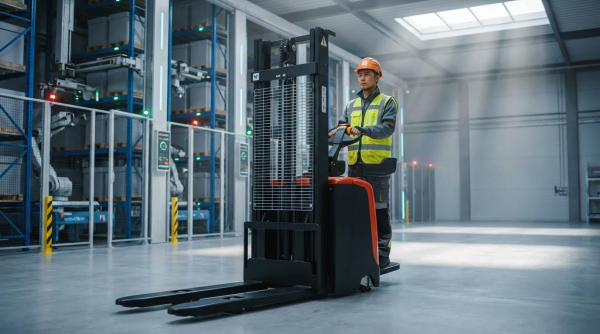
Choosing between lead-acid and lithium for a replacement walkie stacker battery is a total-cost-of-ownership decision, balancing purchase price, runtime, maintenance, and charging flexibility.
| Aspect | Flooded / Sealed Lead-Acid | Lithium (with BMS) | Operational Impact for Walkie Stackers |
|---|---|---|---|
| Upfront cost | Lower purchase price per kWh. | Higher purchase price per kWh. | Lead-acid is attractive for low-utilization sites; lithium suits multi-shift or high uptime fleets. |
| Cycle life (typical range) | Shorter; life heavily affected by deep discharges and poor watering. | Longer; tolerates more cycles if kept within BMS limits. | Lithium spreads cost over more years and cycles, reducing cost per operating hour. |
| Maintenance needs | Needs water checks, cleaning, equalization, and vent management Reference. | Essentially maintenance-light; BMS monitors cells, no watering. | Lead-acid requires regular labor; lithium frees technicians for other tasks. |
| Charging behavior | Prefers full charge cycles; opportunity charging can shorten life Reference. | Supports frequent opportunity charging without memory effect. | Lithium works well with short breaks and irregular shifts; lead-acid suits single, predictable shifts. |
| Runtime consistency | Runtime drops as battery ages; voltage sag becomes obvious under load. | Holds voltage more consistently until nearer end-of-life. | Lithium gives more predictable lift and travel speeds late in the shift. |
| Monitoring | Basic indicators plus manual SG or voltage checks for health. | Integrated BMS provides state of charge, temperature, and alarms Reference. | Lithium makes it easier to see early degradation and plan change-out before failures. |
| Safety profile | Risks: acid leaks, gas venting, corrosion, and explosive mixtures if poorly ventilated Reference. | Risks: thermal runaway if cells are damaged or BMS fails. | Both require training; lead-acid needs spill control and ventilation, lithium needs correct chargers and fire planning. |
- When lead-acid still makes sense: Light-duty, single-shift operations where the truck runs only a few hours per day – you can accept more maintenance in exchange for lower upfront cost.
- When lithium earns its keep: Multi-shift, high-throughput warehouses where downtime is expensive – opportunity charging and longer life usually offset the higher purchase price.
- Compatibility check: Always verify charger compatibility and truck controller limits before switching chemistries – incorrect charging profiles or voltage windows can damage a new pack quickly.
How battery choice affects “bad battery” symptoms
On lead-acid walkie stackers, how to tell if a walkie stacker battery is bad usually starts with visible corrosion, low electrolyte, and obvious runtime loss. You confirm with SG readings, voltage sag tests, and visual case checks Reference.
On lithium systems, early signs are more electronic: BMS alarms, cell voltage out of range, or the truck derating power even when the state-of-charge display looks healthy. Here, a “bad battery” often means a failed cell or BMS fault rather than simple wear, and diagnostics rely on reading BMS data rather than SG or watering history.
💡 Field Engineer’s Note: When you budget for lithium, include the value of recovered floor space and labor. Removing watering stations, spill kits, and long equalize charges often frees up several square meters of space and saves hours of weekly technician time, which rarely shows on the battery quote but matters over a 5–7 year life.

Final Thoughts On Preventing Battery-Related Downtime
Walkie stacker batteries fail in predictable ways. Runtime loss, voltage sag, and visual damage all point to the same physics: rising internal resistance and shrinking usable capacity. If you link operator complaints to measured voltage, specific gravity, and capacity tests, you move from guesswork to hard, defensible decisions.
Technical checks such as EN 60254-1 capacity testing, self-discharge tracking, and block-to-block comparison let you see failure coming. You can then schedule change-out before mid-lift shutdowns, controller overheating, or case damage turn into safety incidents. Clear end-of-life rules, like 30% runtime loss or capacity below 80% of nominal, keep decisions consistent across the fleet.
Safe removal and installation matter as much as good diagnostics. Treat every traction battery as a heavy, live component with chemical risk. Use PPE, isolate power, and handle with proper lifting gear every time. When you plan replacements, match chemistry to duty cycle and charging pattern instead of chasing the lowest ticket price.
The best practice for operations and engineering teams is simple. Combine operator feedback, structured inspections, and periodic lab-style testing into one battery program. This approach cuts unplanned downtime, protects trucks and people, and extends the life of both lead-acid and lithium packs in Atomoving walkie stackers.
Frequently Asked Questions
How do you know if a walkie stacker battery is faulty?
A faulty walkie stacker battery often shows specific warning signs. These include slow cranking when starting the equipment, unusual clicking sounds, or an illuminated battery warning light on the display. In some cases, physical swelling or bloating of the battery case can also indicate failure. Battery Failure Symptoms.
What are common tests to diagnose a bad battery?
To determine if a walkie stacker battery is bad, three basic tests are commonly used: specific gravity testing, load testing, and capacitance testing. These methods help evaluate the battery’s health by checking its charge capacity and internal resistance. Battery Testing Methods.
What causes a walkie stacker battery to drain quickly?
Several factors can lead to rapid battery drainage in walkie stackers. These include excessive use of power-consuming features like lights or displays, leaving the device idle while still powered on, and high ambient temperatures that strain the battery. Regular maintenance and proper usage can help extend battery life.