Outdoor-Capable Electric Forklifts: What Matters Most
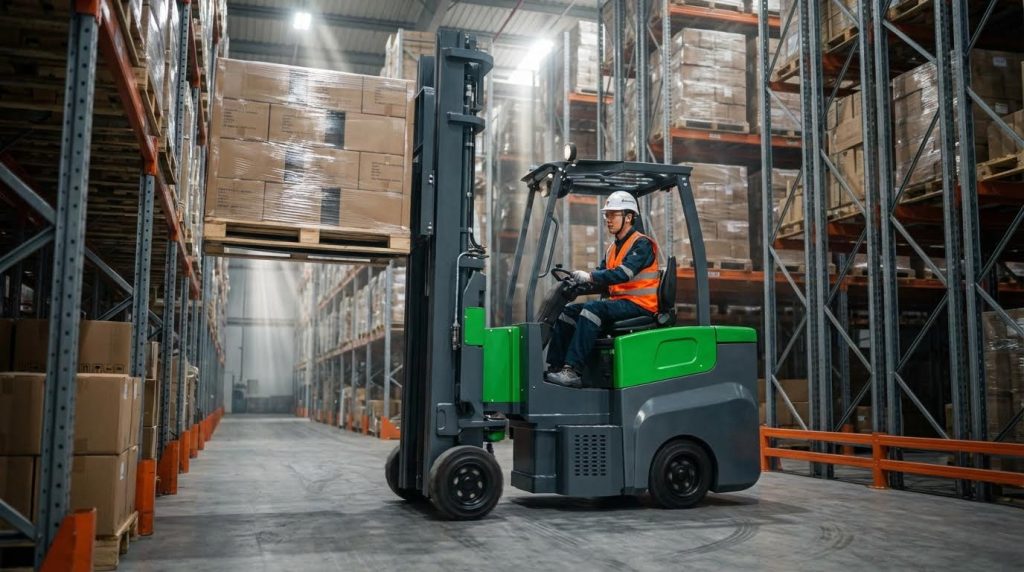
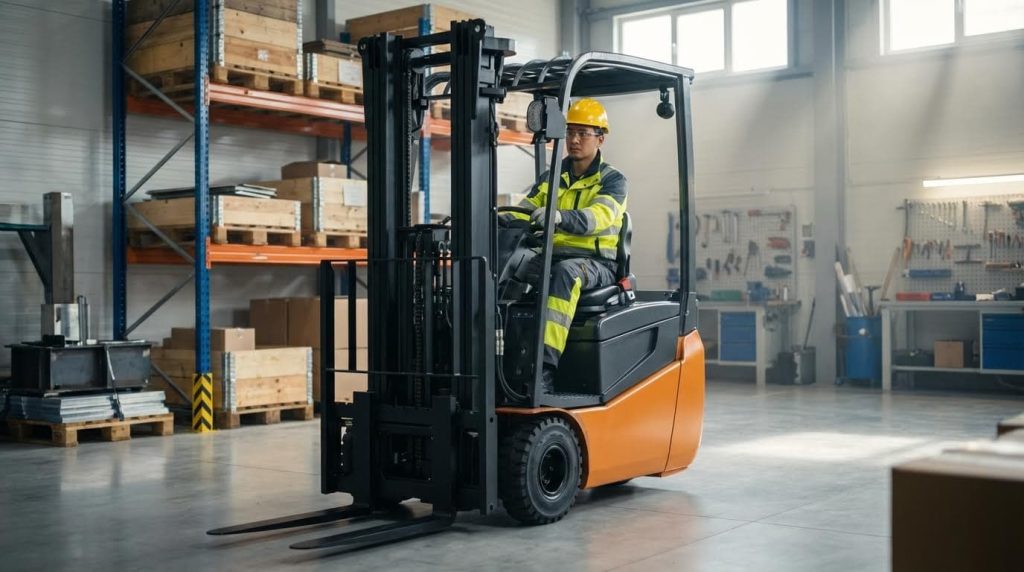
Electric forklifts can be used outdoors safely and efficiently if you match the truck’s design to weather, surface, and duty-cycle limits. The core question is not “can electric forklifts be used outdoors,” but “under which conditions and with what protections.”
At a high level, you must control three things: exposure to rain, snow, heat, and cold; how the truck interacts with uneven or slippery ground; and how long and how often you keep it outside. Get any one of these wrong and you will see downtime, corrosion, or stability incidents long before the forklift reaches its design life.
Weather Limits: Rain, Snow, Heat, And Cold
Weather limits for outdoor electric forklifts revolve around moisture ingress and battery temperature control, not just “can it get wet.” These trucks tolerate occasional bad weather, but continuous exposure without the right IP protection and battery management quickly becomes a reliability and safety problem.
- Rain and spray: Light to moderate rain is usually acceptable for outdoor-rated electric forklifts if enclosures and seals are intact – prevents shorts and nuisance shutdowns. Rain operation guidance
- Standing water: Most manufacturers advise avoiding puddles deeper than about 100 mm – limits splash into motor, brake, and connector areas. Pre-operation checklist
- Snow and slush: Meltwater plus road salt attacks metal and connectors – accelerates corrosion and hidden wiring failures.
- Cold (below 0°C): Lead-acid capacity drops and charge time increases; lithium with thermal management can still work down to about -20°C – protects runtime and avoids sluggish response. Cold performance data
- Heat (above 35°C): Batteries run hotter and age faster; electronic controllers may derate – shortens battery life and can reduce lift or travel speed. Temperature impact on batteries
| Weather Condition | Typical Electric Forklift Risk | Mitigation | Operational Impact |
|---|---|---|---|
| Light–moderate rain | Water ingress to controls and connectors | Use IPX4+ outdoor-rated units and intact seals | Safe for 1–2 hour outdoor tasks on hardstanding surfaces |
| Heavy rain / driving spray | Short circuits, BMS trips, loss of traction | Suspend work or move to covered loading; use enclosed cabs | Plan work windows around severe weather |
| Snow / slush | Corrosion, frozen controls, reduced traction | Frequent wash-down, anti-slip tires, de-icing of routes | Lower speeds and reduced stacking heights on slopes |
| Cold below 0°C | Reduced battery capacity and slow charging | Battery heaters or insulated packs; indoor charging | Shorter outdoor shifts or more frequent opportunity charging |
| Heat above 35°C | Battery overheating, electronics derating | Shaded parking, airflow around chargers, thermal management | Monitor runtime and schedule cooling breaks |
How IP ratings affect “can electric forklifts be used outdoors”
For short outdoor work in rain, many electric forklifts rely on an IPX4 level of protection, which tolerates splashing water and daily rainfall for limited periods. Higher IPX5+ levels support high-pressure washdowns and more severe outdoor exposure, but you still must avoid submersion and deep standing water. IP rating examples
💡 Field Engineer’s Note: In mixed indoor–outdoor sites, the real killer is not one big storm but constant damp: trucks parked outside overnight with open battery covers or damaged gaskets slowly wick moisture into contactors, causing random, hard-to-diagnose shutdowns months later.
Terrain, Surfaces, And Stability Requirements
Terrain and surface conditions set hard limits on where electric forklifts can safely go outdoors, because most are optimized for firm, level yards rather than deep ruts or mud. Even when the electrics have power to move, traction, ground clearance, and load stability often become the real constraints.
- Flat, paved yards: Ideal environment for standard cushion or pneumatic-tire electrics – predictable traction and minimal chassis stress. Warehouse yard applications
- Uneven or potholed concrete: Impacts and rocking reduce stability margin – raises tip-over risk with high loads.
- Gravel and compacted hardcore: Demands larger-diameter, wider tires and careful speed control – prevents sinking and side-slip.
- Mud, loose sand, or deep gravel: Most standard electrics are unsuitable – spin wheels, overload driveline, and lose steering authority.
- Wet or icy surfaces: Stopping distances increase and steering response degrades – requires slower speeds and longer following gaps. Wet-surface risks
| Surface Type | Suitable Electric Forklift Setup | Main Limitation | Best For… |
|---|---|---|---|
| Smooth concrete / asphalt | Standard electric counterbalance, cushion or pneumatic tires | Water pooling and icy patches | Yard shuttles, dock work, cross-dock moves |
| Rough, cracked concrete | Electric with larger pneumatic tires and higher ground clearance | Load rocking and operator fatigue | Older yards, external staging areas |
| Compacted gravel | Outdoor-rated electric with aggressive tread tires | Reduced speed and higher energy use | Short access runs to outbuildings |
| Loose gravel / mud | Generally not recommended for standard electrics | Wheel spin, bogging, control loss | Only for dedicated rough-terrain designs |
| Wet ramps / slopes | Electric with strong traction control and good tires | Skid risk and extended stopping distance | Dock approaches, yard ramps within slope limits |
Practical stability checks before outdoor use
Before you commit an electric forklift to outdoor work, walk the route and ask three questions: Is the surface firm enough that tire tracks are less than 10–20 mm deep? Are there any cross-slopes where a loaded truck would lean visibly toward the low side? Are there potholes or curbs that approach the truck’s ground clearance? If the answer to any is “yes,” reduce route speed, change the path, or keep that segment diesel-only.
💡 Field Engineer’s Note: Many operators feel “safe” as long as the mast is tilted back, but on broken outdoor concrete a bouncing rear axle can still push the combined center of gravity outside the stability triangle; once that happens, no amount of steering correction will save the truck.
Indoor–Outdoor Duty Cycles And Work Patterns
Indoor–outdoor duty cycles determine whether an electric forklift merely survives outside or actually performs efficiently across a full shift. The more hours you keep it outdoors in harsh conditions, the more you must invest in battery thermal control, sealing, and planned charging windows.
- Short outdoor hops (5–15 minutes each): Typical for dock-to-yard or trailer loading – well suited to standard electrics with basic weather precautions. Warehouse yard scenarios
- Mixed indoor–outdoor shifts (30–50% of time outside): Common in cross-dock and yard marshaling – requires robust sealing and disciplined inspection routines.
- Predominantly outdoor work (70–100% outside): Container yards or external storage – demands outdoor-rated electrics with high IP ratings and carefully designed charging strategy. Container terminal use
- High-intensity multi-shift operations: Battery capacity and charging windows become critical – may justify lithium-ion with fast opportunity charging. Lithium advantages
| Duty Pattern | Typical Daily Outdoor Exposure | Key Engineering Focus | Operational Impact |
|---|---|---|---|
| Dock-only with brief yard moves | 1–2 hours | Basic rain protection, good drainage, indoor charging | Electrics easily replace diesel for most tasks |
| Mixed warehouse–yard | 3–5 hours | Sealed components, regular corrosion checks, tire management | Plan charging around breaks to keep one battery per truck |
| Outdoor-heavy single shift | 6–8 hours | High-capacity batteries, IPX4+ enclosures, cab options | Close monitoring of runtime and weather windows |
| Outdoor multi-shift | 10–16 hours | Lithium packs, fast charging or battery swap systems | Can rival diesel uptime but requires infrastructure |
How duty cycle changes your answer to “can electric forklifts be used outdoors?”
For occasional yard trips, almost any modern electric forklift with intact covers and sensible speed limits can work outside. As soon as you expect it to live outside for most of the day, you must treat it like a piece of outdoor plant: specify higher IP ratings, add cab and wiper options, design charging locations, and tighten inspection intervals for tires, brakes, and exposed metal. Skipping that step is why some fleets concluded “electrics don’t work outside” when in fact the duty cycle outgrew the truck spec.
💡 Field Engineer’s Note: When you convert diesel yard trucks to electric, the surprise is rarely lack of power; it is how much your old driving patterns assumed “infinite fuel.” Mapping actual travel paths and idle time before you buy often reveals that a correctly sized electric with opportunity charging can cover the same work with a single pack per shift.
Key Engineering Factors For Outdoor Electric Use
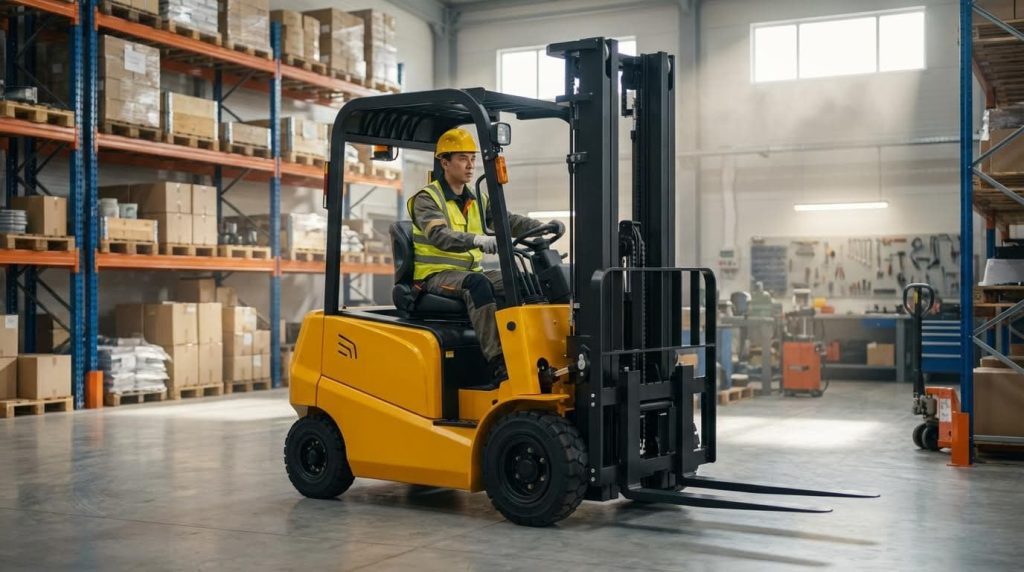
The core engineering factors that decide whether can electric forklifts be used outdoors safely are battery thermal control, moisture protection (IP rating and sealing), and traction/stability systems matched to real surface conditions.
- Battery system: Chemistry, heating/cooling, and energy management – Keeps runtime predictable in heat, cold, and stop‑start outdoor work.
- Ingress protection: IP rating and sealed enclosures – Prevents water and dust from killing electronics.
- Traction & stability: Tires, brakes, and control logic – Maintains grip and stopping distance on wet or uneven yards.
💡 Field Engineer’s Note: When you ask “can electric forklifts be used outdoors,” always check these three items on the spec sheet first; if any one is weak, your real-world uptime outdoors will suffer badly.
Battery Chemistry, Thermal Control, And Runtime
Battery chemistry and temperature control determine how confidently an electric forklift can hold capacity and runtime outdoors across seasons.
Cold and heat both attack battery performance. In low temperatures, capacity drops and charge times stretch, while in high temperatures cells can overheat and age faster. Outdoor fleets that see winter mornings and summer afternoons must be engineered around this reality.
- Cold-weather loss: Lead–acid and lithium batteries lose usable capacity and charge slower in cold conditions – Shifts that run 8 hours indoors may fall short outside in winter. Cold impact on batteries
- Overheating risk: Hot ambient air plus high current draw can overheat packs – Accelerates aging and may trigger protection shutdowns on long outdoor hauls. Heat impact on batteries
- Thermal management: Insulation, heaters, or active thermal systems keep packs in the ideal window, often down to about -20°C – Makes winter yard work feasible without huge runtime loss. Cold-weather performance
- Lithium-ion advantage: Lithium-ion delivers nearly constant voltage throughout discharge – No sluggish last hour of the shift, which matters on outdoor slopes and ramps. Lithium power profile
- Low-maintenance packs: Lithium batteries need no watering or equalizing – Reduces outdoor service work and avoids contamination from open electrolyte. Lithium maintenance
- Energy efficiency: Electric trucks convert a higher share of stored energy into lifting and travel – Gives longer runtime per kWh in stop‑start outdoor work than combustion units per litre of fuel. Energy efficiency outdoors
- Battery life: Modern lithium packs last 3–5 times longer than lead–acid and have ~20% higher energy density – Supports compact trucks that still cover full outdoor shifts. Lithium longevity
Planning runtime for outdoor shifts
For a mixed indoor–yard route, assume real outdoor runtime can fall by 20–30% in winter unless you have heated or well-insulated lithium packs. Build in opportunity charging during breaks and lunch to maintain buffer capacity.
💡 Field Engineer’s Note: In cold yards, I treat any electric without proper battery thermal management as a half-shift truck; it looks fine on paper but spends the afternoon on a charger instead of moving pallets.
IP Ratings, Sealed Systems, And Moisture Protection
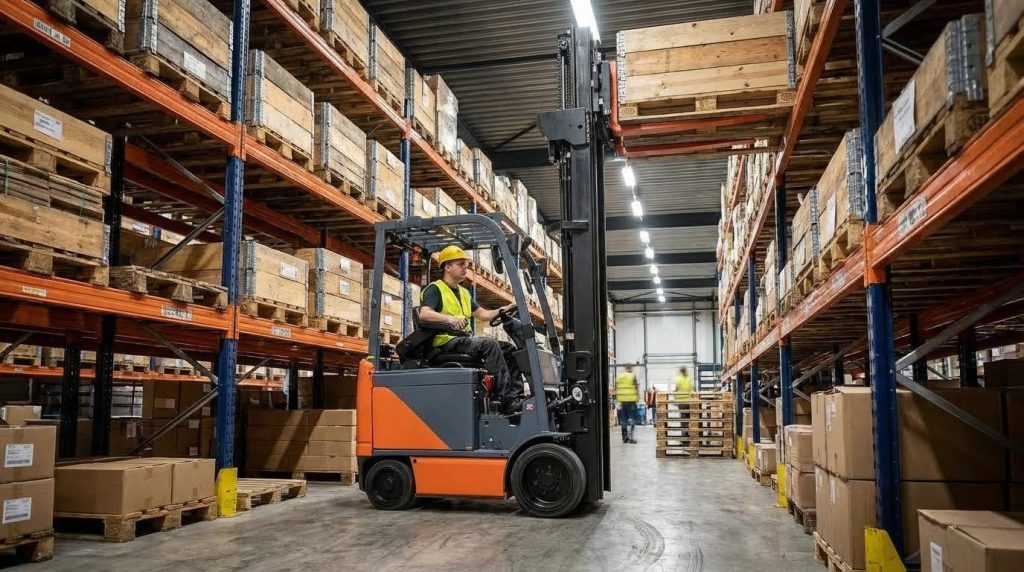
Ingress protection ratings and sealing quality decide how safely an electric forklift tolerates rain, spray, and outdoor dust over years of use.
Water and moisture are the main technical threat when you ask can electric forklifts be used outdoors. Unsealed connectors, control boxes, or battery compartments can short, corrode, or trigger protective shutdowns long before the mechanics wear out.
- Moisture risk: Rain, snow, and spray can cause short circuits and corrosion in unprotected electronics – Leads to intermittent faults and sudden shutdowns outdoors. Moisture impact
- IPX4 capability: IPX4-type configurations withstand daily rainfall and short outdoor use – Suitable for light to moderate rain on hardstanding with no standing water. IPX4 rating
- Higher IP levels: IPX5 and above tolerate high‑pressure washdowns – Better for heavy outdoor or food-industry yards that hose equipment down. High IP ratings
- Sealed components: Modern outdoor-capable electrics use sealed motors, controllers, and harnesses against heat, dust, and debris – Lets one truck shuttle between warehouse and yard without constant failures. Sealed components
- Rain operating window: With IPX4+ and a rainproof system, outdoor use in light–moderate rain on hard surfaces is acceptable for roughly 1–2 hours at a time – Good for loading bursts, not all‑day storms. Temporary outdoor use
- Failure modes: Water entering control or junction boxes can cause leakage or trigger BMS power‑off – Truck suddenly stops, which is dangerous on ramps or in traffic lanes. Electrical failure risks
- Inspection focus: Pre‑use checks must confirm seals on battery covers and electrical boxes, and that cables are undamaged – Prevents water tracking into live components. Pre-operation checklist
Good practices for wet-weather use
Operate only on hard, drained surfaces without puddles deeper than about 100 mm. Avoid driving through standing water, park under cover when idle, and schedule charging in dry, ventilated areas to protect connectors and battery terminals.
💡 Field Engineer’s Note: In wet climates, I treat the IP rating like a load chart; if it is not clearly specified for rain and washdown, I assume the truck is “indoor first” and limit outdoor exposure to short, supervised tasks.
Traction, Tires, Braking, And Stability Systems
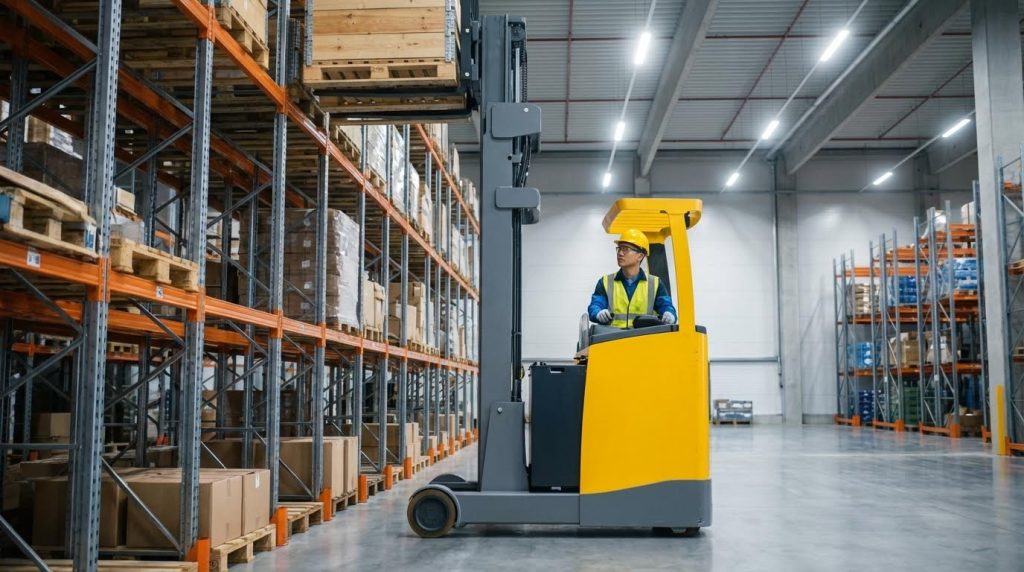
Tire choice, traction, and braking systems determine whether an electric forklift can safely stop, steer, and stay upright on real outdoor surfaces.
Most electric trucks were originally optimized for flat, dry concrete. Once you move to wet yards, ramps, or slightly rough ground, grip and stability become the limiting factor long before motor torque. This is where the engineering behind tires, brakes, and control logic answers whether can electric forklifts be used outdoors for your specific site.
- Surface sensitivity: Electric forklifts are primarily designed for flat, stable surfaces – Uneven, rough, or slippery yards increase tire wear and accident risk. Terrain limitations
- Wet-traction limits: Rain reduces friction, increasing skidding and sliding risk, especially on slopes – Stopping distances grow, and turning margins shrink. Reduced traction in rain
- Operator technique: In wet conditions, operators must use smoother acceleration, longer braking distances, and gentler turns – Compensates for lower tire–ground friction. Training in wet conditions
- Tire selection: Deeper tread patterns and outdoor‑rated compounds improve grip on wet or slightly rough yards – Reduces wheelspin and shortens stopping distance. Tires for rain
- Regular checks: Outdoor fleets need frequent inspections of tire pressure, tread depth, and suspension alignment – Maintains predictable handling on broken or sloped surfaces. Maintenance for rough terrain
- Braking performance: Wet or dirty surfaces increase stopping distance and delay reaction – Requires lower travel speeds and wider safety buffers outdoors. Braking in wet conditions
- Comfort and control: Electric forklifts run with less vibration and noise – Helps operators feel loss of grip earlier and reduces fatigue on long yard shifts. Operator comfort
Minimum traction rules for outdoor use
Limit outdoor electric operation to hardened, well-drained surfaces with no mud or standing water. Enforce reduced speeds in rain, ban tight turning on slopes, and pull any truck with low tread depth out of outdoor duty until tires are replaced.
💡 Field Engineer’s Note: Most “outdoor” electric incidents I have reviewed were not about battery or IP rating at all; they came from worn tires and indoor driving habits taken straight out onto wet concrete or ramps.
Matching Electric Forklifts To Outdoor Applications
This section explains where electric forklifts genuinely work outdoors, and where diesel still dominates, so you can answer “can electric forklifts be used outdoors” for your exact site, not in theory.
- Core idea: Match forklift type to surface quality, travel distance, weather exposure, and duty cycle – that is what decides outdoor success, not just battery size.
- Key question: Can electric forklifts be used outdoors safely and efficiently? – Yes, on prepared yards, docks, and many terminals, if you respect their limits on moisture, terrain, and runtime.
💡 Field Engineer’s Note: Before you compare fuel types, walk the route with a tape and camera. Measure slopes, potholes, and turning radii. Most “outdoor failures” trace back to a 50 mm pothole or a 3% ramp nobody accounted for.
Yard, Dock, And Short-Haul Outdoor Operations
Electric forklifts are well-suited for yards, docks, and short outdoor runs when surfaces are hard, distances are modest, and exposure to rain is controlled.
For these applications, the main engineering questions are: surface quality, run distance per shift, and how often the truck must work in wet conditions.
| Use Case | Typical Conditions | Electric Suitability | Operational Impact |
|---|---|---|---|
| Warehouse yard shuttling | Flat concrete/asphalt, short runs <150 m, light rain exposure | High – with outdoor-capable sealing and correct tires | Quiet, zero local emissions, ideal for frequent in/out moves in warehouse yards |
| Loading docks | Transition between building and truck, dock plates, occasional rain | Very high – classic indoor–outdoor crossover | One truck can handle racking and truck loading, cutting fleet size |
| Short-haul between buildings | Paved lanes, repeated 50–300 m trips | High, if battery sized for frequent shuttles | Energy-efficient moves with 60–80% lower energy cost vs diesel outdoors based on energy cost comparisons |
| Covered loading canopies | Roofed but open sides, occasional wind-blown rain | Very high – reduced direct rain on components | Extends electric runtime because less power is wasted pushing through water and mud |
- Flat, hard surfaces: Electric forklifts are designed for stable, paved ground – this minimizes traction loss and tire wear outdoors on flat yard terrain.
- Short-haul patterns: Repeated 50–300 m trips with pauses suit opportunity charging – you can top up lithium batteries during breaks using fast opportunity charging.
- Moderate rain only: Trucks with appropriate IP ratings can work in light to moderate rain, not standing water – this keeps electrical systems out of trouble under temporary outdoor use conditions.
How rain exposure changes yard and dock planning
Electric forklifts can work in light to moderate rain when they have adequate sealing and IP ratings, but they are not fully waterproof. Guidance from outdoor use and rain operation sources shows that common configurations like IPX4 tolerate daily rainfall and short-term outdoor work, while higher ratings like IPX5 support harsher washdown-style exposure for heavy-duty outdoor forklifts. Best practice is to avoid standing water deeper than about 100 mm and keep work durations in open rain to short windows of 1–2 hours when possible, then return the truck to dry conditions for inspection and cleaning. Regular checks for moisture ingress, corrosion, and brake performance are essential after wet shifts in rainy environments.
- Energy and cost benefits outdoors: Even outside, electric trucks can cut energy costs by roughly 60–80% compared with diesel, thanks to higher energy conversion efficiency and cheaper electricity per kWh-equivalent in comparative cost analyses.
- Noise and emissions: Low noise and zero point-of-use emissions make electric forklifts ideal where docks and yards sit near offices or residential areas – this reduces complaints and helps with permits in warehouse yard applications.
Operator and safety tweaks for wet yard work
When electric forklifts run outdoors on wet docks or yards, operators need extra training for reduced traction and longer stopping distances. Recommended practices include smoother acceleration and deceleration, slower cornering, and careful use of lights, wipers, and defrosting systems to maintain visibility in rainy operations. Site improvements such as better drainage, anti-slip mats, and clear reflective markings further reduce the risk of skids and collisions on wet concrete.
Rough Terrain, Terminals, And Remote Sites
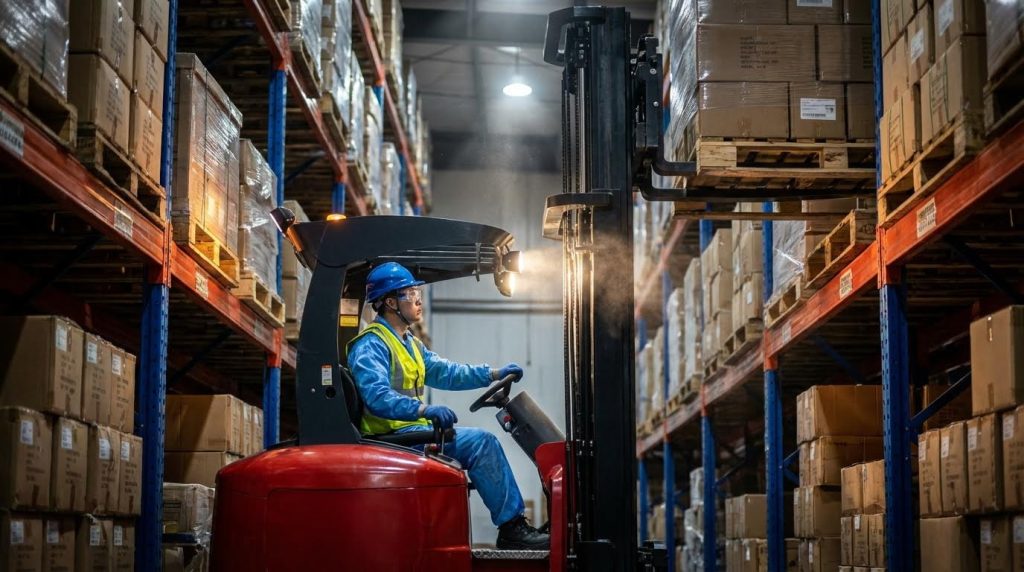
Electric forklifts can work in some rough-terrain and terminal roles, but diesel still has advantages for very harsh, wet, or remote outdoor environments.
Here the main constraints are terrain roughness, continuous runtime expectations, and exposure to dust, mud, and heavy rain over long periods.
| Application | Typical Conditions | Electric Feasibility | Best For / Operational Impact |
|---|---|---|---|
| Container or logistics terminals | Heavy loads, paved or well-compacted yards, harsh weather, dust | Moderate to high with sealed systems and good IP rating | Efficient heavy handling in concentrated areas if water and dust are controlled in container terminals |
| Construction-style rough terrain | Deep ruts, loose gravel, mud, steep grades | Currently limited; diesel still more robust | Electric possible only with purpose-built rough-terrain models and strong charging infrastructure where electric is still developing |
| Remote yards without grid power | Long distances, no reliable electricity, mixed weather | Low today without generator or solar charging | Diesel often preferred; electric needs planned charging and battery swaps due to range and refueling differences |
- Terrain handling limits: Electric forklifts are improving but still face limits in very wet, cold, or extremely rough environments compared with diesel, which has long-proven reliability in harsh conditions on rough terrain.
- Moisture and ingress risk: Persistent exposure to rain, mud, or standing water increases the chance of water entering control boxes and causing short circuits or BMS shutdowns through junction box leaks.
- Runtime vs refueling: Diesel still offers longer continuous run times and fast refueling, which suits remote terminals or multi-shift outdoor work without easy power access based on operating range comparisons.
When electric rough-terrain forklifts make sense
Electric rough-terrain models are most compelling where environmental regulations are tight, noise must be low, or operations run near buildings and people. Cost studies show electric forklifts can have 20–35% higher purchase prices than comparable diesel, but they often deliver 60–80% lower energy costs and 30–40% lower maintenance costs over time, plus better resale value and longer battery life with lithium packs in long-term cost analyses. These economics can offset the higher upfront cost for terminals or yards that run predictable routes on improved surfaces.
- Cold and hot weather at terminals: With proper thermal management, electric forklifts can maintain performance in cold conditions down to about -20°C, and lithium batteries provide consistent power with fast opportunity charging for outdoor use and for lithium-ion advantages.
- Operator comfort in harsh yards: Electric forklifts offer lower vibration and noise, which reduces fatigue during long shifts in terminals or rough yards, helping maintain safe reaction times and productivity in operator comfort comparisons.
💡 Field Engineer’s Note: For “can electric forklifts be used outdoors” on rough sites, my rule of thumb is simple: if a standard road car struggles for grip or ground clearance, expect to need either heavy-duty electric rough-terrain models with strong IP ratings and a robust charging plan, or stick with diesel until the ground is upgraded.
Final Thoughts On Using Electric Forklifts Outdoors
Outdoor electric forklift success depends on engineering discipline, not optimism. You must treat weather, surface, and duty cycle as hard design inputs, then pick trucks and operating rules that respect those limits. Battery chemistry and thermal control must match your coldest mornings and hottest afternoons, or runtime and power will fall when you need them most.
Ingress protection and sealing decide how long electronics survive rain, spray, and washdowns. If IP rating, gaskets, and covers do not match real exposure, you will see random shutdowns and corrosion long before mechanical wear. Tires, braking, and stability systems then close the loop. They turn motor torque into safe traction and stopping on wet, sloped, or broken yards.
When you align these three pillars with real routes and shift patterns, electric forklifts can replace diesel on docks, paved yards, and many terminals with lower energy cost, less noise, and zero local emissions. Operations teams should walk routes, define weather and surface envelopes, and then specify outdoor-rated electrics, charging layouts, and inspection routines to suit. Treated this way, outdoor electric forklifts become reliable plant, not experiments, and Atomoving can help you select configurations that hold up in real yards, not just brochures.
Frequently Asked Questions
Can electric forklifts be used outdoors?
Yes, electric forklifts can be used outdoors, but their suitability depends on the weather conditions and the forklift’s IP code. The IP code indicates the level of protection against solid objects and liquids. Some electric forklifts are designed to handle harsh weather better than others. Always check the manufacturer’s guidelines before using an electric forklift outside. Forklift Outdoor Use Guide.
What precautions should be taken when using electric forklifts outdoors?
When using electric forklifts outdoors, ensure the weather is favorable. Avoid operating in extreme weather conditions, such as heavy rain or strong winds, which can lead to accidents or equipment damage. It’s also important to regularly inspect the forklift for any signs of wear or damage that could be exacerbated by outdoor use.
- Check the forklift’s IP code for weather resistance.
- Avoid use in extreme weather conditions.
- Regularly inspect the forklift for wear and damage.