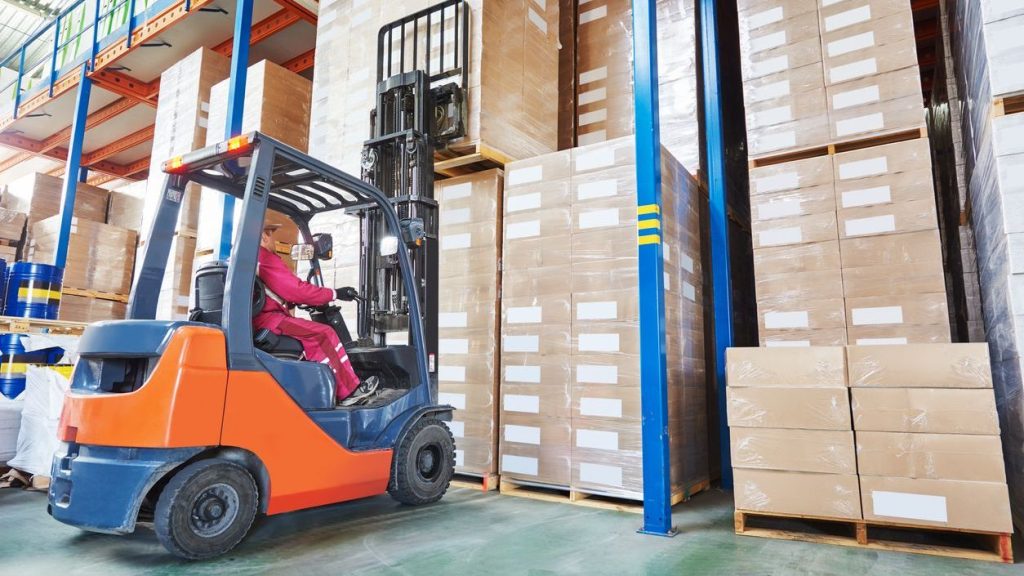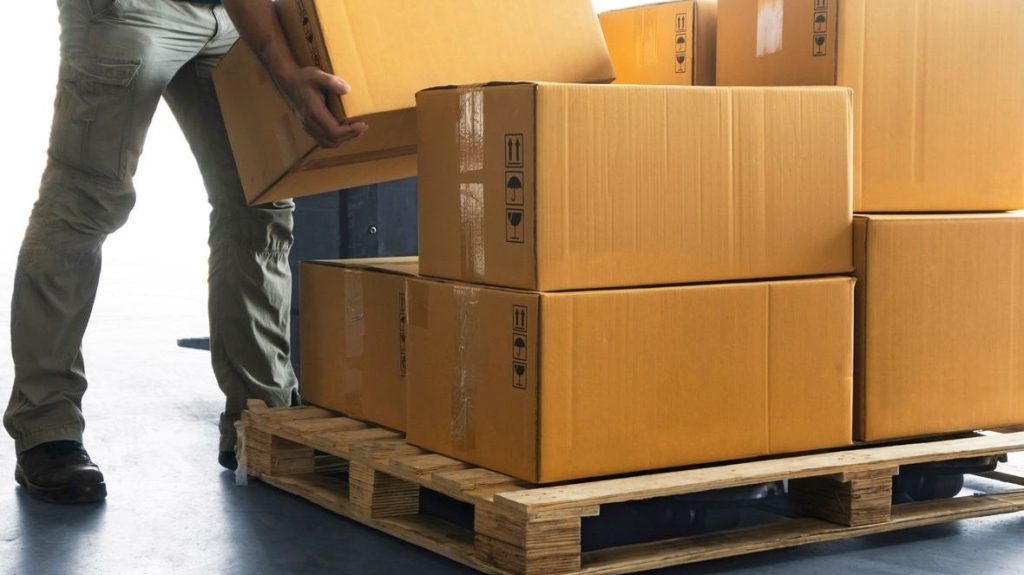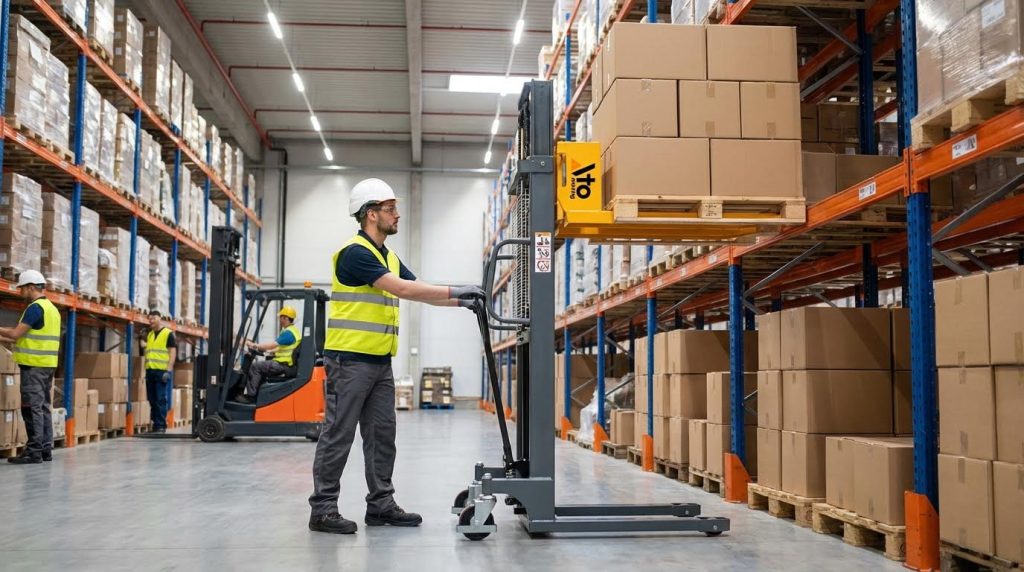
Manual pallet stacking concentrates high masses at shoulder height and above, where a small mistake can cause crush injuries, back damage, or full stack collapse. This article explains why you should do not stack pallets by hand wherever possible, and how to engineer safer options instead. You will see how inspection rules, ergonomics, manual pallet jack, and automation all link back to physics and load paths. Use it as a practical guide to redesign hydraulic pallet truck handling before an incident forces the change.
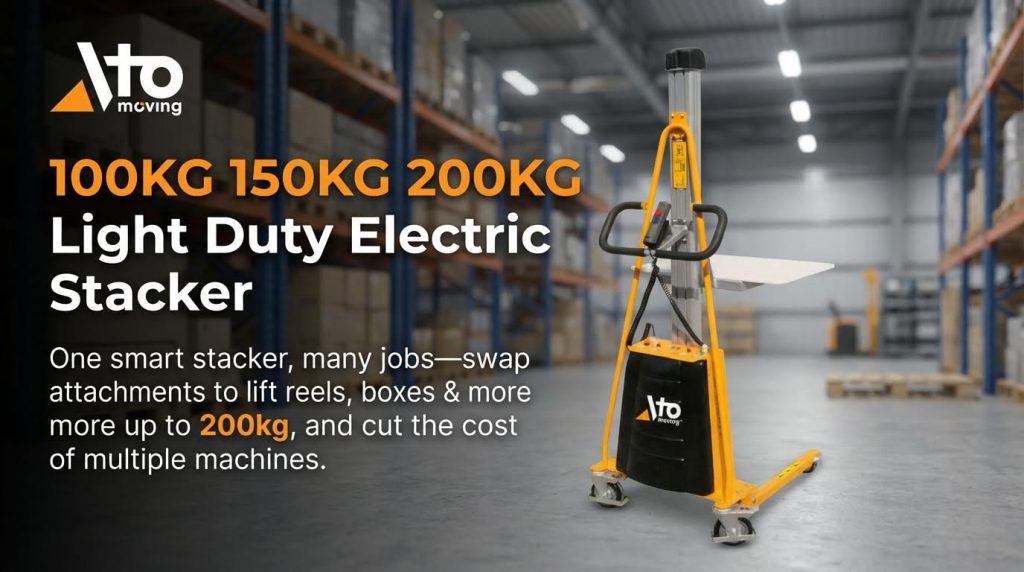
Core Risks Of Stacking Pallets By Hand
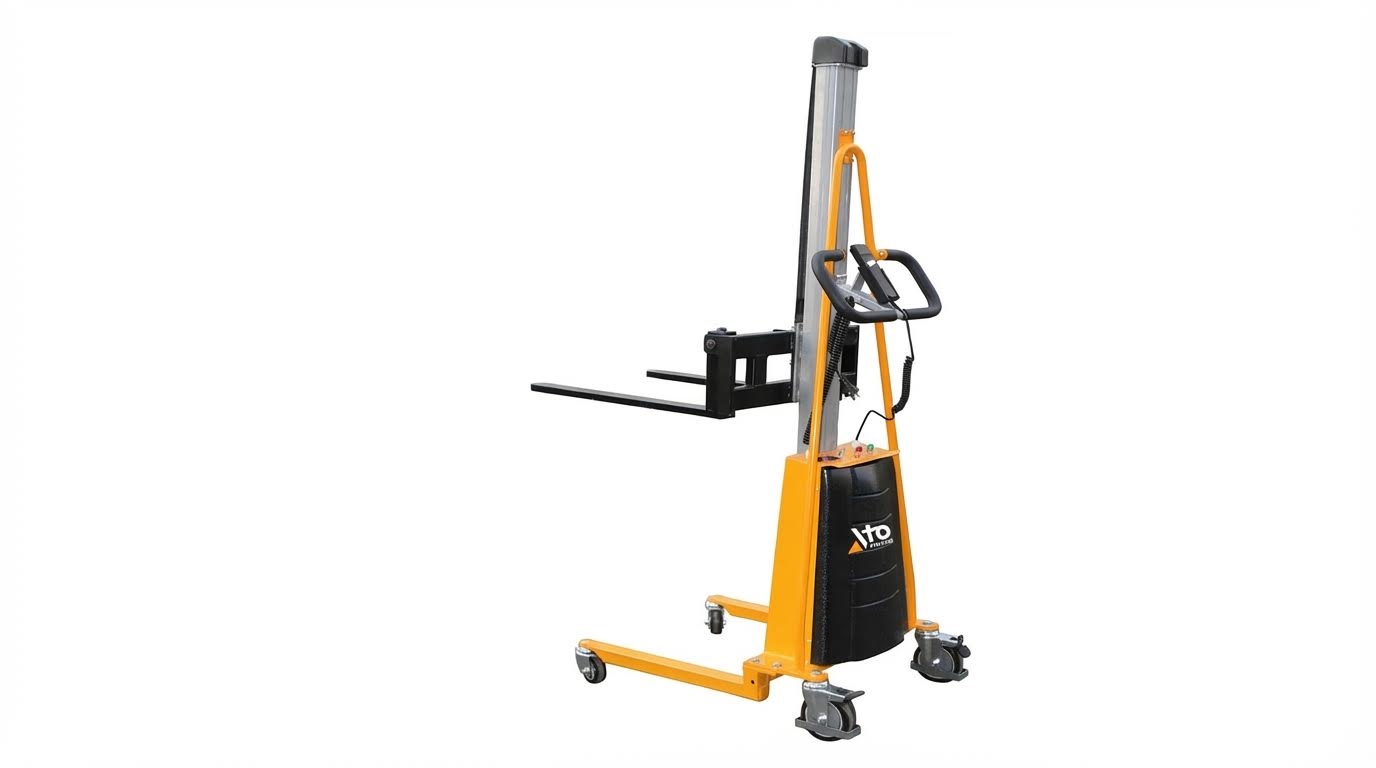
Manual pallet stacking concentrates structural, ergonomic, and stability risks in one task, which is why you should do not stack pallets by hand wherever mechanical options exist. This section explains how pallets fail and where the human body becomes the weak link.
Structural pallet failures and inspection rules
Structural pallet failures usually start from unnoticed damage or overload, so consistent inspection and load control are non‑negotiable if you still stack anything by hand. The more you bend, drag, and drop pallets manually, the faster those weaknesses grow.
| Risk Factor | Key Rule / Typical Limit | Failure Mode If Ignored | Operational Impact |
|---|---|---|---|
| Pallet condition | Inspect for cracks, splinters, broken boards, and structural damage before each use before each use | Board snaps, stringer failure, sudden drop of load | Crush injuries to feet and legs; product loss |
| Load vs pallet rating | Never exceed pallet capacity rating for that design | Progressive sagging, then abrupt collapse | Unexpected failure when pushing or re‑stacking by hand |
| Stack geometry | Height-to-base ratio near 4:1 for free‑standing stacks for stability | Tipping due to small push or floor irregularity | Top pallets fall towards the operator during manual work |
| Floor condition | Firm, level surfaces with maintained clearances in storage areas | Lean and rocking, amplified overturning moments | Stacks that look “ok” suddenly walk and topple when touched |
| Material of pallets | Wood: about 4.5–5.5 m; Plastic: about 3–4.5 m; Steel: can exceed 6 m if conditions allow under proper loading | Material‑specific buckling, creep, or fracture | Wrong stack heights chosen when “eyeballing” by hand |
| Fire load and spacing | Idle pallet stacks ≤4.6 m high and ≤37 m² per pile to control fire risk | Excessive fuel load, sprinkler blockage | Higher chance of catastrophic fire in dense manual stack areas |
When workers stack or unstack manually, they often kick or drag pallets to align them, which hides damage and increases stress on already‑cracked boards. Without a disciplined inspection routine, those weakened pallets end up in the middle of tall stacks where failure is hardest to see but most dangerous.
- Inspect every pallet: Check top and bottom decks, stringers, and blocks – Prevents hidden mid‑stack failures during manual re‑handling.
- Reject or repair damaged units: Remove broken pallets from circulation immediately – Stops “just one more use” that often precedes collapse.
- Control stack pattern: Keep faces flush, no overhang – Reduces torsion and edge loading when someone nudges the stack by hand.
- Respect material limits: Set different maximum stack heights for wood, plastic, and steel – Avoids slow creep and sudden tipping.
- Audit floors: Repair dips and slopes near pallet zones – Prevents lean that turns a light push into a full stack topple.
How stack geometry turns a light push into a full collapse
A 1,000 kg stack at 4.0 m height on a 1.0 m by 1.2 m base has a high centre of gravity. A 10–20 mm floor dip or a sideways push while “straightening by hand” shifts the centre of gravity past the edge. Once that happens, no worker can stop the overturning moment in time, and the entire column can fall towards the person who touched it.
💡 Field Engineer’s Note: If you see workers “bumping” or hip‑checking tall pallet stacks to straighten them, your geometry and inspection controls have already failed. Cap manual stacks much lower and move to mechanical handling before someone ends up under 500–1,000 kg of timber and product.
Ergonomic limits and manual stacking height constraints
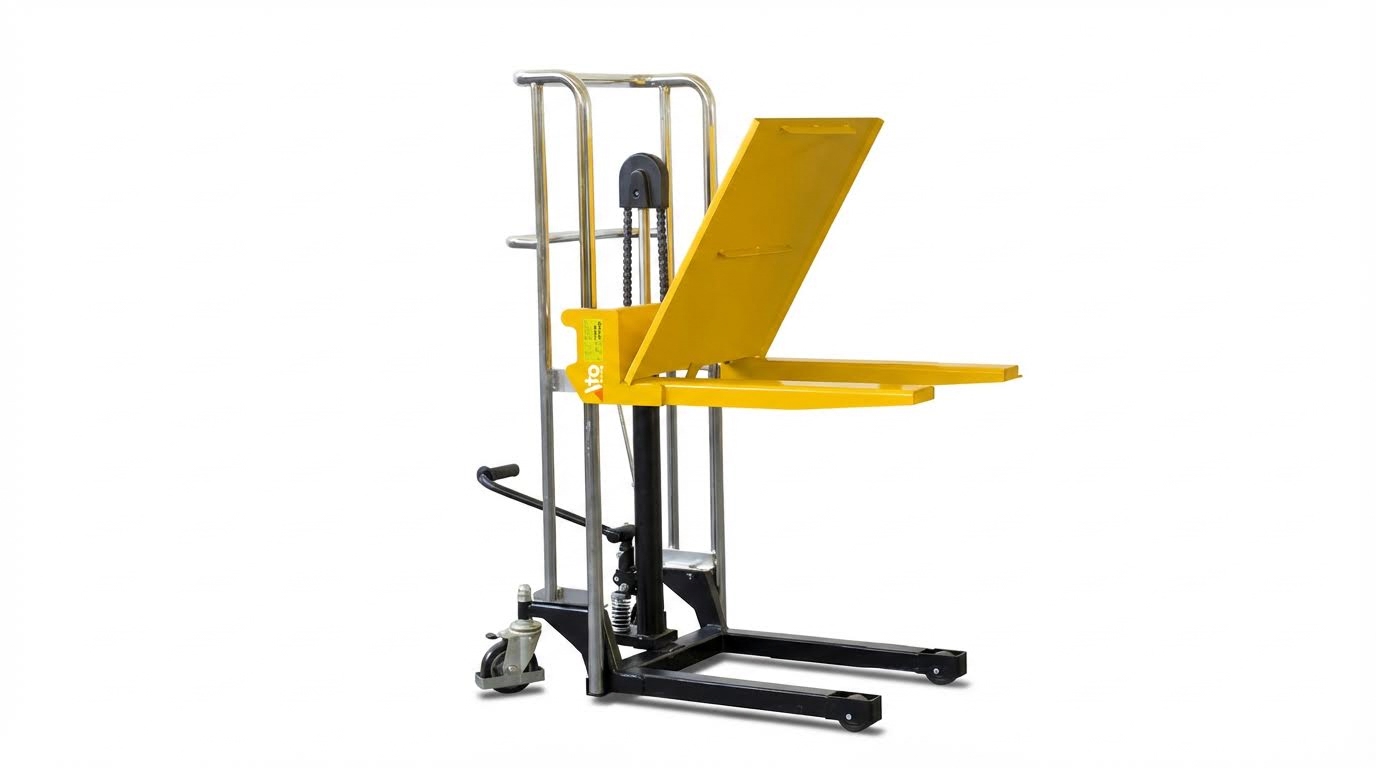
Ergonomic limits on human lifting mean do not stack pallets by hand beyond very low heights, because above waist to shoulder level the spine, shoulders, and grip overload long before the pallet or racking does. The risk is not only from a dropped pallet but from cumulative musculoskeletal damage.
| Ergonomic Factor | Guideline / Typical Practice | Primary Risk | Operational Impact |
|---|---|---|---|
| Pallet mass | Full wooden pallets often exceed safe one‑person lift limits at any height especially when wet or dense | Acute back injury, disc damage | Lost‑time incidents and long‑term compensation costs |
| Vertical lift range | Safe zone is roughly knee to shoulder height with neutral spine when lifting | Overhead or floor‑level strain | Fatigue and errors increase late in shifts |
| Manual stack height | Generally limit to about six empty pallets high by hand for safety | Crush and fall hazards when reaching above head | Need for mechanical aid beyond this height |
| Down‑stacking | Avoid manual down‑stacking from above nine pallets high without equipment | Pallets dropping onto workers | High‑severity incidents during rework or housekeeping |
| Frequency of handling | Higher lifts per hour greatly increase cumulative spinal load even at moderate weights | Repetitive strain injuries | Staff turnover and reduced throughput |
Manual pallet handling often forces workers outside the safe lifting envelope: twisting while holding a corner, reaching forward to clear a stack, or lifting above shoulder height to place the sixth pallet. Even if a single pallet lift feels “manageable,” repeating it hundreds of times per shift drives cumulative damage to discs, shoulders, and knees.
- Keep loads close: Lift with pallets as near to the body as possible – Shortens the moment arm on the spine.
- Use leg power, not spine: Bend knees and hips while keeping the back straight – Transfers force to larger muscle groups.
- Apply two‑person lifts: Use coordinated corner lifts for heavier pallets to share load – Cuts joint loading per person.
- Limit manual stack height: Cap hand‑stacked empty pallets at about six high – Prevents overhead reaching with unstable loads.
- Introduce mechanical aids early: Use manual pallet jack, stackers, or conveyors for vertical moves – Moves risk from the spine to engineered equipment.
Why “just a few pallets” still overload the body
Risk assessments consider pallet mass, lift height, reach distance, frequency, and twisting. A task that looks light on paper becomes high‑risk when workers rush, floors are uneven, or visibility is poor. Once fatigue sets in, technique degrades, and even the POWERLIFT method or two‑person lifts cannot fully compensate. At that point, only engineering controls – better equipment and lower manual heights – truly reduce risk.
💡 Field Engineer’s Note: If you need more than two or three manual lifts to build or break a pallet stack, redesign the task around equipment, not stronger workers. Every extra lift above waist height is a hidden cost that shows up later as chronic back claims and unplanned absences.
Engineering Safer Options For Pallet Handling
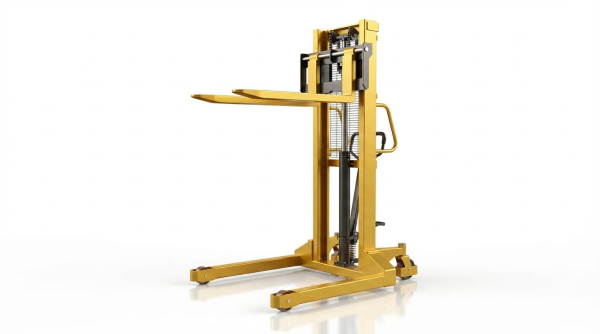
Engineering safer pallet handling means replacing high-risk manual lifting with fit‑for‑purpose equipment and automation, so workers do not stack pallets by hand except in tightly controlled, low-risk cases.
The safest systems match load mass, lift height, and throughput with the right mix of pallet jacks, stackers, forklifts, palletisers, cobots, and AS/RS, backed by sensors and predictive maintenance. Done well, this cuts strain injuries, tip‑overs, and product damage while increasing flow.
Selecting pallet jacks, stackers, and forklifts
Selecting pallet jacks, stackers, and forklifts starts with one rule: do not stack pallets by hand when load weight, height, or frequency exceed ergonomic limits.
Mechanical assistance should take over whenever a full pallet is heavier than a safe one‑person lift, handled repeatedly, or moved above knee–shoulder height. Each equipment type occupies its own performance window.
| Equipment Type | Typical Capacity & Lift | Best Operating Envelope | Operational Impact |
|---|---|---|---|
| Manual pallet jack | 1,000–2,500 kg, lift ≈ 200 mm (source) | Short hauls below ≈ 12 m on good, level floors | Replaces carrying/dragging; ideal for ground-level pallet moves without vertical stacking. |
| Electric pallet jack | ≈ 900–4,500 kg, lift ≈ 200 mm (source) | Longer travel, slight slopes, rougher floors | Cuts push–pull forces and spinal loading on frequent moves; still for low-level work. |
| Pallet stacker (manual or electric) | ≈ 1,000–2,500 kg to ≈ 3–4 m lift (source) | Narrow aisles, racking up to first/second beam levels | Removes need to hand-stack above shoulder height; ideal for small warehouses. |
| Forklift truck | Up to ≈ 20,000 kg and >10 m lift (source) | Indoor/outdoor, heavy loads, high-bay racking | Handles full vertical stacking; keeps people off high lifts and away from heavy suspended loads. |
- Manual jack as baseline: Use for moving single pallets at floor level – prevents workers from dragging or carrying 30–40 kg boards or loads.
- Electric jack for volume: Upgrade when push distances or daily pallet counts climb – reduces fatigue and cumulative back strain.
- Stackers for vertical reach: Introduce when stacks exceed about 1.4–1.6 m – removes shoulder‑height lifting and climbing on pallets.
- Forklifts for height and outdoors: Use where you need >4 m stacking or yard work – eliminates manual re‑stacking in truck beds and external yards.
Safe engineering also means matching equipment to ergonomics and inspection rules. Full wooden pallets often exceed safe one‑person lift limits once wet or made from dense hardwood, so a risk assessment should trigger mechanical assistance based on pallet mass, handling frequency, and lift height (source).
- Pre‑use checks: Inspect jacks and stackers for wheel damage, bent forks, and hydraulic leaks daily – prevents sudden loss of support under stacked pallets. (source)
- Floor quality: Keep travel paths firm, level, and free of ruts – uneven floors amplify overturning moments when lifting stacked pallets. (source)
- Training and certification: Require formal training and certification for forklifts – controls high‑energy incidents around tall pallet stacks. (source)
💡 Field Engineer’s Note: In many facilities, the real tipping point for equipment is not pallet mass but repetition. Once operators are touching more than 30–40 pallets per shift by hand, musculoskeletal disorder rates climb fast; a low‑cost stacker or electric jack usually pays for itself in injury reduction alone.
When to insist “do not stack pallets by hand”
Set a hard rule that workers do not stack pallets by hand when: a full pallet exceeds your ergonomic threshold; stacking height goes above about 1.4–1.6 m; or floors are uneven, sloped, or congested. In these cases, pallet jacks, stackers, or forklifts must take over vertical and horizontal moves.
Palletisers, cobots, and AS/RS as automation paths
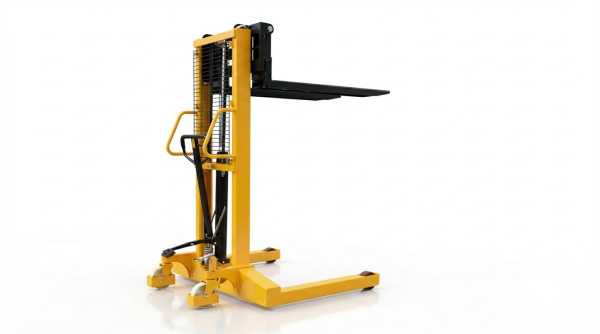
Palletisers, cobots, and AS/RS provide structured automation paths that make “do not stack pallets by hand” a normal operating condition instead of an exception.
They remove people from the most repetitive, high‑reach, and high‑mass stacking tasks, delivering consistent patterns and heights that stay within engineering limits.
| Solution Type | Typical Role | Best For… | Safety & Productivity Impact |
|---|---|---|---|
| Manual palletising (baseline) | People stack items by hand, with basic aids (source) | Low volume, frequent product changes, tight budgets | Low capex but higher strain and injury risk; strong need for ergonomic limits and lift aids. |
| Automatic palletisers | Mechanised or robotic stacking of cases/bags onto pallets (source) | High volume, consistent pack sizes | Handles thousands of items per hour; removes manual stacking and improves pattern accuracy. |
| Cobots for palletising | Collaborative robots stacking within defined height limits (source) | Medium volume, mixed SKUs, shared human–robot cells | Takes over high‑frequency lifts; workers shift to feeding, wrapping, and supervision tasks. |
| AS/RS with stacker cranes | Automated storage/retrieval of pallet loads in high-bay racks (source) | High-density, high-throughput pallet warehouses | Minimises human exposure at height; ensures consistent stack geometry and traceability. |
- Manual palletising as a starting point: Acceptable only with low volumes, strict ergonomic controls, and lift aids – workers still handle items, but not full pallets at height. (source)
- Automatic palletisers for throughput: Ideal when lines run similar cartons or bags – the machine builds the pallet while people stay at floor level.
- Cobots for flexible cells: Cobots maintain consistent layer patterns and heights while humans handle exceptions – reduces awkward lifts without losing flexibility. (source)
- AS/RS for storage risk removal: Stacker cranes move 500–1,500 kg pallets up to >20 m high – no one climbs racks or re‑stacks pallets at elevation. (source)
Automatic palletising also improves load quality. Machines apply repeatable interlocking patterns and can be tuned to respect the 4:1 height‑to‑base ratio for free‑standing stacks, such as around 4 m for a 1.0 m × 1.2 m pallet footprint (source).
💡 Field Engineer’s Note: When justifying palletisers or cobots, do not focus only on labour savings. Quantify reduced product damage from consistent patterns, lower workers’ comp costs from eliminating high‑reach stacking, and the ability to lock in safe maximum stack heights in software.
Choosing between manual, cobot, and full automation
If your operators are still being told to “just stack one more layer by hand,” you likely sit in the cobot or palletiser sweet spot. Use manual palletising only where volumes are low and you can confidently keep all lifts between knee and shoulder height with aids like lift tables.
Sensors, AI, and predictive maintenance for safety
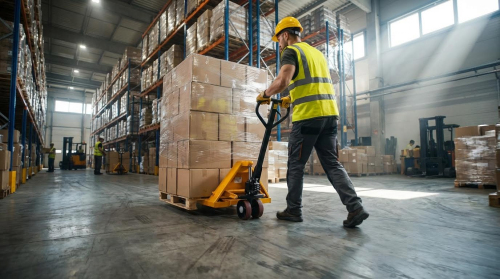
Sensors, AI, and predictive maintenance turn “do not stack pallets by hand” from a policy on paper into an enforceable, data‑driven rule.
They monitor equipment condition, stack geometry, and worker behaviour so unsafe trends are corrected before they become incidents.
- Equipment condition monitoring: IoT sensors track vibration, hydraulic pressure, wheel condition, and mast cycles on pallet jacks, stackers, and forklifts – predicts failures that could drop or destabilise stacked pallets. (source)
- Digital twins for layout and flow: Virtual models simulate pallet flows, rack heights, and equipment paths – lets engineers test new stack heights or aisle widths before changing the real warehouse. (source)
- Vision and lidar for stack monitoring: Vision systems and lidar measure stack height and tilt to confirm compliance with internal limits and insurer or OSHA requirements – alarms trigger before a stack exceeds safe height or leans
Designing Safe Pallet Stacking In Your Facility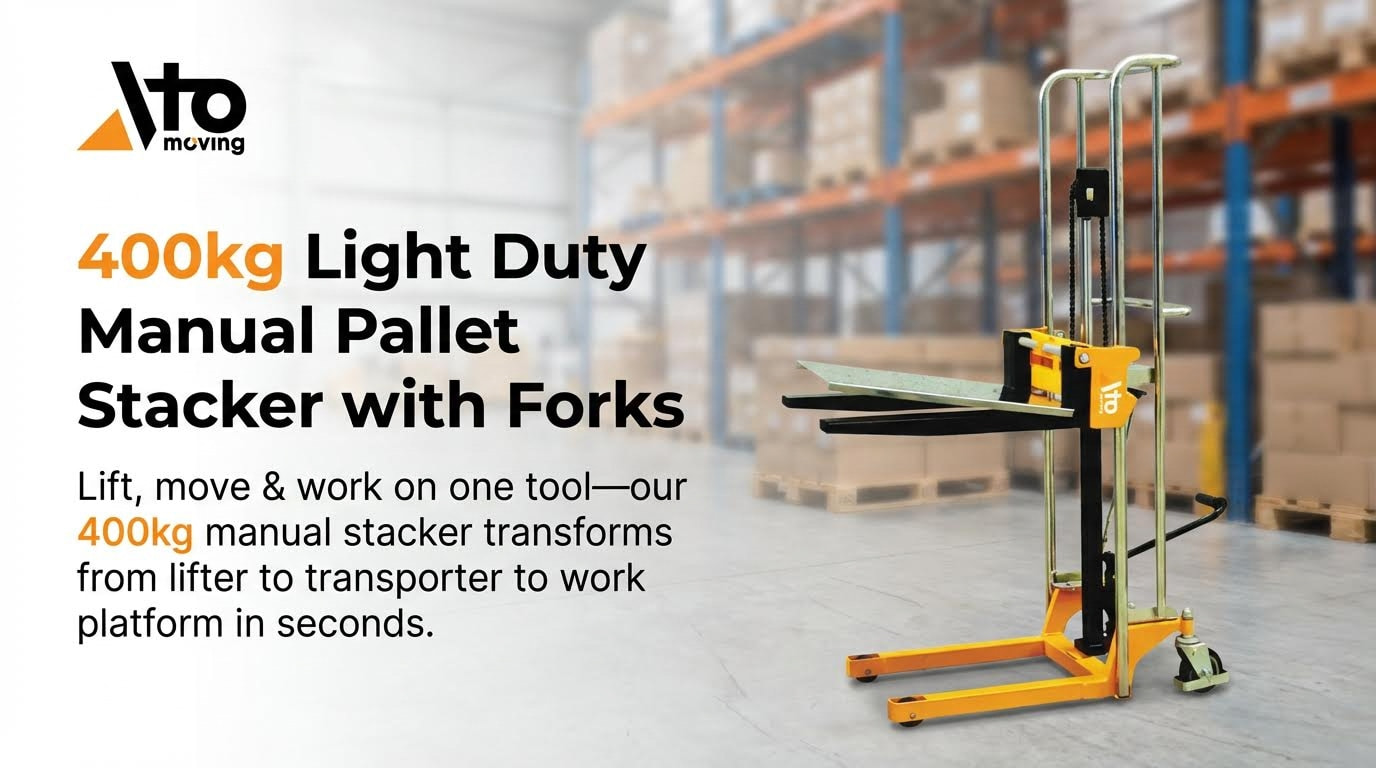 Designing safe pallet stacking means engineering your layout, procedures, and training so operators do not stack pallets by hand beyond safe limits, while every stack, aisle, and lift complies with ergonomic and fire-safety constraints.Stack geometry, floor conditions, and fire codesSafe pallet stack design starts with geometry, floor quality, and fire-code limits so stacks stay stable, aisles remain usable, and sprinkler systems can control a fire if something goes wrong.
Design Factor Typical Guidance / Limit Source Operational Impact Free-standing stack height ratio Max height ≈ 4 × smallest base dimension (4:1) Free‑standing stack ratio 1.0 m × 1.2 m pallet footprint supports ≈4 m stack before stability becomes critical. Idle pallet stack height ≤4.6 m Idle pallet stack fire limit Controls fire load; helps keep sprinkler effectiveness and insurance compliance. Idle pallet pile footprint ≤37 m² per pile Pile area limit Prevents one large fire from overwhelming suppression systems. Manual pallet stack height ≈6 pallets max by hand Manual stacking limit Above ~6 high, require jacks, stackers, or forklifts; do not stack pallets by hand beyond this. Wood pallet stack height (racked/controlled) ≈4.5–5.5 m if uniformly loaded and wrapped Wood pallet stack range Use equipment and engineered layouts for tall wood stacks; never rely on manual re‑stacking at this height. Plastic pallet stack height ≈3–4.5 m Plastic pallet stack range Lower height due to flexibility; critical in warm warehouses and high‑bay storage. Steel pallet stack height >6 m possible under suitable conditions Steel pallet stack range High structural capacity but very high fire load; demands strict fire-code review. Floor condition Firm, level, routinely inspected Floor and storage area maintenance Uneven floors amplify overturning moments; small dips can tip tall stacks during handling. - Define a stack-height policy: Limit free-standing pallet stacks using the 4:1 rule and fire-code caps – prevents tip-overs and non-compliant fire loads.
- Separate idle pallets from product: Treat empty pallet piles as a distinct fire zone – reduces fuel concentration near production lines.
- Standardize pallet footprints: Keep most stacks on 1,000 mm × 1,200 mm bases – simplifies geometry checks and height rules.
- Mark floor zones: Paint pallet stack boxes and no‑stack buffer lanes – gives operators a visual limit without needing to calculate.
- Specify floor tolerances: Set maximum acceptable slope and level deviation in mm – prevents “mystery” leaning stacks on poor concrete.
- Link stack height to equipment: Above ~6 pallets high, require powered equipment – forces a transition away from manual stacking.
- Integrate fire spacing: Maintain required gaps to walls, columns, and between piles – keeps sprinkler spray patterns effective.
How to apply the 4:1 rule in practice Measure the smallest base dimension of the loaded pallet stack in meters. Multiply by 4 to get the maximum free-standing height. Then check that this height is also below your fire-code and insurance limits. If not, reduce height or add racking.
💡 Field Engineer’s Note: Many “mysterious” pallet collapses traced back to a 1–2% floor slope aligned with travel direction. A tall stack on a slightly sloped, worn floor can walk a few millimetres with each bump until the centre of gravity crosses the tipping line.
PPE, training, and ergonomic work design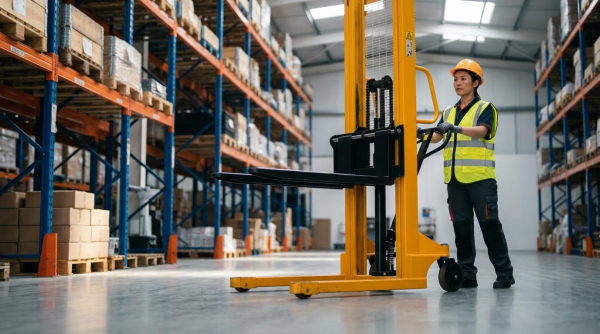 Safe pallet stacking in a live facility depends on PPE, structured training, and ergonomic work design that deliberately shifts high, heavy, or frequent lifts away from manual handling and toward engineered aids.
 - Set a clear “do not stack pallets by hand” rule: Prohibit manual stacking beyond about six pallets high – removes ambiguity for supervisors and operators.
- Standard PPE kit: Require gloves, steel‑toe safety shoes, and cut‑resistant hand protection – reduces crush and laceration injuries from pallet edges and nails.
- Formal manual-handling training: Teach bending at knees, neutral spine, and keeping loads close – cuts cumulative spinal loading when pallets must be moved by hand.
- Use lift tables and self‑levelers: Keep work between knee and shoulder height – avoids repeated lifts from floor level or above 1.5 m.
- Risk-assess pallet mass: Evaluate pallet weight, frequency, reach distance, and twist – identifies tasks that must move from manual to mechanical handling.
- Two-person and POWERLIFT methods: For unavoidable heavy pallets, standardize team lifts and POWERLIFT posture – shares load and keeps joints in safer ranges.
- Trigger points for equipment use: Define weight and height thresholds that mandate pallet jacks, stackers, or conveyors – prevents “hero” lifting culture.
- Route and floor checks in training: Train operators to inspect travel paths for ruts, water, ice, or abrupt level changes – reduces slips and sudden side loads on stacks.
- Refresher and incident-based training: Review real near-misses and injuries in toolbox talks – anchors rules in your own facility’s data.
- Ensure pallets are in good condition and not damaged.
- Limit the height of stacks to prevent instability.
- Interlock items within the stack for added stability.
- Use strong, undamaged pallets for stacking.
- Ensure weight is evenly distributed across the pallet.
- Avoid exceeding recommended weight limits.
- Check the weight capacity of both pallets before stacking.
- Ensure even load distribution to avoid crushing items below.
- Follow manufacturer guidelines for stacking heights.
Map every touchpoint where a worker currently bends to the floor or reaches above shoulder height for pallet tasks. Replace these with pallet jacks, stackers, conveyors, or lift tables. Adjust line heights so that finished loads arrive at a level where wrapping and labelling stay within the knee–shoulder zone. Document this as standard work and audit monthly.
💡 Field Engineer’s Note: When we added a simple rule—“if you need a second effort to lift or twist a pallet, stop and get equipment”—strain injuries dropped sharply. Most overexertion incidents came from that one extra manual shove to straighten a leaning stack.
 Final Thoughts On Reducing Manual Pallet Stacking RisksManual pallet stacking looks simple, but physics, ergonomics, and fire load all work against the operator. Tall stacks on small bases amplify small floor defects into tip‑overs. Heavy pallets at shoulder height turn minor slips into crush injuries. Fire-code limits cap how high and wide you can stack before sprinklers lose control.The safest facilities treat “do not stack pallets by hand” as an engineering rule, not a slogan. They cap manual stacks at low heights. They move vertical work to pallet jacks, stackers, forklifts, palletisers, and AS/RS. They design layouts around the 4:1 stability rule, floor flatness, and idle pallet fire limits. PPE, training, and good technique then act as a backup, not the first line of defence.For operations and engineering teams, the best practice is clear. Map every task where workers lift, twist, or reach above waist height with pallets. Replace those steps with engineered aids from Atomoving and enforce hard thresholds for manual work. Combine this with inspection routines, floor maintenance, and clear stack‑height policies. When you design the system so high, heavy, and frequent lifts always use equipment, you cut injuries, downtime, and product loss at the same time.Frequently Asked QuestionsIs it safe to stack pallets?Stacking pallets can be safe if done correctly. According to OSHA regulations under 29 CFR 1910.176(b), materials stored in tiers must be stacked, blocked, interlocked, and limited in height to remain stable and secure against sliding or collapse. OSHA Stacking Guidelines.
What is the correct way to stack pallets?The correct way to stack pallets involves blocking, stacking, limiting height, and interlocking materials to ensure they don’t collapse or slide. Pallet stack instability can lead to accidents and other issues. Pallet Stacking Tips.
Can you stack two pallets on top of each other?While double stacking pallets can improve storage efficiency, it’s crucial to consider the weight capacity and load distribution. The additional weight from the upper pallet can potentially damage the lower one. Double Stacking Advice.