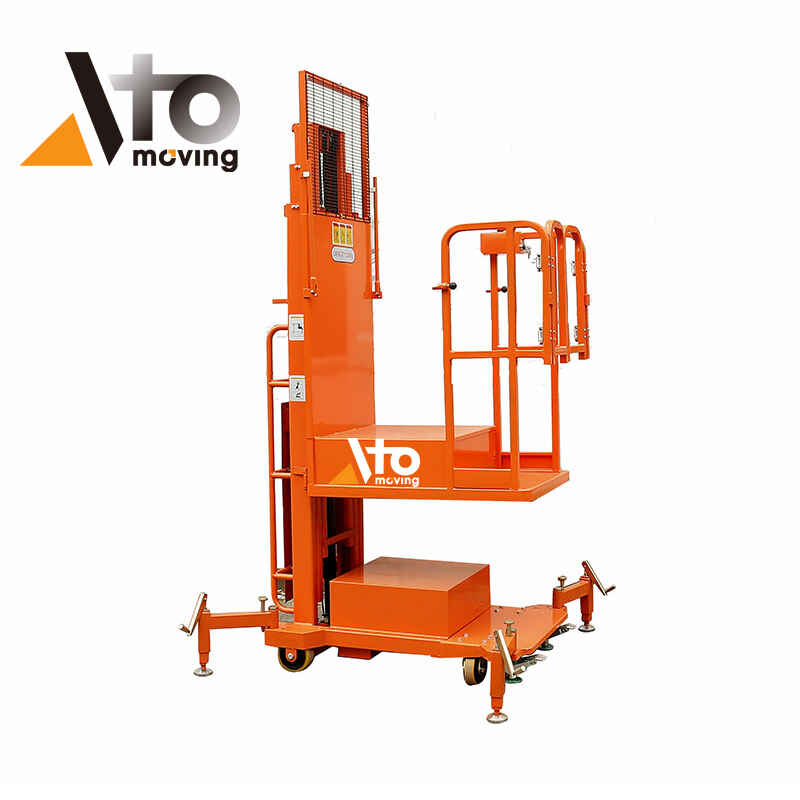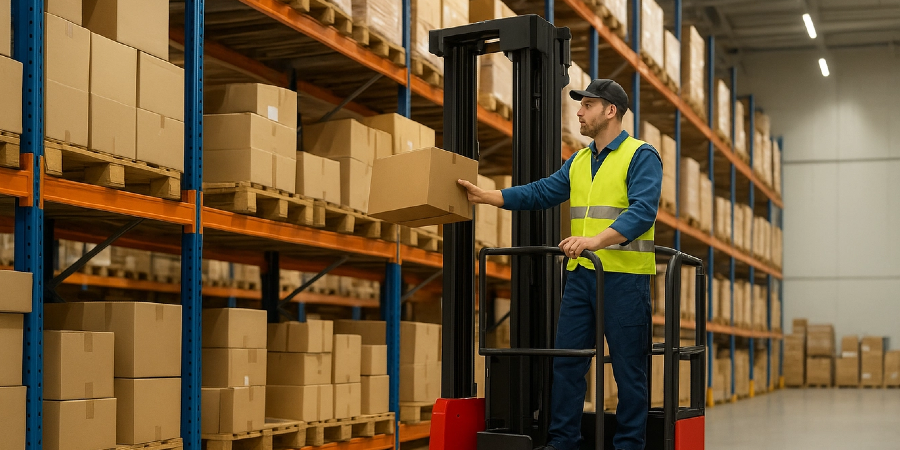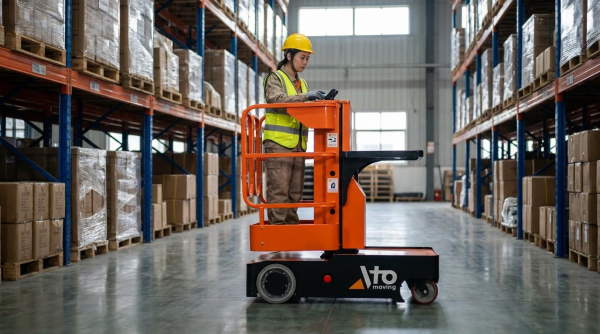
This guide explains how a semi electric order picker compares to manual and full electric machines in real warehouses. You will see where each type wins on safety, productivity, cost, and maintenance so you can match the right technology to your duty cycle and layout.
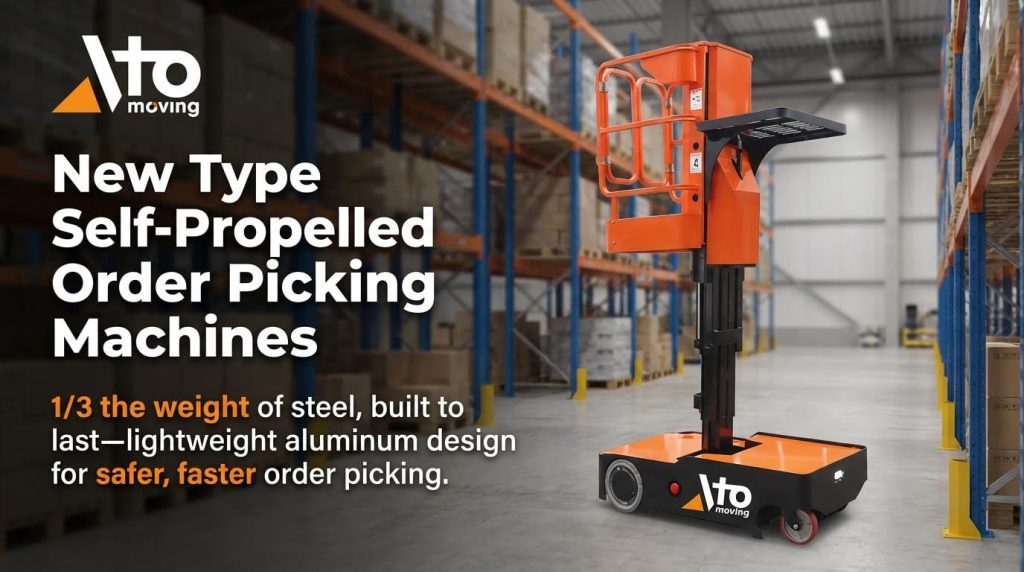
What Semi-Electric Order Pickers Are And How They Work
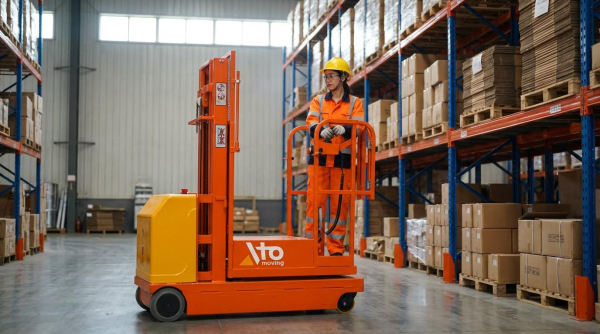
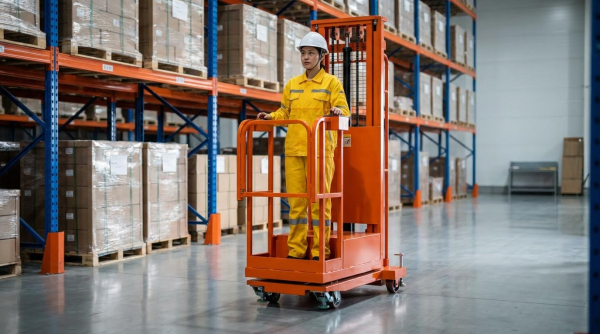
A semi electric order picker is a hybrid machine that uses electric power for lifting but relies on manual push/pull for travel. It fills the gap between fully manual picking and high-cost full-electric trucks, boosting vertical handling efficiency while keeping capital and maintenance low.
In practice, operators walk with the unit, manually positioning it in the aisle, then use powered controls to raise and lower themselves or the load to the required rack level. This separation of duties—manual travel, electric lift—optimizes cost, complexity, and performance for light to medium-duty warehouses.
Core Design And Operating Principles
The core operating principle of a warehouse order picker is simple: human muscles move it horizontally, an electric system moves it vertically. This keeps the chassis light, the battery small, and controls intuitive for new operators.
- Hybrid motion concept: Manual travel, powered lift – Reduces purchase cost and simplifies training compared with full-electric trucks.
- Walk-with operation: Operator walks and steers at about normal walking speed – Good control in narrow aisles and congested zones.
- Electric lift only: Motor-driven hydraulic or chain lift – Removes strain from repetitive lifting and reaching to higher rack levels.
- Low to mid-level picking: Typically serves the first few rack levels – Ideal for carton and tote picking in 3–6 m rack systems.
- Simple controls: Up/down buttons and emergency stop – Minimizes operator error and shortens familiarization time.
Compared with a purely manual picker, a order picking machines cuts the time and effort required to handle vertical movement, while avoiding the cost, weight, and maintenance of powered drive motors and complex steering systems found on full-electric order pickers. This makes it most attractive where operators perform many vertical lifts per shift, but horizontal travel distances remain modest.
How a semi electric order picker cycle typically runs
1) Operator pushes the unit to the picking bay. 2) Sets the parking brake. 3) Uses the electric controls to raise the platform or forks to the target level. 4) Picks or places cartons/totes. 5) Lowers the platform electrically. 6) Releases brake and pushes to the next location. Only the lifting portion consumes battery energy.
💡 Field Engineer’s Note: In real facilities, operators often “ride” the push slightly when aisles are flat and smooth. If your floor has slopes above about 2% or rough expansion joints, plan for more operator effort or consider moving to a fully powered drive to avoid fatigue and runaway risks.
Main Components And Powertrain Layout
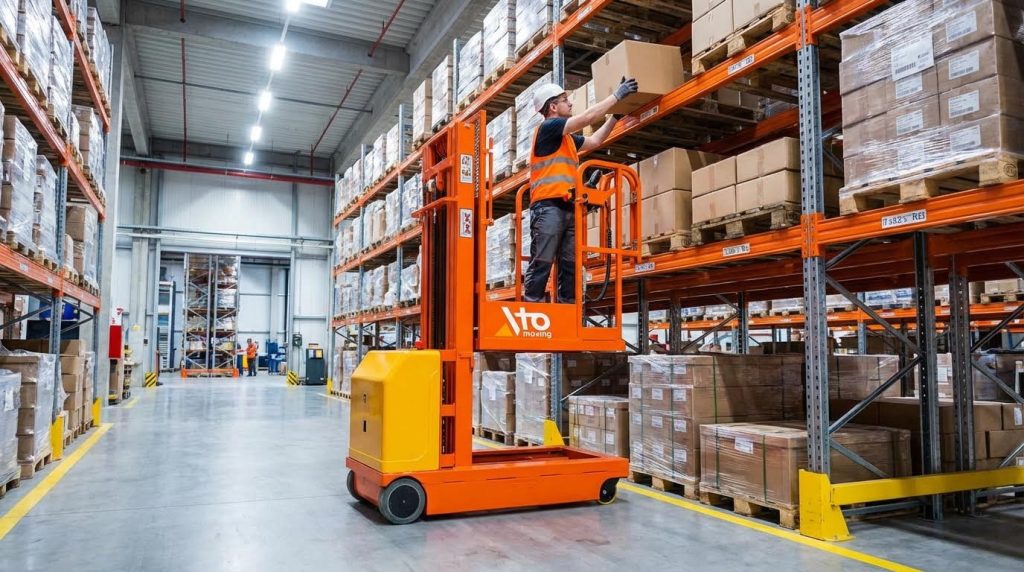
A semi electric order picker uses a very simple powertrain layout: there is no traction motor, only a compact lift power pack. Most components are mechanical and structural, which keeps reliability high and service tasks straightforward.
- Base chassis: Welded steel frame with fixed and steerable wheels – Provides stability for loads typically in the few-hundred‑kilogram range.
- Mast structure: Single or telescopic vertical mast – Guides the platform smoothly up to low or mid rack levels.
- Operator platform or deck: Small standing platform or load deck – Allows the picker to work at comfortable reach height without ladders.
- Guardrails and gates: Side rails and front chain/door – Reduce fall risk when the platform is elevated.
- Lift power pack: Electric motor driving a hydraulic pump or chain system – Provides controlled, repeatable lifting and lowering.
- Battery pack: Small lead‑acid or lithium battery sized for lift only – Keeps overall machine weight and charging time low.
- Control interface: Up/down buttons, key switch, emergency stop – Gives basic but safe control, even for temporary staff.
- Brakes and stabilizers: Foot or hand brake, sometimes stabilizing outriggers – Prevent unintentional movement while elevated.
Because the semi electric order picker does not include a traction gearbox, drive motor, or steering electronics, its powertrain layout is mechanically simple. The main engineering focus is on the hydraulic circuit, mast guidance, and platform safety systems, which are easier and cheaper to maintain than the full drive systems of fully electric order pickers.
| Subsystem | Typical Design | What It Controls | Operational Impact |
|---|---|---|---|
| Travel system | Manual push/pull, steerable wheels | Horizontal movement | Best for short runs and flat floors; keeps cost and weight low. |
| Lift system | Electric motor + hydraulic pump/chain | Vertical movement of platform/load | Removes manual lifting strain; enables frequent picks at height. |
| Power source | Small battery (lift only) | Energy for lift and controls | Short charging time; simple charging infrastructure. |
| Operator interface | Up/down buttons, emergency stop | Lift commands and safety | Fast training; low risk of misuse. |
| Safety structure | Mast, guardrails, brakes | Stability and fall protection | Supports safe work at elevated positions. |
💡 Field Engineer’s Note: In cold storage or unheated warehouses, hydraulic oil thickens and small lift power packs can slow down noticeably. If your semi electric order picker will work regularly below 0°C, specify low‑temperature hydraulic oil and check the manufacturer’s rated lift speed at that temperature.
Engineering Comparison: Manual, Semi-Electric, Full Electric
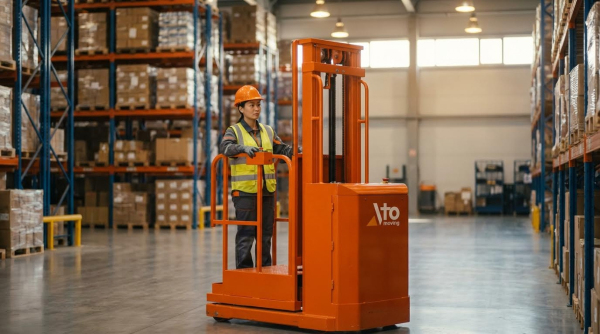
This section compares manual, semi electric order picker, and full electric order pickers on lift performance, ergonomics, safety, and energy systems so you can match the right technology to your warehouse duty cycle.
| Type | Primary Motion | Lift Power | Typical Use Case | Operational Impact |
|---|---|---|---|---|
| Manual | Manual push/pull | Manual pump or no lift | Low-volume, short picks, small sites | Lowest cost, lowest throughput, highest operator effort |
| Semi-electric | Manual travel | Electric lift only | Medium-volume, mixed-height picking | Balanced capex vs productivity; reduced lifting strain |
| Full electric | Powered travel and lift | Electric traction and lift | High-volume, multi-shift operations | Highest throughput, lowest ergonomic load, highest capex |
💡 Field Engineer’s Note: When comparing technologies, walk the longest pick paths in your facility and time them. Travel distance often drives the ROI gap between semi-electric and full electric more than lift speed alone.
Lift Performance, Height, And Throughput
Lift performance and travel mode directly dictate how many order lines per hour each technology can realistically handle in your facility.
| Feature | Manual Picker | Semi-Electric Order Picker | Full Electric Order Picker | Operational Impact |
|---|---|---|---|---|
| Lift actuation | Manual (pumping or climbing) | Electric lift, manual travel | Electric lift and powered travel | Defines operator fatigue and cycle time |
| Typical working height range | Ground to low shelves (≈1.5–2.0 m) | Low to mid-rack (≈3.0–4.5 m) | Low to high rack (≥6.0 m depending on model) | Higher reach expands storage density and SKU access |
| Picking speed / productivity | Low – walking and manual handling dominate | Medium – faster vertical cycles, slower horizontal | High – powered drive and lift increase pick rate | Full electric supports higher throughput than manual units for most operations |
| Cycle time sensitivity to operator fitness | Very high | Moderate | Low | Electric systems stabilize performance across shifts |
| Best throughput band | Very low order lines per hour | Low to medium order lines per hour | Medium to very high order lines per hour | Helps select the right class by demand level |
- Manual picker: Human-powered lift and travel – Throughput collapses as pick heights and distances increase.
- Semi electric order picker: Electric lift, manual push – Big gain in vertical speed and comfort; horizontal speed still limited by walking pace.
- Full electric order picker: Powered drive and lift – Supports faster item picking and transport for higher productivity. Electric units typically outperform manual for speed
How to benchmark throughput in your warehouse
Time a full pick route with each technology over at least 20–30 lines. Record average lines per hour and note maximum lift height used. Use the slowest realistic walking speed when modelling semi-electric performance to keep safety margins.
💡 Field Engineer’s Note: In real warehouses, lift speed rarely limits throughput; it is the walk distance and number of starts/stops. If most picks are within 1.5 m height, a semi-electric may offer little advantage over a well-designed cart route.
Ergonomics, Safety, And Compliance Factors
Ergonomics and safety determine long-term injury rates, compliance risk, and how sustainable your chosen order picking method is for multi-shift operations.
| Factor | Manual Picker | Semi-Electric Order Picker | Full Electric Order Picker | Operational Impact |
|---|---|---|---|---|
| Manual lifting strain | High – frequent bending, reaching, and carrying | Medium – vertical lift is powered, but walking and some handling remain | Low – lifting and much of the handling are assisted | Electric units reduce risk of strains and sprains vs manual methods by removing manual lifting |
| Need to climb shelves or ladders | Often required in ad‑hoc setups | Generally not required; platform lifts operator | Not required; operator works from a guarded platform | Reducing climbing sharply cuts fall risk |
| Operator fatigue over shift | High, especially above 8,000–10,000 steps | Moderate; lift fatigue reduced, walking remains | Low to moderate; most motions powered | Fatigue affects both safety and pick accuracy |
| Typical safety features | Few; maybe brakes and basic guard rails | Emergency stop, guardrails, interlocks vary by model | Emergency stop, dead‑man controls, guarded platforms | More integrated safety usually means better compliance potential |
| Injury profile | Back, shoulder, and knee strain common | Reduced back strain; some push/pull strain | Lower musculoskeletal risk, but higher need for driver training | Impacts absenteeism and workers’ compensation costs |
- Manual picker: High ergonomic risk – Best only where loads are light and volumes are low.
- Semi electric order picker: Balanced ergonomics – Removes heavy vertical lifting while keeping simple, low-speed operation.
- Full electric order picker: Lowest physical strain – But requires stricter procedures, training, and adherence to powered industrial truck standards.
Compliance considerations to review
Check local regulations that align with standards like ISO and OSHA for powered industrial trucks. Full electric units usually fall under stricter “powered truck” rules, requiring formal operator training, inspections, and documented maintenance. Semi-electric units may sit in a lighter regulatory category, but you still need risk assessments and documented safe-use procedures.
💡 Field Engineer’s Note: Many sites underestimate push/pull injuries. On slightly rough floors or ramps, a semi-electric’s mass can still overload operators; keep gradients below about 2% and specify high-quality casters to mitigate this.
Energy Systems, Batteries, And Maintenance Needs
Energy systems and maintenance complexity drive total cost of ownership, uptime, and how easily your team can support the fleet without specialist technicians.
| Aspect | Manual Picker | Semi-Electric Order Picker | Full Electric Order Picker | Operational Impact |
|---|---|---|---|---|
| Energy source | Human power only | Small battery for lift system | Larger traction and lift battery pack | Defines charging needs and runtime per shift |
| Battery presence | None | Yes – lift only | Yes – drive and lift | Full electric requires more structured charging infrastructure |
| Maintenance scope | Mechanical only (wheels, brakes, structure) | Mechanical + basic electrical/hydraulic lift | Mechanical + electrical + drive systems | More systems mean more potential failure points and higher skill needs |
| Technical skill required | Low – basic mechanical skills | Low to moderate – simple electrics and hydraulics | Moderate to high – diagnostics, controllers, contactors | Affects whether in‑house team can maintain units |
| Downtime sensitivity | Low – units are cheap and easily swapped | Moderate – each unit covers a zone or function | High – each truck often supports a full pick route | Critical for high-throughput operations |
- Manual picker: No batteries – Almost zero energy infrastructure, but all work is done by people.
- Semi electric order picker: Simple battery and lift hydraulics – Low energy use and relatively light maintenance compared with full electric fleets.
- Full electric order picker: Higher-capacity batteries and traction systems – Delivers performance but needs structured charging, inspections, and periodic component replacement.
Practical charging and maintenance tips
Standardize connectors and chargers across your semi-electric and full electric fleets where possible. Implement a simple visual schedule for charging (e.g., color tags per shift) to avoid deep discharges. For semi-electric units, prioritize regular checks of hydraulic oil level, lift chains, and emergency stop function; these three checks prevent a large share of field failures.
💡 Field Engineer’s Note: In light-duty sites, semi-electric batteries often fail from neglect rather than overuse. Small lift batteries still need proper charging discipline and periodic inspection, even if the truck only runs a few hours per week.
When Semi-Electric Makes Sense In Your Facility
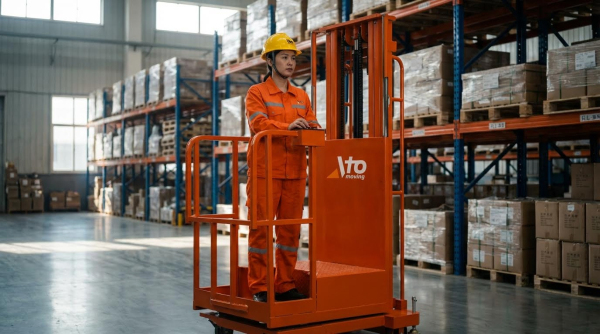
A semi electric order picker makes sense when you need powered lifting for safety and speed, but your travel distances, volumes, and budget do not justify a full-electric truck fleet.
- Typical sweet spot: Light to medium daily picks – More ergonomic than manual, cheaper than full electric.
- Key drivers: Duty cycle, aisle layout, load weight/height – These determine push effort and lift needs.
- Financial trigger: When labour savings matter but capital is tight – Semi-electric often becomes the “bridge” solution.
Matching Duty Cycle, Aisle Layout, And Load Profile
This section explains how to match a semi electric order picker to your actual working hours, travel paths, and load characteristics so you avoid both under‑ and over‑specifying equipment.
| Factor | Good Fit For Semi-Electric | Better For Manual | Better For Full Electric | Operational Impact |
|---|---|---|---|---|
| Daily lift cycles | Up to ~50 lifts/day per unit – light to moderate use | <20 lifts/day, very occasional work | Continuous multi-shift, high-frequency picking | Ensures lift system and small battery are not overworked |
| Travel distance per pick run | Short routes in a zone, tens of metres | Very short, ad-hoc movements | Long runs across large warehouses | Manual push effort stays manageable on level floors |
| Lift height | Low–mid racking (roughly up to 4–5 m) | Ground and first level only | High-bay and very high pick faces | Powered lift removes most strain versus step-ladders |
| Load weight | Cartons / totes / partial pallets, a few hundred kg | Light boxes & single items | Heavy pallets near truck capacity | Hydraulic lift handles weight; operator only pushes horizontally |
| Work pattern | Intermittent batches, a few hours/day | Random, low-intensity tasks | Dedicated picking teams all shift | Aligns battery size and maintenance with real use |
- Duty cycle: Count realistic lifts and travel per shift – Prevents oversizing or burning out equipment.
- Aisle width and slope: Check narrow aisles and gradients – Push forces rise sharply on slopes or rough floors.
- Load mix: Map which SKUs need elevation vs. ground picks – Ensures you buy enough powered positions, not too many.
- Pick pattern: Zone picking vs. long-route picking – Semi-electric loves zone work, struggles on long cross-warehouse routes.
How to quickly assess your duty cycle
Time one normal hour of picking. Count: (1) number of lifts, (2) average lift height, (3) approximate push distance per pick run. Multiply by effective working hours per shift. If you stay in light to medium ranges, a semi electric order picker is usually suitable.
💡 Field Engineer’s Note: In real warehouses, the limiting factor is often floor condition, not the lift motor. Even a semi electric order picker becomes hard work if you have worn concrete, ramps over 2–3%, or dock plates with sharp transitions. Budget for floor repairs or limit use zones if you want operators to push safely all shift.
TCO, Payback, And Upgrade Path Considerations
This section shows how to compare total cost of ownership (TCO) and plan an upgrade path, so your semi electric order picker investment does not trap you when volumes grow.
| Aspect | Manual Picker | Semi-Electric Order Picker | Full Electric Order Picker | Best For… |
|---|---|---|---|---|
| Upfront cost | Lowest | Medium | Highest | Start-ups and very low volumes |
| Productivity | Lowest | Medium | Highest – faster travel and lift per pick | High-volume operations |
| Ergonomics & safety | More strain and climbing | Reduced lift strain; still pushing | Least strain, minimal manual lifting for operators | Sites with strict safety targets |
| Customization options | Very limited | Limited but adequate | Highest – scanners, scales, printers for accuracy | Complex, high-SKU picking |
| Training needs | Minimal, quick to learn for temporary staff | Low – similar to manual with powered lift | Higher – more systems and controls | Sites with many seasonal workers |
- Capex vs. Opex balance: Semi-electric reduces capital outlay versus full electric – Useful when cash is tight but labour cost is rising.
- Labour savings: Electric lifting and better ergonomics cut fatigue – Operators maintain speed for more of the shift.
- Safety and injury costs: Less manual lifting lowers strain injuries – Helps reduce lost-time incidents and insurance pressure.
- Scalability: Semi-electric can be redeployed later as support equipment – They remain useful even after you add full electrics.
Simple payback thinking for semi-electric
Estimate: (1) extra lines picked per hour vs. manual, (2) hourly labour cost, (3) working hours per year. If the extra output covers the price difference between manual and semi electric in 1–3 years, the semi electric order picker is usually a sound step before going fully electric.
💡 Field Engineer’s Note: When planning an upgrade path, standardize on similar platform heights and pallet interfaces across manual, semi-electric, and full electric equipment. That way, you can shuffle units between zones as volumes change without reworking racking or changing load formats.
Final Thoughts On Choosing The Right Order Picker
The choice between manual, semi-electric, and full electric order pickers must follow your real duty cycle, floor conditions, and safety goals. Manual units keep capital low but push physical limits fast once lift heights and walking distances rise. Full electric trucks unlock high throughput and the lowest physical strain, but they demand higher investment, stronger charging infrastructure, and stricter compliance systems.
Semi-electric order pickers sit in a practical middle ground. They use powered lift to remove most vertical strain, yet keep travel manual to control cost, weight, and maintenance. This works well in zone-based layouts, short routes, and low to mid-level racking where operators need safe elevation but do not walk kilometres per shift. Correct floor gradients, good casters, and basic hydraulic and battery care keep these machines safe and reliable.
As a best practice, measure real pick paths, lift heights, and cycles before you buy. Start with semi-electric units where volumes and budgets are moderate, and plan an upgrade path to full electric as lines per hour grow. Treat order pickers as part of a system: racking, floors, training, and procedures must align so your Atomoving equipment delivers safe, repeatable performance over its full life.
Please provide the `{reference}` data so I can parse, filter, and generate the FAQ section based on the query “semi electric order picker.” The reference should include an array of objects with `output` fields containing JSON strings. Once you provide this, I will proceed with the task.