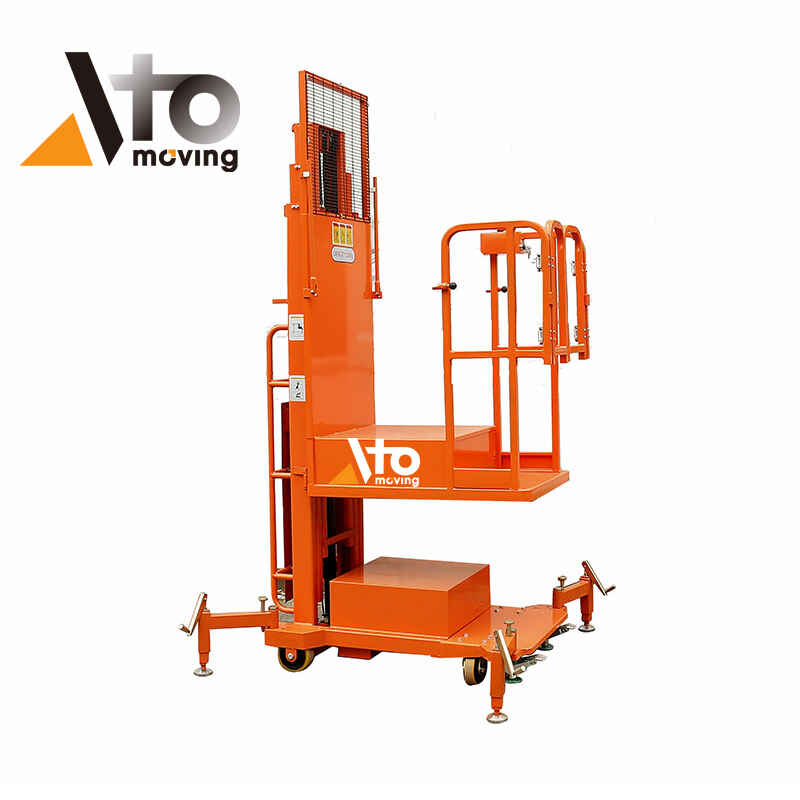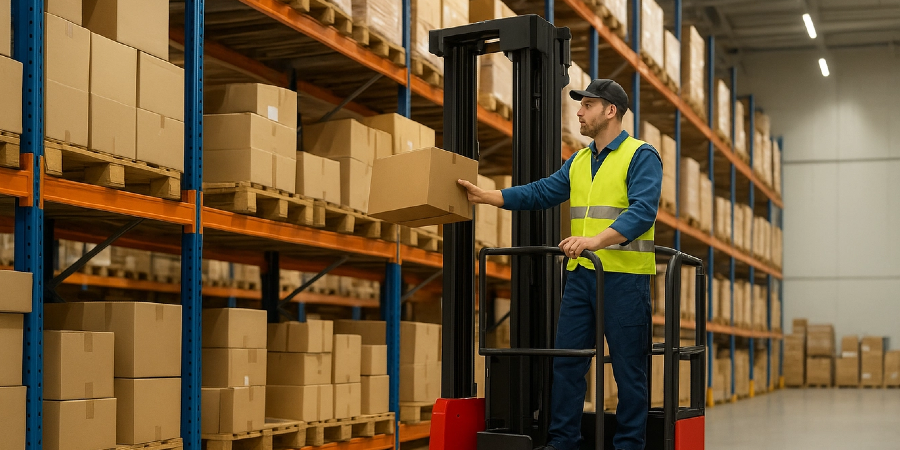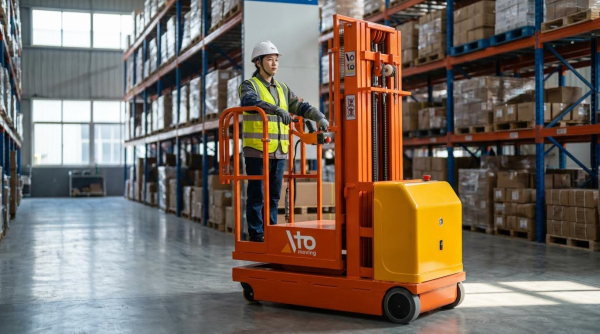
A warehouse order picker is a lifting vehicle that raises the operator to rack level so they can pick individual items efficiently and safely. This guide explains how different order picking machines types work, the key specifications that matter, and how to choose the right machine for your warehouse layout, load profile, and duty cycle. You will see how lift height, capacity, battery technology, and aisle width translate into real-world productivity, safety, and ROI when specifying a warehouse order picker for your operation.
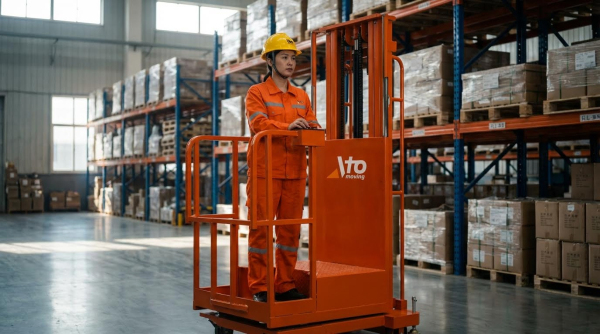
What Warehouse Order Pickers Are And How They Work
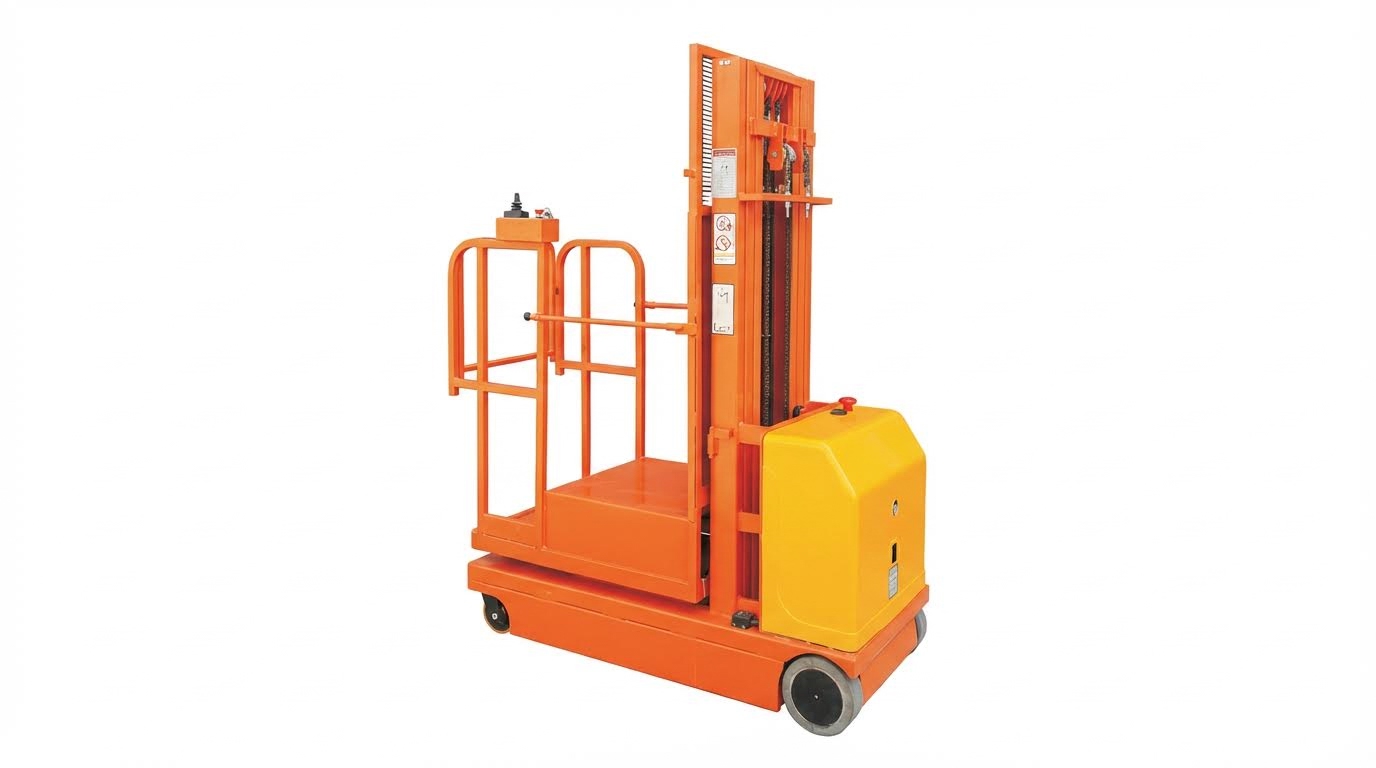
A warehouse order picker is a lifting truck that raises the operator to rack height so they can pick items directly from shelves and move them to a deck or pallet. In modern facilities, the warehouse order picker bridges the gap between manual picking and full automation, boosting pick speed, accuracy, and ergonomics while staying within narrow aisles and tall racking.
Core function in modern warehouses
The core function of a warehouse order picker is to lift the operator and a small load together so they can pick single items or cases quickly and safely from racking. Unlike a standard forklift, which moves full pallets, an order picker is optimized for piece picking and palletless handling in high-density storage.
- Direct item access: The platform elevates the operator to rack levels so they can grab individual SKUs – ideal for e‑commerce and spare parts.
- Onboard staging deck: Picked items sit on a carry deck or pallet on the forks – reduces back‑and‑forth travel to packing.
- Narrow‑aisle operation: Classified as electric motor narrow aisle lift trucks by OSHA – works safely in aisles that are too tight for standard forklifts. OSHA Class II definition
- Operator + load rating: Capacity always includes the operator, tools, and picked goods – prevents overloading and mast instability. Capacity guidance
- Productivity boost: Electric order pickers significantly increase picking speed and accuracy versus purely manual picking – fewer steps per line, more lines per hour. Productivity advantage
How an order picker changes a picking route
With a warehouse order picker, the operator rides the machine down the aisle, stopping only where there are picks. They elevate to the correct level, grab the item, place it on the deck, then lower and drive to the next stop. This eliminates constant climbing of stairs or ladders and repeated long walks back to a central pallet or cart.
💡 Field Engineer’s Note: When you deploy order picking machines in a busy warehouse, re‑draw travel routes and one‑way traffic patterns. These machines move slower than forklifts but occupy more vertical space, so clear overhead obstructions and define “no pass” zones at aisle ends.
Key components and operating principles
Warehouse order pickers work by combining a vertical lifting system with an electric drive chassis and an operator control station on a guarded platform. Understanding the main components helps you judge stability, safety, and long‑term maintenance demands.
- Chassis and drive unit: Houses the drive motor, steering, and braking system – controls travel speed and turning radius in narrow aisles.
- Mast or lifting column: Guides the platform and forks as they move up and down – defines maximum lift height and stability envelope.
- Operator platform: Standing area with guard rails, gates, and non‑slip flooring – keeps the operator secure while elevated. Platform safety and ergonomics
- Load deck or forks: Area for a pallet, tote, or small deck – carries the picked items with the operator.
- Lift system: Typically hydraulic cylinders or electric screw drives raise and lower the platform – converts motor power into vertical motion. Lift mechanism types
- Power source: Lead‑acid or lithium‑ion battery packs supply energy for drive and lift – defines runtime per shift.
- Control system: Travel and lift controls, deadman switch, and emergency stop – ensures the machine stops if the operator lets go. Deadman and braking systems
| Core Component | Typical Design Features | Operational Impact |
|---|---|---|
| Lift system | Hydraulic or electric screw lift | Hydraulics give smoother, faster lifts; screw drives can simplify maintenance planning. |
| Lift height | About 3.0–6.0 m for general models; up to 12.2 m on high‑level electric units High‑level picking range | Determines how many rack levels you can pick from without extra equipment. |
| Turning radius | About 1.2–2.5 m for electric order pickers Narrow‑aisle maneuvering | Controls minimum aisle width and how easily operators can turn at aisle ends. |
| Battery capacity | Roughly 160–375 Ah on many electric units Battery sizing | Defines how many hours of lifting and driving you get per charge. |
| Motor power | About 800–1,900 W on electric pickers Motor wattage range | Higher wattage supports heavier loads and faster lifting to upper rack levels. |
Why OSHA training matters for order pickers
Order pickers fall under OSHA’s powered industrial truck rules as Class II electric motor narrow aisle trucks. Operators must complete formal and practical training and be evaluated before use. This reduces collision, tip‑over, and fall risks when working at height and around mixed traffic. OSHA classification and training
💡 Field Engineer’s Note: In cold storage or unheated warehouses, hydraulic oil thickens and slows lift speed below about 0°C. If you must pick in these areas, specify low‑temperature hydraulic oil and allow warm‑up cycles, or you will see “sluggish mast” complaints every winter.
Manual, semi-electric, and electric variants
Warehouse order pickers come in manual, semi‑electric, and fully electric variants, each balancing cost, effort, and productivity. Choosing the right type depends on pick height, daily line count, and aisle layout.
| Order Picker Type | How It Works | Typical Capacity / Height | Best For… |
|---|---|---|---|
| Manual | Operator pushes/pulls unit; lift is manual via pump or winch. | About 0.5–1.0 t capacity; lift heights around 3–6 m for many models Manual vs electric ranges | Small warehouses, low pick volumes, short travel distances. |
| Semi‑electric | Electric lift with manual travel, or electric travel with manual lift, depending on design. | Similar or slightly higher capacities than manual; typically low‑ to mid‑level heights Semi‑electric overview | Medium pick volumes where you want to cut lifting effort but keep purchase cost down. |
| Fully electric | Electric drive and electric lift; operator rides on platform at all times. | Often 1.0–3.0 t capacity; picking heights up to about 12.2 m on high‑level units High‑capacity electric specs | High‑throughput warehouses, multi‑shift operations, very narrow aisles and tall racking. |
- Manual order pickers: Low purchase cost and simple maintenance – good for light, occasional picking in compact areas. Manual model use cases
- Semi‑electric units: Electric lift reduces strain while keeping travel manual – useful where pickers work in short aisles with frequent lifting but limited driving distance. Semi‑electric advantages
- Electric warehouse order picker: Electric drive and lift handle both movement and elevation – minimizes physical effort and maximizes lines picked per hour. Efficiency benefits
Battery and runtime differences by type
Fully electric warehouse order pickers typically use lead‑acid or lithium‑ion batteries. Lithium‑ion options can provide 6–8 hours of runtime per charge and about 30% longer runtime than lead‑acid, with less maintenance and faster charging. Lead‑acid batteries cost less upfront but need watering and longer charge windows. Battery technology comparison Battery capacity ranges
💡 Field Engineer’s Note: For manual and semi‑electric units, the real bottleneck is operator fatigue, not the machine. Once daily walking distance and elevation cycles climb, upgrading to a fully electric warehouse order picker usually pays back in under two years through reduced injuries and higher pick rates.
Technical Specifications And Design Trade-Offs
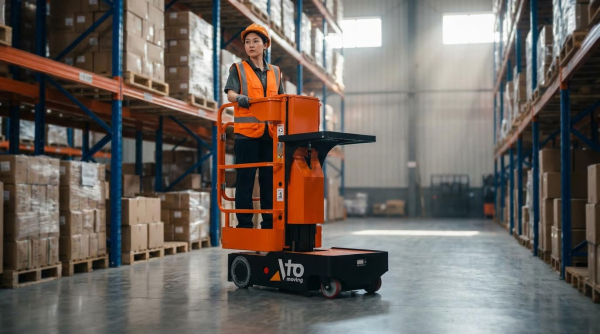
This section explains the key technical specs that define a warehouse order picker and what trade-offs you make when you push height, speed, or runtime. Use it to translate brochure numbers into real-world aisle, rack, and shift performance.
Lift height, capacity, and stability envelope
Lift height, capacity, and stability define how high a warehouse order picker can safely raise an operator and load without risking tip-over or structural overload. You must size these three together, not in isolation.
| Spec | Typical Range | What It Controls | Operational Impact |
|---|---|---|---|
| Normal lift height | 3–6 m reference | Standard rack access | Covers most low–mid bay picking in small and medium warehouses. |
| Max picking height (electric) | 3.6–12.2 m reference | Highest shelf you can safely reach | 12 m class units suit high-bay racking; check building clear height and sprinklers. |
| Platform capacity (small warehouses) | ≈225–450 kg (500–1,000 lb, incl. operator) reference | Total live load at height | Limits heavy-case or bulky SKU picking at upper levels. |
| Overall weight capacity range | Manual: 0.5–1.0 t; electric: up to 3 t reference | Combined load rating for platform / forks | Heavier-rated units handle palletized or dense product but need stronger floors. |
As lift height increases, the stability envelope shrinks because the load’s center of gravity moves further from the chassis. Manufacturers control this with wider bases, longer wheelbases, and electronic stability systems, but you still must respect the rated capacity at height.
- Always de-rate at height: Use the capacity chart – the safe load at 10 m is usually lower than at 3 m.
- Include operator and tools: Capacity is “total on platform” – count the person, carton, tote, and any accessories.
- Future-proof height: Choose 0.6–1.0 m extra over current top rack – gives room for future re-racking without re-buying equipment.
- Match forks to pallets: Typical forks 800–1,500 mm long and 200–300 mm wide reference – avoid pallet overhang that destabilizes loads at height.
How to size lift height for your warehouse
Measure floor to top of highest pallet position, then add at least 600 mm for operator eye level and clearance. Compare that figure to the rated picking height, not just “lift height,” as some brochures quote mast height rather than usable platform height.
💡 Field Engineer’s Note: Once you go above roughly 6–7 m, tiny floor defects matter. A 5 mm low spot under one wheel can translate into noticeable sway at the platform. For high-bay warehouse order picker fleets, invest in floor flatness and keep patch repairs flush, or operators will creep at height and kill your productivity.
Drive systems, wattage, and aisle maneuverability
Drive system design, motor wattage, and chassis geometry together determine how confidently a semi electric order picker moves in narrow aisles without fighting steering or clipping racking.
| Spec | Typical Range | What It Affects | Best For… |
|---|---|---|---|
| Drive motor wattage | ≈800–1,900 W reference | Acceleration, gradeability, loaded travel speed | Higher wattage for heavy loads or long runs; lower for tight, low-speed picking zones. |
| Turning radius | 1.2–2.5 m reference | Space needed to U-turn | 1.2–1.5 m radius suits very narrow aisles; 2.0+ m needs more open cross-aisles. |
| Typical working aisle width | ≈1.5–2.4 m (5–8 ft) reference | Rack layout density | Lets you shrink aisles versus 3.0–3.6 m forklift aisles, increasing storage capacity. |
| Chassis width | ≈740–760 mm (29–30 in) reference | Stability vs. slotting into narrow aisles | Narrow frames work in tight pick tunnels but need good floor conditions for stability. |
Most electric order picking machines models use front-wheel or center-drive traction with electronic speed control and automatic braking. Manual and semi-electric designs rely on push or tow for travel, which cuts speed but reduces complexity and cost.
- Higher wattage: 1,500–1,900 W motors handle heavier loads and frequent stops/starts – ideal for high-throughput case picking.
- Lower wattage: ≈800–1,000 W is usually enough for light loads and short runs – keeps purchase price and battery size down.
- Narrow-aisle focus: Aim for turning radius at least 200–300 mm less than aisle width – gives steering margin so operators are not “threading the needle.”
- Flat-floor requirement: Most units are not designed for ramps or rough ground reference – plan dock transitions and thresholds carefully.
Manual vs semi-electric vs full electric travel
Manual travel order pickers suit very short, low-volume pick zones where walking distance is small. Semi-electric keeps electric lift but manual push, which works in micro-fulfilment or mezzanine areas. Full electric travel is the standard for larger warehouses where operators cover hundreds of meters per hour.
💡 Field Engineer’s Note: In real sites, tight aisles plus aggressive acceleration settings cause most rack strikes. When commissioning a new warehouse order picker, start with conservative acceleration and steering sensitivity, then tune up after operators adapt. That usually saves more uprights than any guardrail project.
Battery technologies and duty-cycle planning
Battery type, capacity, and charging strategy determine how long a aerial platform can run between charges and whether you can support multi-shift operation without constant battery swaps.
| Battery Spec | Typical Values | Key Characteristics | Operational Impact |
|---|---|---|---|
| Capacity (electric pickers) | 160–375 Ah reference | Energy storage per charge | Higher Ah supports longer shifts or higher lift cycles before recharge. |
| Lead-acid runtime | Varies; typically one shift with proper sizing | Lower upfront cost, needs watering and long charge times (≈8+ h) reference | Good for single-shift, planned downtime operations. |
| Lithium-ion runtime | ≈6–8 h per charge, ~30% longer than lead-acid reference | Fast charge, no watering, higher efficiency | Ideal for opportunity charging during breaks and multi-shift use. |
| Battery life (lithium-ion) | ≈2,000–8,000 cycles reference | Long service life if charged correctly | Higher initial cost but strong total cost of ownership for heavy users. |
- Lead-acid choice: Pick when capital is tight and you run one shift – but budget time and space for watering and 8+ hour charges.
- Lithium-ion choice: Pick when you run long or multiple shifts – fast charging and no maintenance reduce downtime and labor.
- Avoid deep discharge: Do not regularly run any battery to 0% – this sharply shortens life, especially for lead-acid packs.
- Plan duty cycle: Map picks per hour, lift heights, and travel distance – then size Ah so you finish a shift with 20–30% charge remaining.
Basic duty-cycle planning for your fleet
Start by logging how many hours per shift each scissor platform actually moves or lifts, not just “key on” time. Combine that with average lift height and load weight. Share this profile with suppliers so they can recommend an appropriate Ah rating and charger configuration rather than just selling the largest battery that fits.
💡 Field Engineer’s Note: Cold storage and very hot docks both punish batteries. In freezers below 0°C, effective capacity of lead-acid can drop sharply, forcing mid-shift swaps. Lithium handles temperature swings better but still benefits from keeping chargers in a temperate room and avoiding charging immediately after very heavy use when packs are hot.
Matching Order Picker Types To Your Operation
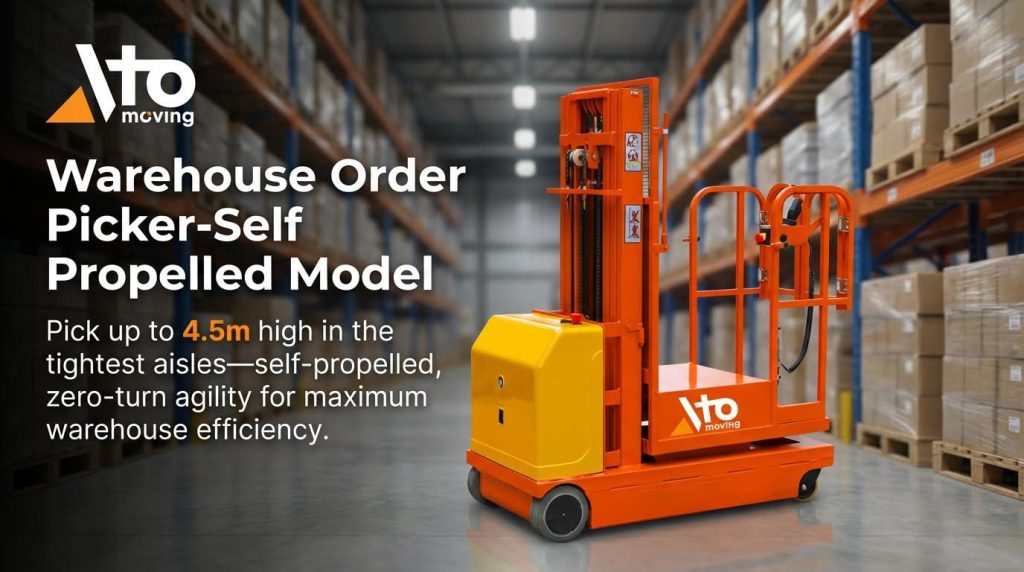
Choosing the right warehouse order picker starts with your building, racking, and workflow, not the brochure. Match picking height, aisle width, duty cycle, and safety rules to each machine type before you buy.
Application scenarios by picking level and aisle width
Application fit for a warehouse order picker depends mainly on picking height bands and the clear aisle width you can actually give the machine.
| Picking Level / Aisle | Typical Specs To Aim For | Best Order Picker Type | Operational Impact |
|---|---|---|---|
| Floor & 1st level (≤2.0–2.5 m) | Lift height up to about 3 m; capacity 500–1,000 kg including operator | Manual or low-level semi-electric | Low cost, ideal for small stores with short runs and light cartons |
| Low–mid level (≈3–6 m) | Lift height 3–6 m; capacity 500–1,000 kg including operator reference | semi electric order picker or compact electric | Good balance of speed and price for e‑commerce and spare‑parts stores |
| High level (≈6–12 m) | Max picking height 3.6–12.2 m; motor 800–1,900 W reference | High-level electric order picker | Supports dense pallet racking in large DCs, but needs flat floors and strong safety program |
| Very narrow aisle (VNA) (≈1.5–1.8 m) | Turning radius 1.2–2.5 m; chassis width ≈0.75 m; aisle 1.5–2.5 m reference reference | Narrow‑aisle electric order picker | Maximizes storage density; requires good driver training and racking alignment |
| Standard aisles (≈2.5–3.5 m) | Turning radius toward upper range (≈2.0–2.5 m) | Standard electric order picker or small forklift | Easier traffic flow and passing, more forgiving for new operators |
- Clarify picking band: Map what percentage of SKUs you pick at 0–2 m, 2–6 m, and >6 m – this prevents over‑specifying expensive high‑level machines you rarely use.
- Measure real aisle width: Measure clear distance between rack uprights, not drawing dimensions – this stops you buying a unit that cannot turn once pallets overhang.
- Check load pattern: Define average and peak pallet or tote weight, including operator and tools – so you stay under rated capacity (often 500–1,000 kg including operator in small units) reference.
- Decide indoor‑only vs mixed use: Most electric order pickers are for dry, flat indoor floors – if you must cross ramps or yards, you may need different equipment reference.
- Align with rack design: Ensure lift height exceeds top pick face by at least 300–500 mm – this gives clearance for safe handling without mast “stretching.”
How to map your current and future picking heights
Walk one representative aisle per zone and mark the highest level you pick from today. Add 0.6–1.0 m to allow for future re‑slotting or adding one more beam level, then select order picking machines lift height to cover that requirement with at least 300 mm extra clearance for forks and operator.
💡 Field Engineer’s Note: In very narrow aisles, the limiting factor is often turning radius, not chassis width. Always test‑drive a demo unit in your tightest aisle with real pallet overhang before signing a purchase order; CAD clearances on paper do not account for driver steering corrections.
Safety, compliance, and maintenance planning
Safe and reliable use of a aerial platform depends on matching the machine to OSHA/ISO rules, fall protection needs, and a realistic maintenance schedule your team can actually follow.
- Respect capacity plate: Total weight of operator, tools, and load must stay within rated capacity (often up to about 1,360 kg / 3,000 lb on some models) – this preserves stability and prevents structural fatigue reference.
- Plan operator training: Order pickers fall under powered industrial truck rules; expect 4–8 hours of initial training plus refreshers – budget time and cost before scaling the fleet reference reference.
- Define fall‑protection rules: At elevated heights, operators usually need a body harness tied off to approved anchor points – factor in harness procurement, inspection, and training reference.
- Specify safety systems: Look for deadman controls, automatic braking, and perimeter guarding – these features reduce runaway and pinch‑point incidents in busy aisles reference reference.
- Set traffic rules: Mark pedestrian‑only zones and speed limits where order pickers share space with forklifts and people – this cuts collision risk dramatically reference.
- Commit to daily checks: Pre‑shift inspections of controls, brakes, hydraulics, and safety systems catch issues early – this supports 10–15 years of reliable service life reference.
- Match maintenance to battery type: Lead‑acid needs watering and long charge windows; lithium‑ion offers 6–8 hours runtime and low maintenance – pick what your maintenance team can realistically support reference reference.
- Schedule periodic service: Plan monthly lubrication and annual professional hydraulic and electrical checks – this minimizes unplanned downtime in peak season reference reference.
Minimum PPE and behavior rules for operators
Require high‑visibility vests, slip‑resistant safety shoes, gloves for grip, safety glasses, and hard hats where overhead hazards exist. Enforce “two hands on controls while moving,” no mobile‑phone use on platforms, and strict adherence to marked travel paths for all scissor platform lift operations.
💡 Field Engineer’s Note: The fastest way to ruin a new order picker is poor battery care. If you choose lead‑acid to save money, also budget for eye‑wash stations, watering equipment, and staff training; otherwise, sulfation and under‑charging will cut capacity in half within a couple of peak seasons.
Final Considerations For Procuring Order Pickers
Final procurement decisions for any warehouse order picker should balance safety, performance, and lifetime cost, not just purchase price. The goal is to match equipment to your racks, aisles, shifts, and operators with enough headroom for future growth.
Key Specification Checklist Before You Sign
Before committing to a warehouse order picker, validate a short list of hard specs against your current and planned operation.
- Lift height vs. top rack: Confirm maximum picking height of 3.6–12.2 m covers your tallest storage level with 300–600 mm safety margin – Prevents last‑minute rack redesigns. Height ranges
- Load capacity envelope: Typical capacities run from 0.5–1.0 ton for manual units and up to 3 tons for electric – Avoids overloading and structural fatigue. Capacity data
- Aisle and turning radius: Turning radii of about 1.2–2.5 m must fit your narrowest aisle and crossing points – Ensures you can actually turn where drawings say you can. Typical radii
- Fork and deck dimensions: Fork length of 800–1,500 mm and width of 200–300 mm must match your pallet and carton patterns – Prevents unstable overhangs and crushed packaging. Fork sizes
- Drive and lift power: Motor wattage around 800–1,900 W should align with your lift heights and load profile – Reduces slow lifts at peak times. Motor data
- Indoor vs. outdoor use: Most electric order pickers are for flat, dry indoor floors only – Prevents premature wear and unsafe use on ramps or rough yards. Environment note
How to verify fit to your racking and aisles
Measure clear rack height (floor to underside of top beam), narrowest aisle between rack faces, main cross‑aisles, and door openings. Compare these to the order picker’s overall height, turning radius, and chassis width, keeping at least 100–150 mm safety clearance on each side for real‑world steering errors.
💡 Field Engineer’s Note: When you test‑drive a demo unit, do it in your tightest aisle and at your highest pick level, not in an open yard. Many procurement mistakes came from signing after a “car‑park test” that never exposed real turning, visibility, and mast sway issues at 6–10 m.
Battery, Power, And Duty-Cycle Planning
Battery chemistry, capacity, and charging strategy must match your shift pattern; otherwise the best semi electric order picker will sit idle waiting for a charge.
- Battery capacity: Common capacities of 160–375 Ah define how many hours you can run per charge – Critical for single vs. multi‑shift work. Capacity data
- Battery type choice: Lithium‑ion offers 6–8 hours runtime, fast charging, and 30% longer runtime than lead‑acid, at higher upfront cost – Ideal for high‑throughput or 24/7 sites. Battery comparison
- Lead‑acid realities: Needs watering, dedicated charging area, and 8+ hour charge times – Better for one‑shift operations with long overnight windows. Lead‑acid details
- Cycle life: Lithium‑ion batteries typically last about 2,000–8,000 cycles depending on use – Impacts total cost of ownership more than the sticker price. Cycle life
- Ramp limitations: Most electric order pickers are intended for flat floors, not steep ramps – Plan dock and mezzanine access carefully. Incline limits
Simple duty-cycle sizing approach
Estimate average amps drawn during typical picking, multiply by planned operating hours per shift, then add 20–30% safety margin. Choose a battery capacity and chemistry that covers this requirement with room for aging and seasonal peaks, especially in cold storage where capacity drops.
💡 Field Engineer’s Note: For 24/7 operations, the bottleneck is rarely raw battery capacity; it is charger availability and change‑out discipline. Budget for extra chargers and clear charging zones, or fast‑charge lithium‑ion, before you add more trucks.
Safety, Training, And Compliance At Purchase Time
Order picker procurement should include safety systems and operator training from day one, to comply with regulations and avoid early incidents.
- Regulatory class: Order pickers fall under Class II electric narrow aisle lift trucks, so powered industrial truck rules apply – Drives your training and inspection obligations. Classification
- Built‑in safety systems: Look for deadman controls, automatic braking, and perimeter guarding – These reduce runaways and pinch‑point injuries. Safety features
- Fall protection at height: Ensure anchor points and gates support harness use at elevated picking positions – Controls fall risk on higher‑level picks. Fall protection
- Training program: Plan for 4–8 hours of initial operator training, including theory and hands‑on – Helps meet OSHA requirements and reduces crash rates. Training time
- PPE policy: Budget and enforce PPE such as safety footwear, high‑visibility vests, gloves, and hard hats – Complements machine guarding in busy mixed‑traffic aisles. PPE guidance
💡 Field Engineer’s Note: When comparing quotes, insist on seeing which safety options are standard vs. “extras.” A cheaper truck without proper guardrails, interlocks, and harness anchor points often becomes more expensive once you retrofit to meet your safety policy.
Total Cost Of Ownership, ROI, And Maintenance Planning
Evaluating a warehouse order picker on total cost of ownership (TCO) and realistic ROI is more accurate than comparing only purchase prices.
| Cost / Factor | Typical Range | What Drives It | Operational Impact |
|---|---|---|---|
| New unit price | ≈ $12,000–$35,000 | Lift height, capacity, battery type, options | Sets depreciation and financing load. Higher spec can cut labor per line picked. Cost data |
| Used/refurbished | ≈ 30–50% less than new | Age, hours, rebuild quality | Good for low‑intensity or backup units when budget is tight. |
| Lease payments | ≈ $300–$800/month | Term length, residual value | Smoother cash flow; often includes service packages. |
| Annual energy cost | ≈ $200–$500 | Runtime, tariffs, charger efficiency | Small vs. labor; rarely the deciding factor alone. |
| Annual maintenance | ≈ $800–$1,500 | Usage hours, environment, service level | Predictable plans reduce downtime and surprise repairs. |
| Productivity gain | Up to ~40% more picking speed | Layout, training, model choice | Often pays back investment in ≈ 21 months via labor savings. ROI example |
- Planned maintenance: Daily checks, weekly battery care, and monthly lubrication plus annual professional service can deliver 10–15 years of reliable life – Spreads capital over a longer period. Maintenance schedule
- Common failure points: Batteries, hydraulics, and wheels are the usual pain spots – Addressing these early prevents downtime cascades. Issue patterns
- Service contracts: Fixed‑price service with local providers stabilizes annual costs – Good fit for sites without in‑house technicians. Service strategy
💡 Field Engineer’s Note: In lifecycle cost reviews, the biggest savings usually come from fewer trucks doing more work, not cheaper trucks. A slightly more expensive, better‑matched order picker that lifts faster and turns in tighter aisles often lets you avoid buying a second unit altogether.
Practical Buying Steps To De-Risk Your Decision
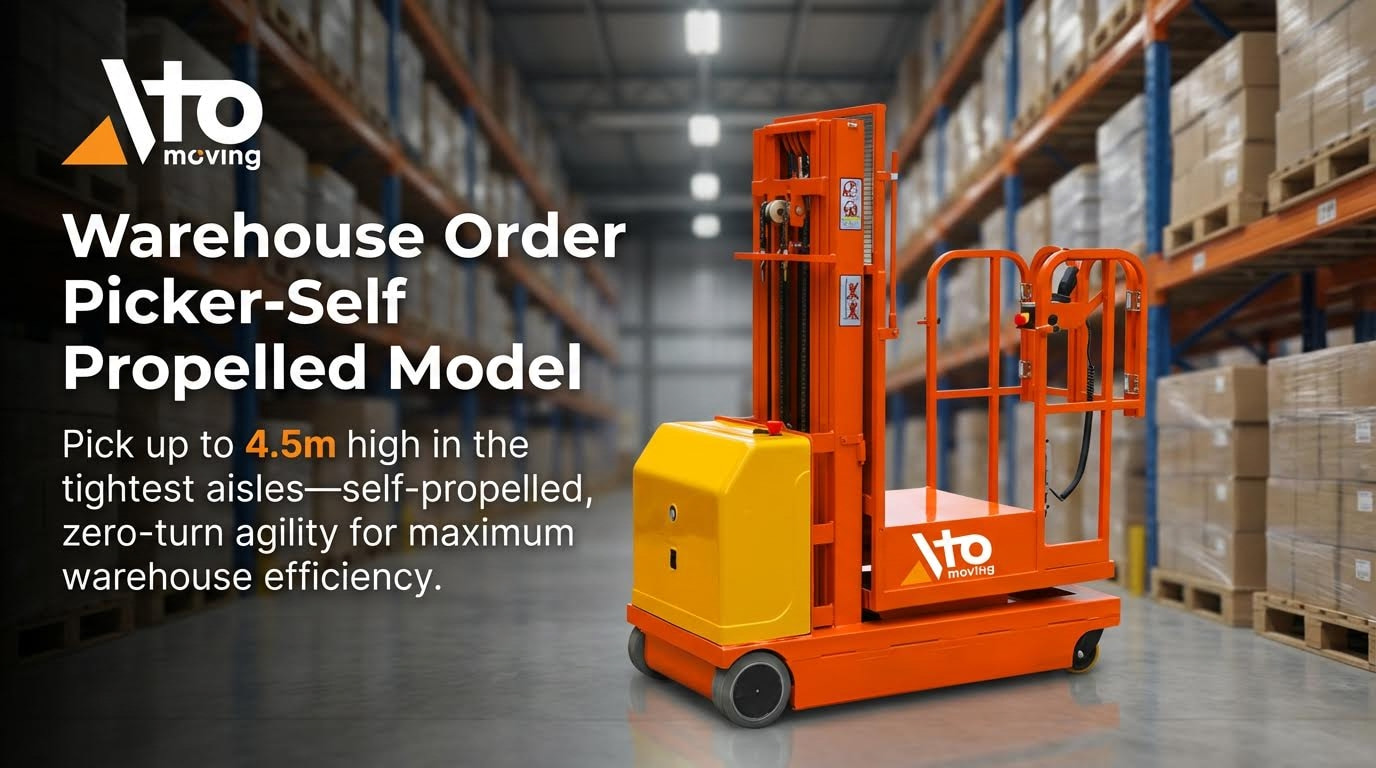
A structured buying process helps you select the right order picking machines the first time and avoid expensive layout or fleet changes later.
- Step 1: Map your current and future storage strategy – Defines required lift height, capacity, and aisle widths.
- Step 2: Classify duty levels by zone and shift – Aligns battery type, capacity, and motor power to actual usage.
- Step 3: Shortlist manual, semi‑electric, and electric options – Matches equipment complexity and cost to throughput needs. Type overview
- Step 4: Run on‑site demos in your tightest aisles – Reveals real maneuverability, visibility, and operator comfort.</
Final Considerations For Procuring Order Pickers
Engineering‑led procurement of order pickers means treating geometry, loads, power, and safety as one system. Lift height and capacity must align with rack design and floor strength, so the machine stays stable with the operator and load at maximum reach. Drive motor power, turning radius, and aisle width must fit your real clearances, not drawing values, or you will trade speed for constant cautious maneuvering.
Battery chemistry and amp‑hour sizing then lock in uptime. Lead‑acid can suit single‑shift work with clean overnight charging. Lithium‑ion fits multi‑shift and cold‑store duty where opportunity charging and stable runtime protect throughput. In both cases, disciplined charging and inspection protect service life and reduce failures.
Safety features, operator training, and PPE close the loop. Deadman controls, guarding, and harness points only work when operators understand limits and supervisors enforce rules. The best practice is clear: measure your warehouse, map duty cycles, and run on‑site demos before you sign. Then select order pickers from Atomoving that meet these engineered requirements, build a simple maintenance plan, and you will gain higher picking speed, lower injury risk, and strong long‑term ROI from a right‑sized fleet.
Frequently Asked Questions
What does an order picker do in a warehouse?
An order picker in a warehouse is responsible for selecting and gathering items from storage to fulfill customer orders. They often use equipment like forklifts or pallet jacks to access products stored at various heights. Their role ensures accurate and timely delivery of goods. Order Picker Role Guide.
Is being a warehouse order picker physically demanding?
Yes, being a warehouse order picker can be physically demanding. Workers often walk 6 to 10 miles per day on hard surfaces, lift heavy loads, and perform high-reach movements. This constant physical activity can lead to fatigue over time. Warehouse Worker Challenges.
Why is the role of an order picker important in warehouse operations?
The role of an order picker is crucial because they ensure that the right products are picked and prepared for shipping. Their accuracy directly impacts customer satisfaction and the efficiency of the supply chain. Mistakes in picking can lead to delays and increased costs.