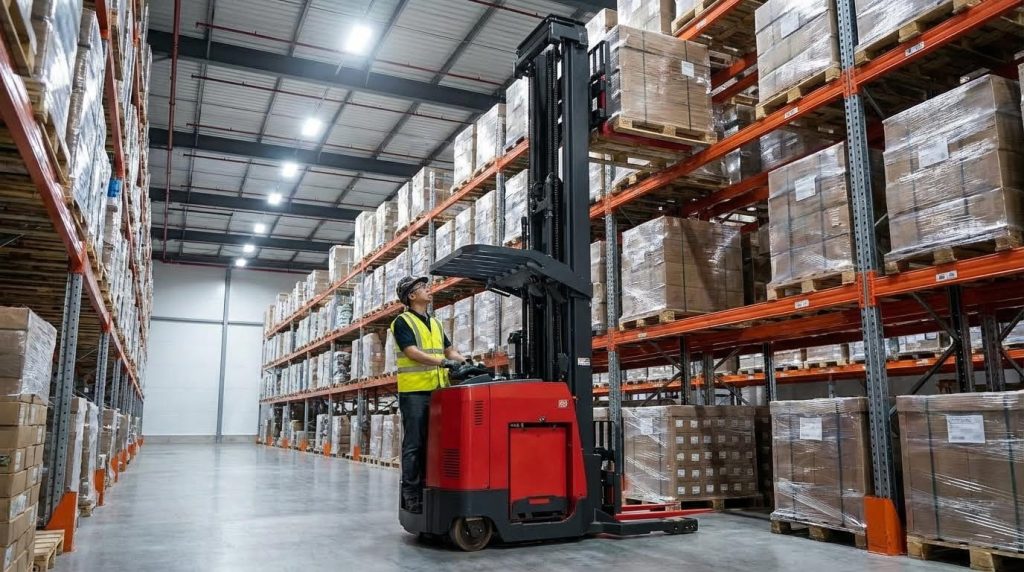
Electric forklift motor power sits typically between 15–45 horsepower (about 11–34 kW), but real-world performance depends just as much on battery voltage, duty cycle, and environment as on the nameplate rating. This guide explains how many horsepower is an electric forklift motor in different classes, how hp links to kW and voltage, and how that power actually feels on the floor in terms of torque, lift speed, and runtime. You will see how to match motor power to load, aisle layout, ramps, and shift patterns so you avoid under‑specifying a truck or wasting money on excess capacity. Use it as an engineering checklist before you sign off on your next semi electric order picker specification.
Understanding Electric Forklift Motor Power Ratings
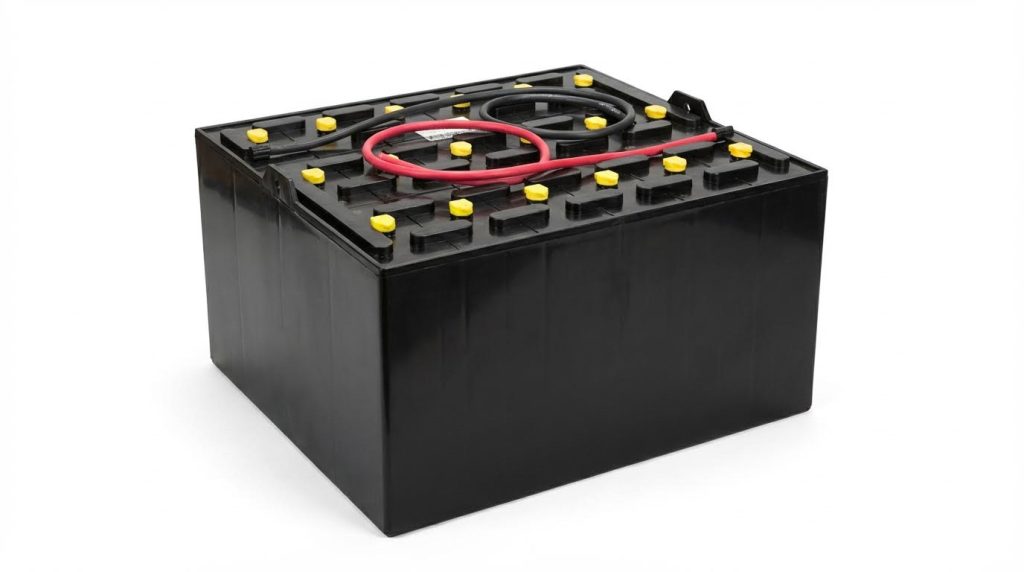
Electric forklift motor power ratings define how much continuous work the truck can do and directly control acceleration, lift speed, and gradeability for a given battery voltage and duty cycle.
If you are asking how many horsepower is an electric forklift motor, most warehouse units sit around 20–30 hp, with the full market running roughly 15–45 hp depending on capacity and duty rating. Power is also expressed in kilowatts (kW), which ties directly to electrical sizing and battery voltage.
Typical horsepower and kW ranges
Typical electric forklift motors deliver about 15–45 horsepower (roughly 11–34 kW), with standard warehouse trucks clustering in the 20–30 hp band for balanced performance and runtime.
In practice, when people search how many horsepower is an electric forklift motor, they usually land in this 20–30 hp range for 1.5–3.5 ton class indoor trucks. Lighter pallet jack and walkie equipment often use smaller motors, while high-capacity or outdoor units push toward the top of the band.
| Forklift duty / capacity class | Typical motor power (hp) | Approx. power (kW) | Motor type range | Operational impact |
|---|---|---|---|---|
| Light-duty, up to ~1,350 kg (3,000 lb) | 15–20 hp | 11–15 kW | Often DC 10–30 hp or AC 15–40 hp power ranges | Suited to short runs, flat floors, low-height racking |
| Medium-duty, ~1,350–3,600 kg (3,000–8,000 lb) | 20–35 hp | 15–26 kW | Common warehouse sit-down trucks hp ranges | Good balance of lift speed, ramp performance, and runtime |
| Heavy-duty, >4,500 kg (10,000 lb) | 35–45+ hp | 26–34+ kW | Upper end of typical 15–45 hp band heavy-duty hp | Needed for long ramps, outdoor use, and tall heavy lifts |
Modern AC traction and pump motors usually fall in the 15–40 hp range, while DC motors sit around 10–30 hp, mainly on older or niche machines. The nameplate rating is a continuous power value, not a momentary peak, so real trucks can briefly exceed this for tough lifts if the controller allows it. Continuous rating note
- AC induction or synchronous motors: 15–40 hp – High efficiency and low maintenance for long shifts.
- DC series motors: 10–30 hp – Strong low-speed torque but more brush maintenance.
- Permanent magnet DC: Lower hp on small trucks – Compact, good speed control for light equipment.
💡 Field Engineer’s Note: When comparing an electric 25 hp truck to a 35 hp internal-combustion unit, the electric often feels stronger because it delivers full torque from zero rpm and does not “bog” on ramps or at the start of a lift.
Quick hp ↔ kW reference for forklifts
Engineers convert using 1 hp ≈ 0.746 kW. So 15 hp ≈ 11 kW, 25 hp ≈ 19 kW, and 40 hp ≈ 30 kW. This helps match trucks to site power limits and charger capacity.
Converting between hp, kW, and battery voltage
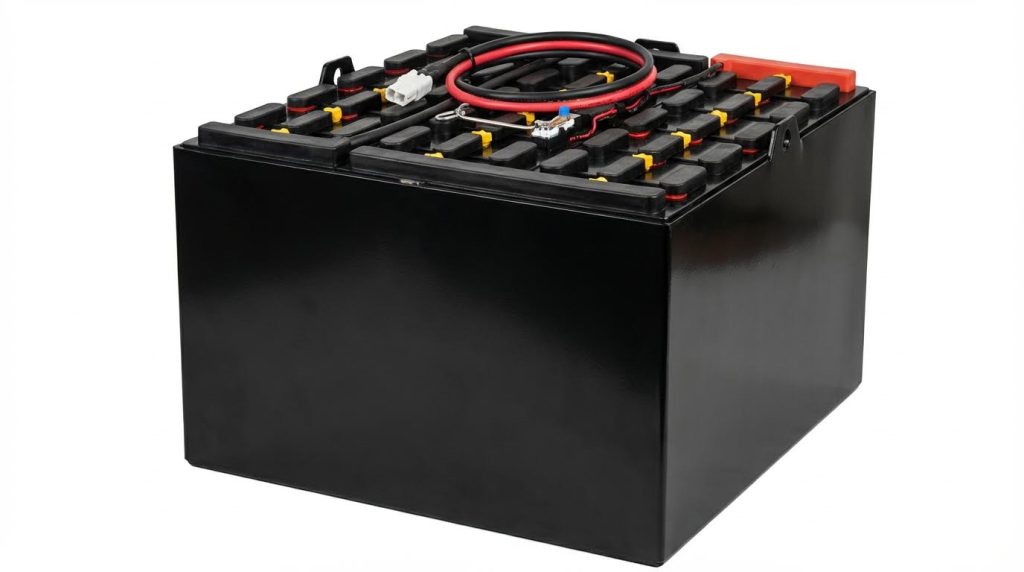
Converting between horsepower, kilowatts, and battery voltage lets you translate a marketing spec like “25 hp motor” into the actual current draw and battery size your site must support.
Power (kW) is the rate of doing work, while energy (kWh) is how much work is done over time. For forklifts, motor hp or kW tells you the performance ceiling, and battery voltage plus ampere-hours (Ah) tell you how long you can stay near that ceiling. Power vs. energy
| Value | Formula / typical numbers | Result | Operational impact |
|---|---|---|---|
| hp → kW | kW = hp × 0.746 | 25 hp ≈ 18.6 kW | Used to size chargers and electrical feeds |
| kW → hp | hp = kW ÷ 0.746 | 20 kW ≈ 26.8 hp | Helps compare electric trucks to IC ratings |
| kW from battery | Power P = V × I (kW = V × I ÷ 1000) | 48 V at 300 A ≈ 14.4 kW | Shows current needed for a given motor load |
| Energy use | Energy (kWh) = kW × time (h) | 10 kW for 3 h = 30 kWh | Used to check if a battery will last a shift |
Most electric forklifts use 24 V, 36 V, 48 V, or 80 V battery systems. Higher voltage supports higher horsepower motors at a given current, which cuts cable size and heat and improves efficiency. Voltage systems
- 24–36 V: Smaller pallet trucks and light-duty units – Lower hp, short travel distances.
- 48 V: Common for mid-size warehouse trucks – Supports ~20–30 hp motors without extreme currents.
- 80 V: Heavy-duty or high-lift trucks – Efficiently feeds 30+ hp for ramps and tall masts.
Worked example: Relating hp, kW, and battery
Suppose a truck has a 25 hp (≈18.6 kW) traction motor on a 48 V system. At full load, ideal current is I = P ÷ V = 18,600 W ÷ 48 V ≈ 388 A. Real currents are higher once you include controller and motor losses, which is why cable sizing, cooling, and duty cycle limits matter.
Remember that the motor’s nameplate hp is a continuous rating. Real-world operation uses a duty cycle: lifting, driving loaded, driving empty, idling, and braking all have different kW draws over a shift. Engineers therefore size batteries on average kW over time, not on the peak hp alone. Duty cycle analysis
💡 Field Engineer’s Note: If your site power is limited, focus on kW and voltage first, then pick the hp rating that fits inside that electrical “budget” instead of chasing the biggest motor; oversizing the motor without enough battery or charger capacity just gives you fast trucks that run out of charge mid-shift.
How Motor Power Translates To Forklift Performance
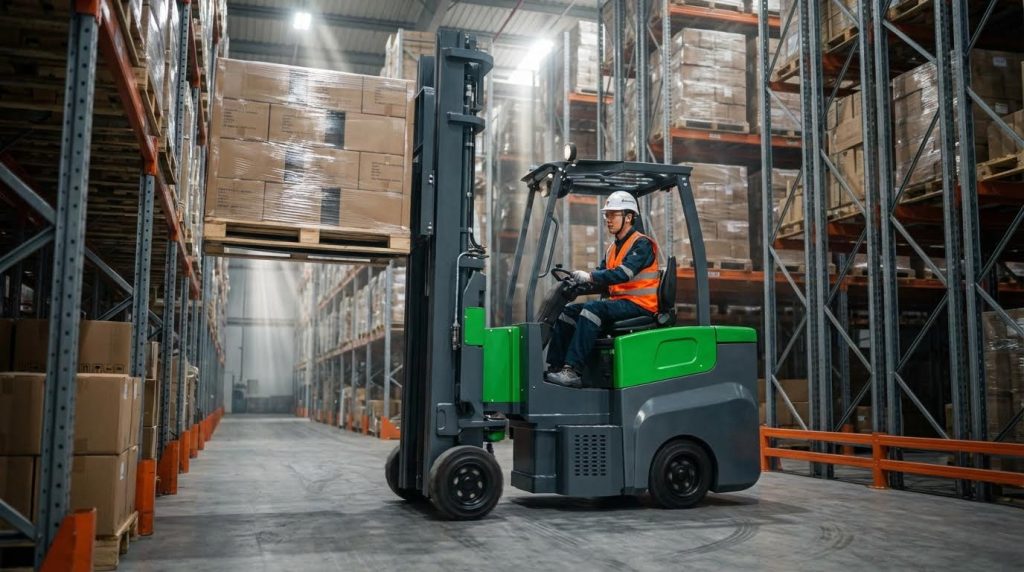
Electric forklift motor power translates into real-world performance through torque, acceleration, gradeability, lift speed, and how long the truck can deliver that power before heat or low battery forces derating. When you ask how many horsepower is an electric forklift motor, you must link the 15–45 hp range directly to these performance limits, not just the nameplate rating. Typical electric forklift power ranges show that 20–35 hp is common for warehouse units, but the “feel” of the truck comes from torque curves, control strategy, and battery condition.
💡 Field Engineer’s Note: In real fleets, two forklifts with the same horsepower often perform very differently on ramps and in tight aisles. The one with better low‑speed torque control, healthier batteries, and less aggressive derating will “work harder” all day, even if its rated hp is slightly lower.
Torque curves, acceleration, and gradeability
Torque curves, acceleration, and gradeability show how motor horsepower becomes push on the floor, which controls how fast you can move and how steep a ramp you can climb. Electric forklift motors in the 15–45 hp range deliver very high torque from zero rpm, which is why a 25 hp electric unit can outperform a 35 hp internal‑combustion truck in many tasks. Comparisons with internal combustion forklifts confirm that instant torque and precise control matter more than raw hp for warehouse work.
- High starting torque: Electric motors deliver near‑maximum torque at zero speed – this gives strong launch and ramp start capability even with heavy manual pallet jack.
- Controlled torque curve: Modern AC controllers shape torque vs. speed – you get smooth acceleration instead of wheel‑spin and wasted energy.
- Gradeability: Available torque at the drive wheels limits ramp performance – insufficient motor power shows up first as slow or stalled climbs on 8–15% gradients.
- Acceleration vs. battery life: Aggressive acceleration maps draw high current – this shortens runtime and heats the motor and battery faster.
| Motor Power Band | Typical Use Case | Acceleration / Grade Feel | Operational Impact |
|---|---|---|---|
| 15–20 hp (≈11–15 kW) | Light‑duty, short flat runs | Moderate acceleration, limited on steep ramps | Best for small warehouses with minimal slopes and short travel distances. |
| 20–35 hp (≈15–26 kW) | Medium‑duty, mixed ramps | Strong launch, handles typical 8–12% ramps | Suited to standard 2.5–3.5 t class trucks in busy distribution centers. |
| 35–45+ hp (≈26–34 kW) | Heavy‑duty, long ramps, outdoor | High thrust, maintains speed on long grades | Used where trucks climb long dock ramps or haul heavy loads over 10,000 lbs (≈4,500 kg). |
Torque type also matters. DC series motors provide very high low‑speed torque and suit heavy lifting, while AC induction and brushless designs offer efficient, controllable torque over a broader speed range for mixed travel and lift work. Catalog data shows DC forklift motors typically in the 10–30 hp band and AC units in the 15–40 hp band, with AC favored for continuous, high‑duty operation.
How gradeability is usually specified
Manufacturers typically quote gradeability as a percentage (e.g., 10–15%) at a specified load and speed. This percent grade equals rise/run × 100. For rough planning, a 10% grade is about a 1 m rise over 10 m of ramp length. If your docks or yard exceed the truck’s rated gradeability at your typical load, expect slow climbs, overheating, or automatic derating.
Lift speed, load capacity, and duty cycle limits
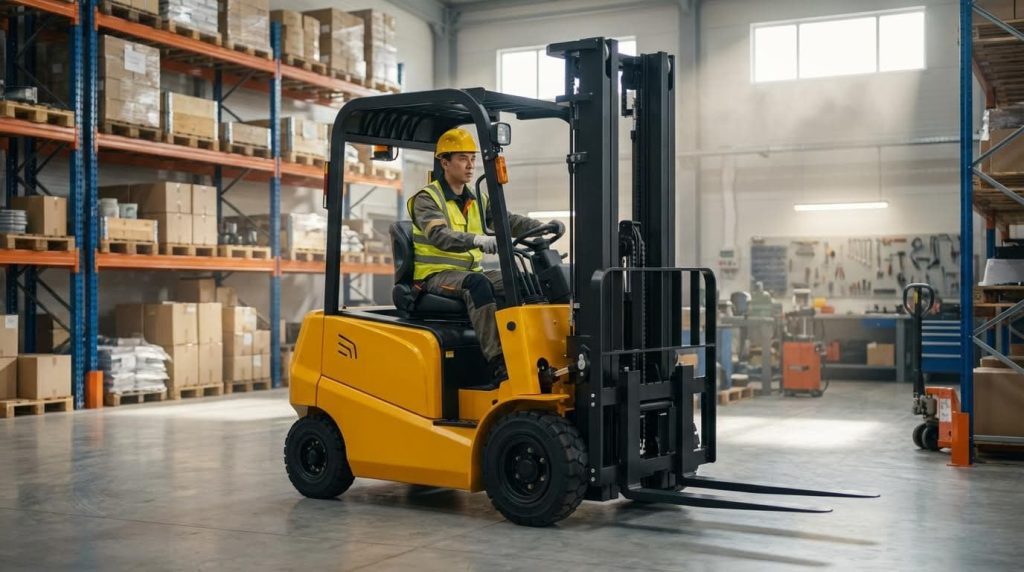
Lift speed, load capacity, and duty cycle limits show how much of the motor’s horsepower goes into vertical work and how long it can do that before heat build‑up forces a slowdown. When people ask how many horsepower is an electric forklift motor for a 3,000–8,000 lb (≈1,400–3,600 kg) truck, the answer is usually 20–35 hp, but only part of that power is available continuously for lifting. Light, medium, and heavy duty ranges link load bands to typical hp.
- Lift speed vs. load: Heavier loads demand more hydraulic power – with the same motor, lift speed drops as you approach rated capacity.
- Continuous vs. peak power: Nameplate hp is usually continuous – short bursts above that are allowed but heat the motor and oil quickly.
- Duty cycle: The “on‑time” ratio for heavy lifting – high‑lift, high‑throughput operations need higher hp or risk thermal derating mid‑shift.
- Energy vs. power: Power (kW) sets how fast you can lift; energy (kWh) sets how long – undersized batteries cause early slowdown even if the motor is strong.
| Application Band | Typical Load | Typical Motor Power | Lift / Duty Behavior | Operational Impact |
|---|---|---|---|---|
| Light‑duty warehouse | ≤1,800 kg | 15–25 hp (≈11–19 kW) | Moderate lift speeds, low thermal stress | Fine for occasional full‑height lifts; risk of slowdown is low. |
| Medium‑duty distribution | 1,800–3,600 kg | 25–35 hp (≈19–26 kW) | Good lift speeds, needs adequate cooling | Suited to frequent full‑height stacking in 8–10 m racking. |
| Heavy‑duty / high‑lift | ≥4,500 kg or very high racks | 35–45+ hp (≈26–34 kW) | High lift power but sensitive to heat | Requires careful duty‑cycle planning and possibly larger batteries. |
From an energy perspective, engineers separate instantaneous power from total energy. Power in kW defines how fast the forklift can do work, while energy in kWh defines how much work it can do per shift. For example, running at 10 kW for 3 hours consumes 30 kWh, which must fit within the usable capacity of the battery after applying depth‑of‑discharge limits. Engineering guidance stresses sizing batteries on average kW over the duty cycle, not just motor nameplate hp.
- Step 1: Break down the shift into lift, travel loaded, travel empty, and idle – each mode has a different power draw.
- Step 2: Assign time fractions to each mode – this gives a realistic average kW, not a worst‑case guess.
- Step 3: Multiply average kW by shift hours – this yields required kWh and helps select battery voltage and amp‑hour rating.
- Step 4: Check against motor and controller limits – ensure peak kW events stay within safe thermal and current margins.
💡 Field Engineer’s Note: In high‑bay operations, the limiting factor is often mast‑up time at or near maximum load. Trucks that “feel fine” on the ground can suddenly derate after repeated full‑height lifts. When specifying hp, always model a worst‑case hour of the shift, not just the daily average.
Battery state of charge, temperature, and derating
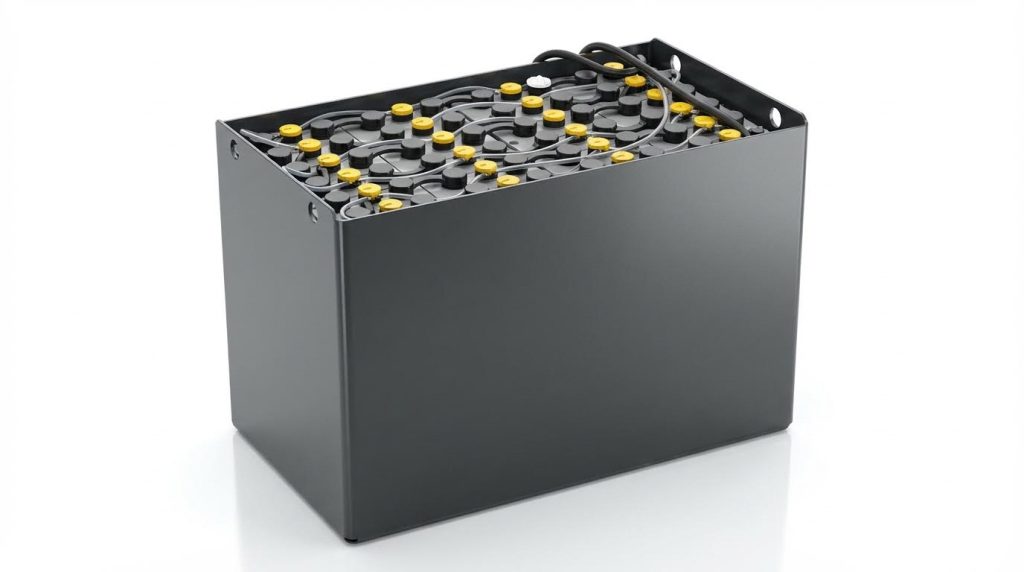
Battery state of charge, temperature, and derating determine how much of the motor’s rated horsepower you actually get on the floor throughout the shift. Even if a spec sheet says 30 hp, low voltage or high temperature can pull you down to something that behaves like a much smaller motor.
- State of charge (SOC): As SOC and voltage drop, available hp falls – most forklifts hold performance until roughly 20–30% SOC, then derate sharply. Field data note this behavior.
- Temperature: Cold reduces battery efficiency; heat triggers protection – both conditions cut peak current and therefore torque.
- Controller derating: To protect components, software limits current when voltage is low or temperatures are high – this feels like a “lazy” truck late in the shift.
- Battery chemistry: Lithium‑ion holds voltage better than lead‑acid – you get more consistent performance from 80% down to 20% SOC.
| Condition | Effect on System | Resulting Performance Change | Operational Impact |
|---|---|---|---|
| SOC 80–40% | Nominal voltage, normal temperatures | Near‑rated hp and torque | Truck behaves “like new”; full speed and lift maintained. |
| SOC 40–20% | Voltage sag under load | Noticeable loss of thrust and lift speed | Cycle times increase; ramp starts feel weaker. |
| SOC <20% or high temp | Controller derating to protect components | Severe power limit; sluggish response | Risk of not clearing ramps or finishing last picks. |
| Cold storage (<0 °C) | Reduced battery chemical activity | Lower available current and hp | Trucks may need higher hp class or heated batteries. |
Good battery management practices help keep real‑world horsepower close to the nameplate. Industry guidance suggests recharging lead‑acid batteries around 20–30% SOC and keeping lithium‑ion between roughly 20% and 80% SOC during routine use to avoid stress and maintain performance. Best‑practice documents also highlight the benefits of accurate energy monitoring and operator training for smoother acceleration and anticipatory braking.
Why the same hp motor can feel weak in one truck and strong in another
Two trucks with the same 25 hp motor can perform very differently because of battery health, controller settings, and cooling design. A truck with a tired lead‑acid battery, conservative current limits, and poor airflow may derate early and struggle on ramps. Another truck with a fresh lithium‑ion pack, optimized thermal paths, and more permissive current limits will deliver stronger acceleration and better gradeability for most of the shift, even though the motor nameplate hp is identical.
💡 Field Engineer’s Note: When operators complain that “this 30 hp truck pulls worse than the old one,” I check SOC logs and motor temperature before blaming the motor. Nine times out of ten the issue is derating from low voltage, hot controllers, or an aggressive battery‑protection profile, not lack of horsepower on the nameplate.
Matching Motor Power To Application Requirements
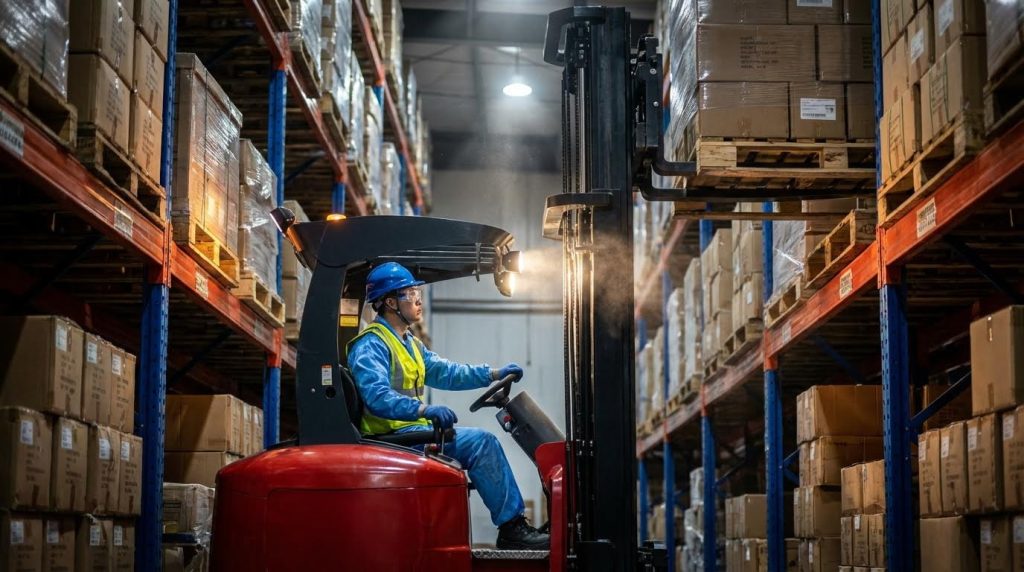
Matching electric forklift motor power to your application means balancing horsepower, environment, and duty cycle so you get enough performance without wasting battery capacity or money.
When people ask how many horsepower is an electric forklift motor, the honest answer is: it depends on load, ramps, travel distance, and shift pattern, not just a catalog number. Most electric forklifts fall between about 15–45 hp (11–34 kW), with light indoor units at the low end and heavy outdoor units at the top end. Typical ranges and use cases are well documented.
| Typical Motor Power | Approx. Load Class | Typical Environment | Operational Impact |
|---|---|---|---|
| 15–20 hp (11–15 kW) | Up to ~1,500 kg | Indoor, flat, short runs | Suited to light warehouse duty with minimal ramps. |
| 20–35 hp (15–26 kW) | ~1,500–3,600 kg | Mixed indoor/outdoor | Covers most standard pallet work and moderate ramps. |
| 35–45+ hp (26–34+ kW) | Above ~4,500 kg | Outdoor, ramps, rougher yards | Handles heavy loads, long travel, and frequent gradients. |
The key is to size motor power so the truck can meet your worst-case scenario (heaviest load, longest ramp, hottest or coldest day) without constant thermal derating or battery abuse.
💡 Field Engineer’s Note: When in doubt between two power classes, step up the motor but control speed via settings; you can’t “tune in” missing torque on a ramp with an undersized drive.
Indoor vs. outdoor, ramps, and travel distance
Indoor-only work usually needs less horsepower than outdoor, ramp-heavy, or long-distance travel because floors are smoother and rolling resistance is lower.
Indoor warehouse trucks often run at 15–25 hp (11–19 kW) because they do not fight wind, rain, or broken concrete. Outdoor or ramp work pushes you toward 25–45 hp (19–34 kW) to maintain safe speed and gradeability under load. Higher hp is specifically recommended for ramps and outdoor surfaces.
| Use Case | Environment Details | Suggested Motor Band | Operational Impact |
|---|---|---|---|
| Light indoor picking | Flat, smooth floor, short aisles (<40 m) | 15–20 hp | Adequate acceleration, good runtime, low battery stress. |
| Standard warehouse | Flat, mixed travel 40–120 m | 20–30 hp | Balanced speed and energy use for 1–2 shift operation. |
| Indoor with frequent ramps | Ramps up to ~10–12% gradient | 25–35 hp | Maintains speed uphill with 1,500–3,000 kg loads. |
| Outdoor yard + loading dock | Uneven ground, dock plates, wind | 30–40+ hp | Enough torque to avoid stalling on bad surfaces. |
| Long-haul in large DC | Travel distances >150 m per leg | 25–40 hp | Higher travel speed; must pair with larger battery. |
- Indoor-only: Favor moderate hp and higher-efficiency motors – Maximizes runtime and reduces heat buildup.
- Outdoor/ramp duty: Favor higher hp and torque-rich AC motors – Prevents bogging down on inclines.
- Long travel distances: Pair higher hp with larger kWh battery – Avoids mid-shift voltage sag and derating.
How ramps quietly kill underpowered electric forklifts
Every 10% gradient adds a large constant load to the motor. An undersized motor must pull near maximum current just to maintain creep speed, which overheats windings and drags battery voltage down. You feel this as sluggish response and frequent thermal cutbacks on busy ramps.
Load classes, aisle layout, and energy strategy
Heavier loads, tighter aisles, and aggressive shift patterns require more motor power and smarter energy management to avoid runtime and overheating issues.
For the core question how many horsepower is an electric forklift motor for a given load, published guidance ties load bands directly to hp ranges. Light-duty trucks up to about 1,350 kg often run 15–20 hp, medium-duty 1,350–3,600 kg use 20–35 hp, and heavy-duty above roughly 4,500 kg use 35–45 hp or more. This pattern appears consistently in application guidance.
| Rated Load (approx.) | Typical Motor Power | Aisle / Layout Type | Best For… |
|---|---|---|---|
| ≤1,500 kg | 15–20 hp | Wide aisles (>3.5 m), low racks | Basic pallet moves, low lift heights. |
| 1,500–3,000 kg | 20–30 hp | Standard aisles (~3.0–3.5 m) | General warehousing with mixed lift and travel. |
| 3,000–3,600 kg | 25–35 hp | Standard / slightly narrow aisles | Heavier pallets, frequent full-height lifts. |
| >4,500 kg | 35–45+ hp | Yard, dock, wide lanes | Heavy industry, outdoor loading, long ramps. |
- Narrow aisles: Focus on control, not just hp – Too much power without fine control risks racking impacts.
- High-rack storage (>8 m): Favor strong lift motors and stable voltage – Prevents slow lift and time loss at top levels.
- Energy-intensive shifts: Combine efficient motors with larger batteries – Supports long duty cycles without deep discharge.
Your energy strategy must link motor hp to battery voltage and capacity. Higher horsepower motors draw more current at a given voltage, so long shifts often need higher voltage systems (48 V or 80 V) and bigger kWh packs to maintain performance. Guidance explicitly notes the correlation between hp and system voltage.
Linking horsepower to battery sizing in practice
Engineers size batteries from measured or estimated average kW, not just motor nameplate hp. If your truck averages 4 kW over a 3.5-hour window, you need roughly 14 kWh usable. With typical limits of 70–80% usable capacity for life preservation, the actual battery must be larger than 14 kWh. Energy-based sizing methods explain this clearly.
💡 Field Engineer’s Note: When you upsize motor power for heavier loads, always revisit aisle design and battery spec together; ignoring either is how you end up with fast but short-lived trucks or powerful machines that cannot maneuver safely.
Final Thoughts On Specifying Electric Forklift Power
Electric forklift horsepower only makes sense when you link it to torque, battery voltage, and duty cycle. A 25 hp truck can outperform a 35 hp unit if it has stronger low-speed torque, better control tuning, and a healthier battery. Engineers must therefore treat hp and kW as starting points, not final answers.
Real safety and productivity depend on how that power behaves on your worst day. Long ramps, heavy pallets, cold storage, and hot summers all push motors and batteries toward derating. If you size only to average conditions, trucks will slow, overheat, or stall right when throughput peaks. That risk turns into missed shipments and near-miss incidents on ramps and docks.
Best practice is clear. First, define your maximum load, steepest gradient, tallest lift, and longest run. Second, choose a motor power band that handles those cases with margin. Third, pair it with the right voltage and battery kWh, then validate with duty-cycle calculations. Finally, lock in good battery care and conservative controller settings. Follow that process and your Atomoving fleet will feel strong, stay safe, and deliver full-shift performance without overspending on excess horsepower.
Frequently Asked Questions
How many horsepower is an electric forklift motor?
An electric forklift’s motor horsepower can vary depending on its design and intended use. Typically, smaller electric forklifts may have motors ranging from 10 to 20 horsepower, while larger models used in heavy-duty applications can have motors exceeding 50 horsepower. The exact horsepower depends on factors such as lifting capacity, speed, and battery type. For more detailed specifications, consult the manufacturer’s guidelines or product manuals.
What is the maximum lifting height of an electric forklift?
The maximum lifting height of an electric forklift varies based on the model and mast configuration. For instance, some electric warehouse forklifts with a quad mast can reach lift heights of up to 20 feet (6 meters). These forklifts are designed for tasks requiring high stacking capabilities. Warehouse Forklift Rentals.
What is the largest electric forklift?
Electric forklifts can be quite powerful and capable of handling significant loads. While specific models differ, some of the largest electric forklifts can lift nearly 190,000 pounds (86,183 kg), holding records for their impressive lifting capacities. These forklifts are typically used in specialized industrial settings where extreme lifting power is required. Biggest Forklifts Guide.