This guide explains how ANSI A92 standards control the safe design, operation, and maintenance of aerial platform, and where to find the right documents for your machine type. If you are asking “where can I find ANSI standards for aerial work platforms,” you will see exactly which A92 document you need and how it ties into OSHA rules. You will learn how the A92 family is structured, which parts apply to vehicle-mounted, manually propelled, and self-propelled MEWPs, and how to access current editions through ANSI, SAIA, NSSN, and regulatory references. The focus is practical: keeping real machines, real jobsites, and real technicians compliant and safe.
What ANSI A92 Covers For Aerial Work Platforms
ANSI A92 covers how aerial platforms and MEWPs are designed, built, tested, maintained, and safely operated, with separate standards for each machine type. It is the technical backbone behind most U.S. rules on aerial lifts and platforms.
If you are asking where can i find ansi standards for aerial work platforms, the answer starts with understanding which A92 document applies to your machine. Each part of the A92 family targets a specific platform type and use case, from vehicle-mounted buckets to self-propelled booms.
| Standard | Applies To | Main Technical Focus | Operational Impact |
|---|---|---|---|
| ANSI/SAIA A92.2-2021 | Vehicle-mounted aerial devices | Design, manufacture, testing, inspection, installation, maintenance, use, training, operation | Defines how truck-mounted lifts must be built, inspected, and used to prevent falls and tip-overs. Source |
| ANSI/SAIA A92.3-2006 (R2014) | Manually propelled integral chassis platforms | Platforms not extending beyond base; manual or powered elevation; not occupied during horizontal movement | Controls how push-around vertical lifts are designed and used, including the rule that no one rides while you push. Source |
| ANSI/SAIA A92.5-2006 (R2014) | Self-propelled boom-type MEWPs | Platforms extending beyond base; power-operated; primary functions and drive from platform; occupied when driven | Sets safety and control rules for boom lifts that drive with the operator in the basket. Source |
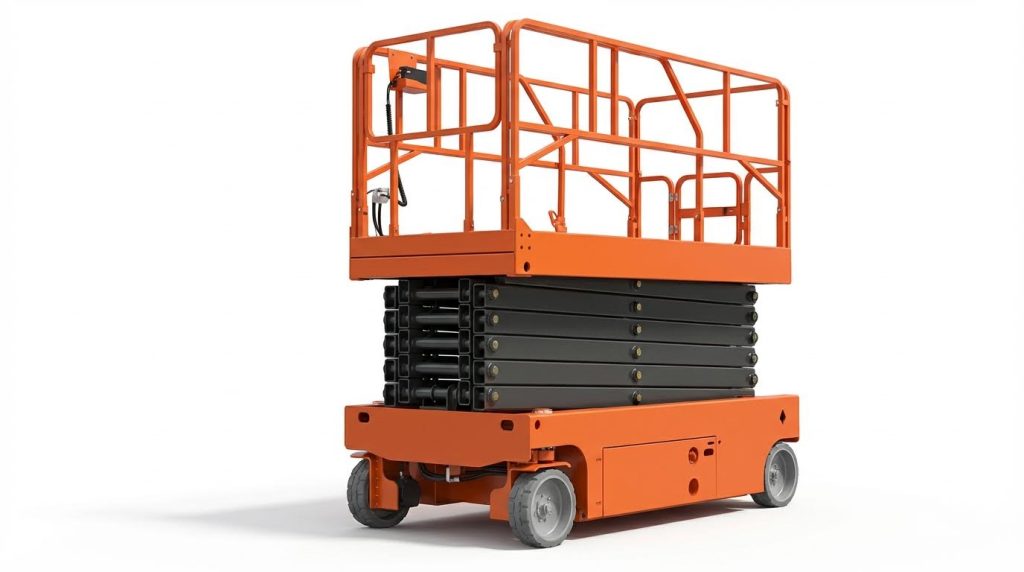
| ANSI/SAIA A92.6-2006 (R2014) | Manually propelled scissor/vertical MEWPs | Integral chassis platforms not extending beyond base; manual or powered elevation; not occupied during horizontal movement | Governs many small scissor platform and vertical lifts used indoors, including how and when they can be moved. Source |
| ANSI/SIA A92.8-2012 | Vehicle-mounted devices used to position personnel | Design, manufacture, testing, inspection, installation, maintenance, use, training, operation | Adds detailed criteria to prevent personal injuries and standardize ratings on personnel-positioning devices. Source |
| ANSI/SAIA A92.10-2009 (R2014) | Transport platforms | Vertical transport of authorized personnel as a tool of the trade | Covers mast-type transport platforms that lift workers and tools vertically on sites. Source |
Across these parts, ANSI A92 defines common elements: rated load, platform dimensions, stability criteria, guarding, controls, inspections, maintenance, and operator training. For engineers and owners, this is the primary design and use rulebook behind every compliant aerial device in the U.S.
How this helps you choose the right standard
First, identify whether your platform is vehicle-mounted, manually propelled, self-propelled, or a transport platform. Then match it to the relevant A92 part in the table above before you buy, specify, or write procedures.
💡 Field Engineer’s Note: When you retrofit or rebuild older lifts, always check which A92 edition applied at original manufacture and which current edition your insurer or authority expects. Mixing old hardware with new rules without checking can leave you non-compliant and uninsured.
Scope Of The A92 Family And Key Definitions
The scope of ANSI A92 is to set minimum safety and performance requirements for aerial platforms and MEWPs, while its definitions section standardizes terms like “platform,” “base,” and “authorized person” so everyone interprets hazards the same way.
Each A92 part defines its own scope to avoid overlap. For example, A92.2-2021 covers the full life cycle of vehicle-mounted aerial devices—design, manufacture, testing, inspection, installation, maintenance, use, training, and operation. Source
- Manually propelled integral chassis platforms: Platforms that cannot extend beyond the base and must be unoccupied during horizontal movement – this is the core scope of A92.3 and A92.6. Source
- Self-propelled integral chassis platforms: Power-operated platforms that can extend beyond the base and are intended to be occupied when driven – this is the domain of A92.5 for boom-type MEWPs. Source
- Transport platforms: Platforms primarily used to vertically transport authorized personnel as a tool of the trade – this is the focus of A92.10. Source
- Use and training: Several A92 parts explicitly include “use, training, and operation” in scope – this pushes responsibilities onto owners, users, and operators, not just manufacturers. Source
Key terms that drive design and procedures
Definitions such as “authorized person,” “qualified person,” “rated work load,” “platform height,” and “base” drive your risk assessments and safe work procedures. Misinterpreting a single term can change how you calculate stability or fall protection needs.
💡 Field Engineer’s Note: When you write site procedures or training, copy wording from the A92 definitions section instead of inventing your own. That keeps your documents aligned with the standard and avoids arguments after an incident.
Relationship Between ANSI A92 And OSHA Requirements
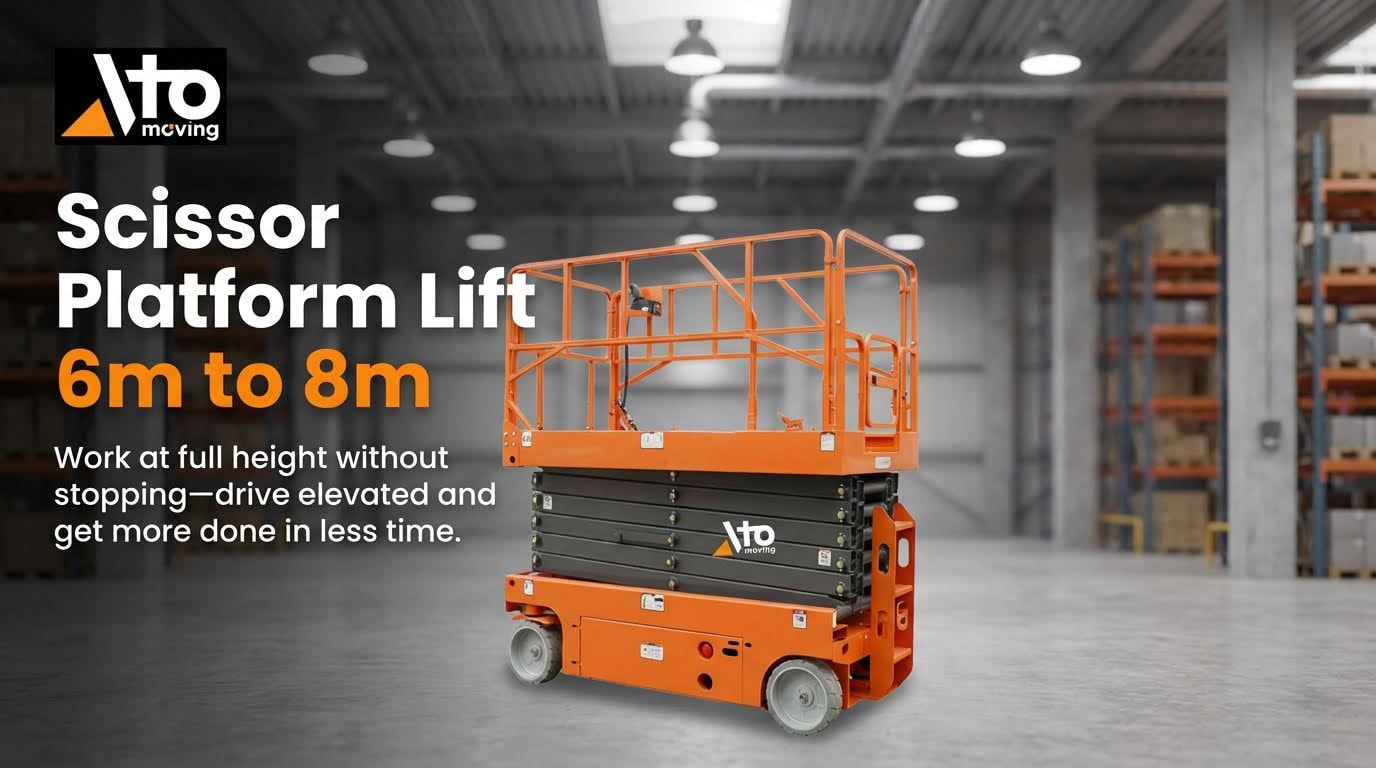
ANSI A92 standards provide the technical “how” for aerial platform safety, while OSHA regulations provide the legal “must,” often by referencing A92 editions or using them as recognized industry practice in enforcement.
OSHA’s construction rule for aerial lifts (29 CFR 1926.453) required that aerial lifts be designed and constructed in conformance with ANSI A92.2-1969, including the appendix. Source Later OSHA interpretations recognized updated ANSI A92.2 and A92.5 versions as additional guidance for vehicle-mounted and boom-supported platforms. Source
- Design linkage: OSHA cites ANSI A92.2 for design and construction of aerial lifts – so compliance with the relevant A92 design standard supports OSHA compliance. Source
- Training duties: OSHA requires employers to instruct employees in recognizing and avoiding unsafe conditions and to limit operation to “authorized persons.” – A92’s training and responsibility sections show how to implement that duty in practice. Source
- Fall protection alignment: OSHA requires approved fall protection devices in aerial lifts even with guardrails, and moved away from body belts toward harness systems for fall arrest over 1.8 m (6 ft) – A92.2 and A92.5 align with this by embedding fall protection expectations in platform design and use. Source
- State adoption: Some states adopt specific A92 editions by reference in their own codes, effectively turning them into law locally – for example, rules that adopt A92.3-2006, A92.5-2006, and A92.2-2001 for aerial platforms and vehicle-mounted devices. Source
From a practical standpoint, OSHA sets the minimum legal floor, while ANSI A92 defines current industry best practice. If an incident occurs, investigators and courts often look at both: OSHA rules for mandatory duties and A92 for whether you followed recognized safe engineering and operating practice.
Where can I find ANSI standards for aerial work platforms?
You can buy official ANSI A92 documents for aerial work platforms through the ANSI and SAIA webstores, which list A92.2, A92.3, A92.5, A92.6, A92.8, and A92.10 with current editions and prices. Key A92 Standards By Machine Type
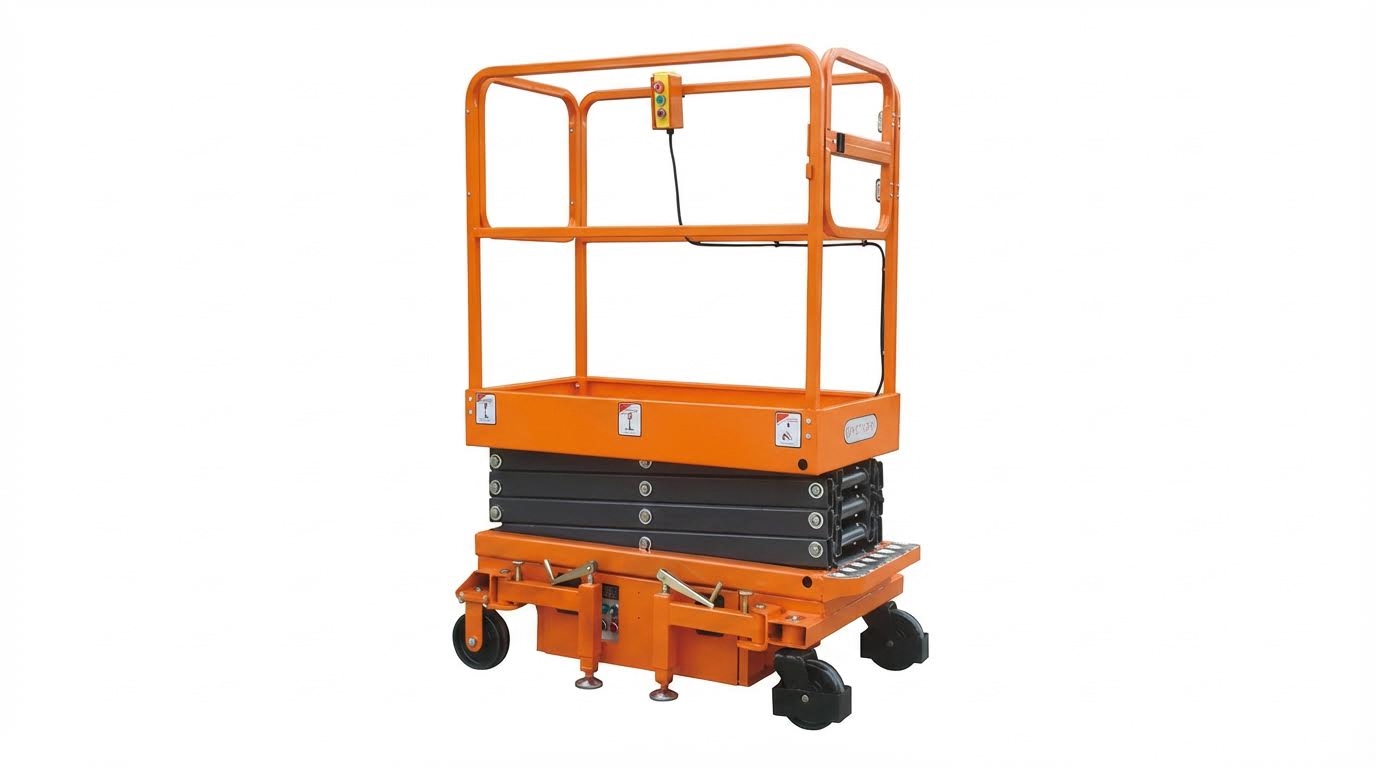
Key ANSI/SAIA A92 standards are organized by machine type so you can map each aerial platform to its governing design, use, and training rules before asking where can i find ansi standards for aerial work platforms online. Matching the right A92 part to each MEWP type is the foundation of compliant design, selection, and operation.
| Machine Type | Primary A92 Standard | Core Focus | Typical Use Case | Operational Impact |
|---|---|---|---|---|
| Vehicle‑mounted aerial device | A92.2 / A92.8 | Design, manufacture, testing, inspection, maintenance, training, operation | Bucket trucks, service trucks with booms | Defines safe outreach, insulation, and work‑zone practices for road and utility work |
| Manually propelled MEWP | A92.3, A92.6 | Manually moved platforms that cannot reach beyond base; not occupied while moving | Push‑around vertical lifts, small indoor platforms | Controls how far you can reach, how you move the unit, and safe indoor use |
| Self‑propelled boom MEWP | A92.5 | Self‑propelled booms with platform beyond base, driven from platform | Articulating/telescopic booms for construction and maintenance | Governs drive‑while‑elevated rules, platform controls, and stability envelopes |
| Self‑propelled scissor MEWP | A92.6 (legacy) / newer MEWP scissor parts | Integral chassis, vertical elevation within base footprint | scissor platform lift and rough‑terrain scissor lifts | Defines guardrails, load ratings, and motion limits to prevent tip‑over |
For any compliance program, start by identifying which A92 part applies to each unit in your fleet, then cross‑check your manuals, training, and inspections against that specific standard text.
💡 Field Engineer’s Note: In mixed fleets, label each machine with its governing A92 part (e.g., “A92.5 unit”) at the control box. This reduces cross‑training errors and keeps pre‑use checks aligned with the correct standard.
Vehicle‑Mounted Aerial Devices (ANSI/SAIA A92.2)
Vehicle‑mounted aerial devices are covered mainly by ANSI/SAIA A92.2 and A92.8, which set design, testing, maintenance, training, and operating rules for bucket‑type equipment installed on trucks and similar chassis. These standards aim to prevent injuries, unify ratings, and clarify responsibilities across manufacturers, owners, and operators.
ANSI/SAIA A92.2‑2021 applies to the design, manufacture, testing, inspection, installation, maintenance, use, training, and operation of vehicle‑mounted aerial devices used to position personnel at height. It defines how these devices must be engineered and used to control risk in everyday work such as utility line maintenance, sign work, or tree trimming. ANSI/SAIA A92.2‑2021 scope
ANSI/SIA A92.8‑2012 further establishes detailed criteria for design, testing, inspection, installation, maintenance, use, training, and operation of vehicle‑mounted aerial devices primarily used to position personnel. Its objectives include preventing personal injuries and accidents, creating uniform ratings, and defining responsibilities for manufacturers, dealers, installers, maintenance personnel, operators, and users. ANSI/SIA A92.8‑2012 objectives
- Design and construction: Devices must meet defined structural, stability, and control requirements – this limits boom deflection and tip‑over risk when working 10–20 m above ground.
- Testing and inspection: Regular functional and structural checks are mandated – this catches cracks, leaks, and control failures before they reach the jobsite.
- Training and operation: Specific operator and supervisor responsibilities are defined – this ensures only trained, authorized personnel use the device near traffic, power lines, or uneven ground.
How OSHA ties into A92.2 for vehicle‑mounted devices
OSHA’s construction rules for aerial lifts reference ANSI A92.2‑1969 (including its appendix) for design and construction requirements under 29 CFR 1926.453(a). OSHA has also recognized later versions of A92.2 as providing additional guidance for vehicle‑mounted elevating and rotating aerial devices. OSHA reference to A92.2‑1969 OSHA recognition of updated A92.2
Manually Propelled MEWPs (ANSI/SAIA A92.3 And A92.6)
Manually propelled MEWPs are governed mainly by ANSI/SAIA A92.3 and A92.6, which control push‑around and similar platforms that cannot reach beyond their base and must not be occupied while moved. These standards are critical for safe indoor maintenance, warehousing, and light‑duty work.
ANSI/SAIA A92.3‑2006 (R2014) covers manually propelled, integral‑chassis aerial platforms whose platforms cannot be positioned completely beyond the base. They are adjusted by manual or powered means and used to position personnel with tools and materials at work locations, but they must not be occupied when moved horizontally. ANSI/SAIA A92.3‑2006 (R2014) scope
ANSI/SAIA A92.6‑2006 (R2014) applies to a similar class of manually propelled, integral‑chassis aerial platforms with platforms that cannot extend fully beyond the base, adjustable by manual or powered means, and not to be occupied during horizontal movement. These units are also used to position personnel with necessary tools and materials. ANSI/SAIA A92.6‑2006 (R2014) scope
- Base‑bound platform geometry: Platform must stay within base footprint – this limits outreach but greatly improves stability on smooth floors.
- No riding while moving: Standard prohibits occupied horizontal travel – this reduces fall and collision risk in tight aisles or near obstacles.
- Manual propulsion limits: Devices rely on human force – this makes gradient, floor friction, and total weight (machine + load) critical in risk assessments.
| Feature | A92.3 Manually Propelled | A92.6 Related Platforms | Operational Impact |
|---|---|---|---|
| Platform reach | Within base footprint | Within base footprint | Safer in 1.2–1.8 m wide aisles but limited outreach |
| Horizontal travel | Not occupied when moving | Not occupied when moving | Requires climb‑down and re‑position cycle at each move |
| Power | Manual or powered elevation | Manual or powered elevation | Check weight vs operator strength for frequent repositioning |
How states adopt A92.3 and A92.6 by reference
Some U.S. states directly adopt these ANSI standards. For example, Michigan Administrative Code R. 408.43204a incorporates ANSI A92.3‑2006 “Manually Propelled Elevating Aerial Platforms” and ANSI A92.5‑2006 “Boom‑Supported Elevating Work Platforms,” listing purchase prices at the time of adoption. State adoption example
💡 Field Engineer’s Note: On manually propelled units, even a 1–2% floor slope is noticeable once you add a 100–150 kg load. Treat ramps and dock plates as “no‑go” zones unless your risk assessment and procedures explicitly address them.
Self‑Propelled Boom And Scissor MEWPs (ANSI/SAIA A92.5)
Self‑propelled boom‑type MEWPs are primarily covered by ANSI/SAIA A92.5, which governs platforms that can extend beyond the base and are intended to be driven while occupied with controls at the platform. These rules directly affect drive‑while‑elevated practices, envelope limits, and training content for operators.
ANSI/SAIA A92.5‑2006 (R2014) applies to self‑propelled, integral‑chassis aerial platforms with platforms that can be positioned completely beyond the base and used to position personnel with tools and materials at work locations. These platforms are power‑operated, with primary functions, including drive, controlled from the platform, and they are intended to be occupied when driven. ANSI/SAIA A92.5‑2006 (R2014) scope
The standard sets an effective date (28 August 2006) for design, manufacture, and remanufacture requirements. Rebuilt or reconditioned aerial platforms must comply with the standard that was in effect at their original manufacture date, while responsibilities for dealers, owners, users, operators, lessors, lessees, and brokers apply to all new and existing units delivered on or after the effective date. Effective date and responsibilities
- Drive‑from‑platform controls: Primary functions, including drive, are controlled at the platform – this allows efficient positioning but demands strict training on speed and steering at height.
- Beyond‑base outreach: Platform can extend fully beyond the chassis – this increases reach but makes load distribution, wind, and ground support critical.
- Lifecycle responsibility: Standard allocates duties across manufacturers, dealers, owners, and users – this clarifies who must update manuals, retrofit labels, and manage training over time.
| Aspect | A92.3 / A92.6 (Manual) | A92.5 (Self‑Propelled Boom) | Operational Impact |
|---|---|---|---|
| Typical working height | Up to ~8–10 m | Often 12–40 m | Higher wind and outreach risk on A92.5 units |
| Travel while elevated | Not occupied when moving | Intended to be occupied when driven | Requires strict speed and surface controls for A92.5 |
| Outreach vs base | Within base footprint | Beyond base footprint | Requires careful load charts and envelope monitoring |
OSHA’s view on A92.5 and fall protection
OSHA has recognized updated ANSI A92.5 standards for boom‑supported elevating work platforms as additional safety guidance. OSHA interpretations also emphasize that workers in aerial platforms must use approved fall protection devices even when guardrails are present, and body harnesses (not body belts) are required for personal fall arrest where the fall risk is 1.8 m or more. OSHA fall protection and A92.5
💡 Field Engineer’s Note: With boom lifts, the worst stability problems usually show up at partial height with maximum outreach, not fully retracted. Train operators to respect the envelope chart and to lower first, then drive, on rough or sloped ground.
Where And How To Access Current A92 Standards
Current ANSI A92 standards for aerial work platforms are purchased through the ANSI and SAIA webstores, or located via standards indexes like NSSN and regulatory references, then built into your site’s documented safety and engineering procedures.
If you are asking “where can I find ANSI standards for aerial work platforms,” the fastest route is to buy the exact A92 parts you need from the ANSI or SAIA online stores, then cross‑check them against OSHA, state rules, and internal engineering controls.
- Primary Source – ANSI Webstore: Use the ANSI online catalog to locate and purchase A92 standards by number or keyword – ensures you always work from the latest official text.
- Sector Source – SAIA/industry store: Use the dedicated aerial‑work‑platform collections – groups all MEWP‑related A92 documents in one place for easier selection.
- Indexing Source – NSSN: Use NSSN to identify document numbers, titles, and developers – helps you confirm you are buying the correct, current edition.
- Regulatory Source – OSHA/state rules: Use OSHA letters and state codes to see which A92 editions are referenced – aligns your purchase with actual enforcement expectations.
💡 Field Engineer’s Note: Always budget for at least one master “standards set” per site. Sharing one PDF between locations leads to out‑of‑date printouts and operators following superseded rules in the field.
Using The ANSI And SAIA Online Webstores
You access current ANSI A92 standards for aerial work platforms by searching and purchasing them directly through the ANSI and SAIA online webstores, using the A92 part number and machine type as your primary filters.
The ANSI webstore lists the core A92 family for different aerial devices, including vehicle‑mounted units, manually propelled MEWPs, and self‑propelled booms and scissors. For example, ANSI/SAIA A92.2‑2021 covers vehicle‑mounted aerial devices, with requirements for design, manufacture, testing, inspection, maintenance, use, training, and operation. ANSI/SAIA A92.2‑2021 listing
| A92 Standard | Applies To | How To Find It Online | Operational Impact |
|---|---|---|---|
| A92.2‑2021 | Vehicle‑mounted aerial devices | Search “A92.2‑2021” in the ANSI aerial‑work section | Defines design, inspection, training, and operation rules for truck‑mounted lifts. |
| A92.3‑2006 (R2014) | Manually propelled integral‑chassis platforms (platform not beyond base) | Search “A92.3‑2006” in ANSI aerial‑work standards | Governs push‑around vertical lifts that must be empty when moved horizontally. |
| A92.5‑2006 (R2014) | Self‑propelled boom‑supported platforms | Search “A92.5‑2006” or “boom‑supported elevating work platforms” | Covers boom lifts intended to be occupied while driven around the site. |
| A92.6‑2006 (R2014) | Manually propelled scissor‑type and similar platforms | Search “A92.6‑2006” with “manually propelled” filter | Applies to push‑around scissors that cannot position the platform beyond the base. |
| A92.8‑2012 | Vehicle‑mounted devices used primarily to position personnel | Search “A92.8‑2012” in the ANSI aerial‑work category | Focuses on design and responsibilities to prevent personal injuries and accidents. |
| A92.10‑2009 (R2014) | Transport platforms for vertical transport of personnel | Search “A92.10‑2009” or “Transport Platforms” | Defines safe use of personnel transport platforms as tools of the trade. |
- Concept: Use standard numbers when searching: Type “A92.2‑2021” or “A92.5‑2006 (R2014)” – avoids buying the wrong document for your machine type.
- Concept: Filter by industry/safety category: On the ANSI webstore, go to the aerial‑work or safety section – groups all MEWP‑relevant standards together.
- Concept: Check revision status: Look for the year and any “R” (reaffirmed) tag – confirms whether you are using a current or legacy edition.
- Concept: Align purchase with your fleet: Map each standard to actual machines (truck‑mount, boom, scissor, push‑around) – ensures every platform type has a governing A92 document.
How to choose between overlapping A92 documents
Start with the platform’s chassis and motion type. Vehicle‑mounted units fall under A92.2 or A92.8. Self‑propelled booms use A92.5. Manually propelled vertical or scissor lifts use A92.3 or A92.6. Transport platforms use A92.10. When in doubt, match the standard’s scope text on the ANSI listing to your machine’s configuration and intended use.
Leveraging NSSN And Regulatory References
You use NSSN and regulatory references to identify which ANSI A92 standards exist, confirm document numbers and developers, and see which editions OSHA or state rules have actually adopted or referenced in enforcement.
The NSSN search engine aggregates standards information from ANSI‑accredited developers, other U.S. bodies, government agencies, and international organizations. It lets you search by keyword or document number to see the full document number, title, developer, and purchase information for standards like the A92 family. NSSN standards search description
| Tool / Reference | What It Provides | How To Use It For A92 | Best For… |
|---|---|---|---|
| NSSN Search Engine | Document numbers, titles, developers, purchase paths | Search “A92.5 boom‑supported elevating work platforms” | Confirming you have the correct A92 part before buying from ANSI. |
| OSHA Letters & Standards | Which ANSI editions OSHA cites or recognizes | Review OSHA interpretations that reference A92.2 and A92.5 for aerial lifts and fall protection | Understanding enforcement expectations and harmonizing site rules. |
| State Administrative Codes | Specific A92 editions adopted by reference, often with prices | Example: Michigan code adopting A92.2‑2001, A92.3‑2006, A92.5‑2006 with listed costs | Knowing which edition your state inspector will expect to see. |
OSHA’s aerial lift interpretation letters show how federal regulators tied equipment design to ANSI A92.2‑1969 and later recognized updated A92.2 and A92.5 editions for vehicle‑mounted and boom‑supported platforms, including fall‑protection expectations. OSHA aerial lift design and training interpretation OSHA fall protection and ANSI A92 references
State‑level rules, such as Michigan Administrative Code R. 408.43204a, explicitly adopt ANSI A92.3‑2006 for manually propelled elevating aerial platforms and A92.5‑2006 for boom‑supported elevating work platforms, and list typical purchase prices for these standards. Michigan adoption of ANSI A92 standards
- Concept: Use NSSN as a “phone book” for standards: Identify exact A92 document numbers and developers – reduces the risk of buying outdated or wrong documents.
- Concept: Cross‑check OSHA letters: See which A92 editions OSHA cites for aerial lift design and fall protection – aligns your internal rules with federal expectations.
- Concept: Check your state code: Confirm which A92 editions your state has adopted by reference – prevents conflicts between site practice and local enforcement.
💡 Field Engineer’s Note: When a state code locks in an older A92 edition, I keep both: the adopted edition for compliance and the newest edition for engineering best practice. Toolbox talks always reference whichever is stricter.
How to reconcile differing A92 references (OSHA vs state)
Start with the strictest requirement you can reasonably meet. If OSHA guidance references a newer A92.5 edition than your state code, treat the newer A92.5 as your engineering baseline, while still keeping a copy of the edition adopted in state law. Document in your safety program that you intentionally apply the more protective standard for design, inspection, and training.
Practical Compliance Steps For Owners And Engineers
Owners and engineers stay ANSI A92 compliant by mapping each aerial work platform to the correct A92 part, purchasing the current standard, and then embedding its inspection, training, and operating rules into site procedures and engineering controls.
From a practical standpoint, you should treat “where can I find ANSI standards for aerial work platforms” as a three‑step workflow: identify the right A92 document using NSSN and regulatory references, purchase it from the ANSI or SAIA webstore, and then convert its clauses into checklists, training modules, and design criteria for your fleet.
- Concept: Build a fleet‑to‑standard matrix: List every MEWP by type (truck‑mount, boom, scissor, push‑around, transport platform) – assign A92.2, A92.3, A92.5, A92.6, A92.8, or A92.10 accordingly.
- Concept: Purchase and archive official copies: Buy PDFs from ANSI/SAIA and store them in a controlled digital library – ensures everyone references the same, current text.
- Concept: Translate clauses into checklists: Turn design, inspection, and training requirements into daily/annual checklists – moves compliance from paperwork to the shop floor.
- Concept: Align training with A92 and OSHA: Use A92 training sections plus OSHA expectations for authorized operators and fall protection – reduces accident risk and citation exposure.
- Concept: Review revisions on a fixed cycle: Re‑check ANSI listings and NSSN annually – catches new editions before an inspector does.
Embedding A92 into engineering and safety documents
For engineering, reference the relevant A92 part in design specs, modification reviews, and procurement documents. For safety, embed A92 inspection intervals, platform loading rules, and fall‑protection requirements into written programs and operator manuals. Keep a revision log showing which A92 edition each document is based on, and update when a new edition is adopted.
💡 Field Engineer’s Note: During audits, inspectors care less about you owning the PDF and more about whether your daily checks, lock‑out tags, and toolbox talks clearly trace back to the right A92 and OSHA requirements.
“”
Final Thoughts On Staying ANSI A92 Compliant
ANSI A92 gives owners and engineers a clear technical map for safe aerial work platforms, but real safety comes from how you apply it. When you match each unit to its correct A92 part, you control geometry, loads, and movement in a predictable way. That control is what prevents tip‑overs, falls, and structural failures.
OSHA and state rules then turn those engineering rules into legal duties. If you ignore the A92 design and use limits, you risk both accidents and citations. If you build your procedures, checklists, and training straight from the standard text, you create a strong defense and a safer jobsite.
The best practice is simple. First, build a fleet‑to‑standard matrix. Second, buy and archive the current A92 editions that match your machines. Third, convert their clauses into daily inspections, maintenance plans, and operator training. Finally, review revisions on a fixed schedule so your documents never lag behind the standards.
Teams that follow this cycle do more than “have the book.” They run lifts the way the standard expects, every day. That is how Atomoving customers, engineers, and safety managers keep aerial platforms productive, compliant, and stable from design through end of life.
Frequently Asked Questions
Where can I find ANSI standards for aerial work platforms?
You can access ANSI standards for aerial work platforms through several methods. Some standards are available for free via the CSA Community Group, which requires registration. Once registered, browse under the ANSI section in the View Standards area.
Alternatively, you can visit the ANSI Incorporated by Reference Portal, which provides access to standards incorporated into U.S. federal regulations.
Can ANSI standards be accessed for free?
Some ANSI standards are available at no cost through specific platforms like the CSA Community Group. However, many ANSI standards are copyrighted and must be purchased directly from ANSI or authorized distributors. This is because voluntary technical standards, unlike government-legislated standards, are developed and maintained by private organizations.