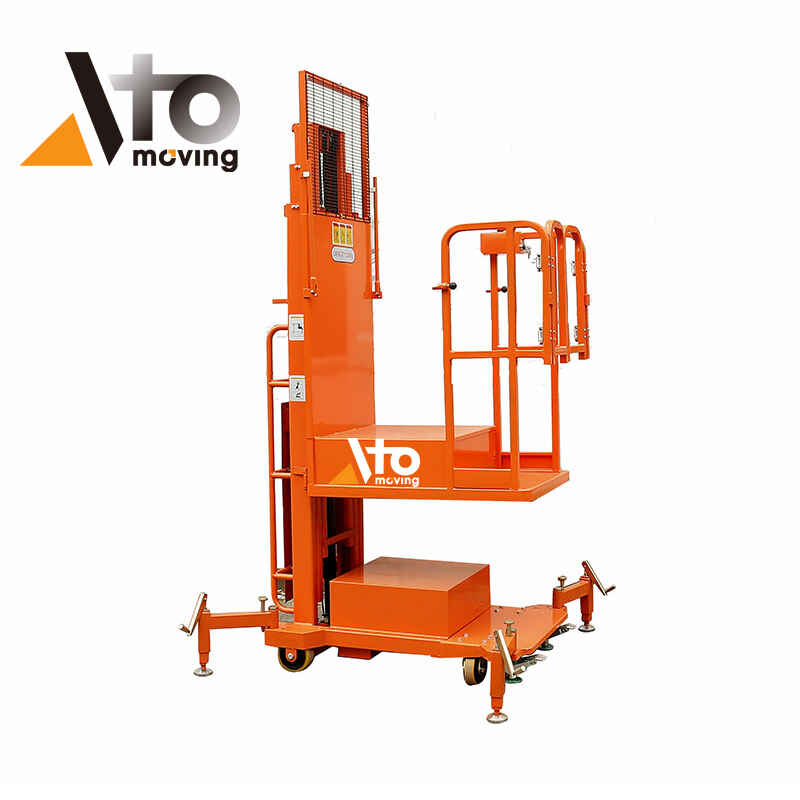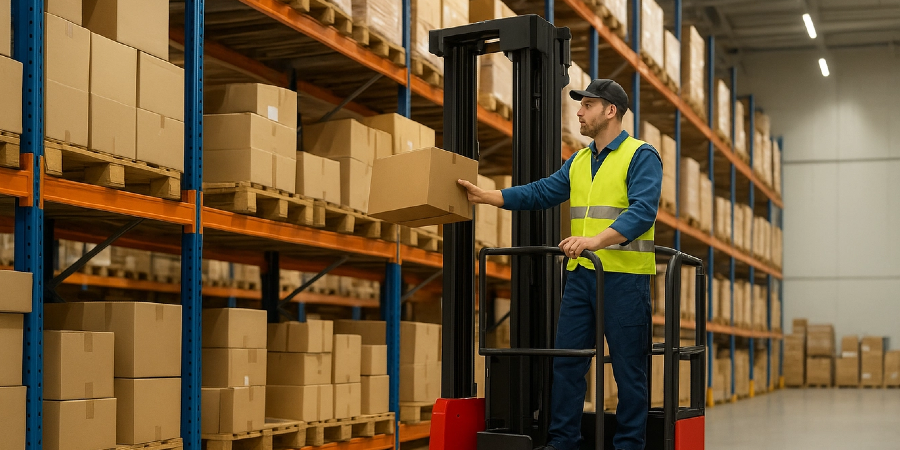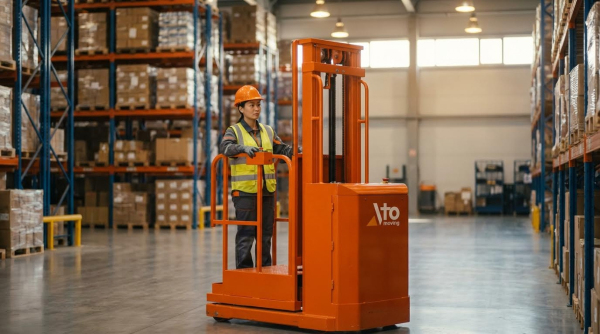
Designing a high-throughput, safe warehouse order picking fleet means matching order picking machines to your demand, layout, and safety constraints so you move more lines per hour with fewer incidents. This guide walks through requirements, equipment mix, automation options, and lifecycle strategy so you can scale throughput, control costs, and protect operators in real-world facilities.
Defining Order Picking Fleet Requirements
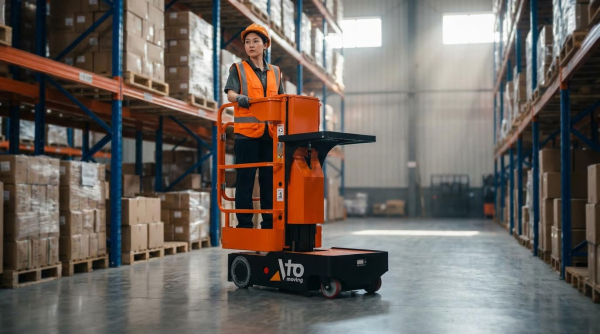
This section explains how to turn demand and storage data into hard throughput and equipment requirements for warehouse order picker, so you size the fleet correctly instead of guessing and hoping it works.
The goal is to link order profiles, service levels, and storage layout to clear numbers: picks per hour, lines per order, and vehicles and operators required. Done right, this prevents both chronic bottlenecks and expensive, underutilized machines.
Translating demand into throughput targets
Translating demand into throughput targets means converting orders, lines, and SKUs into required picks per hour and per shift for your order picking machines.
Start with your real demand, not averages from a brochure. You want peak-day and peak-hour numbers because that is when your system will break if it is under-designed.
- Order lines per day: Total lines you pick on a typical and peak day – Defines base workload for the fleet.
- Lines per order: Average and 90th percentile lines per order – Impacts whether you need carts, pallet trucks, or high-level pickers.
- Service window: Hours available to pick (e.g., 2-hour cut-off window) – Drives required picks per hour, not just per shift.
- Peaks and promotions: Weekly, seasonal, and campaign spikes – Prevents under-sizing for Black Friday or festival peaks.
- Error tolerance: Target error rate (e.g., <0.5%) – Influences how much you lean on automation or pick tech.
Once you have demand, you translate it into throughput by using realistic productivity assumptions for different picking approaches.
| Picking Method | Typical Throughput | Accuracy | Operational Impact |
|---|---|---|---|
| Manual paper / RF picking | ≈60–100 picks/hour per picker throughput data | Error >5% error rate | High labor, more checkers and rework. |
| Pick-to-light | Productivity +30–50% vs manual productivity gain | Often >99% accuracy accuracy | Good for dense, small-item zones. |
| Voice-directed picking | Higher pick speed than paper/RF speed data | Up to ≈99.99% accuracy accuracy | Hands-free, safer, good for mixed SKUs. |
| Automated systems (AS/RS, robotic) | ≈200–800+ picks/hour per station automated throughput | Up to ≈99.9% accuracy accuracy | High capex, excellent for high-volume SKUs. |
These ranges let you back-calculate how many pickers, stations, or robots you need to clear your peak-hour workload with a safety margin.
How to convert daily demand into fleet size
1. Calculate peak-day order lines (e.g., 40,000 lines). 2. Identify effective picking hours in the peak window (e.g., 6 hours). 3. Compute required lines/hour (40,000 ÷ 6 ≈ 6,700 lines/hour). 4. Choose a picking method and realistic productivity (e.g., 150 picks/hour with voice). 5. Divide required lines/hour by productivity (6,700 ÷ 150 ≈ 45 pickers or equivalent automated stations). 6. From there, size trucks, carts, and supporting semi electric order picker to support that labor.
💡 Field Engineer’s Note: Always run scenarios at 120–130% of your current peak. Organic growth and one or two big customer wins can quietly push you over the edge, and the lead time for new equipment is often 3–6 months.
Mapping storage profile to equipment types
Mapping storage profile to equipment types means matching where and how SKUs are stored to the right mix of aerial platform, so travel distance and lift time stay under control.
You start with the physical reality of your building and racking, then select equipment that can physically reach, handle, and safely move your load units at the required speed.
- Ceiling height and clear height: Determines whether low-, mid-, or high-level order pickers are justified – Prevents over-investing in vertical capability you cannot use.
- Racking type and aisle width: Wide aisle, narrow aisle, or very narrow aisle – Dictates if standard pallet trucks suffice or if you need specialist machines.
- Unit load: Carton, tote, or full pallet – Decides between carts, pallet trucks, pallet stackers, or full pallet order pickers.
- SKU velocity profile: A-, B-, C-class SKUs – Helps you reserve premium locations and faster equipment for fast movers.
- Pick face height: Ground-only versus multi-level pick faces – Determines whether mid- and high-level order pickers are required.
Vertical profile is a key driver. Mid- and high-level order pickers often carry around 200 kg on the operator platform and reach working heights near 7.7 m, which lets you pick directly from upper levels instead of replenishing down to ground level first. Example performance data
| Storage / SKU Profile | Typical Equipment Choice | Key Capability | Best For… |
|---|---|---|---|
| Ground-level pallet racking, wide aisles | Manual pallet trucks, low-level order pickers | Handle 1–2 pallets at floor level | Bulk and case picking with low vertical reach. |
| Multi-level racking up to ≈7–8 m | Mid-/high-level order pickers | Platform to ≈7.7 m, ≈200 kg capacity height and capacity | Piece picking from higher levels without extra replenishment. |
| Dense small-item storage, high order volume | AS/RS with goods-to-person stations | 5–10× throughput, up to 85% floor-space saving AS/RS metrics | High-SKU-count e-commerce, pharma, spare parts. |
| Spread-out shelving, long walk distances | AMRs with racks or follow-me mode | Cut walking time and steps by ≈40–60% AMR productivity | Brownfield sites where you cannot rebuild racking. |
Beyond physical fit, you also want to align equipment with the economic profile of each zone.
- High-velocity, small items: Consider pick-to-light, voice, or AS/RS feeding pick stations – Maximizes picks per m² and per operator.
- Medium-velocity SKUs: Low- or mid-level order pickers with RF or voice – Balanced capex and flexibility.
- Low-velocity, bulky items: Pallet stackers or reach trucks doing case or pallet picks – Keeps expensive automation away from slow movers.
Check clearances before committing to equipment
Always verify: 1) Minimum aisle width versus truck turning radius. 2) Top beam height versus truck lift height plus safety clearance (typically 150–200 mm). 3) Floor flatness and load rating versus wheel loads of your chosen warehouse order picking equipment. Fixing these after installation is far more expensive than adjusting the spec up front.
💡 Field Engineer’s Note: In older buildings, floor flatness and small local slopes cause more trouble than height. Manual and electric order pickers lose speed or even struggle to start moving on slopes above roughly 2%, especially with heavily loaded pallets or carts.
Engineering The Right Mix Of Picking Equipment
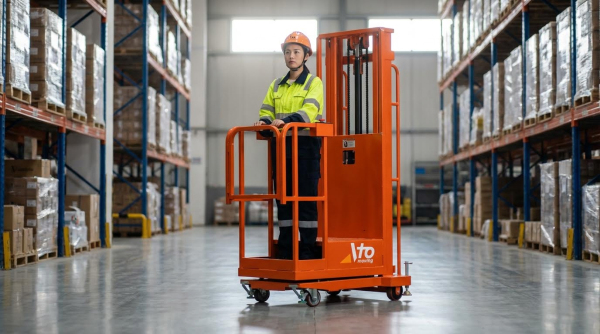
Engineering the right mix of warehouse order picker means matching each technology to SKU profile, throughput, labor model, and building constraints instead of chasing a one-size-fits-all “automation” answer.
The goal is to design a layered fleet where low-, mid-, and high-level pickers, carts, pallet trucks, AMRs and AS/RS each handle the work they are best at, so you hit service levels with the lowest total cost and risk.
- Start from data: Order lines per hour, cube per order, and SKU velocity bands – this prevents over- or under-specifying equipment.
- Segment by zone: Fast-movers, slow-movers, bulky, and value-added areas – lets you assign the right machine to each zone.
- Design for people first: Walking distance, ergonomics, and safety – equipment must make the job easier, not just faster.
- Think lifecycle: Powertrain, maintenance access, and upgrade paths – keeps the fleet productive over 7–10 years, not just year one.
💡 Field Engineer’s Note: When you model the fleet, always simulate peak week, not average week. Many sites under-size picking equipment, then quietly add unsafe ad‑hoc ladders, extra shifts, and overtime to cope with seasonal spikes.
Low-, mid- and high-level order pickers
Low-, mid-, and high-level order pickers define how efficiently you can use vertical cube and how safely operators can work at height.
They differ in working height, travel pattern, and ideal SKU profile, so you should treat them as complementary tools, not competitors, when designing warehouse order picking equipment.
Quick definitions
Low-level order picker: Operator stands at floor level, typically picking from the first 1–1.2 m of rack.
Mid-level order picker: Platform lifts operator to around 3–5 m for medium-height picking.
High-level order picker: Platform lifts operator to higher rack levels, often above 6 m, for full-height picking in narrow aisles.
Mid- and high-level order pickers commonly offer platform capacities around 200 kg and working heights up to roughly 7.7 m, which allows operators to access multiple beam levels directly without re-slotting everything to the ground level. Platform capacity and working height data
| Equipment Type | Typical Working Height | Typical Capacity | Best For… | Operational Impact |
|---|---|---|---|---|
| Low-level order picker | Up to ~1.2 m | 600–1,200 kg pallet load | Fast movers at ground level | Maximizes picks/hour on A‑items; limited vertical utilization. |
| Mid-level order picker | ≈3–5 m | ≈200 kg on platform | Medium movers on mid-rack levels | Balances travel distance and vertical reach; good for mixed SKU velocity. |
| High-level order picker | Up to ≈7.7 m | ≈200 kg on platform | Slow movers at upper levels; narrow aisles | Unlocks vertical cube; lower picks/hour but high storage density. |
- Low-level pickers: Ideal in high-throughput zones with dense, ground-level slotting – they minimize lift time and maximize horizontal travel speed.
- Mid-level pickers: Useful where you cannot justify full high-bay AS/RS but still need more vertical storage – they reduce re-slotting pressure on the floor level.
- High-level pickers: Suited for tall, narrow-aisle racks where operators must reach upper beams safely – they convert building height into usable storage without full automation.
Safety features on modern order pickers typically include open platforms for visibility, emergency descent systems, ground-level emergency stops, and full-body harnesses with energy-absorbing tethers for elevated work. These are critical where operators routinely work above 1.8–2.0 m. Safety feature reference
- Emergency descent: Brings the platform down safely during power or control failures – reduces rescue time and risk.
- Ground-level E‑stops: Allow colleagues to stop the machine immediately – critical in congested pick aisles.
- Harness and tether: Protect operators from falls at height – aligns with common fall-protection practices.
💡 Field Engineer’s Note: In cold storage or mezzanine areas, specify controls and harness anchor points that can be used comfortably with gloves and bulky PPE. If it is awkward, operators stop clipping in after the first week.
Carts, pallet trucks and pallet stackers
Carts, manual pallet jack, and counterbalanced stacker are the backbone of manual and semi-manual picking, handling short-haul transport and small-batch consolidation where powered order pickers or robots would be overkill.
They shine in low-to-medium throughput areas, value-added service zones, and for operations that need flexible, low-CAPEX warehouse order picking equipment.
- Picking carts: Used for small orders, e‑commerce, and piece picking – cheap, flexible, but high walking distance.
- Manual pallet trucks: Move full or partial pallets over short distances – simple and robust, but operator fatigue limits range.
- Electric pallet trucks: Support higher volumes and longer runs – reduce strain and increase sustained throughput.
- Pallet stackers: Lift loads to 3–5 m without a full counterbalance truck – ideal for light stacking and short put-away.
When simple equipment beats automation
If your peak demand is low, SKU count is modest, or order profiles are very irregular, a well-designed cart and pallet truck operation can outperform complex automation in ROI and flexibility.
Manual cart picking is highly labor-intensive. In one study, a typical cart-based task took about 17 minutes 35 seconds and required roughly 621 steps, while AMR-assisted picking cut this to 10 minutes 59 seconds and 276 steps. Cart vs AMR effort comparison
| Method | Task Time | Steps per Task | Best For… | Operational Impact |
|---|---|---|---|---|
| Manual cart picking | ≈17 min 35 s | ≈621 steps | Very small sites, low order volume | Low CAPEX but high labor cost and fatigue. |
| AMR-assisted picking (standard worker) | ≈10 min 59 s | ≈276 steps | Growing operations with rising order lines | Reduces walking by >50%, supports more orders per shift. |
| AMR-assisted picking (experienced worker) | ≈6 min 59 s | ≈175 steps | Mature teams in high-volume sites | Very high productivity; walking becomes a minor component. |
For pallet trucks and stackers, the engineering focus is on capacity, fork dimensions, lift height, and floor conditions.
- Capacity matching: Specify rated capacity at the actual load center you use (often 600 mm) – prevents mast deflection and overload trips.
- Floor gradients: Manual pallet trucks become unsafe on slopes above a few percent – plan travel paths to avoid ramps where possible.
- Lift height for stackers: Choose mast height to clear your highest beam by at least 150–200 mm – gives a safety margin for uneven pallets.
💡 Field Engineer’s Note: In high-density picking aisles, carts with poor caster quality or wrong wheel material can silently kill productivity. A 5–10 kg push/pull force increase over a full shift translates into slower walking speeds and higher injury risk.
AMRs, AS/RS and robotic picking systems
AMRs, AS/RS, and robotic picking systems transform warehouse order picking equipment from purely manual transport into orchestrated, software-driven material flow.
They can multiply throughput and accuracy, but only pay off when matched carefully to order profiles, labor costs, and building constraints.
Automated solutions such as AS/RS and robotic picking have achieved 200–800+ picks per hour with accuracy levels approaching 99.9%, compared with roughly 60–100 picks per hour and error rates above 5% for manual methods. Throughput and accuracy comparison
| Technology | Typical Picks/Hour | Typical Accuracy | Best For… | Operational Impact |
|---|---|---|---|---|
| Manual picking | ≈60–100 | >5% error rate | Small sites, low labor cost | Low CAPEX, high OPEX and quality losses. |
| AS/RS & robotic picking | ≈200–800+ | Up to ≈99.9% | High-volume, multi-shift operations | Massive throughput and accuracy gains; high initial CAPEX. |
Automated picking systems have been shown to cut cycle time by about 55% and reduce error rates by roughly 82%, which directly improves both service levels and cost per order. Automation performance metrics
- AMRs (Autonomous Mobile Robots): Bring shelves or totes to people or follow pickers – slash walking distance and standardize work pace.
- AS/RS: Store and retrieve totes or pallets automatically – increase throughput by 5–10× and save up to about 85% floor space. AS/RS performance data
- Robotic picking arms: Use AI and vision to pick items from totes or shelves – ideal for repetitive piece-picking, 24/7.
| System Type | Main Strength | Typical Use Case | Operational Impact |
|---|---|---|---|
| AMR “goods-to-person” | Reduces walking and non-value time | E‑commerce, high order line counts | Scalable; robots added as volume grows. |
| AS/RS (shuttle, mini-load) | Very high density and speed | High-SKU, high-volume DCs | Concentrates work in few ergonomic pick stations. |
| Robotic picking arm | Hands-free, consistent picking | Repetitive SKU sets, long shifts | Stabilizes output; shifts humans to exception handling. |
From a financial standpoint, automated picking often carries high CAPEX but strong ROI. One model showed CAPEX around ₹200 Lakh for robots, conveyors, software, and integration, with OPEX about ₹25 Lakh per year, and a net annual gain of roughly ₹4.75 Crore, leading to an ROI of about 630%. ROI model reference
Key ROI levers in automation
Labor reduction: Fewer pickers, more supervisors, with lower total wage cost.
Error and RTO reduction: Fewer mis-picks and returns cut transport and replacement costs.
Throughput gains: Higher lines/hour enable more orders with the same building footprint.
AMRs also bring safety and ergonomics benefits by handling most of the walking and heavy transport, while advanced sensors help prevent collisions in mixed human-robot environments. AMR operational benefits
💡 Field Engineer’s Note: When you introduce AMRs or AS/RS, design the pick stations first. Poorly laid out workstations with bad ergonomics or slow exception handling can choke a very fast automated backbone and erase the theoretical throughput gains.
Safety, Powertrain And Lifecycle Optimization
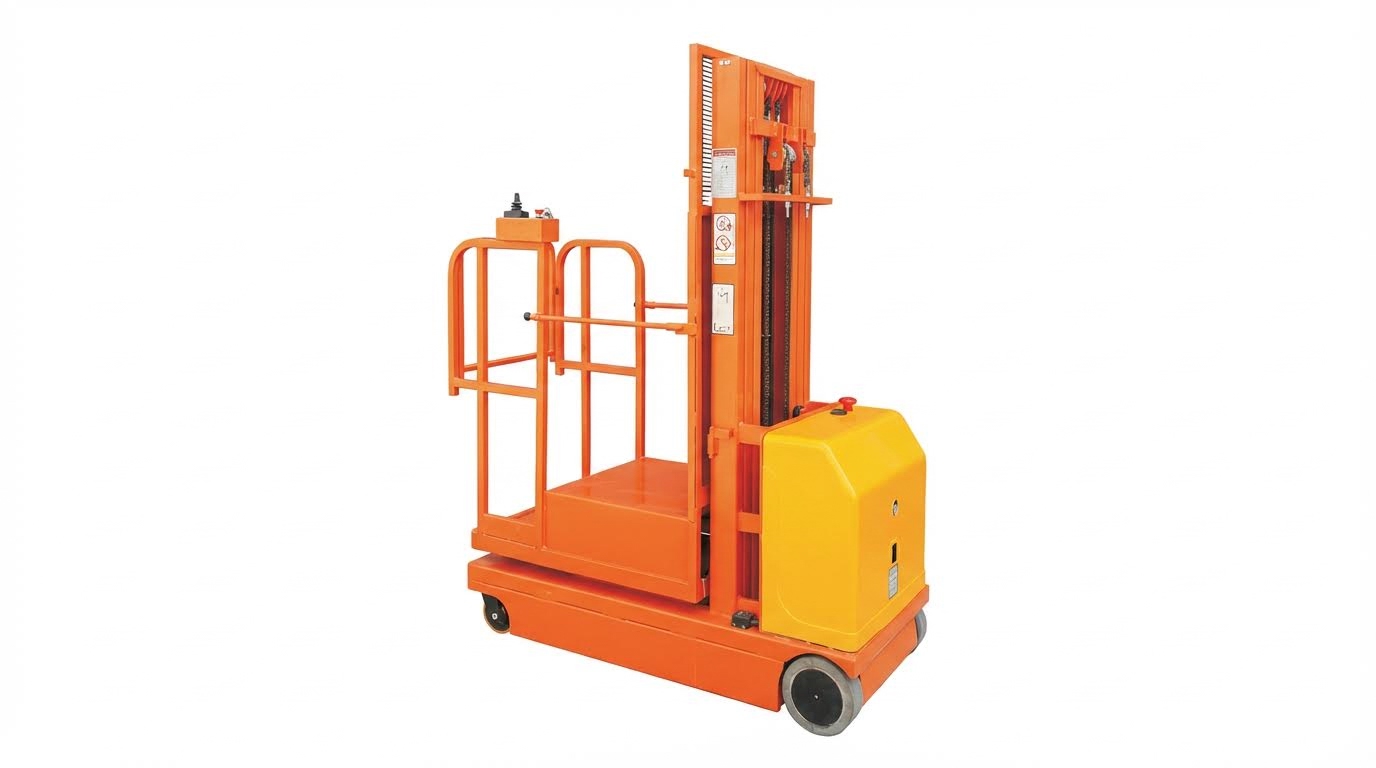
This section explains how to design warehouse order picking equipment fleets that stay safe, powered, and cost‑effective over a 7–10+ year lifecycle. You balance standards compliance, battery strategy, and total cost of ownership instead of just chasing lowest purchase price.
For a modern, high-throughput fleet, safety, energy, and lifecycle choices are tightly linked. Guarding at height drives chassis and mast design, batteries drive shift patterns and charging layout, and lifecycle modeling drives how many trucks you actually need in the building.
ANSI/OSHA compliance and guarding at height
Designing order picking machines for height starts with ANSI/OSHA rules on fall protection, stability, and operator controls. You engineer platforms, masts, and procedures so that a 7–8 m working height is routine, not exceptional risk.
- Guardrails and toe-boards: Full-height guardrails and toe-boards around the operator platform – Mitigates falls and dropped-object incidents when picking at 5–8 m.
- Harness and anchor points: Certified full-body harness and energy-absorbing lanyard with rated anchor point – Limits fall distance and impact if an operator slips at height.
- Interlocked gates: Platform gates tied into travel/lift interlocks – Prevents travel or lifting if the gate is open, reducing ejection risk.
- Emergency descent: Redundant, easy-to-reach emergency descent control plus ground-level E‑stop – Allows safe lowering if the operator is incapacitated or power is lost.
- Visibility and open mast design: Open platform and mast structures – Improves line-of-sight to racking and pedestrians, reducing collision risk at height.
- Load and platform rating plates: Clear marking of platform capacity (often around 200 kg) and maximum working height up to about 7.7 m – Helps supervisors match tasks to the right equipment and avoid overloads.
Mid- and high-level order pickers typically support platform loads around 200 kg and reach working heights up to about 7.7 m, allowing efficient vertical storage utilization in dense racking systems. These parameters define how high you can safely pick and how much product and equipment you can bring with you.
To align with ANSI and OSHA frameworks, you also standardize procedures: pre-use inspections, 3‑point contact rules when entering/exiting platforms, and speed limits when elevated. That combination of mechanical guarding and behavior rules is what actually drives incident rates down over time.
💡 Field Engineer’s Note: When you push picking above 6 m, floor flatness and racking alignment become safety issues, not just quality ones. Small slab dips or misaligned uprights can create mast sway and platform rocking that spooks operators and triggers emergency stops, killing throughput. Invest in floor surveys and rack plumb checks early.
How to translate standards into equipment specs
Start from your maximum required picking height, then work backward: define guardrail height, harness policy, and stability margin; specify platform size and rated load; and finally set speed and acceleration limits when the platform is above a defined elevation threshold.
Li-ion, charging strategy and duty-cycle sizing
Selecting the powertrain for semi electric order picker means matching battery chemistry and charging strategy to shift patterns, ambient temperature, and peak throughput. The goal is simple: no truck should be parked waiting for energy during live picking hours.
- Li-ion vs lead-acid: Lithium-ion supports fast opportunity charging and deeper discharge – Ideal for multi-shift fleets that cannot spare trucks for long charge cycles.
- High-efficiency AC motors: AC drive and lift motors with regenerative braking – Extend runtime and reduce maintenance versus older DC systems.
- Opportunity charging points: Distributed chargers near pick paths and docks – Lets operators recover energy during breaks without detours.
- Duty-cycle based sizing: Model amp‑hours needed per shift from lift distance, travel distance, and average load – Prevents underspec’d batteries that sag by mid-shift.
- Thermal and cold-store considerations: Account for capacity loss at low temperatures – Ensures trucks in chilled zones still complete a full picking window.
- Charging windows and rules: Define when micro-charges are allowed and minimum state-of-charge for parking – Protects battery health and avoids surprise dead trucks at shift start.
Modern order picking equipment often uses efficient AC drive and lift motors combined with regenerative braking to stretch runtime and cut mechanical wear. Lithium-ion batteries then enable fast opportunity charging, which is particularly valuable in multi-shift operations where traditional long charging cycles would constrain availability. This combination reduces maintenance load while keeping trucks in service longer each day.
From an engineering standpoint, you treat each picker or truck like a moving load profile: travel distance per hour, lifts per hour, average lift height, and average load mass. Converting that into energy demand lets you pick battery capacity and charger count for a realistic duty cycle instead of a brochure value.
💡 Field Engineer’s Note: In high-throughput zones, the real bottleneck is often charger congestion, not raw battery capacity. If 10–15 trucks all break at the same time, you need enough charging points within 20–30 m of their parking areas or operators will skip charging, and you’ll see trucks dying late in the shift.
Practical steps to size batteries
Log one week of real drive and lift hours per truck, including idle. Convert into kWh demand with a 15–25% safety margin. Choose a battery that covers at least one shift without deep discharge, then design charger locations so each truck can gain 15–25% charge during natural breaks.
TCO modeling, maintenance and fleet right-sizing
Optimizing lifecycle cost for warehouse order picking equipment means modeling total cost of ownership (TCO) over several years, then tuning maintenance strategy and fleet size to hit throughput targets with the fewest, most utilized units. You trade excess capital for higher utilization and better uptime.
Automated picking technologies show how powerful lifecycle economics can be. Automated systems can reduce cycle time by about 55% and cut error rates by roughly 82%, driving large savings in labor and returns. One ROI model showed a net annual gain driven by lower labor, error, and return-to-origin costs, plus higher throughput, producing an ROI of several hundred percent. While that example focused on broader automation, the same logic applies when you compare manual carts, semi-automated order pickers, and fully automated subsystems in your fleet plan.
| Cost / Performance Factor | Manual Picking Focus | Automated / Optimized Fleet Focus | Operational Impact |
|---|---|---|---|
| Labor intensity | High walking and search time per pick | Machines handle travel and lifting | Fewer pickers per 1,000 lines, more time on value-added tasks |
| Error and RTO costs | Higher error and return-to-origin rates | Automation and guided systems cut errors | Lower write-offs, less rework, better customer satisfaction |
| CAPEX profile | Low initial equipment cost | Higher up-front investment | Payback driven by recurring OPEX savings and extra capacity |
| OPEX profile | High ongoing labor, fewer maintenance contracts | Lower labor, structured maintenance and energy costs | Predictable annual budget and easier scaling |
| Fleet utilization | Many underused units as “insurance” | Fewer, better utilized units | Higher picks per truck per hour, less dead capital |
- Model all costs over time: Include purchase, financing, energy, maintenance, and residual value – Shows the real per-pick cost of each equipment type.
- Use throughput, not units, as the KPI: Start from required lines per hour by zone – Prevents overbuying trucks that sit idle at off-peak times.
- Plan preventive maintenance windows: Slot maintenance in low-volume hours – Keeps uptime high without extra spare units.
- Standardize platforms where possible: Fewer variants of warehouse order picking equipment – Simplifies training, parts stocking, and technician skills.
- Revisit fleet size annually: Compare actual vs planned utilization – Identify candidates for redeployment, sale, or replacement with automation.
Some automated picking deployments have required significant capital outlay but offset that with large operating savings. For example, one analysis showed substantial CAPEX for robots, conveyors, software, and integration, but annual OPEX remained relatively low compared to the labor and error savings achieved. The resulting payback period was on the order of months, not many years. When you apply similar TCO thinking to your mix of manual trucks, order pickers, and automation, you can justify higher-spec, safer, and more energy-efficient equipment because the lifecycle math supports it.
💡 Field Engineer’s Note: In many warehouses, 10–20% of the picking fleet does less than half the hours of the core units. Before buying more trucks for “peaks,” run a utilization study. Often you can reclaim capacity with better task batching, zoning, and a few targeted automation projects instead of adding more iron.
Simple TCO checklist for your picking fleet
For each equipment type, calculate: annualized CAPEX; energy cost per operating hour; planned maintenance cost per year; unplanned downtime hours; and picks per hour. Divide total annual cost by annual pick lines handled by that equipment to get a comparable cost-per-line metric across technologies.

Final Thoughts On Building A Future-Proof Fleet
A future-proof order picking fleet starts with hard numbers, not guesswork. When you translate demand and storage data into clear throughput targets, you size equipment to your real peak, not an average day. That protects service levels and avoids hidden workarounds like unsafe ladders, overtime, and emergency rentals.
Matching fleet geometry to the building is just as important. Order pickers, carts, pallet trucks, AMRs, and AS/RS must fit aisle widths, rack heights, floor conditions, and SKU profiles. When you align reach, capacity, and travel paths with these limits, you cut wasted motion and keep operators in stable, predictable conditions.
Safety, powertrain, and lifecycle choices then lock the system together. ANSI/OSHA-compliant guarding, proven fall protection, and clear procedures turn high-level picking into routine work. Correct battery chemistry, AC drives, and charging layout keep trucks available through every shift. TCO modeling and right-sizing prevent you from owning idle equipment while critical units run overloaded.
The best practice is simple: design from the pick line backward. Use data to define throughput, engineer equipment around your building, and let lifecycle economics guide the mix of manual, semi-electric, and automated Atomoving solutions. Done well, you get higher throughput, lower incident rates, and a fleet that can scale with your business.
Frequently Asked Questions
What is warehouse order picking?
Warehouse order picking is the process of selecting products from storage to fulfill customer orders. This task is often performed using specialized equipment like order pickers, which are battery-powered machines that lift operators to reach items stored at various heights. Order Picker Guide.
What equipment do order pickers use?
Order pickers use battery-powered platforms that can lift an operator up to 20 feet or higher. These machines allow movement in multiple directions—forward, backward, and side-to-side—making it easier to access items stored at different levels. Order Picker Equipment Details.
What does an order picker do?
An order picker retrieves items from warehouse shelves to fulfill customer orders. They operate specialized equipment that allows them to reach high storage racks efficiently. Proper safety precautions must always be followed when using this equipment. Warehouse Safety Tips.
What does picking mean in a warehouse?
Picking refers to the process of selecting the correct type and quantity of products from inventory for order fulfillment. It is a critical step in warehouse operations and is often part of the larger picking and packing process. Picking and Packing Overview.