Warehouse teams often ask a simple question: are all cherry picker machines the same in the warehouse. In practice, the answer is no. Modern facilities used two broad families of equipment: elevated work platforms for safe personnel access and materials handling warehouse order picker for fast stock retrieval at different rack levels.
This article followed that split across the full outline. It compared elevated work platforms and materials handling order picking machines, then broke down aerial platforms, mast lifts, and self-propelled units that operators sometimes use as “order pickers.” It then reviewed low, mid, and high-level order picker trucks, including heights, capacities, power options, ergonomics, and diagnostics. The final section linked these choices back to layout, storage strategy, and safety so you can match each picker type to your own warehouse instead of treating all “cherry pickers” as the same tool.
Core Categories: EWP Vs. MHE Order Pickers
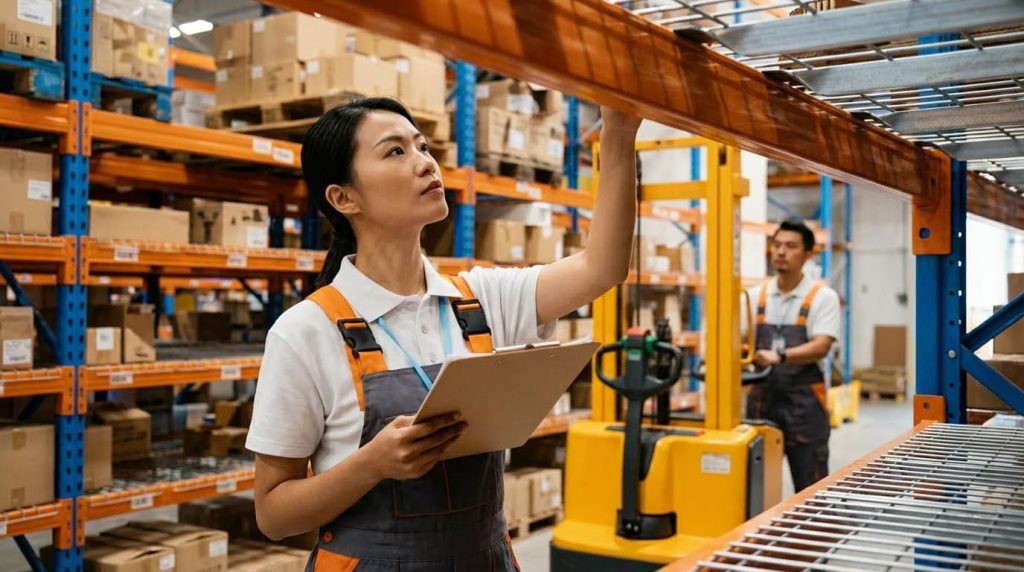
Warehouse teams asking are all cherry picker machines the same in the warehouse need a clear category view. Order picking lifts split into elevated work platforms for personnel access and materials handling order pickers for racking. Each group uses different design rules, safety systems, and duty profiles. Mixing them without this context can reduce safety and productivity.
Elevated Work Platforms For Personnel Access
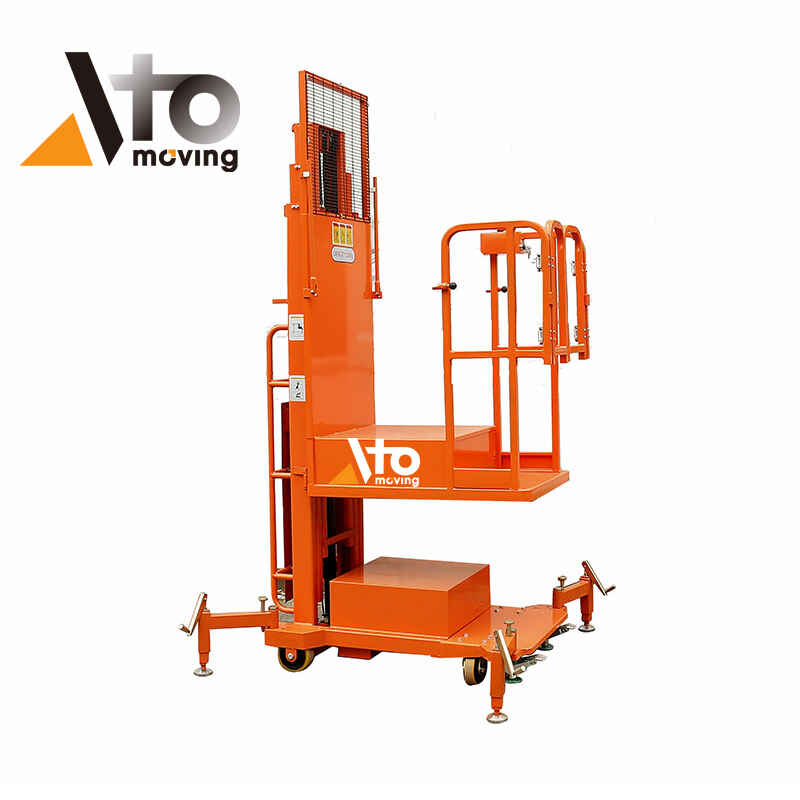
Elevated work platforms (EWPs) lift people first and goods second. Engineers size the platform, guardrails, and controls around safe person access at height. Typical aerial platform order pickers and mast lifts work between roughly 3.7 metres and 9 metres. Safe working loads are lower than MHE trucks, often 150–300 kilograms including the operator.
Common warehouse uses include light maintenance, stock checks, and occasional item retrieval. EWPs usually have simple load decks or small shelves, not full pallet interfaces. Stability systems, such as outriggers or wide base frames, protect the operator rather than support heavy pallets. This is why EWPs are poor substitutes for high-throughput case picking.
Materials Handling Order Pickers For Racking
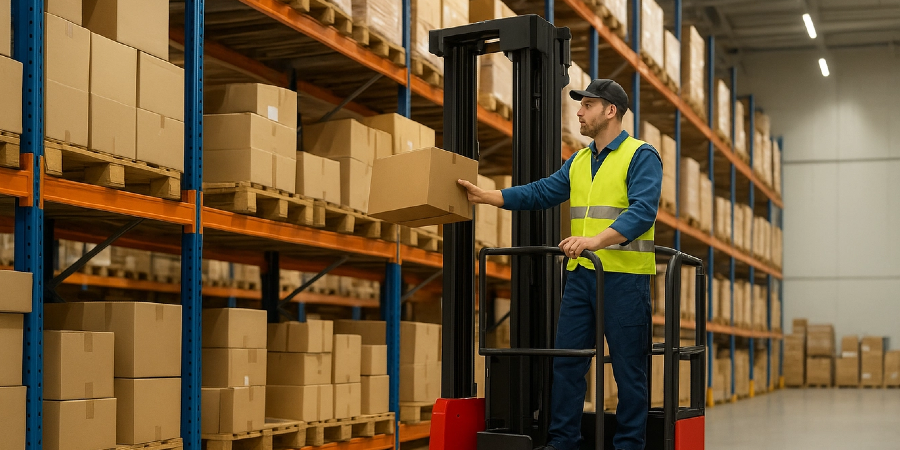
Materials handling equipment (MHE) order pickers move loads as the primary task. Designers optimise mast, chassis, and drive systems for pallet or case handling inside racking. These trucks often carry from several hundred kilograms up to multiple tonnes on forks or load platforms. They work repeatedly at low, mid, or high racking levels.
Unlike EWPs, MHE order pickers integrate with pallets, stillages, and flow racks. Travel speed, acceleration, and braking systems support continuous pick runs across long aisles. Operator platforms rise with the forks so the picker works close to the SKU location. This makes MHE order pickers far more efficient than EWPs for structured order fulfilment.
Typical Use Cases Across Warehouse Operations
Different cherry picker designs fit distinct warehouse tasks. A simple way to see this is to map them to use cases.
- EWPs: cycle counting, light repairs, signage changes, camera or sensor work.
- Aerial order pickers: low-volume item retrieval at moderate heights.
- Low-level MHE order pickers: high-frequency ground and first-level case picking.
- Mid and high-level MHE order pickers: multi-level picking in narrow aisles.
When planners ask whether all cherry picker machines are the same, this matrix shows the answer is no. Each machine type balances reach, capacity, and manoeuvrability differently. Misuse, for example using a light EWP for heavy pallet picking, increases risk and downtime.
Regulatory And Standards Differences
Regulation also separates EWPs from MHE order pickers. EWPs fall under elevated work platform and mobile elevating work platform standards. These rules focus on fall protection, platform stability, and safe approach to overhead hazards. Harness attachment points, guardrail heights, and emergency lowering systems are core requirements.
MHE order pickers sit under industrial truck and powered industrial vehicle standards. These address braking performance, steering, rated capacity, and stability with loads raised. Training content, inspection checklists, and licensing pathways differ between the two groups. Treating all cherry pickers as one category can cause compliance gaps and weak risk assessments.
Safety managers should classify each machine correctly in risk registers and procedures. This ensures the right inspections, operator training, and personal protective equipment. It also supports better equipment selection when facilities upgrade to systems like warehouse order picker solutions for specialised order picking.
Elevated Work Platform Types Used As Order Pickers
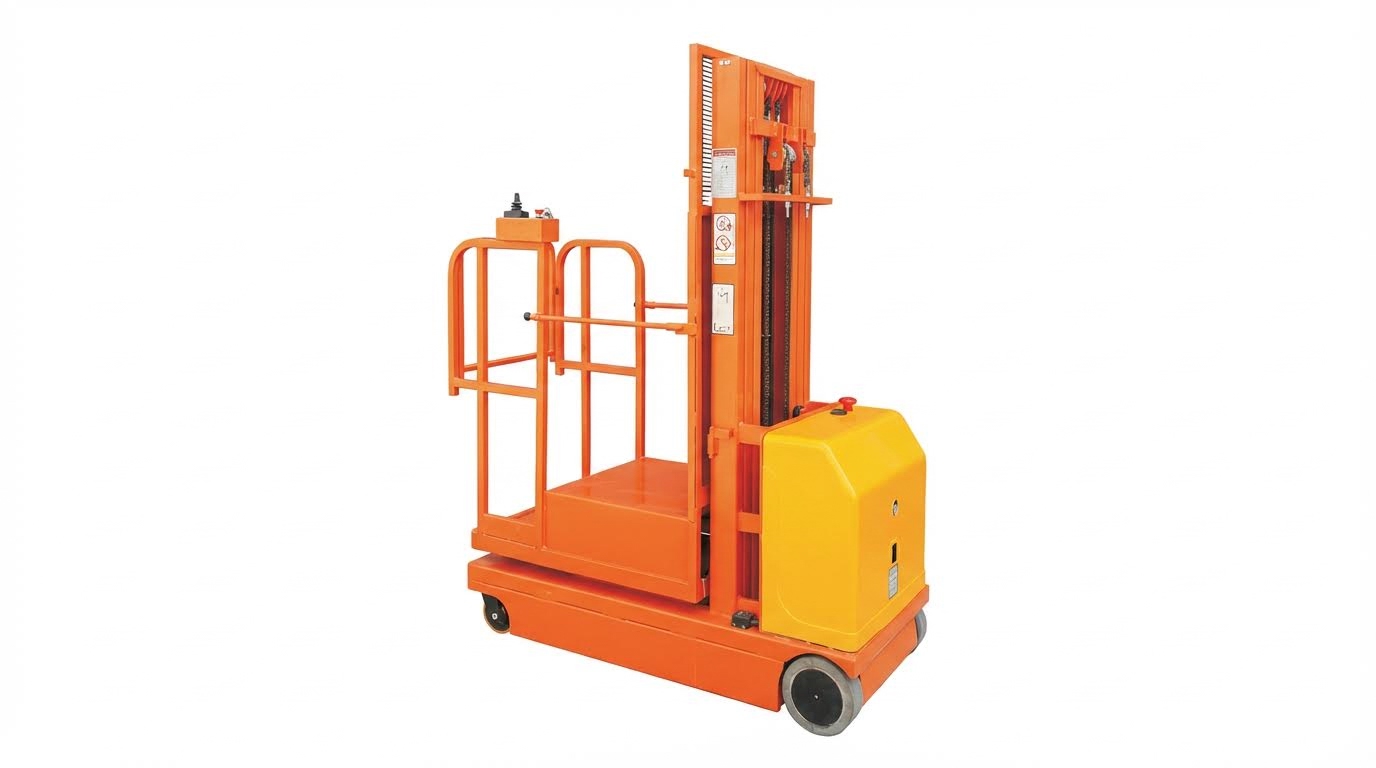
Warehouse teams often ask are all cherry picker machines the same in the warehouse. Elevated work platforms used as order pickers differ a lot in height, capacity, and stability systems. A clear view of warehouse order picker, mast lifts with outriggers, and self‑propelled mast units helps engineers match machines to tasks. Safety systems, harness points, and platform behavior at height then decide if a unit suits real order picking or only maintenance work.
Aerial Order Pickers And Low-Level EWPs
Aerial platform and low-level EWPs work well where operators pick light items or do light maintenance. Typical units lift to about 3.7 m with around 300 kg safe working load, which suits person plus small parts or cartons. Larger platforms and storage pockets support limited picking tasks but do not replace high-capacity MHE order pickers. Engineers should check floor flatness, turning space, and door heights because these compact units often move between zones and even between buildings.
For SEO and selection decisions, the question are all cherry picker machines the same in the warehouse is key here. Aerial EWPs focus on safe personnel access, not pallet throughput. They suit cycle counting, label changes, light fitting work, and slow velocity SKU picking. For dense case picking, a dedicated order picking machines with pallet handling usually gives better picks per hour.
Vertical Mast Lifts With Outriggers
Vertical mast lifts with outriggers target higher reach with lower platform load. Typical working heights reach about 9 m but safe working load often drops to about 150 kg. Four interlocking outriggers lock the base before elevation and give a wide stability footprint. This design favors maintenance, inspection, and light-duty picking where reach matters more than payload.
These units answer are all cherry picker machines the same in the warehouse with a clear no. Outriggers slow cycle time because operators must deploy and retract legs at each position. That trade-off buys higher stability and lower sway at height. In narrow aisles with racking both sides, engineers must confirm outrigger spread versus aisle width and ensure outriggers do not strike pallet loads or rack uprights.
Self-Propelled Mast Lifts In Congested Aisles
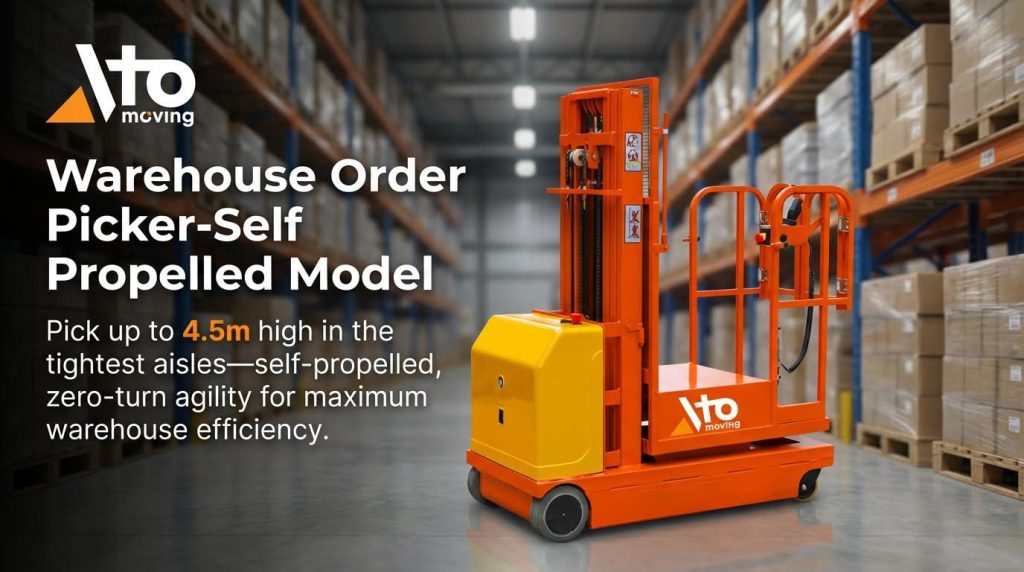
Self-propelled mast lifts offer zero tail swing and compact width, which suits congested aisles or mezzanines. Typical units handle around 200 kg safe working load and lift a single operator plus tools or cartons. Electric drive and narrow chassis improve routing in pick tunnels, under conveyors, and through standard doors. These platforms often move while elevated within rated travel height, which speeds multi-location tasks.
However, they still behave like EWPs, not full MHE order pickers. They rarely handle full pallets or heavy cases at scale. When engineers ask are all cherry picker machines the same in the warehouse, self-propelled mast lifts show the mid-ground: faster than outrigger lifts, more agile than big booms, but still limited by platform size and load rating. They suit inventory checks, light item picking, and maintenance in live production or fulfillment areas.
Safety Systems, Harness Points, And Stability
Across all EWP types, safety systems define where the machine can legally and safely work. Typical controls include deadman pedals, emergency stop buttons, tilt sensors, overload sensors, and interlocks that block lift when outriggers are not set. Guardrails and mid-rails keep the operator inside the platform envelope. Certified harness points allow connection of fall arrest or restraint systems where standards require them.
Stability depends on several design factors:
- Base width and wheelbase length
- Outrigger geometry and interlocks
- Mast or scissor stiffness and deflection at full height
- Dynamic limits on drive speed when elevated
These differences explain why the answer to are all cherry picker machines the same in the warehouse is firmly negative. Each platform family has unique stability behavior, safety logic, and allowed operating envelope. Engineers should align platform choice with task type, rack height, floor conditions, and local EWP standards, then document harness rules and inspection intervals in the site safe work procedures.
Low, Mid, And High-Level MHE Order Picker Trucks
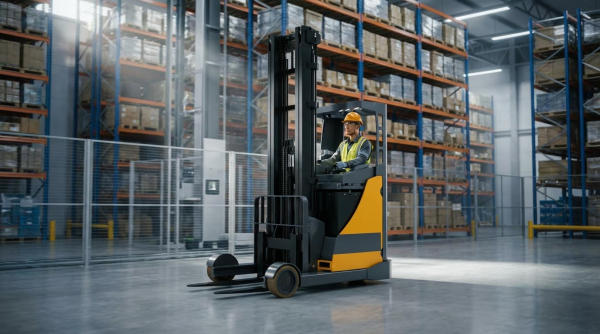
Warehouse teams often ask are all cherry picker machines the same in the warehouse. MHE order picker trucks prove they are not. Low, mid, and high-level units target very different rack heights, travel patterns, and SKU profiles. Good engineering selection links picker type to aisle width, pallet profile, and required pick rates.
Low-Level Order Pickers For Fast Ground Picking
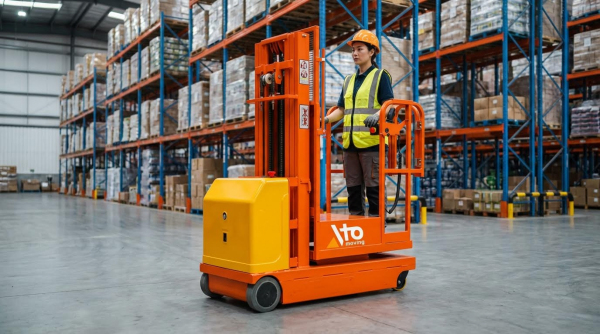
Low-level order pickers work from floor level up to roughly 2.5 m. The operator rides a platform that stays near the floor while forks handle pallet loads up to typical values near 2,500 kg. These trucks suit high-throughput picking of cartons from the first rack level in wide aisles. They reduce walking distance and cut pick-cycle time where most lines ship from ground positions.
Key engineering points include acceleration, braking, and platform layout. High-performance traction motors and regenerative braking shorten travel time between picks and recover energy. Anti-roll-back control protects operators on ramps and dock approaches. Deck height, step-in distance, and control head layout affect fatigue during long shifts.
Low-level pickers are poor choices for tall racking. They force secondary equipment use, such as semi electric order picker, for upper levels. That increases touches and damages productivity.
Mid-Level Units For Medium Height Case Picking
Mid-level order pickers bridge the gap between low-level and high-level units. They usually reach medium rack levels up to about 3 m while carrying loads around 1,000 kg. The operator platform elevates with the forks, so the picker works at chest height instead of stretching or bending. This improves pick accuracy and reduces musculoskeletal strain.
Typical designs include side gates or guard rails around the platform. These barriers become critical once the floor height exceeds normal step heights. Mid-level trucks suit operations where a large share of picks sit between the second and third beam levels. Common examples include e-commerce fulfillment and spare parts warehouses.
Compared with low-level units, mid-level pickers move slower in travel mode and need more operator training. However, they cut vertical reach effort and reduce the need for ladders or temporary platforms. They show their best value when pick density in mid-rack zones is high.
High-Level Order Pickers For Tall Narrow Aisles
High-level order pickers answer the question are all cherry picker machines the same in the warehouse very clearly. They reach heights from about 7.5 m up to roughly 12 m in some designs. Lift capacities often fall between 1,360 kg and higher values in heavy-duty models. These trucks work inside tall, narrow aisles where floor space is expensive and vertical storage is dense.
The operator platform rises with the forks into the rack. This lets the picker select individual cases or items from multiple levels in one travel path. High-level units demand very flat floors, defined aisle guidance, and strict maintenance of mast and rail systems. They also need advanced operator training and strong fall-protection programs.
warehouse order picker are inefficient for heavy ground-level picking. Lift and lower cycles add time compared with low-level ride-on units. They shine in facilities with tall racking, limited footprint, and high SKU counts per aisle.
Power Options, Ergonomics, And Diagnostics
Power systems and controls help separate warehouse cherry picker types even further. Common truck voltages include 24 V and 36 V battery systems sized to the lift height and duty cycle. Modern fleets use lead-acid, thin plate pure lead, or lithium-ion batteries depending on runtime, charge window, and energy cost targets. Higher lift heights and heavier loads usually push toward higher voltage and capacity.
Ergonomics influence pick rate and injury risk. Important design details include:
- Intuitive multi-function controls with proportional response
- Low step heights and non-slip platforms
- Wide pick windows with clear view masts
- Cushioned floor mats and padded lean points
Diagnostics and connectivity protect uptime. Many order picking machines use built-in self-check systems and easy-access service panels. Technicians can read error codes quickly and shorten fault-finding time. Some fleets add telematics to track lift counts, impacts, and battery health.
Across low, mid, and high-level trucks, these power and control choices shape lifecycle cost. They also affect how easily operators move between different cherry picker machines in the same warehouse without errors or delays.
Summary: Matching Picker Lift Types To Your Facility
Warehouse teams that ask are all cherry picker machines the same in the warehouse face a strategic choice. Elevated work platforms and MHE order pickers solve different problems, even if both look like “cherry pickers.” EWP units focus on safe access to height for maintenance and light picking. MHE order pickers focus on fast, repeatable picking inside racking with defined load and height envelopes.
From an engineering view, selection starts with hard constraints. These include maximum rack height, aisle width, floor capacity, and required pallet or case throughput. Low-level MHE pickers suit fast ground and first-level picks in wider aisles. High-level order pickers or self-propelled mast lifts suit tall, dense storage where vertical space is critical. EWPs such as aerial platform or mast lifts fit maintenance, inventory checks, and low-volume picking where reach flexibility matters more than pick rate.
Future designs will keep blending categories. Expect more compact self-propelled mast lifts in narrow aisles, higher energy density batteries, and better on-board diagnostics. Vision and telematics systems will support speed control, impact logging, and pick-path optimization. However, facility fit will still depend on basics: load class, reach, stability, and operator visibility.
In practice, no single “cherry picker” type covers every profile. Engineers should map pick heights, SKU velocity, and task mix, then assign EWP or MHE platforms by zone. Mixed fleets are often optimal: low-level pickers in fast-moving zones, mid or high-level units in dense storage, and EWPs for maintenance and exception work. This balanced approach keeps capital use efficient while controlling risk and maintaining safe, repeatable access to every storage location. For example, order picking machines can enhance productivity, while scissor platform solutions provide versatile elevation options.