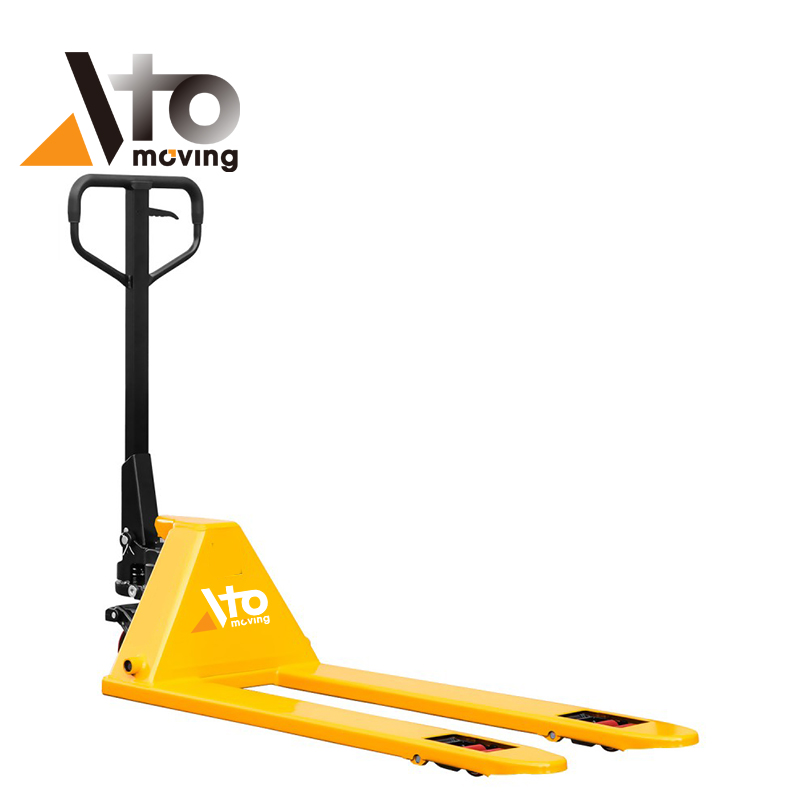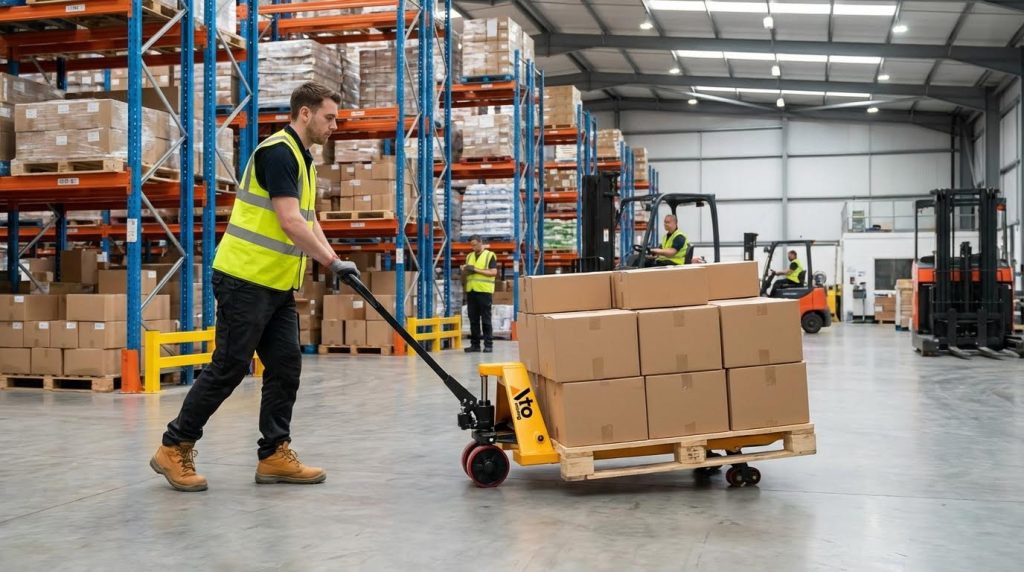
Knowing how to unload a truck with a pallet jack is about controlling risk at the dock edge, not just moving weight on wheels. This guide walks you through principles, step‑by‑step techniques, and equipment care so you can unload trailers safely, efficiently, and in line with modern safety expectations.
You will learn how to choose between manual and electric pallet jacks, position forks correctly, manage ramps and lift gates, and maintain stability of 1,000–2,000 kg pallets inside real trailers. Use it as a practical, field-ready reference for training operators and tightening your unloading procedures.

Core Principles Of Safe Truck Unloading
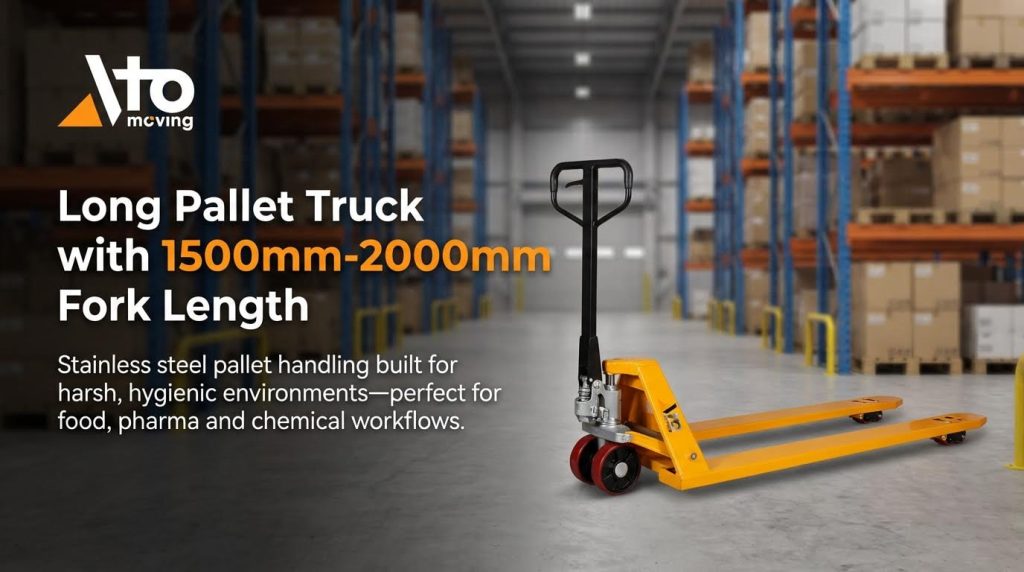
Core principles for how to unload a truck with a pallet jack focus on choosing the right jack type, staying within load ratings, and keeping the center of gravity stable inside the trailer at all times.
Manual vs. electric pallet jacks in trailers
Manual and electric pallet jacks behave very differently inside a truck, so you must match the jack type to trailer space, floor condition, and pallet mass when planning how to unload a truck with a pallet jack safely.
| Factor | Manual Pallet Jack | Electric Pallet Jack | Operational Impact In Trailers |
|---|---|---|---|
| Typical load capacity | Around 1,500–2,500 kg (general range) | 1,000–2,000 kg on level floors for electric units | Electric units handle heavier pallets with less operator effort; both must stay within nameplate rating. |
| Power and control | Human push/pull and pump action | Powered travel and lift, electric controls | Electric jacks can climb slight ramps and overcome dock lips more easily, but need more space to maneuver. |
| Turning radius | Very tight in narrow aisles | Larger due to chassis length | Manual jacks fit tight pinwheeled or turned patterns better at the nose of the trailer. |
| Floor and ramp performance | Limited on ramps; high operator effort | Better ramp and lift gate performance when within gradient limits and capacity | Electric units are preferred for frequent lift gate work, provided gradients are within manufacturer limits. |
| Operator fatigue | Higher, especially with heavy loads or long distances | Much lower for travel and lifting | Electric jacks reduce strain when unloading multiple 1,000–2,000 kg pallets in a 13.6 m trailer. |
| Visibility and control in trailer | Operator stands very close to load | Operator stands slightly behind tiller head | Electric jacks need disciplined speed control to avoid impacts with walls and dock edges. |
- Choose by load mass: Use electric jacks when pallets approach 1,000–2,000 kg – they provide controlled power for starting and stopping on confined trailer floors.
- Consider trailer layout: Manual jacks suit tightly packed or pinwheeled patterns – they turn sharply without hitting sidewalls.
- Account for ramps and lift gates: Electric jacks follow gradient limits and capacity charts – this mitigates roll-away and tipping on inclines.
- Factor in shift length: Use electric units for high-volume unloading – they reduce operator fatigue and ergonomic strain.
💡 Field Engineer’s Note: In tight box trailers with mixed-quality floors, I often specify manual pallet jacks for the nose and electric units only for the rear half. This avoids fighting with long powered trucks where turning clearance is under 1,800 mm.
When a manual jack is the safer choice
Manual pallet jacks are often safer when the trailer floor is uneven or damaged, clearances are under about 2.0 m, or you only move relatively light pallets over short distances. The lower speed and tighter turning radius give the operator more margin before contacting sidewalls or dock edges.
Load ratings, stability, and center of gravity
Safe truck unloading with a pallet jack depends on staying below rated capacity, keeping the pallet centered on the forks, and controlling the combined center of gravity so it always stays within the pallet jack’s wheelbase.
| Stability Factor | Best Practice | Engineering Reason | Operational Impact In A Trailer |
|---|---|---|---|
| Using rated capacity | Keep expected pallet mass below about 80% of nameplate for electric jacks where possible | Provides safety margin for dynamic loads, uneven floors, and unknown pallet mass. | Reduces risk of tipping when crossing dock plates, lift gates, or floor patches. |
| Centering the load | Center pallet laterally on forks, with forks fully under pallet stringers before lifting | Keeps the combined center of gravity within the “stability triangle” formed by the wheels. | Prevents side-lean and pallet breakage when turning near trailer walls. |
| Travel height | Keep forks just 20–50 mm above floor; typically 20–50 mm or 2–5 cm for electric units | Lower height reduces tipping moment and dynamic load transfer on bumps. | Improves stability when crossing floor joints and dock plates at the rear of the trailer. |
| Load orientation | Place the heaviest side of the pallet toward the jack, fully against fork backrest where possible | Brings the center of gravity closer to the drive wheels. | Reduces front-over tipping risk when entering or exiting the trailer. |
| Trailer patterns and stability | Use side-by-side, turned, or pinwheeled patterns based on space and access in a 13.6 m trailer | Controls axle loading and prevents excessive mass at the rear. | Limits trailer pitch when using lift gates and improves pallet jack traction. |
- Check the nameplate: Confirm the pallet mass is comfortably below rated capacity – this accounts for unknown moisture, packaging, or mixed loads.
- Control the center of gravity: Keep tall or unstable stacks tightly wrapped and centered – this reduces sway when you pull the pallet to the door.
- Minimize lift height: Travel with forks just clear of the floor – this keeps the stability triangle wide and reduces tip risk at bumps.
- Avoid offset loading: Never pick only one side of a double-stacked pallet – eccentric loading can twist forks and pull the center of gravity outside the wheelbase.
💡 Field Engineer’s Note: I advise crews to imagine a vertical line from the load’s center straight down to the floor. If that line ever looks like it might land outside the jack’s wheel footprint—especially on a ramp or lift gate—stop and re-position before moving another millimeter.
Quick stability checklist before pulling a pallet
Before you move a pallet toward the trailer door, confirm four points: the pallet is within capacity, forks are fully inserted, the load is centered and secure, and fork height is only a few centimeters above the floor. If any point fails, fix it before you move. This simple habit prevents most pallet jack tip-overs during unloading.
Step‑By‑Step Truck Unloading Procedure
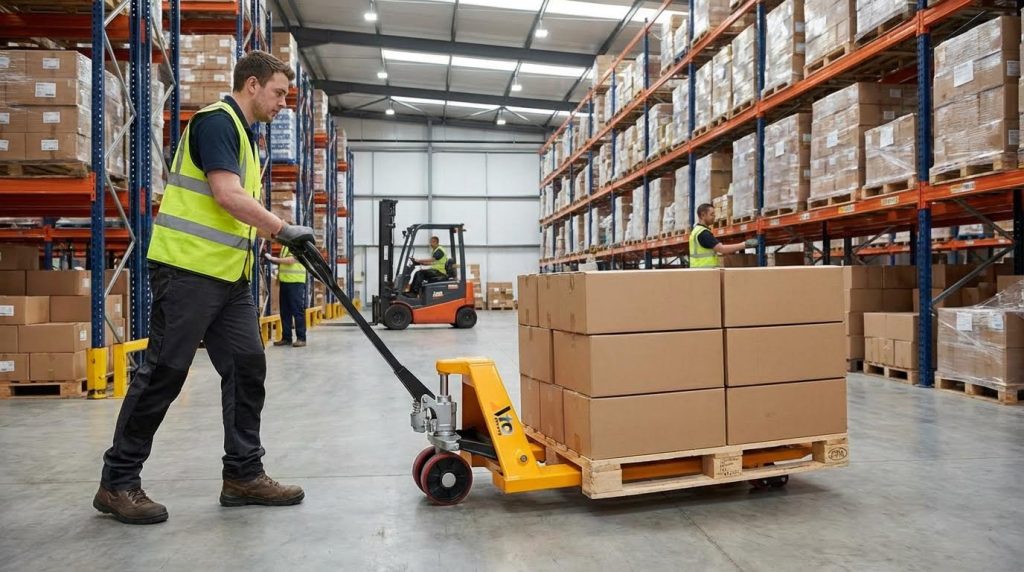
This section gives a clear, practical sequence for how to unload a truck with a manual pallet jack while controlling stability, crush risks, and trailer edge hazards. Follow each step in order and do not rush movements.
Pre‑use inspection and site preparation
Pre‑use checks and site prep come first because a faulty jack or poor trailer setup turns routine unloading into a high-risk job. Treat this as a short safety ritual before every trailer.
- Check identification plate and capacity: Confirm the manual pallet jack’s rated load exceeds the heaviest pallet, typically 1,000–2,000 kg for electric units. This prevents overload and tipping. Pre-use capacity checks
- Inspect forks and frame: Look for cracks, bending, or buckling on forks and chassis. Structural damage can fail suddenly under 1,000+ kg loads. OSHA inspection guidance
- Check wheels and rollers: Inspect for flat spots, cracks, or seized bearings; spin them if possible. Damaged wheels increase push force and can catch on dock edges. Wheel inspection practices
- Verify hydraulics: Pump the handle to full lift and lower; watch for jerky motion or oil leaks. Unstable lifting makes fine positioning in trailers dangerous. Hydraulic system checks
- For electric jacks – check battery: Confirm adequate charge, intact cables, and clean terminals. A weak battery can stall on ramps or lift gates under load. Battery pre-use checks
- Confirm controls and brakes: Test travel, steering, horn, and any emergency stop before entering the trailer. You need full control in tight, blind trailer spaces. Functional safety checks
- Secure the trailer: Ensure wheel chocks, dock locks, and dock plates/bridges are correctly set. This prevents trailer creep or movement while you are inside.
- Check dock plate and floor condition: Verify dock plate capacity covers jack + load mass, and look for holes, ice, or spills. Weak or slippery surfaces are common failure points.
- Assess gradients and lift gates: If using a ramp or lift gate, confirm gradient is within the manual pallet jack’s limit and the platform is level and rated for the combined mass. Too-steep slopes dramatically reduce stability. Gradient and lift gate limits
- Clear the working zone: Remove loose dunnage, wrap, and debris from the dock face and trailer entrance. Trip hazards near dock edges are a major injury source.
- Plan the unload sequence: Identify heavy pallets, unstable stacks, and the order you will remove rows. This avoids trapping heavy pallets behind lighter or fragile ones. Trailer load patterns
💡 Field Engineer’s Note: If the dock floor or trailer bed is even slightly sloped, manual jacks can “run away” when loaded. Always test-roll an empty jack at the dock edge; if it moves on its own, treat that area like a ramp and keep loads as low as possible with extra wheel chocking.
Entering the trailer and positioning forks
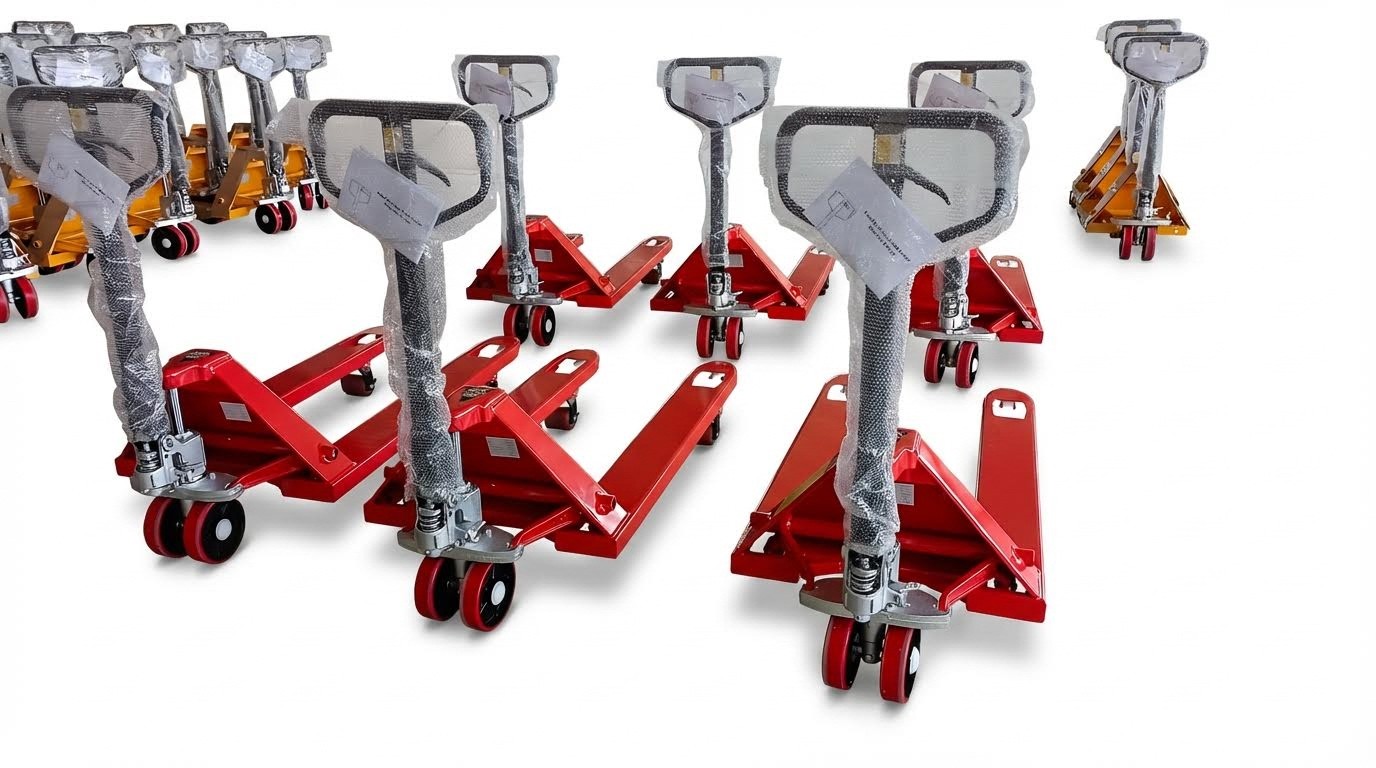
Safe entry and fork positioning are the core of how to unload a truck with a manual pallet jack without damaging pallets, doors, or trailer floors. The goal is straight, controlled approaches and fully supported forks.
- Step 1: Approach the trailer square-on – Align the manual pallet jack straight with the dock plate and trailer opening. This reduces side loading on the dock plate and improves control.
- Step 2: Enter slowly and check floor – Move in at low speed, eyes on the floor for broken boards, gaps, or bulges. Trailer damage can stop wheels abruptly and shift loads.
- Step 3: Maintain clear line of sight – If the first pallets block your view, stop and switch to pulling (walking ahead) so you can see the path. Blind pushing is a common cause of impacts. Visibility practices
How to choose push vs. pull inside trailers
Use pushing when you have a clear line of sight and good stopping distance. Switch to pulling when visibility is blocked or space is tight, but keep the jack between you and any potential rolling load so you are never downhill of the pallet on ramps.
- Align with the pallet: Stop 200–300 mm before the pallet. Center the jack so both forks will sit under the outer stringers equally. This balances the load between forks. Fork positioning guidance
- Insert forks fully: Lower forks fully, then drive straight in until the fork heels nearly touch the pallet’s far end. Full insertion prevents broken boards and fork punch-through. Full fork insertion
- Center the load laterally: Check that the pallet overhang is equal on both sides of the forks. This keeps the center of gravity inside the “stability triangle.” Stability triangle concept
- Lift only a few centimeters: Raise the pallet just 20–50 mm above the trailer floor. Low travel height reduces tipping leverage and stress on the jack. Recommended travel height
| Fork Positioning Rule | What It Means | Operational Impact |
|---|---|---|
| Full fork insertion | Fork tips extend beyond pallet center but not into doors or walls | Prevents broken deck boards and sudden load drops inside trailers |
| Centered load | Equal pallet overhang on both fork sides | Reduces side-tipping risk when turning at the dock edge |
| Low travel height | Forks 20–50 mm above floor | Improves stability on uneven trailer floors and dock plates |
💡 Field Engineer’s Note: In older trailers with thin floors, fork tips can punch through if you lift before full insertion. Train operators to feel for the slight “bump” when fork heels reach the pallet’s far stringer, then lift—never lift while still rolling in.
Moving, lowering, and exiting with the load
Controlled travel, careful lowering, and disciplined exits are where most injuries and trailer damage occur, so this is the most critical phase of how to unload a truck with a manual pallet jack. Think “slow, straight, and low” from trailer to dock.
- Step 1: Check stability before moving – After lifting, pause. Look for leaning stacks, damaged wrap, or shifting product. Fix unstable loads now with wrap or straps before you move. Load securing tips
- Step 2: Travel at walking speed – Move at or below normal walking pace, with forks still 20–50 mm off the floor. Lower speed gives you time to react to floor defects or pedestrians.
- Step 3: Keep path straight inside the trailer – Avoid sharp turns with a raised load, especially on any gradient or lift gate. Turning transfers weight sideways and can exceed the stability triangle. Ramp and lift gate maneuvering
- Step 4: Approach the dock plate square – Line up straight before crossing from trailer to dock. Sideways crossing can twist the plate and jolt the load.
- Step 5: Maintain safe spacing – Stay at least two pallet-jack lengths from other trucks or pedestrians. This reduces collision risk in congested docks. Safe operating distances
Special care on ramps and lift gates
On ramps, always keep the load uphill of the operator, travel straight, and avoid stopping mid-slope. On lift gates, center the pallet on the platform, confirm capacity for jack + load + operator, and keep forks low before raising or lowering to prevent twisting the mechanism. Lift gate best practices
- Positioning at the drop point: Stop with the pallet square to the storage location or staging line, leaving enough space to lower without crushing feet or hitting racks. Square placement improves later handling.
- Lower smoothly: Use controlled lowering, keeping hands and feet clear of the pallet and fork tips. Sudden drops can topple tall stacks or damage fragile goods.
- Release the pallet safely: Once fully lowered and stable, pull the jack straight back until forks are clear. Angled pull-out can drag or twist the pallet.
- Step 6: Re-enter or park safely – If unloading more pallets, re-enter the trailer using the same straight, low approach. If finished, park the jack in a designated area with forks fully lowered. Lowered forks minimize trip and impact hazards.
- Step 7: Final walk-around – Check that the trailer is empty as planned, securing devices are removed, and the dock plate is clear before releasing the trailer. This closes the loop and prevents missed pallets or leftover hazards.
💡 Field Engineer’s Note: Most dock-edge incidents happen on the last few pallets, when operators speed up. Set a site rule that the final three pallets must be moved at “inspection speed” only, with mandatory stops at the dock edge to visually confirm plate position and floor conditions before crossing.
Safety Controls, Equipment Care, And Optimization
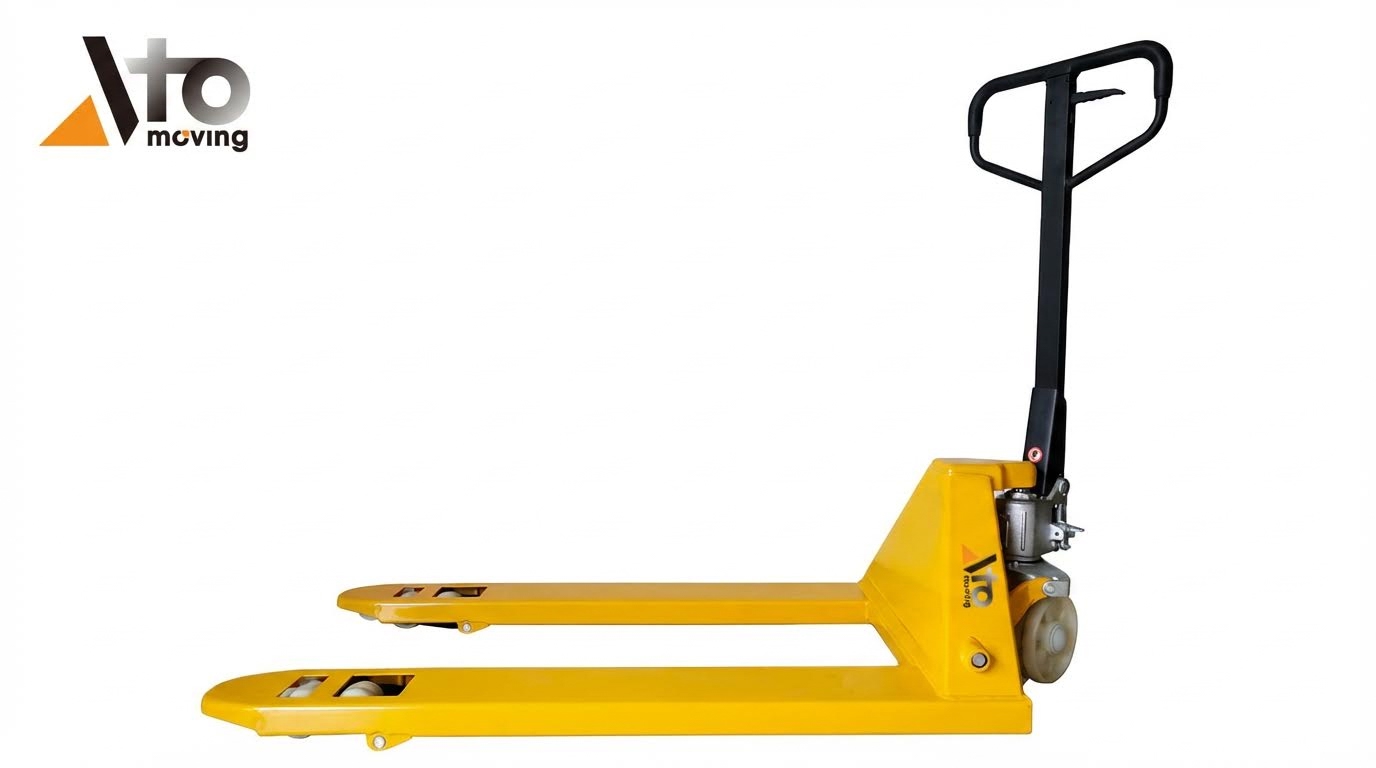
This section explains how to unload a truck with a manual pallet jack safely by controlling edges and ramps, locking loads in place, and keeping the pallet jack in peak condition through structured inspections and maintenance.
- Goal: Link site controls, load layout, and equipment care – So every trailer unloads safely, repeatably, and fast.
- Scope: Lift gates, ramps, layouts, inspections, batteries, hydraulics – The full control chain from dock edge to workshop.
💡 Field Engineer’s Note: Most “mystery” manual pallet jack failures during unloading trace back to two roots: ignored dock-edge controls and skipped daily checks. Treat these as non‑negotiable, like seatbelts in a car.
Lift gates, ramps, and dock edge protection
Lift gates, ramps, and dock edge protection keep the manual pallet jack, load, and operator inside a safe envelope whenever the trailer floor is not level with the ground or dock.
- Check capacity before use: Confirm the lift gate rating exceeds pallet + manual pallet jack + operator mass – Prevents structural overload and sudden gate failure.
- Respect gradient limits: Stay within the manual pallet jack’s rated ramp gradient – Reduces rollback, loss of control, and tipping risk.
- Keep forks low on inclines: Travel with forks roughly 20–50 mm above the surface – Lowers the center of gravity and limits dynamic load transfer.
- Move straight on ramps: Avoid turning on lift gates or ramps – Prevents lateral tipping from side loads on the wheels.
- Center the load on the gate: Place the pallet centrally before lifting or lowering – Reduces torsional twisting of the gate mechanism.
- Slow near edges: Reduce speed and avoid sharp steering near dock edges – Mitigates run‑off and edge collapse accidents.
When planning how to unload a truck with a manual pallet jack using a lift gate or ramp, you must treat the platform as part of the load path, not just a convenience.
| Control Item | Typical Engineering Requirement | Operational Impact |
|---|---|---|
| Lift gate capacity | Must exceed pallet + manual pallet jack + operator mass Reference | Prevents gate bending or collapse when unloading heavy pallets. |
| Gradient on ramps | Within manufacturer ramp limit Reference | Ensures powered or manual units can climb/descend without stalling or runaway. |
| Fork height on ramps | ≈20–50 mm above deck Reference | Avoids ground strikes while keeping the load low and stable. |
| Travel direction | Straight up/down, no turning on incline Reference | Reduces side‑load tipping and wheel slip. |
| Dock edge protection | Use dock plates, wheel chocks, and barriers | Prevents trailer creep and manual pallet jack roll‑off at edges. |
How to integrate dock edge controls into your SOP
Write a short checklist that must be completed before any manual pallet jack enters the trailer: wheel chocks in place, dock plate locked, lift gate capacity verified, ramp gradient confirmed, and edge barriers or visual markings inspected.
Load securing, patterns, and trailer layout

Load securing, patterns, and trailer layout determine how stable the cargo remains during transport and how safely you can extract each pallet with a manual pallet jack at the dock.
- Choose a loading pattern: Use side‑by‑side, turned, or pinwheel patterns depending on pallet size and trailer length – Balances space use with maneuvering room.
- Distribute heavy pallets: Spread high‑mass loads over the trailer axles – Reduces pitching when using lift gates and keeps axle loads legal.
- Center each pallet on the forks: Fully insert forks and center laterally before setting down – Improves stability and prevents pallet damage.
- Lock the block of cargo: Use dunnage, straps, or lashings to fill gaps – Prevents pallets shifting during braking or cornering.
- Control unstable stacks: Strap or wrap tall or mixed loads – Mitigates toppling when you pull the first rows out.
- Remove restraints in sequence: Only release straps when the manual pallet jack is already in position – Ensures you always “own” the load before it can move.
Trailer layout has direct impact on how to unload a truck with a manual pallet jack without fighting tight clearances or unstable stacks at the rear doors.
| Loading Pattern | Description | Best For… |
|---|---|---|
| Side‑by‑side | Short side of pallet faces front/back of trailer Reference | Easy access with manual pallet jacks; more maneuvering room at doors. |
| Turned | Long side of pallet faces front/back Reference | Maximizes pallet count (e.g., up to 33 Euro pallets in 13.6 m trailers). |
| Pinwheel | Alternating pallet directions Reference | Compromise between access, interlock, and space efficiency. |
| Heavy pallet placement | Over or near axles, not at extreme rear Reference | Limits trailer pitching when using lift gates and keeps handling predictable. |
Quick rule for deciding which pallet to unload next
Work from the rear to the front, but always ask: “If I remove this pallet, will the stack behind it become unsupported?” If yes, restrain or re‑strap the next row before you pull the current pallet.
Inspections, maintenance, and battery care
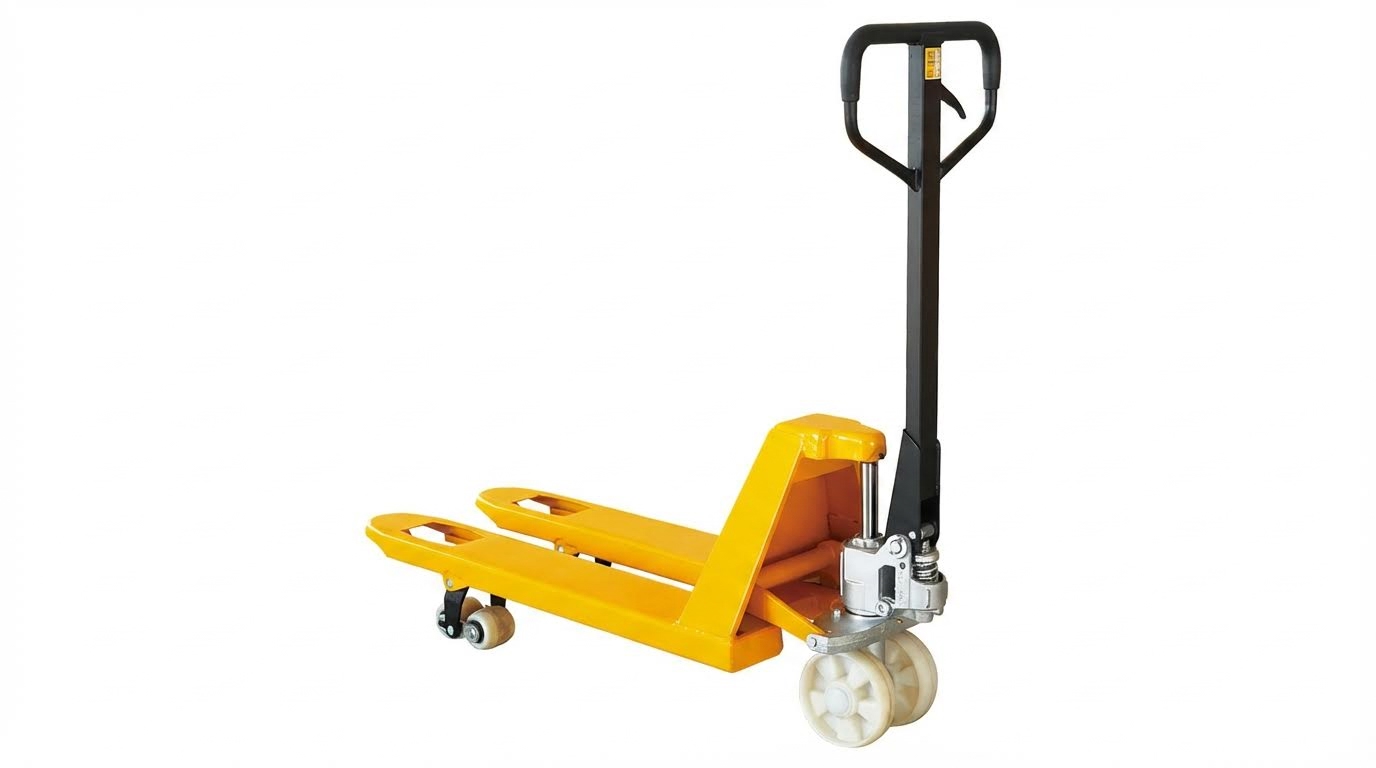
Inspections, maintenance, and battery care keep the manual pallet jack safe and responsive so it behaves predictably every time you unload a truck.
- Daily walk‑around: Check forks, wheels, chassis, and hydraulics for cracks, leaks, or abnormal noise – Catches early damage before a failure under load.
- Functional tests: Test lifting/lowering, steering, brakes, horn, and emergency stop – Confirms you can control the unit in tight trailer spaces.
- Capacity verification: Read the identification plate and compare to planned pallet mass, typically 1,000–2,000 kg – Prevents overloading the structure.
- Weekly lubrication and cleaning: Grease wheel axles and pivots; remove debris from moving parts – Reduces rolling resistance and steering effort.
- Annual inspections: Perform structural checks and load tests to FEM or national standards – Documents compliance with occupational safety rules.
Hydraulic and battery maintenance are especially critical for powered pallet jacks used repeatedly on lift gates and ramps.
| Maintenance Area | Key Tasks | Operational Impact |
|---|---|---|
| Daily inspection | Visual check of forks, wheels, chassis; test horn, brakes, steering, hydraulics Reference | Reduces in‑trailer breakdowns and unsafe handling. |
| Weekly maintenance | Lubricate axles and pivots; clean dirt from moving parts Reference | Keeps steering light and travel smooth on dock plates and lift gates. |
| Hydraulic system | Check oil level (~0.3 L for compact units), leaks, and lifting response; bleed air if needed Reference | Ensures consistent lift height when entering/exiting trailers. |
| Battery care (electric) | Check state of charge, cables, and connectors; avoid deep discharge; charge in ventilated areas Reference | Prevents mid‑unload power loss and extends battery life. |
| Wheel and steering system | Inspect for flat spots, cracks, seized bearings; correct caster alignment Reference | Improves control in narrow trailers and on ramps. |
- Battery charging discipline: Use approved chargers, avoid deep discharge, and keep terminals clean – Maintains reliable runtime across multiple truck unloads per shift.
- Lockout on defects: If you find cracks, major leaks, or control faults, tag out the unit immediately – Prevents catastrophic failure under a live load.
Simple pre‑unload checklist for operators
Before entering any trailer with a manual pallet jack, confirm: (1) Daily inspection completed and signed off, (2) Battery above your site’s minimum state‑of‑charge limit, (3) Hydraulics lift and lower smoothly, (4) Wheels roll freely with no flat spots, and (5) Rated capacity exceeds the heaviest pallet planned for that truck.
Final Thoughts On Efficient, Compliant Unloading
Safe truck unloading with a pallet jack depends on one idea: control the load path from trailer floor to dock, every second. Geometry, capacity, and layout all serve that goal. When you match manual or electric jacks to pallet mass and trailer space, you reduce strain and keep control in tight clearances. When you respect nameplate limits and keep the center of gravity inside the wheelbase, you prevent tip‑overs at dock plates, ramps, and lift gates.
Good trailer layouts and load‑securing plans make unloading predictable. Patterns, axle distribution, and restraint sequences decide whether pallets come out smoothly or fight you at the doors. Daily inspections, structured maintenance, and disciplined battery care ensure the jack behaves as expected when you work at the edge of trailers.
Operations and engineering teams should treat unloading as a designed system, not a routine chore. Define standard pallet patterns, ramp and lift‑gate limits, and a fixed pre‑unload checklist. Train operators to move “slow, straight, and low,” with strict rules at dock edges and on the final pallets. With these controls in place, Atomoving pallet jacks can unload trucks efficiently while staying compliant and protecting people, product, and equipment.
Frequently Asked Questions
What are the proper steps to unload a truck with a pallet jack?
To safely unload a truck using a pallet jack, follow these steps:
- Ensure all unloading equipment is in good condition and ready for use.
- Confirm the truck is parked on stable, firm ground before starting.
- Check that the cargo inside the truck is stable and properly stacked.
- Unload the pallets onto even ground to prevent accidents or damage.
For more details, refer to this Freight Unloading Guide.
How long does it typically take to unload a truck?
The time required to unload a truck depends on its size and the efficiency of the process. Here’s a general breakdown:
| Truck Size | Unloading Time |
|---|---|
| 10-foot truck | 45 minutes |
| 16-foot truck | 2 hours |
| 26-foot truck | 3 hours |
These estimates can vary based on the type of cargo and available equipment. For additional insights, check out this Moving Time Guide.