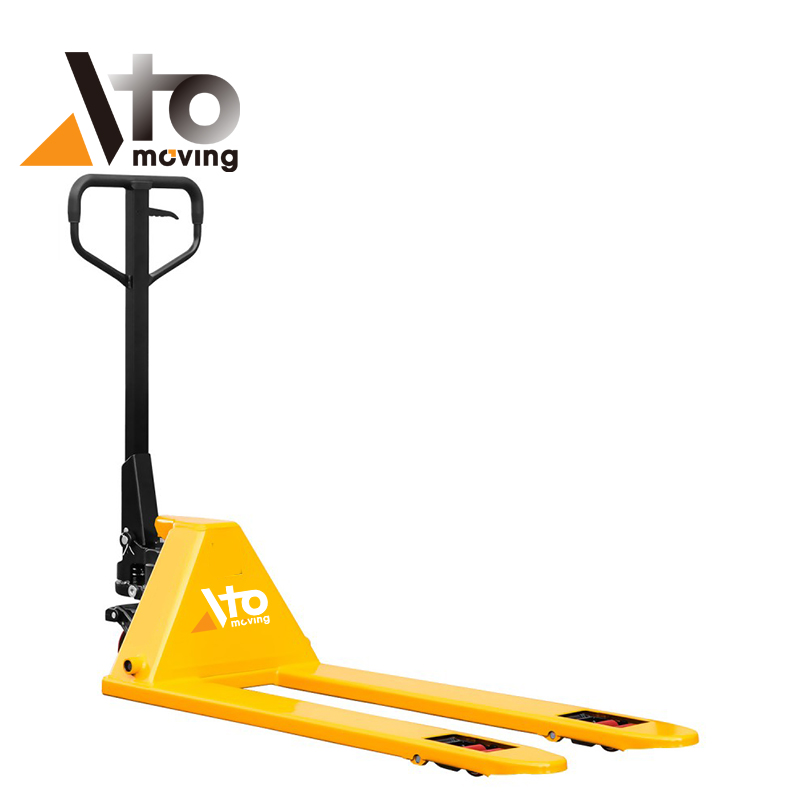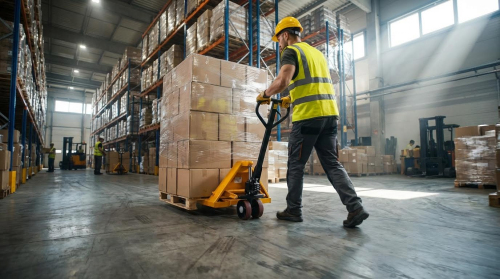
Pallet jack lifting capacity defined safe limits for handling unit loads in warehouses, factories, and logistics hubs. This article examined how manufacturers established nameplate ratings, how design choices governed structural and hydraulic strength, and how operating conditions modified usable capacity. It also linked engineering criteria to practical selection, maintenance, and derating practices for both manual and electric pallet trucks. By following the outlined methods, engineers and supervisors could specify pallet jacks that met throughput targets while maintaining regulatory compliance and safety margins across diverse applications.
Defining Pallet Jack Capacity And Load Ratings
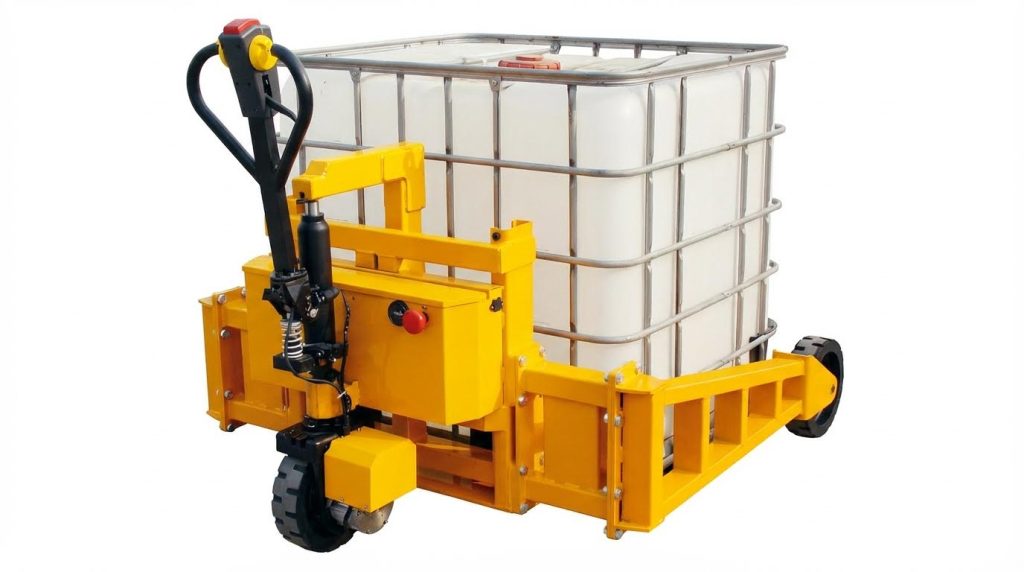
Pallet jack capacity described the maximum safe load the equipment could lift and move under specified conditions. Manufacturers stated this capacity on nameplates in kilograms and pounds, based on controlled test configurations. Engineers and safety managers needed to interpret these ratings correctly and apply conservative margins in real facilities. Misunderstanding capacity terminology often led to overloading, accelerated wear, and increased incident risk.
Working Load Limit Vs. Ultimate Capacity
The working load limit (WLL) represented the maximum load that operators should apply in normal service. Manufacturers derived WLL by testing to higher ultimate capacity and then applying safety factors, typically between 1.25 and 2.0 depending on standards and internal policies. Ultimate capacity corresponded to the load at which structural or hydraulic failure occurred under controlled test conditions. Engineers always selected pallet jacks using WLL, not ultimate capacity, and then added an additional design margin above the heaviest expected pallet. For example, if a facility routinely handled 1,800 kg pallets, a 2,500 kg rated manual jack provided a realistic safety buffer. Using equipment near ultimate capacity in daily operations accelerated fatigue in forks, welds, and hydraulic components.
Typical Capacity Ranges By Pallet Jack Type
Standard manual pallet jacks historically covered roughly 1,000 kg to 2,500 kg, with upper-end models reaching 5,000 kg. The ONEN hydraulic hand pallet trucks illustrated this range, with models rated at 2,000 kg, 2,500 kg, 3,000 kg, and 5,000 kg. Low-profile manual jacks, such as CUBLiFT units with reduced fork height around 1.5 inches, typically traded some capacity for clearance, often around 2,000 kg to 2,500 kg. Electric walkie and rider pallet jacks supported higher throughput and larger loads; the Toyota end-controlled rider models 8HBE30 and 8HBE40 were rated 6,000 lb (≈2,700 kg) and 8,000 lb (≈3,600 kg) on level floors. Heavy-duty or special-design pallet trucks, including reinforced low-profile or extended-fork variants, could reach 4,500 kg to 10,000 lb and beyond, but required careful evaluation of floor capacity and turning space.
Static, Lift, And Travel Ratings On Nameplates
Nameplates on industrial pallet jacks distinguished between different capacity conditions. Static capacity described the maximum load that the parked jack could support without motion, often higher than dynamic ratings because no impact or acceleration forces acted. Lift or rated capacity defined the maximum load that the hydraulic system and structure could safely raise to full stroke under controlled conditions. Travel capacity, sometimes specified as “capacity on level surface,” reflected the maximum load for moving at defined speeds and gradients; for example, Toyota rider jacks specified 6,000 lb or 8,000 lb on level floors with 24 V AC drive. Engineers interpreted these ratings together with notes on fork height range, such as ONEN’s 85/75 mm minimum and 195/185 mm maximum fork heights with 110 mm lift. When ramps, uneven floors, or cold storage appeared, internal engineering rules usually required derating below the nameplate travel capacity to keep stresses and stopping distances within acceptable limits.
Design Factors Governing Lifting Capacity
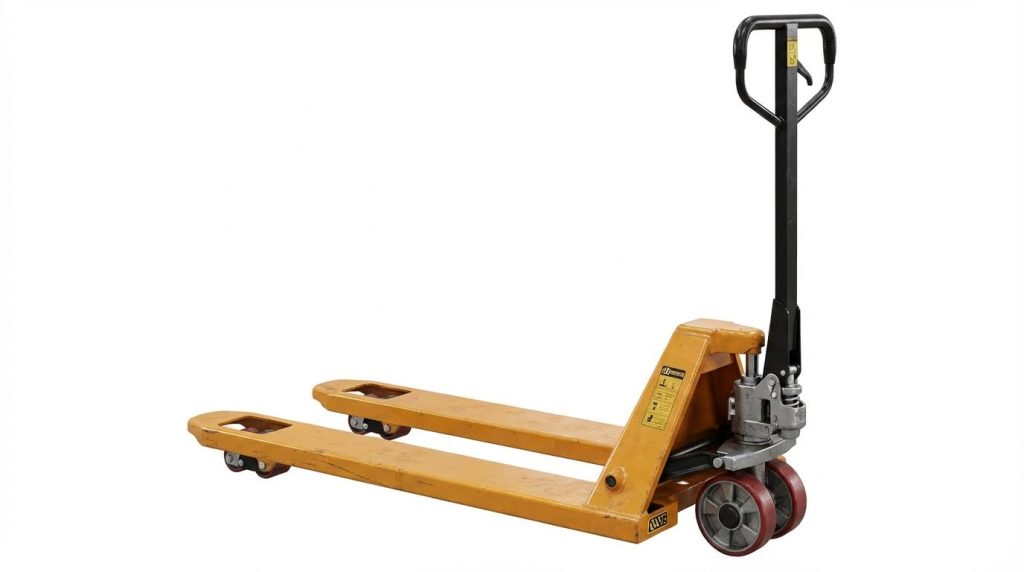
Pallet jack capacity depended on an integrated set of structural, hydraulic, and kinematic design choices. Engineers balanced steel section size, hydraulic pressure, wheel loading, and geometry to achieve a rated working load with acceptable safety factors. Manufacturers validated these ratings through finite element analysis and physical testing under worst-case loading conditions. Understanding these design levers helped users interpret capacity charts beyond the headline kilogram or pound value.
Frame, Fork Section, And Weld Design
The frame and forks carried the full bending and shear from the pallet load, so section geometry governed capacity. Heavy-duty trucks used thicker high-grade steel plate and deeper fork sections to reduce deflection under 2,500 kg to 5,000 kg loads, as seen in ONEN and CUBLiFT models. Weld design at high-stress regions, such as fork-to-pump brackets and wheel housings, controlled fatigue life under repeated cycles. Manufacturers used continuous fillet welds, generous weld throat sizes, and proper joint preparation to avoid crack initiation at capacity. Rider electric units like the Toyota 8HBE30/8HBE40 relied on welded steel chassis to resist impact and torsion during high-speed travel. Excessive fork bending or cracked welds in service signaled that actual loads or shock events exceeded the engineered rating and safety margin.
Hydraulic Pump Design And Cylinder Sizing
The hydraulic unit converted operator or motor input into lifting force, so pump quality and cylinder sizing directly limited rated capacity. Manual units such as ONEN pallet trucks used compact single-stage cylinders and cast hydraulic pumps sized to lift 2,000 kg to 5,000 kg with moderate handle effort. Low-profile CUBLiFT models used highly leak-proof cast pumps to maintain stable lifting despite reduced vertical stroke and lower fork sections. Electric rider pallet jacks like the Toyota End-Controlled Rider used dual lift cylinders with efficient hydraulics to provide smooth, synchronized lifting at 24 V, even near 8,000 lb loads. Engineers selected cylinder bore based on required lifting force (pressure × area) with safety factors, while controlling stroke to achieve specified minimum and maximum fork heights. Degraded seals, internal leakage, or contaminated oil reduced effective lifting capacity over time, even though the structural components remained sound.
Wheel Materials, Axles, And Floor Conditions
Wheel and axle design constrained how much load a pallet jack could move and steer safely, especially on imperfect floors. Nylon wheels, used on ONEN trucks, offered low rolling resistance and high hardness but transmitted more shock and required smoother floors. Polyurethane (PU) or rubber wheels, available on CUBLiFT low-profile models, supported heavy loads while reducing noise and protecting delicate surfaces, though they increased rolling resistance. Axle diameter, bearing selection, and fork tip caster design determined how well trucks handled 5,000 kg-class loads without excessive wear or axle bending. Floor conditions such as joints, slopes, and debris concentrated stresses into wheel contact patches and could effectively derate usable capacity versus the nameplate rating. For electric rider trucks with higher travel speeds, wheel design also had to manage dynamic loads during braking and cornering, not just static vertical load.
Geometry: Fork Length, Width, And Low-Profile Designs
Fork geometry controlled load distribution, clearance, and the ability to support non-standard pallets without overstressing the structure. Standard manual trucks from CUBLiFT and ONEN used fork lengths of 1,150 mm or 1,220 mm and widths between 520 mm and 685 mm to match common pallet footprints and keep bending moments within design limits at rated load. Longer forks increased bending moment at the fork root and often required thicker sections or reduced capacity to maintain similar safety factors. Low-profile designs, such as CUBLiFT units with 1.5 inch lowered and 4.5 inch raised heights, used thinner fork sections to clear low-entry or disposable pallets; this geometry typically reduced capacity compared with standard 85 mm to 195 mm fork height ranges. Turning radius and steering arc, for example the 1,265 mm radius and 195° steering arc on CUBLiFT models, affected how load shifted during tight maneuvers and influenced stability criteria used in capacity calculations.
Specifying Capacity For Real-World Applications
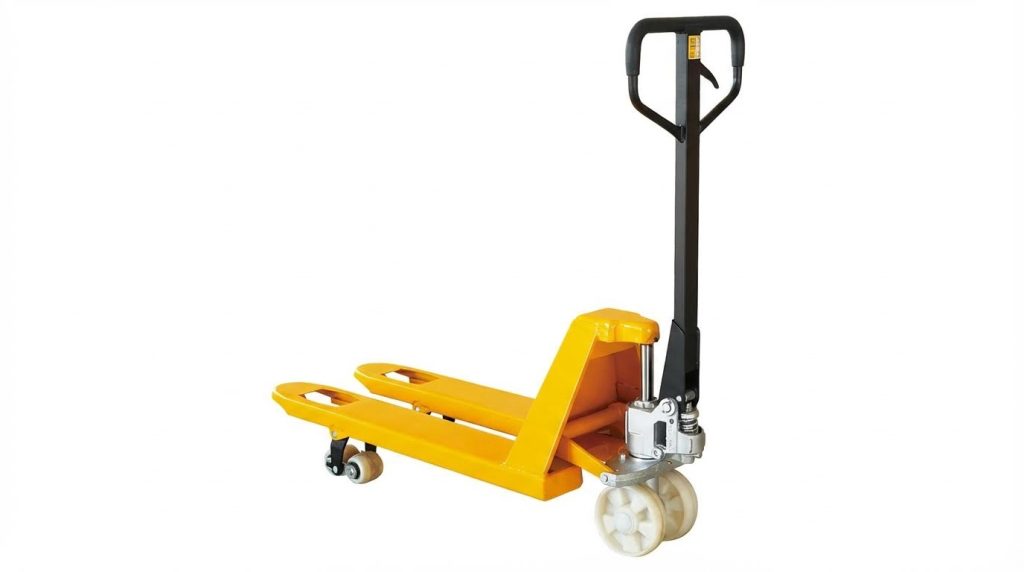
Engineers specified pallet jack capacity by translating theoretical ratings into site-specific requirements. Real facilities combined diverse pallets, products, and floor conditions, so nominal capacities on data plates rarely reflected safe usable limits. This section linked catalog values to actual layouts, duty cycles, and maintenance states to avoid overload, premature wear, and safety incidents.
Matching Capacity To Pallet, Product, And Aisle Layout
Capacity selection started from the heaviest expected palletized load, including pallet mass and packaging. Standard manual trucks typically carried 1,000–2,500 kg, while heavy-duty or rider units reached 4,500 kg or more. Engineers checked fork length and width against pallet dimensions to keep the load center near the truck’s design value, usually around half the fork length. For example, low-profile models with 1,150–1,200 mm forks and widths of 520–685 mm suited Euro and ISO pallets in tight aisles. When aisles were narrow, compact low-profile designs with turning radii near 1,265 mm allowed higher capacity use without excessive steering forces or collision risk. Where mixed pallet sizes existed, users often standardized on fork dimensions that covered the worst case, then sized capacity to the heaviest compatible load with a safety margin of roughly 10–20%.
Derating For Ramps, Rough Floors, And Cold Storage
Nameplate capacity assumed level, smooth, dry floors. On ramps or dock plates, effective safe capacity reduced because the operator required higher push or traction forces and braking distances increased. Rough or damaged concrete increased rolling resistance at wheels, especially nylon types, and raised peak stresses in axles and fork welds. In cold storage, oil viscosity increased and seals stiffened, so manufacturers offered cold conditioning packages with specific hydraulic oils and stainless bushings to preserve performance. Engineers typically applied derating factors for slopes, surface quality, and temperature, then validated them with site trials. For example, a 2,500 kg manual truck on level floors might be administratively limited to 1,800–2,000 kg on a ramp or in deep-freeze areas to maintain controllability and reduce mechanical stress.
Electric Rider Vs. Manual: Throughput And Fatigue
Electric rider pallet jacks handled higher throughput and heavier loads with reduced operator fatigue. Rider models with AC drive motors, 24 V systems, and travel speeds around 6–6.5 mph under load suited long horizontal transport and multi-shift operations. Manual hydraulic trucks remained appropriate for short shuttles, small warehouses, and lorry loading where loads stayed within about 2,000–3,000 kg and cycle counts were moderate. Engineers compared cycle time, distance per trip, and daily pallet counts to justify electric units despite higher capital cost. In tight aisles, compact rider or walkie designs combined powered travel with small turning radii. Where ergonomic risk assessments showed high push–pull forces or repetitive handling, upgrading from manual to powered trucks effectively increased usable capacity because operators could safely handle closer to rated loads over longer periods.
Maintenance, Inspection, And Capacity Degradation
Actual lifting capacity degraded when hydraulic, structural, or wheel components wore. Weekly functional checks with a moderate test load verified that forks lifted and held without noticeable sink; sinking indicated seal wear or internal leakage. Monthly inspections used straightedges on forks to detect permanent bends or excessive sag, which reduced structural margin even if the jack still lifted. Rust streaks on pump rods, oil leaks, wobbling wheels, or cracked nylon wheels signaled that safe working load should be reduced until repairs occurred. Upgrading to polyurethane wheels improved load support and reduced flat-spotting under high static loads. Maintenance programs tied to manufacturer schedules kept hydraulic oil clean, joints lubricated, and axles tight, preserving original ratings. When forks bent significantly, leaks persisted after seal replacement, or wheel instability remained after repairs, best practice treated the jack as derated or removed it from service, because its original nameplate capacity no longer reflected safe performance.
Summary And Capacity Selection Guidelines
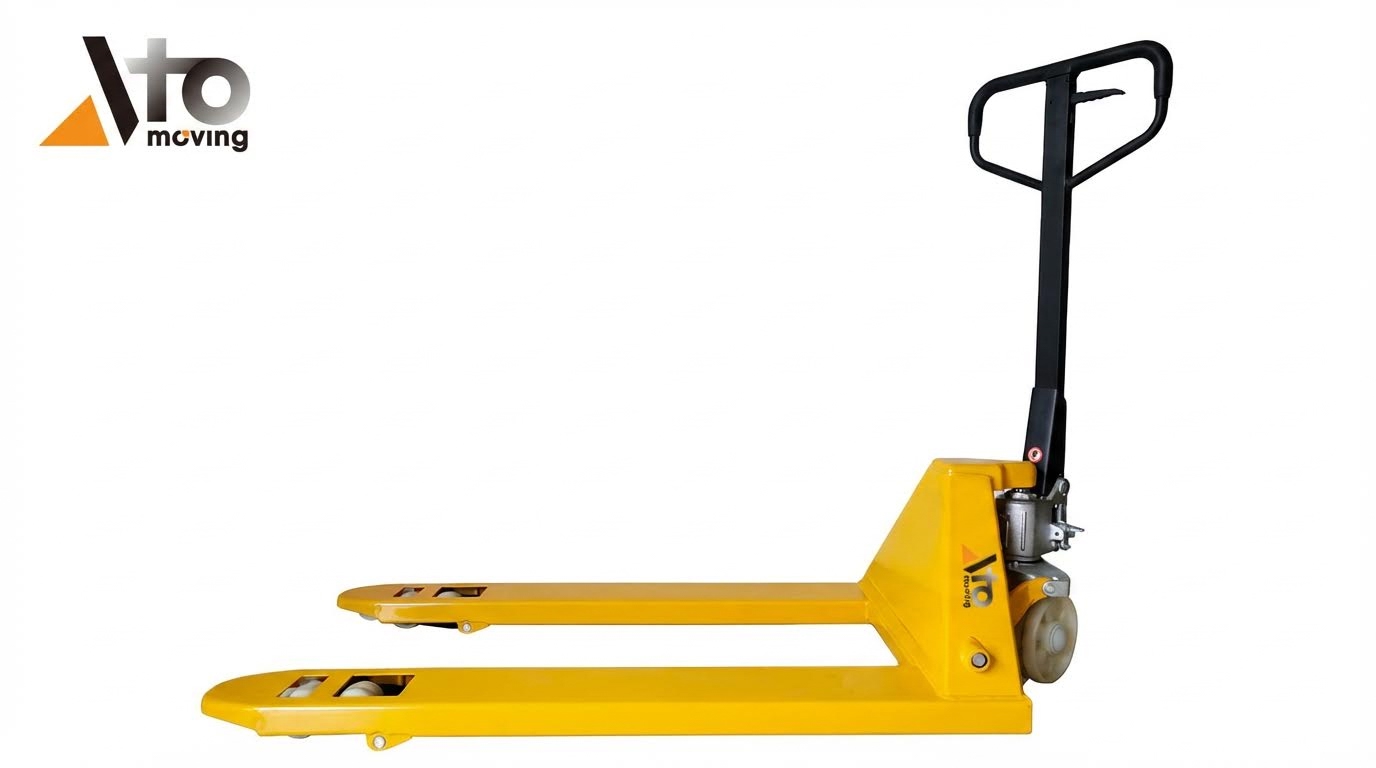
Pallet jack lifting capacity depended on a tightly coupled set of design and application factors. Nameplate ratings reflected the interaction of frame stiffness, fork section and weld quality, hydraulic pump sizing, cylinder area, wheel materials, and fork geometry under defined test conditions. Manufacturers validated these ratings through static and dynamic tests, then published conservative working load limits that stayed below ultimate failure loads.
Across the market, typical capacities ranged from about 1,000 kg to 2,500 kg for standard manual trucks, up to 4,500 kg for heavy-duty units, and higher for specialized designs. Low-profile models traded capacity for reduced fork height, while electric rider pallet jacks, such as 2,700 kg to 3,600 kg class units, combined higher travel speeds with stable load handling on level floors. Real performance in service depended on floor flatness, wheel type, and operating discipline.
For real-world specification, engineers first defined the heaviest palletized load, including packaging, then added an engineering safety margin rather than running at the nameplate limit. They matched fork length and width to pallet geometry and aisle layout, checked turning radius against rack clearances, and selected wheel materials to suit floor conditions and chemical exposure. On ramps, rough floors, or in cold storage, they applied capacity derating and considered electric riders to control fatigue and maintain throughput.
Long-term, maintenance practices directly influenced usable capacity. Degraded hydraulics, bent forks, worn wheels, or cracked welds effectively reduced safe working load below the original rating. Regular inspection, leak checks, fork straightness verification, and wheel replacement maintained the intended safety envelope. As warehouses adopted higher-density storage and heavier unit loads, capacity selection evolved toward higher-rated, more specialized pallet jacks, but the core engineering principle remained constant: choose capacity for the worst credible case, verify conditions in the field, and preserve the rating through disciplined maintenance and operation.