Safe, efficient operation of high-lift walkies depends on how you manage mast height, visibility, and load control when traveling with a high lift walkie. This guide links real-world operating techniques with OSHA and ANSI rules so supervisors and operators can reduce tip‑over, collision, and product‑damage risks. You will see how mast type, free lift, speed, and direction of travel work together in tight aisles, low ceilings, and mixed‑rack layouts. Use these practices to turn your manual pallet jack from a daily hazard into a predictable, stable tool for hydraulic pallet truck material handling.
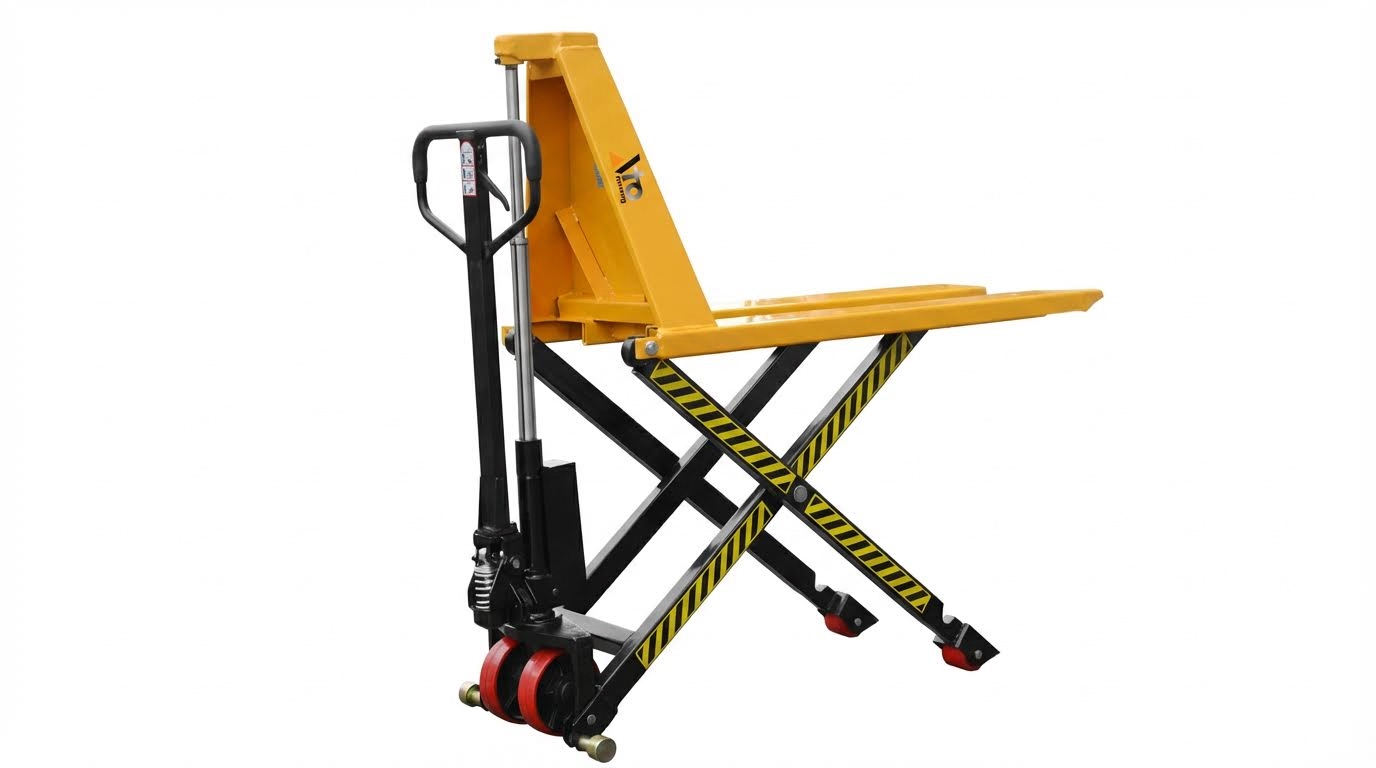
Fundamentals Of Safe Travel With High-Lift Walkies
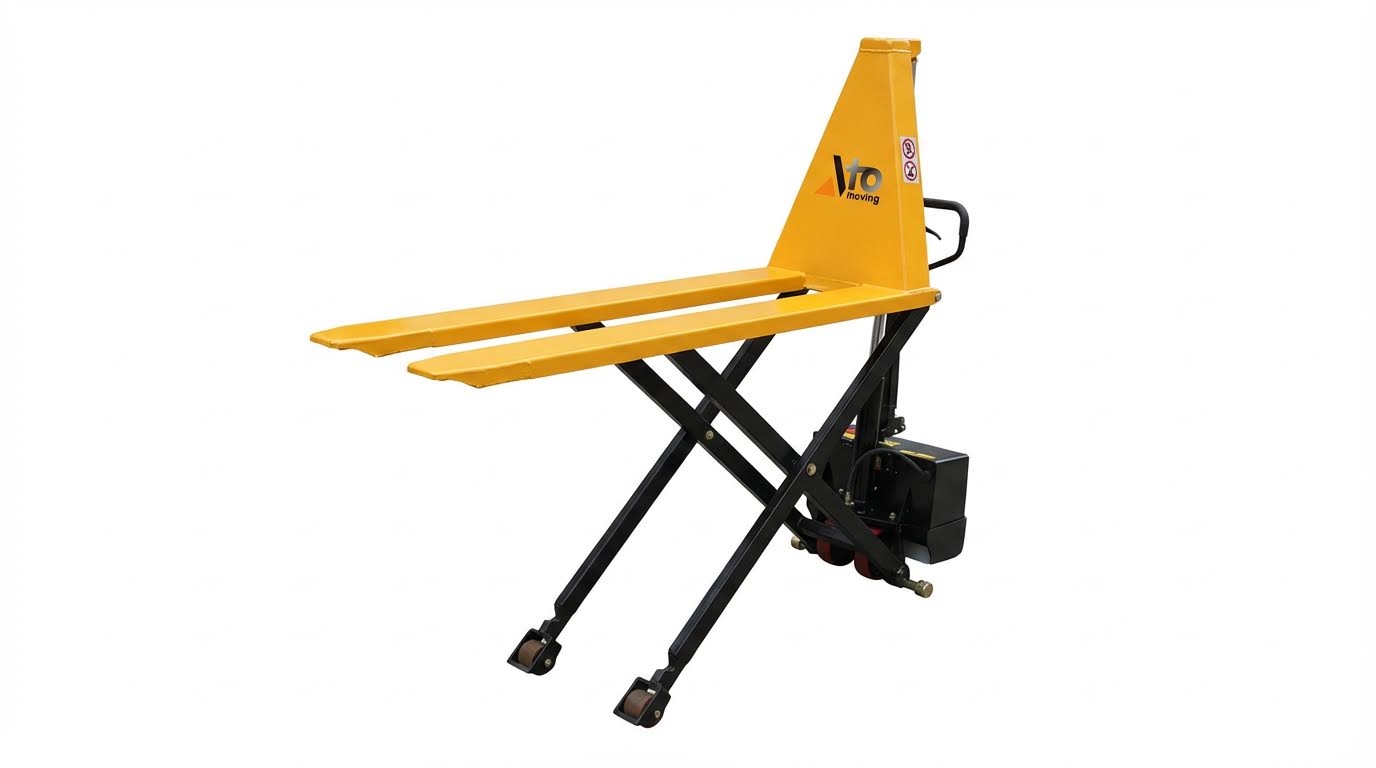
How High-Lift Walkie Masts Affect Stability
High-lift walkie masts change the truck’s center of gravity every time you raise, lower, or tilt. Understanding how mast type, lift height, and free lift affect stability is essential when traveling with a semi electric order picker in tight aisles or near racking.
| Mast type | Typical max lift height* | Free lift behavior | Stability / visibility impact | Best suited environments |
|---|---|---|---|---|
| Monomast | Up to ~2 m | Usually no mast height change during lift | Very good forward visibility, low center of gravity; limited lift height monomast description | Low ceilings, mezzanines, light stacking |
| Simplex (single-stage) | ≈1.6 m | No change in truck height during lift | High inherent stability, good for frequent low-level stacking simplex characteristics | Loading docks, low racks, truck loading |
| Duplex (two-stage) | Up to ≈3.5 m | Optional free lift: carriage rises before inner mast extends | Higher reach with moderate impact on visibility and stability when second stage extends duplex specifications | Standard warehouse aisles, medium racks |
| Triplex (three-stage) | Up to ≈6 m | Full free lift as standard | Great vertical reach but higher tip-over risk at full height; more obstructed view through multiple channels triplex capabilities | High-bay storage, narrow aisles with high racking |
*Heights are typical engineering ranges, not make/model ratings. Always follow the truck’s capacity plate.
As the mast extends, the combined center of gravity of truck and load moves up and often slightly forward. That reduces the stability margin and makes the unit more sensitive to bumps, steering inputs, and braking, especially when traveling with a warehouse order picker across uneven floors.
Key mast features that influence travel stability
Several mast options change how safely you can move with a raised load.
- Free lift: Lets you raise the forks before the inner mast sections extend, critical in low ceilings and doorways. It allows limited travel with the load slightly elevated while keeping overall mast height down, reducing collision risk with sprinklers or beams. free lift description
- Tilt control: Small backward tilt improves load stability; forward tilt at height increases tip and drop risk. Controlled, limited tilt angles are safer during travel. tilt control benefits
- Load backrest: Helps prevent cartons or irregular loads from falling backward toward the operator during acceleration or on ramps. load backrest
- Clear-view rail spacing: Wider window between mast channels improves line of sight to the forks and travel path, reducing collision risk with racks and pedestrians. visibility tips
Stability is also strongly affected by load position. Loads carried high, off-center, or stacked too tall reduce the truck’s resistance to tipping and make steering corrections more abrupt. Keeping the load low and centered is the single most effective control measure when traveling with a order picking machines in real facilities.
- Match mast height to ceiling clearance and rack design to avoid operating near maximum lift for routine moves. mast height vs. facility
- Use only enough backward tilt to stabilize the load; avoid traveling with a heavily tilted, high load.
- Slow to walking pace or less when the mast is raised above roughly axle height, especially with triplex masts in narrow aisles.
- Do not exceed the capacity shown on the data plate at the specified load center; capacity drops as forks rise.
OSHA And ANSI Rules That Govern Travel
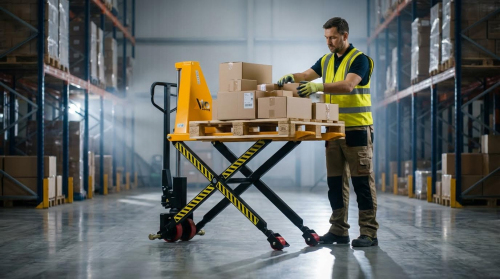
OSHA and ANSI standards set the baseline rules for how operators must travel, park, and handle loads with powered industrial trucks, including high-lift walkies. These rules are performance-based: they define safe behavior rather than just fixed speeds or heights.
| Requirement area | Key OSHA / ANSI expectation | What it means in practice for high-lift walkies |
|---|---|---|
| Truck condition | Inspect powered industrial trucks at least daily or per shift; correct defects before use inspection requirement | Do a pre-shift walk-around: mast chains, forks, wheels, controls, hydraulics. Tag out if unsafe. |
| Travel speed | Operate at a speed that allows the truck to stop safely under all conditions; no fixed mph limit safe speed guidance | Adjust speed for floor conditions, load height, and pedestrian density; slower with raised loads or in tight aisles. |
| Visibility | Slow down and sound horn at cross aisles or where vision is obstructed; if load blocks forward view, travel with load trailing visibility restrictions | Use the horn at intersections and blind corners; walk behind the unit with forks leading only if you can clearly see ahead. |
| Load handling | Do not tilt elevated loads forward except to deposit; use only enough back tilt to stabilize; fully lower load when truck is unattended mast height and load handling | Travel with forks as low as practicable; avoid forward tilt at height; neutralize controls and lower forks when parking. |
| Operator training | Formal and practical training required; must cover truck operation, load handling, and visibility limits; refresher training in defined cases operator training | Train on walkie-specific controls, steering from the tiller, stopping distances, and how mast height changes stability. |
- When traveling with a high lift walkie, keep forks low. OSHA requires the load engaging means to be fully lowered when the truck is left unattended; during travel, forks should stay as low as practical while maintaining ground clearance to maximize stability. lowered load rule
- Use the horn as a risk-control tool. Standards require slowing and sounding the horn at cross aisles and blind spots, not just “if you feel like it.” horn requirement
- Set site-specific speed policies. OSHA expects employers to define safe speeds using truck type, load, surface, and pedestrian factors; ANSI B56.1 provides stopping-distance formulas that safety teams can use. speed and ANSI reference
- Inspect before every shift. Pre-use checks must catch cracks, chain damage, hydraulic leaks, or worn forks before they become incidents. pre-operation inspection
In summary, OSHA and ANSI do not treat high-lift walkies as “light-duty exceptions.” They apply the same core rules on inspection, training, visibility, and safe speed as for larger trucks, while your procedures must account for the unique stability behavior of tall pedestrian masts.
Managing Mast Height, Visibility, And Load Handling
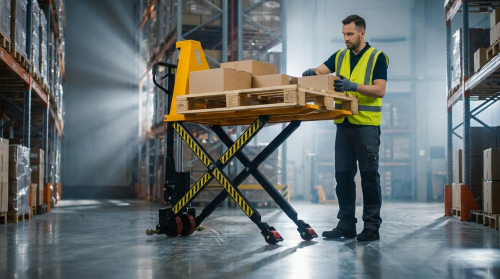
Choosing The Right Mast Type And Free Lift
Selecting the correct mast and free-lift package is one of the most important decisions when traveling with a high lift walkie. The wrong choice can restrict aisle use, hit low structure, or compromise stability. Use mast type, lift height, and free lift to match your building and load profile.
| Mast type | Typical lift range (approx.) | Device height change during lift | Best use cases | Key pros for high‑lift walkies |
|---|---|---|---|---|
| Monomast | Up to ~2 m | No change | Low ceilings, mezzanines, short transfers | Very good visibility, low weight, ideal for low lift work monomast advantages |
| Simplex (single stage) | Up to ~1.6 m | No change | Dock work, truck loading, low racks | High capacity, simple, low maintenance simplex mast characteristics |
| Duplex (two stage) | Up to ~3.5 m | Inner stage extends after free lift | Standard warehouse racking | Medium height reach with compact lowered height duplex mast specifications |
| Triplex (three stage) | Up to ~6 m | Multiple inner stages extend after full free lift | High‑bay storage, low doorways | High reach plus full free lift for low‑ceiling travel triplex mast capabilities |
Free lift is critical when traveling with a high lift walkie in low‑ceiling areas. It defines how far you can raise the forks before any mast channel projects above the outer frame. In tight docks, under conveyors, or through doorways, this can be the difference between safe clearance and a struck beam.
- Transport free lift: Small fork lift (about 0.2–1.0 m) before the inner mast moves; useful for just clearing pallets and dock plates free lift function importance.
- Full free lift: Forks and carriage rise to the top of the outer frame before any inner stage extends; ideal for low ceilings and trailer interiors.
When selecting mast height and free lift for a new walkie, tie your decision to hard constraints, not guesswork.
- Measure lowest obstructions: door headers, sprinklers, beams, HVAC, and dock shelters.
- Compare these to mast lowered height plus required working clearance.
- Check that full free lift lets you clear pallets and dock plates without extending the inner stages.
- Verify that maximum lift height covers your top rack beam plus safe handling clearance.
Engineering checks before you sign off on mast choice
Confirm that the chosen mast does not force operators to “creep” under low structures with partially raised, extended stages. A taller mast can reduce stability and visibility if it is overspecified for the building impact of mast height on operations. Always balance reach needs against lower‑height maneuvering and sight lines.
Travel Position, Tilt Limits, And Load Stability
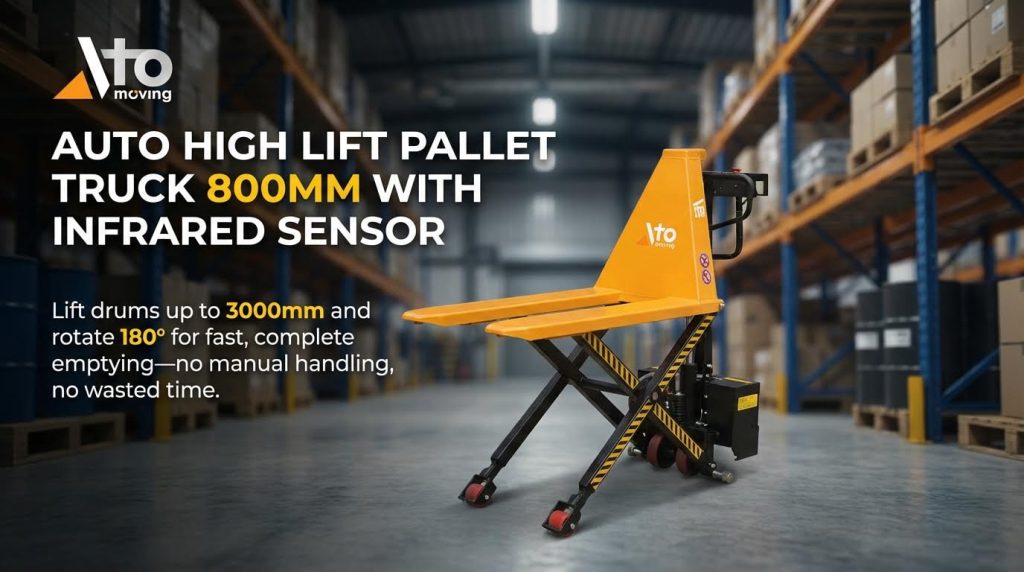
Load position and mast tilt decide how much of the truck’s stability triangle you actually use. Poor practice here is a major root cause of tip‑overs and dropped loads. When traveling with a high lift walkie, you want the center of gravity as low and as far back as practical, without abusing backward tilt.
- Travel mast position (normal conditions)
- Forks just high enough to clear floor defects, dock plates, and expansion joints.
- Mast vertical or slightly back to keep the load against the backrest.
- Load fully within the fork length, not “teetering” at the tips.
- Do NOT travel with:
- Forks high in the air “to save time.”
- Load tilted forward at any elevated height.
- Unstable, top‑heavy, or loosely wrapped pallets.
OSHA requires that an elevated load is never tilted forward except when it is over a stack or rack in a deposit position mast height and load handling. Only enough backward tilt should be used to stabilize the load, not to “cradle” a bad pallet.
| Condition | Recommended mast / fork position | Reason |
|---|---|---|
| Empty travel between tasks | Forks low, mast vertical, carriage lowered | Maximizes visibility, minimizes tip‑over risk and damage potential. |
| Travel with load on level floor | Forks 5–10 cm above floor, slight back tilt | Keeps load stable over bumps, maintains low center of gravity. |
| Approaching rack to stack | Stop, then raise; mast vertical, minimal back tilt | Prevents forward tip and rack impact. |
| Lowering from height | Lower fully before turning or traveling | Reduces overturning moment and mast sway. |
| Parking / unattended | Forks fully lowered, controls neutral, power off, brakes set | Explicit OSHA requirement for powered industrial trucks parking requirements. |
Load stability is not just about tilt; it starts with how the pallet is built and placed on the forks.
- Keep the heaviest items low and toward the heel of the forks.
- Center the load left‑to‑right; avoid “one‑fork” or offset picks.
- Avoid stacking above the load backrest height whenever possible.
- Reject damaged pallets that sag or have broken deck boards.
- Secure loose items with wrap, straps, or containers before lifting.
Quick operator checklist for stable travel
Before you move: confirm the load is within the truck’s rated capacity, the forks are spaced to support the full pallet width, and the load is tight against the backrest. Operators should avoid sudden acceleration or braking, which can cause the load to shift and compromise stability maintaining load stability.
Visibility, Direction Of Travel, And Safe Speed
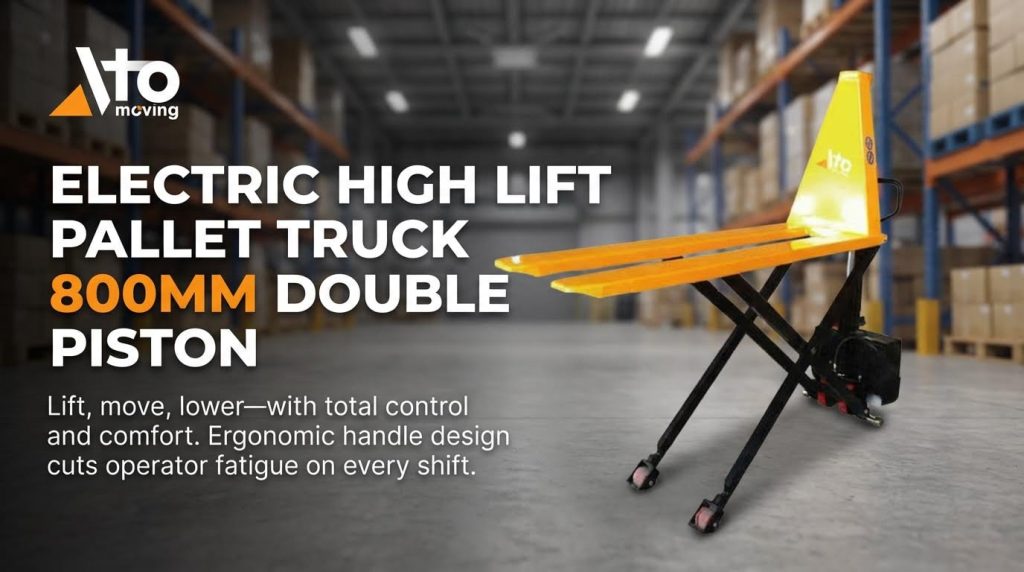
Visibility and speed control are the last line of defense when traveling with a high lift walkie. Even a perfectly chosen mast and stable load can turn dangerous if the operator cannot see or cannot stop in time. OSHA requires that trucks be operated at a speed that allows them to stop safely under all travel conditions safe travel speed requirement.
- Visibility rules of thumb
- If the load blocks your forward view, travel with the load trailing (walking ahead of the power unit) visibility restrictions.
- Use clear‑view masts and low‑profile power units to maintain a sight line through the mast whenever possible operating techniques for visibility.
- Slow down and sound the horn at cross aisles, blind corners, and doorways where vision is obstructed horn use at cross aisles.
- Choosing direction of travel
- On long, straight runs with good visibility, travel forks‑leading at low fork height.
- In tight aisles with tall loads, travel power‑unit‑leading (load trailing) so you can see and steer accurately.
- On slopes, keep the load upgrade and do not turn on the incline.
| Environment | Recommended direction | Speed guidance | Key actions |
|---|---|---|---|
| Wide, open warehouse | Forks‑leading if view is clear | Moderate; within facility’s posted limit | Maintain safe stopping distance from pedestrians and obstacles. |
| Narrow aisles, high racks | Load trailing if load blocks view | Slow; walking pace or less | Use horn at aisle intersections; be ready to stop. |
| Blind intersections / doors | Either, but with maximum caution | Very slow; creep speed | Sound horn, check mirrors, stop if needed before entering. |
| Trailers / containers | Load trailing in most cases | Very slow; controlled inches of movement | Watch for floor defects and low ceilings; use full free lift only as needed. |
OSHA does not set a numeric speed limit but expects employers to define safe speeds based on truck type, load, surface, and pedestrian traffic safe travel speeds. For walkies, that usually means “no faster than you can safely walk and stop,” then lower in congested or uneven areas.
- Reduce speed whenever:
- Carrying high or unstable loads.
- Operating on wet, oily, or damaged floors.
- Working around pedestrians or other trucks.
- Approaching ramps, docks, or floor transitions.
- Use smooth acceleration and braking to keep loads from shifting or falling smooth operation for stability.
Facility policy tips for visibility and speed
Codify expectations in your site rules: maximum walkie travel speed by zone, mandatory horn points, and when operators must switch to load‑trailing travel. Include these in powered industrial truck training, which must cover visibility restrictions and load manipulation per OSHA guidance operator training requirements. Periodic observations and refresher training help keep these practices in daily use.
Applying Safe Travel Practices In Real Facilities
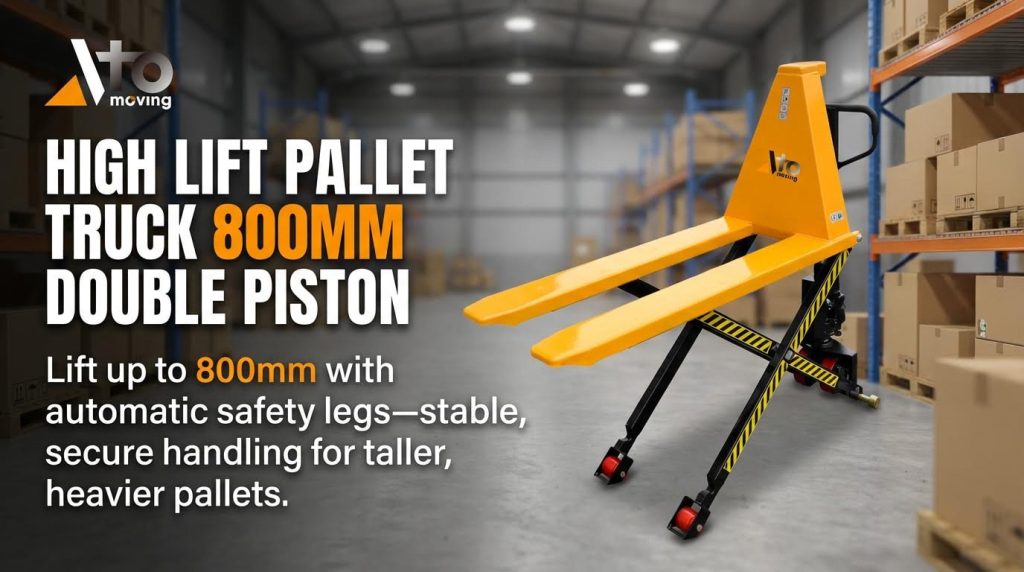
Narrow Aisle, Low Ceiling, And Mixed-Rack Scenarios
Real facilities rarely match textbook layouts. Aisles are tight, ceilings change height, and rack types mix. You need to plan mast choice, free lift, and travel habits around the building, not the brochure. This is critical when traveling with a high lift walkie, because stability margins shrink as space closes in.
In narrow aisles, your main risks are side-swipe impacts, reduced escape room for pedestrians, and limited turning radius.
- Use compact masts with enough but not excessive lift height for the top rack level.
- Slow to a walking pace and keep forks low when traveling without a load.
- Keep loads as low as practical when moving, raised only enough to clear the floor.
- Plan one-way traffic patterns in very tight aisles to avoid head‑on conflicts.
Low ceilings and overhead obstructions add a vertical hazard on top of the horizontal ones.
- Match maximum mast extended height to the lowest ceiling or obstruction on the route, not just the main clear height. Incorrect mast height can lead to product damage or accidents.
- Use free lift to raise the forks without extending the mast in low doorways or mezzanines. Free lift lets the carriage move before the outer mast rises.
- Post “maximum fork height” or “mast must be lowered” signs at low beams, tunnels, and dock doors.
Mixed-rack environments (selective, drive-in, push-back, cantilever) change how you position and travel with the load.
Typical risks in mixed-rack areas
- Misjudging rack depth and striking uprights when entering drive-in lanes.
- Over-raising in front of shorter racks after working on tall ones.
- Side impacts on cantilever arms when turning too tight.
- Inconsistent pallet overhang, leading to snagging and load shift.
To manage these, standardize approach and travel rules by zone.
- Define maximum travel speed for each zone (bulk, drive-in, narrow aisle, dock).
- Set specific mast height limits when traveling loaded between zones (for example, “below second beam”).
- Use floor markings to show safe stopping distances at rack faces and intersections.
- Train operators to pause, straighten, then enter rack lanes under low speed and minimal tilt.
Monomast and simplex masts can be very effective in low-ceiling, short-lift areas.
| Mast type | Typical lift range | Best suited facility conditions | Key safety advantages |
|---|---|---|---|
| Monomast | Up to ~2 m | Low ceilings, intermediate floors, order picking near ground level Monomast advantages | Excellent visibility, no change in truck height while lifting, lighter weight |
| Simplex | Up to ~1.6 m | Truck loading/unloading, low racks, staging areas Simplex mast characteristics | High stability, no mast height change during lift, simple mechanics |
| Duplex (with free lift) | Up to ~3.5 m | Medium racks, some low doorways, mixed-height storage Duplex mast specifications | Medium reach, free lift for low ceilings, good compromise of height and stability |
| Triplex (full free lift) | Up to ~6 m | High-bay racks with low travel clearances (beams, tunnels) Triplex mast capabilities | High reach plus full free lift, ideal where ceiling varies along the route |
When traveling with a high lift walkie in these environments, combine the right mast with disciplined travel rules.
- Travel with mast retracted and minimal tilt whenever the truck is moving between racks.
- Only raise to working height when stopped square in front of the rack.
- Use horn and slow speed at every cross-aisle or blind corner, as required for trucks where vision is obstructed. OSHA requires sounding the horn at cross aisles when vision is obstructed.
Battery Choice, Duty Cycle, And Predictive Maintenance
Battery performance and maintenance discipline directly affect how safely and consistently you can travel in real facilities. Weak or inconsistent power translates into sluggish hydraulics, uneven lift speeds, and unpredictable stopping distances.
High-lift masts, especially duplex and triplex designs, demand stable hydraulic power.
- Multi-stage masts include extra chains, rollers, and cylinders that wear over time and need regular inspection and lubrication. More complex masts require more maintenance.
- Underpowered or poorly maintained batteries cause slow lift and erratic lowering, which can surprise operators and destabilize loads.
- Consistent voltage helps maintain smooth hydraulic motion and predictable control response.
Lithium batteries offer several operational advantages in demanding duty cycles.
| Battery type | Key characteristics | Impact on mast and travel safety |
|---|---|---|
| Lead-acid | Heavier, more maintenance, voltage sag over shift | Lift speed drops as charge falls; risk of operators “pushing” equipment to keep up; more downtime for charging and watering |
| Lithium-ion | Lighter, stable power, longer cycles, fast charging Lithium batteries provide stable power and longer cycles | Smoother lift/lower, consistent travel speed, less heat, and fewer unplanned stops in tight areas |
When traveling with a high lift walkie through narrow aisles or under low ceilings, this stable power helps keep mast motion predictable and reduces the chance of sudden speed changes.
Duty cycle planning checklist
- Map average and peak number of lifts per hour in each zone.
- Identify longest continuous travel routes (dock to high-bay, production to storage).
- Estimate total daily lift height per truck (sum of all lifts).
- Select mast and battery combination that can handle that work with 20–30% capacity margin.
- Schedule opportunity charging breaks around shift changes and breaks.
Predictive maintenance ties all of this together into a stable, low-risk operation.
- Follow the requirement to inspect powered industrial trucks before service, at least daily or each shift for continuous use. OSHA requires pre-use inspections.
- Record mast chain, roller, and hydraulic issues in a maintenance system, not just on paper tags.
- Use hour-meters and lift counters (where available) to trigger inspections based on real use, not just calendar time.
- Monitor battery charge patterns and temperatures to detect cells that are degrading early.
Some modern walkies include real-time monitoring and programmable performance levels.
- Performance profiles can limit speed and acceleration in congested zones or for new operators. Programmable performance levels help match truck behavior to operator skill.
- Monitoring systems can flag overloads, hard braking, or frequent impacts, which are leading indicators of unsafe travel practices.
- Data from these systems supports targeted retraining and route redesign, not just repairs after failures.
In real facilities, safe travel is not just about what the operator does in the moment. It depends on matching mast type and height to the building, choosing the right battery for the duty cycle, and using predictive maintenance and monitoring to keep the high-lift walkie behaving the same way every time the operator touches the controls.
Final Thoughts On Safe High-Lift Walkie Operation
Safe high-lift walkie travel comes from design choices, written rules, and operator habits working together. Mast type, free lift, and battery choice set the physical limits of stability, visibility, and stopping distance. OSHA and ANSI standards then define how operators must travel, park, and handle loads inside those limits. Finally, site procedures turn those rules into clear speed limits, horn points, and mast-height zones that fit your aisles and ceilings.
Operations leaders should treat mast selection like any other engineered control. Measure ceilings, rack heights, and routes, then choose monomast, simplex, duplex, or triplex masts that meet needs without excess height. Keep forks low, mast retracted, and tilt minimal whenever the truck moves. Use free lift only to clear the floor or structure, not to “shortcut” safe stacking practice.
Pair the right mast with stable power and disciplined maintenance. Lithium batteries, structured pre-shift checks, and predictive service keep lift and travel behavior consistent shift after shift. Finally, train and observe operators against your own rules and OSHA expectations. When equipment choice, engineering limits, and operator behavior align, your high-lift walkies become predictable, low-risk tools that support safe, efficient material flow with Atomoving solutions at the center of your program.
Frequently Asked Questions
How high can a walkie stacker lift?
A walkie stacker can lift loads to varying heights depending on the model. Most stackers are designed to handle loads up to 6,100 mm (approximately 20 feet). Crown Walkie Stackers are ideal for applications requiring height and minimal travel distance.
Do you have to be certified to use a walkie stacker?
Yes, operators should be trained and certified to use a walkie stacker safely. Certification ensures that operators understand safety protocols and operational standards. For more details on certification, refer to United Equipment Guidelines.
What is the lifting capacity of a walkie stacker?
The lifting capacity of a walkie stacker typically ranges from 1,500 kg to 2,500 kg (approximately 3,300 lbs to 5,500 lbs). These capacities make them suitable for various warehouse tasks. For specific models, check Toyota Forklifts.