
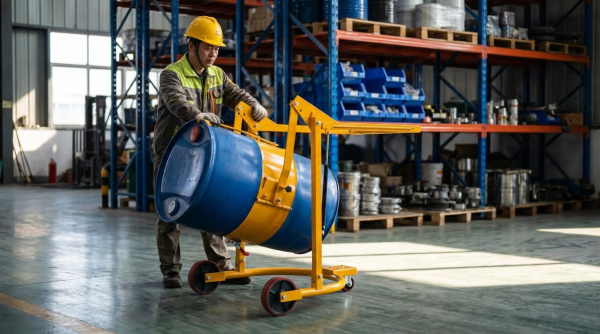
Moving 55-gallon drums in plants and warehouses demands a structured safety checklist that integrates planning, equipment choice, and operator protection. This article explains how to safely move a 55 gallon drum by starting with pre-planning and route checks, then verifying drum condition, contents, and PPE requirements before any movement. It then compares safe handling methods and equipment options, from manual techniques to specialized drum mover, drum palletizer, and forklift drum grabber double grips that improve control and reduce ergonomic stress. The final section summarizes key drum handling safety practices and emerging trends so safety managers and engineers can update procedures, training, and equipment specifications effectively.
Pre-Planning, Risk Assessment, And Route Checks
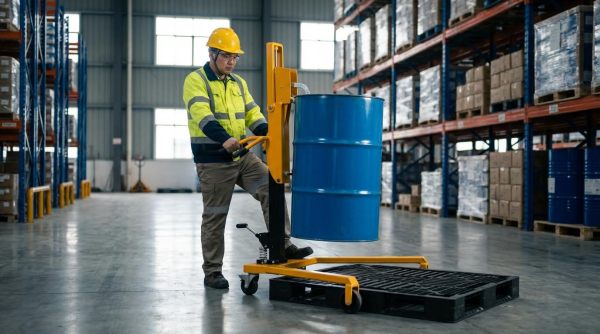
Pre-planning determines how to safely move a 55 gallon drum in busy plants and warehouses. A structured risk assessment reduces manual handling injuries, chemical exposures, and collision incidents. Route checks verify that floors, gradients, and clearances match the limits of drum handling equipment and operators. These steps create a predictable, controlled move instead of a reactive one.
Identifying hazards, spill risks, and traffic conflicts
Start with a task-specific risk assessment before moving any 55-gallon drum. Identify chemical hazards by checking labels and Safety Data Sheets, then classify flammable, corrosive, toxic, or reactive contents. Map potential spill paths along the intended route, including floor drains, sumps, door thresholds, and slopes where liquids could spread quickly. Evaluate contact hazards such as burrs on drum chimes, sharp edges, or warped shells that could cut gloves or cause loss of grip.
Assess interaction with other mobile equipment and pedestrians. Mark crossing points with forklifts, tuggers, and walkie pallet truck, and schedule drum moves during lower traffic periods where possible. Define exclusion zones around the moving drum, especially during tipping, upending, or transferring between devices. Include emergency response triggers in the plan, such as immediate evacuation distances and spill kit deployment steps for the specific drum contents.
Verifying floor conditions, gradients, and clearances
Inspect the entire travel path from storage to destination before starting movement. Confirm that floors are dry, clean, and free from oil, powders, shrink-wrap, or loose debris that could cause slips or wheel skidding. Check for cracks, holes, broken expansion joints, and uneven transitions between slabs that could destabilize a loaded drum cart or truck. Measure slopes or ramps; even modest gradients increase stopping distance and push forces on a 400–800 kg combined system of drum plus handling device.
Verify vertical and lateral clearances at doors, tunnels, mezzanine openings, and under pipe racks. Ensure adequate space for turning radii of drum trucks, manual pallet jack, or specialized drum handlers without forcing sideways pulling or twisting. Confirm that thresholds, dock plates, and elevator sills are rated for the combined weight and that their surfaces provide sufficient friction. Where clearances are tight, assign a spotter to control pace, communicate hazards, and prevent striking obstacles that could rupture a drum or dislodge bungs.
Estimating drum weight and stability before movement
Estimate drum weight before selecting handling methods or equipment. A full 55-gallon drum typically weighed between roughly 180 kg and 360 kg, depending on liquid density. Use known product densities, fill levels, and container tare weight to calculate mass rather than guessing. Compare this value to the rated capacity of the selected cart, truck, hydraulic pallet truck, or drum handler, including any derating for gradients or attachments.
Evaluate stability in both the vertical and horizontal positions. Check that bungs and lids are present, correctly threaded, and tightened to prevent sloshing-induced leaks or sudden pressure release. Inspect the drum for bulging, dented chimes, out-of-round shells, or corrosion pitting that could compromise structural integrity during tilting, rolling, or clamping. Avoid manual rolling for long distances, especially with heavy or partially filled drums, because shifting contents can alter the center of gravity and increase the risk of tipping or loss of control. If stability is uncertain, treat the drum as high-risk and use purpose-built drum handling equipment with positive mechanical restraint instead of relying on manual techniques.
Drum Condition, Contents, And PPE Requirements
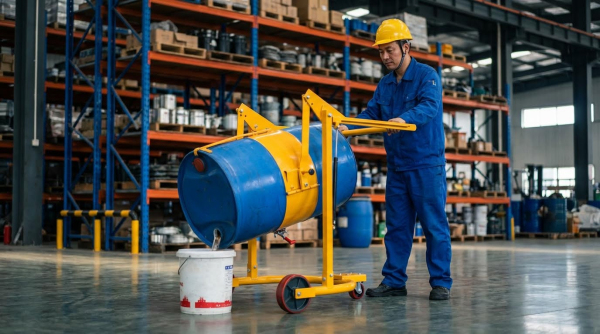
Drum condition and contents directly control how to safely move a 55 gallon drum in plants and warehouses. Before any handling, operators must confirm what is inside the drum, whether the container can withstand movement, and what level of personal protection is required. This section focuses on pre-move checks that prevent leaks, exposures, and crush injuries while keeping material handling operations compliant and repeatable.
Labeling, SDS review, and unknown-content protocols
Always start with the drum label before planning how to safely move a 55 gallon drum. Read product names, hazard pictograms, signal words, and precautionary statements to classify flammable, corrosive, toxic, or reactive contents. Cross-check the product identifier on the label with the Safety Data Sheet to verify physical hazards, incompatibilities, and required PPE. Review SDS sections on handling, storage, exposure controls, and first aid before authorizing movement.
If the drum has no label or an illegible label, treat the contents as hazardous until identified. Isolate the drum from traffic routes and ignition sources and restrict access to trained personnel only. Follow the facility’s unknown-chemical procedure, which usually includes consulting supervisors, EHS staff, and historical inventory records before sampling or testing. Do not roll, lift, or tilt an unknown drum with powered or manual equipment until the contents and internal pressure condition are understood.
For mixed storage areas, verify that the planned staging location is compatible with the drum’s hazard class. Keep oxidizers away from organics, acids away from bases, and flammables away from ignition sources according to SDS and local regulations. Document label and SDS checks on pre-move checklists so that future audits can confirm that every drum move followed a defined decision process.
Inspecting drum integrity, bungs, leaks, and deformities
Before deciding how to safely move a 55 gallon drum, inspect the container from top to bottom. Look for dents, creases, bulges, or corrosion that indicate loss of structural strength or internal overpressure. Warped or out-of-round drums can slip from forklift drum grabber or carts, so flag them for specialized handling or overpacking. Check for sharp burrs on chimes or weld seams that could cut gloves or snag lifting straps.
Examine all bungs, plugs, and lids for tightness and mechanical damage. Use appropriate tools to snug threaded bungs to the specified torque without overtightening or stripping threads. If a bung or lid is missing, install a compatible replacement and verify gasket condition before any tilting or rolling. Never move a liquid-filled drum with a loose closure, because sloshing can drive product past the threads and create a trail of leaks.
Scan the drum surface and floor for staining, wet spots, or crystallized residue. If you see evidence of leakage, stop the move, isolate the area, and initiate the site’s spill response procedure. Confirm that pallets or containment decks under the drum are intact and rated for the estimated mass of 400–800 kg for a full 55-gallon unit, depending on density. Only release the drum for handling after it passes a documented integrity and leak check, or after it has been secured inside an overpack or salvage container when damage exists.
Selecting PPE for chemical, impact, and ergonomic hazards
PPE selection must match both the drum’s contents and the mechanical risks of movement. At a minimum, use safety footwear with toe protection when handling 55-gallon drums to reduce crush injuries from tipping or rolling. Choose chemical-resistant gloves based on SDS permeation data rather than generic glove ratings, especially for strong solvents, acids, or caustics. Inspect gloves for pinholes or degradation before each task, and replace them immediately after contact with leaking product.
Eye and face protection are critical whenever there is a risk of splashes from leaking bungs or pressurized drums. Use safety glasses with side shields for low-risk handling of sealed, intact drums and upgrade to face shields over goggles for corrosive or unknown contents. For volatile or toxic vapors, follow SDS exposure guidance and consider respirators with appropriate cartridges, ensuring fit testing and training comply with regulatory requirements. Avoid moving suspect drums through poorly ventilated spaces without evaluating airborne exposure potential.
Ergonomic hazards also influence how to safely move a 55 gallon drum. Use back-supporting postures, powered equipment, or electric drum stacker to avoid manual lifting of high masses. Where operators must guide or steady drums, provide cut-resistant sleeves and forearm protection to prevent injuries from sharp chimes. Combine PPE with training on proper push–pull techniques, safe body positioning, and emergency actions if a drum starts to fall or leak. PPE never replaces engineering controls and safe equipment, but it forms the last protective layer when handling conditions change unexpectedly.
Safe Handling Methods And Equipment Selection
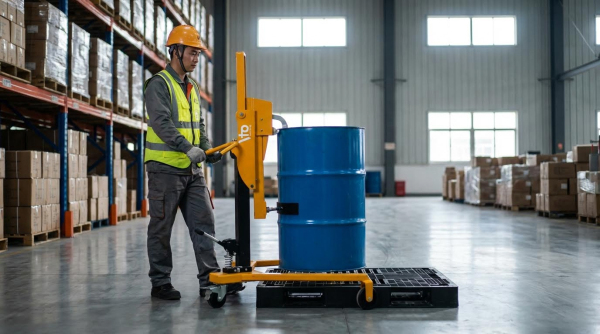
Safe handling methods determine how to safely move a 55 gallon drum without overloading workers or equipment. Engineers should match techniques and devices to drum mass, center of gravity, and contents. Poor selection increases spill probability, crush injuries, and musculoskeletal disorders. A structured approach combines ergonomic limits, suitable drum dollies, and engineered attachments or automation.
Limits of manual handling and ergonomic best practices
Manual handling of a full 55-gallon drum is rarely acceptable because weights often reached 180–360 kg. Direct lifting or carrying exceeded recommended manual handling limits from most occupational safety guidelines. Manual techniques therefore focused on controlled tipping, rolling short distances, and fine positioning, not primary transport. Workers kept backs straight, used leg muscles, and avoided twisting under load. They maintained hands on the chime, kept fingers away from pinch points, and never used feet to push or stop a rolling drum. Two-person operations reduced individual load but required clear communication to prevent uncoordinated pushes or pulls. Facilities implemented job rotation and mechanical aids to reduce repetitive strain, especially where frequent drum moves occurred.
Choosing carts, trucks, palletizers, and drum handlers
When deciding how to safely move a 55 gallon drum across a plant, engineers prioritized wheeled and purpose-built devices. Drum dollies and basic carts supported short, level moves where loads stayed vertical and routes were smooth. Drum trucks with chime hooks or clamps allowed one operator to tilt, transport, and set drums with reduced spinal loading. For pallet-level work, drum palletizers and transporters lifted drums on or off pallets between roughly 150 mm and 650 mm height, keeping operators outside crush zones. Dedicated drum handlers combined lift, clamp, and tilt functions for dispensing or racking, and often accepted steel, plastic, or fiber drums with adaptable jaws or bands. Selection criteria included capacity with a minimum 25% safety margin, wheel type matched to floor conditions, and compatibility with drum diameter and chime geometry. Corrosive or flammable environments required stainless or spark-resistant builds and antistatic features.
Forklift and crane attachments for secure drum control
Forklifts and overhead cranes handled high-mass drums or longer travel distances, but bare forks posed puncture and spill risks. Safe practice used drum-specific forklift attachments that gripped the drum body or chime and prevented slip during acceleration, braking, or uneven floors. These attachments often provided 180° or 360° rotation for pouring, plus mechanical or powered clamping to handle smooth plastic drums. Below-hook drum carriers for cranes and hoists enabled vertical lifting, controlled rotation, and precise placement into racks or process equipment. Engineers verified attachment ratings exceeded the maximum filled drum mass and considered dynamic factors such as swing and tilt. They also ensured adequate overhead clearance, controlled travel speeds, and exclusion zones under suspended loads. Quick-attach designs reduced changeover time but still required lock pins and positive engagement checks before lifting.
Automation, cobots, and digital tools for drum handling
Automation and collaborative technologies increasingly supported facilities that frequently moved 55-gallon drums. Automated guided vehicles with integrated drum clamps transported drums between storage and processing with minimal human exertion. Robotic or cobot-based drum stations performed repetitive lift, tilt, and pour tasks, reducing exposure to hazardous vapors and splash zones. Engineers integrated sensors to confirm clamp engagement, drum presence, and correct orientation before motion. Digital tools such as route mapping, load tracking, and interlocks between process control and drum movers reduced routing conflicts and accidental moves of the wrong product. Condition monitoring on powered drum handlers helped schedule maintenance before brake or lift failures occurred. Despite higher capital cost, these systems lowered incident rates, improved traceability, and supported compliance with strict chemical handling standards when properly risk-assessed and validated.
Summary: Key Drum Handling Safety Practices And Trends
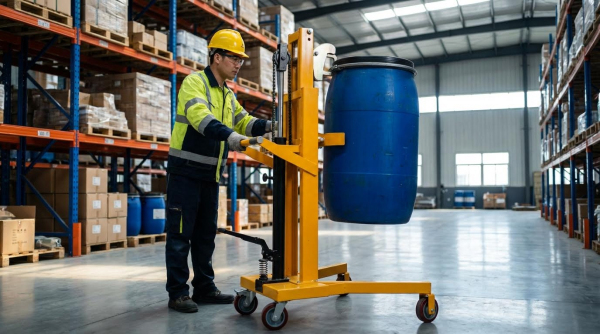
Knowing how to safely move a 55 gallon drum required a structured approach that started before any physical contact with the drum. Workers first reviewed labels, Safety Data Sheets, and unknown-content protocols, then combined this information with route surveys, floor condition checks, and weight estimates to decide whether manual or mechanical handling was appropriate. Plants and warehouses that formalized these steps into a written safety checklist generally reduced strains, crush injuries, and chemical exposures.
Core practices for moving 55-gallon drums safely included verifying drum integrity, securing bungs and lids, and rejecting warped, leaking, or severely corroded containers. Operators wore task-specific PPE that protected hands, feet, eyes, and respiratory systems when needed. Manual handling, when allowed by risk assessment, used defined push, pull, drag/pull, and push/pull techniques that kept backs straight, hands clear of pinch points, and feet outside the rolling path. Facilities increasingly discouraged long-distance manual rolling because full drums often weighed 200–360 kg and created high ergonomic and spill risks.
The dominant trend shifted toward engineered controls and dedicated drum handling equipment. Plants adopted drum carts, trucks, palletizers, lifter bars, forklift drum grabber, and mobile pourers to control lifting, tilting, and positioning with repeatable force limits and mechanical restraints. Automation, cobots, and digital tools supported safer movement of 55-gallon drums by standardizing workflows, enforcing travel routes, and logging inspections. Over time, the industry moved from “strong back” practices toward system-based controls that integrated risk assessment, equipment selection, and training into a single management strategy.