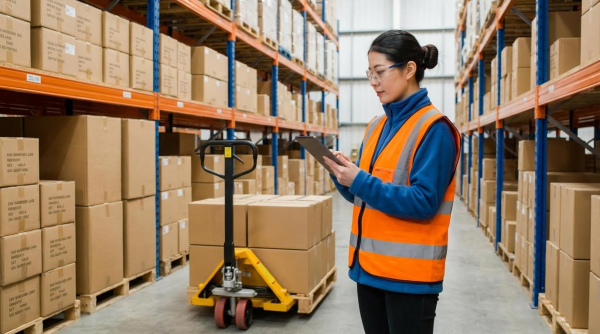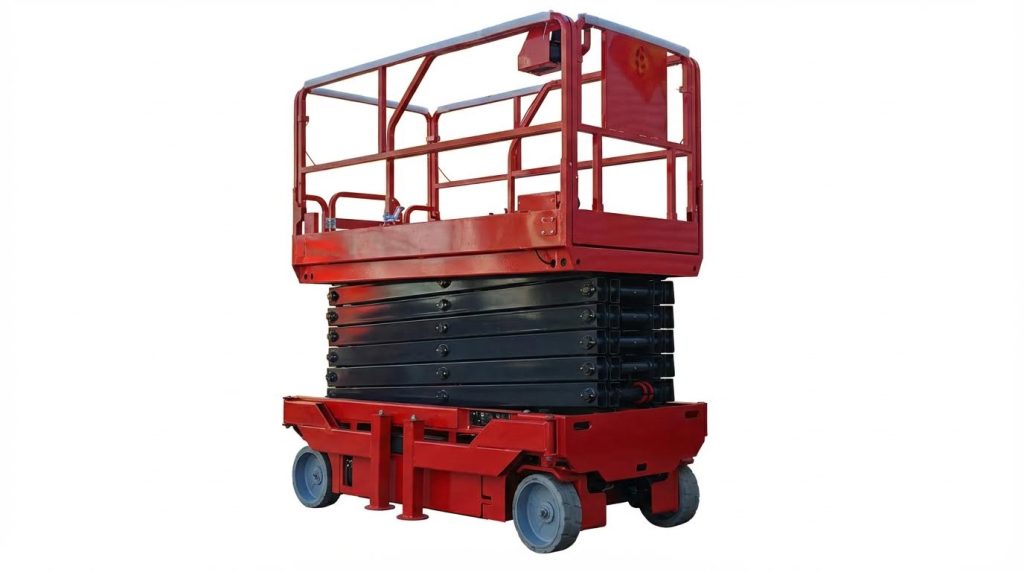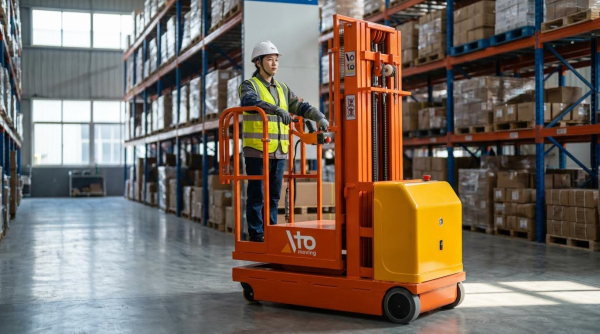
Case picking in warehousing is the process of selecting full cases or cartons (not individual pieces) to fulfill customer orders, typically for medium‑ to high‑volume demand. In practice, it sits between piece picking and full‑pallet picking, balancing speed, storage density, and handling effort for case‑packaged SKUs. This guide explains what is case picking in a warehouse, when it makes economic sense, and how to design processes, equipment, and layouts that maximize throughput, accuracy, and safety. You will see how order profiles, SKU velocity, storage systems, and semi electric order picker, warehouse order picker, order picking machines, and aerial platform technology choices interact so you can select the right case‑picking model for your operation.
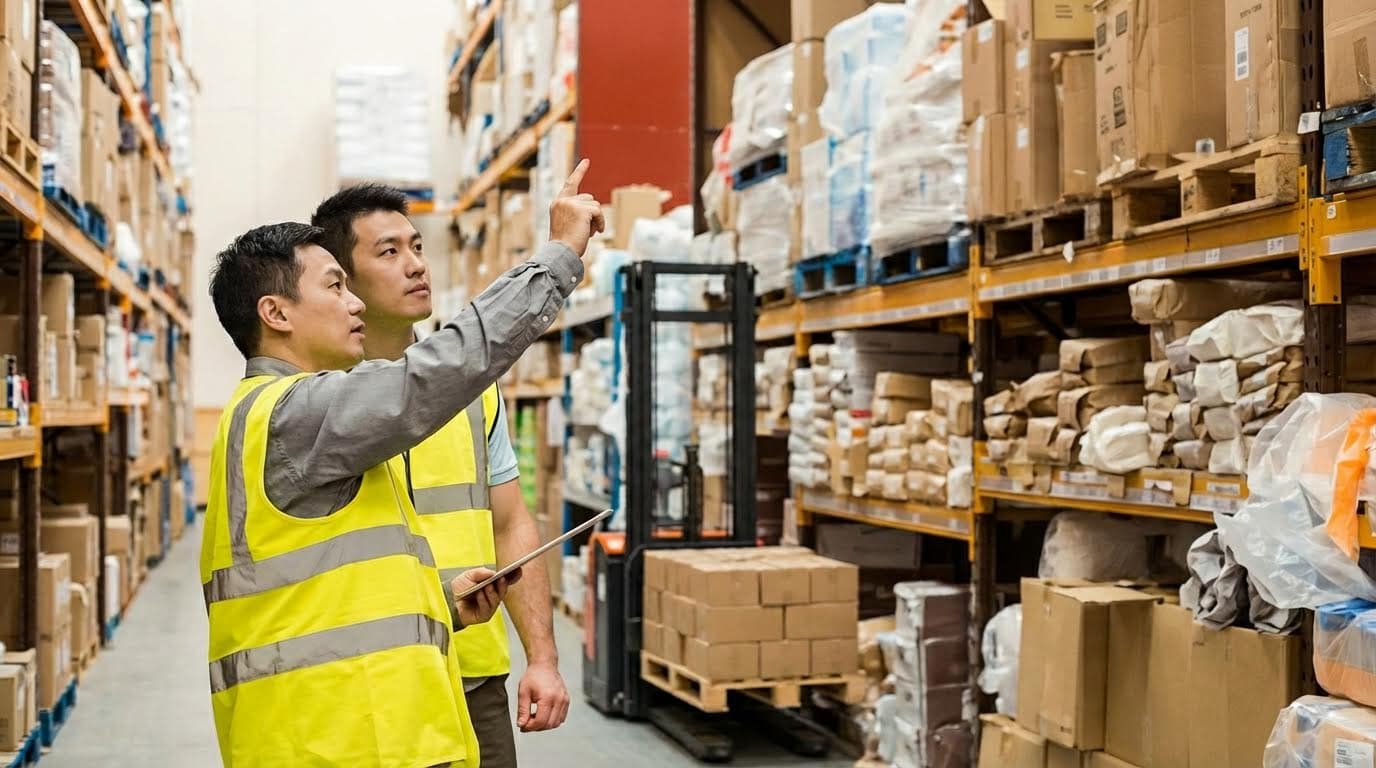
Defining Case Picking and Core Operating Models
Case picking in a warehouse is the process of selecting full cartons rather than individual units or full pallets, and the right operating model depends on order profiles, SKU velocity, and layout constraints.
When people ask “what is case picking in a warehouse,” they are really asking how to design a process that balances travel time, storage density, and labor productivity for carton-level orders. This section explains what case picking is and when it makes sense, compares it with piece and pallet picking, and shows how order profiles, SKU velocity, and slotting logic determine your best operating model.
💡 Field Engineer’s Note: Most underperforming case-pick operations don’t have a travel-time problem; they have a slotting problem—fast movers are simply in the wrong place.
What Case Picking Is and When It Makes Sense
Case picking is selecting and handling full cartons from storage locations to fulfill orders, and it makes the most sense where orders are carton-heavy, SKUs are stable, and demand is medium to high.
Operationally, “what is case picking in a warehouse” means pickers travel through rack or floor locations and remove sealed cases (e.g., 6, 12, or 24 units per carton) instead of individual pieces. This reduces touches and simplifies packing because full cases can be staged or loaded directly, which streamlines the packing and loading process and minimizes handling complexity for individual items for carton-based orders.
Case picking is most efficient when a large share of your order lines are full cartons, when products are typically shipped in case quantities, and when you can dedicate storage space for case pick faces. It also suits environments where grouping similar orders (batch or zone picking) can significantly cut walking distance and picking time by reducing travel per order.
- Best for carton-heavy orders: High proportion of order lines are 1+ full cases of the same SKU.
- Moderate SKU variety: Enough repetition in orders to justify dedicated case pick faces.
- Stable packaging: Carton sizes and configurations don’t change frequently, simplifying layout.
- Reasonable case weight: Typical cases under ~20–25 kg so manual handling remains safe.
- Flow-friendly SKUs: Products that work well in carton or pallet flow to keep pick faces full.
Why case picking reduces travel time
Each full case pick replaces multiple piece picks, so pickers perform fewer “stops” per tour. With batch or zone picking, you further compress travel because one tour feeds several orders at once instead of walking the same aisle repeatedly.
Case vs. Piece and Pallet Picking
Case picking sits between piece picking and pallet picking in terms of handling unit, storage density, and labor intensity, and choosing among them depends on order size and SKU mix.
At a high level, piece (each) picking targets individual units, case picking targets full cartons, and pallet picking targets full pallets. Each mode trades off touches, travel, and space utilization. Case picking reduces the number of picks compared with piece picking because you handle full cartons, but it requires more pick faces and more labor than shipping full pallets. It also simplifies packing and loading because full cases are easier to handle and arrange than loose items in carton-based operations.
| Picking Mode | Typical Pick Unit | Order Profile Fit | Labor & Travel Intensity | Space / Storage Impact | Field Impact |
|---|---|---|---|---|---|
| Piece (Each) Picking | Single units | eCommerce, spare parts, high-SKU variety, low units per line | Highest touches and walking; 100–200 picks/hour typical for manual bin work in manual systems | Can be dense with bins/shelving; more complex inventory control | Best where precision at unit level matters more than speed per line. |
| Case Picking | Full cartons / cases | Wholesale, retail DCs, food & beverage, medium–high volume per SKU | Moderate touches; fewer picks per order because one case = many units | Requires dedicated space for full cases; may reduce overall density as more faces are opened | Good balance of speed and flexibility for carton-heavy orders. |
| Pallet Picking | Full pallets | Bulk replenishment, store-ready pallets, very high volume SKUs | Lowest touches per unit; lift truck travel dominates labor time | Highest cube utilization at pallet level; few SKUs per bay | Ideal when customers can take full pallets and SKU demand is very high. |
From an engineering perspective, the “right” mode is rarely all-or-nothing. Most warehouses run all three: full pallets from reserve storage, full cases from case flow or lower rack levels, and pieces from shelving or totes. The goal is to push as much volume as possible up the hierarchy—from piece to case, from case to pallet—without hurting service levels.
💡 Field Engineer’s Note: If more than ~60–70% of your piece-pick lines are exactly a full carton quantity, you’re leaving money on the floor by not promoting those SKUs into a case-pick area.
Order Profiles, SKU Velocity, and Slotting Logic
Order profiles, SKU velocity, and slotting logic determine where and how you store each SKU so that case pickers touch the fastest movers with the shortest, safest travel paths.
Your order profile describes how many lines, units per line, and cartons per order you ship. High-line-count, carton-heavy orders benefit from batch or zone case picking, where similar orders are grouped and zones are assigned to reduce congestion and walking distance across the pick area. SKU velocity is simply how often a SKU is picked (lines per day/week) and in what quantities (cases per pick). Slotting logic uses that data to put fast movers in the “golden zone” (roughly 500–1,500 mm from the floor) and closest to main travel aisles.
- Analyze order profiles: Identify what percentage of lines are full cases vs pieces or pallets; this drives how big your case-pick area should be.
- Classify SKUs by velocity: Use A/B/C classes (e.g., top 10–20% of SKUs generating 60–80% of case lines) to decide which SKUs earn prime case-pick locations.
- Apply slotting rules: Place A-movers in carton or pallet flow near the shipping dock; B/C movers can sit higher, deeper, or further away.
- Use gravity systems wisely: Carton and pallet flow keep pick faces full and support FIFO, improving retrieval efficiency and inventory rotation for medium–high velocity SKUs.
- Support with WMS and scanning: Real-time tracking and barcode scanning maintain accurate stock levels and reduce picking errors through better visibility.
Good slotting directly improves throughput and accuracy: shorter walks, fewer reaches outside the ergonomic zone, and fewer touches to replenish or correct mistakes. Over time, continuous review of case-pick performance and feedback from operators helps you refine slotting rules and remove bottlenecks as demand patterns change.
How often to re-slot a case-pick area
Many DCs review velocity and re-slot quarterly, but fast-changing businesses may adjust monthly. The key is to move only the top-impact SKUs—typically the top 5–10% by case lines—so you gain most of the travel-time reduction without constant disruption.
“”
Applying Case Picking: Layout, Safety, and Technology

Applying case picking in layout, safety, and technology means engineering the warehouse so full-case picking runs with minimal walking, low risk, and high scan-driven accuracy, directly answering what is case picking in a warehouse in practical terms.
💡 Field Engineer’s Note: Most case-pick operations lose 20–40% of potential capacity to walking and poor slotting, not to lifting. Fix travel paths and information flow before buying more equipment.
Layout Design and Travel-Time Reduction
Layout design for case picking focuses on shortening picker travel distance per line by smart slotting, batching, and using gravity or mobile systems to bring cases closer to the operator, which directly boosts picks per hour.
- Slot fast movers to golden zone: Place highest-velocity SKUs at 0,6–1,6 m pick height near main aisles to minimize bending and walking, aligning with the high-volume nature of case picking operations for bulk orders.
- Use gravity and flow lanes: Carton or pallet flow racks keep product at the pick face and auto-advance cases, cutting walk-backs into the rack and maintaining first-in-first-out rotation for case stock via gravity-based systems.
- Apply batch and zone picking: Group similar orders and assign pickers to defined zones so one walk covers many order lines, sharply reducing travel time per case picked through batch and zone strategies.
- Use AMRs/AGVs for long runs: Deploy mobile robots to shuttle pallets or carts between zones so humans stay in dense pick areas, leveraging 40–60% walking reduction and large step-count savings per task with AMR assistance.
- Balance storage density vs. access: Case picking requires dedicated full-case locations, so layouts must trade off high-density storage against keeping high-demand SKUs close and quickly reachable because full cases consume more space.
How layout ties back to “what is case picking in a warehouse”
Because case picking selects full cartons instead of eaches, the layout should prioritize pallet and case flow, wide enough pick aisles, and staging that supports fast loading of full cases onto outbound pallets or trailers to streamline packing and loading.
Safety Practices in Case-Level Rack Picking
Safety in case-level rack picking means controlling fall, crush, and overexertion risks when operators work at floor and low levels in rack, especially with pushback and gravity systems where stored pallets can move unexpectedly.
- Pick floor level only in pushback: Limit case picking from pushback racks to the floor level so operators are never directly in front of moving pallets at elevation, reducing crush risk at the pick face as recommended for pushback systems.
- Install pallet stops at pick faces: Use beam-mounted pallet stops on every pushback pick position so partially loaded pallets cannot be shoved forward by the pallet behind, directly protecting the operator’s torso and legs per rack safety guidance.
- Control empty pallet removal: Remove empties from pushback lanes with a truck whenever possible so the operator is not managing both pallet weight and the following pallet’s descent by hand manual pallet jack.
- Use manual removal only with strict control: If a pallet must be dragged out manually, the operator should verify the aisle is clear, use proper lifting posture, and walk backward slowly to manage the following pallet’s motion as detailed for safe manual removal.
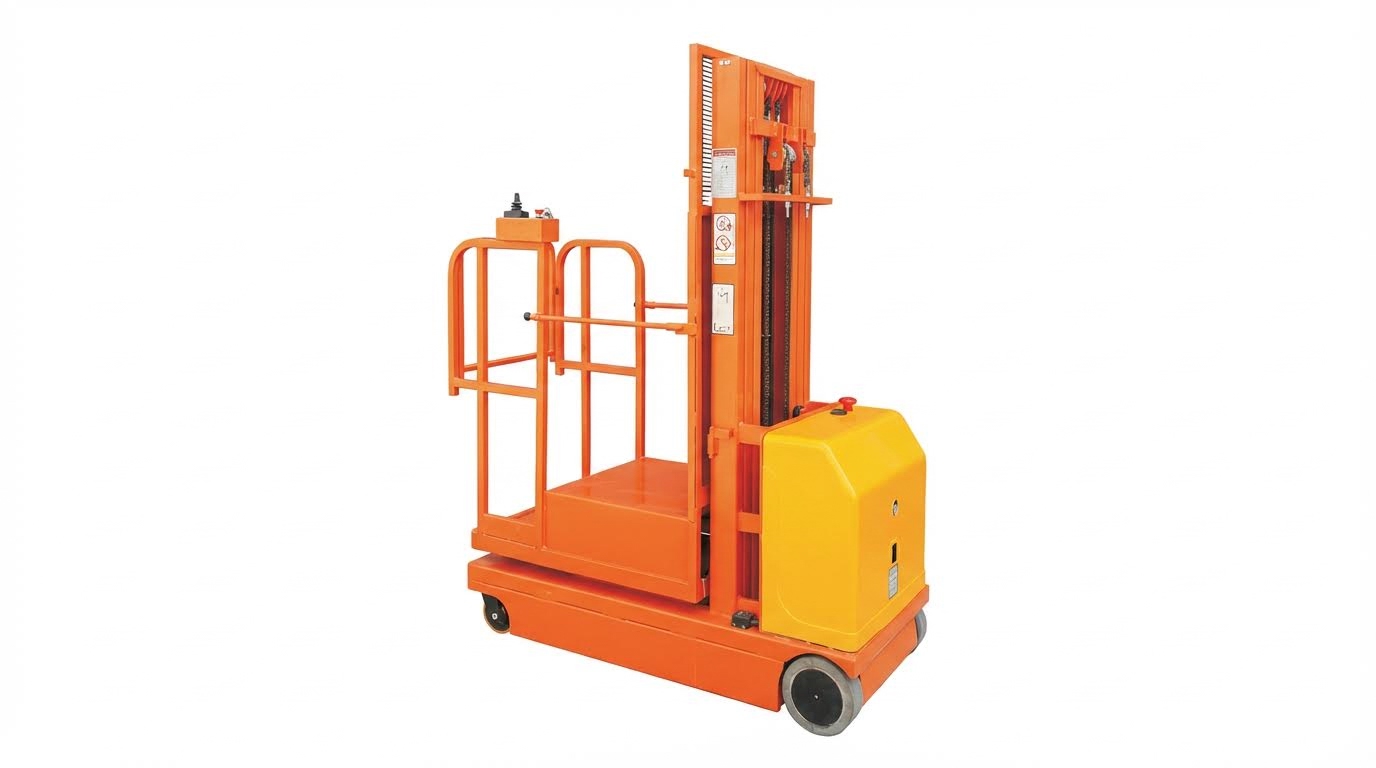
- Integrate equipment safety features: For any case picking that uses semi electric order picker or lift equipment, apply harnesses, emergency stops, and controlled travel speeds at height to reduce fall and collision risks using standard safety design features.
💡 Field Engineer’s Note: In pushback and flow rack, the hazard is stored energy in the moving pallet, not just weight. Train operators to expect pallet movement every time a case is picked or a pallet is removed.
WMS, Scanning, and Advanced Picking Technologies
WMS and advanced technologies in case picking orchestrate where each case sits, which route the picker takes, and how every scan confirms accuracy, turning a manual process into a controlled, data-driven flow.
- Use WMS for real-time inventory and slotting: A WMS tracks stock levels and locations in real time, enabling accurate case allocation, cycle counting, and dynamic slotting of high-demand SKUs near pick paths for precise inventory management.
- Scan every case for accuracy: Handheld or vehicle-mounted barcode scanners confirm each picked case against the order line, updating order status and sharply reducing mis-picks and shipment errors through real-time tracking.
- Adopt voice or RF-directed picking: Voice headsets or RF terminals guide operators step by step, avoiding paper lists and cutting reading errors while maintaining high walking speed and hands-free case handling to reduce list-reading errors.
- Leverage AMRs and AS/RS for case retrieval: Automated systems bring pallets or cases to the picker, achieving 3–5× faster retrieval and very low error rates, while reducing manual walking and handling with 400–800+ cycles per hour.
- Continuously monitor and improve: Use WMS and automation logs to monitor bottlenecks, common error types, and travel times, then adjust pick paths, zoning, and training to steadily improve throughput and accuracy through continuous review.
Why technology matters specifically for what is case picking in a warehouse
Because case picking handles fewer, larger units than piece picking, each error is more expensive and each walk is longer; WMS, scanning, and automation ensure every full case is correct and every trip is fully utilized while reducing labor cost.
Final Thoughts on Optimizing Case Picking
Effective case picking depends on matching the picking mode to order profiles and SKU velocity, then engineering layout, storage, and equipment around that reality. When you push as much volume as possible from piece to case, and from case to pallet, you cut touches and travel and free labor for value work. Slotting is the core lever. Put true A-movers in the golden zone, close to main aisles, and feed them with carton or pallet flow so pickers always face ready product with short, safe reaches. Poor slotting turns even good equipment into a slow system.
Safety and technology complete the picture. Design rack and pushback systems so pallets cannot move unexpectedly into the operator’s space, and keep manual handling within safe weight and height limits. Use WMS, scanning, and guided picking so every walk and every lift has a clear purpose and a confirmed result. The best practice is simple: treat case picking as an engineered system, not a set of aisles. Start with data on order lines and SKU velocity, then tune slotting, layout, and Atomoving equipment as demand shifts. Operations that follow this cycle gain higher throughput, fewer injuries, and more stable service performance.
Frequently Asked Questions
What is case picking in a warehouse?
Case picking in a warehouse refers to the process of selecting full cases or boxes of products from storage locations to fulfill customer orders. This method is often used when customers order in bulk or when items are stored in case quantities. Case picking can be performed manually or with the help of material handling equipment like forklifts or pallet jacks. It is one of several picking methods used in warehouses to optimize order fulfillment.
What are the different types of picking in a warehouse?
There are several types of picking methods used in warehouses, each designed to improve efficiency based on the operation’s needs:
- Single Order Picking: Items are picked one order at a time.
- Batch Picking: Multiple orders are picked simultaneously in a single trip.
- Cluster Picking: A picker collects items for multiple orders grouped into a cluster.
- Wave Picking: Orders are grouped into waves based on specific criteria like shipping deadlines.
These methods ensure faster and more accurate order fulfillment. For more details, you can refer to this resource: Warehouse Picker Overview.
Is warehouse picking a hard job?
Warehouse picking can be physically demanding, as it often involves repetitive lifting, bending, and walking for long periods. Workers may experience strain on their bodies, particularly their backs, due to the constant physical demands. However, using proper ergonomics and material handling equipment can reduce fatigue and injury risks. Employers also implement safety measures to protect workers. For insights into the challenges faced by pickers, see: Warehouse Work-Life Balance.