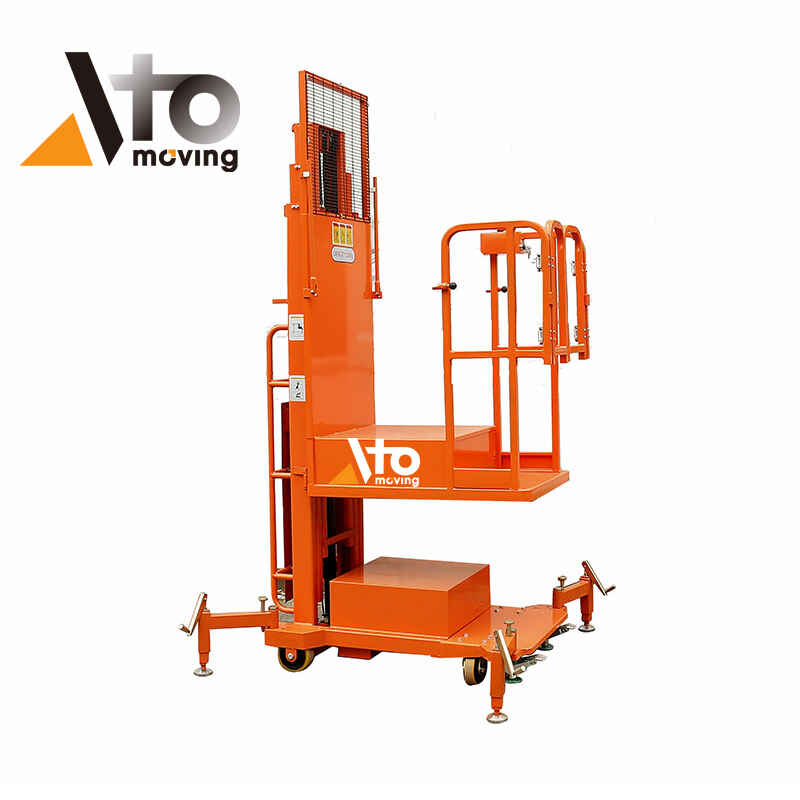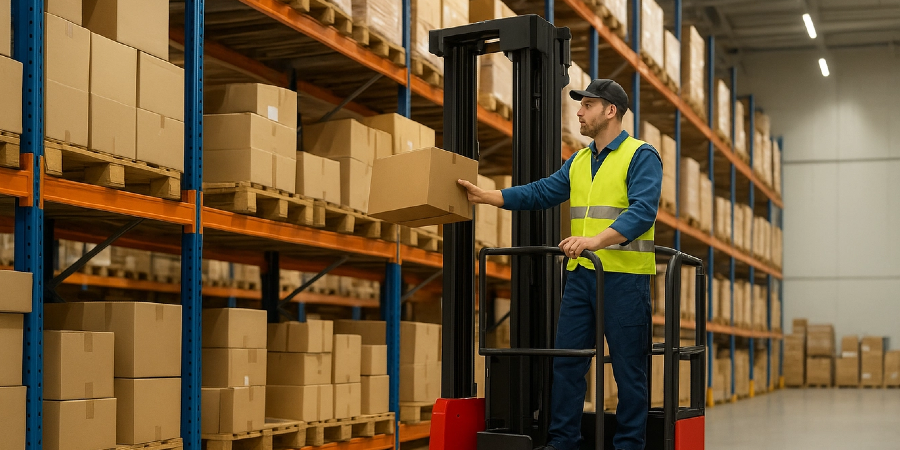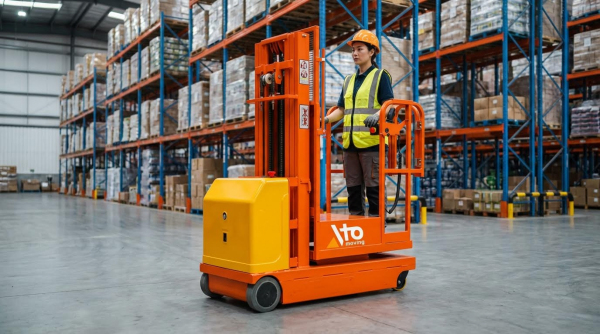
Safe operation of warehouse order picker lifts starts with trained operators, pre-use inspections, and disciplined driving in narrow aisles. This guide explains how to drive a warehouse cherry picker safely, manage loads, protect against falls, and control site traffic for real-world warehouse conditions.
Core Principles Of Order Picker Lift Safety
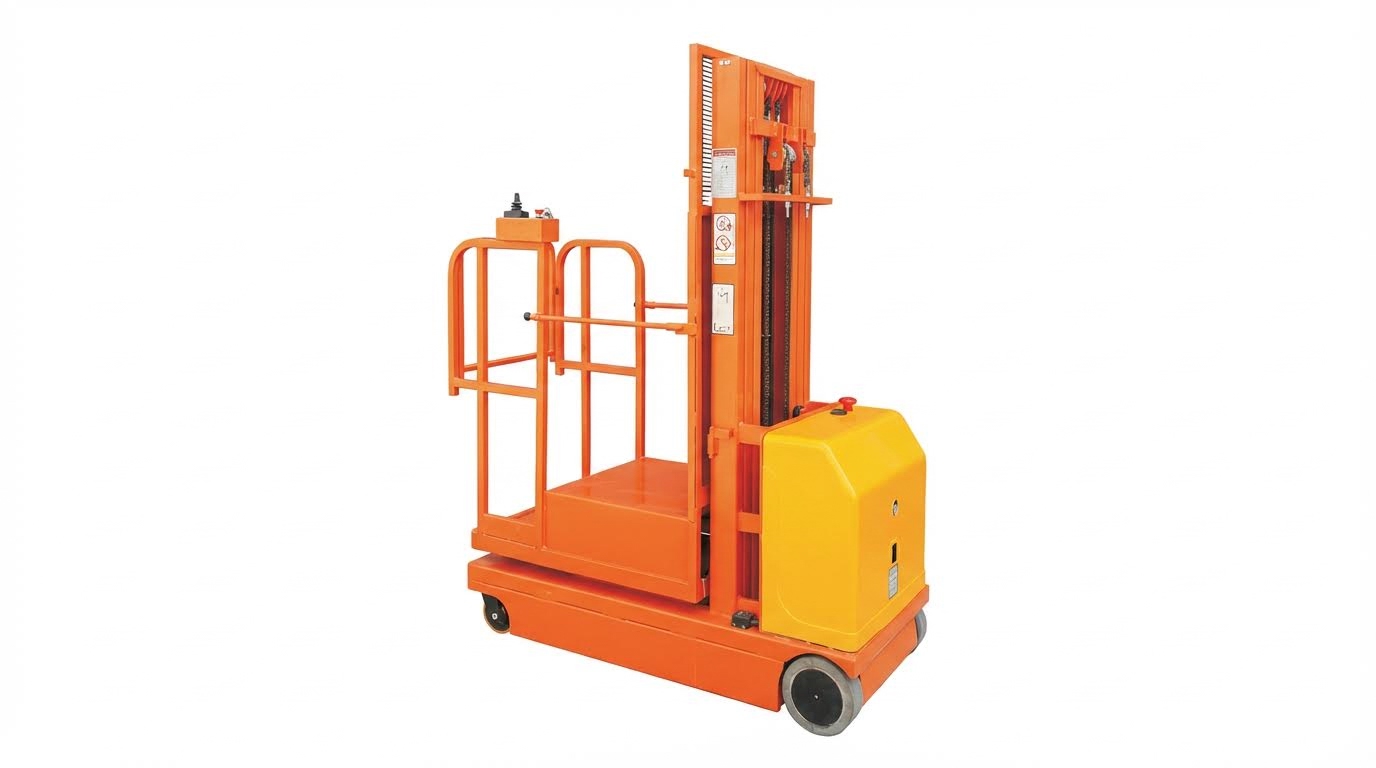
Core safety principles for warehouse order picker lifts combine correct OSHA classification, certified operator training, and consistent use of PPE and fall protection to control the main risks when learning how to drive a warehouse cherry picker in real operations.
- OSHA-powered industrial truck rules: Treat order pickers as Class II narrow-aisle lift trucks – this sets the baseline for training, inspections, and operating limits.
- Competent, trained operators only: No untrained person should move, lift, or troubleshoot an order picker – this cuts collision and tipover risk dramatically.
- Fall protection as a system: Combine guardrails, gates, and body harnesses – this prevents serious injury when working several meters above floor level.
- PPE as the last barrier: Helmets, eye protection, gloves, boots, and hi-vis vests – these reduce harm if something still goes wrong.
💡 Field Engineer’s Note: In real warehouses, most serious order picker incidents I have seen involved either an untrained “helper” driving the truck or someone bypassing harness rules “just for a minute.” Procedures fail where culture is weak, so supervisors must visibly enforce training and fall protection every shift.
OSHA classification and operator training
Order pickers fall under OSHA’s powered industrial truck rules, so only trained and evaluated operators may drive them, with ongoing refresher training tied to incidents, equipment changes, or long gaps in use.
Under OSHA, order pickers are treated as Class II electric motor narrow aisle lift trucks, which means employers must run a structured training and evaluation program before an operator is allowed to use the machine in the warehouse.
- Legal classification: Order pickers are powered industrial trucks – this triggers OSHA training, inspection, and documentation duties for the employer.
- Formal training required: Operators must complete safety training on order picker use before operating – this reduces organizational fines and safety risks. Training requirement reference
- Theory plus hands-on: Good programs mix classroom content with practical driving, lifting, and emergency drills – this builds real muscle memory, not just paper compliance.
- Site-specific hazards: Training must cover your actual aisles, racking, gradients, and traffic patterns – this prepares operators for real layouts, not generic textbook diagrams.
- Refresher triggers: Incidents, near misses, new truck models, or long breaks from driving should trigger retraining – this corrects bad habits before they lead to injuries.
| Training Element | What It Covers | Typical Metric Detail | Operational Impact |
|---|---|---|---|
| Truck classification | Order picker as Class II narrow-aisle truck | Aisles often 1,600–2,000 mm wide | Explains why tight steering control and low speeds are critical. |
| Load capacity basics | Reading nameplate, adding operator + tools | Example: up to ~1,350 kg (3,000 lb) total | Prevents overloading when picking heavy items at height. |
| Stability and tipping | Center of gravity, mast height, turning rules | Safe travel height usually below axle level | Reduces risk of tipover in narrow aisles and at intersections. |
| Hazard identification | Aisle obstructions, pedestrians, overheads | Overhead clearance often 4–12 m | Teaches operators to scan ahead before lifting or driving. |
| Pre-use inspections | Daily walk-around and function tests | 5–10 minutes per shift | Catches leaks, brake faults, or control issues before use. |
| Emergency procedures | Stops, lower to floor, reporting defects | Emergency stop within arm’s reach | Ensures calm, correct reactions during faults or impacts. |
How training connects to how to drive a warehouse cherry picker
When people search how to drive a warehouse cherry picker, they often expect a simple “how-to.” In reality, OSHA treats driving as only one part of a full powered industrial truck training program that also covers load limits, fall protection, inspections, and site rules. Learning to drive without that bigger safety context is both unsafe and non-compliant.
Training must also stress hazard identification: narrow aisles, overhead obstructions, pedestrians, and unsecured loads all need active scanning and conservative driving to keep the truck stable and people safe. Hazard identification reference
Required PPE and fall protection at height
Order picker operators must wear basic PPE and a properly adjusted full-body harness with a secure anchor point whenever they work at height, using gates and guardrails to prevent falls from the platform.
Because order pickers lift the operator several meters into the racking, fall protection is not optional; it is a core engineering control that works with the truck’s guardrails and gates to keep the operator inside the platform envelope.
- Body harness at height: Operators must wear a full-body harness when elevated – this is the primary protection if they slip or lose balance. Fall protection requirement reference
- Harness fit and adjustment: Straps must be snug, with chest and leg straps correctly routed – loose harnesses increase free-fall distance and injury risk.
- Anchorage point: The lanyard must connect to an approved anchor on the platform – clipping to guardrails or improvised points can fail under load.
- Guardrails and gates: All open sides need rails and self-closing gates – these stop step-through or trip falls during normal picking.
- No exiting at height: Operators must not climb out of the platform when elevated – this bypasses the entire fall protection system.
| PPE Item | Primary Function | Typical Specification | Operational Impact |
|---|---|---|---|
| Safety goggles | Protect eyes from dust and debris | Wrap-around, impact-rated lenses | Improves visibility when looking up into racks and down to controls. |
| Hard hat | Guard against falling objects | Industrial helmet, often with chin strap | Reduces head injury risk when picking from high bays. |
| Hi-vis vest | Increase operator visibility | Fluorescent with reflective strips | Makes the operator stand out to other trucks and pedestrians. |
| Gloves | Improve grip and protect hands | Non-slip palm, cut-resistant where needed | Helps maintain control of controls and cartons in cold or dusty areas. |
| Safety boots | Protect feet and improve traction | Slip-resistant hard soles, toe protection | Prevents slips on smooth concrete and protects from dropped loads. |
| Full-body harness | Arrest falls from platform | Adjustable, with shock-absorbing lanyard | Allows safe work several meters above floor if used correctly. |
Personal protective equipment such as safety goggles, slip-resistant hard-sole boots, gloves, high-visibility vests, and hard hats provides the last layer of defense against dust, slips, and falling objects around the truck. PPE requirement reference
- Pre-use harness checks: Operators must inspect webbing, stitching, buckles, and hooks before each use – any cuts, frays, or deformation mean the harness is out of service.
- Periodic inspections: A competent person should inspect harnesses and lanyards on a fixed schedule (commonly every few months) – this catches aging and UV or chemical damage that operators may miss.
- Integration with driving: When learning how to drive a warehouse cherry picker, operators must practice driving, lifting, and lowering while fully connected to the fall protection system – this normalizes safe behavior from day one.
Why fall protection matters more as lift height increases
As the platform rises, the combined center of gravity of truck, operator, and load moves higher and further from the wheelbase. Even a small impact or sudden stop can cause a strong lurch. Without a harness and proper rails, that motion can throw the operator out of the platform. The higher the lift height (often 6–12 m in modern warehouses), the more severe a fall becomes, so fall protection rules must tighten, not relax, with height.
Step-By-Step Safe Driving And Operation
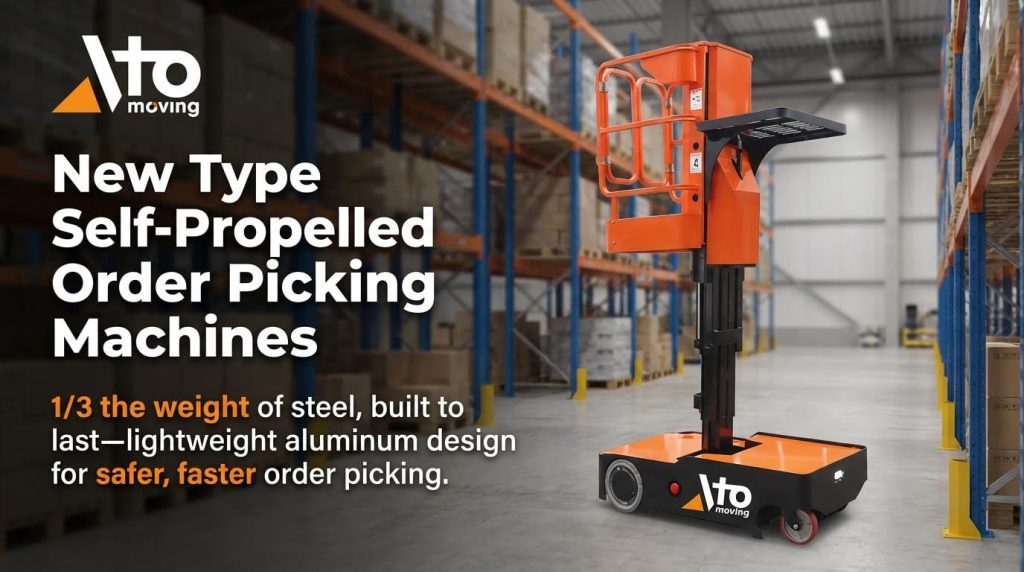
Safe, efficient control of an order picker comes from a fixed routine: inspect first, secure yourself on the platform, then drive slowly and predictably in narrow aisles with both hands on the controls.
If you are searching for how to drive a warehouse cherry picker, this section breaks it into three practical stages: pre-use inspection, getting onto and securing the platform, and controlled travel in tight racking.
Pre-use inspection and function tests
Pre-use checks make sure the semi electric order picker is mechanically sound and all safety systems work before you ever raise the platform or move an inch.
Use a consistent “key off / key on” sequence so you do not miss critical items.
Why pre-use checks matter
A failed brake, worn chain, or deadman pedal fault usually gives no warning under light use, but will show up under load or at height. Finding defects early prevents tipovers, uncontrolled travel, and stranded operators at elevation.
Start with a walk‑around (key off, power isolated):
- Structure and mast: Look for cracked welds, bent mast sections, damaged guards – prevents sudden structural failure when elevated.
- Chains, cables, hoses: Check for kinks, corrosion, broken strands, leaks – reduces risk of platform drop or loss of hydraulic control.
- Forks and attachments: Inspect for cracks, deformation, missing pins – keeps pallets and loads secure during lifting.
- Tyres and wheels: Look for flat spots, cuts, low pressure (pneumatic), loose fasteners – maintains stability and predictable steering.
- Battery and cables: Check electrolyte level (if applicable), cable insulation, connectors, and hold‑downs – avoids power loss and electrical shorts.
- Safety devices present: Confirm guardrails, gates, lanyard anchor points, warning labels, and data plate are intact – ensures you can use fall protection correctly.
Then perform “key on” functional tests with no load:
- Battery discharge indicator: Verify charge level is sufficient for the shift – prevents being stranded at height. OSHA daily checklist
- Steering and drive: Slowly move forward and reverse, full left and right – checks for unusual noise, drift, or delayed response.
- Service brake and parking brake: Test stopping distance at low speed and holding on slight gradients – confirms you can stop in narrow aisles.
- Lift and lower: Raise and lower the platform smoothly through part of its travel – detects jerky motion or binding in the mast.
- Emergency stop / deadman: Release the deadman pedal and hit the emergency stop to confirm all motion stops – critical for emergencies. OSHA guidance
- Horn, lights, and alarms: Test horn, beacons, and any pedestrian alerts – improves visibility in mixed traffic zones.
- Platform controls and interlocks: Confirm gate interlocks, foot switches, and control enable devices all function – prevents movement with open gates or no operator present.
💡 Field Engineer’s Note: Treat any leak, brake issue, steering fault, or failed safety device as “truck out of service.” Do not let production pressure override this; a 10-minute delay beats a 10-metre fall or collision in a confined aisle.
Entering, positioning, and securing the operator platform
Safe entry means stepping onto a stable platform, closing and interlocking gates, and connecting fall protection before lifting or driving.
This step is where many “near misses” happen, especially when operators rush or carry loose items in their hands.
- Step 1: Approach the truck from the side, not the front or rear – keeps you away from pinch points and unexpected movement.
- Step 2: Use three points of contact when climbing on (two hands and one foot, or two feet and one hand) – reduces slips on metal steps, especially with dusty soles.
- Step 3: Place tools and scanners in holders, not in your hands or pockets – prevents dropping objects from height later.
- Step 4: Close the platform gate fully until it latches and any interlock indicator shows “gate closed” – stops the truck moving with an open entrance.
- Step 5: Put on your full-body harness and connect the lanyard to the approved anchor point – keeps you attached if you trip or the truck stops suddenly. Fall protection guidance
- Step 6: Adjust harness and lanyard length so you can work but cannot fall over or through the guardrails – limits free-fall distance and swing.
- Step 7: Stand within the guarded area, feet clear of edges and moving parts, facing the primary control console – gives stable posture for fine control.
- Step 8: Familiarize yourself with control layout before moving: travel, lift, lower, horn, emergency stop – avoids fumbling under stress.
- Hands on controls: Keep both hands on the controls whenever the machine is in motion – maintains precise steering and quick reaction in tight spaces. Control handling tip
- No leaning or climbing: Never climb on guardrails or lean outside the platform to reach – keeps your centre of gravity inside the truck’s stability zone.
💡 Field Engineer’s Note: In cold stores, harness webbing stiffens and lanyard hardware ices up. Build extra seconds into your routine to check buckles fully lock and that the lanyard carabiner actually closes before raising the platform.
Driving, steering, and speed control in narrow aisles
Driving safely in narrow aisles means slow, deliberate travel with the platform at safe height, eyes scanning for pedestrians, and strict speed discipline.
This is the core of how to drive a warehouse cherry picker without damaging racking, pallets, or people.
- Platform height for travel: Keep the platform just clear of the floor and below axle height when travelling between pick locations – maximizes stability and reduces sway.
- Speed discipline: Use the lowest speed setting in aisles and near pedestrians; never “feather” controls to bypass limiters – shortens stopping distance in confined spaces.
- Both hands on controls: Maintain two-hand control while moving – improves fine steering around uprights and pallets. Control handling guidance
- Use horn at blind spots: Sound the horn at aisle ends, intersections, and doorways – warns pedestrians and other trucks before you appear.
- Pedestrian awareness: Watch for people stepping out from behind racks or pallets; yield to pedestrians in shared zones – aligns with traffic safety protocols in mixed-traffic warehouses. Traffic safety protocols
- Clearances: Track overhead beams, sprinklers, and lights as you raise the platform – prevents striking overhead obstructions.
- Alignment with pallet: Stop fully, centre the truck on the pallet, then raise – avoids side loading the mast and reduces risk of clipping racking.
- Turns and intersections: Lower to safe travel height before turning or crossing main aisles – keeps the centre of gravity low during lateral acceleration.
Typical narrow-aisle driving mistakes
Common errors include travelling with the platform too high, steering one-handed while scanning a pick list, and turning too fast at aisle ends. Each of these shifts the centre of gravity towards the stability limit and reduces reaction time if a pedestrian appears.
💡 Field Engineer’s Note: On polished or dusty concrete, even small speed increases dramatically lengthen stopping distance for electric trucks. If you notice wheel spin or ABS-like pulsing when braking, treat that area as a “slow zone” and report it so floor cleaning or resurfacing can be scheduled.
Load Handling, Environment, And Technology Aids
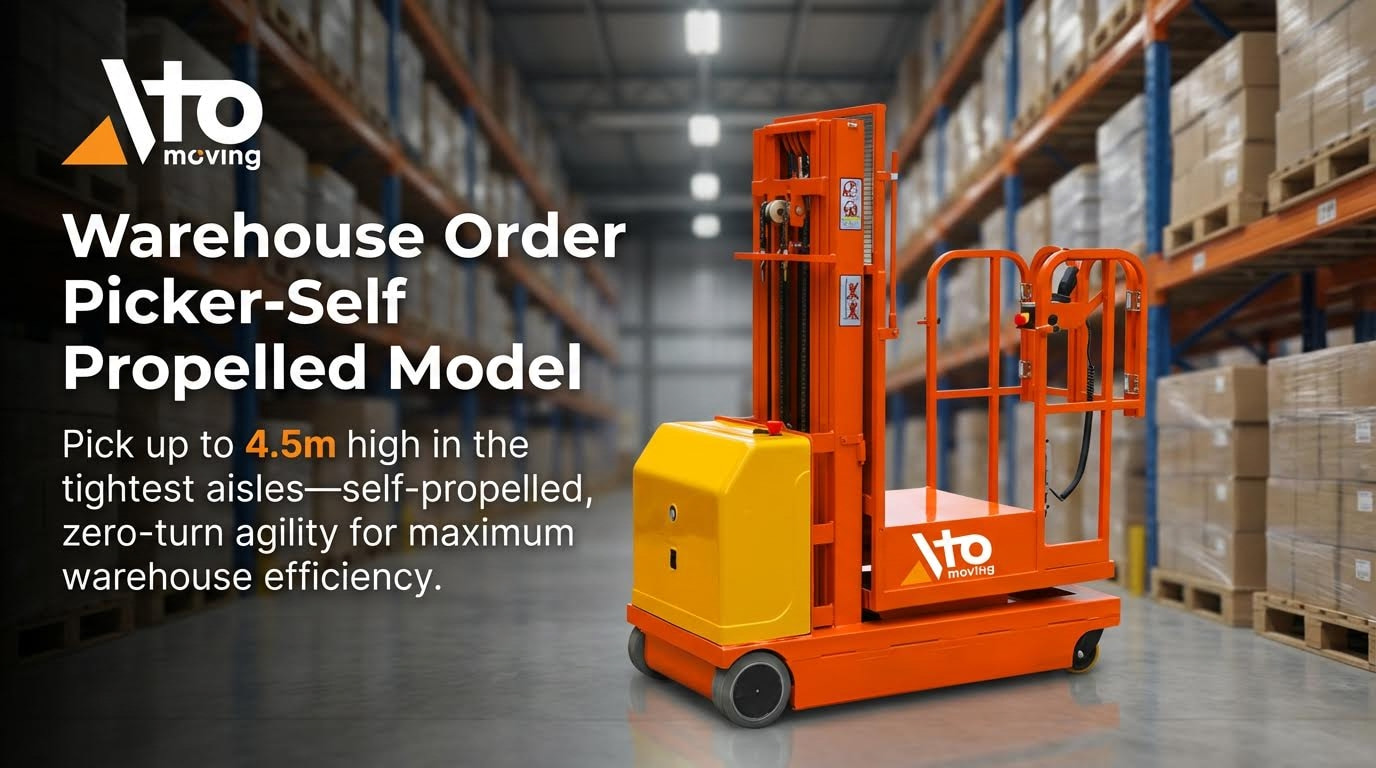
Safe load handling on a warehouse order picker means keeping weight, stability, traffic, and floor risks under tight control while using built‑in electronic safety aids correctly. This is the core of how to drive a warehouse cherry picker without incidents.
- Load handling: Know limits and center of gravity – Prevents tipovers and mast damage.
- Environment: Control traffic, pedestrians, and floor hazards – Cuts collision and slip risks.
- Technology aids: Use guidance, sensors, and limiters – Adds a backup layer when humans make mistakes.
💡 Field Engineer’s Note: Most order picker incidents I have seen started with a “small” overload or a wet patch on the floor, then escalated when the operator tried to correct while elevated. Keep loads conservative and floors clean; it is cheaper than repairs.
Load capacity, stability, and center of gravity
Load capacity, stability, and center of gravity define how much weight your order picker can lift safely and how aggressively you can steer or brake at height. Misjudging any of these is the fastest way to a tipover.
From a practical “how to drive a warehouse cherry picker” standpoint, you always start with the truck’s capacity plate and then mentally add every kilogram that goes onto the platform. That includes the operator, tools, pallets, and picked items. If any component rating is lower than the others, you treat that lowest number as the hard limit. Guidance from safety experts stresses that operators must consider the combined weight of the load, operator, and onboard tools and stay within the specified limits for the platform and carry deck. Exceeding those limits increases tipover and structural failure risk. Industry guidance on load capacity
| Item | Typical Guidance | Operational Impact |
|---|---|---|
| Rated truck capacity | Several hundred kg up to about 1,350 kg (3,000 lb) including operator and tools | Choose truck and racking so routine picks stay well below this number for stability margin. |
| Platform vs. carry deck ratings | Separate, with platform often lower than base truck rating | Do not “hide” heavy cartons on the platform if its rating is lower than the truck’s main rating. |
| Center of gravity (CoG) | Must stay within the truck’s stability triangle or polygon | Keep heavy items low and close to the mast; avoid cantilevering loads off the platform edge. |
| Load distribution | Even spread across pallet or platform surface | Prevents twisting forces on forks and reduces risk of sideways tipover when turning. |
- Check the capacity plate: Read the maximum kg rating for your lift height – Sets the hard limit for what you can pick.
- Add all weights: Load + operator + tools + packaging – Stops you from creeping over the limit “by a little.”
- Keep heavy mass low: Stack heavy cartons at the platform floor, light items higher – Reduces CoG height and sway.
- Stay centered: Keep pallets tight to the backrest or platform face – Prevents forward tipping moments.
- Slow at height: Reduce steering angle and speed when elevated – Limits lateral acceleration that can push CoG outside the stability triangle.
How to read capacity and stability in daily work
In real operations, you rarely calculate exact moments. Instead, you keep a simple rule: if you are close to the rating, you are already too heavy for rough floors, emergency braking, or side impacts. Supervisors should set internal “working limits” (for example, 70–80% of rated capacity) for routine tasks.
💡 Field Engineer’s Note: If operators regularly “feel” the truck rocking when they brake or steer at height, you are operating too close to the stability limit or stacking loads too high on the platform. Fix the layout or the work method before someone rides the truck over its tipping point.
Traffic management, pedestrians, and floor conditions
Traffic management, pedestrian control, and floor condition rules turn a narrow‑aisle warehouse from a chaos zone into a predictable, low‑risk driving environment for order pickers. Without them, even a skilled operator cannot drive safely.
Authoritative safety guidance recommends clearly defined traffic lanes, speed limits, right‑of‑way rules, floor markings, and designated pedestrian areas to avoid collisions where people and trucks mix. Traffic safety protocols for order pickers For anyone learning how to drive a warehouse cherry picker, these rules are as important as knowing the controls.
| Control Area | Typical Measure | Operational Impact |
|---|---|---|
| Traffic lanes | Painted or taped one‑way and two‑way routes | Reduces head‑on encounters and blind‑corner surprises. |
| Pedestrian zones | Clearly marked walkways, no‑truck areas | Keeps people away from turning and reversing trucks. |
| Speed control | Posted limits, slow zones near docks and crossings | Shortens stopping distance and reduces impact energy. |
| Right‑of‑way | Rules at intersections, doors, and end‑of‑aisle | Makes movements predictable so drivers can anticipate others. |
| Floor condition | Routine checks for spills, damage, and debris | Prevents skids, wheel snagging, and unplanned mast sway. |
- Use defined lanes: Stay inside painted truck routes at all times – Makes your path predictable for pedestrians and other drivers.
- Protect pedestrians: Treat marked walkways as “no‑go” for trucks – Separates people from high‑risk turning and reversing zones.
- Control speed: Slow before intersections, doors, and blind spots – Gives time to stop if someone steps out.
- Signal intent: Use horn and warning light when entering aisles or crossing – Alerts others before you appear from behind racking.
- Inspect floors: Watch for wet patches, loose shrink‑wrap, broken pallets, and potholes – These can cause sudden stops or side pull on the truck.
Why floor condition matters more with elevated platforms
When the platform is raised, even a small floor defect can create a large sway at operator level. A 10 mm hole or edge at floor level can feel like a violent jolt 6–8 m up. Keeping aisles smooth, clean, and free of debris is a structural control, not just housekeeping.
💡 Field Engineer’s Note: In mixed‑traffic warehouses, most serious near‑misses I investigated happened at the end of aisles where order pickers exit into cross‑aisles. Installing convex mirrors, enforcing a complete stop, and repainting stop lines every few months drastically reduced those events.
Final Thoughts On Order Picker Safe Operation
Safe order picker operation depends on how well engineering controls, procedures, and training work together in daily use. Geometry, capacity limits, and center of gravity rules define how far you can push the machine before it tips. Fall protection, guardrails, and harness systems then protect the operator if anything still goes wrong at height.
Pre-use inspections keep critical parts, brakes, hydraulics, and interlocks inside their design envelope. Controlled driving, low platform height during travel, and strict speed limits keep dynamic forces low, so the stability triangle is not exceeded. Load planning, conservative capacity use, and clean, flat floors reduce shock loads and sudden sway.
Traffic management, pedestrian separation, and clear visual cues turn the warehouse into a predictable system, not a guessing game. Technology aids and limiters on Atomoving order pickers add an extra layer, but they cannot replace trained, disciplined operators and firm supervision.
For operations and engineering teams, the best practice is clear. Treat order pickers as precision lifting systems, not general-purpose carts. Set internal limits below the nameplate ratings, enforce harness and PPE rules, and fix floor and traffic issues quickly. When in doubt, slow down, lower the platform, and stop the job until conditions are safe.
Frequently Asked Questions
Can I drive a cherry picker?
To drive a cherry picker, also known as a Mobile Elevating Work Platform (MEWP), you need proper certification and training. A high school diploma or equivalent is often required, along with a valid cherry picker certification that covers safe operation, pre-shift inspections, and load handling. Warehouse Cherry Picker Training.
What are the safety rules for operating a cherry picker?
When operating a cherry picker, follow these key safety rules:
- Always wear Personal Fall Protective Equipment (PFPE).
- Adhere to weight limits to avoid instability.
- Maintain controlled speed while moving the equipment.
- Stay aware of your surroundings to prevent accidents.
- Never leave the cherry picker unattended while in operation.
- Follow the manufacturer’s guidelines for safe use. Cherry Picker Safety Checklist.
How long does it take to complete a cherry picker training course?
A typical cherry picker training course lasts one day, usually from 8:30 AM to 4:30 PM. The course covers various types of cherry pickers under IPAF 3a, 3b, and 1b Operator Training. Cherry Picker Training Info.
What should I be aware of to prevent a cherry picker from tipping over?
To prevent a cherry picker from tipping over, be mindful of the following:
- Avoid working on uneven or sloped ground.
- Do not exceed the recommended weight limit for the platform.
- Ensure the equipment is stable before raising the platform. Cherry Picker Risk Guide.