Safe, efficient drum handling starts with understanding weight, stability, and the right equipment for each move. This guide explains how to transport drums in plants and on the road while controlling spill, injury, and damage risks. You will learn how to match handling tools to drum weight and duty cycle, apply proven securing methods, and design pallets and layouts that keep operations compliant and productive. Whether you move a few drums a week or hundreds per shift, these best practices help you standardise your drum transport program.
Fundamentals Of Industrial Drum Transport
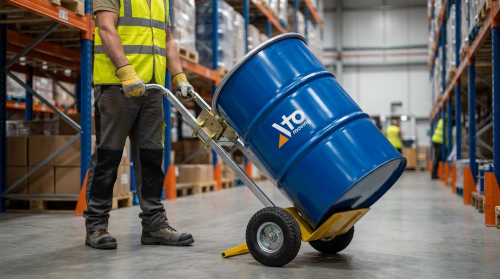
Fundamentals for how to transport drums start with understanding drum weight, center of gravity, and how different routes change risk. Get these wrong and even perfect equipment or strapping will not prevent spills or tip-overs.
Drum weights, stability, and center of gravity
Drum weight and center of gravity directly control tip-over risk, required equipment, and safe driving speeds when planning how to transport drums. Most incidents start with someone underestimating mass or how liquid moves inside the drum.
| Parameter | Typical Value / Range | Engineering Concern | Operational Impact |
|---|---|---|---|
| Typical drum size | 205–210 L (55-gallon) | High mass in a narrow footprint | Requires stable base and positive restraint on all moves |
| Filled drum mass | ≈180–360 kg | High inertia and crush potential | Manual rolling is unsafe; use drum dolly, or forklifts |
| Manual hand truck/dolly rating | ≈450–500 kg capacity for typical drum carts | Must exceed worst-case drum mass | Comfortably carries one full drum with safety margin |
| Drum dolly capacity | Up to ≈500 kg for standard models | Supports upright drums at low height | Good for short in-plant moves on smooth floors |
| Drum palletiser/stacker capacity | Up to ≈450 kg per drum for typical units | Vertical lift to pallet or rack height | Bridges gap between manual tools and forklifts |
| Forklift drum load | Often ≥400 kg including attachment for dense liquids | Near truck residual capacity | Requires capacity check at the correct load centre |
For stability, think of each drum as a tall, heavy cylinder with a small footprint and a center of gravity near its mid-height. Any lateral acceleration (turning, braking on a slope, impact with a floor joint) creates an overturning moment about the drum edge.
- Filled drums: Mass is high and contents are rigid – tip-over mainly comes from external forces and poor restraint.
- Partially filled drums: Liquid sloshes and shifts – dynamic center-of-gravity movement makes them much easier to overturn.
- Drums on pallets: Combined center of gravity rises with stacking – stack height and pallet condition now drive stability.
Forklifts, drum trucks, and dollies must not only be strong enough; they must also keep the drum’s center of gravity inside a stable support polygon. This means wide wheelbase, low lift height during travel, and positive capture of the drum body or rim.
How to estimate drum mass before moving
Use: Estimated mass (kg) ≈ product density (kg/L) × fill volume (L) + drum tare mass. If density is unknown, assume 1.0 kg/L for water-like liquids and add 10–20% safety margin for denser chemicals.
💡 Field Engineer’s Note: Treat every “partially full” drum as more hazardous than a full one when planning routes and speeds. Sloshing can double the lateral load at the point where a forklift or hand truck hits a floor joint, snapping straps or flipping a cart that seemed stable on paper.
Local vs. over-the-road transport risk profiles
Local in-plant drum moves and over-the-road freight runs expose drums to very different hazards, so how to transport drums safely depends heavily on whether you stay inside the plant fence or go onto public roads.
| Aspect | Local / In-Plant Drum Moves | Over-the-Road Drum Transport | Operational Impact |
|---|---|---|---|
| Typical distance | Metres to a few hundred metres | Several kilometres to hundreds of kilometres | Road moves see many more vibration and braking cycles |
| Main equipment | Hand trucks, drum dollies, pallet jacks, forklifts, drum stackers for repetitive flows | Palletised drums on trucks or containers | Plant focuses on handling impacts; haulier focuses on load restraint |
| Floor/road conditions | Concrete floors, dock plates, thresholds, slopes | Road camber, potholes, emergency braking, cornering | Local moves need good wheel choice; road moves need robust blocking |
| Key hazards | Crush injuries, tip-over at thresholds, manual handling strain from push–pull forces | Load shift, pallet collapse, leak spreading over long distances | In-plant risk is people-centric; road risk is containment-centric |
| Securing method | Drum clamps, rim grabs, cradles, low travel height, slow speed | Pallets, straps, load bars, blocking and bracing in trailer | Plant uses equipment geometry; haulier uses friction and mechanical restraint |
| Packaging requirements | Often original drum only | Pallets with tight deck gaps, straps, and overpack slipcovers for 55-gallon drums | Road shipments need impact and abrasion protection |
| Weight limits (example guidance) | Based on equipment rating and floor capacity | Some services limit combined pallet weight to about 1,000 kg and three pallets per shipment for drum consignments | Requires load planning and possible load splitting |
- In-plant moves: Focus on route quality – repair floor defects, control slopes, and limit manual push forces.
- Dock-to-warehouse transfers: Use forklifts with drum grabs and low travel height – this minimizes tip risk at ramps and dock plates.
- Road shipments: Build stable pallets and secure them aggressively – braking and cornering will try to roll or slide every drum.
For over-the-road moves, drums should sit on plastic or hardwood pallets with deck gaps under about 20 mm (0.8 in) to support the chimes. They must be strapped with at least two robust bands and often covered with 2-ply or 3-ply cardboard slipcovers to resist dents and abrasion during transit. Standard freight guidance for 55-gallon drums illustrates these practices.
Why road braking is harder on drums than plant driving
Truck emergency braking can easily exceed 0.5 g of deceleration. This is far higher than typical in-plant forklift braking, so any slack in straps or gaps in blocking will let drums slide, tilt, or punch through pallet edges.
💡 Field Engineer’s Note: When I investigate road spills, the root cause is almost always upstream in the plant: pallets with damaged boards, drums overhanging edges, or mixed-height stacks. Build “road-ready” pallets in the warehouse, not on the trailer, and your transport incident rate will drop sharply.
Equipment, Securing Methods, And Technical Standards
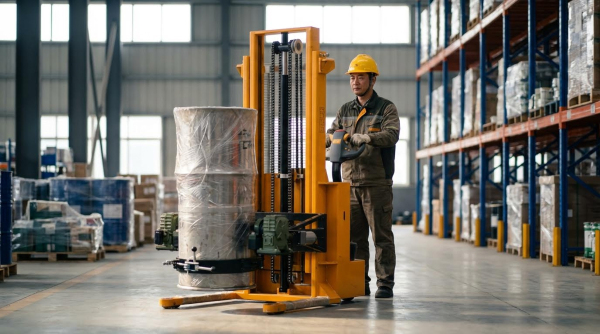
This section explains how to transport drums safely by matching equipment, securing methods, and standards to drum weight, contents, and journey type. The goal is stable loads, low ergonomic risk, and compliance with technical and regulatory limits.
Selecting drum handling equipment by duty cycle
Select drum handling equipment by drum mass, handling frequency, travel distance, and floor conditions to balance safety, ergonomics, and lifecycle cost.
For anyone asking how to transport drums inside a plant, equipment choice is your first and most important control. The wrong cart or truck turns every move into a near-miss; the right one makes 360 kg drums feel routine.
| Scenario / Duty Cycle | Typical Drum Mass | Preferred Equipment | Key Limits / Specs | Operational Impact |
|---|---|---|---|---|
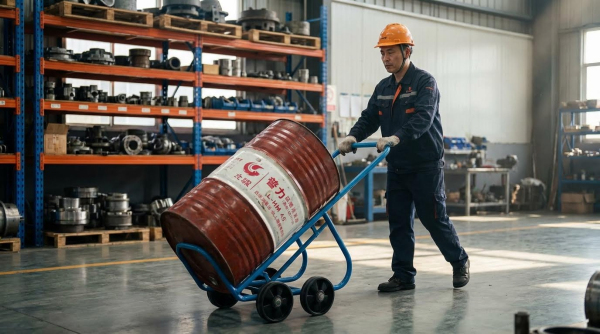
| Occasional, short moves on smooth floors | 180–360 kg (200–210 L) | Hand truck, drum cart, drum dolly | Dolly/hand truck capacity ≈ 450–500 kg – capacity guidance | Low capital cost, suited to low-frequency work on good floors. |
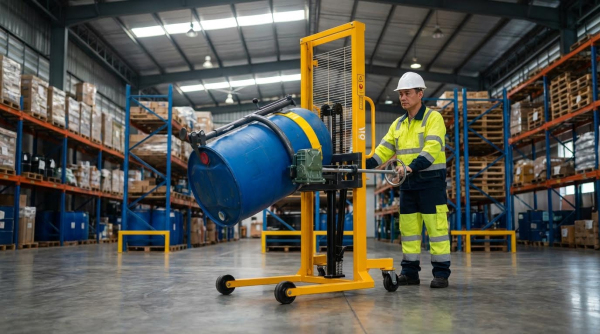
| Frequent moves, long routes, production flows | Up to ≈ 360–400 kg per drum | Forklift with drum attachment, palletiser stacker | Forklift must handle combined drum + attachment mass with margin – residual capacity | High throughput, reduced strain, but needs trained operators and inspections. |
| Narrow aisles, dense racking | Up to ≈ 360 kg | Compact pallet loader, drum cradle, hand truck | Small turning radius, ability to straddle pallets – narrow aisle suitability | Access into tight storage without reconfiguring racking. |
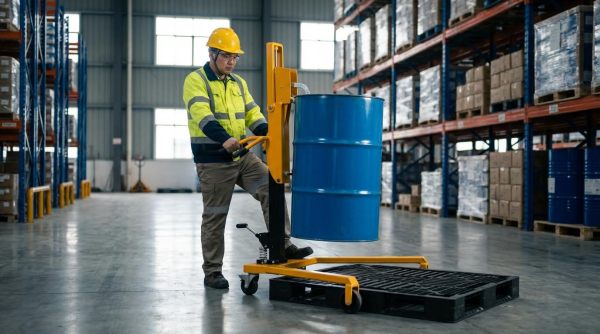
| Frequent filling / decanting | Liquid drums 180–360 kg | Drum cradle or rotator with controlled pour | Support during 360° rotation for pouring – cradle benefits | Reduces slosh, impact loads, and spill risk when tipping drums. |
| Intermediate solution, no forklifts available | Up to ≈ 450 kg | Drum palletiser stacker | Lifts drums to pallet height using hydraulic jacks – stacker capacity | Bridges gap between manual and fully powered handling. |
- Match equipment to frequency: Use forklifts or stackers for high-frequency moves – they amortise cost through productivity and fewer injuries.
- Respect ergonomic limits: Limit hand trucks and dollies to occasional moves – push–pull forces, not just mass, drive injury risk.
- Check floor conditions: Avoid small-wheeled dollies on cracked or uneven floors – they stop dead on thresholds and can flip drums.
- Consider contents hazard: Prioritise positive clamping and smooth travel for hazardous liquids – this reduces slosh, venting, and spill exposure.
- Think lifecycle cost: Include downtime, injury, and spill clean-up in your business case – cheap gear is often the most expensive to own.
💡 Field Engineer’s Note: When you push a fully loaded drum dolly over just a 2–3% slope, real push forces often exceed safe ergonomic limits. If drums routinely cross ramps, step up to a palletiser stacker or forklift attachment instead of “just one more push.”
How to quickly screen equipment for a new drum flow
List drum types, maximum masses, and daily move counts. Note longest travel distance and steepest slope. If more than 20–30 full drums move per shift over mixed floors, plan for at least one powered solution (stacker or forklift attachment) dedicated to that flow.
Forklift drum attachments and stability calculations
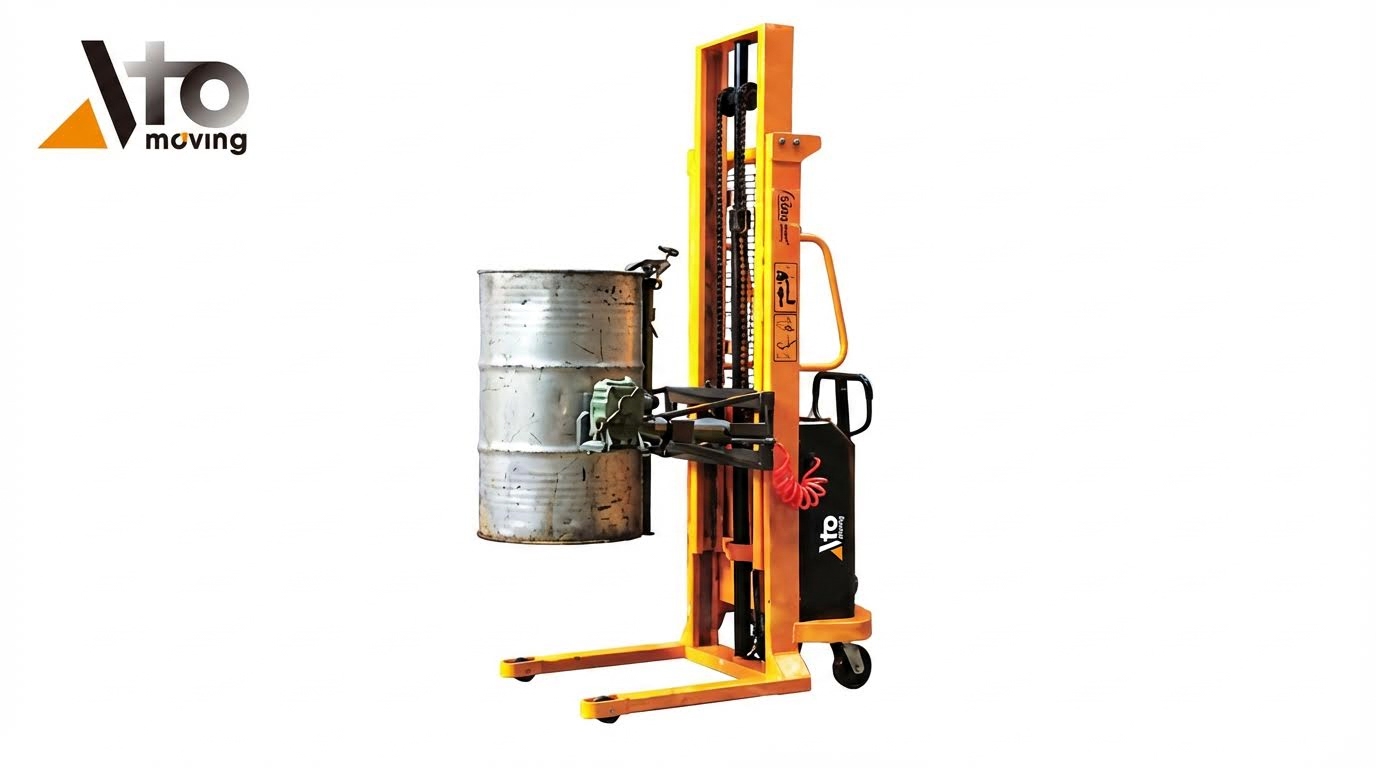
Forklift drum attachments must be sized against drum mass and forklift residual capacity, then operated with controlled mast height and tilt to keep the combined system stable.
In any discussion of how to transport drums safely with forklifts, stability is non‑negotiable. You are effectively extending the truck’s load centre with heavy, sometimes sloshing, cylinders.
| Design / Check Item | Typical Engineering Guideline | Why It Matters For Stability |
|---|---|---|
| Drum mass | Standard 200–210 L drums: 180–360 kg depending on product – typical range | Base number for attachment sizing and capacity checks. |
| Attachment capacity | Must exceed max drum mass by a clear safety margin (commonly 25–50%) | Prevents overload of clamps, pivots, and rotators during dynamic moves. |
| Forklift residual capacity | Rated capacity at given load centre minus attachment mass | Ensures truck remains within its stability triangle with drum attached. |
| Fork length vs drum diameter | Fork length should exceed drum diameter for palletised loads – engagement guidance | Maintains support under the drum or pallet, reducing tip‑forward risk. |
| Mast height during travel | Forks typically 150–200 mm above floor with slight rear tilt – travel practice | Keeps centre of gravity low while avoiding ground contact or snagging. |
| Driving behaviour | No pushing drums with forks; no release while truck is moving – safety guidance | Prevents impact loads and uncontrolled rolling that defeat stability calculations. |
- Start with the heaviest credible drum: Use maximum fill and highest density product for calculations – this is your design case.
- Check residual capacity: Subtract attachment mass from forklift rating at the working load centre – if you are close to the limit, down‑rate the route or upsize the truck.
- Use purpose‑built clamps: Rim or waist grippers matched to drum type resist slippage – especially important with wet or oily drums.
- Control tilt and speed: Small mast tilt back, low speed, and no sharp steering – this keeps dynamic side loads inside the stability triangle.
- Leverage automation: Where available, use interlocks, dual‑button controls, and telematics – they reduce accidental release and flag unsafe driving patterns.
💡 Field Engineer’s Note: When you add a heavy drum rotator, you effectively move the load centre 100–200 mm forward. Many “nominally adequate” trucks end up overloaded at that new load centre, especially on gradients. Always get an updated capacity plate from your attachment supplier or a competent engineer.
Quick field check for marginal stability
If the truck feels light on the rear axle when braking gently with a full drum at travel height, you are probably too close to the capacity limit. Stop the job, lower the load, and recalc with actual drum and attachment masses before continuing.
Pallet design, blocking, bracing, and load restraint
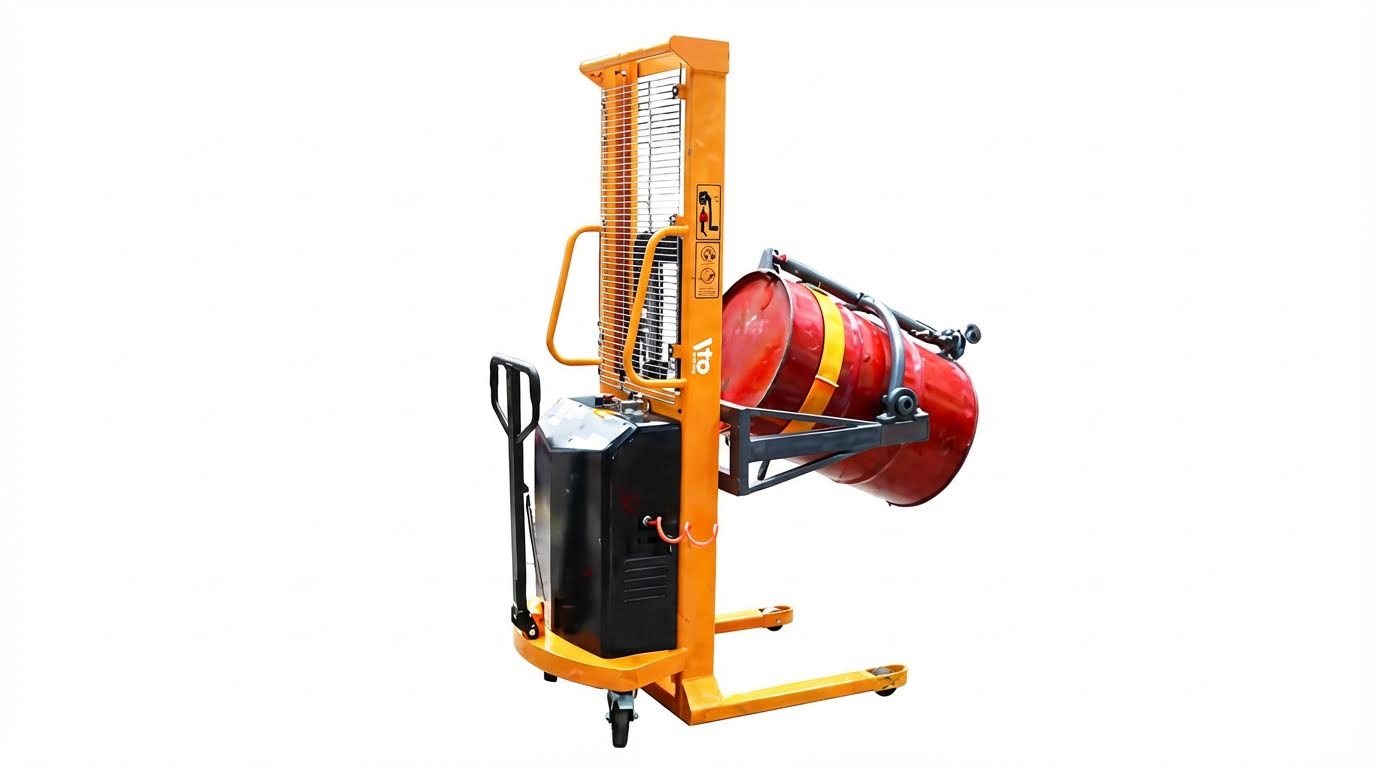
Pallets, blocking, and restraints must keep drums upright, immobile, and protected from puncture during handling and transport, from the warehouse floor to over‑the‑road shipping.
Once drums are on pallets, the question of how to transport drums becomes a load‑integrity problem. You are now designing a small structure that must survive forklifts, loading docks, and motorway braking events.
| Element | Key Requirement | Operational Impact | ||||||||||||||||||||||||||||||||||
|---|---|---|---|---|---|---|---|---|---|---|---|---|---|---|---|---|---|---|---|---|---|---|---|---|---|---|---|---|---|---|---|---|---|---|---|---|
| Pallet deck and gaps | Use plastic or hardwood pallets with plank gaps < 20 mm (0.8 in) for 55‑gallon drums – pallet gap limit | Prevents chime edges from dropping into gaps and destabilising drums. | ||||||||||||||||||||||||||||||||||
| Pallet condition | Sound deck boards and stringers, no protruding nails or broken boards – pallet integrity | Reduces puncture risk and tilt when forklifts pick or set down loads. | ||||||||||||||||||||||||||||||||||
| Drum layout | Typical pattern: four 200 L drums per pallet, centres aligned symmetrically – layout guidance | Creates a compact, self‑bracing cluster with a low combined centre of gravity. | ||||||||||||||||||||||||||||||||||
| Strapping to pallet | Minimum two metal or unbreakable plastic straps per pallet load – strap requirement | Locks drums to pallet so the unit behaves as one rigid mass under braking. | ||||||||||||||||||||||||||||||||||
| Corner / strap protectors | Use cleats or protectors under straps – strap protection | Prevents strap damage to chimes and coatings while allowing high tension. | ||||||||||||||||||||||||||||||||||
| Overpack slipcovers | Cover entire pallet with 2‑ply or 3‑ply cardboard slipcover – overpack guidance | Protects against dents and abrasions during road or air transport. | ||||||||||||||||||||||||||||||||||
| Shipment weight limits | Some carriers limit to three pallets
Applying Best Practices In Real-World OperationsApplying best practices for how to transport drums means matching equipment, layout, and securing methods to real plant constraints and shipping conditions. This section turns theory into concrete rules for in-plant moves and outbound freight. Local in-plant drum moves and narrow aisle layoutsIn-plant drum moves focus on short distances, tight spaces, and repetitive handling, so equipment choice and driving rules directly control spill and injury risk.
How to transport drums safely inside the plant – quick checklist
Preparing drum pallets for regional and long-haul shippingPreparing drum pallets for regional and long-haul freight means using engineered pallets, blocking, and overpacks so drums stay locked in place under braking and impacts.
How to transport drums on pallets for road freight – field steps
“” Final Considerations For Drum Transport ProgramsSafe drum transport depends on three linked pillars: correct mass estimation, stable geometry, and engineered restraint from plant floor to highway. When you understand drum weight and centre of gravity, you can choose equipment that keeps loads inside a stable base and within ergonomic and capacity limits. When you design pallets, routes, and forklift operations around that geometry, you cut tip-over and crush risk sharply. Local moves demand tight control of floor quality, slopes, and aisle width. Over-the-road moves demand robust pallets, strapping, and blocking that turn groups of drums into rigid units. In both cases, you must treat partially filled drums and mixed loads as higher risk and slow operations accordingly. The most effective drum transport programs use standardised tools, fixed routes, and written rules that link equipment type, drum mass, and journey length. They also budget for fit-for-purpose gear from suppliers such as Atomoving instead of stretching manual methods. If you treat every pallet as a small structure and every move as a calculated load case, you will reduce spills, injuries, and damage while keeping throughput high and audits uneventful. Frequently Asked QuestionsHow do you transport a drum set safely?Transporting a drum set requires careful packing and the right equipment. Line the inside of the drums with cardboard and paper to protect both the interior and exterior surfaces. Wrap the outside of the drums with bubble wrap to safeguard the hardware and shells during transit. For moving heavier components, use equipment like dollies or hand trucks to prevent strain or damage. What equipment is best for moving 55-gallon drums?To move 55-gallon drums safely, it’s essential to use proper material handling equipment. Forklifts, pallet jacks, and drum dollies are ideal tools for this task. Attempting to manually roll or lift these containers can lead to accidents and injuries. Always ensure the equipment is rated for the weight and size of the drum being transported. How is concert equipment, including drums, transported for shows?Concert tours rely on specialized logistics companies to transport equipment like drums, instruments, and electronics. These companies handle imports, exports, customs, and freight using trucks, air, and sea transport. Equipment is packed into custom-made steel cases or work boxes to ensure safe transit. Concert Logistics Guide. |