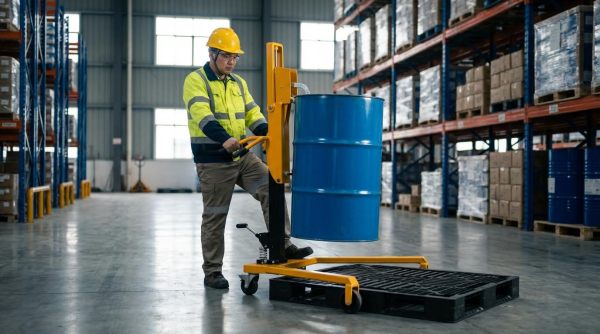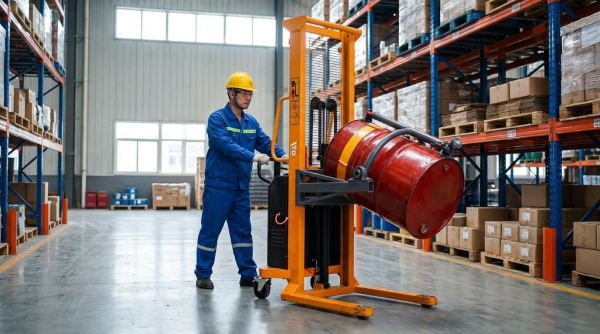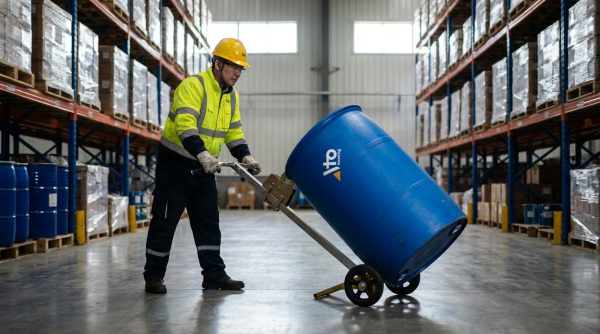
A drum used to transport crude oil is a standardized cylindrical container, typically around 200 L, engineered to move dense, often flammable liquid safely through manual and mechanical handling systems. This guide explains how drum specs, handling physics, and equipment choices affect safety, efficiency, and regulatory compliance when moving crude oil drums in real facilities.
Key Specifications Of Crude Oil Drums And Barrels
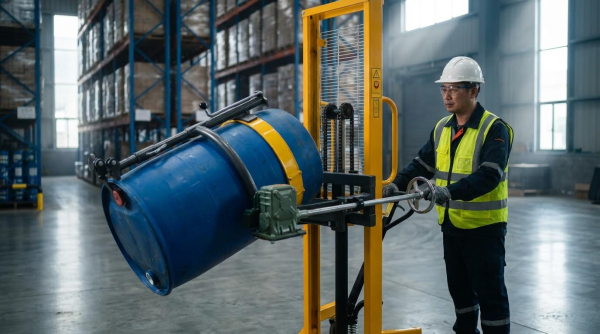
The key specifications of a drum used to transport crude oil focus on capacity, external dimensions, construction material, and closure type because these directly affect compatibility with handling equipment, stacking safety, and leak control. Most facilities standardize on a few drum sizes to simplify storage layouts, pallet patterns, and transport clearances through 2.1 m doors and typical warehouse aisles.
Standard drum capacities and dimensions
Standard capacities and dimensions for a drum used to transport crude oil typically follow global 200 L (55-gallon) and 60 L classes, with tight tolerances that allow predictable stacking and handling with drum trucks, dollies, and clamps. Even small dimensional differences matter because they influence pallet fit, vehicle loading patterns, and the reach geometry of lifters and stackers.
| Drum Type | Nominal Capacity | Typical External Height | Typical External Diameter | Empty Mass (Approx.) | Operational Impact |
|---|---|---|---|---|---|
| Standard steel tight-head drum | 200 L (55 gal) | ca. 880–900 mm | ca. 570–600 mm | ca. 16–20 kg | Global crude oil standard; fits two across on 1,200 mm pallets; compatible with most drum trucks and rim clamps. |
| Open-head steel drum | 200 L (55 gal) | ca. 870–900 mm | ca. 570–600 mm | ca. 18–22 kg | Used for viscous or solidifying products; removable lid adds height variation that affects stacking clearance. |
| Medium drum | 60–120 L | ca. 600–900 mm | ca. 400–500 mm | ca. 8–15 kg | For samples and specialty crude blends; smaller footprint eases manual positioning but increases unit count per batch. |
| Plastic tight-head drum | 200 L (55 gal) | ca. 900–1,000 mm | ca. 580–620 mm | ca. 8–12 kg | Lighter handling but larger deformation under clamping; needs well-matched grab profiles and lower stacking heights. |
These dimensions are indicative ranges, not design-certified values. Engineering teams should always verify the exact height and diameter from the drum’s technical data sheet before specifying lifter stroke, racking beam spacing, or vehicle deck clearances.
- Height tolerance: Allow at least 20–30 mm extra clearance in racking and under mezzanines – Prevents impact when lifting slightly overfilled or bulged drums.
- Diameter tolerance: Assume ±5–10 mm when designing cradles and V-blocks – Ensures drums sit fully supported without point loading.
- Stacking pattern: Use 2×2 on 1,200 × 1,000 mm pallets for 200 L drums – Gives a stable base for strapping and forklift transport.
- Weight range: Full 200 L crude oil drums often reach 200–350 kg – Critical for drum truck rating and floor load checks.
How to verify a drum’s working dimensions on site
Measure height from floor to highest point on the chime or lid, including any bungs. Measure diameter at the widest rolling band, not at the thinner central body. Record both to the nearest 5 mm and compare with equipment catalog limits before first use.
💡 Field Engineer’s Note: When you mix steel and plastic 200 L drums in the same area, assume the tallest and widest variant when setting guard rail heights and aisle widths. Plastic drums often bulge a few millimeters when filled warm, which can snag on fixed guides or clamps set too tight.
Materials, closures, and drum construction
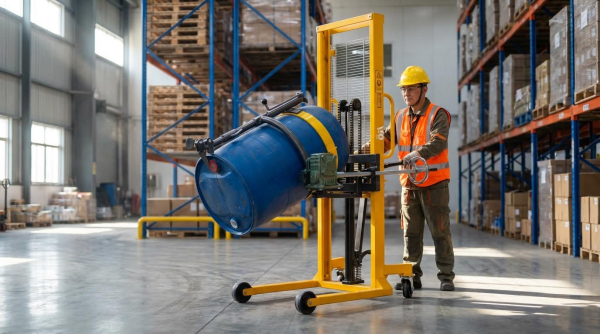
The material, closure, and construction of a drum used to transport crude oil determine its compatibility with flammable liquids, resistance to internal pressure, grounding requirements, and whether it suits single-trip or long-term re-use. These choices also drive which handling attachments are safe, especially in hazardous (ATEX) areas where sparking and static build-up are critical concerns.
| Design Aspect | Common Options | Typical Application For Crude Oil | Operational Impact |
|---|---|---|---|
| Shell material | Carbon steel, stainless steel, HDPE (plastic) | Carbon steel for bulk crude; stainless for corrosive fractions; HDPE mainly for refined or specialty liquids | Steel supports earthing and higher stacking loads; plastic reduces weight but needs careful clamping and static control. |
| Head type | Tight-head (closed), open-head (removable lid) | Tight-head preferred for crude oil to minimize leak paths and vapor release | Tight-head drums work best with bung pumps and tilting pourers; open-head simplifies cleaning but adds gasket maintenance. |
| Closures | 2″ and 3/4″ threaded bungs with gaskets | Standard pattern for pump and vent fittings | Correct torque and gasket selection prevent seepage during tipping, rolling, and transport vibration. |
| Body profile | Straight sidewall, rolling hoops/chimes | Hooped steel drums dominate crude oil logistics | Hoops stiffen the shell and define the rolling diameter for drum trucks and cradles. |
| Internal coating | Unlined, epoxy/phenolic lined | Unlined for stable crude; lined for aggressive or high-sulfur blends | Lining protects the drum from corrosion but must tolerate operating temperature and cleaning methods. |
| UN / performance rating | UN-marked for liquids, pressure-tested | Required for hazardous crude oil in international transport | Specifies maximum gross mass and stacking test load, guiding safe racking heights. |
- Steel drums: Welded carbon steel shells with reinforced chimes – Provide robust impact resistance when using forklifts, clamps, and cranes.
- Plastic drums: Blow-molded HDPE bodies – Lower tare mass but deform more under banding and clamp pressure.
- Tight-head construction: Permanently attached top with bungs only – Best for volatile crude fractions where vapor containment is critical.
- Open-head construction: Separate lid with bolt ring or lever lock – Useful if residues must be cleaned, but less ideal for long-distance crude transport.
- Reinforcing hoops: Rolled ribs around the circumference – Control denting and help the drum roll straight on dollies and cradles.
Grounding and compatibility checks for steel vs plastic drums
For flammable crude oil, steel drums allow direct earthing via clamps on the chime or bung ring, reducing static risk during pumping. Plastic drums need additional bonding strategies, such as conductive inserts or bonded pump assemblies, and may not be suitable in some explosive atmospheres without specialist approval.
💡 Field Engineer’s Note: When you specify drum grabs or forklift attachments, always confirm whether your crude oil comes in tight-head steel drums or mixed plastic/steel packaging. A clamp tuned for rigid steel hoops can crush a plastic drum or slip on a smooth-sided design, especially when the center of gravity shifts during travel.
Engineering Considerations For Safe Drum Handling
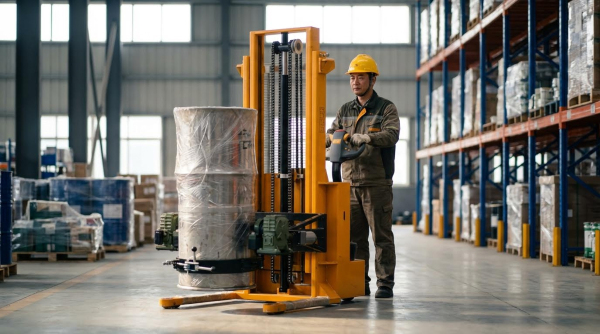
Engineering safe handling for a drum used to transport crude oil means controlling load, stability, ignition sources, and operator strain through correct equipment, route design, and procedures that match liquid behavior and regulatory requirements.
This section explains how load physics, hazardous area rules, and ergonomics interact when you move or store a drum used to transport crude oil, so you can specify equipment and procedures that actually work on a real shop floor.
Load, center of gravity, and sloshing effects
When you move a drum used to transport crude oil, the liquid’s shifting center of gravity and sloshing can multiply forces on the drum, the equipment, and the operator.
- Typical drum mass: 200–350 kg full – Sets the baseline for equipment capacity and floor loading.
- Center of gravity (CoG): On the drum axis when upright – Shifts quickly when tilting or accelerating.
- Sloshing: Free liquid surface moves during starts, stops, and turns – Creates dynamic loads higher than static weight.
- Contact patch: Small footprint when rolling on the chime – Increases floor pressure and damage risk.
- Operator leverage: Long handles reduce input force – But increase arc radius and swing risk in tight aisles.
Oil drums typically weigh between 200 kg and 350 kg when full, so handling equipment should provide at least a 25% capacity margin to account for dynamic effects and unknown overfill tolerances. This margin helps prevent overload when the liquid surges during movement.
The center of gravity of a drum used to transport crude oil lies on the drum’s vertical axis when it stands upright, but it shifts during tilting, cornering, or ramp travel. As the drum tips, the liquid mass climbs up one side, moving the CoG toward the upper quadrant and increasing overturning moments on dollies, trucks, or clamps.
- Item: Slow acceleration and deceleration – Reduces liquid surge and peak forces on grabs and frames.
- Item: Avoid sudden steering inputs – Prevents side loads that can roll a drum off a dolly or clamp.
- Item: Keep drum axis vertical for travel – Minimizes CoG shift and slosh amplitude.
- Item: Use positive mechanical restraints – Stops drums sliding or rotating in cradles.
- Item: Respect floor gradients and transitions – Ramps and thresholds amplify slosh and tipping risk.
How sloshing changes effective load
When a drum is partially filled, the free surface can oscillate at its natural frequency. A quick stop at the wrong moment can stack the liquid against one wall, momentarily adding significant side load to clamps, pallet edges, or truck tines. This is why rated capacity must exceed static drum weight and why operators should brake gently.
💡 Field Engineer’s Note: On ramps steeper than about 3–4%, I treat every partially filled crude oil drum as a higher-risk load. The combination of gravity pull and slosh can “walk” a drum out of a marginal clamp; use travel in the lowest gear, keep the drum as low as possible, and, where feasible, move drums uphill empty and downhill full using powered equipment only.
Regulatory and hazardous area requirements
Safe handling of a drum used to transport crude oil must align with flammable liquid regulations and hazardous area standards, especially where vapors or spills can create explosive atmospheres.
Before moving crude oil drums, you should classify the liquid by flammability, toxicity, and reactivity using its safety data sheet, then define spill zones and ignition controls along the handling route. This includes slopes, drains, and low-lying areas where vapors may accumulate.
- Item: Use safety data sheets (SDS) – Confirms flash point, vapor density, and required control measures.
- Item: Define spill and vapor zones – Allows you to set no-ignition and no-pedestrian areas.
- Item: Provide sealed drum attachments – Reduces leak paths at bungs and rims during lifting.
- Item: Stage spill kits and absorbents – Shortens response time if a drum fails.
- Item: Separate traffic from ignition sources – Prevents contact with hot surfaces, welding, or open flames.
Safe oil drum handling must comply with OSHA rules for flammable liquids and with ATEX or equivalent standards in explosive atmospheres. OSHA frameworks require proper storage, secondary containment, and spill control, while ATEX compliance involves limiting mechanical sparking and surface temperatures on handling equipment. Equipment in zoned areas should use certified components for brakes, hydraulics, and electrical parts.
- Item: Non-sparking contact surfaces – Reduces ignition risk if a drum scrapes a frame or floor.
- Item: Conductive wheels and bonding – Dissipates static charge during rolling or pumping.
- Item: Rated electrical equipment – Prevents arcs from motors, sensors, or controls in vapor zones.
- Item: Secondary containment on routes – Stops spills from entering drains or soil.
- Item: Controlled ventilation – Dilutes vapors where drums are opened or filled.
Typical hazardous area controls around crude oil drums
Common controls include earthing points at filling stations, anti-static hoses for drum pumps, exclusion of non-rated forklifts from ATEX zones, and dedicated drum storage racks with built-in sumps. Routes between storage and process areas should avoid pits and trenches where vapors could collect.
💡 Field Engineer’s Note: In real plants, the weak point is often “temporary” storage: two or three crude oil drums parked near a process line. Treat every temporary parking spot as if it were permanent: check floor condition, drainage, ventilation, and distance from ignition sources before you approve it as a staging area.
Ergonomics and injury risk controls
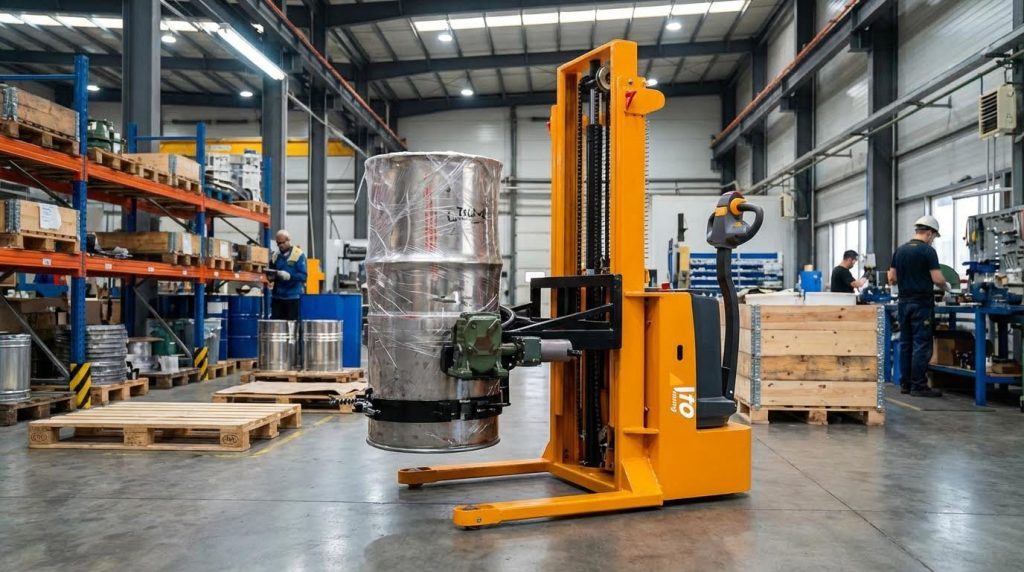
Ergonomically safe handling of a drum used to transport crude oil means designing tasks so operators never have to manually lift, catch, or arrest the full drum weight, and can push with neutral joint posture.
Manual handling of oil drums exposes workers to high compressive forces on the spine and heavy shoulder loading, especially when tipping drums from vertical to rolling position or when arresting a rolling drum. Facilities should minimize direct lifting by using engineered aids like drum cart, drum trucks, and powered lifters. Adjustable handles and low rolling resistance casters further reduce strain.
- Item: Replace lifting with rolling or powered lifting – Moves load paths from the spine to equipment.
- Item: Use long, height-adjustable handles – Keeps wrists neutral and reduces bending.
- Item: Specify low-resistance casters – Cuts push force, especially on long routes.
- Item: Design for pushing, not pulling – Improves body mechanics and visibility.
- Item: Avoid twisting with a loaded drum – Reduces torsional stress on knees and lower back.
Operators should push rather than pull drums and maintain neutral wrist posture when using trucks or dollies. Pushing aligns the operator’s body behind the load, improves sightlines, and reduces the risk of shoulder overuse. Neutral wrist and straight-arm postures lower the chance of repetitive strain injuries when moving multiple drums per shift.
Simple ergonomic checks for drum routes
Walk the full route a drum used to transport crude oil will take. Check door thresholds, slopes, and tight corners that force awkward body positions. Measure push forces with a simple force gauge; if operators consistently exceed recommended push limits, upgrade casters, reduce gradients, or switch to powered aids.
💡 Field Engineer’s Note: Any time you see operators “catching” a rolling crude oil drum by hand, you have an uncontrolled risk. Install physical stops, use chocks, and train staff to let the equipment, not their backs and shoulders, absorb the energy of a moving drum.
Equipment Selection For Crude Oil Drum Transport
Equipment for a drum used to transport crude oil must match drum weight, movement distance, lift height, and hazard level to avoid spills, strains, and tip-overs while keeping throughput high.
Choosing the right solution starts with the basics: full drum mass, floor conditions, route length, and whether you only move horizontally or also lift to pallets, racks, or trucks. From there you match manual, semi-powered, or fully powered systems to your risk profile, regulations, and budget.
- Capacity margin: Size equipment for at least 25% above the heaviest full drum – absorbs slosh and impact loads.
- Movement pattern: Short, occasional moves vs. continuous flow – drives manual vs. powered choice.
- Hazard zone: Ordinary vs. explosive area – defines ATEX and grounding needs.
- Interface points: Floor, pallets, racks, trucks, mixers – dictates lift height and rotation features.
💡 Field Engineer’s Note: When you move crude oil drums on slightly uneven floors, equipment that feels “oversized” on paper quickly becomes the safest option because sloshing and small floor steps can spike dynamic loads far above the static drum weight.
Drum trucks, dollies, and horizontal movement
Drum trucks and dollies move a drum used to transport crude oil horizontally over short to medium distances with minimal lifting, reducing manual strain and spill risk compared with rolling drums on their rims.
They are your first line of engineered control before you ever let an operator “manhandle” a 200 L crude oil drum. The choice depends on route length, floor quality, and how often drums start and end at floor level vs. pallets.
| Equipment Type | Typical Capacity Range | Main Use Case | Key Features | Operational Impact |
|---|---|---|---|---|
| Drum dolly | Up to about 350 kg per drum | Short moves on flat floors | Low platform with 3–4 swivel casters for 360° movement | Lets one person reposition a full crude oil drum in tight spaces without lifting |
| Drum truck (hand truck) | Typically sized for 200 L drums, up to about 350 kg | Longer pushes between workstations or storage | Tilting lever action, two main wheels, sometimes small rear casters | Allows one operator to tip and roll a full drum over tens of meters safely |
| Low-profile drum cart | Similar to drum trucks; often 350–450 kg class | Moving drums that must stay upright | Cradle or ring keeps drum vertical; push handle and fixed/swivel wheel mix | Reduces spill risk when moving partially filled or sensitive liquids |
- Drum dollies: Provide 360° maneuverability with swivel casters – ideal for repositioning drums under racks, near pumps, or in congested bays. Source
- Drum trucks: Let one operator tip and roll a 200 L drum over longer distances – cuts the need for two-person handling and reduces back strain. Source
- Caster selection: Polyurethane treads on swivel casters lower rolling resistance and protect floors – important for smooth concrete and epoxy-coated surfaces. Source
How to choose between a drum dolly and a drum truck
Use a drum dolly when the drum stays mostly upright and the move distance is under about 10–15 m on flat floors. Choose a drum truck when routes are longer, involve small ramps, or when operators must tilt the drum to negotiate thresholds. For mixed tasks, a low-profile cart with a retaining ring often provides a good compromise.
Lifters, stackers, and vertical handling
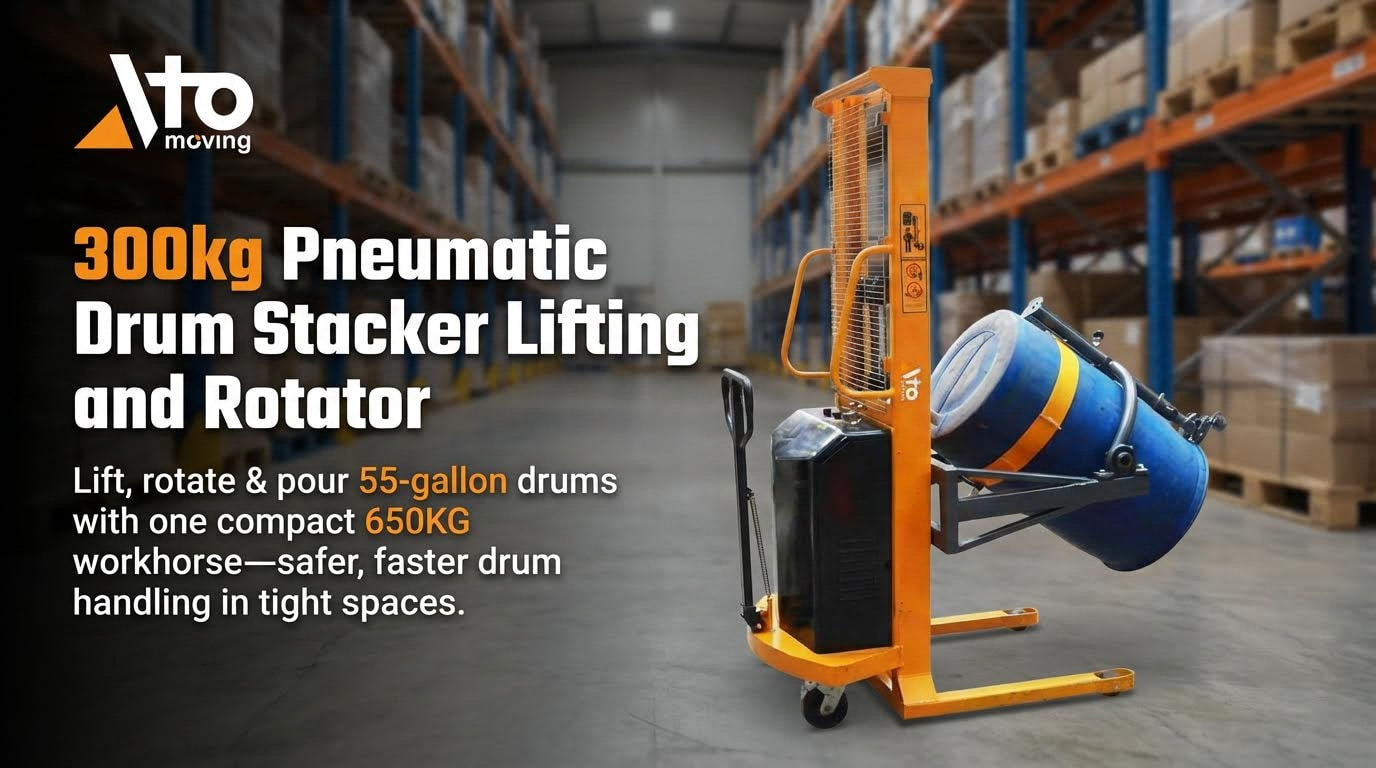
Drum lifters and stackers handle the vertical side of moving a drum used to transport crude oil, lifting from floor level to pallets, spill decks, or racking while keeping the drum controlled and usually upright.
They are critical once you introduce height: loading trucks, feeding reactors, or stacking drums two or three high. Vertical handling multiplies the consequences of any slip, so capacity margins, clamping geometry, and operator visibility become non-negotiable.
| Equipment Type | Typical Capacity Range | Lift Height Range | Mechanism | Best For… |
|---|---|---|---|---|
| Manual drum stacker | About 450–900 kg per drum | Up to pallet or first rack level (≈1.0–1.6 m) | Hand pump hydraulic or winch | Low-throughput warehouses lifting single drums onto pallets |
| Powered drum stacker | Similar 450–900 kg class | To higher racks (≈2.0–3.0 m) | Electric lift, walk-behind | Medium throughput, repetitive palletizing and depalletizing |
| Below-hook drum lifter | Often 450 kg+ per drum | Defined by crane hook height | Mechanical grab or clamp rings | Overhead crane systems and congested floor layouts |
Technical guidance notes that drum lifters and stackers for oil drums typically work in the 450–900 kg capacity band, using manual, hydraulic, or electric lift mechanisms to reach pallet height or multi-tier racking. Source
- Clamp geometry: Match grab or clamp rings to drum chime profile – prevents slip when lifting partially filled crude oil drums. Source
- Manual vs. powered: Manual stackers suit low duty cycles; powered units suit frequent lifting – reduces fatigue and speeds truck or container loading.
- Rotation options: Some lifters add 120–360° drum rotation – useful for controlled pouring into process vessels. Source
💡 Field Engineer’s Note: For crude oil and other sloshing liquids, avoid lifting drums fast from floor to height; a slow, steady hydraulic lift with a positive mechanical lock at the target level dramatically cuts oscillation and clamp shock loads.
Choosing lift height and aisle width
Measure the highest pallet or rack beam you must reach, then add at least 200–300 mm clearance for safe handling. Check aisle width against the stacker’s turning radius; for walk-behind stackers, aim for at least 2.2–2.5 m clear width so operators can position drums without twisting their spine or trapping themselves between the mast and racking.
Forklifts, cranes, AGVs, and drum attachments
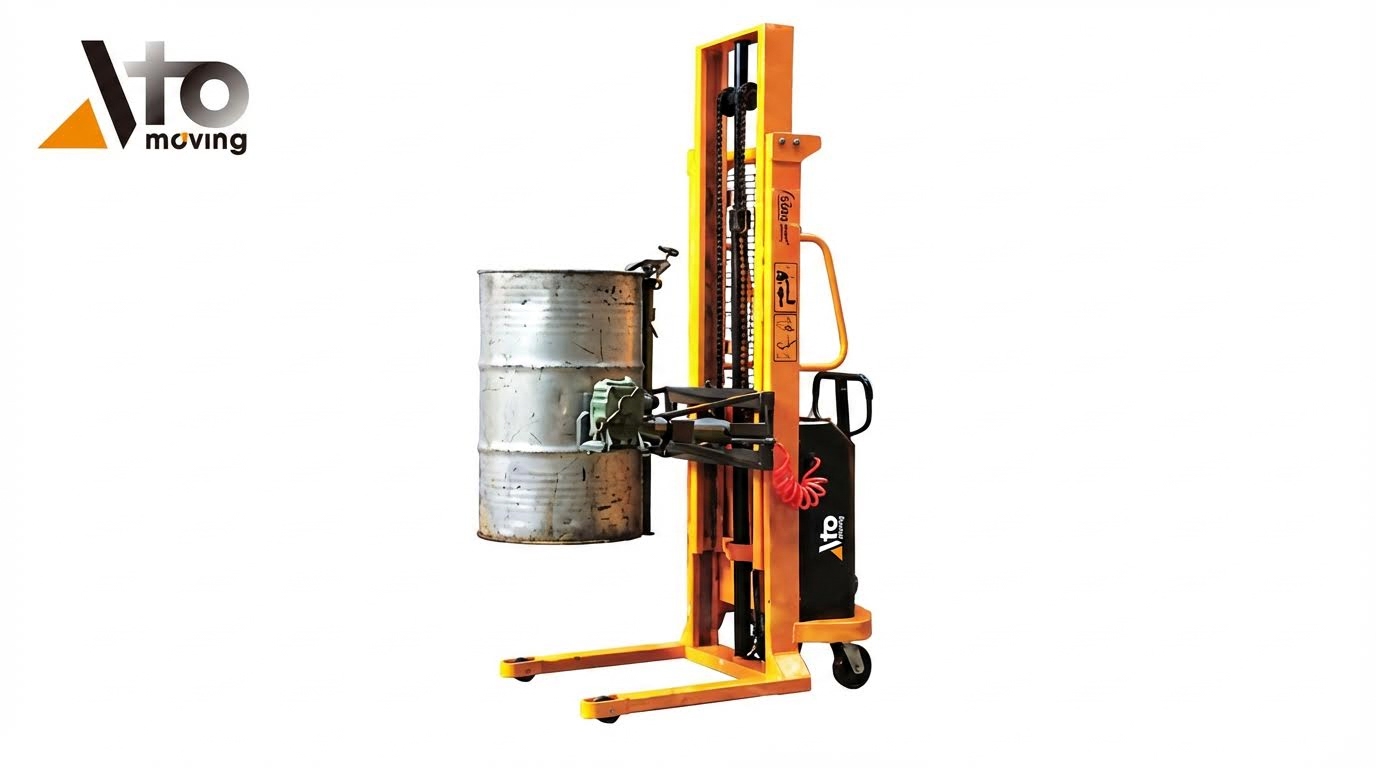
Forklifts, cranes, AGVs, and specialized attachments handle high-throughput movements of a drum used to transport crude oil, especially where you must integrate with pallets, trucks, and automated storage.
Once you move beyond a few drums per shift, these systems become more economical and safer than manual or walk-behind solutions. The key is to treat the attachment and drum as part of the load, not an afterthought, and to respect derated capacities and stability envelopes.
| Carrier Type | Attachment / Interface | Typical Application | Key Safety Consideration | Operational Impact |
|---|---|---|---|---|
| Forklift truck | Drum clamp, rim grip, or fork-mounted cradle | Loading/unloading trucks, moving palletized and loose drums | Derate forklift capacity when using rotating or extended attachments | Moves multiple crude oil drums per trip, cutting loading times |
| Overhead crane | Below-hook drum lifter or grab | Plants with congested floors or pits, loading mixers from above | Ensure positive engagement and controlled lift/rotation | Removes drum traffic from narrow aisles and pedestrian zones |
| AGV (Automated Guided Vehicle) | Drum frame or pallet interface | Lights-out or high-repeatability routes | Requires clear paths and robust sensing around people | Automates repetitive drum movements, stabilizing cycle times |
Industry guidance highlights that forklift-mounted drum clamps or rim-grip attachments increase throughput by allowing operators to pick drums directly from the floor, while crane-integrated grabs help avoid floor-level congestion. Source Automated guided vehicles can also carry special drum frames for fully automated operations in suitable facilities. Source
- Forklift drum clamps: Secure one or more drums by the body or rim – ideal when drums share space with palletized goods.
- Rotating attachments: Allow controlled pouring or tipping – but always check the manufacturer’s derated capacity chart.
- Crane grabs: Free up floor space – especially useful over bunded areas, pits, or process vessels.
- AGV drum frames: Standardize drum footprint – improves navigation accuracy and reduces side impact risk.
💡 Field Engineer’s Note: When you add a drum clamp or rotator to a forklift, treat the combination as a new machine: re-label the capacity plate, re-brief operators, and re-check that your narrowest aisles still allow safe turning without clipping bund walls or pipework.
Integration with hazardous area and hygiene requirements
In explosive atmospheres, select drum attachments and carriers that meet relevant ATEX categories and use conductive wheels or grounding straps to prevent static build-up. For hygienic or corrosive environments, stainless steel frames with smooth welds and sealed bearings help withstand washdowns and crude oil residues. Outdoor crude oil drum movements benefit from corrosion-resistant finishes on forks, clamps, and frames to maintain structural integrity over time. Source

Final Considerations For Crude Oil Drum Operations
Safe crude oil drum operations depend on treating geometry, liquid behavior, and human limits as one integrated system. Drum size, material, and closure details drive fit with pallets, racks, and Atomoving handling equipment, so engineers must lock in verified dimensions and weight before they design layouts or buy gear. Load physics then set the rules for movement. Sloshing, shifting center of gravity, and floor gradients can push real loads well above static weight, which is why capacity margins, slow travel, and positive restraints are essential.
Regulatory and hazardous area controls shape equipment choice and routes. You must align every movement with SDS data, zoning, grounding, and spill containment, not just storage rules. Ergonomics closes the loop. If operators still lift, catch, or drag drums by hand, the system remains unsafe, no matter how strong the hardware looks on paper.
The best practice is clear. Standardize drum types, verify real dimensions and masses, select engineered handling solutions with capacity margin, and design routes that respect both vapor behavior and human biomechanics. Then lock this into procedures, training, and inspection routines. When you do that, crude oil drum operations run predictably, with lower injury rates, fewer spills, and higher throughput.
Frequently Asked Questions
What is an oil drum?
An oil drum is a cylindrical container designed for storing and transporting oils and greases. It typically holds 55 gallons of oil or about 410 pounds of grease. These drums are commonly used in industrial settings and can be accessed through a drum cover. Oil Drum Glossary.
What is the difference between an oil barrel and an oil drum?
While the term “barrel” as a unit of measurement refers to 42 U.S. gallons, actual drums used in industries generally hold 55 U.S. gallons. This distinction is important when discussing transport and storage capacities. Oil Measurement Details.