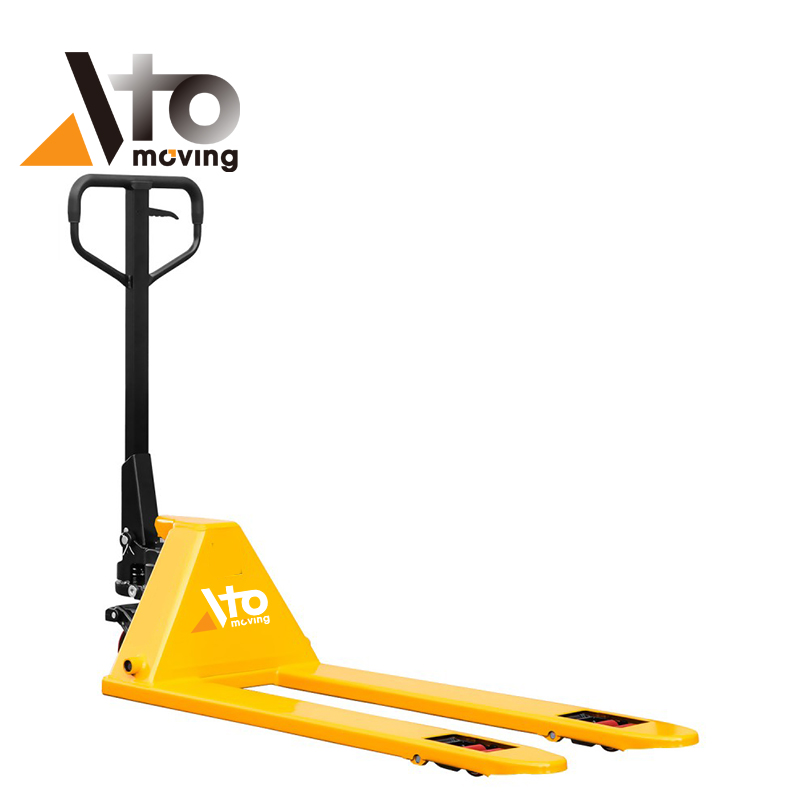
This guide explains how much a pallet jack can lift in real-world conditions, by type and application. You will learn how rated capacity, load center, and floor conditions change safe limits, and how to choose the right jack for your loads. Whether you run a small warehouse or a high-throughput DC, understanding pallet jack capacity protects people, product, and floors while maximizing efficiency.
Understanding Pallet Jack Load Ratings
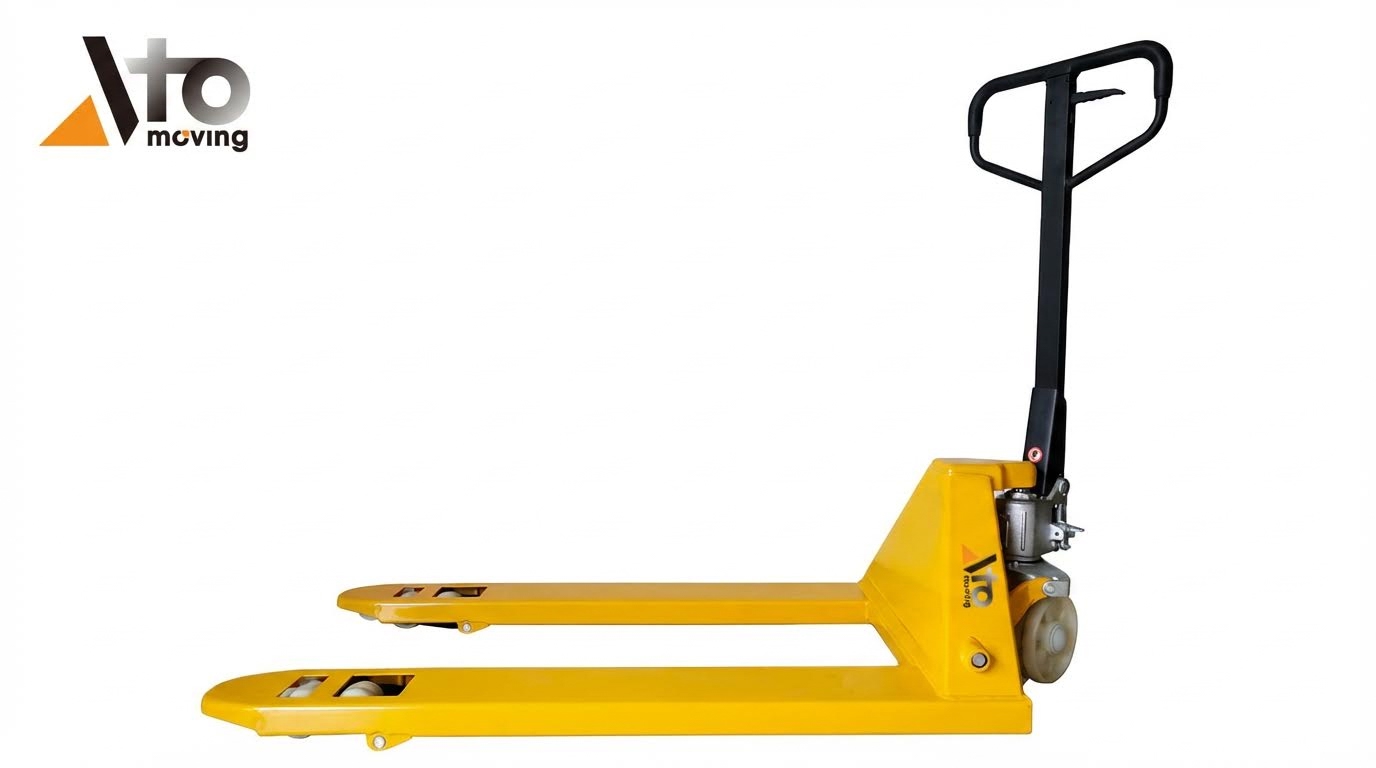
Pallet jack load ratings answer the question “how much can a pallet jack lift” under ideal, standardized conditions, not in every real-world situation. To stay safe, you must understand rated capacity, load center, and the truck’s data plate.
Rated capacity, load center, and stability
Rated capacity is the maximum load a pallet jack can lift at a specified load center without exceeding structural and stability limits. This is the engineering backbone behind how much can a pallet jack lift in practice.
- Rated capacity: The maximum load the jack can lift and carry under standard test conditions – Defines the upper safe limit in kg.
- Load center: Horizontal distance from fork heel to the load’s center of gravity, often 600 mm – Controls tipping and bending moments.
- Stability margin: The distance between the combined center of gravity and the “tipping line” – Prevents the truck from pitching or rolling over.
- Uniform load assumption: Rating assumes a compact, evenly distributed pallet load – Real, uneven loads usually reduce usable capacity.
- Standard test surface: Smooth, level, dry concrete floor – Any slope or damage cuts practical capacity.
Most pallet jack ratings are based on a standard load center, commonly 600 mm, with a uniformly distributed load. When the actual load center is longer than the rating, safe capacity drops in direct proportion. Industry guidance describes this as a standardized condition.
| Term | Typical Value / Definition | Operational Impact |
|---|---|---|
| Rated capacity | e.g. 2,000 kg at 600 mm load center | Safe only if load center and conditions match the rating. |
| Standard load center | 600 mm from fork heel to load COG | Roughly the center of a standard 1,200 mm deep pallet. |
| Uniform load | Evenly distributed over both forks | Real loads with voids or overhang reduce stability. |
| Testing surface | Level, smooth concrete floor | Slopes and rough floors require extra safety margin. |
When the load center increases, you can estimate the new safe capacity using a proportional formula. This is a practical way to translate the nameplate into real-world limits when handling long or overhanging loads. Guidance explains this linear relationship.
How to calculate adjusted capacity when the load center changes
Use this proportional rule of thumb: New Safe Capacity = (Rated Load Center ÷ Actual Load Center) × Rated Capacity. For example, if a pallet jack is rated 2,000 kg at a 600 mm load center, but the actual load center is 750 mm, then New Safe Capacity ≈ (600 ÷ 750) × 2,000 = 1,600 kg. The further the center of gravity moves away from the fork heel, the faster capacity drops.
💡 Field Engineer’s Note: In busy warehouses, the most common overloads are not from “too heavy” pallets but from long, overhanging loads that quietly push the load center out past 600 mm. Operators feel “light steering” or see the steer wheels lifting slightly when they pull a load out of a rack—that is your early warning that the stability margin is gone even if the weight seems within the printed rating.
How data plates define safe lifting limits
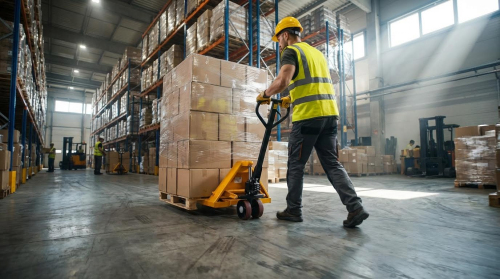
The data plate (or capacity label) is the legal and engineering answer to how much can a pallet jack lift in its current configuration. It ties rated capacity to load center, lift height, and sometimes attachments.
Manual pallet jacks usually have a simple stamped rating such as “Capacity 2,000 kg @ 600 mm.” Powered pallet jacks and high-lift units use more detailed plates that list capacity, load center, maximum lift height, truck weight, and sometimes battery weight. These plates define the official safe limits.
| Data Plate Field | What It Shows | Operational Impact |
|---|---|---|
| Rated capacity | e.g. 2,000 kg | Maximum load under listed conditions; not per fork. |
| Rated load center | e.g. 600 mm | Capacity only valid if COG is at or inside this distance. |
| Max lift height | e.g. 200 mm (low-lift) or higher on high-lift | High-lift models may show lower capacity at max height. |
| Truck + battery weight | Empty truck mass, sometimes with battery | Important for floor loading and trailer weight limits. |
| Derating chart | Table or graph vs. load center / height | Shows how capacity falls as load center or height increases. |
Capacity plates on powered pallet jacks often include load-center charts or derating tables. These show, for example, 1,200 kg at a 600 mm load center, dropping to 1,000 kg at 700 mm, following the same proportional formula used for off-center loads. Such tables make the math visible for operators.
- Always read the full plate: Check capacity, load center, and height together – Avoid using the “best” number out of context.
- Match configuration: Ensure tires, forks, and attachments match what the plate assumes – Wrong configuration invalidates the rating.
- Watch for multi-line values: Some plates list different capacities for different heights – Use the value that matches your lift height.
- Ignore faded/incorrect labels: Treat unreadable or obviously wrong plates as unsafe – Have them replaced before use.
- Train against common errors: Many overloads come from misreading the plate – Short toolbox talks reduce these mistakes.
Regulators require pallet jacks to display accurate, legible capacity information, and any change in attachments or load-handling configuration demands an updated plate from a qualified party. Operating a modified truck without an updated plate breaches safety rules and training guidance. Industry resources highlight this requirement.
Typical data plate misreadings that lead to overloads
Common mistakes include: treating the printed capacity as “per fork” instead of total; ignoring the stated load center and assuming the same capacity for very long loads; using the highest number on a multi-line plate without checking the corresponding lift height; relying on old plates after adding fork extensions or custom platforms; and working from faded or partially missing labels. Each of these errors can push the truck beyond its real safe limit even though the operator believes they are “under the rating.” Documented field issues show these recurring patterns.
💡 Field Engineer’s Note: When I audit sites, I often find trucks with fork extensions or custom platforms still running on the original plate. In practice, those add-ons both increase dead weight and push the load center forward, so the real capacity can be 20–30% lower than printed. Until you have a revised plate, assume a conservative derate or keep those trucks on lighter, short loads only.
Capacity Ranges by Pallet Jack Type
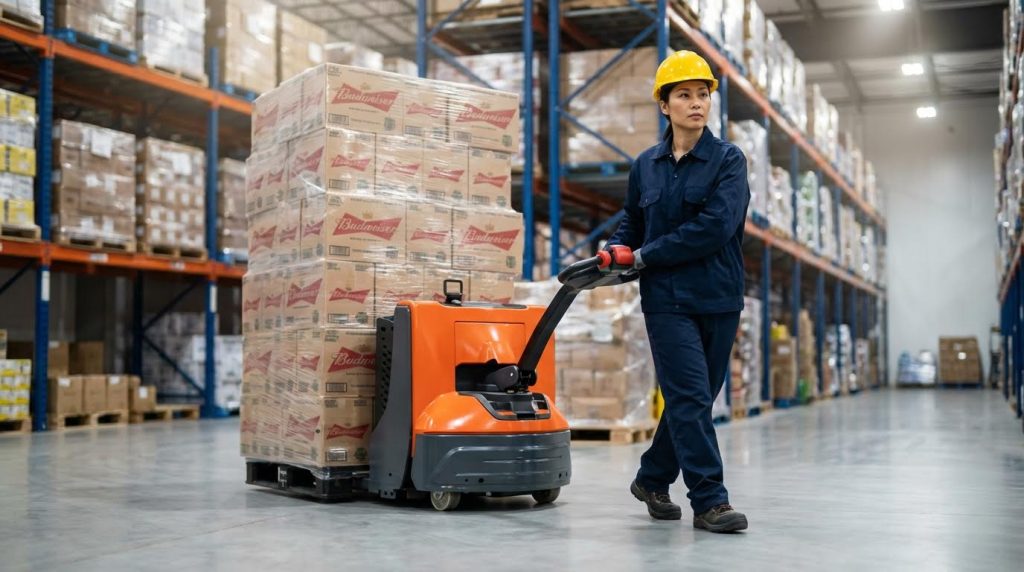
This section explains how much a manual pallet jack can lift by type, so you can match rated capacity to real loads and avoid hidden derating in daily operation.
| Pallet jack type | Typical rated capacity (kg) | Typical rated capacity (lb) | Operational impact / Best for… |
|---|---|---|---|
| Manual low-lift | Up to ≈2,270 kg | Up to 5,000 lb capacity data | General warehouse pallets on level floors; short travel where operator effort is acceptable. |
| Compact / light-duty electric | ≈1,500 kg | 3,300 lb capacity data | Tight spaces, retail backrooms, and delivery trucks where maneuverability matters more than peak capacity. |
| Standard walkie electric | ≈2,000–2,050 kg | 4,500 lb capacity data | Most warehouse applications with heavier pallets and longer runs; reduces operator strain. |
| Heavy-duty electric | ≈3,600 kg | 8,000 lb capacity data | Heavy production loads, dock work, and bulk storage where high throughput is needed. |
| High-performance / specialized electric | ≈1,500–4,500 kg | 3,300–10,000 lb range capacity range | High-intensity operations, high-lift, or custom applications; often derated at greater lift heights. |
| High-lift pallet jack (work-positioner type) | ≈1,000 kg | Up to 2,200 lb high-lift capacity | Ergonomic work heights; not for maximum weight but for lifting pallets to bench level. |
If you are asking “how much can a walkie pallet truck lift,” the practical answer is that most warehouse units fall between about 1,000–3,600 kg depending on whether they are manual, standard electric, or heavy-duty electric, with high-lift models trading capacity for height.
Manual pallet jacks: typical limits and constraints
Manual pallet jacks usually lift up to around 2,000–2,270 kg (≈5,000 lb), but real usable capacity is often lower once you factor in operator effort and floor conditions.
- Typical rating: Up to ≈2,270 kg (5,000 lb) – Answers the core question “how much can a pallet jack lift” for basic manual trucks.
- Hydraulic and ergonomic limit: Manual hydraulics and handle forces keep most designs near 2,000–2,500 kg to stay within human push/pull limits engineering background – Prevents designs that operators physically cannot move.
- Low lift height: Forks typically raise only 150–200 mm on low-lift jacks lift height data – Stability is mainly about load position and floor, not mast height.
- Load center assumption: Ratings assume a 600 mm load center with a compact, evenly distributed pallet load load center definition – Long or overhanging pallets reduce safe capacity even if the weight is under the nameplate.
- Floor dependency: Ratings assume smooth, level concrete; slopes, joints, or debris increase required push force and shock loads floor condition impacts – Real-world safe loads may need a 10–15% reduction.
- Wear and inspection: A 10% loss in fork thickness cuts fork capacity by about 20% inspection guidance – A “5,000 lb” jack with worn forks no longer has that capacity.
How to estimate safe load on a worn manual pallet jack
Measure fork thickness at the heel and compare to original spec. If wear is near 10%, derate at least 20% from the nameplate capacity, and remove from service for repair if cracks or bending appear.
💡 Field Engineer’s Note: On manual jacks, operator push/pull force becomes the limiting factor long before the steel or hydraulics do. In busy warehouses, I recommend treating 80–90% of the nameplate capacity as the practical ceiling, especially on any slope or rough floor.
Electric pallet jacks: duty cycles and battery impact
Electric pallet jacks can lift roughly 1,500–3,600 kg depending on model, but duty cycle, battery type, and voltage sag effectively reduce how much they can lift continuously over a shift.
- Compact / delivery units: Around 1,500 kg (3,300 lb) capacity for compact electric pallet jacks capacity data – Ideal for liftgates, trucks, and tight aisles.
- Standard walkie pallet jacks: Typically ≈2,000–2,050 kg (4,500 lb) capacity capacity data – Covers most warehouse pallets with reduced operator strain.
- Heavy-duty electric: Up to ≈3,600 kg (8,000 lb) on high-capacity electric models capacity data – Handles heavy production loads and intense dock work.
- Wider capacity band: Some electric pallet trucks span roughly 1,500–4,500 kg (3,300–10,000 lb) across a family of models capacity range – Lets you size the truck to your heaviest recurring load.
- Battery types: Lead-acid, thin plate pure lead, and lithium-ion options are common battery types – Battery chemistry affects how long the truck can repeatedly lift near rated capacity without voltage sag.
- Duty cycle impact: High-duty cycles generate heat in motors, hydraulics, and wheel treads running gear constraints – Real usable capacity over a shift may need a 10–15% safety margin below the nameplate.
- Application fit: Electric pallet jacks support loading/unloading, low-level order picking, dock work, mobile delivery, and bulk storage application list – Choose capacity based on your heaviest task, not your average task.
How battery condition affects “how much it can lift” in practice
A worn or undercharged battery causes voltage sag under load. The truck may still raise rated loads, but lift speed slows, thermal limits hit sooner, and overload alarms may trigger earlier. Plan capacity with fresh, fully charged batteries in mind and build in margin for degradation.
💡 Field Engineer’s Note: In high-throughput docks running heavy loads, I treat heavy-duty electrics rated at ≈3,600 kg as “comfortably” good for about 3,000–3,200 kg all day. Above that, heat and battery sag start to show up in slower lifts and more faults.
High-lift and specialized models: derating with height
High-lift pallet jacks and specialized models can lift pallets to greater heights, but their rated capacity often drops as lift height and load center increase.
- High-lift capacity: High-lift pallet jacks typically offer up to about 1,000 kg (2,200 lb) capacity high-lift capacity – Much lower than standard low-lift jacks because the load is raised higher.
- Lift height effect: As lift height increases, the load’s center of gravity rises and moves slightly away from the chassis due to mast deflection and geometry stability explanation – This increases overturning moment and reduces safe capacity.
- Derating with height: Capacity charts often show higher ratings at mid-height and lower values at maximum height derating tables – You cannot assume “if it lifts off the ground, it’s safe at full height.”
- Load center shift: Attachments and fork extensions add dead weight and move the effective load center forward, reducing capacity attachments impact – Longer forks mean you must treat the truck as having a lower safe capacity.
- Simple derating formula: New Safe Capacity ≈ (Rated Load Center ÷ Actual Load Center) × Rated Capacity derating formula – Lets you estimate how much less you can safely lift with longer loads.
- Example impact: A 2,000 kg jack rated at 600 mm load center drops to about 1,600 kg when the actual load center becomes 750 mm Engineering And Operational Factors That Change Capacity
Engineering limits and real operating conditions quietly reduce how much a pallet jack can lift compared with the nameplate rating. To answer “how much can a pallet jack lift” in the real world, you must factor in structure, hydraulics, wheels, load geometry, and floor conditions, not just the printed capacity.
- Key Point: Rated capacity assumes ideal conditions – any deviation (slopes, overhang, worn forks, soft wheels) reduces safe working load.
- Practical Rule: Apply a 10–15% safety margin below the plate in everyday use – this compensates for unknowns and minor defects.
Structural design, hydraulics, and running gear limits
Structural strength, hydraulic pressure limits, and running-gear capacity set the hard upper boundary on how much a pallet jack can lift. These design choices explain why one jack is safely rated 2,000 kg while another can handle 3,000 kg and above.
Design Element What It Controls Typical Engineering Practice / Range Operational Impact on “how much can a pallet jack lift” Forks & frame (structure) Static strength and fatigue life Safety factor about 1.5–2.0 on yield stress for rated load engineering design Limits maximum nameplate capacity; cracks or fork thinning sharply reduce real safe load. Hydraulic system Maximum lift force / pressure Manual trucks commonly 2,000–2,500 kg; powered units about 3,000–3,600 kg, with burst pressure 2.5–4× operating hydraulic limits If hydraulics are undersized or worn, the jack may not raise a load even below the structural rating. Running gear (wheels, axles, bearings) Rolling stability and dynamic loading Larger-diameter, wider wheels and higher-spec bearings on 3,000 kg+ models running gear design Even if the frame is strong, undersized wheels can overload bearings and increase push force, effectively derating capacity. - Structural design: Fork thickness, width, and section modulus are sized so deflection stays small and stresses remain below yield at the rated load, with a safety factor typically 1.5–2.0. – Once forks bend or crack, real capacity can drop well below the plate even if the jack still “works.” Structural limits
- Hydraulics: Cylinder bore, rod diameter, wall thickness, and seals are chosen so burst pressure is 2.5–4.0 times maximum operating pressure. – This caps the theoretical lift force even if the steel structure could take more. Hydraulic design
- Running gear: Each load and steer wheel has its own static and dynamic rating; engineers sum these and apply safety factors to set the truck capacity. – High-capacity models use larger wheels and better bearings to keep rolling resistance and contact stress under control at 3,000 kg and above. Running gear constraints
How fork wear quietly reduces capacity
A 10% loss in fork thickness can reduce fork load capacity by about 20%, which is enough to invalidate the original rating and justify removing the truck from service, even if the hydraulics still lift the load. Fork wear effect
💡 Field Engineer’s Note: In heavy 3,000 kg+ applications, most “mystery” capacity losses come from flat-spotted or undersized load wheels and tired bearings, not the frame. If operators complain that a jack “won’t move the load,” check wheel diameter, tread condition, and bearing play before blaming hydraulics.
Load geometry, overhang, and off-center loads
Load geometry and where the center of gravity sits on the forks often decide how much a pallet jack can lift safely, even when the weight is below the nameplate. As the load center moves forward or off to one side, effective capacity drops.
Scenario Rated Capacity Load Center Calculated New Safe Capacity Operational Impact Ideal, compact pallet 2,000 kg @ 600 mm 600 mm 2,000 kg Full rating usable on level, good floor. Overhanging or long load 2,000 kg @ 600 mm 750 mm ≈1,600 kg (2,000 × 600 ÷ 750) Must reduce load by about 20% to stay within stability limits. Load center formula Tall, top-heavy stack Per plate Same horizontal, higher vertical CoG Derated in practice Slow travel and reduced weight needed to prevent tipping in turns or on slopes. - Load center basics: Rated capacity is usually defined at a 600 mm load center with a uniform load. – If the actual load center exceeds 600 mm, effective capacity decreases roughly in proportion. Rated capacity and load center
- Practical formula: New Safe Capacity = (Rated Load Center ÷ Actual Load Center) × Rated Capacity. – This is your go-to method for answering “how much can a pallet jack lift” when loads overhang or attachments extend the forks. Capacity calculation
- Overhanging and irregular loads: Overhang shifts the center of gravity away from the fork heel, and irregular shapes can move it off-center sideways. – Operators must treat the effective load center as the distance to the combined center of gravity, not the pallet edge. Handling irregular loads
- Tall loads: Stacks that push the center of gravity high reduce lateral stability, especially when turning or traveling on slopes. – Best practice is to keep the heaviest portion low and close to the fork heel, and reduce travel speed. Tall load guidance
- Attachments and fork extensions: Extensions add dead weight and move the effective load center forward. – They can cut usable capacity by 20% or more, and regulations require updated capacity labels when attachments change load handling characteristics. Attachment impact
Quick steps to estimate safe capacity for a long pallet
- Step 1: Measure from fork heel to the combined load center – this is your actual load center in mm.
- Step 2: Read rated capacity and rated load center (often 600 mm) from the plate – this is your baseline.
- Step 3: Apply New Capacity = Rated Capacity × (Rated Load Center ÷ Actual Load Center) – this gives a conservative safe limit.
💡 Field Engineer’s Note: When operators ask “Can I take this extra-long pallet?”, I ignore the weight guess and first sketch where the center of gravity actually sits on the forks. If it is beyond about 600–650 mm on a standard jack, I derate aggressively or refuse the move, especially near dock edges or slopes.
Floor conditions, wheels, and real-world derating
Floor quality, gradients, and wheel condition often decide how much a pallet jack can lift and still move safely, even if the structure and hydraulics could take more. Real-world capacity is almost always lower than the nameplate on poor floors.
Factor Ideal Condition (What Rating Assumes) Degraded Condition Real-World Effect on Capacity Floor surface Level, smooth, dry concrete rating assumptions Cracks, joints, debris, wet or uneven surfaces Shock loads and loss of traction effectively derate capacity; risk of tipping or loss of control rises. Gradient (slope) Near-zero slope, typically below 2–3% Ramps and dock plates approaching 5% or more Required push/pull force and overturning moments increase; many sites self-derate loads by 10–20% on slopes. Wheel type & condition Correct-size, good-condition wheels (often polyurethane on smooth floors) Flat-spotted, worn, under-inflated (pneumatic), or wrong material Higher rolling resistance and unstable support; usable capacity drops below nameplate before wheels or bearings fail. - Wheel and tire type: Cushion-type wheels on smooth concrete give predictable friction and stable support, while pneumatic or large-diameter wheels handle rough surfaces but introduce more compliance and sway. – Wrong wheel choice can make a “legal” load feel unsafe to move. Wheel and tire effects
- Wear and damage: Worn or under-inflated wheels reduce contact area and stability and increase point loading into the floor. – This lowers the real safe capacity below the data plate value and increases push forces. Wheel wear impact
- Floor condition: Rough, damaged, or contaminated floors introduce shock loads into forks, axles, and hydraulics. – These peak stresses exceed those used in rating calculations, so prudent operators derate loads whenever traveling over bad sections. Floor condition impacts
- Slopes and ramps:</
Selecting The Right Capacity And Staying Within Limits
Selecting the right manual pallet jack capacity starts with your heaviest, worst‑case pallet and then building in safety margins for load geometry, floor conditions, and real-world derating. This is how you turn “how much can a pallet jack lift” into a safe daily practice—not a guess.
1. Quick Capacity Checklist Before You Buy
This section gives a fast, field-ready method to size pallet jack capacity correctly for your site and loads.
- Heaviest pallet weight: Confirm the true maximum pallet weight, not the average – This anchors how much can a pallet jack lift in your operation.
- Load dimensions: Measure pallet length and load overhang to estimate actual load center – Prevents hidden derating from long or overhanging loads.
- Lift height needs: Decide if you only need low-lift (≤200 mm) or high-lift/stacking – High-lift models derate with height.
- Floor and ramps: Note slopes, dock plates, rough concrete, or outdoor use – Real usable capacity drops on poor floors.
- Duty cycle: Estimate trips per hour and distance – Determines if manual, electric, or high-performance is suitable.
- Attachments or fork extensions: List any planned platforms, clamps, or extensions – These shift the load center and reduce capacity.
- Operator ergonomics: Consider push/pull effort and fatigue – Manual jacks with “enough” capacity may still overstrain staff.
💡 Field Engineer’s Note: When I spec pallet trucks, I size capacity from the heaviest “ugly” pallet on the worst ramp, not the catalog-perfect one on flat concrete. That’s usually where overloads actually happen.
2. Turning “How Much Can a Pallet Jack Lift” Into a Number
This section shows how catalog ratings translate into safe working limits in kilograms, with realistic safety margins.
Pallet jack type Typical rated capacity (kg) Recommended planning limit (kg)* Best for… Operational impact Manual pallet jack ≈2,000–2,300 kg (up to 5,000 lb) rated ranges 1,700–2,000 kg Short runs, flat floors, general warehouse Above ~2,000 kg, push/pull forces and floor quality become critical. Electric pallet jack (standard walkie) ≈1,500–3,600 kg (3,300–8,000 lb) typical models 1,300–3,000 kg Heavier loads, longer travel, docks Power assists traction and braking, but floor and load geometry still derate capacity. High-lift / scissor pallet jack ≈1,000 kg (up to 2,200 lb) typical values 800–900 kg Work positioning, feeding machines Capacity often reduces as height increases; treat rating as maximum, not target. *Planning limit assumes a 10–15% safety margin for uneven loads, slopes, and wear as recommended.
- Rule of thumb: If your heaviest pallet is 1,600 kg, a 2,000 kg manual jack is the realistic minimum – This keeps you within margin when floors or pallets are less than perfect.
- Growth margin: Add another 10–20% if your operation is likely to increase pallet weights – Prevents early obsolescence.
How to quickly estimate pallet weight if you don’t have a scale
Add product net weight, pallet weight (typically 15–30 kg for a wooden pallet), and packaging. For mixed pallets, assume all tiers are full and round up. If in doubt, size the jack for the worst plausible case.
3. Using Load Center to Avoid Hidden Overloads
This section explains how load center distance quietly reduces how much a pallet jack can lift, even when the nameplate looks sufficient.
Most pallet jacks are rated at a 600 mm load center with a uniformly distributed load under standardized conditions. If your actual load center is longer, effective capacity drops.
- Standard rating example: “2,000 kg @ 600 mm” – Safe only if the center of gravity is 600 mm from the fork heel.
- Long pallets / overhang: 1,200 mm pallets or overhanging boxes can push the center to 700–800 mm – This derates capacity even though weight is unchanged.
- Attachments / fork extensions: These move the effective center further out – Capacity must be recalculated and re-labeled.
A practical formula for new safe capacity is: New Capacity = Rated Capacity × (Rated Load Center ÷ Actual Load Center) as described.
Rated capacity @ 600 mm Actual load center Calculated new safe capacity Operational meaning 2,000 kg 600 mm 2,000 kg Standard pallet, no overhang – you can use the full rating. 2,000 kg 700 mm ≈1,715 kg Long or overhanging load – treat 1,700 kg as your limit. 2,000 kg 750 mm ≈1,600 kg Matches the worked example for fork extensions and long loads in practice. - Field rule: If the load sticks out significantly beyond the forks, mentally drop the nameplate capacity by 15–20% – Especially important on slopes or during tight turns.
💡 Field Engineer’s Note: Most overloads I investigate are not “too heavy” pallets; they are “too long” or badly stacked pallets that quietly push the center of gravity out another 100–150 mm.
4. Reading Data Plates and Capacity Charts Correctly
This section teaches operators how to read capacity plates so they stay within the true limits for their specific truck and configuration.
- Manual pallet jacks: Often show a single line like “2,000 kg @ 600 mm” – Simple but assumes standard pallets and low lift.
- Electric and high-lift units: Plates list capacity, load center, max lift height, truck weight, and sometimes battery weight in more detail.
- Multi-line plates: High-lift trucks may show several capacities at different heights – You must use the line that matches your actual lift height and attachments.
Common misreadings that lead to overloading include documented issues:
- Ignoring load center: Using the “2,000 kg” number without checking the 600 mm condition – Dangerous with long pallets or extensions.
- Using the highest line only: Reading the biggest capacity on a multi-height chart – Even when lifting near max height.
- Per-fork misunderstanding: Treating the rating as “per fork” – Capacity is always total, not per blade.
- Outdated plates: Using old data plates after adding platforms, clamps, or extensions – This violates OSHA-style requirements for updated information.
What to check on a pallet jack data plate before lifting
Match: 1) Truck model and serial number, 2) Capacity in kg, 3) Rated load center (usually 600 mm), 4) Maximum lift height, 5) Any listed attachment or configuration. If your setup differs, treat the printed capacity as invalid until re-labeled by a qualified person.
💡 Field Engineer’s Note: I train operators to read the data plate out loud during induction. If they can’t explain what the load center and height lines mean, they’re not ready for high-lift work yet.
5. Building a Practical Safety Margin Into Daily Operation
This section shows how to adjust from theoretical ratings to safe, repeatable day-to-day limits with a clear safety margin.
- Apply 10–15% margin: Plan operations below 85–90% of nameplate capacity to account for uneven loads, slopes, and wear as advised.
- Derate further for poor floors: On rough, cracked, or sloped floors, mentally cut another 10–20% – Shock loads and higher push forces eat into the design margin.
- Account for fork wear: A 10% loss in fork thickness can reduce capacity by about 20% based on inspection guidance.
- Adjust for tall stacks: With tall, top-heavy loads, treat the truck as effectively derated even at low height – Stability, not fork strength, becomes the limit.
Example process to set an internal “do not exceed” number for a 2,000 kg manual jack on mixed floors:
- Step 1: Start with 2,000 kg rated capacity – Nameplate value.
- Step 2: Apply 15% general safety margin → 1,700 kg – Allows for normal variation.
- Step 3: Subtract another 10% for rough or sloped areas → ≈1,500 kg – Reflects your actual site conditions.
- Step 4: Use 1,500 kg as the internal operational limit – Train and label accordingly.
💡 Field Engineer’s Note: The simplest way to cut accidents is to set internal limits below the nameplate, then lock them into SOPs and training. Operators should rarely, if ever, work at 100% of rated capacity.
6. Matching Pallet Jack Type to Your Application
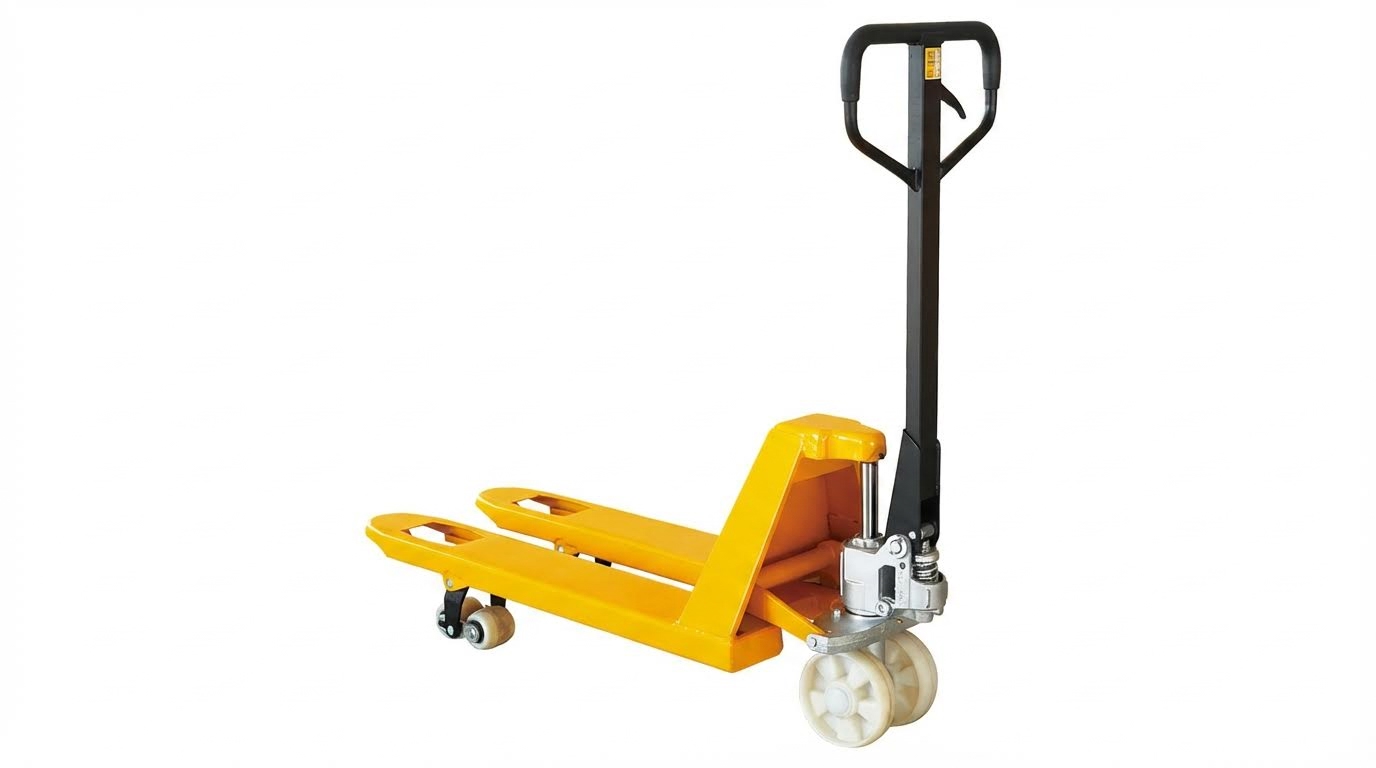
This section links typical applications to the most suitable pallet jack type and capacity band so you select the right tool, not just a high number.
Application Recommended pallet jack type Typical capacity band (kg) Why this works best Light warehouse, retail backroom Manual pallet jack 1,500–2,000 kg Lower cost, simple, suitable for short runs and moderate weights. Heavy pallets, long travel, docks Electric walkie pallet jack 2,000–3,600 kg typical range Reduces strain, supports higher throughput, better on slopes and dock plates. Feeding machines, ergonomic picking High-lift / scissor pallet jack 800–1,000 kg Acts as adjustable work platform; capacity is lower but lift height is higher. Very heavy or oversized loads High-performance / heavy-duty electric Up to ≈3,600–4,500 kg (8,000–10,000 lb) Selecting The Right Capacity And Staying Within Limits
Safe pallet jack capacity depends on more than the number stamped on the plate. Structural design, hydraulics, wheels, load geometry, and floor conditions all interact to set the real limit. When you respect these links, you protect people, product, and floors while keeping flow high.
Rated capacity assumes a compact, even load at a standard load center on smooth, level concrete. Long pallets, overhang, tall stacks, fork wear, slopes, and bad floors all cut into this margin. The simple load‑center formula and a 10–15% planning margin turn theory into clear working limits. Internal “do not exceed” values then become easy to train and enforce.
Operations and engineering teams should start with their heaviest, worst‑case pallet on the worst floor, then choose the pallet jack type and capacity band that stays comfortably inside all limits. Use data plates, derating charts, and regular inspections to keep those limits current, especially when attachments or extensions change geometry.
The practical best practice is clear: size trucks for ugly loads, run below nameplate, and treat load center and floor quality as critical design inputs. When you follow this method, your Atomoving pallet jacks will work safely, predictably, and efficiently over their full service life.
Frequently Asked Questions
How much weight can a pallet jack lift?
A standard pallet jack typically has a lifting capacity ranging from 2,268 to 2,495 kilograms (5,000 to 5,500 pounds). However, the exact capacity depends on the model and manufacturer. For more details, you can refer to this Pallet Jack Weight Guide.
Can a pallet jack lift a car?
No, a pallet jack is not designed to lift a car. While theoretically possible, it would be unsafe and could damage both the jack and the car. Pallet jacks are intended for lifting pallets, not vehicles. For safe practices, check out this Forklift vs. Pallet Jack Guide.