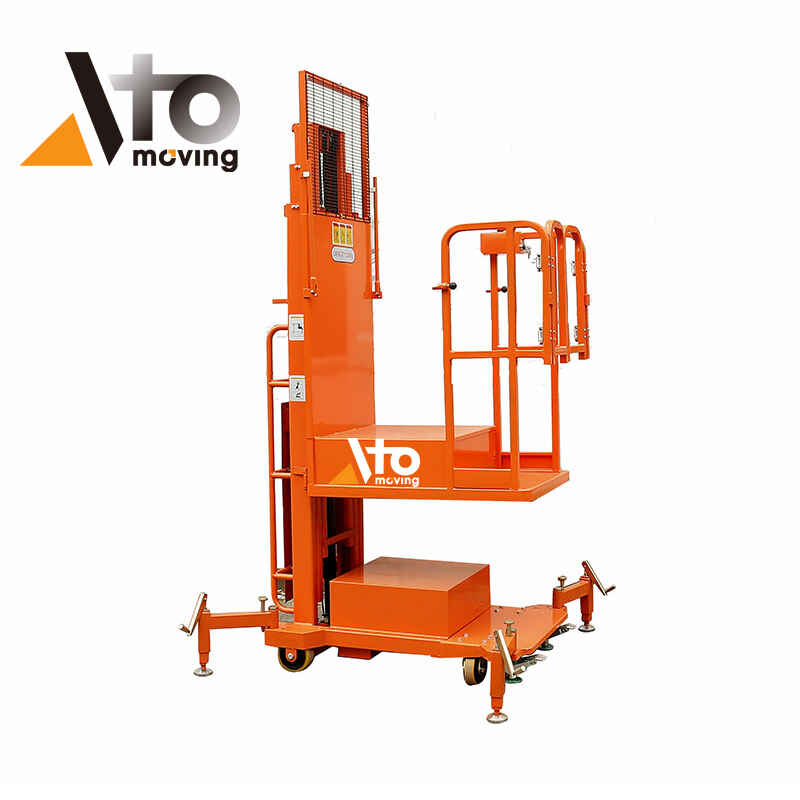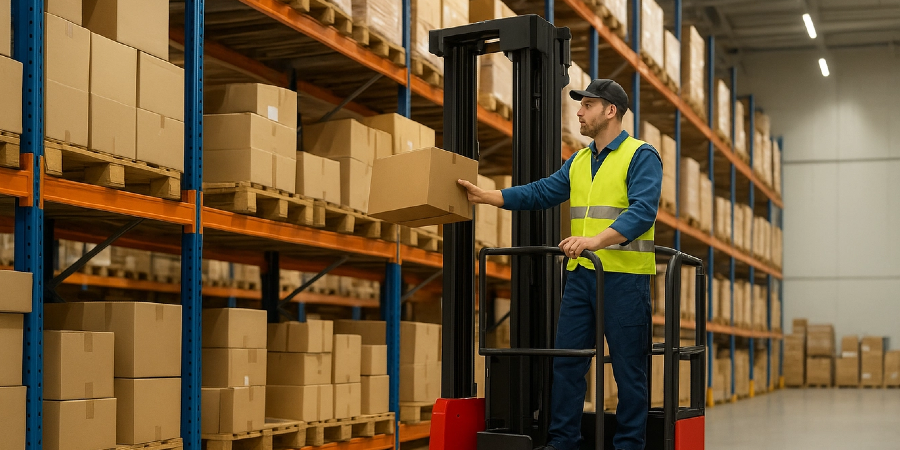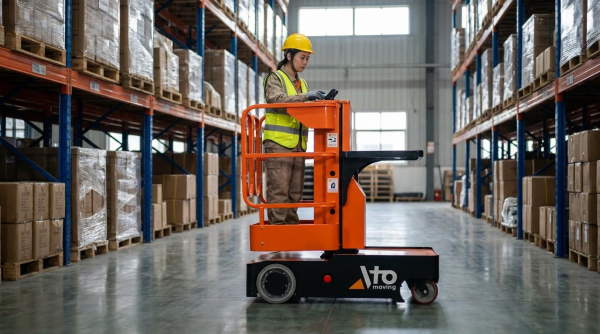
Order picking equipment defines how fast, accurate, and safe your warehouse can move items from rack to dispatch. This guide walks through options from simple manual pallet jack to high-level trucks and fully automated systems, using real performance, height, and safety data to support engineering-grade decisions.
Order Picking Methods And Core Equipment Types
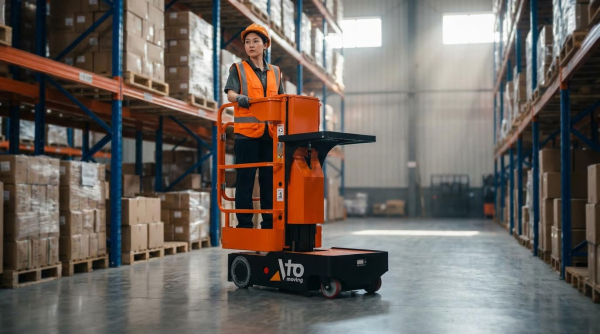
This section explains how different order picking equipment types—from simple carts to high-level machines—change walking distance, pick rate, and safety in your warehouse. Use it to map the right method to your SKU profile and building layout.
At a high level, manual carts and pallet jacks suit low-volume, low-investment operations, while low-, medium-, and high-level order pickers unlock vertical space and higher throughput in racked storage. Understanding the strengths and limits of each class is the first step before looking at automation.
Manual carts, trolleys, and pallet jacks
Manual carts, trolleys, and pallet jacks are the entry-level order picking equipment for short travel distances and light to moderate loads. They keep capital cost low but cap throughput and expose more ergonomic risk as volume grows.
In most warehouses, these tools support basic floor-level picking: operators walk the aisles, push or pull a cart, and consolidate multiple orders. They are simple, flexible, and forgiving on mixed product lines, but walking time quickly dominates the shift as order lines increase.
| Equipment Type | Typical Load / Capacity | Best Working Height | Typical Picks / Hour | Operational Impact |
|---|---|---|---|---|
| Manual picking cart / trolley | Up to about 200 kg per cart, depending on design (light‑duty platform reference) | Floor level to ~1,500 mm (shelf height reachable by hand) | ≈60–100 picks/hour in typical operations (manual range) | Low investment, but walking dominates time; good for small, simple warehouses. |
| Manual pallet jack (hand pallet truck) | Typically 1,500–2,500 kg pallet loads (transport, not ergonomic picking) | Floor-level pallet positions only | Similar 60–100 picks/hour when used for case picking at floor level | Best for bulk moves and floor-level case picking; not suitable for high shelves. |
Because the operator walks every meter of the route, these methods are inherently limited on productivity. Studies showed manual cart picking taking about 17 minutes 35 seconds and 621 steps for a representative task, while AMR-assisted workflows cut this to 10 minutes 59 seconds and 276 steps, more than halving the walking distance and time per task (manual vs AMR comparison).
- Manual carts/trolleys: Simple, low-cost platforms – Ideal for short routes, low SKU counts, and light items.
- Pallet jacks: Floor-level pallet movers – Efficient for bulk pallet or case moves but require bending and twisting to pick.
- Ergonomics: Frequent bending and long walking distances – Increase fatigue and injury risk over multi-shift operations.
- Scalability: Adding more workers, not speed – Labor costs rise linearly with volume.
- Accuracy: Typically around 95% for manual processes – Higher error and return costs than automated methods. (accuracy reference)
When manual order picking equipment still makes sense
Manual carts and pallet jacks remain the right answer when daily order lines are low, travel distances are short, and racking is limited to 2–3 m high. They are also a good seasonal or backup solution when you need surge capacity without major capex.
💡 Field Engineer’s Note: If you are consistently above 100 picks/hour per picker or your average walk path exceeds 150–200 m per batch, manual carts become a bottleneck. At that point, the physics of walking time and push/pull forces start to dominate cost per order, and powered low-level order picking equipment or AMR support should be evaluated.
Low-, medium-, and high-level order pickers
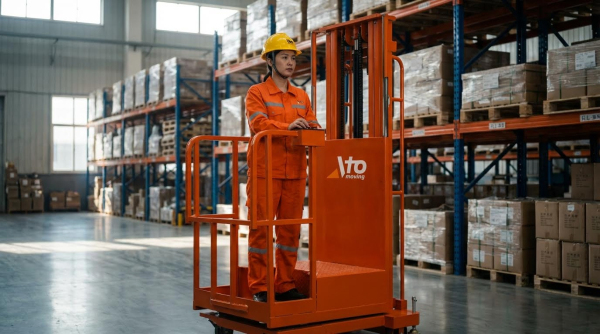
Order picking machines are powered machines that lift the operator, the load, or both to pick directly from racking, dramatically reducing walking and unlocking vertical storage. They are the core mechanized order picking equipment in most modern distribution centers.
Compared with manual carts, these trucks trade human walking for powered travel and vertical lift. That shift enables narrower aisles, higher rack heights, and more picks per hour per operator, especially when paired with a warehouse management system.
| Order Picker Class | Typical Lift / Platform Height | Capacity Range | Typical Aisle Width / Wheelbase | Operational Impact |
|---|---|---|---|---|
| Low-level order picker | Up to about 1,000–1,200 mm for operator platform and forks (first/second level) | Commonly up to about 1,000–1,250 kg per pallet, depending on model (capacity reference) | Narrow-aisle capable; compact wheelbases around 1.6 m for dense layouts (compact wheelbase) | Fast horizontal travel on ground level; ideal for high-volume case picking at lower rack levels. |
| Medium-level order picker | Lift heights around 8.25–9.85 m for picking locations, depending on voltage class (medium/high specification) | Up to about 1,250 kg load capacity in heavy-duty models (capacity reference) | Wire or rail-guided narrow aisles; aisle width minimized through guidance systems (guidance reference) | Serves multiple rack levels without additional equipment; good compromise between height and cycle time. |
| High-level order picker | Platform heights from about 3,620 mm up to 9,465 mm; lift heights up to 9,600 mm and beyond (height range) and up to around 12.1 m on some heavy-duty models (12.1 m reference) | Typically 1,000–1,250 kg loads (capacity range) | Very narrow aisles with wire or rail guidance; layout optimized for high-density storage (guidance reference) | Maximizes vertical cube; supports dense, multi-level racking and high pick density per square meter. |
Medium- and high-level order pickers are engineered around high output and low cost per pick. Heavy-duty 48 V models reach picking locations up to about 12.1 m with roughly 1,250 kg capacity, while 24 V variants reach around 9.85 m with similar load ratings (voltage and height). This lets you convert unused vertical space into active pick faces instead of expanding building footprint.
- Energy-efficient drivetrains: AC drive and lift motors plus regenerative braking – Increase runtime and cut mechanical wear compared with older DC designs. (energy systems)
- Safety at height: Full-body harnesses, SecurGate-style side gates, and automatic speed reduction – Control risk when operators work above 1,200 mm. (safety features) (harness and lift logic)
- Operator presence and stability: Whole-floor presence sensors and stability stance concepts – Ensure four solid contact points and prevent unintended movement at height. (presence system) (stability stance)
- Guidance systems: Wire or rail guidance and programmable end-aisle speed control – Allow minimal aisle widths and consistent, safe speeds in dense storage. (guidance)
- Ergonomics: Low step height around 215 mm, grab handles, and anatomical control layouts – Reduce fatigue and speed up entry/exit during frequent picks. (ergonomics)
How order pickers change throughput vs. manual methods
Where manual carts typically deliver 60–100 picks per hour, mechanized and automated systems (including advanced order pickers, shuttles, and robotic cells) can reach 200–800+ picks per hour depending on configuration and process design (throughput comparison). The main driver is less walking and more time with hands on product.
💡 Field Engineer’s Note: When you design aisles for high-level order picking equipment, do not push aisle width to the theoretical minimum without checking real mast sway and floor flatness. A few millimeters of rut or joint step in a 9–10 m mast can translate into noticeable platform movement, which slows operators and can trigger conservative speed settings from the truck’s height sensor and stability systems.
Technical Comparison: Performance, Energy, And Safety
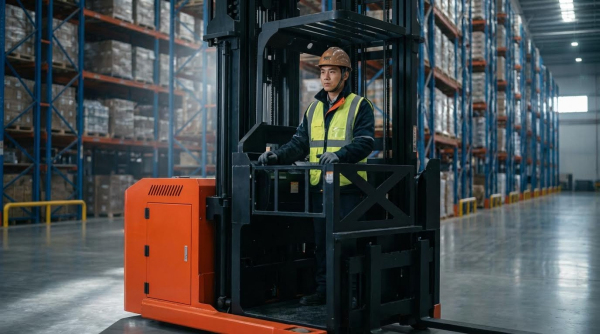
This section compares order picking equipment on hard numbers: throughput, accuracy, labor, lift height, aisle use, powertrains, maintenance, and safety so you can match technology levels to your warehouse profile and risk tolerance.
Throughput, accuracy, and labor productivity
Throughput, accuracy, and labor productivity define how much useful work each picker and each piece of order picking equipment delivers per hour and per shift.
| Picking approach / equipment | Typical throughput (picks/hour) | Accuracy level | Labor effort | Operational impact |
|---|---|---|---|---|
| Manual carts / pallet jacks | ≈60–100 | ≈95% accuracy | High walking distance, 600+ steps per task in tests | Low capex, but labor-heavy and fatigue-sensitive |
| AMR-assisted person-to-goods | Typically 120–250 (range depends on layout and SKU size) | ≈98–99% with WMS guidance | Walking steps cut by >50% (621 → 276 steps); time 17:35 → 10:59 per task | Good bridge between manual and full automation; keeps humans at the pick face |
| Robotic picking cells | ≈400–800 picks/hour | Error rates ≈0.5–0.1% (≈99.5–99.9%+ accuracy) | Minimal human walking; operators supervise cells | Ideal for high-volume, repeatable SKUs and standardized packaging |
| AS/RS with integrated picking | ≈400–600 operations/hour; up to ≈1,000 at peak | Up to 99% error reduction vs manual; ≈99.9%+ accuracy in mature systems | Humans stay at ergonomic workstations | Best for dense storage and 24/7, high-SKU-count operations |
- Manual picking: 60–100 picks/hour with about 95% accuracy – cheap to start, but labor and error costs scale badly.
- AMR-supported workflows: Cut steps roughly in half and time per task from 17:35 to 10:59 minutes – direct reduction in fatigue and overtime.
- Advanced automation: Robotic cells and AS/RS reach 400–800+ picks/hour – stabilizes output and protects service levels during peaks.
- Accuracy impact: Moving from 95% to ≈99.9% accuracy can cut returns by 50–70% and errors by up to 85% in automated facilities – key for e‑commerce and pharma.
How to benchmark your current picking performance
Start by measuring picks/hour per operator, error rate per 1,000 order lines, and average walking steps per order. These three metrics give a clean baseline for comparing manual tools, AMRs, and more automated order picking equipment.
💡 Field Engineer’s Note: When I audit sites, the biggest hidden loss is walking. Once picks are above 80–100 per hour, even a 50–100 m reduction in walking per order often delivers more ROI than squeezing a few extra picks per hour out of the same manual process.
Lift heights, capacities, and aisle optimization

Lift height, load capacity, and aisle width determine which order picking machines can safely reach your storage locations while maximizing cubic utilization and still turning inside your racking geometry.
| Equipment / system | Typical lift / working height | Load / platform capacity | Aisle width capability | Operational impact |
|---|---|---|---|---|
| Compact low-/medium-level order picker | Working height ≈7.7 m | Platform ≈200 kg for light-duty models | Compact wheelbase around 1.6 m supports narrow aisles | Good fit for small-item or light case picking up to mid-rack levels |
| Medium-level man-up order picker | Lift heights up to ≈8.25 m | Up to ≈1,250 kg load capacity | Very narrow aisles with wire or rail guidance | Maximizes racking height without moving to full AS/RS |
| High-level man-up order picker | Lift heights ≈9,600 mm; platform ≈9,465 mm; some models up to 10.5–12.1 m | ≈1,000–1,250 kg | Wire/rail guidance enables minimal aisle widths | Supports very high bay warehouses while keeping person-up picking |
| AS/RS shuttle system | Often 12–30 m building height (system-specific) | Tray/tote loads typically 30–300 kg per carrier | Requires only crane/shuttle lanes, no human aisles | Delivers 40–60% higher storage density and up to 85% space saving vs conventional shelving |
- Capacity vs stability: 1,000–1,250 kg at heights up to about 9.6 m demands very stiff masts and stability systems like four-point “stance” at height – critical to operator confidence.
- Guidance systems: Wire or rail guidance automates steering and allows extremely narrow aisles, while end-aisle controls slow trucks automatically – this combination protects racking and pedestrians.
- Operator envelope: Low step heights around 215 mm and walkthrough platforms reduce fatigue during frequent mount/dismount cycles – especially important in high-frequency case picking.
How to check if your aisles are “order-picker ready”
Measure clear aisle width between rack uprights, then compare to the order picker’s required working aisle (truck length + pallet length + safety clearance). For guided man-up machines, verify wire or rail placement and end-of-aisle overrun space before ordering new order picking equipment.
💡 Field Engineer’s Note: In very narrow aisles, the limiting factor is often not the truck but pallet overhang and rack damage. I always recommend surveying real pallet dimensions and overhang before committing to aisle widths based only on catalog truck dimensions.
Powertrains, batteries, and maintenance engineering
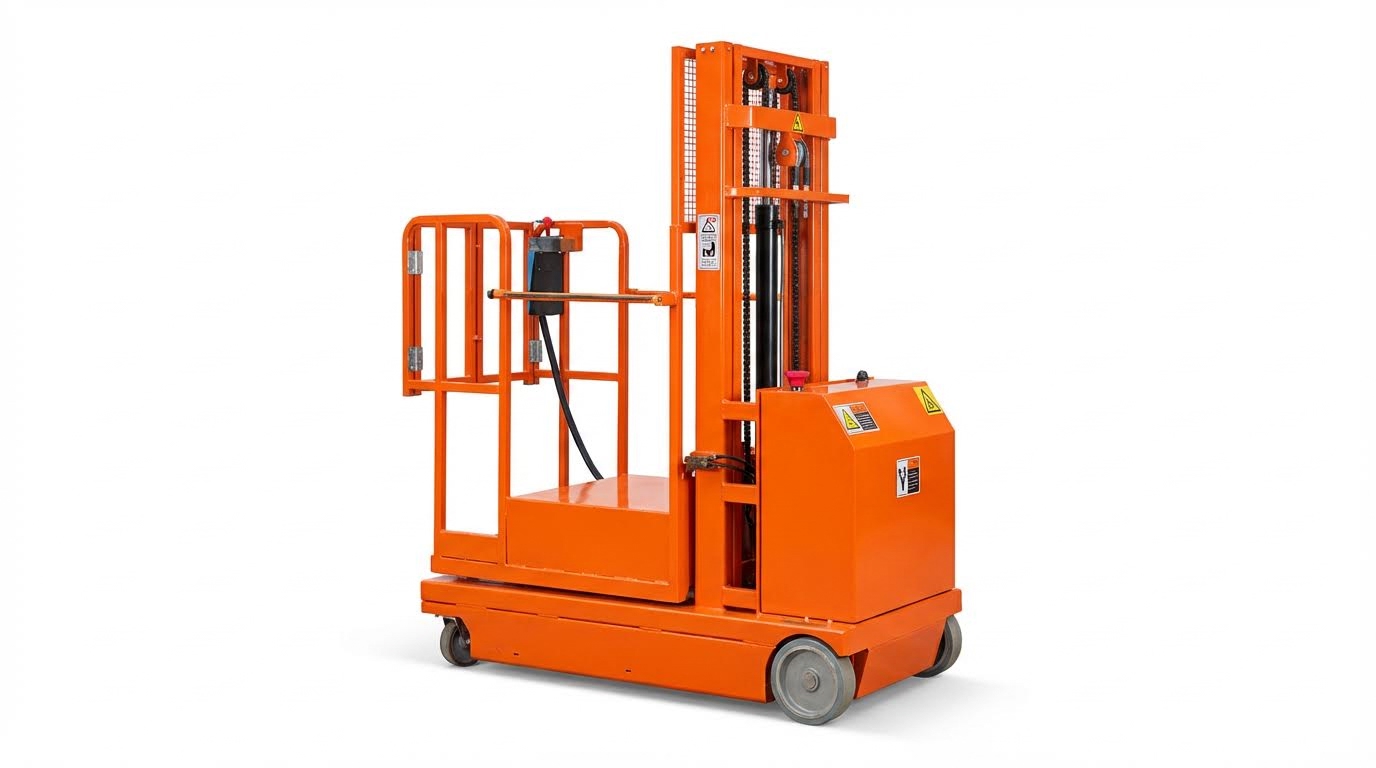
Electric drive technology, battery type, and maintainability determine how long your order picking equipment runs between charges, how stable performance stays over a shift, and how much downtime you absorb for service.
| Design aspect | Typical implementation on modern order picking equipment | Engineering effect | Operational impact | ||||||||||||||||||||||||||||||||||||||||||||||||||||||||||
|---|---|---|---|---|---|---|---|---|---|---|---|---|---|---|---|---|---|---|---|---|---|---|---|---|---|---|---|---|---|---|---|---|---|---|---|---|---|---|---|---|---|---|---|---|---|---|---|---|---|---|---|---|---|---|---|---|---|---|---|---|---|
| Drive & lift motors | High-efficiency AC drive and lift motors with regenerative braking | Fewer wear parts vs older DC; energy recovered during deceleration | Longer runtime per charge and reduced brake wear, especially in high-lift cycles | ||||||||||||||||||||||||||||||||||||||||||||||||||||||||||
| Battery systems | 24 V and 48 V configurations; growing use of lithium-ion for fast opportunity charging | Stable voltage over discharge; fast partial charges in breaks | Supports multi-shift operations with fewer battery changes and smaller battery rooms | ||||||||||||||||||||||||||||||||||||||||||||||||||||||||||
| Energy recovery | Regenerative lowering of the mast and braking systems | Captures potential energy when lowering loads | Fewer battery swaps per week and lower energy bills | ||||||||||||||||||||||||||||||||||||||||||||||||||||||||||
| Maintenance access | Modular designs, tool-free cover removal, steel battery rollers for quick exchangeMatching Order Picking Equipment To Your Operation
The right order picking equipment depends on SKU profile, order patterns, building geometry, labor, and automation strategy. In this section we translate those factors into concrete, engineering-driven equipment choices and investment logic.
Application-driven equipment selection criteriaApplication-driven selection means you start from your operational profile and then narrow down order picking machines options using measurable thresholds. Use the criteria below to decide when to stay manual, go mechanized, or invest in high-level and automated systems.
How to quickly map your current picking application1) Export 3–6 months of order lines. 2) Rank SKUs by picks to define A/B/C. 3) Plot picks per order and lines per order. 4) Measure travel distances in a sample of shifts. This gives a data-backed baseline before you touch equipment. Automation, WMS, and ROI-based justificationAutomation and WMS should be justified with a clear ROI model that compares manual order picking equipment against semi- and fully automated options. Use hard metrics like picks/hour, space savings, accuracy, labor, and energy to build the business case.
|