Scissor lift tables can work safely and efficiently with standard pallets when you match platform size, load capacity, and access geometry to real-world handling equipment. This guide explains how to engineer that compatibility, prevent damage, and improve ergonomics.
You will see how platform dimensions relate to EUR and North American pallet standards, how low-profile and pit-mounted tables change traffic flow, and which hydraulic and safety features matter most. We then link those design choices to daily operation, maintenance, and total cost of ownership so you can answer “can scissor platform lifts work with standard pallets” with confidence for your own facility.
How Scissor Lift Tables Interface With Standard Pallets
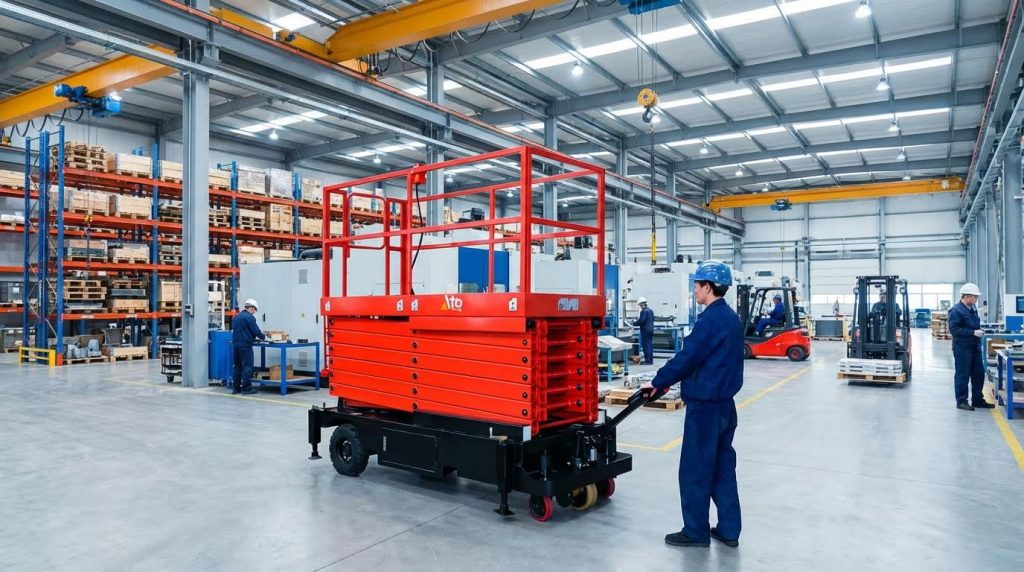
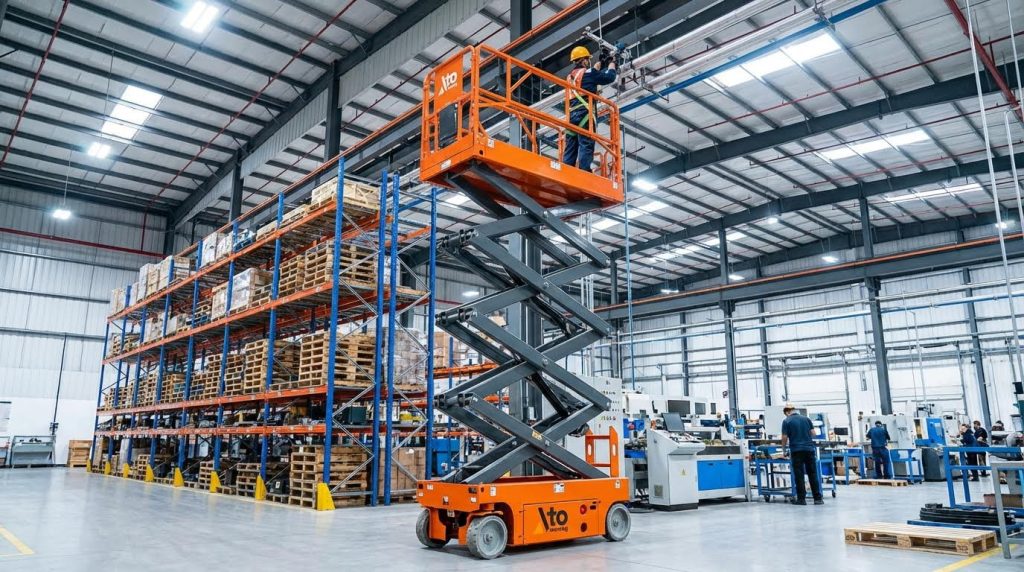
Scissor lift tables interface with standard pallets by matching platform size, clearances, and access geometry so trucks or AGVs can place and remove pallets safely and repeatably. When engineered correctly, they answer the question “can scissor lifts work with standard pallets” with a clear yes.
The two big design levers are platform dimensions versus pallet standards, and whether you use a low-profile surface-mounted unit with ramps or a pit-mounted table that sits flush with the floor.
Platform size, pallet standards, and clearances
Scissor lift tables work with standard pallets when platform dimensions exceed pallet size by a controlled clearance band, typically around 50 mm on each side. This margin absorbs steering error without wasting footprint.
In practice, you choose the platform by mapping it to the pallet standard and the way the pallet is delivered (short side vs long side entry, truck type, AGV guidance accuracy).
| Platform Size (mm) | Compatible Pallet Type | Typical Pallet Size (mm) | Edge Clearance (each side) | Best For… |
|---|---|---|---|---|
| 1,120 × 1,220 | EUR pallet (short-side entry) | 800 × 1,200 | ≈ 160 mm width, 10 mm length | Compact cells where pallets are well centered by guides. |
| 1,200 × 1,200 | EUR or small ISO pallet | 800 × 1,200 | ≈ 200 mm width, flush length | Square platforms in tight conveyor or robot cells. |
| 1,270 × 1,370 | North American and EUR pallets | 1,016 × 1,219 or 800 × 1,200 | ≥ 50 mm all around | Mixed fleets and manual pallet truck loading with steering error. |
Typical industrial scissor lift platforms range from about 1,120 × 1,220 mm up to 1,270 × 1,370 mm, which comfortably cover North American 1,016 × 1,219 mm and EUR 800 × 1,200 mm pallets with at least 50 mm clearance on all sides. This clearance band compensates for steering deviations and placement error, which is crucial when operators use hand pallet trucks rather than guided AGVs.
- Check pallet standard: Confirm if you handle EUR 800 × 1,200 mm, 1,016 × 1,219 mm, or both – this fixes your minimum platform envelope.
- Maintain ≥ 50 mm edge clearance: Design for at least 50 mm free space each side – reduces collisions with toe guards and platform edges.
- Use guides or locators: Add side guides or mechanical locators – keeps pallets centered and improves stability at height.
- Control overhang: Avoid pallets overhanging more than necessary – limits tipping leverage from tall stacks.
How to quickly check if your existing lift suits a new pallet
Measure clear platform length and width in mm. Subtract pallet length and width. Divide each result by 2 to get side clearance. If any side is below 50 mm, expect more frequent edge strikes and consider guides, soft bumpers, or a larger platform.
💡 Field Engineer’s Note: When customers ask “can scissor lifts work with standard pallets” but insist on ultra-compact platforms, I always simulate worst-case misalignment. If a pallet corner can ride up onto a toe guard or miss a support roller by 20–30 mm, you will see broken deck boards and chipped paint within weeks.
Low‑profile vs pit‑mounted configurations
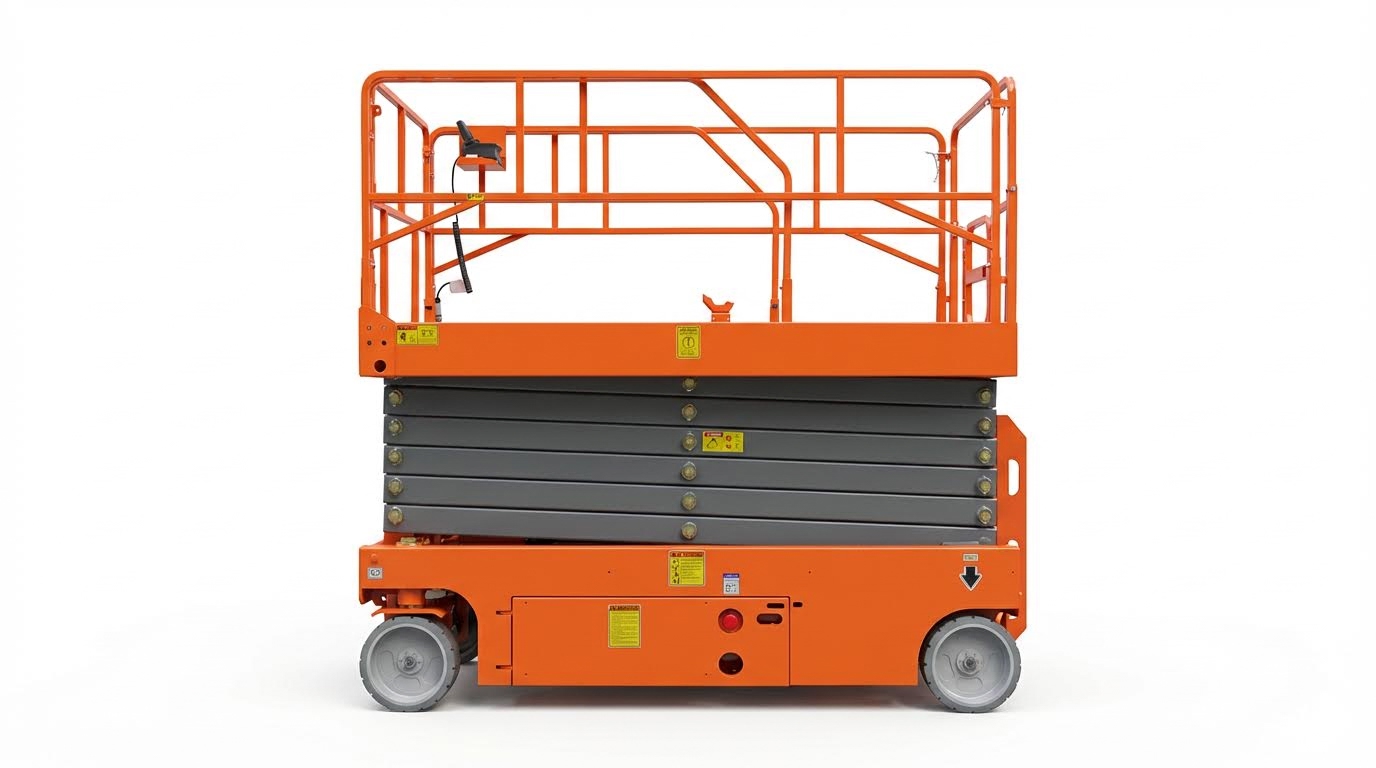
Low-profile and pit-mounted scissor lift tables both handle standard pallets; the right choice depends on how you load them, your floor construction, and whether you use pallet trucks, stackers, or AGVs.
Think of low-profile units as bolt-down “surface machines” with ramps or U-platforms, and pit-mounted units as “disappearing” platforms that sit flush with the slab.
| Configuration | Key Geometry | Loading Method | Main Advantages | Operational Impact |
|---|---|---|---|---|
| Low-profile, solid deck | Closed height ≈ 80–90 mm | Ramp + hand/electric pallet truck | No civil work, easy relocation | Good for retrofits; ramp adds 1.0–1.5 m to footprint. |
| Low-profile, U-shaped deck | Closed height ≈ 80–90 mm with cut-out | Pallet truck enters “U” around load | No separate ramp, reduced tilting | Ideal for single-pallet workstations and order picking. |
| Pit-mounted, flush deck | Deck level with floor, pit depth ≈ closed height | Direct loading by pallet truck, stacker, or AGV | No ramps, smooth traffic flow | Best for AGVs and conveyors; requires accurate pit and drainage design. |
Low-profile scissor lifts typically have a collapsed height around 80–90 mm, so you can surface-mount them and use a short ramp or a U-shaped platform for pallet jack access. Pit-mounted tables instead sit flush with the floor, eliminating the ramp completely and giving AGVs and stackers a clean drive-on interface.
- Low-profile + ramp: Use where you cannot cut the floor – fast installation, but ramps must stay below about 10–12° for safe push forces.
- Low-profile U-platform: Ideal when you only ever handle one pallet – the truck forks straddle the void, so you avoid a long ramp and reduce pallet tipping.
- Pit-mounted: Choose when you design a new line or AGV route – flush floor improves traffic flow and reduces trip hazards.
- Plan drainage and pit tolerances: Provide sump/drain and keep pit flat – prevents water pooling and uneven support that can twist the scissor base.
Ramp and approach design tips
Keep ramp angles under 10–12° so operators can move 1,000–2,000 kg pallets without excessive push force. Use beveled or chamfered leading edges to reduce impact and rolling resistance when pallet trucks or AGVs enter the platform. Consider guide rails or tapered edges to help center the truck and pallet.
💡 Field Engineer’s Note: In older buildings with uneven floors, I often prefer a correctly poured pit-mounted table over a low-profile unit on shims. A twisted base frame shortens bearing life and makes loads “walk” sideways as you raise them, especially with tall pallet stacks.
Engineering Criteria For Safe, Stable Pallet Handling
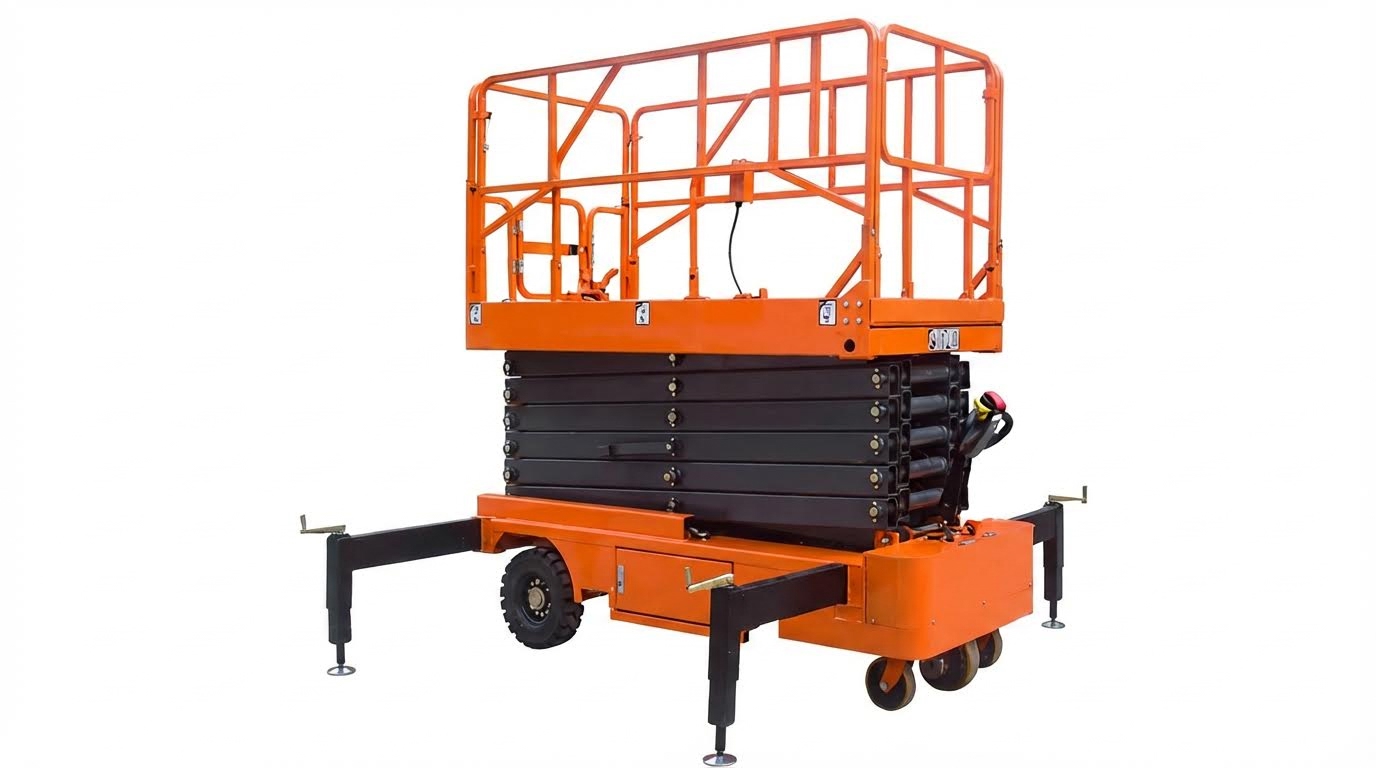
Engineering criteria for safe, stable pallet handling define how and when scissor platform lift tables can scissor lifts work with standard pallets without tipping, overloading, or creating ergonomic risks for operators.
These criteria cover capacity, deflection, eccentric loading, access geometry, hydraulics, and working height. Getting them right is what makes pallet handling predictable instead of risky guesswork.
Load capacity, deflection, and eccentric loading
Load capacity, deflection, and eccentric loading determine whether a scissor lift table can safely support real pallet loads, not just theoretical nameplate ratings.
For standard EUR and ISO pallets, typical industrial lift tables support 1,000–3,000 kg capacities, with at least a 25% margin above the maximum expected pallet weight to cover load variation and abuse. Reference
| Design Aspect | Typical Engineering Range | What To Check | Operational Impact |
|---|---|---|---|
| Rated capacity | 1,000–3,000 kg | Must exceed heaviest pallet + 25% margin | Handles worst-case heavy pallets without overload trips |
| Load type | Uniform vs. point / line loads | Is pallet load evenly distributed? | Reduces local deck bending and pallet damage |
| Platform deflection at full load | Small elastic sag only (few mm over span) | Deck should not feel “springy” at height | Prevents rocking of tall stacked pallets |
| Eccentric loading | Offset loads up to rated eccentric spec | Side / end overhang during loading | Prevents tipping when pallets are not perfectly centered |
| Side-load restriction | Defined by manufacturer | Forks or push forces parallel to scissor arms | Avoids scissor leg twisting and bearing damage |
- Capacity margin: Size the table at least 25% above the heaviest pallet weight – This absorbs scale errors, wet loads, or heavier future SKUs.
- Deflection limit: Specify low deck deflection at full load – Stable decks keep high center-of-gravity pallet stacks from oscillating.
- Eccentric load rating: Check end and side offset load ratings – Real loading is rarely perfectly centered, especially with hydraulic pallet truck.
- Stack height: Consider maximum pallet stack height and CoG – Tall stacks amplify small deflections into visible sway.
- Dynamic effects: Control approach speeds of trucks – Impact loads from hard docking can exceed static capacity.
💡 Field Engineer’s Note: When a lift is “technically” within rated capacity but shows more than a few millimeters of deck sag at height, operators instinctively slow down or avoid using it. That kills throughput long before anything actually breaks, so stiffness is as important as pure capacity.
Ramp geometry, U‑platforms, and pallet truck access
Ramp geometry, U-platforms, and pallet truck access define how easily and safely pallets move on and off the lift, especially for manual trucks.
Low-profile scissor platform lift tables with closed heights around 80–90 mm allow surface mounting with access by ramps or U-shaped platforms. Reference
| Geometry Element | Typical Value / Option | Engineering Focus | Best For… |
|---|---|---|---|
| Closed height (low-profile) | ≈ 80–90 mm | Minimizes ramp height and angle | Surface-mounted lifts with manual pallet jack access |
| Ramp angle | < 10–12° | Controls push force with manual jacks | Ergonomic loading by operators |
| Ramp leading edge | Beveled / chamfered | Reduces impact and rolling resistance | Protects pallet stringers and jack wheels |
| Platform style | Full deck | Universal support for any pallet / stillage | Mixed load types and non‑standard bases |
| Platform style | U‑shaped | Fork pockets straddle platform cut-out | Direct pallet loading without separate ramp |
- Ramp angle: Keep below 10–12° – Higher angles spike push forces and increase strain and rollback risk.
- Ramp length: Use longer ramps to reduce angle – Longer run-up improves control for electric and manual trucks.
- U‑platform selection: Choose U‑platforms where only pallet trucks load the lift – They remove the need for a separate ramp and reduce tilting.
- Docking aids: Add guide rails or tapered edges – They keep trucks aligned and reduce platform edge impacts.
- Floor interface: Verify floor flatness and friction – Uneven or slippery floors increase approach and braking distances.
How ramp angle links to push force
As ramp angle increases, the horizontal push force to move a loaded pallet jack rises sharply because the operator must overcome both rolling resistance and a growing component of the pallet weight. Keeping the angle below roughly 10–12° helps maintain forces within typical ergonomic guidelines for repeated tasks.
💡 Field Engineer’s Note: Most “hard to push” complaints trace back to short, steep ramps or square-cut leading edges. A 200–300 mm longer ramp and a 10–15 mm bevel at the nose usually do more for ergonomics than changing the whole lift.
Hydraulics, safety circuits, and ergonomic work heights
Hydraulics, safety circuits, and ergonomic work heights ensure that scissor lift tables move pallets smoothly, stop safely, and keep pick faces in a healthy working band.
Hydraulic power units typically run on 220–240 V single-phase or 380–415 V three-phase supplies, with pressure relief valves, flow controls, and hose-burst valves providing core safety functions. Reference
| System Aspect | Typical Specification | Safety / Ergonomic Role | Operational Impact |
|---|---|---|---|
| Hydraulic supply | 220–240 V 1‑phase or 380–415 V 3‑phase | Drives pump and cylinder | Matches site power; influences lift speed and duty cycle |
| Pressure relief valve | Set slightly above rated load pressure | Prevents structural overload | Protects scissors and deck if pallets exceed plan weight |
| Flow control / descent valve | Adjustable | Limits lowering speed | Prevents shock to pallets and conveyors |
| Hose‑burst valve | Locks cylinder on line failure | Stops sudden platform drop | Critical where people work near or under load |
| Ergonomic height band | ≈ 750–1,200 mm pallet top | Minimizes trunk flexion and shoulder elevation | Reduces fatigue and musculoskeletal disorder risk |
| Lift range (low‑profile) | ≈ 85–860 mm | Keeps pallet layers in ergonomic band | Allows layer‑by‑layer build / de‑stack without bending |
- Control devices: Use hold‑to‑run pushbuttons or footswitches – Operators can stop instantly if a pallet shifts.
- Toe protection: Specify toe guards or safety skirts – Prevents foot trapping under descending platforms.
- Interlocks: Link lift motion to gate or guard status – Stops movement when people are in the hazard zone.
- Height presets: Add simple height stops or sensors – Operators quickly return to optimal pick height for each product.
- Duty cycle: Match pump and motor to cycle rate – Prevents overheating in high‑throughput palletizing cells.
Setting ergonomic work heights in practice
Start by defining the operator’s elbow height (typically around 1,000–1,100 mm for many adults). Aim to keep the working layer slightly below this, around 900–1,050 mm, and ensure the lift stroke allows the lowest and highest pallet layers to pass through the 750–1,200 mm ergonomic band during build or de‑stack cycles.
💡 Field Engineer’s Note: In cold stores and washdown areas, hydraulic oil thickens and seals stiffen, slowing lift speeds and making motion jerky. Always specify oil grade and seal materials for the actual temperature range, or your “smooth” ergonomic lift becomes a stop‑start fight every winter.
Selecting And Applying Lift Tables In Real Operations
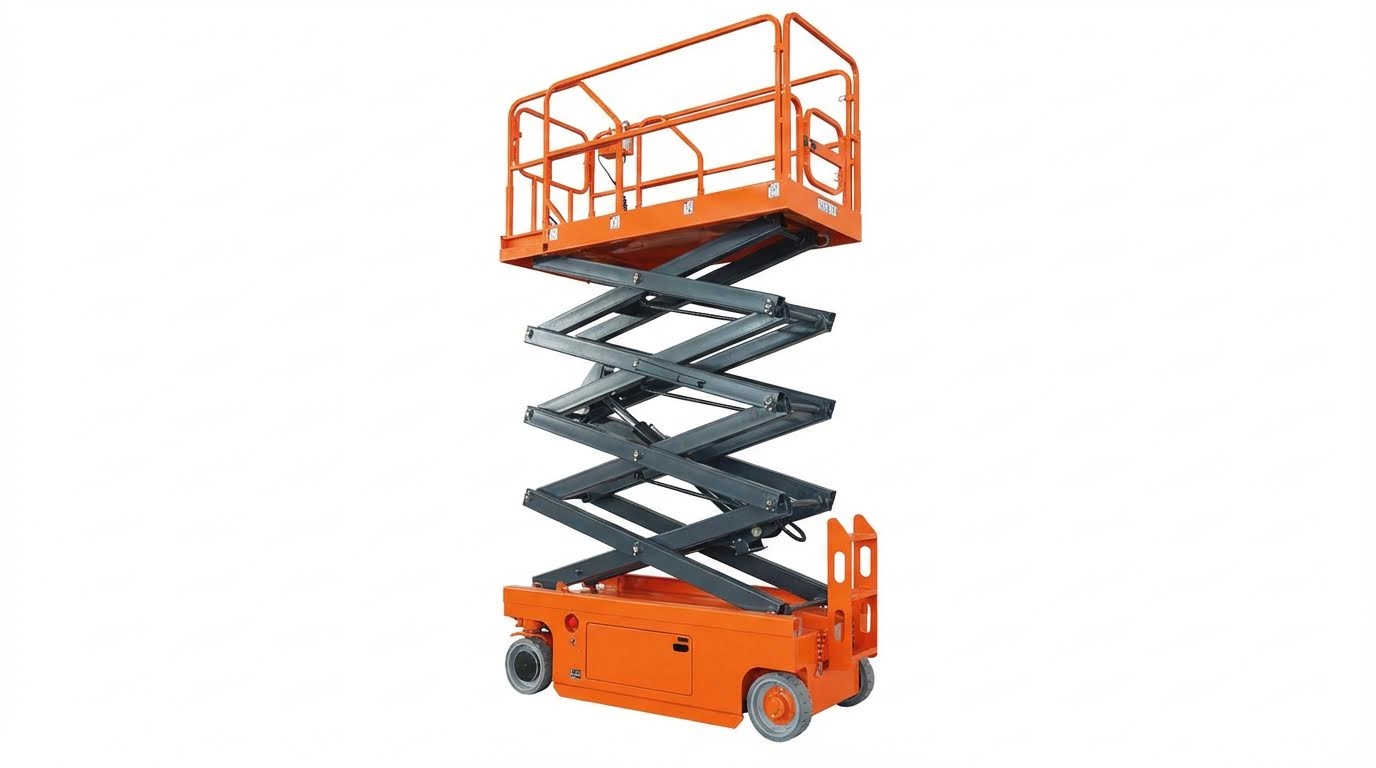
This section explains how to select and deploy scissor lift tables so they work cleanly with standard pallets, trucks, AGVs, and hygiene or regulatory constraints in real facilities.
Matching lifts to trucks, AGVs, and conveyors
Correct interface geometry ensures scissor lift tables accept standard pallets smoothly from pallet trucks, AGVs, and conveyors without hang‑ups, excessive push forces, or stability problems.
A common question is “can scissor lifts work with standard pallets?” The practical answer is yes, provided platform size, clearances, and access geometry match the handling equipment. Typical platforms from about 1,120 mm × 1,220 mm to 1,270 mm × 1,370 mm comfortably fit EUR 800 mm × 1,200 mm and North American 1,016 mm × 1,219 mm pallets with at least 50 mm clearance on all sides. This clearance absorbs steering errors and misalignment, avoiding impacts on pallet edges and stringers. Platform size and pallet standards
| Interface Type | Key Geometry / Feature | Typical Values | Operational Impact |
|---|---|---|---|
| Hand / electric pallet truck to lift table | Platform size and edge clearance | 1,120–1,270 mm × 1,220–1,370 mm, ≥50 mm clearance each side | Fits EUR and North American pallets without snagging or edge damage. |
| Manual pallet jack ramp | Ramp angle and beveled leading edge | Ramp angle <10–12°, chamfered front edge | Keeps push forces ergonomic and reduces impact into the platform. |
| U‑shaped platform | Fork slots and open center | Closed height ≈80–90 mm, fork pockets sized for pallet jacks | Allows direct pallet loading without a separate ramp, reduces tilting. |
| AGV / AMR docking | Flush or near‑flush transition | Pit‑mounted or low-profile with shallow ramp | Prevents AGV grounding and improves repeatable docking. |
| Conveyor interface | Lift stroke and level accuracy | Travel ≈900 mm with controlled positioning | Transfers pallets between conveyor levels without step or gap. |
Front‑edge design strongly affects real‑world usability. Beveled or chamfered leading edges cut impact and rolling resistance as pallet trucks or AGVs enter the platform. Low‑angle ramps, kept below about 10–12°, keep manual push forces within ergonomic limits and reduce wheel slip or jack “stalls” at the toe of the ramp. Ramp geometry and ergonomics
- Check platform plan size vs pallet: Confirm ≥50 mm clearance all around – prevents side impacts when drivers are off‑center.
- Limit ramp angle: Design for <10–12° – keeps push forces reasonable for manual pallet jacks.
- Use U‑platforms where ramps are impossible: Open center lets pallet trucks drop pallets directly – cuts cycle time and tilting.
- Add guides and locators: Rails or tapered edges steer trucks or AGVs – reduces collision risk and platform edge damage.
- Verify lift stroke vs conveyors: Ensure full overlap at top and bottom levels – avoids pallet overhang and product spillage.
How to quickly check compatibility on site
Measure pallet length and width, then add at least 100 mm to each dimension to define minimum platform size. Check that ramp length gives a slope <10–12° from floor to platform height. Finally, simulate the worst steering error of your pallet truck or AGV and ensure the pallet still lands fully within the platform boundary.
💡 Field Engineer’s Note: When integrating AGVs, always mock up the worst‑case loaded height and steering error. Tall pallet stacks amplify any small misalignment, and an AGV bumper can easily catch a scissor toe guard if the pit edge or ramp transition is not modeled correctly.
Environment, hygiene, and regulatory constraints
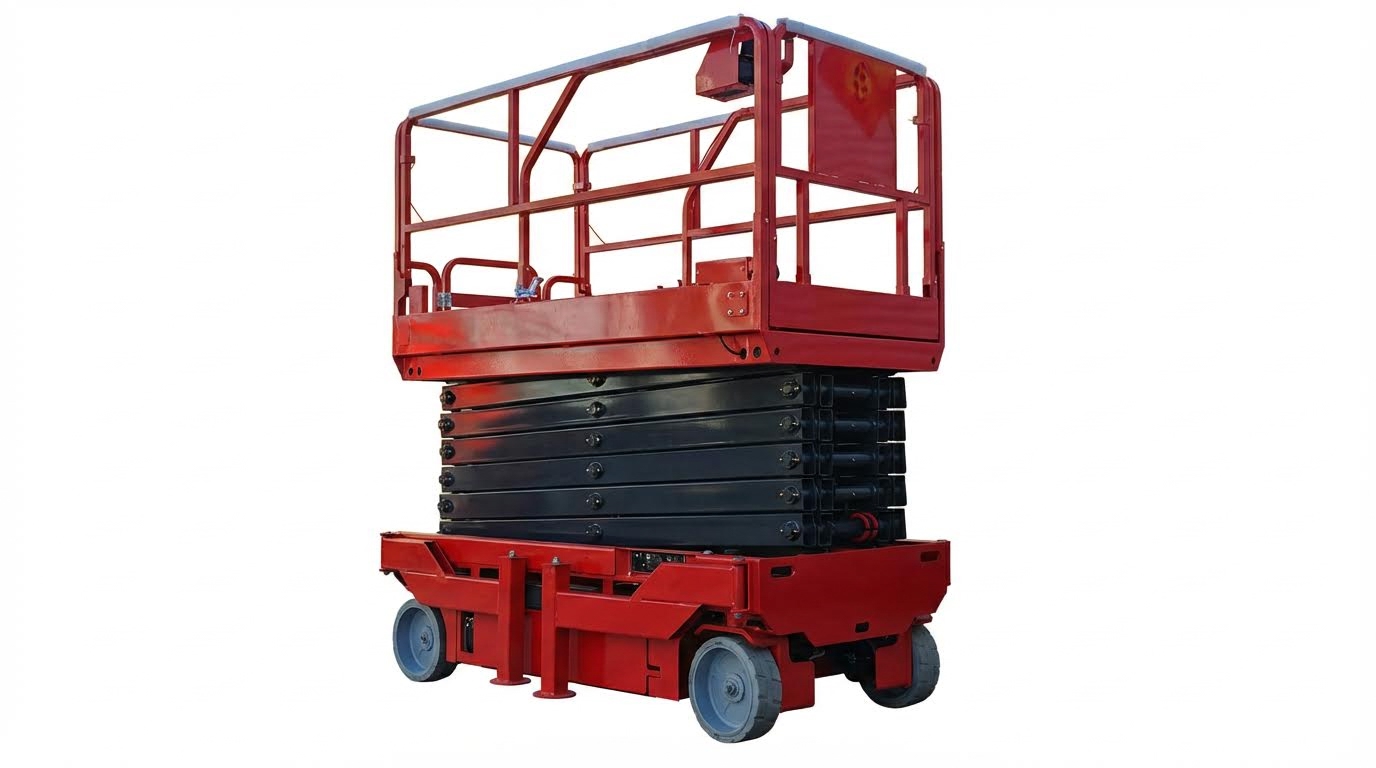
Environmental conditions, hygiene demands, and safety regulations dictate material choice, protection level, and safety equipment when applying scissor lift tables with standard pallets.
In dry indoor warehouses, painted steel hydraulic scissor lifts usually provide adequate corrosion resistance for standard pallet handling. In food, beverage, or pharmaceutical plants, stainless steel structures and smooth, easy‑to‑clean surfaces are preferred to prevent contamination and allow washdown. Electrical enclosures in wet or hose‑down areas need high ingress protection ratings so water does not penetrate controls or safety circuits. Environment and hygiene requirements
| Environment | Recommended Construction | Key Regulatory / Safety Focus | Best For… |
|---|---|---|---|
| Dry indoor warehouse | Painted steel, standard hydraulics | Guard spacing, toe protection, emergency stops | General pallet handling up to 3,000 kg with low cleaning demands. |
| Food & beverage processing | Stainless steel, smooth welds, minimal crevices | Hygiene, cleanability, corrosion resistance | Palletizing ingredients or finished goods in washdown zones. |
| Pharmaceutical / cleanroom | Stainless steel, sealed surfaces, low particle generation | Cleanability, contamination control | Handling wrapped pallets near clean production areas. |
| Wet / washdown area | Corrosion‑resistant metals, high‑IP electrical enclosures | Ingress protection, slip prevention | Pallets in bottling, meat, or dairy washdown lines. |
| Harsh or chemical environment | Special coatings or stainless, protected hoses and cables | Chemical resistance, hose and seal durability | Corrosive warehouses or chemical packaging lines. |
Regulatory frameworks define minimum requirements for guarding, safety distances, and emergency features around scissor lifts. Typical provisions include fixed or interlocked guards to prevent access to scissor mechanisms, toe protection around platform edges, and clearly marked emergency stop devices. These measures protect operators when they move standard pallets on and off the platform. Guarding and safety clearances
- Match materials to cleaning regime: Use stainless steel where frequent washing occurs – avoids rust and bacterial traps.
- Specify IP‑rated enclosures: Choose enclosures suited to water or dust exposure – prevents control failures.
- Provide toe guards and skirts: Protect all moving edges – reduces foot crush and pallet jack wheel pinch points.
- Plan drainage for pits: Include sumps or drains for pit‑mounted lifts – prevents standing water and corrosion.
- Verify safety devices in risk assessment: Include emergency stops, interlocks, and signage – ensures compliance and safer pallet handling.
Checking if your existing lift suits a new area
Before relocating a scissor lift to a higher‑hygiene or outdoor area, review its material finish, hydraulic hose routing, and electrical enclosure rating. If these do not match the new environment’s cleaning chemicals, water exposure, or dust level, upgrading components is usually cheaper than dealing with corrosion, leaks, or electrical failures later.
💡 Field Engineer’s Note: In washdown zones, the weak point is often the pit, not the lift. If drainage and slope are wrong, water and chemical residues sit under the table, attacking pins, rollers, and base frames even when the visible stainless top looks perfect.
Final Considerations For Long‑Life, Low‑TCO Operation
Scissor lift tables handle standard pallets safely when you treat geometry, structure, hydraulics, and environment as a single system. Correct platform size and at least 50 mm clearance on every side keep pallets stable and away from toe guards. Low-profile, U-platform, or pit-mounted layouts then control how trucks, AGVs, and operators approach the lift without strain or impact.
Structural sizing and stiffness protect against overload and sway, especially with tall stacks. Hydraulics, safety circuits, and toe protection turn that structure into a predictable machine that fails safe if loads, hoses, or controls go wrong. Ergonomic height bands keep work inside a narrow, comfortable zone, which cuts fatigue and long-term injury.
Environment and hygiene choices finally lock in life-cycle cost. Correct steels, coatings, and enclosure ratings avoid corrosion, leaks, and electrical failures that drive unplanned downtime.
The best practice is clear. Start with pallet standard and handling method, then size platform, capacity, and access geometry. Validate ramp angles, pit design, and guarding against your risk assessment. Match materials and hydraulics to the real environment. When you follow this sequence, Atomoving scissor lift tables deliver long, low-maintenance service and predictable TCO in pallet handling lines.
Frequently Asked Questions
Can scissor lifts work with standard pallets?
Scissor lifts are not typically designed to handle standard pallets like forklifts. However, with the right attachments or modifications, they can be used for such tasks. For example, a scissor lift can be equipped with forks or a pallet handler to move pallets safely. Always ensure the equipment is rated for the load and that operators are trained in using these attachments. Common Scissor Lift Issues.
What safety measures should be followed when using scissor lifts?
When operating scissor lifts, it’s important to follow OSHA guidelines to ensure safety. Workers must be trained and certified before using the equipment. Additionally, always use guardrails if available; harnesses are only required if guardrails are missing or incomplete. Ensure the ground is stable and level to prevent tipping. Scissor Lift Safety Tips.
Do you need certification to operate a scissor lift?
Yes, OSHA requires workers to be trained and certified before operating a scissor lift. The training covers safe operation, recognizing hazards, and following OSHA standards. Certification ensures operators are knowledgeable about preventing accidents and maintaining workplace compliance. OSHA Certification Guide.