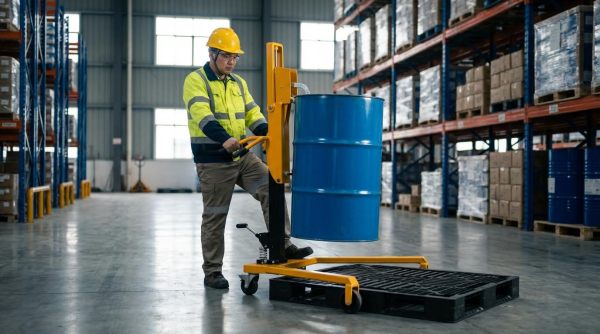
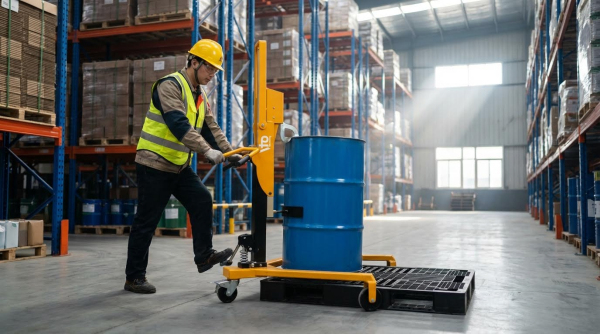
Barrel dollies on wheels are low, wheeled platforms that let you move heavy wine, food, and industrial drums safely with minimal manual effort. This guide explains what they are, how they are engineered, and how to use a barrel dolly correctly for different floors, environments, and barrel types.
What A Barrel Dolly Is And How It Works
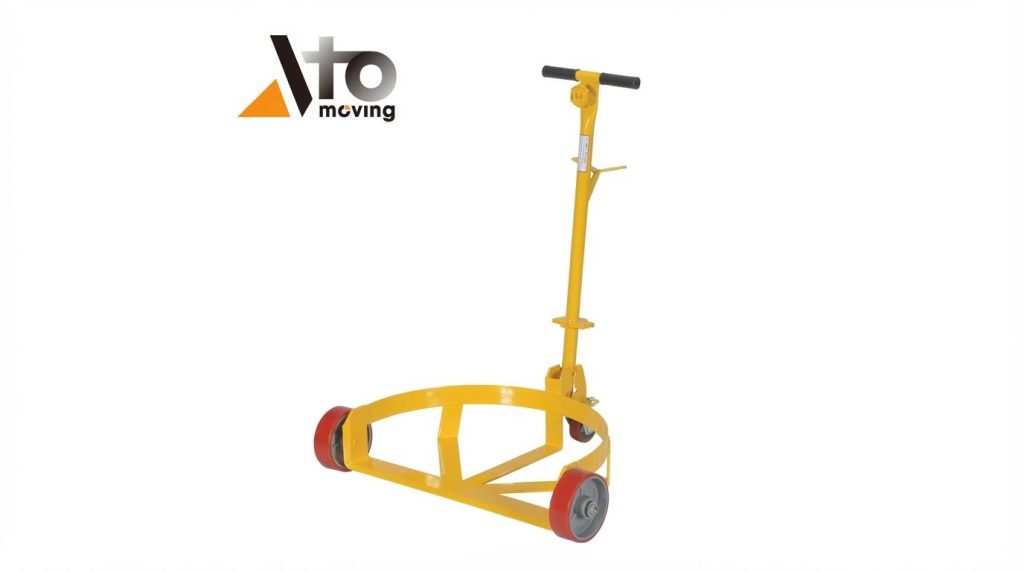
A barrel dolly is a low wheeled frame that supports and moves a full wine, food, or industrial drum with minimal manual effort. It keeps the barrel’s base cradled on a rigid ring or cross-brace while casters carry the load across the floor.
Understanding how to use a barrel dolly starts with knowing how its frame, ring, and casters share the load. The barrel sits inside a circular or polygonal support, so the dolly carries the weight while you only provide steering and push force.
- Function: Support the barrel base on a rigid frame – protects thin drum walls from point loads.
- Mobility: Use multiple swivel casters – allows tight turning in cellars, warehouses, and production rooms.
- Safety: Keep the center of gravity low – reduces tipping when you start, stop, or turn.
- Compatibility: Sized for typical 110–210 L barrels – fits common wine, food, and industrial drum diameters.
How a barrel dolly actually carries the load
The barrel’s full mass transfers through its bottom chime into the dolly’s ring or cross-brace. The frame then spreads this force into the casters, which contact the floor over several points, lowering surface pressure and easing rolling.
💡 Field Engineer’s Note: When operators complain a dolly is “hard to push,” it is often a frame issue, not just bad wheels. A slightly bent ring or cross-brace can twist the caster geometry, so one wheel drags instead of rolling, multiplying the push force needed.
Core components and frame geometry
The core components of a barrel dolly are the support frame, load ring or cross-brace, and the interface to the casters. Their geometry decides whether the barrel feels stable or “wobbly” when you move it.
- Support ring or deck: Circular or polygonal ring sized to the barrel base – prevents the drum from sliding sideways.
- Cross‑brace structure: X‑shaped or radial beams under the ring – shares the barrel weight across several members.
- Low profile height: Typically 100–200 mm overall – keeps the barrel’s center of gravity close to the floor.
- Caster mounts: Rigid corner or radial plates – hold wheels square so they track correctly under load.
- Perimeter stops: Upturned lips or short posts – act as a mechanical stop if the barrel shifts.
Why low height matters for stability
A full 200 L drum can weigh 200–300 kg. Raising that mass even 50–80 mm higher increases the overturning moment during a sudden stop or when a wheel hits a floor defect. Low frames keep this moment small and reduce tip‑over risk.
| Frame Feature | Typical Implementation | Operational Impact |
|---|---|---|
| Support geometry | Ring plus X‑brace deck | Spreads load; suitable for mixed wine and industrial drums on the same dolly |
| Deck openness | Open X or grid, not solid plate | Allows washdown water and spills to drain instead of pooling under food barrels |
| Perimeter restraint | Raised ring or tabs around edge | Helps keep tall wine barrels centered on uneven floors |
| Height from floor | Approx. 100–200 mm including casters | Clears small debris but keeps barrel low for safe manual pushing |
Caster layout, wheel materials, and maneuverability
The caster layout and wheel material determine how easily you can steer a loaded barrel dolly and what floor types it can safely run on. Four swivel casters are common because they balance stability and tight-turn maneuverability.
- Caster count: Usually four swivel casters – provides stable four‑point support with easy direction changes.
- Wheel diameter: About 75 mm (3 in) for standard duty – small enough to keep height low, large enough to roll over joints.
- Wheel width: Around 30 mm – spreads load to avoid floor damage.
- Wheel material options: Steel frame with polymer or rubber treads – tunes grip, noise, and floor protection.
- Swivel bearings: Ball‑bearing races – reduce steering effort when barrels are near maximum weight.
| Wheel Material | Best For… | Operational Impact |
|---|---|---|
| Hard polymer (e.g., polyolefin‑type) | Smooth, hard concrete | Low rolling resistance; good for long wine cellar runs with heavy barrels |
| Polyurethane‑type tread | Finished floors, epoxy, coated food areas | Protects floor, runs quietly in bottling or packaging rooms |
| Softer rubber‑type tread | Uneven or slightly rough floors | Better shock absorption; useful where drains and small thresholds are common |
How caster layout affects how to use a barrel dolly
With four swivels, you push from the side or end and let the casters align themselves. Short, smooth pushes keep the wheels tracking. On tight corners, a slight backward pull before turning helps all casters swivel into the new direction, reducing the force you need.
💡 Field Engineer’s Note: In real cellars and food plants, floor slopes of only 1–2% are enough for a loaded barrel dolly to “drift” sideways on hard wheels. Where floors are not perfectly level, choose slightly softer treads and always park with at least one caster brake engaged.
Engineering Design Of Barrel Dollies
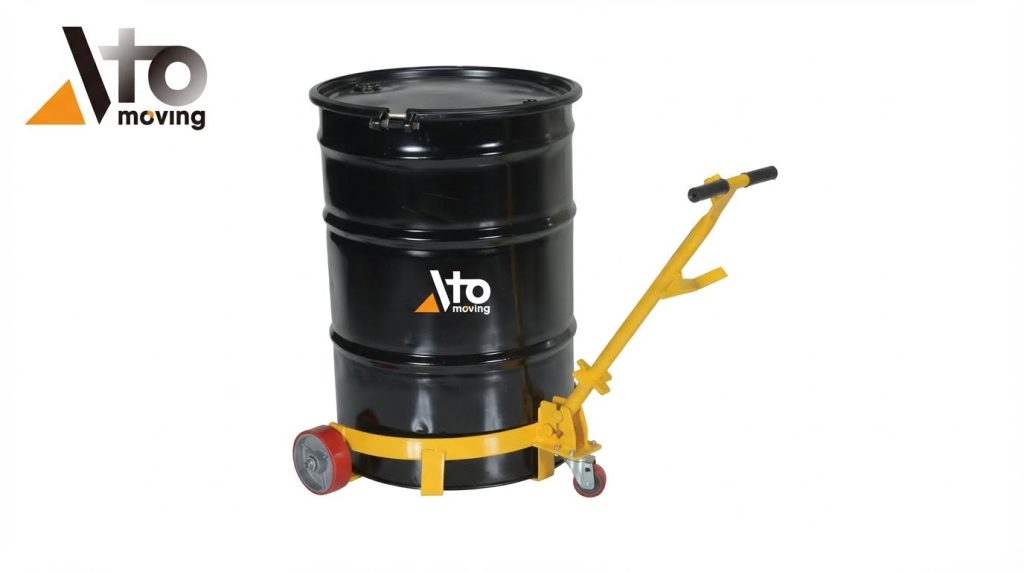
Engineering design for barrel dollies focuses on load rating, frame and coating selection, and stability features so operators can safely understand how to use a barrel dolly in real-world cellars and plants.
For wine, food, and industrial drums, good design turns a simple trolley into a controlled handling system. The goal is to carry full barrels safely while staying hygienic, corrosion‑resistant, and easy to push on typical floors.
Load ratings for wine, food, and chemical barrels
Load rating defines the maximum safe barrel weight the dolly can carry, including liquid, barrel, and any fittings.
Because wine, juice, oil, and chemicals have different densities, the same volume barrel can vary a lot in mass. A conservative load rating keeps the frame and casters within their stress limits and reduces the risk of sudden failure.
| Typical Barrel / Drum Type | Approx. Volume | Typical Full Mass Range | Recommended Dolly Load Class | Operational Impact |
|---|---|---|---|---|
| Wine barrel (225–300 L) | 225–300 L | 220–320 kg | ≥ 350–400 kg | Covers wine density variation and sloshing during starts/stops. |
| Food oil / syrup drum (200 L) | 200–220 L | 200–260 kg | ≥ 400–500 kg | Handles higher density liquids without overstressing frame. |
| Standard industrial drum (30–55 gal) | 114–210 L | 120–280 kg | ≈ 450–1,100 kg (1,000–2,500 lbs) range per common industrial dollies | Supports 55‑gal (210 L) steel drums in warehouses and plants. |
| Chemical drum (high‑density liquids) | 100–200 L | Up to ~300 kg | Upper end of 1,100 kg (2,500 lbs) class for added safety margin | Gives reserve capacity for shock loads and uneven floors. |
- Static load rating: Maximum mass the dolly can support at rest – must exceed the heaviest full barrel you plan to move.
- Dynamic allowance: Extra margin for bumps, joints, and sudden stops – prevents frame or caster overload when learning how to use a barrel dolly in tight spaces.
- Barrel mix planning: Detail your heaviest product and largest barrel – size the dolly to that worst‑case, not the average.
How to estimate the needed load rating
Take the barrel’s empty mass, add the liquid mass (volume × density), then add at least 25–50% margin for dynamic effects and future product changes. Choose the next higher standard load class.
💡 Field Engineer’s Note: When in doubt between two load classes, choose the higher one. In real facilities, operators often stack tools or small containers on the barrel; that “extra 20–30 kg” plus floor defects quickly eats your safety margin.
Frame materials, coatings, and hygienic design
Frame material and surface treatment determine corrosion resistance, cleanability, and long‑term structural integrity.
Wine cellars, food plants, and chemical warehouses expose dollies to moisture, acids, salts, and cleaning chemicals. The wrong material or coating leads to rusted welds, flaking paint, and hygiene or safety issues.
| Frame / Finish Type | Typical Construction | Best For | Operational Impact |
|---|---|---|---|
| Painted / powder‑coated carbon steel | Welded steel with powder coating surface common in standard drum dollies | Dry warehouses, general industrial drums | Cost‑effective, but needs inspection to prevent coating damage and rust. |
| Stainless steel (e.g., 304) | Stainless sections with polished or brushed finish offered for corrosive environments | Wineries, breweries, food & CIP areas, some chemicals | Resists corrosion and cleans easily, ideal where hygiene and washdown are routine. |
| Zinc‑plated steel | Carbon steel with zinc plating as one of several finishes | Moderately damp or outdoor‑adjacent areas | Improves rust resistance over bare steel but still needs periodic checks. |
| Polished stainless / high‑finish | Smooth, low‑roughness surfaces used as a premium finish | High‑hygiene zones, visible tasting rooms | Reduces dirt traps and biofilm risk; looks professional in customer areas. |
- Closed welds and smooth joints: Avoid gaps and crevices – they trap wine, sugar, and product residues, making cleaning harder.
- Open deck vs solid pan: X‑shaped cross‑brace decks let liquids drain and reduce pooling – important when learning how to use a barrel dolly in wet bottling halls.
- Support ring geometry: Perimeter rings around the deck keep barrels from sliding – especially critical with round wine barrels.
Hygienic details to check before purchase
Look for continuous welds, minimal horizontal ledges, and easy access under the frame for floor cleaning. In food and wine, avoid rough galvanizing or flaking coatings that could contaminate product areas.
💡 Field Engineer’s Note: In washdown zones, the frame is not the only corrosion risk. Standard carbon‑steel fasteners and caster forks will rust long before a stainless frame fails, so match casters and hardware to the same hygiene level as the main dolly.
Stability, anti-tipping features, and ergonomics
Stability and ergonomics determine how forgiving the dolly is when operators push, pull, and turn full barrels on real floors.
Good design lowers the center of gravity, widens the footprint, and controls barrel movement. This reduces tipping risk and makes it physically easier to learn how to use a barrel dolly safely.
| Design Feature | Typical Implementation | Stability / Ergonomic Effect |
|---|---|---|
| Wide stance base | Deck diameter around 600 mm for 200 L drums (≈ 24 in) with 24×24 in variants | Wider caster spread increases tipping resistance during cornering. |
| Low deck height | Overall heights roughly 100–200 mm (4–8 in) depending on model | Keeps the barrel’s center of gravity close to the floor, reducing overturning moment. |
| Cross‑brace / X‑deck | X‑shaped support members under the barrel plus perimeter ring | Prevents sagging and drum “rocking,” improving steering control. |
| Anti‑tipping straps / cross straps | Cross straps and secure frame structures used as anti‑tipping elements | Stops the barrel from slipping off if the dolly hits a joint or ramp. |
| Swivel casters (3 in / ≈ 75 mm) | Four or eight swivel casters about 75 mm diameter with optional bearings and special materials | Allow tight turning with less push force, especially in crowded cellars. |
| Optional brakes / wheel locks | Locks on one or more casters | Hold the dolly still while loading or on slight slopes, reducing operator strain. |
- Handle height and grip: A low, solid push point improves control – pushing near the barrel mid‑height reduces tipping leverage.
- Rolling resistance: Quality bearings and suitable wheel material – cut the force needed to start and keep the barrel moving.
- Operator posture: Design so users can keep elbows close and walk upright – this directly lowers back and shoulder strain.
Choosing wheels for your floor
Harder wheels suit smooth concrete but can be noisy and harsh on joints. Softer or larger‑diameter wheels help on rough or expansion‑jointed floors and reduce shock loads into the barrel and frame.
💡 Field Engineer’s Note: Many tipping incidents happen at door thresholds and drain grates, not on open floor. When specifying a dolly, walk the actual route with a tape measure and check every joint height against your wheel diameter and deck clearance before signing off.
Safe Use, Applications, And Dolly Selection

This section explains how to use a barrel dolly safely, where it works best, and how to select the right design for wine, food, and industrial barrels. The focus is on stability, ergonomics, and matching dolly geometry to your floor and drum type.
Step‑by‑step: how to load and move a barrel
This step‑by‑step guide shows you how to use a barrel dolly so you load, move, and park barrels with minimal tipping risk and operator strain.
- Step 1: Inspect the dolly – Check frame, casters, and any straps or rings for damage or looseness. Prevents failures under load.
- Step 2: Clear and check the route – Remove debris, shrink wrap, and pallet splinters; avoid holes or sharp level changes. Cuts sudden shock loads that can flip a tall barrel.
- Step 3: Position the dolly – Place the dolly directly beside the upright barrel, as close as possible to its base. Reduces the lever arm and effort needed to roll the barrel on.
- Step 4: Brace the barrel – Stand with a wide stance, feet at least shoulder‑width apart, and one foot slightly behind. Gives you a stable base against the barrel’s mass.
- Step 5: Roll the barrel onto the dolly – Tilt the barrel slightly toward you, then guide the bottom edge onto the dolly ring or cross‑brace using controlled force. Keeps the center of gravity over the dolly as early as possible.
- Step 6: Center the barrel – Once on the dolly, nudge or lever the barrel until the base is fully seated and centered. Improves stability when turning or crossing joints.
- Step 7: Secure if applicable – Engage any clamps, straps, or rim‑grips the dolly provides. Prevents sliding or walking of the barrel on uneven floors.
- Step 8: Start moving smoothly – Push from low on the barrel or a low handle, and accelerate gradually. Limits dynamic sway and tipping moments.
- Step 9: Control speed on slopes – Keep the barrel on the uphill side where possible, and avoid diagonal travel across ramps. Maintains lateral stability.
- Step 10: Park and chock if needed – Stop on level ground, set any brakes, and use chocks or wheel locks in sloped areas. Prevents slow creep or runaway movement.
- Never pull by the rim only: Always keep at least one hand low on the shell or a handle – reduces twisting loads on the drum and your back.
- Avoid sudden pivots: Turn in a wide arc instead of spinning in place – reduces side loading on casters and barrel.
- Respect rated capacity: Match barrel mass to the dolly’s stated kg rating – prevents frame or caster collapse.
💡 Field Engineer’s Note: In tight cellars and plants, most tip‑overs happen at doorway thresholds and drain grates. Treat every edge like a speed bump: slow down, hit it as straight as possible, and keep both hands controlling the barrel.
How to teach new staff how to use a barrel dolly
Start with empty or partially filled barrels, demonstrate the loading tilt and centering, then add complexity: tight turns, thresholds, and gentle ramps. Only move to full, high‑value barrels once they show consistent control and good body posture.
Matching dolly type to barrel, floor, and environment
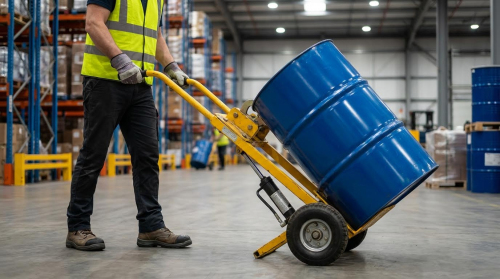
Choosing how to use a barrel dolly efficiently starts with choosing the right dolly: match its ring size, frame style, and casters to your barrel dimensions, floor quality, and hygiene or corrosion requirements.
| Selection Factor | Key Choice | Best For… | Operational Impact |
|---|---|---|---|
| Barrel size and shape | Round ring vs square/rectangular frame | Wine barriques, 200 L food drums, 200 L chemical drums | Round rings cradle curved barrels; square frames suit flat‑bottom tanks and totes. |
| Load capacity | Rated kg vs full barrel mass | Heavy 200–225 L barrels | Prevents overloading and frame or caster failure during normal pushing and turning. |
| Frame style | Closed ring vs X cross‑brace | Wet cellars, washdown areas, spill‑prone zones | Cross‑brace lets liquids drain; closed rings give maximum base support on thin‑wall drums. |
| Wheel / caster material | Hard vs softer tread | Tile, epoxy, concrete, outdoor yards | Hard treads roll easier on smooth floors; softer treads grip better and tolerate rough spots. |
| Wheel diameter | Small vs larger casters | Floors with joints, thresholds, and drains | Larger wheels climb edges more smoothly and reduce push force peaks. |
| Corrosion resistance | Painted steel vs stainless or coated | Food, beverage, and chemical plants | Stainless or high‑grade coatings resist rust and flaking in washdown or chemical exposure. |
| Cleaning and hygiene | Open vs closed profiles | Wine and food production | Simpler, smooth frames are faster to clean and harbor less residue or biofilm. |
| Handling frequency | Light‑duty vs heavy‑duty design | Occasional moves vs 3‑shift operations | Heavy‑duty frames and casters survive continuous use with fewer repairs. |
- Wine cellars: Choose low‑profile, round‑ring dollies with smooth, easy‑wash frames – keeps barriques stable and cleaning quick.
- Food plants: Prefer stainless or high‑grade coated frames with minimal crevices – supports hygiene and fast sanitation cycles.
- Chemical and industrial drums: Use robust frames with strong rings or cross‑braces and chemically compatible wheels – handles higher masses and harsher liquids.
- Rough or damaged floors: Select larger‑diameter casters and wider treads – reduces shock loading and tipping when crossing defects.
- Narrow aisles: Opt for compact frames with fully swiveling casters – allows tight turns without dragging the dolly sideways.
Quick checklist before buying a barrel dolly
Measure barrel diameter at the base, estimate maximum filled mass, walk the intended route and note floor defects, drains, and slopes, then decide whether washdown or chemical exposure will be routine. Use those four data points to shortlist suitable dollies.
💡 Field Engineer’s Note: If you are unsure between two models, pick the one with slightly higher capacity and better casters rather than extra frame features. In real plants, wheel performance and stability over bad floors decide whether people actually keep using the dolly—or go back to unsafe manual rolling.

Final Thoughts On Barrel Dolly Use And Selection
Barrel dollies turn heavy, awkward drums into controlled, low‑risk loads when you match design, capacity, and floor conditions correctly. The key is to treat the dolly as engineered load‑bearing equipment, not a simple cart. Frame geometry, caster layout, and deck height work together to keep the center of gravity low, spread forces, and resist tipping over real defects like joints and drains.
Correct load rating and material choice protect both people and product. When you size for the heaviest filled barrel, add dynamic margin, and choose corrosion‑resistant frames and casters, you cut the chance of sudden failure, rust, and hygiene problems. Good ergonomics then reduce strain so operators can move full barrels with steady, predictable effort.
For operations and engineering teams, the best practice is clear. Survey your barrels, routes, slopes, and cleaning regime. Select dollies with conservative capacity, stable low profiles, and wheels tuned to your floor. Train staff with a step‑by‑step method and enforce inspection before use. When you follow these principles and pair them with proven equipment from suppliers like Atomoving, barrel handling becomes safer, faster, and easier to standardize across your site.
Frequently Asked Questions
How do you use a barrel dolly?
To use a barrel dolly, push the dolly up to the drum and position its feet at the drum’s base. Tip the dolly forward and engage the dolly-drum lock. Pull the dolly with the drum back until it rests on the wheels. For more details, refer to Moving Drums Guide.
Should you push or pull a barrel dolly?
Pushing a barrel dolly is generally easier and safer than pulling. Pushing uses your body weight to assist the movement, while pulling can cause the dolly to hit your shins or ankles. For professional guidelines, see OSHA Materials Handling Tips.
Are barrel dollies easy to move?
Barrel dollies are designed to make moving heavy drums easier, but their ease of use depends on factors like surface angle, load distribution, and obstacles. Proper technique, such as pushing rather than pulling, can improve maneuverability. Learn more about efficient material handling in Push vs Pull Analysis.