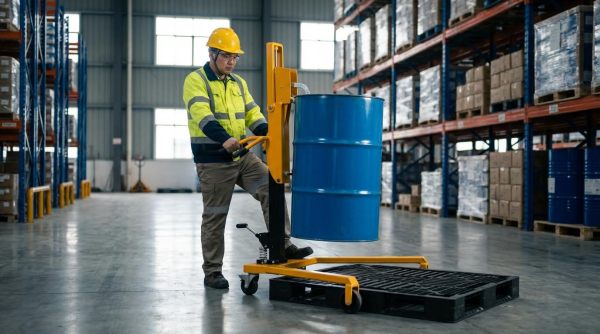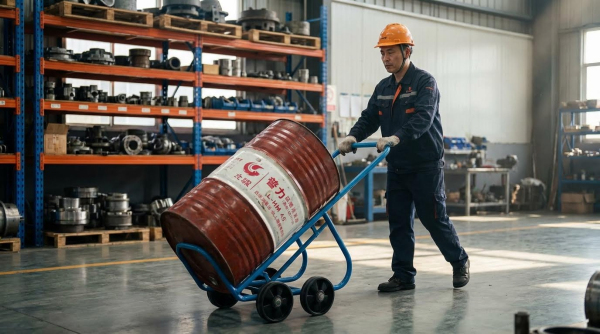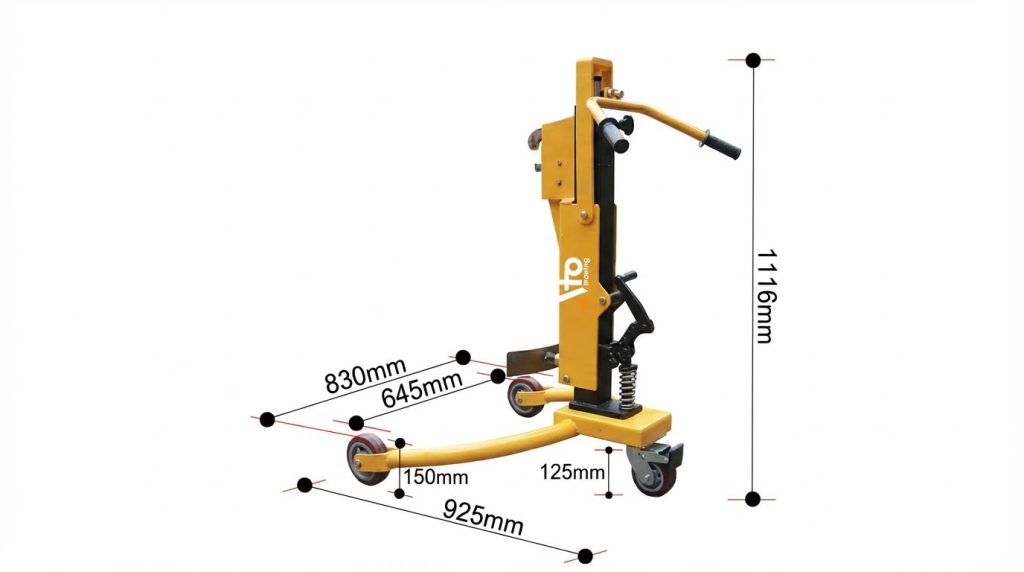
Safe, efficient methods to move steel drums from pallets to floor level rely on engineered equipment, controlled techniques, and route planning that match 180–360 kg drum loads to your facility’s real-world constraints. Knowing how to get steel drum from pallet to the floor without damaging drums, pallets, or floors directly reduces spill risk, injury rates, and unplanned downtime in warehouses and plants. This guide explains drum weights and risks, compares mechanical handling options, and shows how to select the right method based on contents, hazards, and floor conditions. By the end, you will have a clear, standards-aware playbook for moving drums from pallet to floor level with minimal effort and maximum safety.
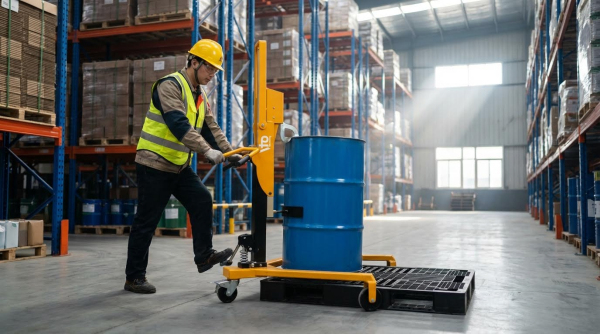
Understanding Drum Loads, Risks, And Constraints
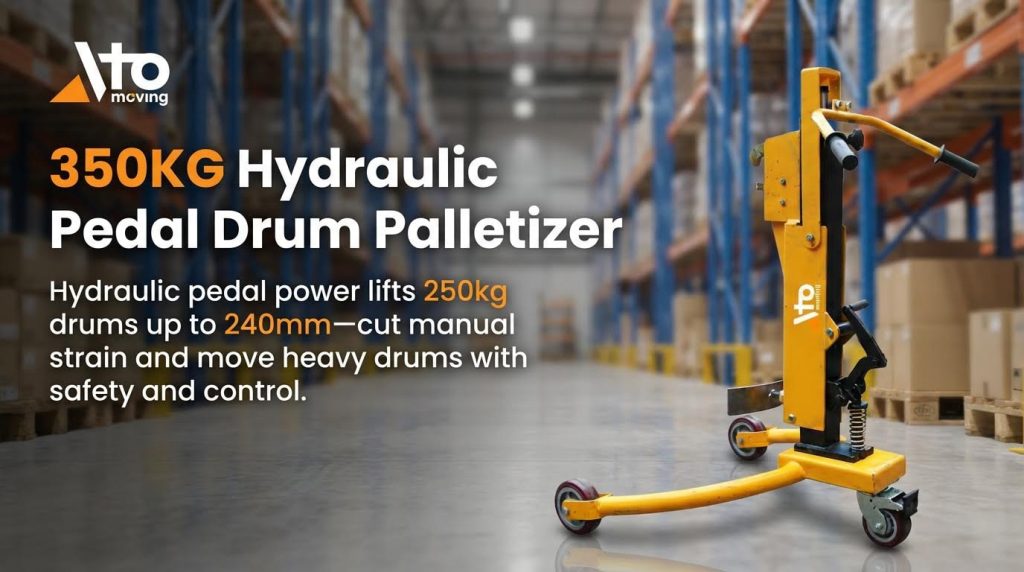
Understanding drum loads, risks, and constraints means quantifying drum weight, contents, pallet support, and regulations so you can choose safe, efficient methods for how to get steel drum from pallet to the floor without spills or injuries.
When you move drums off pallets, you are effectively handling compact, high-mass cylinders that can exceed safe manual limits and behave differently from boxes. Their curved shells, liquid slosh, and high centers of gravity amplify tipping and crush risks. Before choosing equipment, you must understand typical drum weights, how contents affect stability, and which standards govern stacking, storage, and handling.
💡 Field Engineer’s Note: The single biggest mistake I see is treating a full drum “like a heavy box.” Its round footprint and high center of gravity mean a minor bump or floor defect can turn into a sudden roll, tip, or crush event.
Typical drum weights and load characteristics
Typical drum weights and load characteristics define the mass, center of gravity, and pallet support requirements that determine whether a given method for how to get steel drum from pallet to the floor is safe or likely to tip, crush, or puncture.
| Parameter | Typical Range / Practice | Engineering Meaning | Field Impact |
|---|---|---|---|
| Standard drum size | 205–210 L (55 gal) upright steel drum | Common unit for bulk liquids and chemicals | Most handling gear, attachments, and pallets are designed around this geometry. |
| Filled drum mass | ≈180–360 kg (400–800 lbs) for typical products depending on contents | Far exceeds safe one-person manual lift capacity | Requires mechanical aids (forklifts, drum trucks, palletizers) rather than direct lifting or “muscling” off pallets. |
| Empty drum mass | Roughly 18–25 kg (40–55 lbs) (varies by construction) | Often within manual handling range | Manual handling is more feasible but still needs care to avoid finger crush and uncontrolled rolling. |
| Weight distribution | High center of gravity when full; shifts with sloshing liquids | Increases overturning moment when tilted or on slopes | Sudden tilt or impact can cause tip-over, especially on narrow hand trucks or uneven floors. |
| Manual handling threshold | Full drum mass (180–360 kg) exceeds ergonomic limits for one person for safe lifting | High musculoskeletal and crush hazard if handled by pure manpower | Facilities should prohibit “bear hugging” or manually dragging full drums off pallets. |
| Pallet size for 4 drums | Commonly 1,220 × 1,220 mm or ≥1,170 × 1,170 mm for four drums with edge clearance | Provides near-full bearing under drum bases | Reduces local deformation and puncture risk; critical when inserting forks or drum handlers at pallet level. |
| Pallet bearing quality | Full or near-full base support; no protruding nails or broken boards to avoid damage | Prevents point loading and shell puncture | Damaged or undersized pallets can collapse when you shift a drum off the pallet edge. |
| Stacking capability | Steel drums with SG ≤≈1.5 can be stacked up to four pallets high in controlled practice under proper conditions | Stacking load adds compressive force to lower drums | Higher stacks mean more stored energy and risk if a drum is mishandled during pallet-to-floor transfers. |
| Drum contents | Water-like liquids, viscous products, powders, or hazardous chemicals with varying SG | Changes total mass and slosh behavior | Heavier, higher-SG liquids increase tip forces; free-surface slosh demands smoother, slower moves off pallets. |
| Environmental exposure | Temperature, rain, and UV can cause corrosion and label fading over time | Weakens shell and undermines identification | Corroded drums may buckle when lifted or rolled off pallets; unreadable labels complicate hazard assessment. |
These characteristics mean that a full drum behaves more like a compact, unstable column than a simple “heavy object.” The curved shell offers little grip, and any off-center push can start a roll you cannot easily stop.
Why pallet size and bearing matter when offloading to the floor
When you move a drum from pallet to floor, the load path shifts from full pallet bearing to line or point contact at the pallet edge. If the pallet is undersized or broken, the drum base can deform locally, tilting the drum as you start to roll or transfer it. Proper 1,220 × 1,220 mm or at least 1,170 × 1,170 mm pallets with near-full bearing under the drum base significantly reduce this risk by spreading the load and resisting edge crush during handling.
Regulatory and safety standards for drum handling
Regulatory and safety standards for drum handling define how drums must be designed, stacked, labeled, and moved so that any method for how to get steel drum from pallet to the floor controls spill, fire, and injury risks within legally acceptable limits.
- Drum design and stacking tests: Steel drums containing hazardous materials must pass stacking tests simulating a 3 m stack load for 24 hours at ambient temperature, ensuring they can withstand vertical loads without buckling during storage and handling before use.
- Storage height and fire code limits: Facilities handling flammable liquids must comply with fire codes that limit stack height and specify sprinkler density and pressure-relief features, so pallet-to-floor moves do not compromise fire protection or over-stress lower drums in storage areas.
- Closure and sealing instructions: Operators must follow manufacturer closure instructions and verify proper sealing to avoid leaks during movement; poorly closed bungs or rings can open under tilt or impact when transferring drums off pallets in routine handling.
- Inspection and condition checks: Regular inspections should confirm no bulging, corrosion, dented chimes, or pallet damage that could compromise stack stability or cause failure during handling, especially when lowering drums from pallet height to the floor in warehouses.
- Hazard identification and labeling: Before moving any drum, operators must verify labels to identify flammable, corrosive, toxic, or reactive contents; missing or unreadable labels require treating the drum as hazardous until characterized, which affects PPE and emergency planning during pallet-to-floor moves per safe-handling guidance.
- PPE and operator protection: PPE selection must reflect both drum mass and material hazard, including safety shoes with toecaps, gloves for grip and abrasion protection, and chemical-resistant gear where corrosive or toxic materials are present during handling tasks.
- Use of mechanical aids: Safe handling practices emphasize forklifts with drum attachments, hand trucks, dollies, cradles, and stackers instead of manual lifting, to keep forces within ergonomic and regulatory limits for repetitive drum moves in industrial plants.
- Blocking and bracing in transit: Proper blocking and bracing of drums on trailers or in containers prevent shifting and damage so drums reach the pallet in safe condition before any floor transfer is attempted after shipment.
- Environmental and temperature controls: Outdoor drum storage should be shielded from rain and UV, with stacking heights adjusted when ambient temperatures exceed about 30 °C, to avoid corrosion or deformation that could lead to failure when the drum is rolled or lifted off pallets in hot climates.
- Inspection frequency and FIFO rotation: Implementing FIFO rotation and scheduled inspections helps identify rust, bulging, dented chimes, or illegible UN markings before handling, reducing the chance of sudden structural failure during pallet-to-floor transfers in ongoing operations.
💡 Field Engineer’s Note: Before planning any drum transfer method, I always ask for three documents: the Safety Data Sheet, the site’s drum-handling SOP, and the fire code classification of the storage area. Those three dictate what “safe enough” really means for your pallet-to-floor moves.
Engineering Methods To Transfer Drums From Pallet To Floor
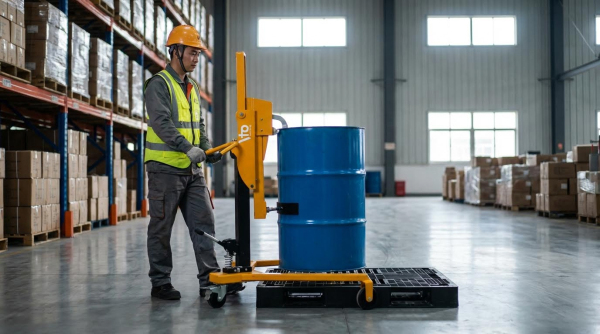
Engineering methods to transfer drums from pallet to floor define the safest, lowest-effort way to move 180–360 kg steel drums from raised pallets down to floor level using forklifts, drum palletizers, stackers, hand trucks, and cradles. This section explains how to get steel drum from pallet to the floor without punctures, tip-overs, or manual overexertion by matching equipment type to drum mass, route, and hazard level. You will see where forklifts dominate, when compact palletizers win, and when controlled manual techniques remain acceptable for short, simple moves.
💡 Field Engineer’s Note: Decide your “default” drum method by volume: if you move more than a few pallets per shift, engineer around mechanical solutions first and treat manual methods as rare exceptions, not the norm.
Forklift drum attachments and pallet interface
Forklift drum attachments provide the highest-throughput method to move drums from pallet to floor by clamping one or more 180–360 kg drums securely, lifting clear of the pallet, then lowering to floor level under full control. They are the primary answer when you ask how to get steel drum from pallet to the floor in high-volume warehouses because they combine capacity, reach, and controlled motion.
| Parameter / Practice | Typical / Guidance | Field Impact for Drum-to-Floor Transfers |
|---|---|---|
| Typical filled drum mass | 180–360 kg for 205–210 L drums (standard drum range) | Confirms that manual lifting is unsafe; forklift with rated attachment becomes the primary engineered solution. |
| Fork height during travel | ≈150–200 mm above floor (good practice) | Prevents drum or attachment scraping the floor while keeping the center of gravity low for stability. |
| Drum handling method | Rim clamps, waist grippers, or rotators matched to drum type (attachment guidance) | Positive clamping prevents slip or roll-off when lifting off pallets or setting drums onto floor. |
| Residual capacity check | Compare drum + attachment mass to rated capacity at load centre (capacity requirement) | Ensures the truck remains within its stability envelope when lifting drums clear of pallets. |
| Pallet quality under drums | Full or near-full bearing; common 1,220 × 1,220 mm pallets for 4 drums (pallet guidance) | Stable pallets prevent sudden drum lean or shift when the attachment first clamps the drum. |
| Driving style | Low speed, smooth acceleration/braking, slight mast tilt back (safe operation) | Reduces slosh and side loads on clamps, especially with liquid-filled or hazardous drums. |
Operationally, the sequence is: position forks, engage the drum attachment, clamp the drum vertically, raise just enough to clear the pallet deck, reverse clear of the pallet, then travel to the drop location and lower onto the floor. Keeping the mast slightly tilted back while travelling helps keep the drum firmly seated in the attachment without contacting the ground.
When drums contain hazardous or high-specific-gravity liquids, forklift rotator or grab attachments provide controlled tilting and rotation, reducing spill risk compared with improvised pushing or rolling methods (hazard guidance). This aligns with OSHA/ISO expectations for using mechanical aids when individual object mass exceeds safe manual limits.
💡 Field Engineer’s Note: Never “scoop” drums directly with bare forks from the side; the fork tip is a punch. One slip and you can puncture a 360 kg drum, causing both spill and structural collapse of the pallet stack.
How the pallet interface affects drum pickup
Drums sitting on undersized or damaged pallets may tilt or deform locally when clamped, especially near deck board gaps. Guidance recommends pallets that provide full or near-full bearing under the drum base and are free from nails or sharp projections that could puncture the shell during handling (pallet quality). If pallets are marginal, consider transferring drums first with a palletizer or stacker that supports the drum more locally before using the forklift.
Drum palletizers, stackers, and lift tables
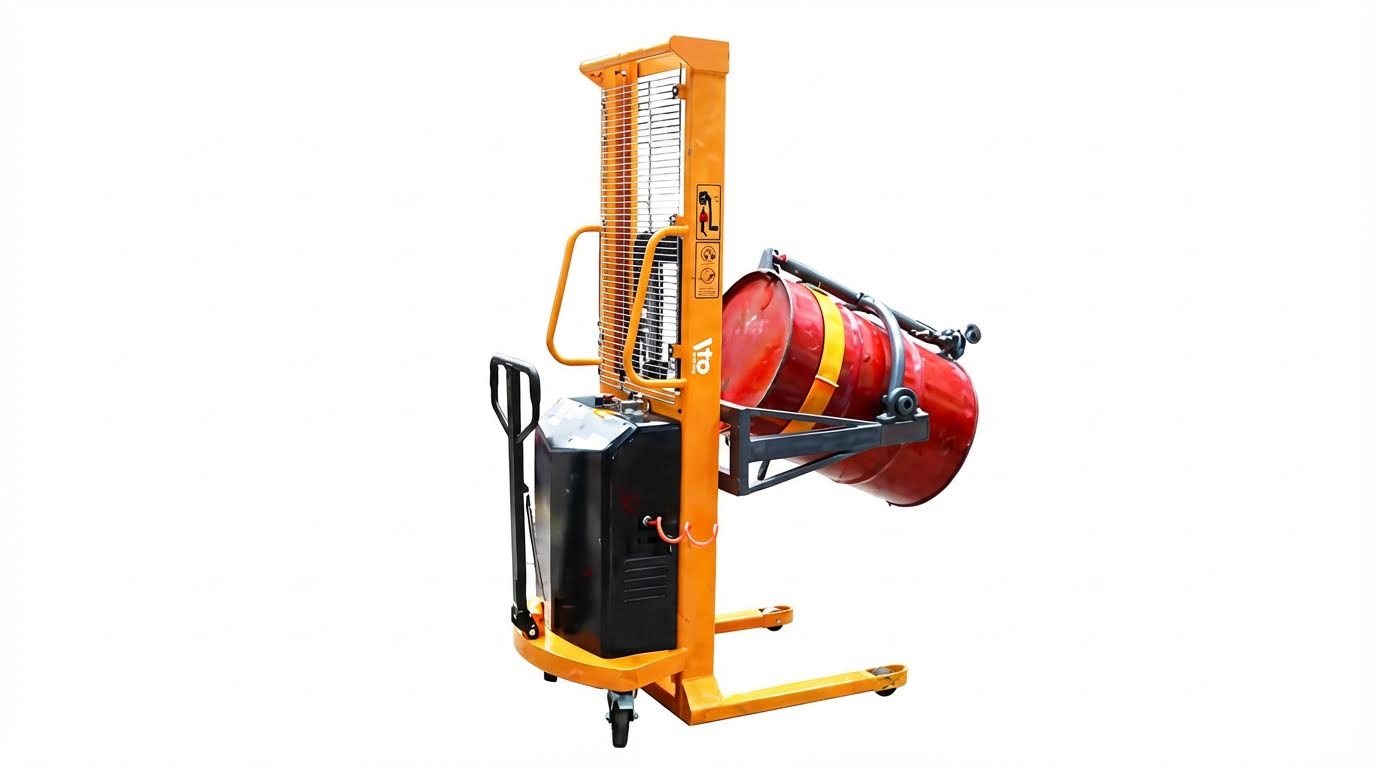
Drum palletizers, stackers, and lift tables are compact, often pedestrian-operated devices that lift individual drums off pallets and lower them to floor level when a forklift is unavailable, impractical, or unnecessary. They are the most controlled answer for how to get steel drum from pallet to the floor in tight spaces or low-throughput areas.
| Equipment Type | Typical Capacity / Range | Use Case in Drum-to-Floor Transfers | Field Impact |
|---|---|---|---|
| Drum palletizer / pallet loader | Up to ≈360–400 kg capacity with 200–300 mm lift height (example specs) | Lifts a single filled drum just clear of pallet deck, then allows rolling or repositioning to floor. | Ideal for removing one drum at a time from a 4-drum pallet without a forklift. |
| Manual / hydraulic drum stacker | Drum masses up to ≈450 kg to pallet height or higher (stacker guidance) | Engages drum, lifts vertically, clears pallet, then lowers directly to floor or another pallet. | Bridges the gap between pure manual methods and full forklifts, reducing ergonomic strain. |
| Drum lift table / work-positioner | Capacity typically ≥ drum mass; lift stroke tailored to pallet height | Raises or lowers drums for ergonomic access; can be used to equalize height between pallet and floor. | Reduces bending and upending effort when drums must be reoriented or accessed frequently. |
| Automatic clamping feature | Integrated into many palletizers for steel, plastic, and fibre drums (clamping feature) | Hands-free gripping during lift cycle. | Minimizes operator hand exposure near pinch points and drum chimes. |
In a typical sequence, the palletizer or stacker straddles or approaches the pallet, its jaws or cradle clamp the upright drum, and a hydraulic jack lifts the drum just high enough to clear the pallet deck. The operator then pulls the unit back, clears the pallet, and lowers the drum to floor level with a controlled release.
Because these devices are usually pedestrian-operated, they work well in narrow aisles and small rooms where forklifts cannot achieve the required turning radius or where floor loading limits rule out heavier trucks (floor condition guidance). This makes them a strong option for laboratories, filling rooms, and segregated hazardous storage where you still need engineered lifting but not full forklift infrastructure.
💡 Field Engineer’s Note: When operators complain that “forklifts are overkill for one drum,” a small hydraulic palletizer is often the sweet spot—cheap to own, light on floors, and still removes almost all manual lifting.
When to prefer palletizers over forklifts
Palletizers and stackers are preferred when drum flows are intermittent, aisles are narrow, or noise and exhaust restrictions limit powered trucks. They also simplify compliance with inspection and maintenance duties compared with full forklifts, while still meeting the expectation to use mechanical aids for heavy drums that exceed safe manual thresholds (safety guidance).
Hand trucks, cradles, and controlled manual techniques
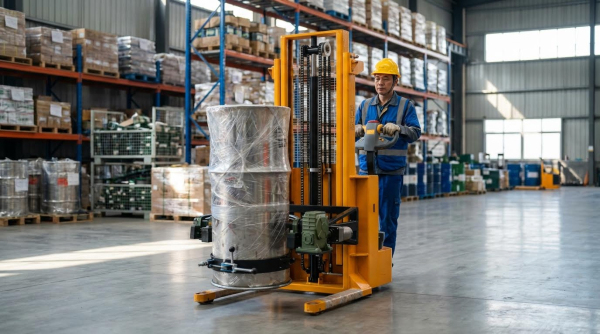
Hand trucks, cradles, and controlled manual techniques are the lowest-capital methods to get a drum from pallet to floor but must be engineered carefully because a 180–360 kg drum far exceeds safe manual lift limits. These methods rely on leverage and rolling, not lifting, and should be reserved for short, low-frequency moves with good floor conditions.
- Use dedicated drum hand trucks or cradles: Select drum-specific trucks that can safely support typical 180–360 kg drum masses and secure the drum to the frame with straps or clamps to prevent roll-off during tilt and travel (securing requirement).
- Plan the route and inclines first: Map thresholds, slopes, and turning radii; guidance limits two-wheel hand trucks on slopes steeper than ≈5° to avoid runaway or tip-over events during drum moves (incline guidance).
- Transfer from pallet to hand truck with leverage, not lifting: If the drum is on the pallet edge, use a cradle or truck with a low nose plate; hook the upper chime, then tilt the drum toward you while keeping your back straight and using leg power to bring it onto the truck, avoiding any full deadlift.
- Push, don’t pull, the loaded truck: Operate by pushing so the drum’s centre of mass stays between you and the axle, improving control and visibility and reducing the risk of over-rotation or trips at blind corners (operating practice).
- Use controlled manual upending only as last resort: If you must manually upend a drum from floor to rolling position, crouch close with feet apart, keep your back straight, and use legs to tilt the drum onto its lower chime while keeping hands clear of pinch points on the far side of the chime (manual technique).
- Inspect equipment daily: Before use, check wheels, axles, and frames for cracks, deformation, or corrosion; clean and dry after use to prevent rust that could reduce load rating during future drum transfers (inspection guidance).
From an engineering standpoint, hand trucks and cradles convert
Selecting Equipment For Your Facility And Workflow
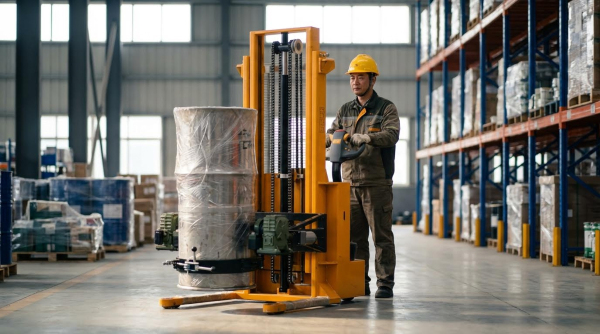
Selecting drum-handling equipment means matching the tool to drum contents, hazards, and travel path so you can move heavy steel drums from pallet to floor safely, efficiently, and in full regulatory compliance.
This section focuses on how to choose the right method for how to get steel drum from pallet to the floor based on what is inside the drum, how often you move it, and the physical constraints of your building. You will see how contents, hazard classes, floor quality, and aisle geometry drive whether you use forklifts with attachments, drum palletizer, or hand trucks for drum-to-floor transfers.
Matching equipment to drum contents and hazards
Matching equipment to drum contents and hazards means you select handling methods based on drum mass, liquid behavior, and chemical risk so spills, leaks, and operator exposure remain within acceptable safety limits.
| Selection Factor | Typical Range / Condition | Recommended Equipment | Field Impact for Drum-to-Floor Moves |
|---|---|---|---|
| Drum mass (filled) | ≈180–360 kg for 205–210 L steel drums documented for standard units | Forklift with drum attachment, drum palletizer/stacker, heavy-duty drum truck | Mass is well above safe manual limits, so mechanical aids are mandatory for routine pallet-to-floor transfers. |
| Contents type | Non-hazardous liquids, oils, food, benign powders | Hand trucks, cradles, palletizer stackers, forklifts | Lower consequence of minor leaks, so focus is on ergonomics and throughput rather than containment. |
| Hazard classification | Flammable, corrosive, toxic, reactive materials per SDS | Forklift drum rotators with positive clamping, enclosed drum handlers, minimal-tilt palletizers | Equipment must minimize impact, slosh, and tilt to avoid venting or spills and to protect operators from exposure. Hazardous liquids require especially smooth motion. |
| Required tilt / rotation | Upright only vs. partial or full rotation | Upright drum grabs, rotators, or tippers | For simple pallet-to-floor set-downs, upright grabs are sufficient; decanting requires controlled rotators to manage pour angle and rate. |
| Handling frequency | Occasional vs. high-throughput, repetitive moves | Occasional: drum trucks / palletizers; High-frequency: forklifts with attachments | Higher frequency justifies powered solutions that reduce fatigue and injury risk while increasing pick rates and consistency. Frequent moves amplify musculoskeletal risk. |
| Spill and exposure tolerance | Low (hazardous contents) vs. moderate (non-hazardous) | Positive-clamp rotators, palletizers with automatic clamping, secondary containment in work area | Where consequences are severe, you prioritize clamping reliability, slow controlled motion, and minimal manual intervention over speed. |
| PPE and procedural controls | Basic PPE vs. chemical-resistant PPE with strict SOPs | Equipment that allows distance from drum (forklift, powered palletizer) | For corrosive/toxic materials, choose tools that keep operators out of the immediate splash zone and reduce the need to touch the drum. Guidance highlights PPE for corrosive, toxic, or flammable contents. |
Because a filled 55-gallon drum typically weighs 180–360 kg, it already exceeds safe one-person manual limits, so even “non-hazardous” contents still require mechanical aids for how to get steel drum from pallet to the floor without strain or tip-over risk as safety guidance stresses.
Hazardous liquids need extra control: drum rotators with positive clamping and smooth, limited-angle rotation significantly reduce spill risk by managing slosh and preventing sudden releases, while SDS-driven PPE protects operators from any residual exposure. When you combine engineered controls (attachments, palletizers) with procedural controls (inspection, labeling, PPE), you create a robust barrier against both acute and chronic injury.
💡 Field Engineer’s Note: In chemical plants, I always assume every “unknown” or poorly labeled drum is hazardous until proven otherwise; that simple rule pushes teams to choose clamped, upright handlers instead of rolling drums on their chimes “just this once.”
How to prioritize between forklift attachments, palletizers, and hand trucks
For frequent pallet-to-floor moves with mixed hazardous contents, prioritize forklifts with drum attachments because they combine reach, clamping, and travel speed. For smaller sites with fewer moves, drum palletizer stackers bridge the gap: they safely lift ≈180–360 kg drums on and off pallets without needing a licensed forklift operator as summarized in drum equipment overviews. Hand trucks are best reserved for short, flat transfers of intact, well-characterized drums once they are already at floor level.
Floor conditions, aisle widths, and route planning
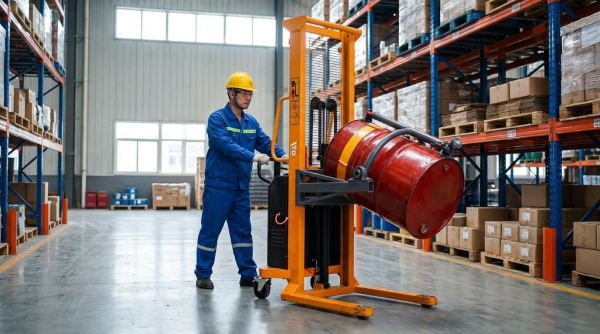
Floor conditions, aisle widths, and route planning control whether a chosen drum-handling method can actually move safely from pallet to floor and then to its destination without impacts, tip-overs, or operator overexertion.
| Physical Constraint | Typical Values / Issues | Best-Fit Equipment / Practice | Field Impact on Drum-to-Floor Transfers |
|---|---|---|---|
| Floor flatness and surface quality | Cracks, thresholds, gratings, minor slopes, wet or oily patches | Forklifts on flat, clean floors; large-wheel drum trucks or palletizers on uneven surfaces | Small-wheel dollies perform poorly on cracks and thresholds and can stop abruptly or tip; guidance notes that floor condition strongly influences equipment choice for drum handling. |
| Aisle width | Narrow racking aisles vs. wide cross-aisles | Narrow: compact drum trucks, cradles, pallet loaders; Wide: forklifts with attachments | Narrow aisles and dense racking often favor hand trucks or compact pallet loaders that can straddle pallets and work in confined spaces according to equipment guidance. |
| Route slopes and ramps | Inclines; guidance limits two-wheel hand trucks on slopes steeper than ≈5° for safety | On slopes, use equipment with brakes and stable wheelbase; keep truck ahead when descending and behind when ascending | Planning routes that avoid steep slopes for hand trucks drastically reduces runaway and tip-over events, especially with 180–360 kg drums. |
| Doorways and thresholds | Narrow doors, raised thresholds, dock plates | Check loaded footprint and wheel diameter; choose equipment that clears without excessive tilt | Pre-checking door widths and threshold heights ensures a loaded drum truck or palletizer can pass without needing unsafe extra tilt or manual “heaving.” |
| Turning radius | Obstructions, columns, and rack uprights in corners | Short-wheelbase hand trucks or palletizers in tight areas; forklifts only where turning radius is adequate | Route planning must confirm that a loaded unit can turn without forcing operators to push sideways or “walk” the drum, which raises strain and tip risk. |
| Travel distance | Short (<10 m) vs. long (>25–30 m) runs | Short: hand trucks / palletizers; Long: forklifts or powered tugs | Long distances amplify fatigue; for frequent long runs, powered equipment offers better ergonomics and throughput than repeated manual pushing. |
Before deciding how to get steel drum from pallet to the floor, you should walk the entire route from storage location to end use, mapping doorways, thresholds, slopes, and turning points to confirm that your chosen equipment can maintain safe tilt and clearances as route-planning guidance recommends.
Safe practice also specifies how to operate on slopes: on approved ramps, operators keep the hand truck ahead when descending and behind when ascending, maintaining full control of the 180–360 kg load at all times to prevent runaway events. Combining this route planning with the right drum-handling device ensures the drum moves from pallet to floor and then through the building without unplanned impacts or emergency stops.
💡 Field Engineer’s Note: In older plants I always budget for at least one “route improvement” per new drum-handling project—often just grinding a threshold or widening a pinch-point saves far more in reduced near-misses and equipment damage than it costs.
Final Considerations For Safe Drum-To-Floor Transfers
Final drum-to-floor controls combine equipment choice, route planning, and inspection so every move of a 180–360 kg steel drum from pallet to floor stays within safe, repeatable limits.
When you think about how to get steel drum from pallet to the floor safely, the final check is whether your method is consistent, inspectable, and within your team’s skill level. This is where many facilities fail: they buy good hardware, but don’t lock in standards, inspections, and training to make every transfer as safe as the first one.
- Standardize “approved” methods: Define which equipment and techniques are allowed for pallet-to-floor moves in each area (warehouse order picker, palletisers, hand trucks) and explicitly ban ad‑hoc manual rolling of full drums.
- Set clear weight and frequency limits: Treat 205–210 litre drums in the 180–360 kg range as “mechanical-aid only” loads and specify when powered vs. non-powered gear is mandatory, based on move frequency and distance. Source: drum safety guidance
- Lock in pre-move inspections: Require operators to verify labels, check for bulging, corrosion, or leaks, and inspect pallets and handling equipment before every transfer, especially for hazardous or high specific gravity contents. Source: steel drum handling practices
- Control the route, not just the lift: Approve routes that avoid steep slopes, tight turns, and poor floors; limit two-wheel trucks to gentle slopes (≈5°) and keep speeds low with the load always under positive control. Source: route and incline guidance
- Specify PPE by hazard class: Tie PPE (toe protection, gloves, eye/face protection, chemical-resistant gear) directly to the drum’s hazard classification so pallet-to-floor transfers of corrosive or flammable liquids always use the right protection. Source: drum contents and PPE
- Train on “last metre” risks: Emphasize the moment the drum leaves the pallet and approaches the floor—control lowering speed, keep hands away from pinch points at chimes, and never “catch” a tipping drum with body weight.
- Maintain equipment and pallets: Build daily checks for wheels, frames, forks, and attachments into your routine and remove damaged pallets that could puncture or destabilize drums during transfer. Source: pallet quality for drum stability
- Document and review incidents: Record near-misses and minor damage during drum-to-floor moves, then adjust methods, routes, or equipment specs so the same scenario cannot recur.
💡 Field Engineer’s Note: The highest-risk moment is often the “quick move” of a single drum at the end of a shift. If you enforce the same pallet-to-floor procedure for one drum as for a full batch, your incident rate drops dramatically.
In practical terms, mastering how to get steel drum from pallet to the floor is less about inventing new techniques and more about disciplined execution: right tool, inspected route, trained operator, every single time.
Final Considerations For Safe Drum-To-Floor Transfers
Safe drum-to-floor transfers depend on one core idea: treat every 180–360 kg drum as a high-energy, unstable load. Geometry, mass, and liquid slosh all work against you, so you must use engineered controls, not strength or habit. Forklift attachments, palletizers, stackers, and drum trucks each solve a different constraint, but they only work safely when you match them to drum contents, floor quality, aisle width, and route slopes.
Regulatory standards, pallet bearing rules, and inspection practices give you the design envelope. Within that envelope, your job is to remove variation. Standardize which method applies in each area, define “mechanical-aid only” thresholds, and lock in pre-move checks for drums, pallets, and equipment. Plan and approve routes so operators never improvise around tight corners, bad thresholds, or steep ramps.
The most reliable strategy is simple: default to positive-clamp mechanical handling, reserve manual rolling for short, low-risk moves at floor level, and back everything with training and PPE tied to hazard class. If you apply those rules consistently, you turn drum-to-floor transfers from a daily gamble into a controlled, repeatable process that protects people, product, and uptime.
Frequently Asked Questions
How do you safely move a steel drum from a pallet to the floor?
Moving a steel drum from a pallet to the floor requires proper equipment and safety precautions. Use a drum handler or lift attached to a forklift to securely grip and lower the drum. If a forklift is unavailable, a manual drum dolly can help tilt and roll the drum to its destination. Always ensure the drum is properly grounded if it contains flammable materials. Drum Grounding Safety.
- Use a drum handler or forklift attachment for heavy drums.
- Employ a drum dolly for manual movement.
- Ensure the drum is stable and does not tip during transport.
What tools can help secure a drum during transport?
To prevent movement and damage, secure drums on pallets using specialized tools like Drumclip, a V-shaped plastic stopper designed to hold drums in place. Additionally, ensure the pallet itself is stable and meets shipping standards, such as having plank gaps of less than 0.8 inches. Drum Security Tools.
- Use Drumclip or similar stoppers to secure drums on pallets.
- Choose pallets with narrow plank gaps to stabilize the drum base.
- Follow weight distribution guidelines to avoid tipping.