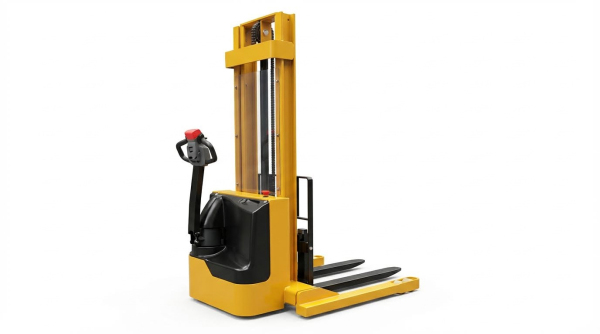
Safe walkie stacker operation is the disciplined way of controlling, inspecting, and maintaining a walk‑behind stacker so it stays stable, productive, and incident‑free. This guide explains how to use a walkie stacker step‑by‑step, linking controls, procedures, and safety checks to real warehouse conditions. You will see how load capacity, pre‑shift inspections, operator training, and site layout work together to prevent tip‑overs and crush injuries. Use it as a practical reference for setting up training, SOPs, and checklists in your facility.
Step‑By‑Step Operating Procedures And Safety Checks
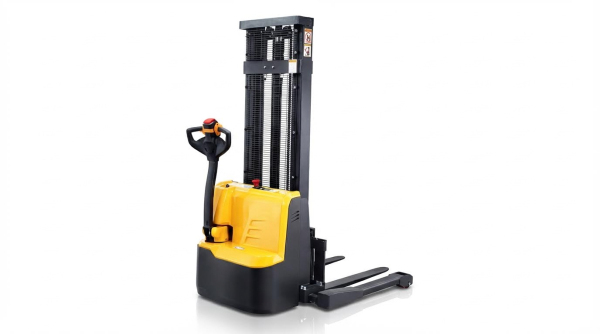
This section explains how to use a walkie stacker step by step, from pre‑shift checks to stacking and travel, so operators stay within capacity limits, protect pedestrians, and avoid tip‑overs or damage.
Pre‑shift inspection and functional testing
Pre‑shift inspection is the first answer to how to use a walkie stacker safely, because you remove faults before they turn into incidents or breakdowns.
- Walk‑around visual check: Look for oil leaks, damaged covers, bent or cracked parts, and loose bolts or chains – prevents sudden structural or hydraulic failure under load.
- Hydraulic system: Check cylinders, hoses, fittings, and tank area for seepage or wet spots – small leaks grow into burst hoses at full lift height.
- Forks and mast: Inspect forks for cracks, bends, or twisted blades and confirm smooth mast movement – avoids dropped pallets and mast binding.
- Wheels and tires: Check wheels and casters for free rotation, cuts, flat spots, or debris – reduces steering effort and uneven braking.
- Battery and cables: Confirm charge level, look for corrosion or damaged insulation, and ensure connectors are locked – prevents no‑start conditions and electrical shorts.
- Controls and steering: Test travel, lift, lower, and tilt controls for smooth, proportional response – helps avoid jerky motion around pedestrians and racks.
- Brakes and parking brake: At low speed, confirm service brake stops straight and parking brake holds – stops roll‑aways on slight slopes.
- Safety devices: Check horn, emergency stop, deadman control, and any lights or alarms – critical for warning others and stopping the truck instantly.
- Labels and capacity plate: Ensure warning labels and the load capacity plate are clean and readable – so operators can match loads to rated capacity.
| Inspection Item | What To Check | Risk If Ignored | Operational Impact |
|---|---|---|---|
| Hydraulic system | Leaks at hoses, cylinders, tank | Sudden loss of lift, dropped loads | Unplanned downtime and spill cleanup |
| Forks | Cracks, bends, uneven height | Load shift or fork failure | Unsafe for full‑capacity pallets |
| Battery | Charge, corrosion, loose cables | Truck stops mid‑task, arcing | Shortened battery life and delays |
| Brakes | Stopping distance, parking hold | Collisions or roll‑aways | Cannot work safely near ramps |
| Controls | Lag, sticking, overspeed | Loss of control | Hard to position loads in tight aisles |
Typical daily pre‑shift checklist items
Daily checks normally include leaks, structural damage, forks, chains, wheels, steering, brakes, horn, emergency stop, battery level, cables, hydraulic oil level, and visible warning labels, with all defects reported before use. Detailed checklist reference
💡 Field Engineer’s Note: Treat every new noise or vibration during the functional test as a red flag. Many mast chain and wheel failures started as “minor” sounds that operators ignored for several shifts.
Safe start‑up, travel, and maneuvering rules
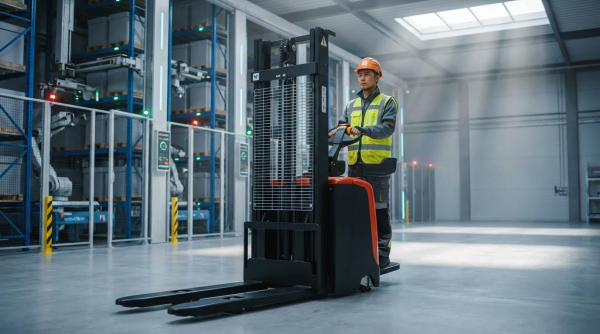
Safe start‑up and controlled travel are central to how to use a walkie stacker in crowded aisles without hitting racks, pedestrians, or doors.
- Before start‑up: Confirm the area is clear, forks fully lowered, and the tiller in the correct operating zone – prevents unexpected movement into someone’s path.
- Initial movement test: Select direction slowly and check smooth acceleration and predictable braking – verifies control response before entering traffic.
- Fork travel height: Keep forks about 300–400 mm above the floor on level surfaces – high enough to clear bumps, low enough to maintain stability.
- Speed control: Adjust speed to floor condition, visibility, and congestion – wet or dusty floors need slower travel to avoid skids.
- Intersections and doors: Reduce speed, sound the horn, and yield to pedestrians – blind corners are the top collision points in warehouses.
- Turning: Avoid sharp turns at speed and never turn with the load raised – side forces can push the truck outside its stability triangle.
- Reverse travel: Only reverse when you have a clear line of sight and space behind – prevents crushing injuries to trailing pedestrians.
- Slopes: Do not travel on slopes steeper than site rules (often around 7°) and keep the load upgrade – reduces the chance of runaway or tip‑back.
- Separation distance: Maintain space to the truck ahead and pedestrians – allows stopping without rear‑end impacts.
| Operating Situation | Key Rule | Reason | Best For… |
|---|---|---|---|
| Straight travel, level floor | Forks at 300–400 mm, moderate speed | Balances clearance and stability | Long runs between storage and docks |
| Blind intersection | Slow, horn, ready to stop | Pedestrians may appear suddenly | Cross‑aisles in case‑pick zones |
| Narrow aisle | Low speed, no sharp turns | Prevents rack and pallet impacts | Aisles near high‑bay racking |
| Approved slope | Load upgrade, no turning | Minimizes overturn and run‑away risk | Short ramps to docks or cool rooms |
Quick start‑up sequence
1) Inspect and clear the area. 2) Lower forks fully. 3) Stand in the designated operator zone. 4) Turn on power and release parking brake. 5) Gently select direction and test travel and brake response before entering live traffic. More on travel rules and slopes
💡 Field Engineer’s Note: In tight aisles, coach operators to “drive the forks,” not the truck. If the forks clear posts and pallets at 300–400 mm height, the chassis will usually clear too, which slashes rack strike incidents.
Load handling, stacking, and de‑stacking sequence
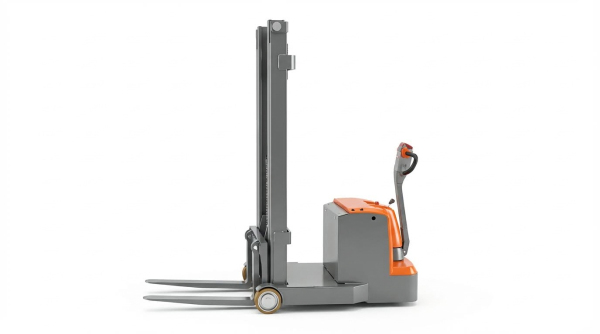
Correct load handling is the final part of how to use a walkie stacker, turning safe travel into safe lifting, stacking, and de‑stacking without overloading or destabilizing the truck.
- Step 1: Verify load and capacity – Compare pallet mass and size with the capacity plate at the specified load center. Prevents overloads that shrink the stability margin.
- Step 2: Approach square to the load – Align the truck straight to the pallet. Reduces side loading on forks and mast.
- Step 3: Insert forks fully – Adjust fork spacing, then drive in until the pallet contacts the backrest. Short insertion increases the effective load center and tipping risk.
- Step 4: Lift slightly and tilt back – Raise just clear of the floor and apply allowed back tilt. Centers the combined load within the stability triangle.
- Step 5: Travel with load low – Move with the load at transport height (around 300–400 mm). Limits the effect of bumps and turns on stability.
- Step 6: Position for stacking – Stop square to the rack, centered in the bay, with enough overhead clearance. Prevents contact with uprights and beams.
- Step 7: Raise to target level – Lift vertically to slightly above the beam height. Avoids dragging the pallet on the beam during entry.
- Step 8: Inch forward and place – Move slowly forward, then lower until the pallet is fully supported. Ensures even bearing on both beams or supports.
- Step 9: Withdraw forks – Lower slightly to unload the forks, reverse straight out, and then lower to transport height before moving away. Prevents snagging or pulling the pallet out.
| Load Handling Stage | Critical Check | Common Error | Operational Impact |
|---|---|---|---|
| Load assessment | Within rated kg at stated load center | Guessing pallet weight | Hidden overloads and near‑tip events |
| Fork entry | Forks fully under pallet | Partial fork insertion | Broken boards and falling product |
| Travel to rack | Load low, route clear | Travelling with load raised | Strikes door headers or sprinklers |
| Stacking | Square to bay, slow approach | Angled approach | Rack damage and pallet skew |
| De‑stacking | Lift to clear, reverse straight | Turning while forks engaged | Hooked pallets and mast twist |
De‑stacking reverse sequence
For de‑stacking, raise the forks just enough to clear the support, inch back straight until the pallet is clear of the rack, then lower to transport height before turning or travelling. This mirrors the stacking steps in reverse to keep forces predictable. Reference for load handling principles
💡 Field Engineer’s Note: Teach operators that every centimetre they move the load away from the backrest increases the effective load center. On tall lifts, even a 50–100 mm shift forward can be the difference between a stable truck and a front‑end tip.
Battery Care, Maintenance, And Site Engineering Controls
Battery care, mechanical maintenance, and engineered site controls are what make how to use a walkie stacker safely repeatable, predictable, and compliant over thousands of operating hours.
This section links day‑to‑day battery handling, hydraulic and brake upkeep, and aisle/traffic design so your operators can focus on productive moves instead of fighting breakdowns and near‑misses.
Battery technologies, charging, and ventilation
Battery technology, correct charging, and proper ventilation determine how reliably a walkie stacker runs and how much risk you carry from heat, gas, and electrical faults.
Most electric walkie stackers in industry still use lead‑acid traction batteries, with some sites now adopting maintenance‑free sealed or lithium packs for intensive multi‑shift work. Whatever the chemistry, you must match battery voltage and amp‑hour capacity to the charger to avoid overheating and premature failure. Correct pairing prevents thermal damage and extends service life.
| Battery / Charging Aspect | Key Practice | Operational Impact |
|---|---|---|
| Battery type | Use traction‑rated lead‑acid or lithium packs sized to the truck’s voltage and Ah rating. | Delivers full shift runtime without overheating or nuisance cut‑outs. |
| Discharge depth | Recharge when indicator approaches minimum threshold; avoid deep discharge. | Extends battery life and keeps lift speed and travel performance consistent. |
| Visual condition | Inspect casing for cracks and terminals for corrosion or loose connections. | Reduces risk of short circuits, arcing, and unexplained shutdowns. |
| Electrolyte level (flooded lead‑acid) | Check after charging and top up with purified water only as required. | Prevents plate exposure, capacity loss, and overheating during heavy lifts. |
| Charging area ventilation | Provide airflow to disperse hydrogen generated during charging. | Mitigates explosion risk and supports regulatory compliance. |
| Change‑out method | Use mechanical aids for battery removal and installation. | Prevents back injuries and crush hazards during maintenance. |
Battery charging stations must include adequate ventilation, correct electrical infrastructure, and defined safety equipment such as eye‑wash stations and emergency shut‑offs to meet safety and environmental obligations. Employers also need written rules for handling, storage, and disposal of batteries to align with regulatory expectations for powered industrial trucks. These procedures cover heat management, charging routines, and spill response.
- Charge planning: Schedule charging during breaks or shift changes – keeps trucks available without frequent deep discharges.
- Housekeeping in charging zones: Keep floors dry and free of clutter – reduces slip and trip risk around high‑energy equipment.
- Labeling and signage: Post “No smoking”, PPE, and emergency instructions – guides correct behavior even for visitors and contractors.
💡 Field Engineer’s Note: In cold rooms and freezers, charge batteries in a temperate, ventilated area and allow them to acclimate before use; cold‑soaked batteries suffer voltage sag, which can trigger under‑voltage cut‑outs during lifts at 2–3 m height.
How battery care supports safe walkie stacker use
Consistent charging, correct water top‑up, and corrosion control keep lift and travel functions predictable. That stability is critical when you teach new operators how to use a walkie stacker in tight aisles or near pedestrians.
Hydraulic, brake, and structural maintenance
Hydraulic integrity, effective brakes, and sound structure are the backbone of safe lifting, controlled stopping, and long service life for any walkie stacker.
Daily pre‑shift inspections should always include a quick hydraulic and structural scan: look for oil leaks at the pump, cylinders, hoses, and fittings, confirm smooth mast and fork movement, and listen for abnormal noises during lift and lower cycles. These checks are part of standard pre‑shift routines and should be documented in maintenance logs.
| System / Component | Typical Check or Interval | Operational Impact |
|---|---|---|
| Hydraulic oil level | Verify daily via sight glass or dipstick; top up with specified grade if low. | Ensures full lift height (2.5–3.5 m) and smooth mast motion without cavitation. |
| Hydraulic oil replacement | Replace every 6–12 months depending on usage intensity. | Removes contamination that causes valve sticking and jerky lifting. |
| Air in hydraulic system | Bleed system if lift speed drops or movement feels uneven. | Restores consistent control, especially during precise stacking. |
| Hoses and cylinders | Inspect daily for leaks, cracks, or damage. | Prevents sudden loss of lift or uncontrolled lowering under load. |
| Service and parking brakes | Function test at low speed every shift. | Confirms truck can stop and hold safely on level floors or mild slopes. |
| Brake clearances | Technician checks typical ranges (e.g. 0.2–0.8 mm) during service. | Maintains predictable stopping distance and pedal/handle feel. |
| Lubrication of chains and pivots | Apply grease about monthly. | Reduces wear, noise, and mast binding during lift cycles. |
| Wheels and casters | Check for cracks, flat spots, and debris; clean as required. | Lowers rolling resistance and improves steering in 2.0–2.5 m aisles. |
| Frame, mast, and forks | Inspect for cracks, rust, bends, or misalignment. | Protects structural integrity at rated capacity and full lift height. |
| Annual expert inspection | Full check by a qualified technician at least yearly. | Validates rated load performance and catches hidden fatigue issues. |
Facilities typically implement tiered preventive maintenance schedules built around daily, weekly, monthly, and six‑monthly tasks to keep walkie stackers within specification. Daily checks focus on leaks, visible damage, controls, horn, emergency stop, and basic travel/lift tests. Weekly tasks include battery cleaning and electrolyte checks, while monthly or quarterly inspections look at chains, powertrain, electrical systems, and safety devices. Six‑monthly services often involve partial strip‑down and wear measurements.
- Brake function: Confirm the truck stops smoothly and that the parking brake holds when stationary – critical when working near dock edges or ramps.
- Control response: Verify steering, throttle, lift, and tilt respond cleanly – avoids over‑correction in narrow aisles.
- Warning devices: Test horn, emergency stop, and any alarms – these are your last line of defense around pedestrians.
💡 Field Engineer’s Note: If operators complain that the truck “pulls” to one side or needs extra effort to steer, check for a seized caster or uneven tire wear before adjusting steering; fighting the tiller all shift is a major fatigue and incident driver.
Why maintenance matters when learning how to use a walkie stacker
New operators often assume odd noises or sluggish lift are “normal.” A tight maintenance program makes truck behavior consistent, so training on how to use a walkie stacker safely is based on predictable controls, not compensating for faults.
Aisle design, traffic plans, and pedestrian safety
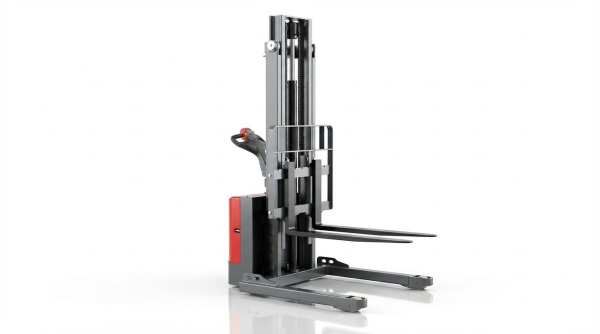
Aisle layout, traffic rules, and pedestrian controls decide whether even a perfectly maintained walkie stacker operates safely or ends up in constant near‑miss situations.
Walkie stackers are built for tight pallet handling in case‑pick zones, buffer storage, and small‑parts warehouses, so aisle width, turning clearances, and racking layout must match the truck’s dimensions and turning radius. Correctly matched equipment and aisle design reduce product damage, congestion, and cycle times by allowing operators to position loads precisely at high‑bay racking or workstations. Selection should consider pallet type, aisle width, and lift height.
| Site Engineering Control | Key Requirement | Best For… |
|---|---|---|
| Aisle width | Provide enough space for turning radius, load overhang, and emergency egress. | Ensures trucks can turn with a 1.0–1.2 m pallet without striking racking. |
| Traffic direction | Use one‑way systems in narrow aisles and mark stop lines at blind corners. | Reduces head‑on conflicts and rear‑end impacts in busy pick zones. |
| Speed limits | Set lower limits in high‑pedestrian or confined areas. | Allows stopping distances compatible with floor friction and visibility. |
| Pedestrian walkways | Mark and, where possible, physically separate walking routes. | Keeps foot traffic away from turning and staging areas. |
| Crossing points | Define dedicated pedestrian crossings with right‑of‑way rules. | Prevents people stepping out mid‑aisle behind stacked loads. |
| Warning systems | Use horns, backup alarms, strobes, and high‑visibility PPE. | Improves detection of quiet electric trucks in noisy spaces. |
| Floor condition | Maintain clean, level, obstruction‑free floors. | Preserves braking performance and stability on 300–400 mm fork travel height. |
Guidance for powered industrial trucks stresses that adequate operating space and clearly separated pedestrian zones are essential. Aisle dimensions should reflect the stacker’s size, turning radius, and the loads it carries, with additional safety measures such as traffic control systems where space is tight. Facilities should also manage floor conditions, temperature, and air quality to protect both equipment and operators.
Clear separation between pedestrian and vehicle zones using painted walkways, barriers, and exclusion zones around loading, charging, and high‑density racking helps maintain safety in mixed‑use areas. Speed rules and right‑of‑way policies must be written and communicated, and incident reporting systems should capture any collisions or near‑misses involving walkie stackers for later review. Tracking these events supports continuous improvement of traffic plans.
- High‑visibility PPE: Require hi‑vis vests in intersecting traffic areas – improves detection at rack ends and doorways.
- Noise and alarms: Fit audible alarms and strobes where ambient noise is high – offsets the quiet running of electric units.
- Charging and loading zones: Treat as exclusion areas for pedestrians – reduces exposure to moving loads and battery hazards.
💡 Field Engineer’s Note: When you redesign aisles, mock up turning paths with tape and an unloaded truck before moving racking; operators can show you where they actually walk and turn, which often differs from CAD layouts.
Linking site design to how to use a walkie stacker safely
Good aisle design and traffic rules mean operators can follow textbook techniques on how to use a walkie stacker—keeping forks low, maintaining sight lines, and yielding at crossings—without constantly “bending the rules” just to get the job done.
Final Safety Considerations For Walkie Stacker Use
Safe walkie stacker use depends on how well you connect equipment condition, operator behavior, and site design. Pre‑shift inspections, controlled travel, and correct load handling protect the stability triangle and keep loads inside the truck’s rated envelope. When operators verify capacity, insert forks fully, and travel with the load low, they turn theoretical limits into daily safe practice.
Battery care and planned maintenance keep performance predictable. Stable voltage, healthy hydraulics, and effective brakes mean operators do not need to “work around” faults, which cuts error and fatigue. Tiered maintenance schedules, backed by clear defect reporting, stop small leaks, cracks, or brake issues before they become structural failures or collisions.
Engineering controls in the warehouse close the loop. Correct aisle width, one‑way traffic, marked walkways, and speed limits give operators the space to follow best practice without shortcuts. Clear separation between people and trucks, backed by alarms and high‑visibility PPE, directly reduces crush and strike risks.
The most effective operations treat Atomoving walkie stackers as part of a system. Combine solid equipment, trained operators, strict inspections, and well‑designed traffic plans. Review incidents and near‑misses, then adjust rules and layouts. That continuous loop is what keeps productivity high and serious events rare.
Frequently Asked Questions
How to Use a Walkie Stacker?
A walkie stacker is a versatile tool for lifting and moving pallets in warehouses. To use it, first ensure the equipment is inspected for damage, with proper fluid levels and functioning safety features. Stacker Safety Tips. Next, position the forks under the pallet and adjust the height using the controls. Move cautiously, keeping an eye on your surroundings.
How High Can a Walkie Stacker Reach?
Walkie stackers typically lift pallets up to 5.5 meters high, depending on the model. They are ideal for stacking and loading tasks in warehouses. Walkie Stacker Specifications.
Do You Need Certification to Operate a Walkie Stacker?
While certification requirements vary by region, operators should always undergo proper training to ensure safe operation. Familiarize yourself with local regulations or consult your employer for specific training needs.