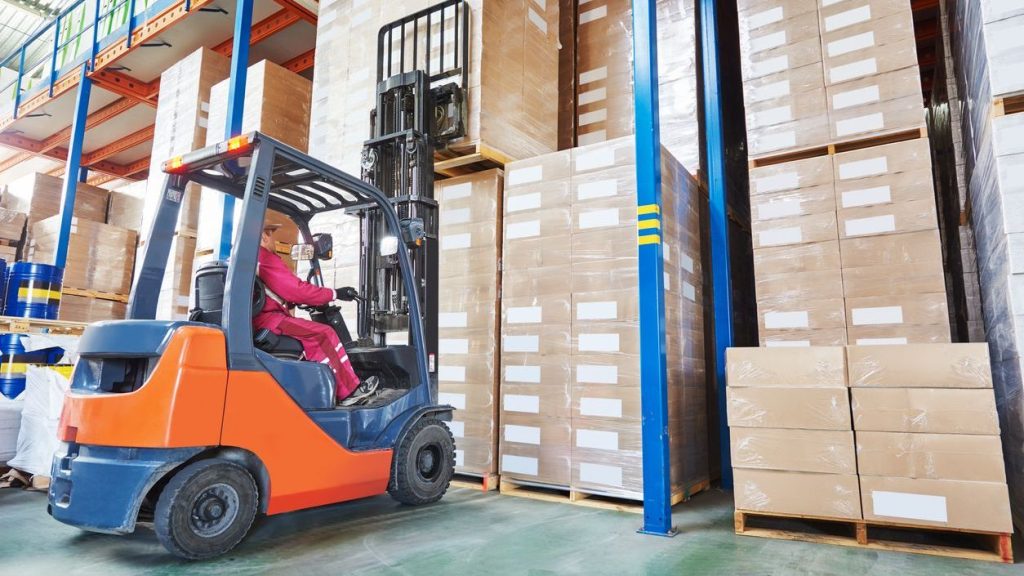
If you are asking how high can a pallet lift, the real answer depends on the equipment, load geometry, and stability limits, not just mast height. This guide maps typical safe lift ranges for pallet jacks, stackers, counterbalance trucks, and reach trucks so you can match equipment to rack height, floor conditions, and safety rules.
Defining Safe Lift Height Across Equipment Types
Safe lift height is the highest level you can place or carry a pallet without losing stability, overloading the truck, or violating facility rules. It always depends on equipment type, load geometry, and how the pallet is handled in motion.
When people ask “how high can a pallet lift,” they really need a safe, repeatable height that still leaves a stability margin, not the absolute mechanical stroke of the mast or hydraulics. This section builds that definition before we look at specific equipment classes.
What “maximum safe lift height” really means
Maximum safe lift height is the highest fork or pallet position where the truck still meets its rated capacity, stability criteria, and site rules for that specific load. It is usually lower than the mechanical maximum mast or fork height.
- Rated at height, not at floor: A truck might handle 2,000 kg at low level but only safely lift that same pallet to about 8–9 m before capacity derates, and at 12–13 m the safe capacity can drop below 1,000 kg. – Prevents tip‑over and mast overload at the top of stroke.
- Depends on equipment class: Low‑lift pallet jacks only raise forks to about 180–200 mm, high‑lift trucks to roughly 800 mm, while stackers and reach trucks place pallets anywhere from 1.6 m up to around 13 m. – Clarifies “how high can a pallet lift” for each tool.
- Dynamic, not just static: Stability calculations use the truck’s “stability triangle” or polygon and consider braking, turning, mast tilt, and reach movement at height. – Reflects real driving, not a parked truck in a lab.
- Constrained by floor and rack: Above about 6–8 m, floor flatness, rack stiffness, and deflection start to dominate how high you can safely store pallets. – Prevents sway, beam strikes, and progressive rack damage.
- Governed by policy and standards: OSHA and consensus standards require stable stacking and clearances but do not give a single maximum height; facilities convert these into specific height limits by zone. – Aligns equipment capability with legal compliance.
Why mechanical max height ≠ safe working height
The hydraulic cylinder and mast design might let forks reach a nominal top height, but seals, chains, and profiles deflect under load. At full stroke, even small extra sway or deflection can push the combined center of gravity close to the stability limit or into rack steel. That is why capacity charts and site rules often cap working height below the nameplate maximum.
| Question | Engineering Reality | Operational Impact |
|---|---|---|
| “How high can a pallet lift on this truck?” | Depends on truck class, load center, and rated capacity at that height. | Always read the capacity plate and height chart, not just the brochure mast height. |
| “Is top‑of‑mast always usable?” | No. Capacity derates sharply at 4–6 m and again above about 8 m due to load moments and mast deflection. | Plan rack elevations so routine work stays below the extreme top of stroke. |
| “Do standards give a single max stacking height?” | No. Standards specify test methods, stability, and clearances; facilities set actual numeric limits. | Use internal policies to cap stacking height by area, product, and rack design. |
💡 Field Engineer’s Note: When you design a high-bay zone, assume the top 200–300 mm of theoretical mast height is “no‑go” for everyday work. This buffer absorbs mast sway, floor unevenness, and pallet variability without constant rack contact or operator alarms.
How load center and COG limit usable height
Load center and overall center of gravity (COG) determine how much of the mast’s height you can actually use before the truck becomes unstable or must be derated. As the COG moves up or out, the safe lift height for a given mass drops.
In practice, two pallets with the same mass can have very different safe heights, depending on how that mass is distributed on the pallet and where the effective load center sits relative to the forks and mast.
- Rated at a standard load center: Forklift and stacker capacities assume a nominal load center, typically 600 mm for a 1,200 mm pallet. – Any overhang or longer load increases the load center and reduces safe capacity at height.
- COG shifts with height: As you lift, the combined truck‑plus‑load COG rises and moves forward, shrinking the stability margin within the support triangle or polygon. – Makes a tall, top‑heavy pallet far more critical at 6 m than at 1 m.
- Top‑heavy vs compact loads: A low, dense pallet is stable at greater heights than a tall, light but top‑heavy stack of cartons at the same mass. – Explains why facilities often cap load height as well as mass.
- Derating curves at height: Reach and stacker trucks can carry their base rating only up to a certain height; above 4–6 m, allowable mass reduces sharply. – Directly limits “how high can a pallet lift” at full weight.
- Rack interaction: Overhanging or offset loads move the COG closer to rack members and bracing, increasing strike risk as mast deflection grows with height. – Forces tighter controls on pallet size and overhang for upper tiers.
| Load Scenario (same pallet mass) | Load Center / COG Effect | Typical Safe Height Behavior |
|---|---|---|
| Low, shrink‑wrapped cartons flush with pallet | COG close to deck, near nominal 600 mm load center. | Can usually approach truck’s rated height (subject to capacity chart and rack design). |
| Tall, loosely wrapped cartons 2× pallet height | COG higher and may shift during travel. | Often requires reducing maximum stacking height or mass to keep stability margin. |
| Overhanging load front and sides | Effective load center increases beyond 600 mm; COG moves outward. | Capacity derates; safe lift height for the same mass may drop by several rack levels. |
| Double‑stacked pallets on forks | Combined COG higher and further forward. | May be safe only at low levels; often prohibited at upper rack tiers. |
How to think about load center when planning rack heights
When you choose a top beam level, assume worst‑case geometry: maximum allowed pallet overhang, tallest permitted load, and any common double‑stacking practice. Use the truck’s capacity chart at the resulting load center and target height. If the chart forces a derate below your heaviest pallet, either lower the top beam, restrict those loads to lower levels, or select a higher‑class truck.
💡 Field Engineer’s Note: In real warehouses, most “mystery tip‑overs” at height were not about exceeding nameplate mass; they came from a slightly overhanging or leaning load that quietly pushed the effective load center 50–100 mm forward. At 8–10 m, that small shift is enough to erase your safety margin, so control load geometry as tightly as you control weight.
Height Capabilities By Common Pallet Handling Equipment
Height capability varies massively by equipment type, so the real answer to “how high can a pallet lift” ranges from about 0.2 m with a manual pallet jack up to roughly 13 m with high-bay reach trucks. This section groups realistic maximum safe lift heights by common pallet handling machines.
- Key idea: The higher you go, the more capacity derates and the more stability and floor quality dominate safe operation – not just the catalog “max height.”
💡 Field Engineer’s Note: Always check the data plate for rated capacity at height, not just the headline max lift. Two trucks that both “reach 6 m” can have very different safe pallet weights at that level.
Low‑lift pallet jacks and high‑lift trucks
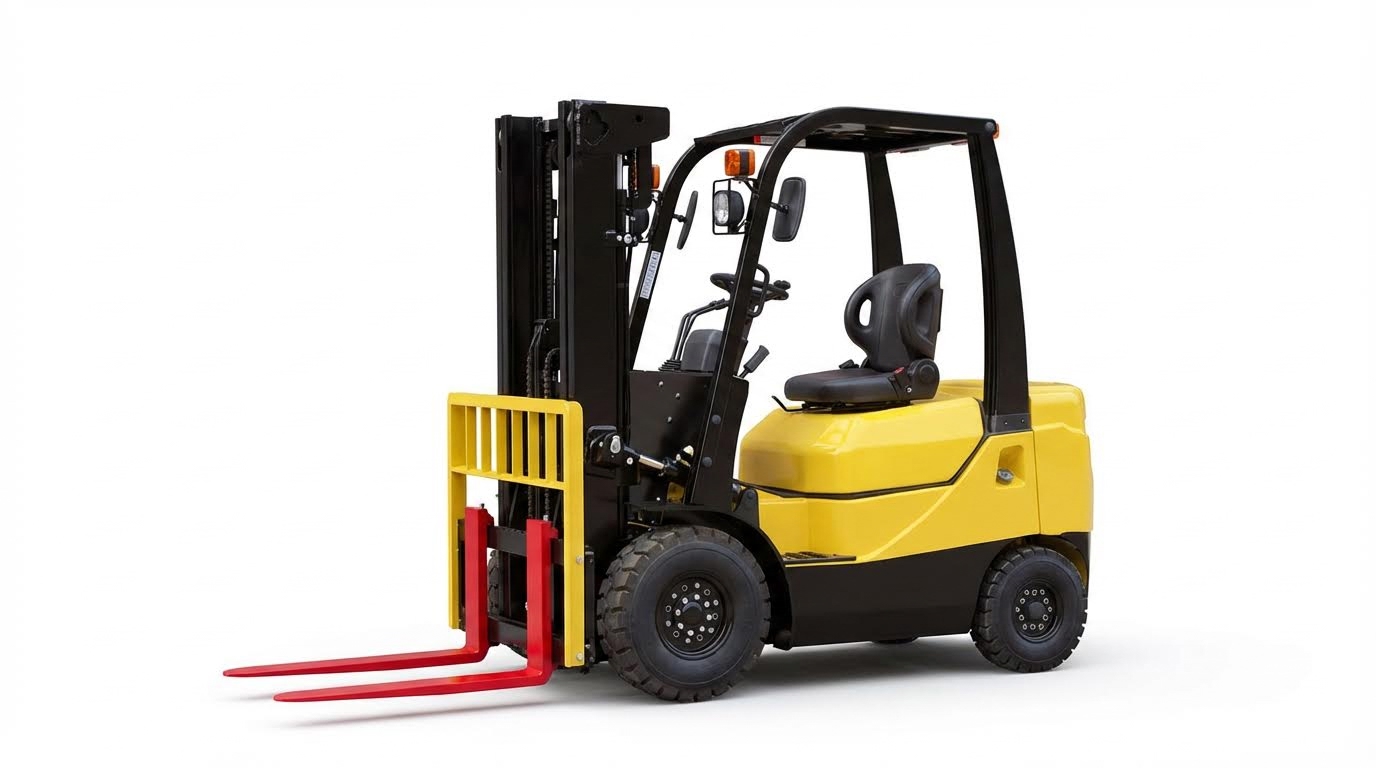
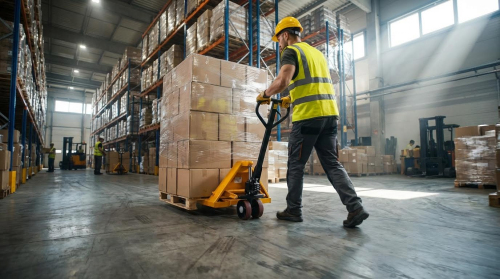
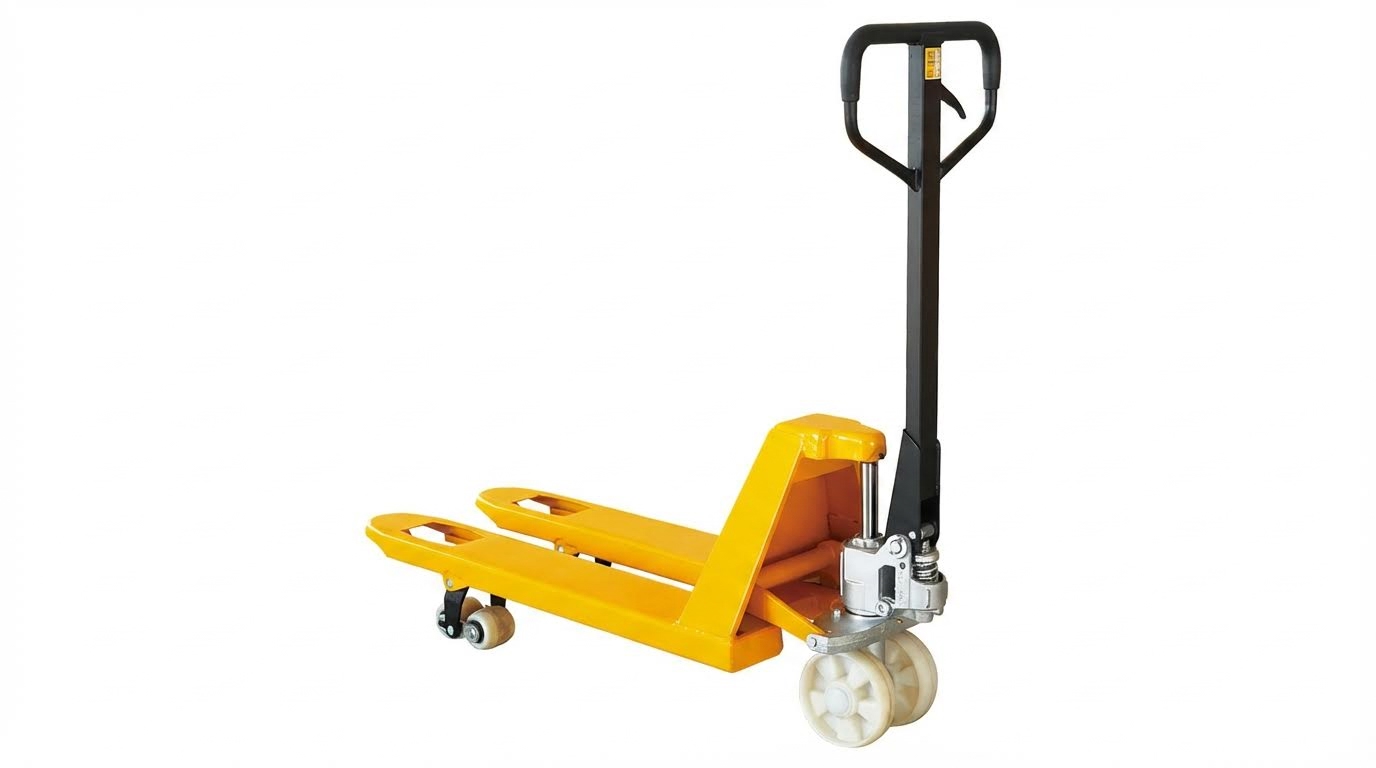
For low-lift pallet jacks and high-lift trucks, how high can a pallet lift is usually between 0.2 m and 0.8 m, which is enough for transport or ergonomic working height but not for stacking. The hydraulic design and frame stiffness set these modest limits.
| Equipment type | Typical max fork height | Typical capacity range | Operational impact / Best for… |
|---|---|---|---|
| Manual low-lift pallet jack | 180–200 mm | 1,000–5,000 kg | Under-pallet pick-up and floor transport only; no vertical stacking. |
| High-lift pallet truck (manual or electric) | Up to ~800 mm | ≈1,000–1,500 kg (typical range) | Raising pallets to bench height for picking or feeding machines; still not for multi-tier stacking. |
- Low-lift jacks: Minimum fork height is usually 75–85 mm, with maximum around 180–200 mm, giving only 25–40 mm of ground clearance under a loaded pallet – just enough to roll without catching on joints.
- Why so low: More stroke would need taller chassis and longer cylinders, raising the center of gravity and cost – so designers cap lift at about 200 mm to keep trucks compact and stable.
- High-lift trucks: Use longer-stroke hydraulics to reach up to about 800 mm – ideal for working height but still within a very stable, short mast.
- Stability at small heights: Even at 200–800 mm, fork deflection and poor floors can reduce actual clearance – so operators should avoid rough concrete and steep ramps when loaded.
How to use these heights in your risk assessment
For low-lift jacks, treat any lift above ~200 mm as misuse. If operators routinely try to “stack” pallets by putting one on top of another with a pallet jack, you need stackers or forklifts instead. For high-lift trucks, confirm that operators understand they are for work positioning, not for building tall pallet stacks or feeding high racks.
Pedestrian and rider pallet stackers up to 6 m
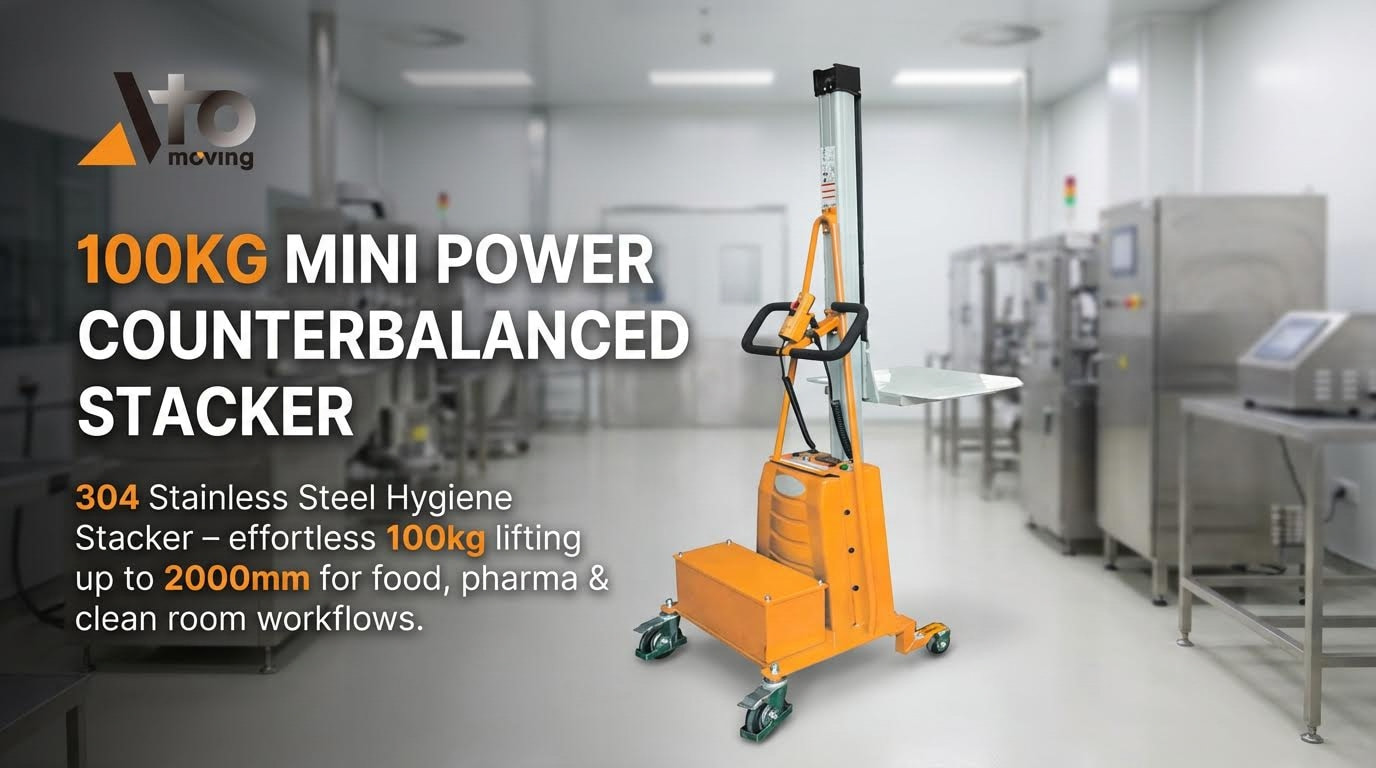
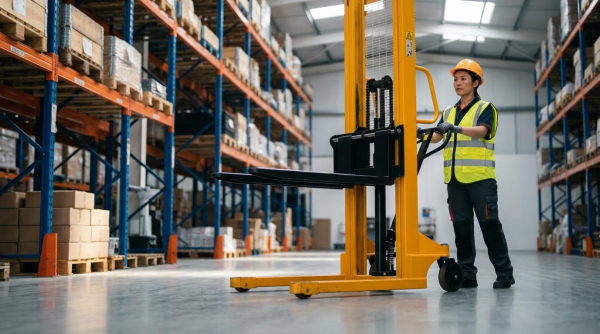
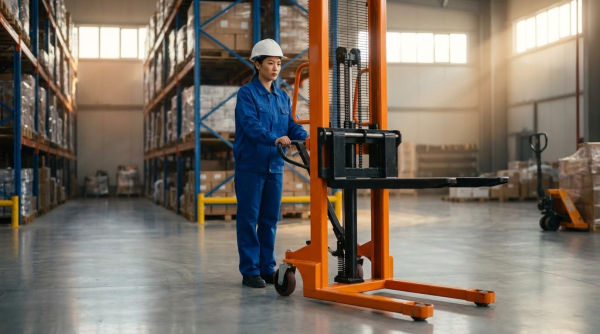
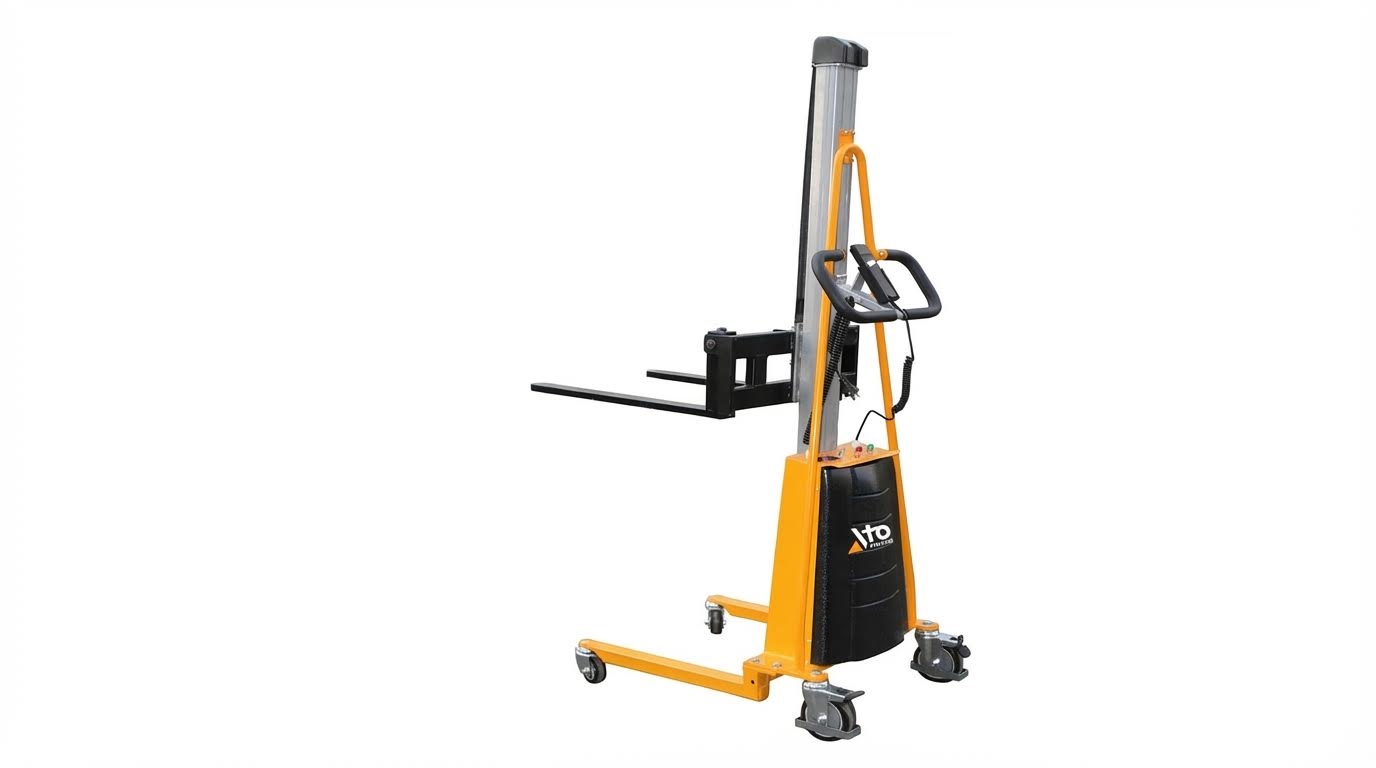
For pedestrian and rider pallet stackers, how high can a pallet lift is typically between about 1.6 m and 6 m, with safe capacity dropping as you approach the top of the mast. These machines bridge the gap between pallet jacks and full counterbalance forklifts in tight aisles.
Pallet stackers use a vertical mast and powered lift to raise pallets well above operator head height. They are common in smaller warehouses and manufacturing areas where you need to put pallets into low–mid-level racking without the cost or aisle width of a counterbalance truck.
| Stacker type | Typical max lift height | Typical capacity | Operational impact / Best for… |
|---|---|---|---|
| Basic pedestrian pallet stacker | ≈1.6–3.5 m | ≈1,000–1,600 kg (typical range) | Single- or two-level stacking, low racks, mezzanine feeds. |
| Full-electric pallet stacker | ≈2–6 m | Up to about 2,000 kg | Up to 3–4 beam levels in standard racking; compact storage in aisles ≈2.2–2.5 m wide. |
| Stacker with retractable mast | Similar to high stackers, often up to ≈6 m | Comparable to stackers of same class | Combines reach function with small chassis for narrow aisles and closed pallets. |
- Typical spec: Many pallet stackers handle up to 2,000 kg and lift to around 6 m, while remaining usable in 2,200–2,500 mm aisles – ideal for small, dense storage.
- Derating with height: Capacity at 5–6 m is lower than at 2 m because the combined center of gravity moves forward and up – so always read the capacity chart at your target height.
- Load geometry: A low, dense pallet is safer at 5–6 m than a tall, top-heavy one of the same mass – tall loads may need a lower maximum stacking level.
- Aisle interaction: Stackers are sized for about 2.2–2.5 m aisles, so they trade absolute lift height and capacity for maneuverability – good for smaller facilities without full wide-aisle layouts.
💡 Field Engineer’s Note: In real warehouses, stackers near their 5–6 m limit become very sensitive to floor flatness. A 5–10 mm dip under one wheel can translate into noticeable mast lean at height, so verify floor tolerances before approving high stacking with these machines.
Checking if a stacker can safely reach your top beam
Measure the top rack beam height and add at least 150–200 mm for fork clearance and pallet overhang. Compare this to the truck’s maximum fork height, not just “lift height” marketing language. Then confirm from the capacity chart that your pallet mass at its load center is within the rated capacity at that exact height.
Counterbalance and reach trucks up to high bay
For counterbalance and reach trucks, how high can a pallet lift ranges from about 3 m with small counterbalance units up to around 12–13 m in high-bay applications, again with strong capacity derating at the top. These trucks are the backbone of multi-level racking systems.
Counterbalance forklifts place the load in front of the wheels, while reach trucks use a retractable mast to work in narrower aisles and higher racks. Both rely on tall, multi-stage masts whose stiffness and deflection behavior largely control safe, usable height.
| Equipment class | Typical max lift height | Typical capacity range | Operational impact / Best for… |
|---|---|---|---|
| Counterbalance forklift (warehouse use) | ≈3–7 m | ≈1,500–5,000 kg | Floor stacking and low–mid-level racking in wider aisles; robust on docks and yards. |
| Walkie / pedestrian reach truck | ≈4.5–5.0 m | ≈1,000–1,600 kg | Narrower aisles than counterbalance, moderate rack heights. |
| Conventional seated reach truck | ≈6.0–9.5 m | ≈1,200–2,500 kg | Mainstream warehouse racking up to ~5–6 beam levels. |
| High-capacity / high-bay reach truck | Up to about 12.8–13 m | ≈900–2,500 kg (with strong derating at top) | High-bay storage; very narrow aisles with guided operation. |
- Stacker vs reach: Stackers typically top out at about 6 m, whereas reach trucks extend that to ~13 m – so anything above 6–7 m is usually reach-truck or crane territory.
- Derating example: A reach truck that carries 2,000 kg at low level may only manage around half that mass near 13 m – meaning pallet weight and height must be matched carefully.
- Aisle width: Reach trucks are designed for roughly 2,800–3,000 mm aisles, narrower than counterbalance trucks – this enables higher density without sacrificing high lift.
- Operator aids: Height indicators, fork cameras, and speed reduction at height are common because mast deflection and sway increase above 8 m – these systems reduce rack impact and tip-over risk.
💡 Field Engineer’s Note: Above about 8 m, mast deflection and floor flatness dominate behavior. Even with a stiff mast, a slightly crowned or dished floor can move the fork tips 50–80 mm sideways at full height, so guided aisles and tight floor tolerances are often mandatory in high-bay designs.
Relating your rack design to truck lift height
Start from the highest planned beam level (for example, 11.5 m) and add clearance for pallet height plus at least 100–150 mm for fork extraction. Then ensure your chosen reach truck’s maximum fork height exceeds that by a margin. Finally, read the truck’s capacity chart at that exact height and load center. If the residual capacity is below your heaviest pallet, you either reduce pallet mass, lower the top beam, or move to a higher-capacity truck class.
Engineering And Selection For High Pallet Stacking
Engineering high pallet stacking means matching truck class, rack design, floor, and policies so “how high can a pallet lift” stays inside tested, stable limits at real load centers.
This section connects theory (load center, mast deflection, floor flatness) with practical selection rules, standards, and modern digital safety tools.
Matching load, rack height, and truck class
Matching load, rack height, and truck class is the first control on how high can a pallet lift safely in daily operation.
You size the truck for the real load at the real height, then check the aisle and rack geometry.
| Equipment Type | Typical Max Lift Height | Typical Rated Load Range | Best For… (Height vs Load) |
|---|---|---|---|
| Pallet stacker (pedestrian / rider) | Up to about 6,000 mm | Up to about 2,000 kg | Medium-height racking where aisles are 2,200–2,500 mm and loads are moderate Typical stacker spec |
| Reach truck | Up to about 13,000 mm | Up to about 2,500 kg | High-bay and narrow aisles (≈2,800–3,000 mm) with heavy pallets at upper levels Typical reach truck spec |
| Low-lift / high-lift pallet truck | ≈200 mm (low-lift) to ≈800 mm (high-lift) | ≈1,000–5,000 kg | Ground-level transport and work positioning, not multi-tier stacking Pallet truck ranges |
- Start from the load: Define mass (kg), load center (mm), and load height – this dictates truck class and mast type.
- Check rack top beam: Note top beam elevation (for example 7,500 mm) – the truck’s maximum fork height must exceed this by a safety margin.
- Use capacity at height tables: For reach and counterbalance trucks, check the capacity curve at the intended lift height – this is the real answer to “how high can a pallet lift” for your load.
- Align with aisle width: Compare required aisle (for example 2,200–2,500 mm for stackers, 2,800–3,000 mm for reach trucks) to your layout – prevents a truck that fits the height but cannot turn.
- Respect vertical clearances: Maintain at least 100–150 mm overhead clearance above the pallet for fork extraction and sprinklers where required – avoids impact and fire-code violations Rack and clearance guidance.
How to translate “rack design” into truck spec
Take the highest beam level, add pallet height plus 100–150 mm extraction clearance. Then choose a truck whose rated maximum fork height is at least 150–300 mm higher again. Finally, read the truck’s capacity chart at that height and your actual load center; if the residual capacity is below your pallet mass, you either reduce load per pallet, lower the top beam, or move to a higher-capacity truck class.
💡 Field Engineer’s Note: In high-bay projects, I always derate paper nameplate heights by at least 200–300 mm to allow for floor unevenness and mast flex. If your top beam is at 12,000 mm, specifying a truck with only 12,000 mm fork height is a design error—you will never hit that level cleanly under real conditions.
Stability, mast deflection, and floor flatness
Stability, mast deflection, and floor flatness are what actually limit how high can a pallet lift, even when the nameplate suggests more.
As height increases, capacity derates, mast sway grows, and small floor errors turn into big lean at the top pallet.
| Factor | Effect as Height Increases | Operational Impact |
|---|---|---|
| Capacity derating | Safe capacity drops sharply above about 4,000–6,000 mm; at ≈13,000 mm it can fall below half the low-level rating | Truck rated 2,000 kg near floor may be limited to <1,000 kg at top tier, directly capping stackable pallet mass Derating behavior |
| Mast deflection | Elastic bend grows roughly with height; sway at 10,000–13,000 mm can be several tens of millimetres | Harder to align with rack beams; higher risk of rack strikes and product damage, especially with narrow aisles and deep-reach systems Rack interaction |
| Floor flatness | Small floor slope or local settlement tilts the whole truck | A 1–2 mm floor deviation at the wheels can become 20–30 mm lean at 10,000 mm, shrinking stability margins and clearances High-bay sensitivity |
- Use the stability triangle/polygon: Engineers check that the combined center of gravity of truck plus load stays inside the support polygon under static and dynamic conditions – this is the physics behind tip-over limits Stability factors.
- Control load geometry: Keep loads compact and low where possible; tall or offset loads move the center of gravity outwards – this can reduce safe lift height even if mass is unchanged COG and rack interaction.
- Sequence heavy-to-light vertically: Place heavier pallets on lower levels and lighter ones higher up – keeps the rack and the truck’s average center of gravity lower Vertical tiering.
- Specify floor flatness for high-bay: High-bay, narrow-aisle systems need tighter floor tolerances than conventional warehouses – without this, even the right truck cannot safely reach its design height Narrow-aisle notes.
- Account for dynamic effects: Braking, turning, and mast tilt at height all move the center of gravity – safe engineering assumes reduced travel speed and controlled manoeuvres above about 4,000–6,000 mm Dynamic stability.
When mast deflection becomes a design issue
Once your top beam is above about 6,000–8,000 mm, you should treat mast deflection as a primary design parameter, not a nuisance. At these heights, a few tens of millimetres of side sway can cause fork tips to clip beams or bracing. For deep-reach and narrow aisles, that can mean specifying stiffer masts, guidance systems, or even moving to stacker cranes instead of conventional trucks.
💡 Field Engineer’s Note: If you are asking “how high can a pallet lift in this aisle?” but you have not yet measured floor flatness and rack plumb over the full height, you are guessing. In problem sites I often find that fixing a 5–10 mm floor dip solves more “mystery stability” complaints than changing trucks.
Standards, policies, and digital safety aids
Standards, facility policies, and digital safety aids turn theoretical maximums into enforceable rules for how high can a pallet lift in each zone.
They define stacking limits, enforce capacity at height, and use sensors and software to stop operators exceeding safe envelopes.
- Regulatory baseline: Safety rules require stable, interlocked stacks and clear aisles, but they do not give a single numeric max stacking height – employers must set site-specific limits OSHA-oriented guidance.
- Sprinkler and fire codes: Many sites maintain at least 450 mm–460 mm (≈18 inches) below sprinklers for stored goods – this can cap top beam height even if the truck can lift higher Sprinkler clearance.
- Facility stacking policies: Many warehouses formalise maximum pallet heights per zone, pallet type, and product family – these internal limits often sit below theoretical structural capacity to protect against variability and misloads Policy constraints.
- Capacity plates and load charts: Trucks carry nameplates and capacity charts that include lift height and load center – operators must treat these as hard limits, not guidelines Capacity example.
- Digital height and tilt indicators: Modern reach and stacker trucks can show fork height and mast tilt on displays – this helps operators stop within the certified height band and avoid beam strikes Operator aids.
- Overload and envelope control: Integrated sensors can derate speed, block further lifting, or restrict travel if overload or excessive height is detected – this effectively “locks in” how high a pallet can lift for a given load Electronic safeguards.
- WMS and AGV integration: In automated or semi-automated sites, the WMS stores each truck’s certified maximum lift height and residual capacity – task assignment logic only sends high-bay missions to suitable equipment System integration.
- Predictive maintenance and digital twins: Sensor data on lift cycles, pressures, and drift feeds models that predict when hydraulic or mast components will limit safe height – you keep trucks operating at their designed maximum safe lift height instead of silently degrading Monitoring and twins.
Using simulation to set safe height limits
Digital twin models let engineers simulate lifting a given pallet mass to 6,000 mm, 8,000 mm, or 12,000 mm while varying floor flatness, battery state, and rack stiffness. You can see at what point tip-over margin or rack deflection becomes unacceptable, then encode that as a hard height limit in truck software and WMS rules. This is how leading high-bay sites answer “how high can a pallet lift here?” with a tested number instead of a guess.
💡 Field Engineer’s Note: The most effective high-bay safety upgrade I have seen was not a new truck, but a simple rule pushed from the WMS: no pallet over a defined mass could be assigned above a certain beam level. Combined with truck height limiters, that one change eliminated a long history of near-miss sway events at the
Final Thoughts On Specifying Safe Lift Heights
Safe lift height is never just the mast’s mechanical limit. It comes from how load geometry, truck capacity at height, mast deflection, and floor flatness interact with rack design and site rules. If you ignore any one of these, you shrink stability margins and invite tip‑overs or rack strikes.
Engineering and operations teams should start with the pallet: real mass, load center, and height. Then they must match this to truck class, certified capacity at the target beam, and aisle width. Next, they should verify rack strength, vertical clearances, and floor tolerances, especially once beam levels rise above about 6 m.
Policies and digital tools then lock these limits into daily work. Capacity plates, WMS rules, and electronic height or overload controls turn “how high can a pallet lift” into a hard number for each zone and truck. Atomoving equipment can support this approach when specified against real rack heights and load cases, not brochure figures.
The best practice is clear. Design the system from the top beam down and from the worst‑case pallet up. Build in 150–300 mm of height margin, respect derating curves, and keep heavy, tall, or awkward loads off the top tiers. If you do that, maximum safe lift height becomes predictable, repeatable, and enforceable across your entire site.
Frequently Asked Questions
How high can a pallet lift?
A standard pallet lift, such as a manual or electric pallet jack, typically lifts to a height of around 15 cm (6 inches). However, specialized models, like scissor lifts or high-lift pallet trucks, can raise pallets to heights of up to 163 cm (64 inches) or more. The exact height depends on the equipment’s design and intended use.
- Standard pallet jacks: ~15 cm (6 inches).
- Specialized electric models: Up to 50 cm (20 inches).
- Scissor lifts or high-lift pallet trucks: Up to 163 cm (64 inches).
For specific applications requiring higher lifts, consult equipment specifications from trusted suppliers. Pallet Truck Specifications.
What factors determine the maximum lifting height of a pallet lift?
The maximum lifting height of a pallet lift is influenced by its type, design, and purpose. Key factors include:
- Type of pallet lift (manual, electric, or scissor lift).
- Load capacity and stability requirements.
- Warehouse racking system height.
- Regulations for safe material handling.
For detailed guidance on choosing the right lift height for your needs, refer to industry resources. Pallet Jack Lift Guide.