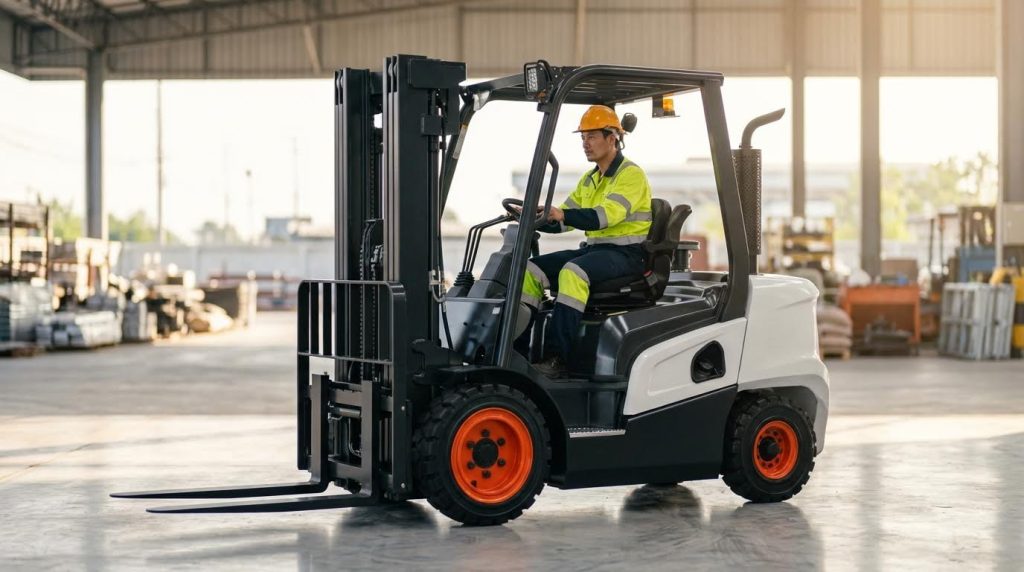
Safe diesel forklift startup in any weather means controlling engine, hydraulics, and environment so the truck moves only when it is mechanically ready and the area is safe. This guide explains how to start a diesel forklift step-by-step, warm it up correctly, and adapt your routine for cold and hot conditions so you protect people, equipment, and productivity.
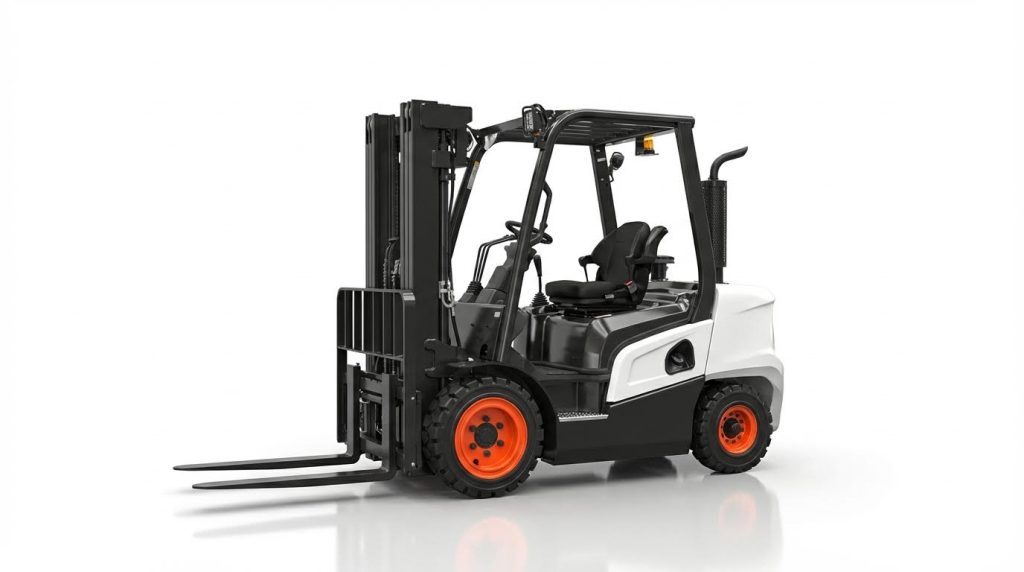
Core Principles Of Safe Diesel Forklift Startup
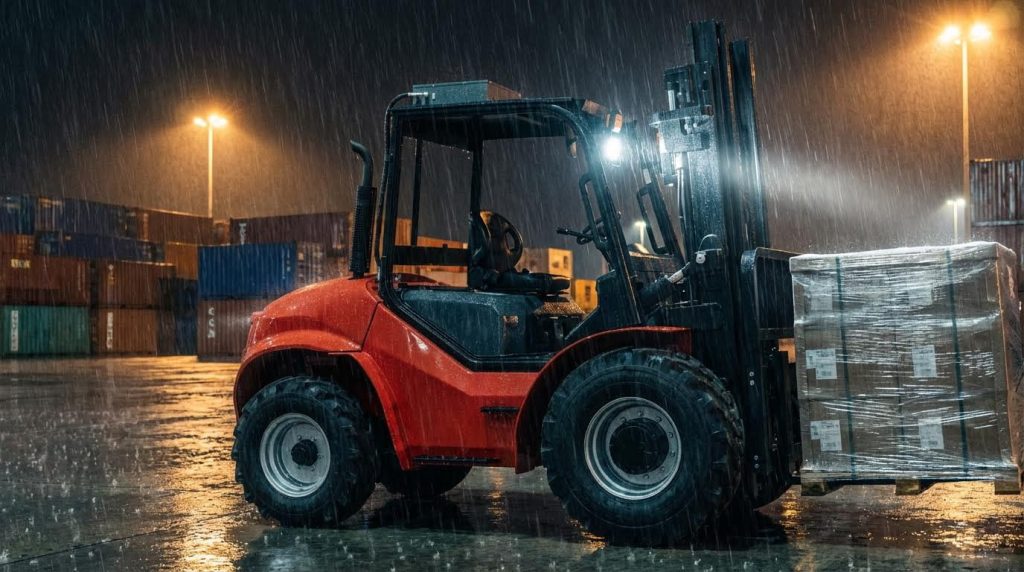
Core principles for how to start a diesel forklift safely focus on a disciplined pre-start inspection and secure truck positioning before you ever touch the key. These habits prevent roll-aways, mechanical failure, and crush injuries in every shift and climate.
Pre-start inspection and safety interlocks
A structured pre-start inspection is the foundation of how to start a diesel forklift without surprises, leaks, or sudden component failures under load.
- Walk-around damage check: Inspect mast, carriage, and forks for cracks, bends, or missing locking pins – Prevents sudden fork or mast failure under load. Reference
- Overhead guard and chassis: Check for impact damage or distortion – Maintains rated protection if a load or object falls. Reference
- Capacity plate and attachments: Confirm the plate matches the installed attachment and is readable – Prevents overloading beyond the true rated capacity. Reference
- Tires and wheels: Inspect for cuts, chunking, low inflation, or loose wheel nuts – Reduces blowout and tipover risk under load and steering forces. Reference
- Fluid levels: Check engine oil, coolant, hydraulic oil, fuel, and brake fluid – Prevents seizure, overheating, spongy brakes, and cavitating hydraulics during the shift. Reference Reference
- Leaks and loose parts: Look under the truck for oil, fuel, or coolant spots and feel for loose guards or hoses – Catches failures before pressure and vibration make them catastrophic. Reference
- Battery condition: Inspect terminals for corrosion and tightness – Improves cranking reliability and avoids intermittent electrical faults during startup. Reference
- Lights, horn, and alarms: Once in the seat with key ON, test horn, work lights, and beacons – Ensures pedestrians can see and hear the truck from the first movement. Reference
- Control neutral and free movement: Verify all hydraulic levers and the direction selector move freely and return to neutral – Prevents unexpected mast or travel motion at startup. Reference
Cold-climate extra checks before starting
In very cold conditions, drain water from coolant low points, brake air tanks (if fitted), and the fuel tank bottom daily to prevent internal ice that can crack components or block fuel flow. Reference
💡 Field Engineer’s Note: If you consistently find low hydraulic oil or coolant on pre-start checks, do not “top up and go.” Repeated topping up usually hides a slow leak that will fail under full pressure or at maximum mast height.
Parking brake, mast, and fork positioning
Correct parking brake, mast, and fork positioning lock the truck in a stable, predictable state so how to start a diesel forklift does not turn into an uncontrolled roll or sudden lurch.
- Parking brake fully applied: Before turning the key, pull the parking brake to full engagement – Prevents roll-away on slight slopes when the engine fires. Reference Reference
- Direction lever in neutral: Confirm the travel selector is in NEUTRAL, not forward or reverse – Stops the truck from jumping when hydraulic pressure builds at start. Reference Reference
- Fork height 150–200 mm above floor: Set forks roughly 15–20 cm above ground level – High enough to clear minor obstacles, low enough to avoid striking people or racks on first movement. Reference
- Mast slightly tilted back: Keep the mast fully or slightly rearward – Moves the fork tips up and back, improving truck stability and reducing risk of catching floor joints. Reference
- Forks level and spread correctly: Adjust fork spacing for the first planned pallet, keeping tines level – Reduces time spent repositioning under a live load later.
- Seat, belt, and mirrors set before start: Adjust seat travel, fasten the belt, and set mirrors before cranking – Prevents one-handed driving or leaning while the truck is already moving.
- Step 1: Park on the flattest available ground – Minimizes gravitational pull if the brake is weak or misadjusted.
- Step 2: Apply parking brake and chock wheels if on a noticeable gradient – Adds a mechanical back-up against roll-away.
- Step 3: Lower forks to just above floor and tilt mast back – Sets a stable, repeatable “home” position for every start.
- Step 4: Confirm direction lever and hydraulics are in neutral – Ensures no stored command will move when pressure builds.
💡 Field Engineer’s Note: If the truck creeps when you start it even with the direction in neutral, treat that as a defect, not “normal behavior.” It often indicates a transmission or inching valve issue that can turn into a full uncontrolled movement under load.
Engine Start, Warm-Up, And Hydraulic Readiness
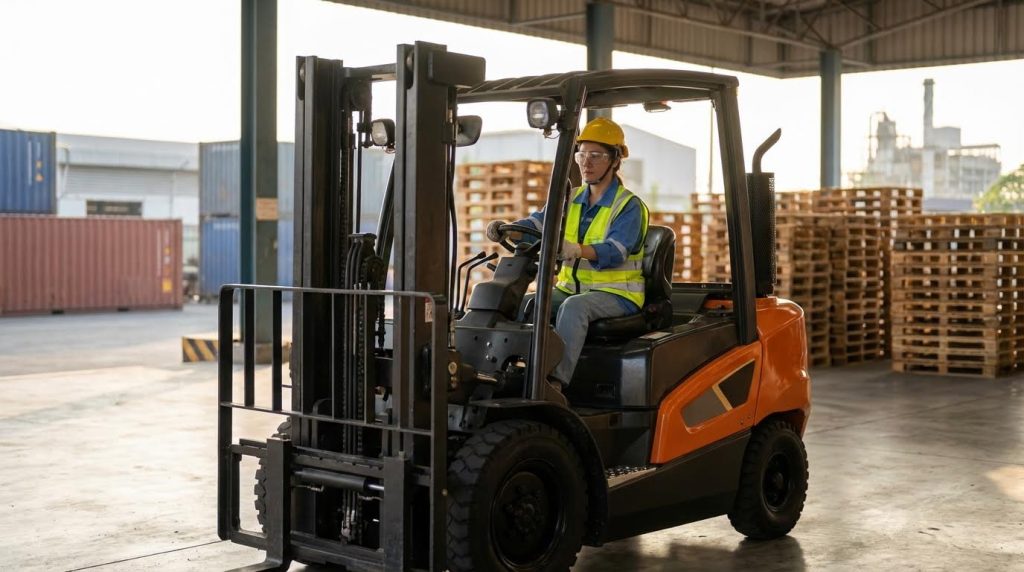
This section explains how to start a manual pallet jack, warm the engine, and bring hydraulics and brakes up to safe operating temperature in a controlled, low-stress way.
For operators asking how to start a diesel forklift safely, the key is a disciplined sequence: correct control positions, glow plug preheat, limited cranking, then a structured warm-up of engine, driveline, and hydraulics before any load work.
Glow plug preheat and cranking limits
Glow plug preheat is the first critical step in how to start a hydraulic pallet truck because it stabilizes combustion and protects the starter, battery, and engine in all weather.
- Seat, belt, and posture: Sit fully back with seat adjusted and seat belt fastened – keeps you in control if the truck moves unexpectedly.
- Neutral and parking brake: Confirm direction lever in neutral and parking brake fully applied – prevents lurching or roll-away on start.
- Key to ON: Turn the key to ON and wait for the glow plug indicator to go out – confirms the plugs have reached ignition temperature for reliable starting.
- Cold weather double-preheat: In very low temperatures, repeat the ON / glow cycle once – improves fuel atomization and first-fire quality on cold starts.
- Crank time limit: Turn key to START and crank ≤ 10 seconds per attempt – prevents overheating the starter and voltage collapse in the battery as recommended.
- Cool-down between attempts: Allow ≥ 60 seconds between cranks, maximum three attempts – lets starter and cables cool and avoids deep battery discharge before troubleshooting.
Why long cranking is dangerous
Extended cranking overheats the starter windings, drops battery voltage, and can wash unburned diesel into the cylinders and oil, thinning lubrication and accelerating wear.
💡 Field Engineer’s Note: If the engine does not fire cleanly within two or three short crank attempts after proper glow plug preheat, stop. Persistent cranking usually points to fuel gelling, air in lines, or low compression, not a “weak battery,” and you risk starter failure and ring gear damage.
Idle warm-up for engine and driveline
Idle warm-up is essential after you start a drum dolly because it lets oil, coolant, and gear lubricants reach safe viscosity and pressure before any load or high RPM.
- Initial low idle: Let the engine idle at low speed for at least 3 minutes – stabilizes oil pressure and begins even block and head heating for basic lubrication.
- Extended cold-weather idle: In cold climates, extend idle beyond 3 minutes – lets oil and coolant reach near-normal operating temperature before loading to avoid cold scuffing.
- No high revs when cold: Avoid snapping the throttle or driving fast immediately – prevents bearing and piston damage while oil is still thick and slow-flowing inside the galleries.
- Short no-load movements: After initial idle, move forward and reverse slowly a few meters – warm the transmission and differential oils for smoother shifting and reduced gear wear before full-speed travel.
- Monitor gauges: Watch oil pressure and coolant temperature during warm-up – early deviations flag low oil, stuck thermostats, or pump problems before you pick up a load.
Typical warm-up times by temperature
In mild climates (around 15–25°C), 3–5 minutes of idle plus light movement is usually adequate. In near-freezing conditions (0–5°C), plan for roughly 5–10 minutes before full-load operation, depending on manufacturer guidance.
💡 Field Engineer’s Note: On slopes or dock plates, do your initial forward/reverse “driveline warm-up” on the flattest area available. Cold gear oil dramatically reduces traction smoothness; combining that with a gradient is a common cause of early-morning wheel spin and uncontrolled surges.
Hydraulic circuit and brake system warming
Hydraulic and brake warm-up is the final piece in how to start a forklift drum grabber double grips because cold oil and seals respond slowly, increasing stopping distance and mast instability if not conditioned.
- Post-idle hydraulic check: After engine warm-up, keep the truck stationary with the parking brake set – prevents unintended movement while you condition the hydraulics.
- Slow mast raise/lower: Gently raise the forks 100–200 mm, then lower them several times – circulates hydraulic oil through lift cylinders and lines to build temperature and smooth response within a few minutes.
- Gentle tilt in/out: Slowly tilt the mast fully back and slightly forward – warm seals and spool valves, reducing jerky motion when you later handle loads in cold oil conditions.
- Function sweep: If fitted, lightly operate side-shift or auxiliary functions – ensures all circuits are pressurized and free of lag before entering tight racking or loading areas.
- Brake application test: With the truck still, apply and release the service brake several times – confirms consistent pedal feel and helps move any trapped moisture or cold-thickened fluid through the system where brake fluids are specified.
- Response check under no load: Perform a very low-speed test drive with no load, then a light load – verifies that steering, hydraulics, and brakes respond predictably before full-capacity lifting.
How long to warm hydraulics and brakes
After the initial 3–10 minute engine warm-up, most hydraulic systems reach acceptable responsiveness with 2–5 minutes of gentle cycling. Brake feel should stabilize within the same window; any sponginess or pull indicates a defect, not a temperature issue.
💡 Field Engineer’s Note: In very cold warehouses, operators often complain about “grabby” or “dead” hydraulic levers on the first few lifts. That is usually cold, viscous oil trying to pass through fine control orifices. A short, disciplined warm-up cycle saves mast chains, hoses, and pallets from shock loading and sudden surges.
Weather-Specific Starting Practices And Risk Controls
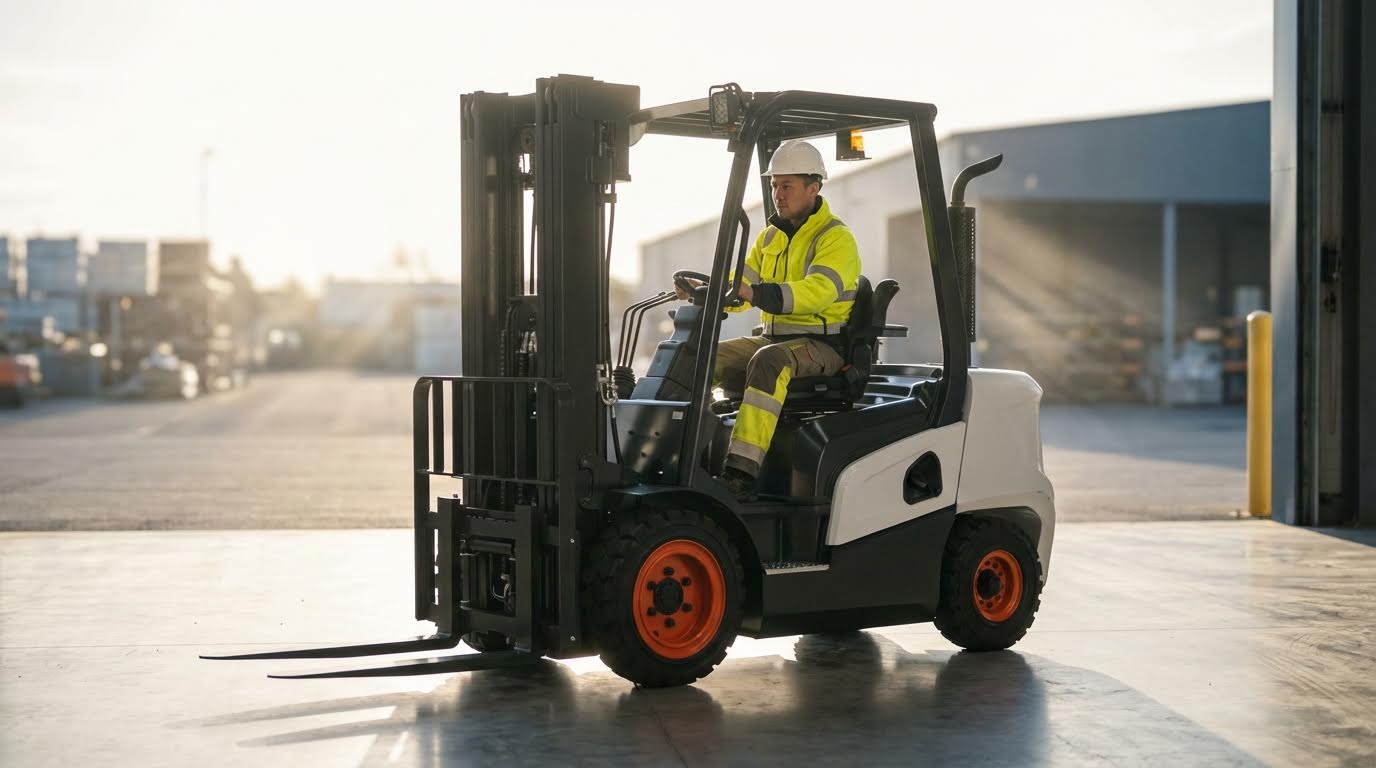
Weather-specific diesel forklift starting practices adapt the same core steps to cold, hot, or indoor conditions so the engine, hydraulics, and operator all stay within safe operating limits. This is critical when learning how to start a diesel forklift in real-world environments.
Below, each subsection explains how temperature and air quality change the way you manage fuel, coolant, tires, and emissions before and immediately after startup.
Cold weather fuel, coolant, and starting aids
Cold weather starting focuses on fuel quality, coolant protection, and correct glow-plug use so the engine fires reliably without damaging components. Poor winter preparation is one of the main reasons operators struggle with how to start a diesel forklift in low temperatures.
- Winter-grade diesel and additives: Use season-appropriate or winter-grade diesel to resist gelling and waxing – prevents blocked filters and no-start conditions in sub-zero weather. Cold climate fuel management guidance
- Drain water from fuel system: Open the tank bottom drain at the end of each shift to remove water – reduces ice formation and fuel line blockage overnight. Drain and filter maintenance steps
- Keep tank near full at shutdown: Fill to a high level before parking outside – minimizes internal condensation that later freezes as ice crystals and sludge. Fuel tank best practices
- Inspect and replace fuel filters: Check filters for ice, sludge, or rust and replace as needed – keeps fuel flow stable so glow-plug preheat can actually ignite a proper mixture. Filter care in cold weather
- Coolant freeze protection: Confirm antifreeze mix protects below the lowest site temperature – prevents block cracking and internal ice that can lock the water pump at start. Coolant and antifreeze practices
- Daily coolant drainage where specified: In very cold regions and older designs, drain water from the coolant system if the manufacturer requires it – avoids ice pockets that restrict flow on restart. Cold weather coolant guidance
- Glow plug preheat routine: Turn key to ON, wait for the glow-plug light to go out, then crank for ≤10 s with ≥60 s cooling between attempts – protects the starter and battery while improving first-fire success. Glow plug preheat sequence
- Repeat preheat in very low temperatures: In severe cold, run the glow-plug ON phase twice before the first crank – raises combustion chamber temperature enough for reliable ignition. Cold start aid recommendation
How cold weather changes your warm-up routine
In low temperatures, extend engine idle beyond 3 minutes and cycle hydraulics gently to warm oil and seals before lifting or travelling at speed. This reduces sluggish controls and seal damage. Engine and hydraulic warm-up guidance
💡 Field Engineer’s Note: Below about 0°C, many sites underestimate water in fuel and coolant. The number-one cold-start failure I have seen was ice at the tank drain or in a half-protected coolant mix, not bad glow plugs.
Hot weather cooling, tires, and heat stress
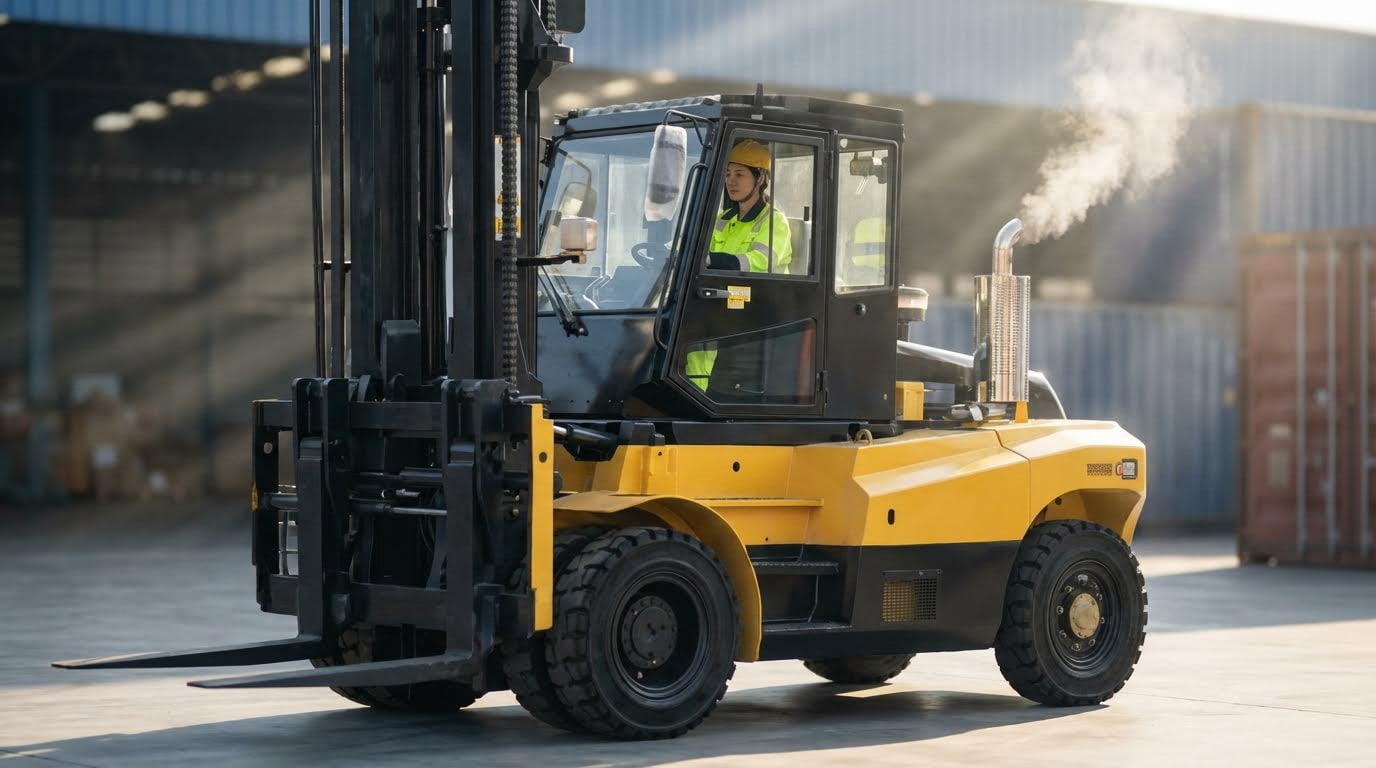
Hot weather starting emphasizes cooling-system performance, tire care, and operator heat stress so the forklift can work at full capacity without overheating or tire failure.
- Monitor temperature gauge from startup: Watch the engine temperature closely during the first minutes and early work – catches marginal cooling issues before they become boil-overs. Hot weather cooling adjustments
- Keep radiator and screens clean: Before starting a shift in dusty heat, clear fins, guards, and screens – restores airflow and heat rejection margin as load and ambient temperature rise. Radiator cleanliness advice
- Check coolant level and cap condition: Confirm correct coolant level and a healthy pressure cap before operating – maintains boiling point and reduces risk of steam pockets during heavy work. Coolant checks in heat
- Avoid long high-load pushes at low speed: Plan work to avoid sustained heavy pushes with low travel speed – these conditions generate maximum heat with minimum airflow through the radiator. Overheating prevention tips
- Schedule short cool-down idles: After heavy cycles, idle briefly in neutral – stabilizes temperatures and prevents heat soak before the next lift or shutdown. Engine idle practices
- Set tire pressure when cold: Adjust tire pressure to spec before the shift, when tires are cool – avoids dangerous over-pressure and blowout risk as carcass temperature climbs. Tire management in hot weather
- Inspect tread and sidewalls: Look for cuts, bulges, or separation before startup – weak spots fail faster under heat and dynamic loading. Tire inspection guidance
- Reduce speed on very hot surfaces: On sun-baked concrete or asphalt, operate more slowly and corner gently – limits carcass flex and internal heat build-up. Speed and cornering advice
- Manage operator heat stress: Provide cold water, regular hydration breaks, and airflow via fans or ventilation – reduces risk of heat exhaustion and heat stroke for seated operators. Heat safety guidance
Optional PPE and monitoring for hot environments
Cooling vests and wearable sensors can help manage body temperature and track heat stress in real time for operators working long shifts in high ambient temperatures. Operator heat protection options
💡 Field Engineer’s Note: Most overheating incidents I investigated started with a slightly dirty radiator and marginal coolant level. In hot climates, building a 2-minute “radiator and cap check” into every pre-start routine paid off more than any hardware upgrade.
Ventilation, emissions, and indoor air quality
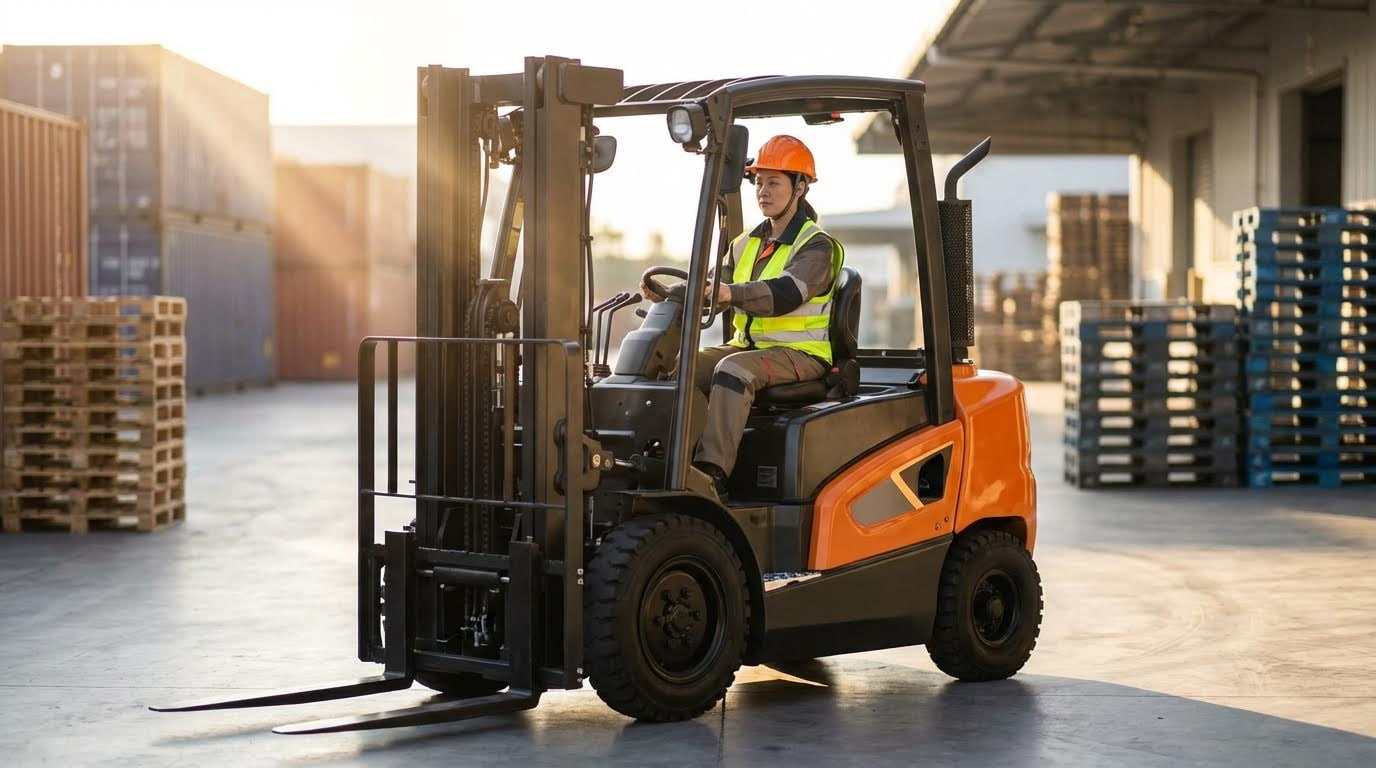
Indoor and enclosed-area starting demands strict control of exhaust emissions and ventilation so diesel fumes do not accumulate to dangerous levels for operators and nearby workers.
- Understand truck designation (D, DS, DY): Diesel forklifts are classified by fire and explosion safeguards; only suitable types should enter certain enclosed or hazardous areas – reduces ignition risk around flammable atmospheres. Diesel forklift designations
- Provide effective ventilation before start: In warehouses, trailers, or cold-weather buildings with closed doors, ensure mechanical or natural ventilation is operating before you start the engine – prevents buildup of diesel fumes from idle and warm-up. Indoor air quality hazards
- Avoid extended idling indoors: Keep warm-up time indoors to the minimum needed for safe operation – limits total exhaust volume in the space. Engine idle recommendations
- Control carbon monoxide risk: Train operators to recognize dizziness, headache, or nausea as warning signs and evacuate immediately – prevents severe CO poisoning in enclosed spaces. Carbon monoxide risk information
- Install and maintain CO monitors: Use fixed or portable CO detection in indoor diesel forklift areas – provides objective alarms when ventilation is inadequate. CO monitoring guidance
- Respect enclosed and hazardous area limits: Do not run diesel forklifts in confined trailers, containers, or poorly ventilated rooms longer than necessary – reduces fume concentration and explosion risk. Operating limits indoors
- Use proper emissions shutdown sequence: After work, idle briefly, then follow a two-step shutdown so DEF pumps depressurize and reverse flow – prevents crystallization in after-treatment lines and keeps emissions control effective next start. Emissions system shutdown procedure
- Maintain filters on schedule: Change engine oil, fuel, and air filters per manufacturer guidance – clogged filters raise exhaust temperature and emissions, increasing indoor air quality problems.
Final Recommendations For Reliable, Safe Operation
Safe diesel forklift startup depends on one linked chain: a clean pre-start inspection, stable parking setup, controlled engine start, and temperature-aware warm-up. Each step removes a specific failure mode. You cut the risk of roll-away, cold scuffing, hydraulic shock, brake fade, and fumes in one routine. Geometry and stability matter as much as engine health. Neutral controls, applied parking brake, low fork height, and a slightly tilted mast keep the center of gravity inside the stability triangle from the first engine fire. Correct glow-plug use and tight cranking limits protect electrical parts and ensure clean combustion, which reduces emissions in indoor work. Structured idle, driveline movement, and hydraulic cycling bring oils, seals, and friction surfaces into their design window before you lift at capacity. Weather controls then fine-tune this base routine. Winter fuel and coolant practice prevent no-starts and cracked parts. Summer cooling and tire checks prevent boil-over and blowouts. Ventilation and CO monitoring protect people in enclosed spaces. Operations leaders should lock these steps into written procedures, training, and supervision. Treat any deviation, creep, or abnormal noise during startup as a defect, not a quirk. That culture, backed by Atomoving guidance, delivers reliable trucks, fewer breakdowns, and safer shifts in every season.
Frequently Asked Questions
How to Start a Diesel Forklift
Starting a diesel forklift involves a few key steps to ensure safe and efficient operation. First, perform a pre-operation inspection to check for any visible damage or leaks. Ensure the fuel tank has enough diesel and that the battery is charged.
- Adjust the seat and mirrors for optimal visibility and comfort.
- Turn the key to the “On” position to allow systems to initialize.
- Press the brake pedal and move the gear shifter to “Neutral.”
- Turn the key to the “Start” position. If the engine doesn’t start within a few seconds, release the key and wait before trying again.
- Once started, let the engine idle for a minute to warm up before driving.
What Are the Key Safety Checks Before Starting a Diesel Forklift?
Before starting a diesel forklift, always conduct a safety check. Inspect the tires for proper inflation and damage, and ensure the forks are not cracked or bent. Check fluid levels, including oil, coolant, and hydraulic fluid. Look for leaks under the machine. Test the horn, lights, and backup alarm to confirm they are working properly. Finally, review the surrounding area to ensure it’s clear of obstacles and people.