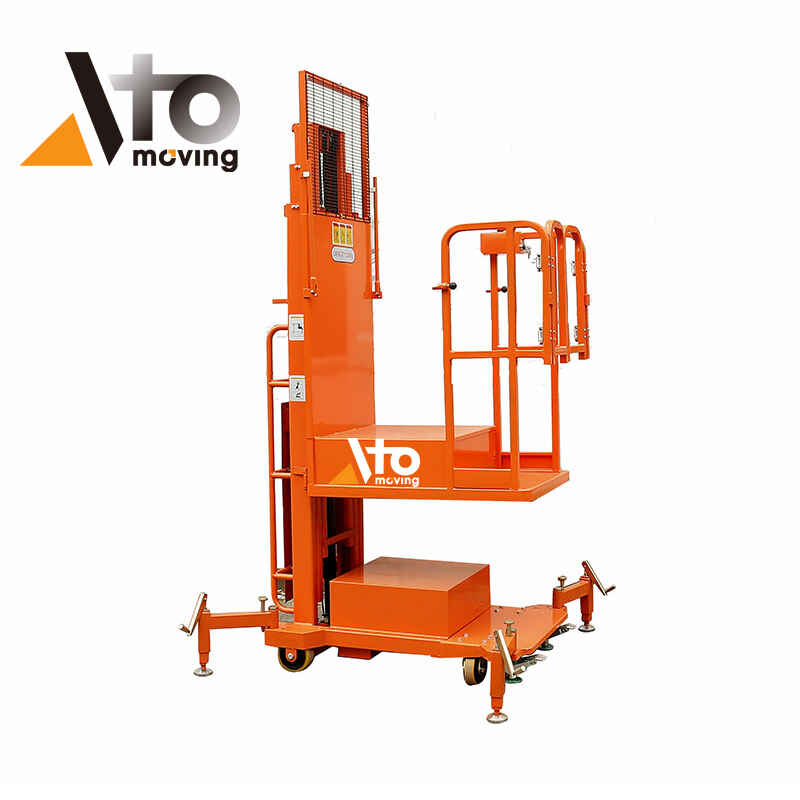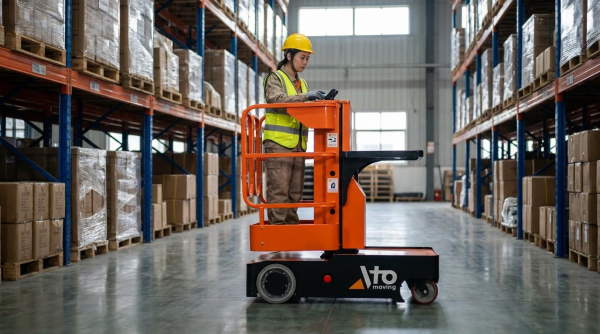
An electric order picker is a battery-powered, ride-on machine that lifts both the operator and load to pick items directly from racking. This guide explains how these order picking machines improve warehouse efficiency, what keeps them safe, and how to maintain them for long, reliable service life. You will learn the key specs that matter, the safety systems that prevent tipovers and falls, and the maintenance routines that keep downtime and repair costs under control.
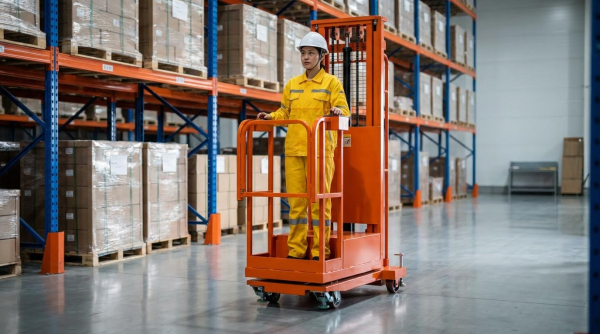
What Electric Order Pickers Are And Why They Matter
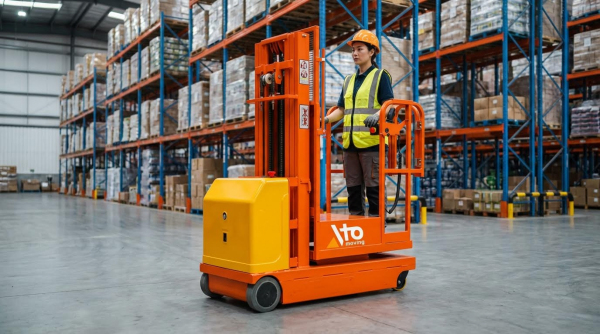
An electric order picker is a narrow‑aisle powered industrial truck that lifts the operator with the load so they can manually pick items from racking. These machines matter because they unlock high-density vertical storage while keeping pick times, travel distances, and manual handling risks under control.
Unlike standard pallet trucks or forklifts, an order picking machines is optimized for “man‑up” picking of cartons, cases, or eaches rather than just moving full pallets. This makes them a core tool in e‑commerce, spare parts, and high-SKU warehouses where operators must reach many locations quickly and safely.
Core functions and warehouse use cases
The core function of an semi electric order picker is to move an operator and a small load platform through narrow aisles and up to height so they can pick product directly into a pallet or container. This combines vertical lifting, horizontal travel, and precise positioning in one compact machine.
- Vertical access to inventory: The truck raises the operator to the pick face – this removes the need for ladders and reduces fall and strain risks.
- Narrow aisle maneuvering: The chassis and steering are designed for tight spaces – this lets you shrink aisle width and add more rack locations.
- Case and each picking: Operators pick cartons or single items, not just pallets – ideal for e‑commerce, retail replenishment, and spares.
- Integrated travel and lift controls: Travel, lift, and steering are on the operator console – this speeds up the pick cycle and cuts wasted motion.
- Operator protection systems: Guard rails, harness points, and interlocks are built in – this helps control the main hazard: falls from height.
Typical warehouse use cases for an warehouse order picker include:
- E‑commerce fulfillment centers: High SKU count and small order lines – order pickers minimize walking and climbing between picks.
- Spare parts and MRO stores: Many slow‑moving parts stored high – operators can safely access upper levels without mobile ladders.
- Retail DCs and wholesale hubs: Case‑picking for store replenishment – supports high throughput with controlled travel paths.
- Cold stores and freezers: Vertical racking with narrow aisles – electric drive avoids exhaust emissions and works in enclosed spaces.
- Narrow‑aisle storage systems: Where aisles are much tighter than conventional 3.6 m–wide forklift aisles – order pickers and reach trucks are mandatory to operate safely in these systems according to OSHA guidance.
How an electric order picker differs from a reach truck
A reach truck lifts only the pallet, while the operator stays at floor level. An semi electric order picker lifts the operator platform with the load so the person can manually select items from the rack. This is why fall protection and operator training are more critical for order pickers than for many other truck types.
💡 Field Engineer’s Note: When converting a conventional warehouse to narrow aisles, confirm early whether you will use electric order pickers, reach trucks, or both. Their turning radii and required clearances differ, and getting this wrong can lock you into racking that is impossible to service efficiently.
Key performance specs: height, capacity, duty cycle
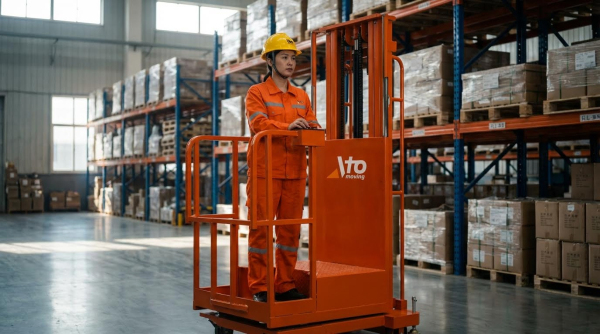
The most important performance specs for an order picking machines are lifting height, rated load capacity, and duty cycle (how long it can run between charges). Getting these right ensures the truck can safely reach your top beam, handle your heaviest picks, and keep up with your shift pattern.
Typical catalog values for modern electric order pickers fall into clear ranges for height and capacity, and they are powered by rechargeable lead‑acid or lithium‑ion batteries for multi‑hour operation. The table below summarizes common spec bands and what they mean in real warehouse terms.
| Spec | Typical Range / Options | Engineering Notes | Operational Impact |
|---|---|---|---|
| Lifting height | ≈ 2.5–9.0 m (≈ 8–30 ft) based on market listings | High‑level units reach upper rack levels; low‑level units focus on ground and first level. | Choose height so the platform can reach at least 200–300 mm above your highest pick level for safe access. |
| Rated load capacity | ≈ 450–1,350 kg (1,000–3,000 lb) depending on model reported across models | Capacity typically decreases as lift height increases due to stability limits. | Match to heaviest pallet or container the operator will handle; never exceed the capacity plate rating. |
| Power source | Lead‑acid or lithium‑ion traction batteries commonly offered | Lithium‑ion has higher energy density and minimal maintenance; lead‑acid needs regular watering and controlled charging. | For multi‑shift or cold storage, lithium‑ion helps with fast opportunity charging and reduced maintenance downtime. |
| Drive system | Brushless DC electric drive motors frequently used | High efficiency with low noise and less maintenance than brushed motors. | Quiet operation improves operator comfort and supports use in noise‑sensitive or indoor environments. |
| Braking system | Regenerative electronic braking with mechanical backup described in product data | Regeneration slows the truck and feeds energy back to the battery, reducing wear on mechanical brakes. | Smoother deceleration improves stability at height and extends brake service intervals. |
| Duty cycle / runtime factors | Battery runtime depends on temperature and usage; heat can cut capacity by ≈15–20% at 28–32°C according to battery guidance | High lift frequency, long travel, and high speeds all increase energy draw. | Plan for spare batteries or opportunity charging if you run long shifts in warm environments or high‑throughput operations. |
- Height vs. stability: The higher an electric order picker lifts, the more critical load placement and capacity limits become – this is why OSHA stresses handling only stable, safely arranged loads within the rated capacity in its powered industrial truck guidance.
- Capacity vs. aisle width: Higher‑capacity trucks usually need a slightly larger turning radius – verify you can still turn within your planned aisle width before finalizing the racking layout.
- Duty cycle vs. battery choice: Lead‑acid works for single‑shift, moderate use; lithium‑ion is better for high‑intensity, multi‑shift duty – this directly affects uptime and charger infrastructure.
How to interpret the capacity plate on an electric order picker
The capacity plate shows the maximum load the truck can safely lift at specified heights and load center distances. If you add attachments or shift the load center outward, the safe capacity drops. This is why OSHA requires handling only loads within the rated capacity and taking extra care with long or high loads that affect stability. Their guidance on safe stacking explains these principles.
💡 Field Engineer’s Note: When you specify lift height for an electric order picker, always add at least 300–400 mm clearance above your highest beam to allow for platform height, operator reach, and uneven floors. Underspecifying height forces operators to stretch or improvise at the top level, which is exactly where a small mistake can turn into a serious fall or tip‑over.
Engineering Design, Safety Systems, And Maintenance
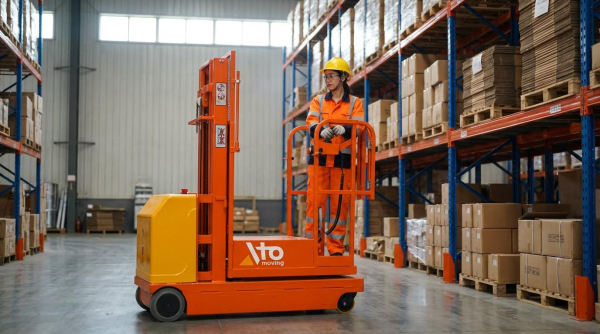
Engineering, safety, and maintenance determine how productive, safe, and long‑lasting an warehouse order picker will be in real warehouse conditions. This section links core design choices to day‑to‑day reliability, uptime, and operator safety.
Powertrain, batteries, and drive motor technology
The powertrain of an semi electric order picker combines batteries, controllers, and drive motors to deliver smooth lifting and travel with minimal energy waste. Getting these elements right directly affects runtime, charging strategy, and maintenance workload.
| Component / Spec | Typical Options / Data | Operational Impact on Electric Order Picker |
|---|---|---|
| Load capacity | Approx. 450–1,350 kg (1,000–3,000 lbs) capacity range | Defines pallet weight limit and how high you can safely lift without instability. |
| Lifting height | About 2.4–9.1 m (8–30 ft) height range | Determines racking design and whether you need low‑, mid‑, or high‑level picking. |
| Battery type | Lead‑acid or lithium‑ion rechargeable batteries battery types | Impacts runtime, charging time, maintenance needs, and ventilation requirements. |
| Lead‑acid maintenance | Requires regular watering and controlled charging to avoid sulphation and over‑discharge maintenance guidance | Needs scheduled checks and trained staff; poor care shortens battery life and reduces capacity. |
| Lithium‑ion maintenance | Higher energy density, minimal routine maintenance, supports fast charging lithium-ion info | Ideal for multi‑shift work; reduces watering tasks and equalization charging. |
| Temperature effect on runtime | Capacity loss of about 15–20% at roughly 28–32°C temperature impact | Requires derating and extra batteries or chargers in hot environments. |
| Drive motor type | Brushless DC drive motors with high efficiency and low noise drive motor info | Provides smooth acceleration, reduced maintenance, and quiet operation for indoor warehouses. |
- Brushless DC drive: Uses electronic commutation – Reduces wear compared to brushed motors and cuts unplanned downtime.
- Matched controller and motor: Controller limits current and speed – Protects the motor and battery from overheating under heavy loads.
- Battery selection: Choose chemistry by shift pattern – Lead‑acid suits single‑shift; lithium‑ion suits fast‑paced, multi‑shift work.
- Charging discipline: Follow correct charge curves – Prevents sulphation in lead‑acid and preserves capacity over thousands of cycles.
How to choose between lead‑acid and lithium‑ion for your picker
Use lead‑acid if your order picking machines runs one shift with long breaks available for charging and you can manage watering. Use lithium‑ion if you run multiple shifts, need fast opportunity charging, or want to minimize daily battery maintenance.
💡 Field Engineer’s Note: In hot warehouses, I always derate expected runtime by at least 20% and plan extra charging windows. Batteries on aerial platform sitting near dock doors in summer heat lost capacity faster and triggered mid‑shift low‑voltage faults.
Stability, braking, and fall protection systems
Stability, braking, and fall protection systems prevent tipovers and falls when an scissor platform lifts both operator and load several meters above the floor. Designing and using these systems correctly is the real safety backbone of narrow‑aisle operations.
| System / Feature | Key Function | Operational Impact on Electric Order Picker |
|---|---|---|
| Regenerative braking | Electronic braking that recovers energy and slows the truck regen braking info | Extends brake life and improves control on approach to racks and in congested aisles. |
| Mechanical service brakes | Provide stopping power when electronic systems are not sufficient | Act as the final safety layer in emergency stops or on slight gradients. |
| Electronic end‑braking | Automatically slows travel near end of stroke or when controls are released electronic braking | Reduces risk of impacts with racking or walls and smooths deceleration for the operator. |
| Tilt and load control | Monitors mast tilt and load weight; may inhibit unsafe lifts tilt and load sensing | Prevents lifting beyond rated capacity and helps avoid tipovers. |
| Load sensors | Detect load weight and can stop the lift on overload load sensor info | Enforces capacity limits, especially critical at high lift heights. |
| Anti‑slip floor and emergency cut‑outs | Non‑slip platform surfaces and emergency stop switches safety features | Stops the truck instantly in a hazard and reduces slip‑and‑fall incidents. |
| Fall protection equipment | Body harnesses or belts attached to anchorage points fall protection guidance | Prevents operators from falling from elevated platforms, the primary hazard of order picker trucks. |
| Operator protection structures | Cabins, rails, and seat belts where fitted operator protection | Reduces injury risk in the event of contact or tipover. |
- Operate within rated capacity: Never exceed the truck’s load rating – Overloading is a primary cause of instability and tipover.
- Safe stacking: Keep heavy loads low, light loads high, and handle only stable loads – Improves center of gravity and prevents falling pallets.
- Off‑center loads: Treat long or uneven loads as reduced capacity lifts – Shifts the combined center of gravity toward the tipping line.
- Fall arrest use: Wear and correctly adjust harnesses on elevated platforms – Addresses the main hazard of order picker trucks: operator falls.
Key OSHA stability and stacking practices for order pickers
OSHA highlights that order picker trucks expose operators mainly to fall hazards and requires appropriate fall protection and training. It also requires handling only stable or safely arranged loads, keeping within rated capacity, and using extreme care when tilting loads at height. See OSHA’s powered industrial truck guidance for detailed rules.
💡 Field Engineer’s Note: In narrow aisles under about 3.0 m, I always program conservative acceleration and braking curves. Aggressive settings on an scissor platform lift make the mast sway at height, spooking operators and increasing the chance they over‑correct with the controls.
Preventive maintenance and daily inspection checklist
Preventive maintenance and daily inspections keep an light duty electric stacker safe and available, catching leaks, wear, and electrical issues before they become breakdowns or accidents. A disciplined routine is far cheaper than unplanned downtime or injury.
- Daily pre‑operation checks: Required for powered industrial trucks – Confirms the picker is safe before the first lift of the shift.
- Visual leak inspection: Check under the truck and around hoses – Hydraulic or oil leaks can cause failures and slippery floors.
- Mechanical wear checks: Inspect forks, chains, and mast stops – Prevents structural failures that could drop a load or platform.
- Functional tests: Test all motions and safety devices with no load – Ensures braking, steering, lift, and alarms work correctly.
| Inspection / Maintenance Item | What to Check | Frequency | Operational Impact on Electric Order Picker | ||||||||||||||||||||||||||||||||||||||||||||||||||
|---|---|---|---|---|---|---|---|---|---|---|---|---|---|---|---|---|---|---|---|---|---|---|---|---|---|---|---|---|---|---|---|---|---|---|---|---|---|---|---|---|---|---|---|---|---|---|---|---|---|---|---|---|---|
| Tires | Wear, cuts, chunking, and correct pressure for pneumatic types tire care | Daily visual; deeper check weekly | Maintains stability, ride height, and predictable steering in narrow aisles. | ||||||||||||||||||||||||||||||||||||||||||||||||||
| Forks and load backrest | Cracks, bends, and secure mounting OSHA checklist | Daily | Prevents fork failure and keeps loads from shifting toward the operator. | ||||||||||||||||||||||||||||||||||||||||||||||||||
| Hydraulic system | Hoses, mast chains, cylinders, and fluid level for leaks or damage hydraulic checks | Daily quick check; detailed monthly | Avoids sudden loss of lift or uncontrolled lowering of platform and load. | ||||||||||||||||||||||||||||||||||||||||||||||||||
| Brakes and steering | Service brake, parking brake, steering response, and regen braking behavior functional tests | Daily | Ensures the truck can stop and maneuver safely in tight warehouse aisles. | ||||||||||||||||||||||||||||||||||||||||||||||||||
| Controls and safety devices | Horn, lights, alarms, emergency stop, interlocks, and indicators safety device checks | Daily | Alerts pedestrians and allows quick shutdown during unsafe conditions. | ||||||||||||||||||||||||||||||||||||||||||||||||||
| Battery (lead‑acid) | Electrolyte level, cable condition, restraint system, and charge state battery checks maintenance tips | Daily glance; weekly top‑up as needed | Prevents sulphation, cable failures, and battery movement during hard braking. | ||||||||||||||||||||||||||||||||||||||||||||||||||
| Battery (lithium‑ion) | State‑of‑charge, BMS alarms, connector condition Matching Order Pickers To Your Operation Matching an electric order picker to your operation means balancing load, height, aisle width, and duty cycle so you hit throughput targets without compromising safety or equipment life. Application analysis and equipment selection criteriaCorrect application analysis for an warehouse order picker starts with quantifying loads, lift heights, and operating hours, then checking these against rated capacities and safety requirements.
How to document your current picking operationTime at least one full shift. Count lines picked per hour, average lines per order, average travel distance per order, and number of touches per carton. This gives a baseline to size the order picking machines fleet and set realistic improvement targets.
Aisle design, racking interface, and throughput planningAisle design and racking interface for an semi electric order picker must balance storage density with safe maneuvering space and realistic pick rates per hour. Conventional rack aisles often needed about 3.65 m (12 ft) for standard trucks. Narrow aisle systems reduced this width and relied on reach trucks and order pickers to operate safely in tighter spaces narrow aisle storage. You must ensure your aisle width, turning radius, and rack clearances match the specific truck model, not a generic catalog number.
Throughput planning checklistTo plan throughput with electric order pickers, calculate: (1) average and peak lines per hour, (2) average travel distance per order, (3) time per lift cycle, (4) pick density per aisle, and (5) expected delays from congestion and battery changes. Use these to model how many trucks and operators you need per shift.
Final Thoughts On Deploying Electric Order PickersElectric order pickers deliver real gains only when engineering limits, warehouse design, and maintenance work together. Lift height, load capacity, and aisle width define the safe operating envelope. If you push past these limits, stability drops fast and the risk of tipover or falls rises. Modern braking, load sensing, and fall protection systems reduce this risk, but they do not replace sound layout and trained operators. You must set aisle widths to match the exact truck, keep loads stable and centered, and enforce harness use at height. Battery choice and charging strategy then decide whether the fleet can sustain target throughput across full shifts. A disciplined inspection and preventive maintenance program closes the loop. Daily checks catch leaks, worn forks, or weak brakes before they cause failures. Planned service keeps motors, hydraulics, and batteries in safe working range and protects your investment. The best practice is clear: treat electric order pickers as an engineered system, not a single machine. Involve Atomoving or your equipment partner early in racking and aisle design, size trucks and batteries from real load and duty data, and lock in training and maintenance routines from day one. This approach gives you high-density storage, predictable throughput, and a strong safety record. Please provide the `{reference}` data so I can parse, filter, and generate the FAQ section based on the search intent for “electric order picker.” The `{reference}` should be an array of objects containing the `output` field with JSON strings. Once you provide this, I’ll proceed with the task. |