To understand how to improve warehouse picking speed, you must attack travel distance, routing logic, and equipment choice together. This guide explains how smarter layouts, algorithms, and picking systems convert meters walked into orders shipped—safely and profitably.
You will see how layout, ABC slotting, and pick-path design cut wasted motion, while the right mix of manual, semi‑automated, and automated solutions lifts pick rates and accuracy. We will stay practical, focusing on measurable gains in meters, seconds, and kilograms moved per shift.
Core Principles Of High‑Speed Warehouse Picking
Core principles of high-speed warehouse picking focus on cutting travel distance, tightening layout, and using data-driven slotting to boost pick rates without immediately buying more automation. These are the foundations of how to improve warehouse picking speed in any facility size.
- Goal: Minimize walking and searching – Most wasted time in picking is unproductive travel.
- Method: Engineer layout, slotting, and routes first – Equipment and software only amplify a good design.
- Metric Mindset: Measure distance per line and picks per hour – Lets you quantify every design change.
- Safety + Speed: Keep aisles clear and flows predictable – Fast operations still need safe walking paths.
💡 Field Engineer’s Note: In most audits I have done, you can gain 10–20% in pick speed just by re-slotting and fixing traffic conflicts—before buying a single new warehouse order picker or robot.
Travel time as the dominant loss in picking
Travel time is the dominant loss in warehouse picking because operators spend more minutes walking between locations than actually grabbing items. Reducing that distance is the fastest lever for how to improve warehouse picking speed.
- Reality Check: In manual systems, pickers often walk several kilometres per shift – Most of that distance adds no value.
- Core Loss: Backtracking and zig-zag routes between aisles – Small inefficiencies compound over thousands of lines.
- Hidden Waste: Congested nodes (ends of aisles, packing area) – Pickers queue instead of picking.
Optimizing the pick path sharply cuts this waste. Well-designed routes minimize backtracking and unnecessary travel, which significantly reduces cycle time, especially when scaled across thousands of orders per day. Optimized pick paths turn random walking into structured, short loops.
- Direct Impact: Less distance per line picked – Higher lines per hour at the same walking speed.
- Fatigue Reduction: Fewer metres walked per shift – Lower fatigue, fewer errors late in the day.
- Capacity Gain: Same headcount, more orders shipped – Cheaper than adding extra shifts.
How to measure travel time losses quickly
1) Sample 10–20 typical orders. 2) Time full pick cycles. 3) Mark walking vs actual pick/scan time. If walking exceeds 50–60% of the cycle, routing and layout are your primary improvement levers.
💡 Field Engineer’s Note: When you pilot new routes, do not chase theoretical “perfect” paths. Instead, design routes that are easy to remember and repeat—simple patterns keep speed high even with new or temporary staff.
Slotting, ABC, and layout for fast routing
Slotting, ABC analysis, and smart layout make routing faster by putting the right SKUs in the right places so pick paths become naturally short and smooth. This is the structural backbone of how to improve warehouse picking speed.
ABC inventory categorization groups items so that high-velocity SKUs sit in the most accessible, shortest-walk locations. Typically, A-items are about 20% of SKUs but drive around 80% of revenue, so they belong closest to main pick and packing zones. ABC slotting improves efficiency without major process changes.
- A‑Class SKUs: High demand, high revenue – Place within the shortest 10–20 m from main aisles or packing.
- B‑Class SKUs: Medium movers – Store slightly deeper in the layout but still on ergonomic levels.
- C‑Class SKUs: Slow movers and bulky items – Push to upper levels or distant aisles.
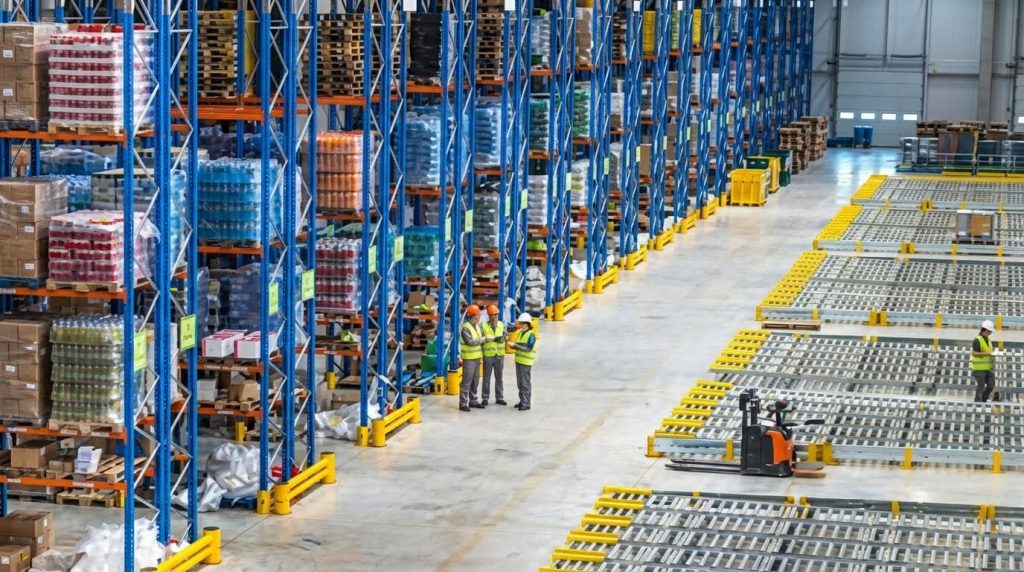
Warehouse layout optimization reinforces this by placing high-velocity items near packing or picking stations and keeping aisles clear with predictable traffic flow. Even modest adjustments in slot placement or aisle structure can yield measurable gains in pick speed. Clear aisles and logical flows prevent slowdowns and near-miss incidents.
| Design Lever | Typical Change | Operational Impact |
|---|---|---|
| Place A‑items near packing | Move top 20% SKUs to first 1–2 aisles or lowest 1,200 mm pick band | Cuts walking distance per order; speeds urgent and e‑commerce lines |
| ABC-based vertical slotting | A at 800–1,400 mm, B above/below, C at floor or high levels | Reduces bending and reaching; maintains high pick rate across shifts |
| Dedicated fast-pick zone | Create compact area for very high-frequency lines | Allows short loop routes and easy training of new pickers |
| Clear, one-way aisles | Mark flow direction, remove obstructions | Prevents head-on conflicts and congestion at aisle mouths |
Dynamic slotting based on demand forecasting keeps this structure aligned with reality. By adjusting storage locations for seasonal peaks, promotions, or shifting order patterns, high-demand products always stay in the most accessible positions. This makes the warehouse layout follow current operational activity instead of a static, outdated plan. Demand-driven slotting improves responsiveness to customer needs and stabilizes pick performance during peaks.
- Ergonomic Slotting: Raise main pick faces into the 800–1,400 mm band – Reduces strain and keeps speed consistent all day.
- Cluster Logic: Group items often ordered together – Cuts cross-aisle travel for multi-line orders.
- Traffic Design: Separate pedestrian and truck paths where possible – Improves safety at higher walking speeds.
Simple 5-step ABC and re-slotting routine
1) Export 3–6 months of order lines by SKU. 2) Rank SKUs by line frequency or revenue. 3) Label top ~20% as A, next ~30% as B, rest as C. 4) Re-slot A SKUs to closest, ergonomic zones. 5) Review and adjust every 3–6 months or before peak seasons.
💡 Field Engineer’s Note: When you re-slot, move in waves of 50–100 SKUs at a time. Large “all at once” reshuffles create weeks of confusion and lost speed; controlled waves let teams adapt while gains accumulate.
Engineering Better Pick Routes And Material Flow
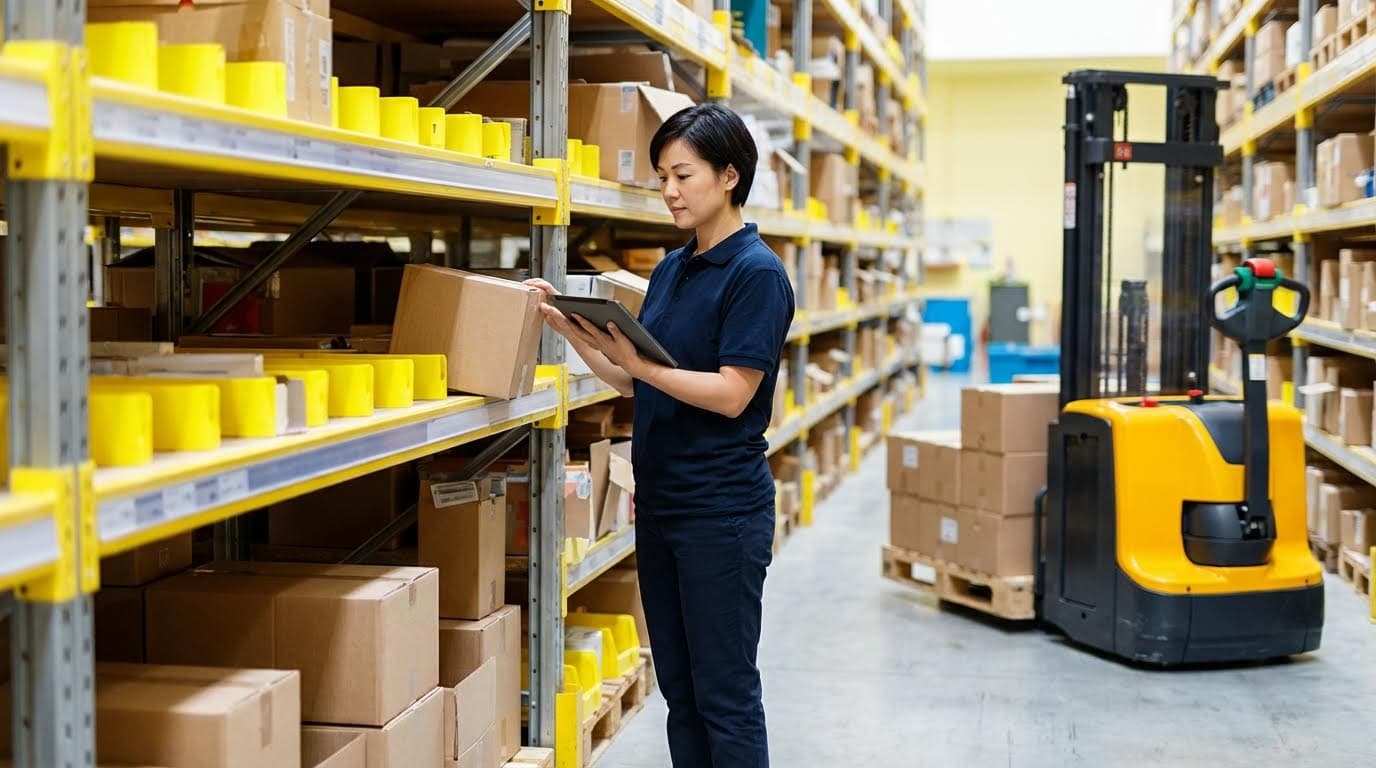
Engineering better pick routes and material flow is the fastest way to cut travel time and directly improve how to improve warehouse picking speed. Smart path design, clustering, and WMS‑driven control turn layout and data into real throughput gains.
Pick path design and routing algorithms
Pick path design and routing algorithms reduce walking distance per order by eliminating backtracking and dead travel, which is the core lever for how to improve warehouse picking speed. You engineer the shortest safe route that respects aisle directions, congestion, and equipment limits.
Optimizing the route that workers or automated systems follow can significantly reduce cycle time by minimizing backtracking and unnecessary travel. Even small distance cuts per pick scale into major gains across thousands of orders. Evidence from warehouse optimization studies confirms this.
| Routing Pattern / Method | Typical Use Case | Travel Distance Impact | Operational Impact |
|---|---|---|---|
| S‑shape (serpentine) | Long parallel aisles, one-way traffic | Reduces decision points, may add minor extra distance | Simple training, good for new pickers and AMRs in 60–80 m aisles |
| Return (aisle in-and-out) | Low pick density, wide aisles | Minimizes walking deep into empty aisles | Best when only 1–2 picks per 30–40 m aisle |
| Combined / hybrid rules | Mixed-density zones | Balances S‑shape and return patterns | Good default for brownfield sites with uneven demand |
| Batch picking with routing optimization | Many small orders with overlapping SKUs | Large distance reduction vs. discrete picks | Fewer trips per zone; higher picks/hour per worker |
| GPU‑accelerated shortest‑path algorithms | Large, complex networks (e.g., >10⁵ nodes) | Near‑optimal routes computed in sub‑second times | Enables real‑time route recalculation for AMRs and high‑volume sites |
GPU‑based implementations of the Bellman‑Ford algorithm can evaluate very large path combinations and still maintain sub‑second runtimes for problem sizes up to 10⁵ nodes, enabling near‑optimal routing in complex warehouses. Research on GPU‑accelerated routing shows this level of performance.
- Define a graph of your warehouse: Treat intersections as nodes and aisle segments as edges – this lets algorithms find true shortest paths, not just “nice looking” routes.
- Separate pedestrian and truck routes: Model different speeds and turning radii – avoids routing people through congested forklift zones.
- Use batch and zone picking where density is high: Combine orders for the same area – cuts passes through the same 20–40 m aisle runs.
- Lock in one‑way patterns where possible: Enforce direction per aisle in the routing engine – reduces head‑on congestion and hesitation time.
How to measure if your pick path design is working
Track average travel distance per order (m/order), picks per hour, and “touches per location” per shift. If distance per order drops while picks/hour and accuracy stay flat or improve, your routing design is effective.
💡 Field Engineer’s Note: When you tighten routes aggressively, watch congestion at cross‑aisles around 1.2–1.5 m wide. Below roughly 2.4 m, two pickers with carts cannot pass comfortably, so a mathematically optimal path can still lose time to waiting and awkward reversing.
Clustering, dynamic slotting, and demand shifts
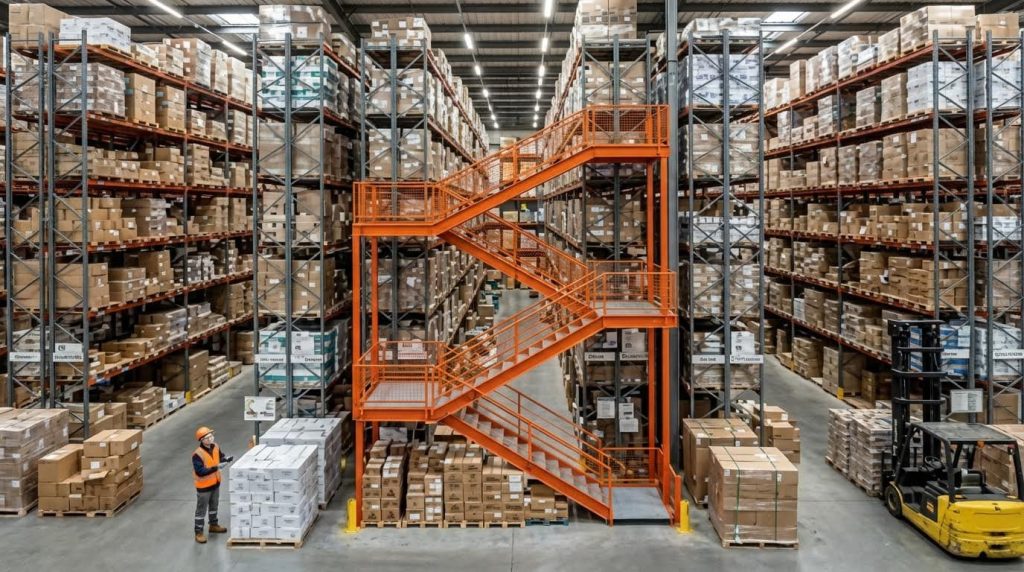
Clustering, dynamic slotting, and demand‑aware layout ensure high‑demand and co‑ordered SKUs stay in the easiest‑to‑reach locations, which is fundamental to how to improve warehouse picking speed without adding headcount. You change the map, not just the route.
Placing high‑velocity items closer to packing or picking stations reduces unnecessary movement and improves pick speed. Even modest slot or aisle changes often yield measurable efficiency gains. Studies on warehouse layout optimization highlight this effect.
ABC categorization is a proven way to structure this: A‑items are roughly 20% of SKUs but about 80% of revenue, so they belong in the most accessible positions. Evidence shows that placing fast movers in easy‑reach zones improves efficiency without major process changes.
| Technique | What It Does | Quantified Effect | Operational Impact |
|---|---|---|---|
| ABC slotting | Groups SKUs by velocity and value | A‑items ≈ 20% SKUs, ≈ 80% revenue | Keeps fastest movers in golden zone (0.7–1.6 m height) near packout |
| Cluster‑based reorganization | Groups frequently co‑ordered items together | Route length reduced by about 44% | Shorter tours when orders share many SKUs; fewer cross‑warehouse trips |
| Dynamic slotting | Moves SKUs based on current demand | Responds to seasonal, promo, and pattern shifts | Maintains fast access to hot SKUs during peaks without permanent relays |
| Compact, well‑separated clusters | Improves cluster “quality” in layout | Silhouette score gains up to 0.86 under low noise | Clear physical grouping that matches order behavior; easier training and routing |
A cluster‑based optimization framework that continuously repositions products based on demand fluctuations achieved a 44% reduction in picking route length and improved silhouette scores (a measure of cluster compactness and separation) across different noise levels. The research documents gains of 0.86, 0.50, and 0.18 in silhouette scores under low, moderate, and high noise respectively.
- Cluster by co‑occurrence, not just velocity: Group SKUs often ordered together – this cuts cross‑aisle travel even if some are only “B” movers.
- Define a golden zone in mm, not vibes: Typically 700–1,600 mm from floor – keeps A‑items at comfortable reach, lowering fatigue and errors.
- Schedule dynamic slotting windows: Move SKUs during low‑volume hours – avoids interference with live picking while keeping layout current.
- Use demand forecasts for seasonality: Bring seasonal peaks (e.g., winter items) forward 2–4 weeks early – prevents travel spikes once orders surge.
How often should you re‑slot?
In fast‑moving B2C operations, weekly or bi‑weekly reviews of A‑items and key clusters are common. Slower B2B or project‑based warehouses may only need monthly or quarterly re‑slotting, focusing on promo or project SKUs.
💡 Field Engineer’s Note: Aggressive dynamic slotting can backfire if labeling and WMS updates lag. I recommend a hard rule: no physical move without a live WMS confirmation, and no more than 3–5% of locations “in motion” at once to avoid mispicks and confusion on the floor.
WMS, KPIs, and simulation‑driven optimization

WMS, KPIs, and simulation‑driven optimization turn routing and slotting ideas into controlled, measurable changes that systematically improve how to improve warehouse picking speed. You stop guessing and start testing scenarios in software before moving a single rack.
Common picking KPIs include pick rate per hour, accuracy rate, labor utilization, and cost per pick. Regularly reviewing these metrics helps identify bottlenecks and measure the impact of layout, slotting, or technology changes. Industry guidance emphasizes KPI tracking as a core practice.
| KPI / Tool | What It Measures / Does | Typical Effect Range | Operational Impact |
|---|---|---|---|
| Pick rate (lines/hour) | Throughput per picker or station | Manual: ~60–80; voice: ~100–120; AMR‑assisted: ~300–400 | Direct view of routing and slotting effectiveness on the floor |
| Accuracy rate (%) | Correct lines / total lines | Manual: ~97–99%; automated often >99.5% | Ensures speed gains do not create rework and returns |
| Labor utilization (%) | Productive picking time vs. total time | Improves with better routes and less walking | Shows how much time is lost to travel and searching |
| Cost per pick | All costs divided by total picks | Falls as distance, errors, and touches drop | Links engineering changes to financial results |
| Simulation tools | Model layout, slotting, and routing scenarios | Test changes virtually before implementation | De‑risks investments and prevents disruptive “trial and error” on live floor |
Digital modeling and simulation tools allow teams to test changes to slotting, travel paths, or automation upgrades before implementation, ensuring that investments target improvements with measurable returns. Industry sources highlight simulation as a key validation step.
When WMS integrates cleanly with other systems via APIs, it enables real‑time data sharing and route optimization. Open APIs between WMS, transportation systems, and route engines eliminate manual data re‑entry and keep all systems aligned on current orders and inventory. Evidence from logistics tech stack studies shows this API‑driven connectivity improves efficiency and decisions.
Companies that use real‑time, AI‑driven routing together with their WMS and transportation systems have seen substantial cost reductions. Some operations achieved up to 42% fewer routes to deliver the same order volume and about 35% fewer miles driven, with delivery costs reduced by 30–40% and on‑time performance near 99% in dense urban areas. The integration benefits are quantified in recent reports.
- Make WMS the single source of truth: All slotting, routing rules, and pick paths must live there – prevents “side spreadsheets” that drift from reality.
- Tie KPIs to experiments: Before any change, define expected impact on picks/hour, distance/order, and accuracy – this lets you keep only what works.
- Use simulation before layout moves: Test new aisles, cluster strategies, or batch rules virtually – avoids costly rack relocations that do not pay back.
- Integrate routing engines via API: Let real‑time order data adjust pick sequences – keeps routes efficient as demand patterns shift during the day.
Practical KPI targets when tuning picking
For a conventional manual warehouse, a realistic first improvement step is 10–20% more picks/hour and a noticeable drop in travel distance/order after better routing and slotting. As you add semi‑automation and refine clusters, higher gains are possible, provided accuracy stays at or above your current baseline.
💡 Field Engineer’s Note: When you roll out new WMS logic or routing rules, pilot them on one zone and one shift first. Watch not just the KPIs but also picker behavior—extra “side walking” or frequent overrides usually means the algorithm logic does not match real‑world constraints like congestion pockets or awkward turns with 1,000 mm‑wide carts.
Selecting Equipment To Support Faster Picking
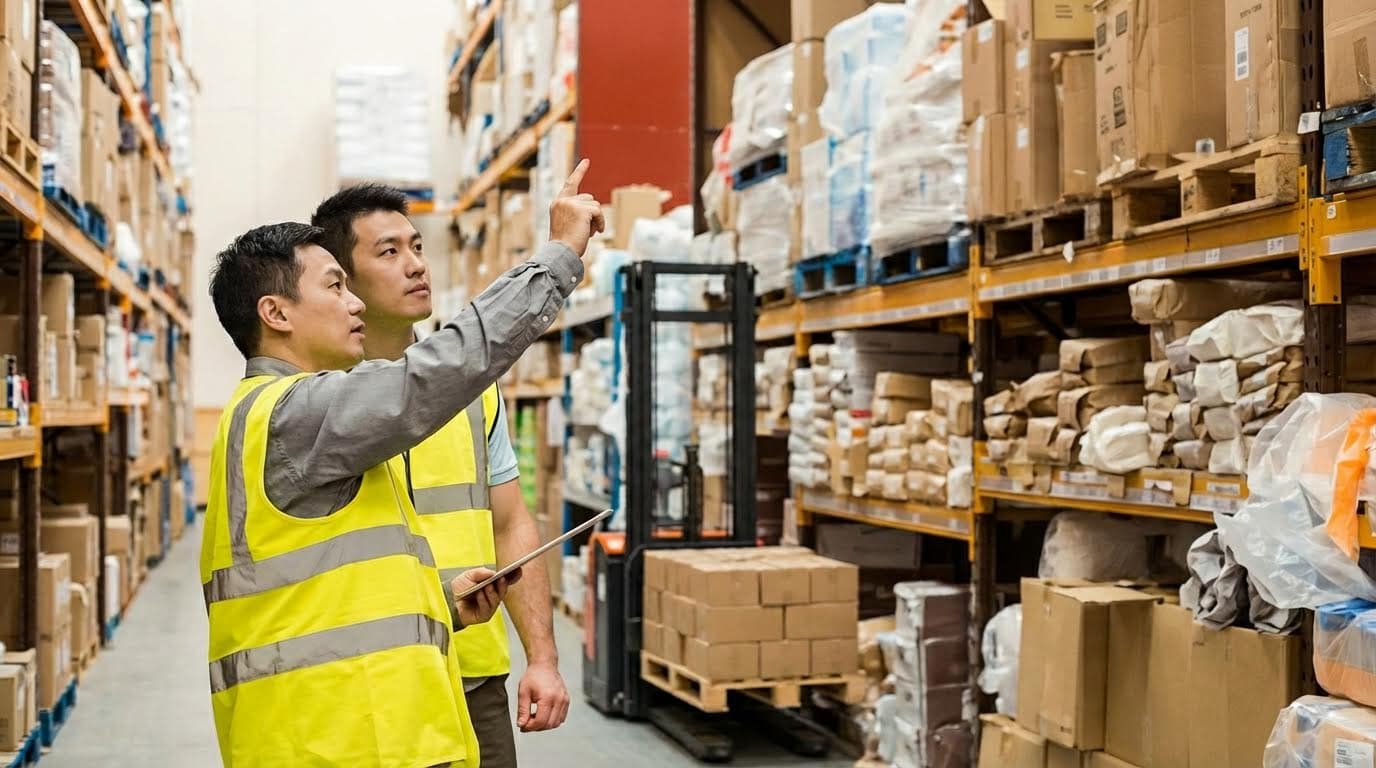
Selecting the right mix of manual, semi‑automated, and automated equipment is one of the most direct levers for how to improve warehouse picking speed. The goal is to cut walking distance, raise pick rates, and keep errors and injuries low while matching your order profile and budget.
💡 Field Engineer’s Note: Before upgrading equipment, verify aisle widths, floor flatness, and clear heights; I have seen many “perfect on paper” systems underperform because trucks, AGVs, or AS/RS could not operate at their rated speed in real conditions.
Manual, Semi‑Automated, And Automated Systems
Manual, semi‑automated, and automated picking systems differ mainly in how much human walking and decision‑making they remove, which directly affects speed, accuracy, and cost per pick.
| System Type | Typical Technology | Pick Rate (per person / station) | Error Rate | Labor & Space Impact | Operational Impact On Picking Speed |
|---|---|---|---|---|---|
| Manual | Paper lists, handheld scanners, pallet jacks, trolleys | ≈60–80 picks/hour (source) | ≈1–3% errors (source) | Highest walking distance, low capital cost | Slowest; pickers may walk 10–15 km per shift, so routing and layout matter most. |
| Semi‑automated | Pick‑to‑light, voice picking, RF terminals | ≈100–120 picks/hour (source) | ≈0.5–1% (25–40% fewer errors than manual) (source) | Same aisles, less search time, moderate investment | Faster picks per stop; still limited by walking distance and truck speed. |
| Automated (AMR‑assisted) | Goods‑to‑person AMRs, conveyor feeds | ≈300–400 picks/hour per station (source) | <0.5% (source) | 40–60% less picking labor, higher capex (source) | Very high station throughput; walking almost eliminated, ideal for high‑volume SKUs. |
| Automated (AS/RS) | Shuttles, cranes, vertical lift modules | Similar to AMR‑assisted at pick face | Often <0.1% errors (source) | Up to 40–85% more storage density, up to 90% less floor space (source) | Fast, repeatable cycle times; ideal for tall buildings and very high order volumes. |
To use equipment as a lever for how to improve warehouse picking speed, start by matching system type to your order profile and budget, then layer routing and layout optimization on top.
- Manual systems: Best for low volume or highly variable SKUs – low capex, but you must squeeze speed out of routing and slotting.
- Semi‑automated systems: Good step‑change upgrade – boosts pick rate without redesigning the whole building.
- Automated goods‑to‑person: Ideal for stable, high‑volume lines – minimizes walking and balances labor across shifts.
- AS/RS and VLMs: Best where height >8–10 m and floor space is scarce – combine speed with dense storage.
When to move from manual to semi‑automated or automated
Most sites should consider semi‑automation once pickers consistently exceed about 8–10 km walking per shift, or when error costs and overtime begin to outgrow the cost of simple technologies like voice or pick‑to‑light. Full automation usually makes sense when order volumes and SKU stability can support a 2.5–4 year payback window. See payback and performance data.
Trucks, AGVs, And AS/RS For Different Aisle Types
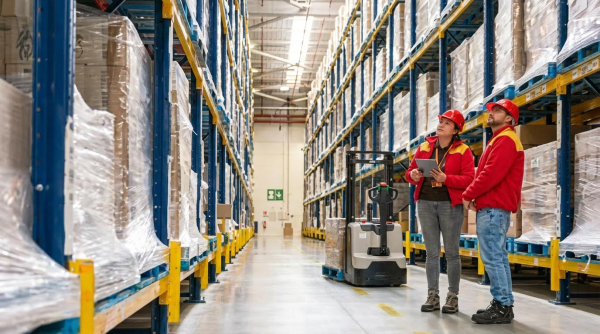
Choosing between conventional trucks, AGVs/AMRs, and AS/RS by aisle type is critical, because aisle width, height, and traffic patterns directly cap your achievable picking speed.
| Aisle Type | Typical Clear Aisle Width | Best‑Fit Equipment | Storage Height Range | Operational Impact / Best For… |
|---|---|---|---|---|
| Wide aisle | ≈3.0–3.5 m for standard counterbalance or ride‑on pallet trucks | Pallet trucks, counterbalance forklifts, manual carts, person‑aboard order pickers | Up to ≈8–10 m with standard racking | Flexible, easy to change layout; good for mixed pallets and case picking, but long travel distances limit speed. |
| Narrow aisle (NA) | ≈2.4–2.8 m | Reach trucks, guided turret trucks, AGVs with guidance lines | ≈10–12 m | Higher storage density and shorter pick paths per SKU; needs better driver skill or guidance systems. |
| Very narrow aisle (VNA) | ≈1.6–1.9 m with guidance | Wire‑ or rail‑guided turret trucks, aisle‑bound AGVs | Up to ≈14 m depending on building | Maximizes pallet positions per m²; ideal with guided systems that keep deviation under ≈20 mm for safety and speed. |
| Goods‑to‑person / shuttle aisles | ≈1.0–1.5 m between racks (robot lanes) | Shuttles, mini‑load cranes, AMRs, AS/RS | Often up to ≈14 m or more (source) | Removes human traffic from aisles; travel is robotic, pickers stay at ergonomic stations for very high sustained pick rates. |
- Wide‑aisle with manual trucks: – Use optimized pick paths and ABC slotting to cut travel, since equipment itself cannot remove walking.
- Narrow/VNA with guided trucks: – Good compromise between density and speed; guidance reduces accidents and allows higher travel speeds.
- AGVs/AMRs in mixed aisles: – Let robots handle long horizontal moves while humans focus on high‑precision picking zones.
- AS/RS in dedicated aisles: – Best where throughput and height justify rail‑bound cranes or shuttles feeding goods‑to‑person stations.
Automated storage and retrieval systems can retrieve bins from heights up to about 14 m and deliver them directly to ergonomic workstations, which eliminates most walking and keeps pick rates stable even during volume spikes. This reduces congestion and maintains consistent throughput.
How equipment choice ties into routing and WMS
Faster equipment only translates to higher throughput if your WMS and routing logic minimize backtracking and deadheading. Optimized pick paths and dynamic slotting can significantly reduce travel distance per pick, and when combined with AMRs or AS/RS, they turn speed at the machine level into speed at the order level. Evidence shows even modest travel reductions scale to large efficiency gains.
Final Thoughts On Building A High‑Velocity Picking Operation
High‑velocity picking comes from engineering, not guesswork. You cut travel first, then let routing logic and equipment amplify the gains. Tight layouts, ABC slotting, and cluster‑based storage shorten every path. Good routing rules then turn that geometry into predictable, low‑congestion loops that people and machines can repeat at speed.
A strong WMS and clear KPIs close the loop. They show exactly how distance per order, picks per hour, and accuracy respond as you change layout, routes, or equipment. Simulation lets you test ideas before you move a single rack or buy a new system.
Equipment choice then fits around this engineered flow. Manual, semi‑automated, and automated solutions all work if you match them to aisle geometry, height, and demand. Trucks, AGVs, AS/RS, and Atomoving picking tools only deliver their rated speed when aisles, guidance, and WMS logic support them.
The best practice is simple but strict: measure travel, redesign layout and routes, prove the gains in data, then scale with equipment. Follow that order and you build a fast, safe operation that keeps throughput high, fatigue low, and capital working hard shift after shift.
Frequently Asked Questions
How to Increase Picking Efficiency in a Warehouse?
Improving warehouse picking efficiency starts with optimizing processes and layouts. Assess your order profiles to understand demand patterns. Reduce travel time by staging high-demand products near shipping stations. Implement slotting in warehouse racks and use the A-B-C SKU strategy to organize inventory based on priority. Warehouse Picking Tips.
How to Be a Faster Warehouse Picker?
To pick faster, divide your warehouse into zones and batch pick multiple orders for the same item. Maximize your pickface with dynamic storage solutions and separate similar-looking items to reduce errors. These strategies help streamline operations and improve speed. Faster Picking Strategies.
What Are Some Effective Ways to Reduce Picking Time?
Reducing picking time involves creating hot zones in your warehouse where frequently picked items are stored. Optimize material storage at efficient levels and examine your warehouse layout to ensure smooth workflows. These methods minimize unnecessary movement and boost productivity.