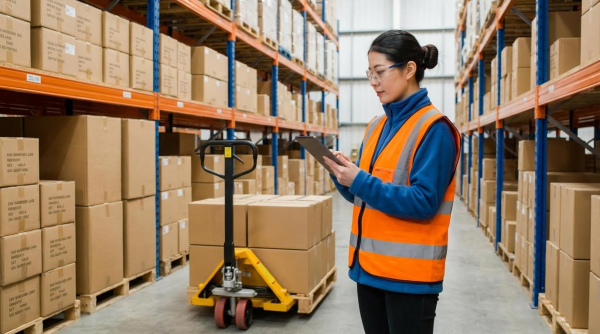
Safe, practical ways to move pallets without jacks or forklifts are structured methods that let you shift palletized loads using manual techniques and simple mechanical aids while staying within ergonomic and safety limits. This article is written for anyone who has asked “how do you lift a pallet without a jack” and needs realistic options that do not damage floors, overstrain staff, or violate OSHA/ANSI guidelines. You will see when manual handling is acceptable, how lever/roller/sliding methods work, which low-cost mechanical aids can replace pallet jacks, and what safety, ergonomics, and compliance rules must always be respected. By the end, you will have clear engineering recommendations you can apply on the warehouse floor, in a small workshop, or at a job site where forklifts are not available.
Core Methods To Move Or Lift Pallets Manually
Core manual pallet methods define when people can safely move pallets by hand and which low-tech lever, roller, or sliding tricks replace a manual pallet jack in a pinch while staying within ergonomic limits.
💡 Field Engineer’s Note: In real warehouses, the first decision is not “how do you lift a pallet without a jack,” it’s “should we be lifting this at all?” Decide that before anyone bends a knee or grabs a pry bar.
When Manual Handling Is Acceptable Or Prohibited
Manual pallet handling acceptability depends on load weight, shape, distance, frequency, and team size; above modest limits, standards push you toward mechanical aids instead of pure muscle to avoid long-term injuries.
- Use manual handling only for light pallets or partial loads: For full pallets, manual lifting should be limited to removing a few cartons, not dead-lifting the entire pallet. OSHA recommends minimizing manual handling by using aids where possible. OSHA guidance stresses using tools instead of back force.
- Respect ergonomic weight limits: Training material recommends setting explicit manual lift limits and using team lifts for loads above approximately 23 kg (50 lbs) to control musculoskeletal risk. Guidance on weight limits states team handling is advised once loads exceed 50 lbs.
- Avoid twisting and awkward postures: Ergonomic guidance highlights that twisting while lifting or carrying sharply increases injury risk, especially with palletized loads that force you to reach or turn. Training resources cite twisting and excessive manual handling as key hazards.
- Prohibit manual moves for very heavy or frequent tasks: When pallets are heavy, handled repeatedly, or moved over distance, OSHA and ergonomic guidance recommend replacing manual handling with mechanical aids such as hydraulic pallet trucks, skates, or conveyors to reduce cumulative strain. OSHA-aligned training explicitly suggests minimizing manual lifting.
- Use team handling only with coordination and training: Where team lifting is used (e.g., sliding a pallet on a sheet), workers must be trained in posture, communication, and avoiding sudden movements to keep the load stable and distribute force evenly. Manual handling training stresses proper technique and team coordination.
- Rotate tasks to control fatigue: For any repetitive pallet work done manually, rotating workers between tasks reduces fatigue and injury risk, keeping overall ergonomic load within safe limits. Training guidance recommends rotation for demanding tasks.
How risk is evaluated for manual pallet lifting
Ergonomic tools such as the NIOSH multi-task lift analysis and Composite Lifting Index (CLI) evaluate manual palletizing tasks by combining weight, frequency, and posture into a single risk score. These methods help engineers determine when a manual pallet move is acceptable and when to introduce equipment. NIOSH-based methods are commonly used for palletizing analysis.
💡 Field Engineer’s Note: As a rule of thumb on the floor: if you need more than two people to “muscle” a pallet, you actually need a tool. Extra bodies don’t fix bad physics or bad ergonomics.
Lever, Roller, And Sliding Techniques Overview
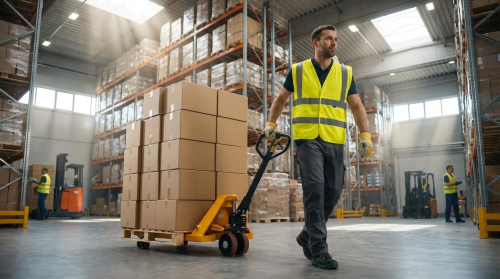
Lever, roller, and sliding methods answer “how do you lift a pallet without a jack” by converting straight lifting into prying, rolling, or dragging, which reduces peak force but still demands strict control and good surfaces.
| Technique | How it Works | Typical Use Case | Key Safety Controls | Field Impact |
|---|---|---|---|---|
| Roller crowbar / pry bar with wheel | Use the bar as a lever to lift one edge of the pallet a few millimetres, then roll or block it. | Raising a pallet corner to insert skates, pipes, or blocks when no jack is available. | Stay within the bar’s capacity, keep floor level and clear, and move slowly to avoid tipping. Guidance on roller crowbars stresses controlled movement. | Lets one person “create clearance” under a pallet without dead-lifting, making it practical to insert other moving aids. |
| Pipes, rods, or temporary rollers under pallet | Place strong pipes or rods under the pallet and roll it across the floor like a simple roller conveyor. | Short moves across smooth, level floors when no pallet jack is available. Rolling technique description explains this method. | Ensure pipes are strong enough for the load, surface is level, and multiple workers guide and control the pallet to prevent sudden shifts. | Reduces friction dramatically so a heavy pallet can be moved with lower push force, but requires coordination and clear space. |
| Sliding on sheets / tarps | Place pallet on a strong sheet or tarp and drag it, turning sliding friction into a controlled pull. | Very short emergency moves of lighter pallets when no wheeled aid is available. Ropes and sheets method describes this approach. | Limit to lighter loads, verify the sheet or tarp is strong and undamaged, and use proper pulling posture with team handling for control. | Simple, zero-cost method that trades off speed and comfort; useful only for occasional, light moves, not routine operations. |
| Ropes used as pull aids | Attach ropes to a pallet on a sheet or low-friction surface to pull instead of pushing directly on the load. | Controlled pulling of a light pallet over smooth floor where access is limited. | Use strong ropes, avoid wrapping around hands, and maintain good posture while pulling as recommended in manual handling training. Training materials stress posture and avoiding twisting. | Improves leverage and keeps operators away from pinch points, but still limited by human pulling force and floor friction. |
| Gravity rollers / sloped roller lanes | Place the pallet on gravity rollers so it moves by gravity down a gentle slope. | Feeding pallets along a line in loading or assembly areas. Gravity roller guidance outlines use and precautions. | Control slope, add end-stops or brakes, and keep rollers clean and free of debris to prevent uncontrolled movement. | Removes most manual push effort over distance but requires engineering controls to prevent runaways and impacts. |
Practical sequence: from “stuck pallet” to rolling movement
- Inspect load and floor: Confirm the pallet is structurally sound and the floor is level, clean, and strong enough for concentrated loads where pipes or rollers will contact.
- Lift a corner with a lever: Use a roller crowbar or sturdy pry bar to raise one edge just enough (often 10–20 mm) to insert the first pipe or roller. Keep feet clear.
- Insert first rollers: Slide in pipes or rollers under the lifted edge, then gently lower the pallet onto them, ensuring even spacing and alignment.
- Add additional rollers: Repeat on the opposite side if needed so there are at least two or three contact points under the pallet for stability.
- Push or pull with control: With workers on each side, slowly push or pull the pallet along the rollers, adding a new roller at the front as one exits at the rear.
- Remove aids and re-set pallet: Once in position, lever the pallet again to remove pipes or sheets and lower it back onto the floor in a controlled way.
💡 Field Engineer’s Note: Lever and rolling methods are about trading distance for force: you move the bar or roller further so the pallet moves a little, but with much less effort. That’s the safe way to “cheat” the physics instead of cheating your spine.
Mechanical Aids That Replace Pallet Jacks
Mechanical aids that replace pallet jacks are non‑forklift devices that lift or move pallets using levers, hydraulics, or wheels, reducing manual strain and answering how do you lift a pallet without a jack safely and efficiently.
These tools bridge the gap between pure manual handling and full forklifts, letting you move 500–2,500 kg pallets in tight spaces with far less ergonomic risk. The right choice depends on lift height, travel distance, floor quality, and how often you move pallets.
💡 Field Engineer’s Note: Before buying anything, walk the actual routes with a tape measure and camera—aisle width, door thresholds, and floor cracks will eliminate half your options immediately.
Hand pallet trucks and high-lift trucks
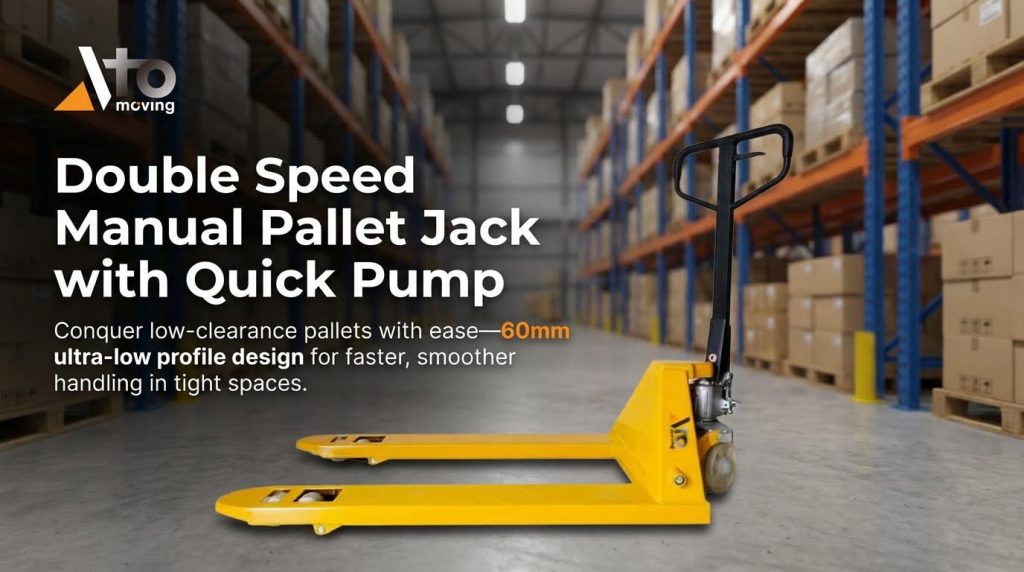
Hand pallet trucks and high-lift trucks use manual hydraulic pumps to raise pallets off the floor, with standard units focused on transport and high-lift versions doubling as ergonomic work tables.
| Equipment Type | Typical Capacity & Range | Best Use Case | Key Safety Practices | Field Impact |
|---|---|---|---|---|
| Hand pallet truck (manual pallet jack) | Up to about 2,500 kg (5,500 lbs) lift, low lift ~200 mm | Short horizontal moves on level floors where forklifts are not allowed | Inspect wheels, forks, handles, and levers before use to avoid failures before each shift; do not overload beyond rated capacity | Lets one operator move heavy pallets without a forklift, but requires good floors and trained users to control momentum and prevent runaways. |
| High-lift pallet truck | Up to about 1,000 kg (2,200 lbs), lift height around 800 mm | Feeding workstations, packing benches, or light assembly at waist height | Use within rated 1,000 kg capacity and keep center of gravity over the legs to avoid tipping; keep area clear when raising or lowering | Reduces bending and back strain by bringing pallets up to 700–800 mm, which can cut ergonomic risk compared to floor-level picking. |
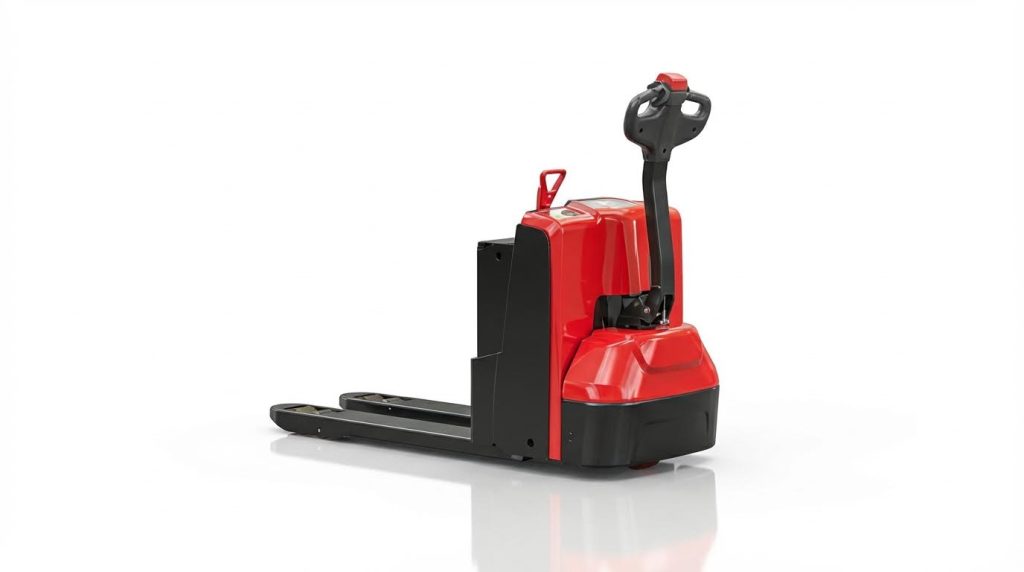
| Powered pallet truck (for comparison) | Similar 1,500–2,500 kg capacities, powered travel | Longer internal runs where manual pulling would exceed ergonomic limits | Keep battery inspected and charged, obey speed limits, and use defined walkways to avoid collisions | Reduces push–pull forces dramatically, which matters when daily travel distances or slopes would over-stress operators. |
- Personal protective equipment: Use safety shoes and gloves to protect feet and hands during pallet truck operations as recommended.
- Load stability: Stack loads evenly and keep them low to the ground to prevent tipping and maintain control while moving on manual pallet trucks.
- Inclines and ramps: Descend ramps slowly, keep visual contact with the load, and avoid steep grades where manual control could be lost on pallet trucks.
💡 Field Engineer’s Note: If you routinely ask “how do you lift a pallet without a jack,” a high-lift pallet truck is often the lowest-cost way to turn dangerous floor-level lifts into safe waist-height picks.
Stackers, lift tables, and scissor lifts
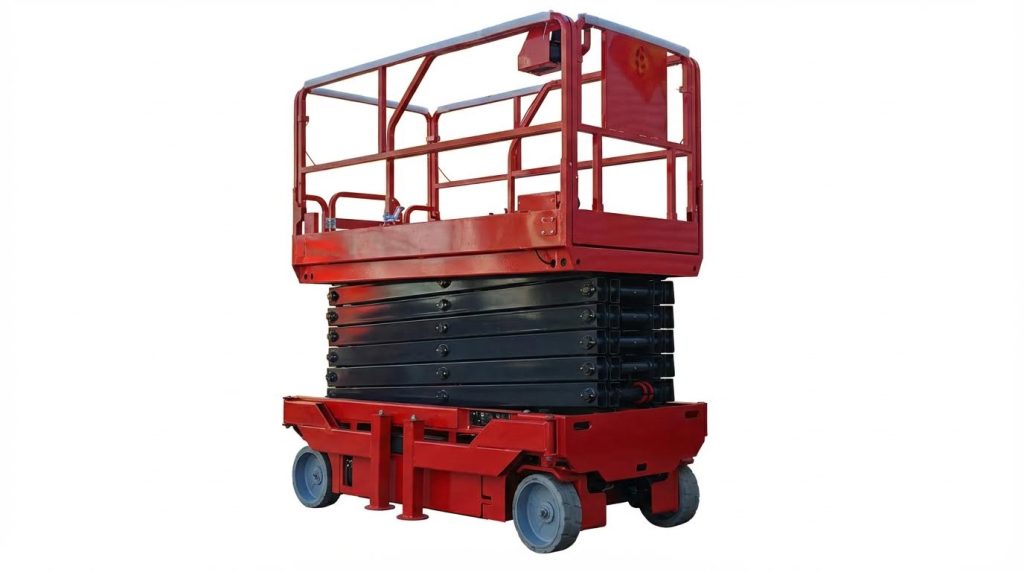
Stackers, lift tables, and scissor lifts vertically raise pallets without forklifts, using manual or powered hydraulics to position loads at safe working heights or stack them in racking.
| Equipment Type | Typical Capacity & Height | Best Use Case | Key Safety Practices | Field Impact |
|---|---|---|---|---|
| Manual stacker | Commonly up to ~1,000–1,500 kg, lift height to several metres (varies by model) | Occasional stacking or unstacking of pallets where forklifts are not allowed | Stay within weight and height limits and use only on level surfaces to prevent tipping; inspect hydraulics regularly | Enables vertical storage and retrieval without combustion engines, ideal for small rooms and low-throughput areas. |
| Powered stacker | Similar capacities, powered lift and often powered travel | Frequent stacking where manual pumping would exceed ergonomic limits | Train operators in safe maneuvering and keep pathways clear to avoid collisions and tip-overs | Improves throughput and reduces fatigue; especially useful in narrow aisles where full forklifts cannot turn. |
| Lift table / scissor lift | Capacities commonly 500–2,000 kg, lift heights to around 1,000–1,500 mm | Feeding conveyors, packing lines, or workstations at ergonomic height | Never exceed rated capacity and keep area around lift clear during operation | Turns “floor work” into waist-height work, significantly reducing bending and twisting that drive musculoskeletal injuries. |
- Ergonomic benefit: These devices cut down on manual lifting distance and frequency, aligning with OSHA’s push to reduce manual handling through mechanical aids in pallet handling.
- Task rotation: Even with lifts, rotating operators between tasks helps limit fatigue where repetitive palletizing is required in manual handling.
- Risk assessment tools: For heavy, repetitive lifting around pallets, NIOSH multi-task lift analysis and Composite Lifting Index can be used to evaluate ergonomic risk in palletizing operations.
💡 Field Engineer’s Note: If you’re asking how do you lift a pallet without a jack just to pick from it, a fixed-position lift table is often safer than repeatedly raising and lowering with mobile gear.
Skates, dollies, crowbars, and roller systems
Skates, dollies, crowbars, and roller systems move pallets by rolling or sliding instead of lifting them fully, using low-friction contact points to shift heavy loads across smooth floors.
| Equipment / Technique | Typical Capacity & Requirements | Best Use Case | Key Safety Practices | Field Impact |
|---|---|---|---|---|
| Skates | Heavy-duty bearings spread load; capacities vary but handle substantial pallet weights | Relocating heavy machinery or pallets on very smooth, flat floors | Check skate weight limits and ensure floor is level and clear to avoid sudden shifts | Reduces push forces by rolling instead of dragging, but requires good floor quality and careful steering. |
| Dollies / skates & dollies combo | Often rated several hundred kg per dolly; smooth floors needed | Temporary or small-scale pallet moves without forklifts | Verify weight limit, use brakes or chocks when stationary, and move slowly to maintain control | Low-cost, portable option that works well for occasional moves but can be unstable on rough or sloped surfaces. |
| Roller crowbar | Lever with small wheel; capacity limited by tool rating and floor condition | Lifting one side of a pallet just enough to insert skates, pipes, or dollies | Check weight capacity, ensure floor is level, and move slowly to avoid tipping | Excellent answer to how do you lift a pallet without a jack when you only need a few centimetres of lift to get rollers or skates underneath. |
| Sliding / rolling pipes under pallet | Requires strong pipes or rods that can handle full pallet weight | Moving pallets short distances by rolling them along pipes | Wear gloves, maintain a steady pace, and ensure surface is level to prevent uncontrolled movement | Classic low-tech solution that dramatically reduces friction, but needs multiple workers for control and guidance. |
| Gravity rollers / conveyors | Capacity depends on roller design; requires controlled slope | Moving pallets along fixed paths (e.g., from dock to staging) | Limit slope, install safety stops, and keep rollers clean for smooth operation | Provides nearly hands-free pallet movement along a line but demands robust guarding and clear procedures at load/unload points. |
| Ropes and sheets / tarps | Suited only for lighter pallets; requires strong sheet or tarp | Very short, occasional moves when no equipment is available | Use only for lighter loads, confirm sheet strength, and use proper posture when pulling to reduce strain | Last-resort method; should be backed by strict weight limits and team pulls to avoid overexertion. |
- Manual handling limits: For heavier pallets, enforce team handling or mechanical aids where single-person lifts exceed about 23 kg (50 lbs) to stay within safe limits.
- Body mechanics: When positioning pipes, skates, or crowbars, workers should lift with knees, keep the load close, and avoid twisting
Safety, Ergonomics, And Compliance Considerations
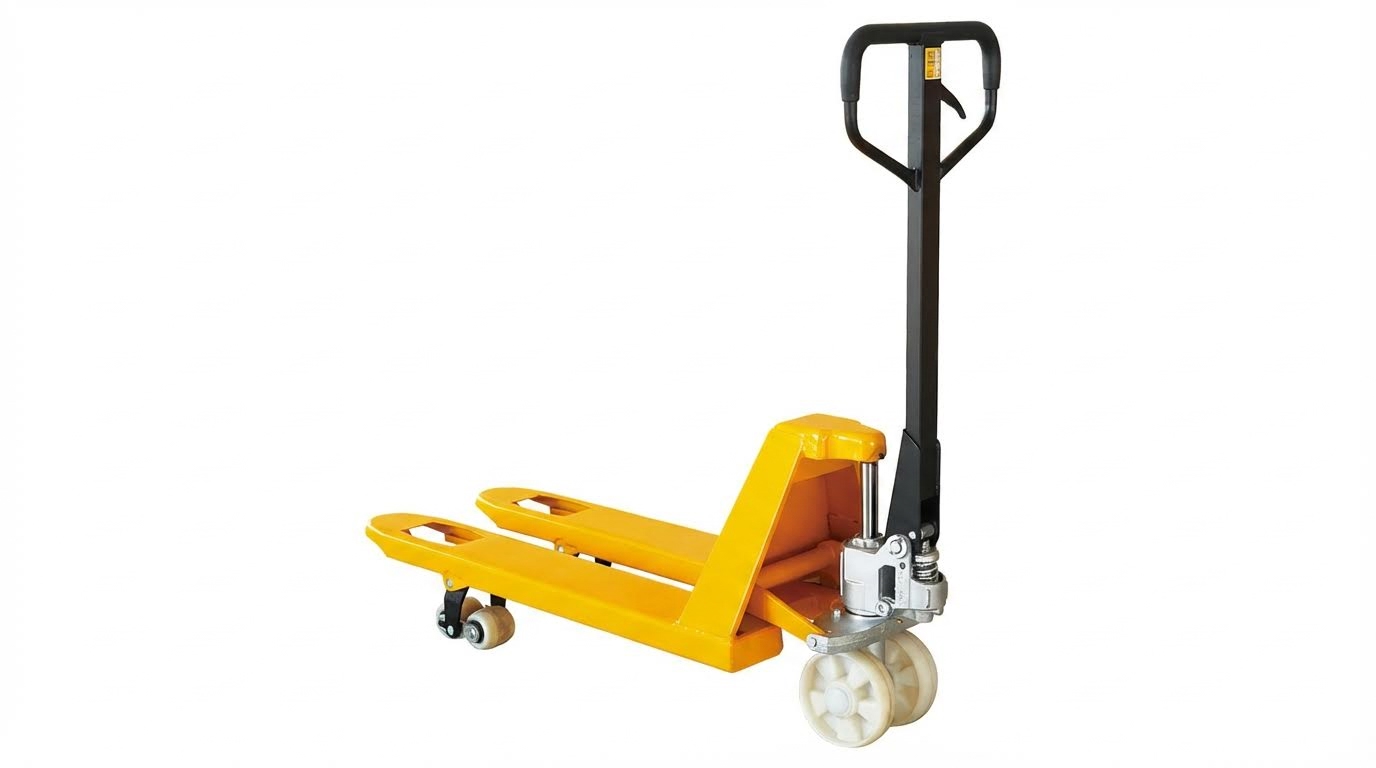
Safety, ergonomics, and compliance define when it is actually acceptable to move or lift pallets by hand and when you must switch to mechanical aids to avoid injuries, fines, and damaged product.
When people ask “how do you lift a pallet without a manual pallet jack,” the real engineering answer is: you first check whether the task is ergonomically acceptable, then you design the method, team size, and route around safety and standards. This section ties manual pallet movement to OSHA/ANSI guidance, ergonomic limits, and real-world floor and load conditions so you can decide when manual methods are safe and when they are prohibited.
💡 Field Engineer’s Note: Most pallet-related back injuries come from “just a quick move” of a near‑floor load—treat every manual pallet move as a designed task, not an improvisation.
OSHA, ANSI, and ergonomic risk limits
OSHA, ANSI, and ergonomic limits effectively cap how heavy, how often, and how far you can manually move pallets before you must use mechanical aids instead of pure muscle power.
- Minimize manual handling: OSHA recommends reducing manual handling and using mechanical aids wherever possible for pallet handling tasks to lower injury risk and cumulative strain. OSHA guidance
- Weight limits and team lifts: Training guidance advises clear weight limits and team lifting for loads above about 23 kg (50 lbs), especially when handling pallets or stacked product. Manual lifting limits
- Ergonomic hazard controls: Employers must control twisting, excessive reach, and repetitive lifting, which are all common in palletizing and depalletizing activities. Ergonomic hazard overview
- Use of risk assessment tools: NIOSH multi‑task lift analysis and the Composite Lifting Index (CLI) are used to evaluate repetitive pallet lifting tasks and quantify ergonomic risk. NIOSH lifting tools
- Training obligation: OSHA-aligned training emphasizes teaching proper lifting, use of aids, and recognition of when a pallet is too heavy or unstable to move manually. Training guidance
How this ties back to “how do you lift a pallet without a jack”
If a pallet’s total mass or the required posture exceeds ergonomic limits, the compliant answer to “how do you lift a pallet without a manual pallet jack” is: you don’t—you introduce a suitable mechanical aid or redesign the task.
💡 Field Engineer’s Note: In audits, I flag any process where a single worker drags or “walks” a full pallet across the floor—once you need more than light force over a few metres, you are outside safe manual handling.
Proper lifting technique and team handling
Proper lifting technique and team handling reduce spinal load and shoulder strain when workers must manually shift parts of a pallet, individual cases, or use levers and sliders around a pallet.
- Lift with legs, not the back: Training stresses bending at the knees and hips, keeping the spine neutral, and driving upward with the legs to minimize back stress during pallet-related lifts. Proper lifting technique
- Keep load close to the body: Workers are trained to keep boxes or pallet edges close to the torso, which reduces torque on the spine when repositioning or raising product. Load positioning tips
- Avoid twisting while lifting: Twisting while holding a load is a documented ergonomic hazard that greatly increases musculoskeletal injury risk in pallet handling. Twisting hazard
- Team lifting for heavy items: For items above about 23 kg (50 lbs) or bulky loads from pallets, guidance recommends team lifting to share the load and maintain safer postures. Team lift thresholds
- Task rotation: Rotating workers between palletizing and less demanding tasks helps reduce fatigue and repetitive strain from continuous manual pallet handling. Task rotation
💡 Field Engineer’s Note: When you must manually “walk” a pallet using crowbars or rollers, treat it like a coordinated team lift: one leader calls moves, everyone faces the same direction, and no one twists under load.
Floor conditions, load stability, and route planning

Floor conditions, load stability, and route planning determine whether a theoretically “light enough” pallet move is actually safe in the real warehouse, especially when using sliders, rollers, or dollies instead of pallet jacks.
- Even, clear floors: Manual and low-tech methods require smooth, level floors free of debris or obstacles; uneven surfaces increase the risk of tipping or sudden stops.
- Load stacking and even weight distribution: Loads must be stacked evenly and kept within equipment capacity to prevent instability or tipping during movement. Load stability guidance
- Keep loads low to the ground: Keeping the pallet or cases close to floor level during movement improves control and reduces the impact of any tip or slip. Low load handling
- Inclines and ramps: Moving loads on ramps or inclines requires slow speeds and constant visual control to prevent slipping or runaway pallets. Ramp safety
- Route planning: Before using pipes, sheets, or drum dollies to move a pallet without a jack, the route should be checked for tight turns, slopes, thresholds, and pedestrian traffic.
Route planning checklist for manual pallet moves
- Confirm floor is smooth and dry along the entire path.
- Verify no slopes or only gentle, controllable inclines.
- Ensure doorways and aisles are wide enough for the pallet and helpers.
- Keep the path clear of other traffic during the move.
💡 Field Engineer’s Note: I treat any change in floor level—expansion joint, dock plate, threshold—as a “mini ramp.” If you would hesitate to push a loaded pallet jack over it, don’t drag a pallet over it by hand either.
## Final Engineering Recommendations And Best Practices
Final engineering recommendations prioritize strict manual handling limits, simple mechanical aids, and route preparation so you can safely answer “how do you lift a pallet without a jack” without exceeding human capability or regulatory guidance.
- Start with the safety question, not the tool: Before asking “how do you lift a pallet without a manual pallet jack,” confirm whether the task should even be manual; if load mass, frequency, or reach are high, you must default to mechanical aids per OSHA/NIOSH guidance. Use team lifts only for moderate loads and short carries, and avoid any scenario where a single worker must lever or drag a near‑full pallet.
- Use manual-only methods for light, low-risk pallets: Reserve pure manual methods (dragging on sheets, short slides, or partial hand-unloading) for lighter pallets and short, controlled distances, keeping loads well below typical single-person limits and using team lifting when weights exceed about 23 kg (50 lbs) per person for manual handling.
- Prefer low-cost mechanical aids over brute force: When pallets are too heavy to lift safely by hand, the practical answer to “how do you lift a pallet without a jack” is to use substitute devices such as skates, dollies, roller crowbars, or lift tables instead of back muscles. These tools convert vertical lifting into rolling or controlled elevation, drastically cutting spinal compression and musculoskeletal risk while staying aligned with OSHA’s push to minimize manual handling through mechanical aids wherever feasible.
- Engineer the move: floor, route, and stability first: Before moving a pallet with rollers, skates, crowbars, or sheets, inspect the floor for cracks, slopes, and debris; plan a straight, obstruction-free route; and ensure the pallet load is tightly wrapped and evenly stacked to prevent tipping or load shift during rolling or sliding by any non-forklift method.
- Standardize technique and training: Implement a simple SOP that covers proper lifting technique (bent knees, neutral spine, load close to body, no twisting), team-lift communication, and correct use of skates, dollies, rollers, and lift tables, supported by ergonomic training that highlights the injury risks of twisting and overreaching during pallet handling in real operations.
- Set clear weight and task limits by policy: Define site-specific thresholds for when workers may manually reposition a pallet versus when they must use mechanical aids (e.g., no manual dragging of full pallets, mandatory team lifting above defined weights, restricted frequency of repetitive lifts). Use NIOSH-based tools such as multi-task lift analysis and the Composite Lifting Index to evaluate high-volume palletizing tasks and justify investment in lift tables, stackers, or conveyors from an ergonomic risk standpoint.
- Prioritize scalable aids as volume grows: As pallet traffic and weights increase, transition from ad‑hoc methods (ropes, sheets, loose pipes) to engineered systems such as pallet rollers, gravity conveyors, lift tables, and stackers that stabilize the pallet and control motion, reducing both operator error and long-term injury rates while maintaining throughput in busy facilities.
- Embed PPE and inspection into daily routines: Require safety footwear and gloves for any pallet movement, and apply the same pre-use inspection mindset you’d use on a pallet truck—checking rollers, skates, crowbars, and lift tables for damage or wear before use, and removing defective gear from service until repaired to avoid sudden failures under load.
- Use task rotation to protect workers long term: For operations that still require some manual lifting, implement task rotation so no worker spends the entire shift bending, pulling, or guiding heavy pallets, which reduces fatigue and musculoskeletal injury risk and aligns with ergonomic best practices for repetitive material handling in pallet operations.
💡 Field Engineer’s Note: The most cost-effective “answer” to how do you lift a pallet without a manual pallet jack is usually to avoid lifting the whole pallet at all—break the load down, roll it on skates or rollers, and only lift what a person can safely handle.
Final Engineering Recommendations And Best Practices
Safe pallet movement without jacks or forklifts depends on one discipline: you engineer the task before anyone touches the load. Weight limits, posture, and distance set a hard boundary for manual work. Lever, roller, and sliding methods then “shape” the physics so people guide motion instead of carrying it. Mechanical aids like pallet trucks, stackers, lift tables, skates, and dollies convert dangerous lifts into controlled rolling or vertical travel within rated capacities.
OSHA, ANSI, and NIOSH principles turn into clear rules on the floor. Do not drag full pallets by hand. Keep single-person loads near 23 kg. Use team lifts only for short, planned moves. Inspect floors, routes, and pallets before every shift. Keep loads low, stable, and wrapped. Train workers to avoid twisting and to communicate during team moves.
The best practice is simple: default to mechanical aids whenever weight, reach, or frequency rise. Use low-tech rollers and crowbars only within strict limits on good floors. As volume grows, shift to engineered systems and formal SOPs. Operations that follow this hierarchy protect people, reduce damage, and keep pallet flow reliable—whether they use Atomoving equipment or other compliant tools.
Frequently Asked Questions
How do you lift a pallet without a jack?
Lifting a pallet without a jack can be done using proper manual techniques or alternative equipment. If no tools are available, you can tip the pallet onto your thighs while maintaining a wide stance and using your legs to lift. Always keep your back straight and avoid twisting your torso to prevent injury. For safer and more efficient lifting, consider using manual pallet jacks or electric pallet jacks, which allow you to move pallets easily without a forklift. Forklift Alternatives Guide.
What are some alternatives to using a forklift for pallet handling?
If you don’t have access to a forklift, there are several alternatives for moving pallets in a warehouse. These include low-lift pallet trucks, electric pallet trucks, pedestrian stackers, and high-lift trucks. Tugger trains with towing vehicles and stationary conveyor systems are also effective options for material handling. Each of these tools is designed to improve safety and efficiency when moving heavy loads. Pallet Moving Tips.