Industrial facilities that store and handle hazardous material drums operated under a dense web of safety and environmental regulations. This article examines compliance-driven storage and containment requirements, engineering controls for drum handling, and advanced technologies that reduced risk and improved reliability. It integrates regulatory expectations for CAAs, SAAs, and HAZWOPER sites with practical guidance on equipment selection, secondary containment, and fire protection. The final section converts these principles into an implementation roadmap that safety, engineering, and operations teams can apply at the plant level.
Compliance-Driven Drum Storage And Containment
Compliance-driven drum storage in industrial facilities relied on prescriptive U.S. EPA, DOT, OSHA HAZWOPER, and state-level rules. Engineers had to integrate these regulatory requirements into layouts, container selection, and operating procedures. Effective designs minimized handling risks while maintaining clear inspection access and emergency response capability.
Regulatory Framework: CAAs, SAAs, And HAZWOPER Sites
Central accumulation areas (CAAs) operated under strict accumulation time and volume limits, weekly inspection obligations, and record retention of at least five years. Facilities had to document that all dangerous waste containers in CAAs were closed, structurally sound, and within permitted accumulation thresholds. Satellite accumulation areas (SAAs) allowed limited quantities at or near the point of generation, but still required closed containers and clear labeling while in use. HAZWOPER sites handling buried or legacy drums had to follow 29 CFR 1910.120 requirements, including pre-entry hazard assessments, remote inspection where feasible, and conservative assumptions for unlabeled drums. Across CAAs, SAAs, and remediation sites, regulators expected written procedures that aligned container handling, inspection, and emergency actions with the site’s hazardous waste determinations.
Drum Compatibility, Labeling, And “Closed” Conditions
Regulations required that drum shell and closure materials were chemically compatible with the contained waste, including gaskets and bungs. Polyethylene drums were preferred for corrosive liquids, while bondable and groundable steel drums were specified for flammable liquids to control static discharge. Labels had to identify hazardous contents, hazard class, and accumulation start date, and unlabeled drums were treated as hazardous until characterized. A drum was considered “closed” only when lids, rings, and bungs were secured tightly enough to prevent liquid loss if the drum tipped and to minimize vapor release. Inspectors frequently cited violations where funnels were left loosely fitted, rings were unlatched, or vent caps were open between transfers, so procedures needed explicit close-out steps after every operation.
Secondary Containment Design And Sizing Criteria
Secondary containment for liquid dangerous waste in CAAs had to prevent any release to soil or surface water under credible failure scenarios. Regulatory criteria required containment volume equal to at least 10% of the total stored liquid volume or 100% of the largest single container, whichever was greater. For 55-gallon (≈208-litre) drum arrays, engineers often sized sumps, dikes, or spill pallets to exceed these minima, while Factory Mutual guidance historically recommended 25% of total volume for enhanced protection. Concrete containment systems needed chemical-resistant coatings, minimal joints, and curbing, with floor slopes directing leaks away from drum rows toward sumps. For flammable, reactive, or dioxin-bearing wastes, designers integrated covered spill pallets, segregated sumps, and isolation valves to limit cross-contamination and to support rapid cleanup. Where state codes required, containment for large drums holding flammable or toxic liquids also incorporated dikes or pans enclosing at least 35% of total drum volume.
Layout: Spacing, Segregation, And Environmental Protection
Storage layouts had to maintain at least 30 inches (≈0.76 metres) of aisle space between drum rows in CAAs to support inspections and emergency access. Engineers segregated incompatible hazard classes, such as oxidizers and organic solvents, into distinct containment cells or separated zones with physical barriers. Layouts also considered weather protection, using enclosed buildings or roofed structures to keep drums dry and to prevent precipitation from consuming containment capacity. For flammable and toxic drum storage, regulations required locating groups of large containers away from vehicle traffic or protecting them with guards and barriers against impact. Designers avoided placing pressurized or flammable drums near open flames, hot surfaces, or other ignition sources, and ensured that fire extinguishers of suitable rating were mounted within immediate reach. Exterior layouts incorporated graded surfaces and curbing so that any overflows remained within controlled drainage paths rather than reaching stormwater systems or soil.
Engineering Controls For Drum Handling Operations
Engineering controls for drum handling reduced operator exposure, stabilized load paths, and limited spill consequences. Facilities combined mechanical handling, explosion prevention, and containment hardware into integrated systems. Correct equipment selection and layout determined whether regulatory requirements translated into day-to-day safe practice. This section focused on specifying and integrating these controls for hazardous material drums.
Equipment Selection: Forklifts, Dollies, Cranes, And Hoists
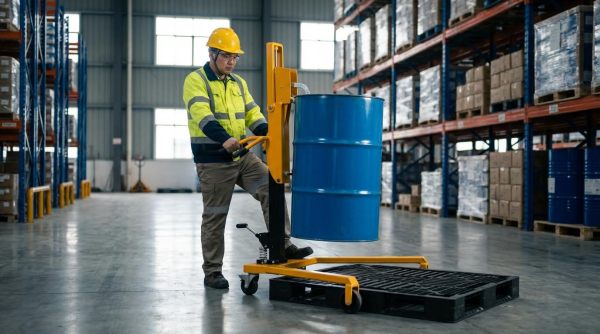
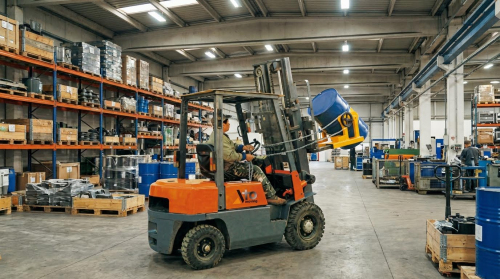
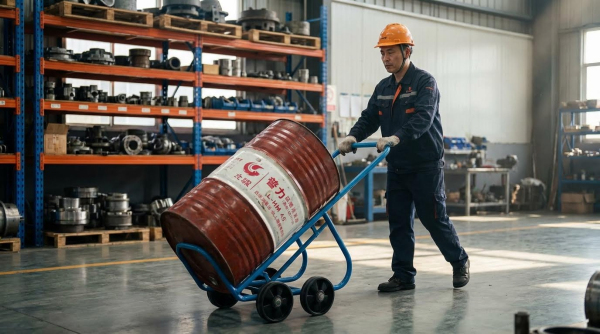
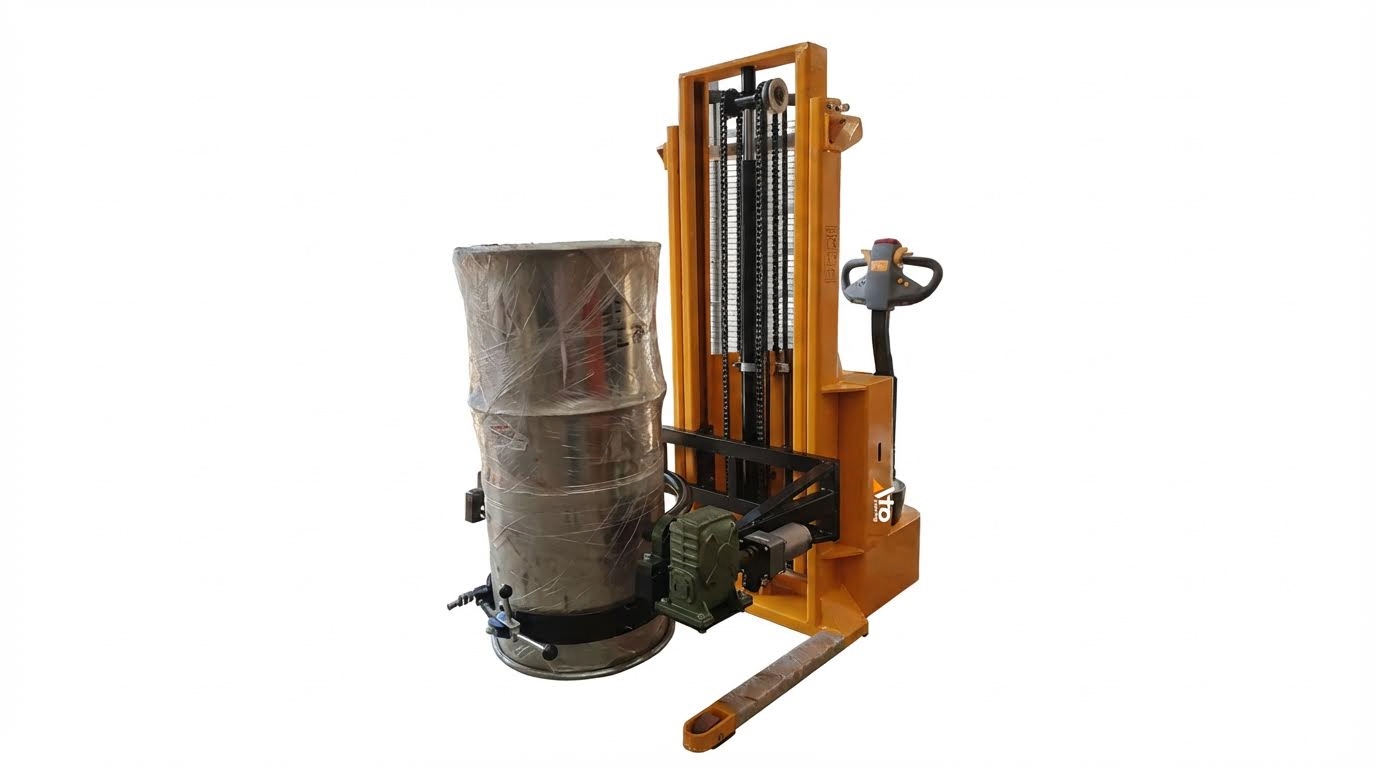
Equipment selection started with drum condition, weight, and travel path definition. Forklifts with drum clamp attachments handled high-throughput movements on flat, unobstructed floors, but required certified operators and clear aisles. Drum dollies and pallet jacks supported short internal moves and staging, reducing manual handling but offering limited control on slopes or rough surfaces. In congested or vertical-access areas, overhead cranes or jib cranes with drum grabs or C-hooks allowed precise positioning while keeping personnel out of the drop zone. For HAZWOPER or unknown-content drums, facilities favored remote or semi-remote handling devices that allowed operators to stay outside the potential blast or splash radius.
Preventing Ignition Sources And Overpressure Hazards
Facilities had to treat flammable or combustible drum areas as potential hazardous (classified) locations and select equipment accordingly. Material-handling devices and powered tools near flammable vapors needed designs that minimized ignition sources, including explosion-proof electrical components and non-sparking contact surfaces where appropriate. Drums showing bulging lids or distorted seams indicated internal overpressure or ongoing reactions; operators were instructed not to move these until pressure was safely relieved using controlled venting and shielding if remote methods were not feasible. Regulations prohibited pressurizing shipping drums to remove contents and required relief valves and bypasses on any temporary pressurized transfer lines to prevent rupture and sudden releases. Storage areas also excluded open flames, hot metal, or other heat sources that could raise internal drum pressure or ignite vapors.
Salvage Drums, Transfer Pumps, And Spill Control Systems
Where inspection identified compromised drums, DOT-specified salvage drums provided an engineered overpack with sufficient structural capacity and closure integrity. Salvage drums allowed facilities to relocate leaking or severely corroded containers without direct product transfer in the immediate hazard zone. When transfer was necessary, classified pumps and hoses designed for the specific chemical and vapor class moved contents into sound containers while avoiding drum pressurization. Spill control systems combined absorbent stocks, portable berms, and fixed secondary containment, such as sumps or spill pallets sized to at least 10% of total stored liquid volume or 100% of the largest container. Site spill plans defined how operators isolated releases, protected drains and soil, and coordinated with fire protection resources for flammable or reactive materials.
Facility Protection: Dikes, Guards, And Fire Suppression
Facility-level protections translated individual drum risks into controlled storage zones. For flammable or toxic liquids in containers of 55 gallons (approximately 208 litres) or greater, dikes or pans surrounded storage and provided a containment volume of at least 35% of the total stored volume, aligning with specific regulatory requirements. Where drums or pressure vessels over 30 gallons could be struck by vehicles or mobile equipment, fixed barriers or guards protected against mechanical damage and subsequent leaks. Storage buildings and outdoor compounds integrated spill containment sumps meeting or exceeding the 10% or largest-container volume rule, with some insurers historically requiring 25% capacity for additional margin. Fire suppression provisions included appropriately rated portable extinguishers located in the immediate storage and handling area, always ready for initial-response use, and often tied into building-wide detection and suppression systems sized for flammable liquid fire loads.
Advanced Practices And Emerging Technologies
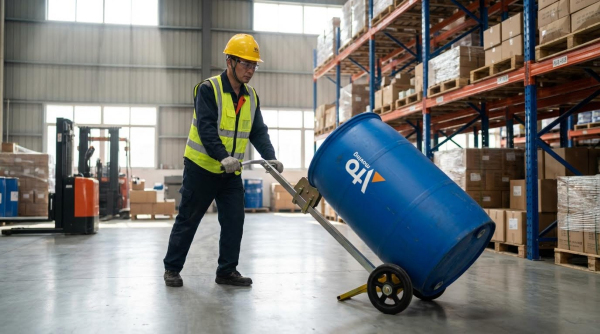
Advanced practices for hazardous drum management increasingly relied on data, connectivity, and automation. Facilities combined regulatory-driven requirements for storage, containment, and handling with predictive analytics and digital modeling. Modern systems supported safer operations, lower lifecycle costs, and higher availability of critical handling assets. The following subsections focused on key technologies and design approaches that industrial plants could integrate into existing compliance frameworks.
Predictive Maintenance For Drum Handling Equipment
Predictive maintenance programs used sensor data and analytics to anticipate failures in forklifts, drum dollies, hoists, and cranes. Plants monitored parameters such as vibration, hydraulic pressure, motor current, brake temperature, and lift-cycle counts. Algorithms identified patterns that preceded component wear, leaks, or hoist brake degradation, enabling planned interventions before loss of control or dropped loads occurred. Integrating predictive maintenance with inspection records for CAAs and HAZWOPER drum operations reduced unplanned downtime and improved compliance with safe-handling requirements.
Condition monitoring also supported verification that explosion-protected equipment in flammable drum areas remained within design limits. For example, excessive motor temperature or abnormal current draw in a forklift operating near ignitable vapors indicated elevated ignition risk. Maintenance teams could then remove the unit from service and document corrective actions as part of the facility safety and health plan. Predictive strategies extended equipment life, but more importantly, they reduced the probability of handling incidents that could compromise secondary containment or cause drum rupture.
Digital Twins For Storage Layout And Risk Simulation
Digital twins of drum storage areas represented a virtual model of racks, aisles, containment curbs, and access routes. Engineers populated the model with drum types, hazard classifications, container sizes, and regulatory constraints such as 10% or 100% secondary containment capacity rules. The twin allowed simulation of alternative layouts while checking row spacing, segregation of incompatible wastes, and egress clearances for emergency response teams. This helped designers validate that 30-centimetre aisle spacing, diking volumes, and sump capacities met applicable EPA and OSHA-derived requirements.
Risk simulations within the digital twin environment modeled spill scenarios, drum failures, or forklift impacts. Engineers could evaluate how a 200-litre drum leak propagated across a sloped concrete floor and whether the containment sump volume remained adequate. They also tested fire growth with different drum groupings and fire-extinguisher placements, ensuring extinguishers stayed within effective reach of likely ignition points. Over time, actual incident and near-miss data could calibrate the twin, improving the accuracy of future layout modifications and expansion projects.
Automation, Cobots, And Remote Drum Handling
Automation and collaborative robots (cobots) reduced direct human exposure to drum hazards, especially at HAZWOPER and high-hazard waste sites. Automated guided vehicles (AGVs) or autonomous mobile robots (AMRs) transported drums between SAAs, CAAs, and loading docks, following defined routes that minimized turns and collision risk. Robotic manipulators equipped with drum grippers handled lifting, tilting, and palletizing tasks that previously required manual effort and close proximity to potential leaks or vapors. Remote cameras and sensors allowed operators to supervise these systems from control rooms outside classified or contaminated zones.
Remote-controlled cranes and hoists were particularly valuable in congested or structurally compromised areas where buried or unstable drums existed. Operators could position hooks or drum lifters while remaining behind blast shields or outside exclusion zones. Control systems incorporated interlocks to prevent lifting drums that exceeded rated capacity or showed excessive tilt, reducing the chance of rupture. Integration with gas-detection and fire-detection systems enabled automatic stop commands if flammable vapor levels rose, supporting ignition-source control near volatile drum inventories.
Designing Energy-Efficient, Sustainable Drum Storage
Energy-efficient drum storage design focused on reducing HVAC loads, lighting power density, and unnecessary equipment idling while maintaining strict safety margins. Facilities used high-reflectance interior finishes and LED luminaires with occupancy and daylight sensors to maintain inspection-quality lighting at lower power. Thermal zoning and demand-controlled ventilation limited conditioned air to occupied or high-risk zones, while still providing adequate dilution and exhaust for flammable or toxic vapors. Variable-speed drives on ventilation fans helped balance contaminant control with energy savings, based on real-time gas-monitoring data.
Sustainable design also addressed materials and lifecycle impacts of containment and building systems. Engineers selected durable, chemically resistant coatings for concrete sumps and curbs to extend service life and reduce repair frequency. Modular spill pallets
Summary And Implementation Roadmap For Plants
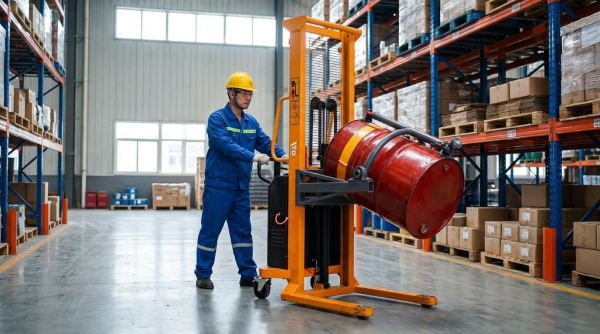
Industrial facilities that stored hazardous material drums operated under a tightly defined regulatory and engineering framework. Compliance required correct use of central accumulation areas, satellite accumulation areas, and HAZWOPER controls, combined with compatible packaging, “closed” container practices, and correctly sized secondary containment. Engineering controls for handling, transfer, and fire protection further reduced the probability and consequence of loss-of-containment events. Recent advances in predictive maintenance, digital modeling, and automation allowed plants to optimize safety performance while reducing lifecycle cost.
Future drum storage strategies will increasingly integrate real-time condition monitoring of handling equipment, electronic inspection records, and digital layout simulations linked to regulatory criteria such as minimum spacing and containment volume. Facilities will likely deploy more semi-autonomous movers, cobots, and remote-opening tools to keep personnel outside immediate hazard zones, especially for unknown or shock-sensitive wastes. Sustainability drivers will push toward energy-efficient storage buildings, high-durability containment structures, and designs that minimize concrete and steel mass without compromising required sump capacity or fire resistance.
For implementation, plants should start with a gap assessment against applicable codes and guidance: container compatibility, closure practices, labeling, inspection frequency, and containment sizing (≥10% of total liquid volume or 100% of the largest container, and higher where required). Next, they should prioritize engineering upgrades that address high-consequence risks first: ignition control, overpressure relief, spill collection, diking, and fire suppression coverage. Parallel efforts should strengthen procedures for drum inspection, movement, sampling, and emergency response, supported by targeted training for operators and supervisors.
A balanced roadmap combines incremental retrofits with a long-term technology plan. Short term, facilities can standardize packaging types, improve storage layout, and implement robust salvage drum and transfer pump strategies. Medium term, they can add instrumentation, digital inspection tools, and data-driven maintenance for forklifts, hoists, and cranes. Long term, they can evaluate automated or remotely operated drum handling and model-based design of storage buildings. Plants that align these steps with regulatory changes and internal risk tolerances will maintain compliance while systematically lowering incident rates and whole-life operating costs.