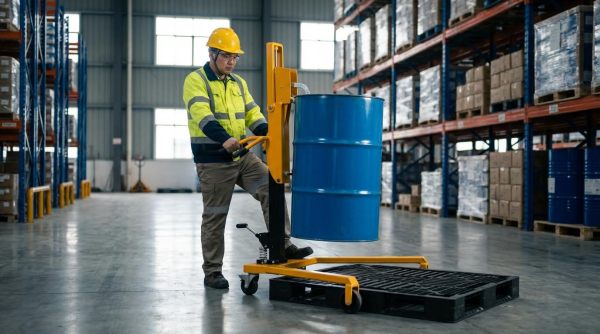
Facilities that ask “how can I move full 55 gallon drums by myself” face a high-risk handling problem. This article explains why solo movement of heavy drums is hazardous, what one-person drum handling equipment exists, and how to select and use it safely.
You will see typical drum weights, failure modes, and injury mechanisms, then compare dollies, carts, trucks, lifters, and hydraulic drum rotators suited to 205 litre or 55-gallon drums. The selection section links drum type, route, and floor conditions to the right device and highlights unsafe shortcuts to avoid. The final summary turns these points into practical best-practice rules for engineers, supervisors, and safety managers who must control solo drum handling in real plants and warehouses.
Why Moving Full Drums Alone Is High-Risk
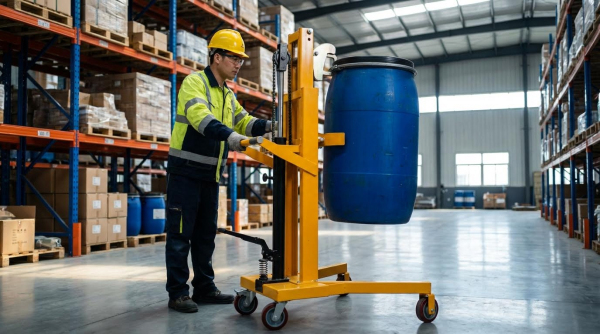
People who ask how can I move full 55 gallon drums by myself usually face tight space, time pressure, and heavy loads. A single full drum can weigh as much as a small car engine, but it often looks harmless. This section explains why solo movement of full drums is a high-risk task and why engineering controls and handling equipment matter more than personal strength. It links drum weight, failure modes, and OSHA concerns so safety, maintenance, and operations teams can set clear rules for when manual handling is never acceptable.
Typical Drum Weights And Failure Modes
A full 55-gallon drum typically weighs between 180 kilograms and 360 kilograms. The exact mass depends on liquid density and drum material. This weight range already exceeds safe manual handling limits for one person in most standards. Any attempt to tilt, catch, or stop a moving drum by hand creates very high joint and spine loads.
Failure does not only mean the drum splits. More common failure modes include:
- Loss of balance while tilting, causing the drum to fall or roll away.
- Chime or rim damage when the drum drops on edges or hard points.
- Seal or bung leakage after impact or side loading.
- Progressive denting that weakens stacking and racking stability.
Thin-wall steel or plastic drums deform under point loads, especially at chimes and rolling hoops. When an operator levers a drum over a floor defect or threshold, contact stresses can exceed local yield strength. That can trigger sudden shifts, which surprise the operator and cause secondary incidents such as slips or crush injuries. For flammable or corrosive contents, even a small leak can escalate into a major event.
Common Injury Mechanisms And OSHA Concerns
Unassisted movement of full drums exposes workers to several predictable injury paths. Typical mechanisms include:
- Acute back and disc injuries from upending or catching a tipping drum.
- Crush injuries to feet and hands between drum and floor, wall, or other drums.
- Strains to shoulders, elbows, and wrists from repeated pushing, pulling, and twisting.
- Chemical exposure from leaks, splashes, or contact with contaminated surfaces.
OSHA guidance treated drum handling as a material handling and hazard communication issue. Key concerns included unlabeled or poorly labeled drums, blocked access to markings, and manual handling that ignored ergonomic limits. Inspectors focused on whether facilities used proper equipment such as drum dollies, drum trucks, or powered systems instead of relying on body force.
From a risk standpoint, solo rolling methods like push, pull, drag/pull, and push/pull were only acceptable for intact, non-hazardous drums over short, flat routes. Even then, operators needed training on balance points, hand placement, and pinch points. For hazardous contents, regulators expected engineered controls, PPE, and written procedures. Any practice that required a worker to stand in the fall path of a drum or to stabilize a moving drum with feet or hands increased regulatory concern.
When Manual Handling Is Never Acceptable
For anyone asking how can I move full 55 gallon drums by myself, the first step is to define clear “no manual handling” cases. In these conditions, the only safe answer is to use purpose-built equipment or get help. Typical red lines include:
- Drum mass above safe push–pull limits for one person, usually any full 55-gallon drum.
- Hazardous, toxic, flammable, or unknown contents where a leak has high consequence.
- Damaged, corroded, bulging, or leaking drums that may fail under rolling loads.
- Routes with slopes, broken floors, thresholds, gratings, or tight turns.
- Operations that require lifting, stacking, or placing drums at height.
In these cases, facilities should mandate drum dollies, trucks, lifters, or powered systems and often two-person operations. Policies should state that workers must not try to catch a falling drum, must step away from any uncontrolled motion, and must treat unmarked drums as hazardous until proven otherwise. Clear rules, backed by training and supervision, prevent improvisation and unsafe shortcuts when workers feel pressure to move drums alone.
Essential Equipment For One-Person Drum Handling
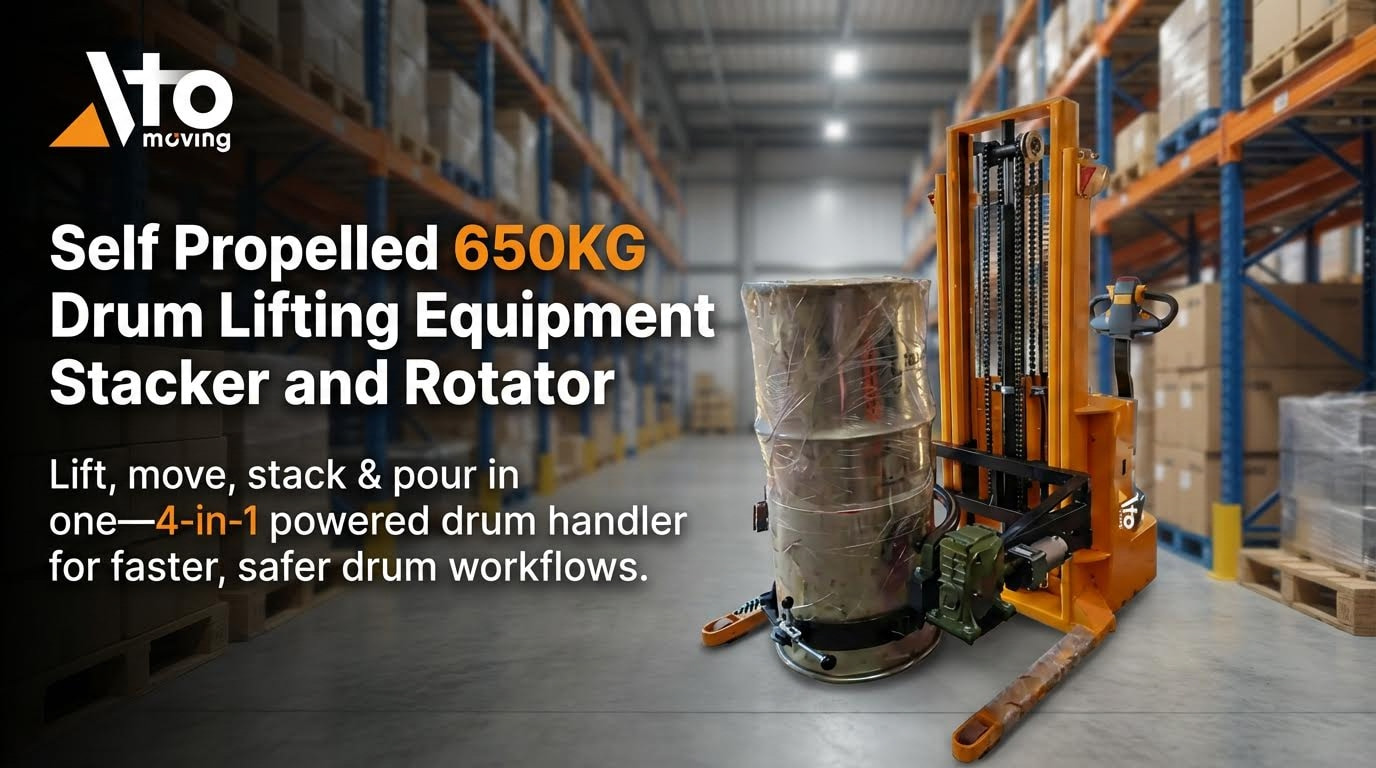
Engineers who ask how can i move full 55 gallon drums by myself should treat it as a handling system problem, not a strength test. Safe solo movement depends on equipment that supports the drum, controls tilt, and manages floor interaction. This section compares core device types and shows where each fits in a one-person workflow. The goal is to match tools to route length, transfer height, and discharge needs while keeping the operator outside the crush and spill zone.
Drum Dollies, Carts, And Trolleys For Short Moves
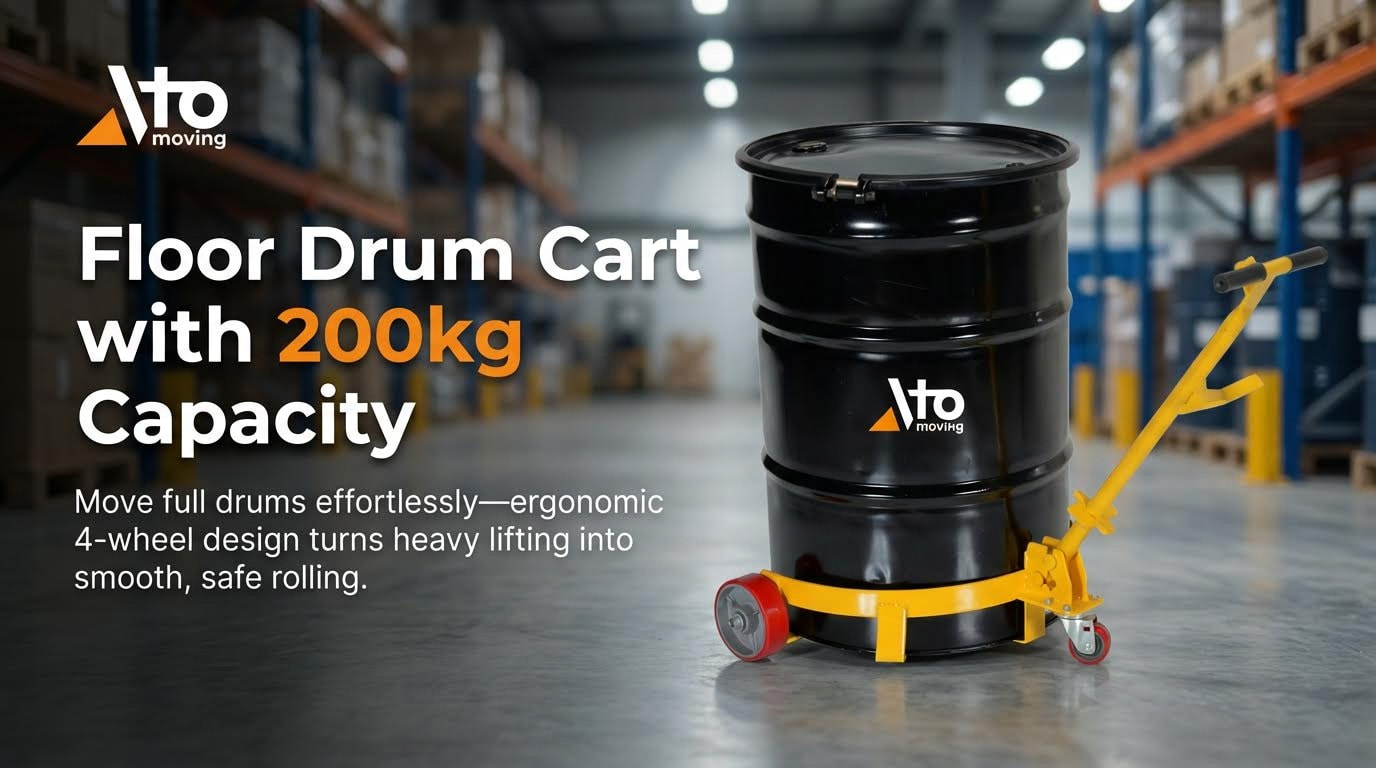
Drum dollies answer the question how can i move full 55 gallon drums by myself over short, flat routes. A typical steel dolly for a 55-gallon drum carries up to about 450 kilograms and uses four swivel casters. Cross bracing and welded frames keep the drum seated and reduce flex when crossing joints or thresholds. Brakes on two wheels help control movement during loading, unloading, or temporary storage.
Drum carts and trolleys work better when floors are uneven or routes are longer. Two- or three-wheel trolleys shift part of the drum weight onto the axle, so the operator mainly balances and steers. This reduces push force and back strain compared with bare rolling on the chime. For short intra-bay moves, facilities often standardize on:
- Dollies for pure horizontal transport on smooth floors.
- Trolleys where ramps, door sills, or tight corners exist.
- Carts with containment pans for corrosive or toxic liquids.
Selection should check wheel diameter, bearing type, and floor compatibility. Hard wheels roll easier under heavy loads but transmit more shock into the drum and floor slab.
Drum Trucks And Caddies For Controlled Tilting
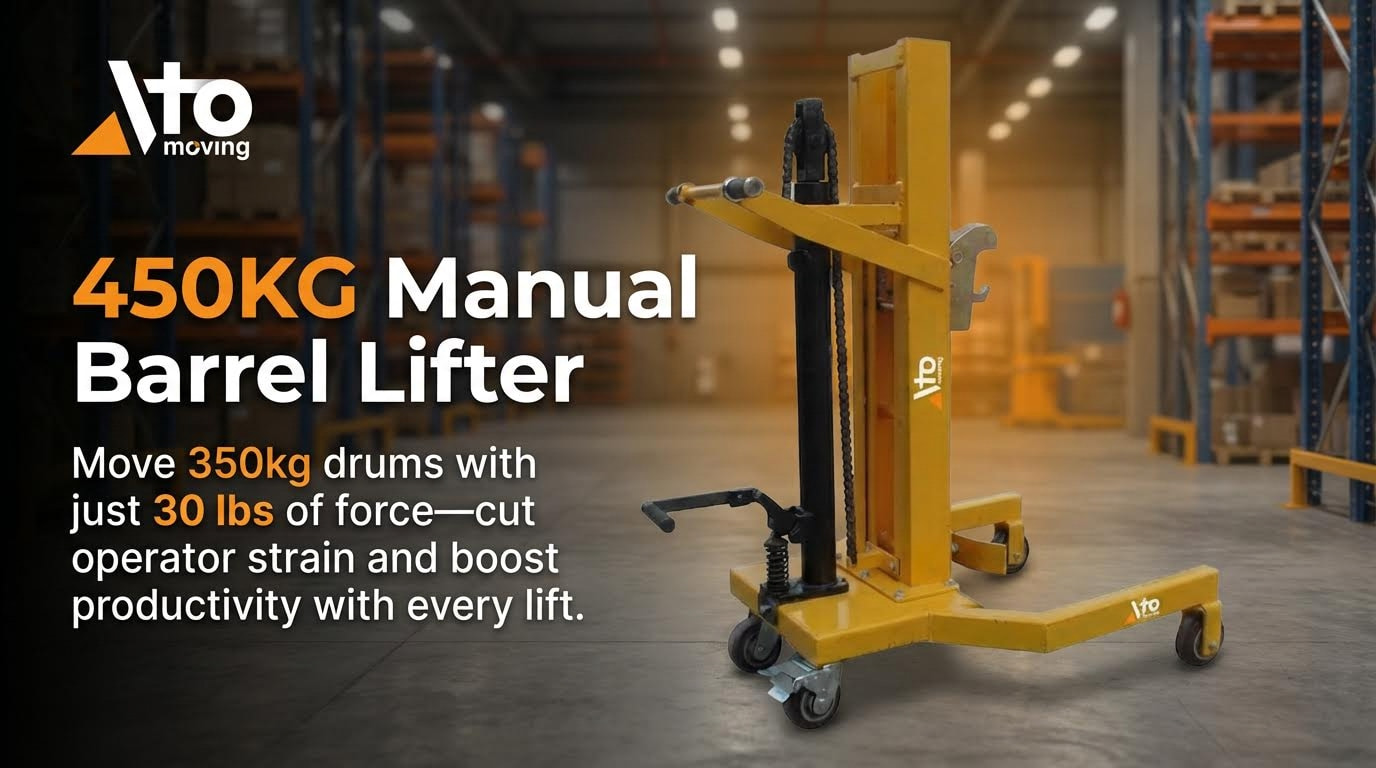
Drum trucks and caddies combine transport with controlled tilting, so one person can both move and position the drum. Spring-assist drum trucks reduce the initial effort to tip a vertical drum onto the wheels, which is critical when gross weight approaches 350 kilograms or more. A hook or rim clamp secures the chime and prevents the drum from slipping off the nose plate during tilt.
Multi-purpose drum caddies often allow the drum to rest in a semi-horizontal cradle for dispensing. This configuration turns the unit into both a transporter and a storage stand. Revolving drum carts can rotate a drum from vertical to horizontal and sometimes include rollers for on-cart mixing. For process engineers, these designs cut changeover time because the drum does not need re-rigging at each station.
When deciding how can i move full 55 gallon drums by myself with tilting included, compare:
| Aspect | Drum truck | Drum caddy |
|---|---|---|
| Main use | Vertical transport | Transport plus dispensing |
| Typical capacity | Up to about 450–500 kg | Up to about 450–1,000 kg |
| Operator effort | Higher at initial tip | Lower, due to cradle geometry |
Trucks suit frequent dock-to-rack moves. Caddies suit work cells that draw product directly from the drum.
Forklift Drum Lifters, Beaks, And Clamp Attachments
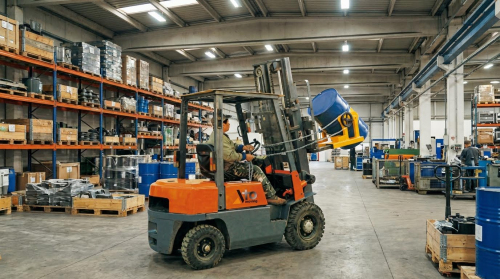
Forklift drum attachments let one operator lift and place drums without manual contact. Beak-style lifters grip the drum under the top rolling hoop as the truck advances. Once engaged, the mechanism locks as the mast raises, so the operator can stay in the seat. Working load limits typically range from about 500 kilograms for single-drum units to about 1,500 kilograms for double-drum models.
Strap-and-lock clamp attachments wrap a belly strap around the drum and use an eccentric lock or safety catch. This design is useful for plastic or thin-wall drums where hoop strength is lower. Three-arm lifters with stabilizing arms spread contact around the circumference and reduce rim damage. Vertical drum lifters for cranes or hoists handle similar weights but shift the load path straight up instead of through forks.
When you ask how can i move full 55 gallon drums by myself in high-bay storage, forklift attachments are usually the safest option. Key checks before selection include:
- Forklift rated capacity at the specified load centre.
- Attachment weight, which reduces net lifting capacity.
- Drum material and hoop geometry for reliable gripping.
- Required lift height and aisle width.
Attachments must lock positively and resist accidental release during braking, turning, or mast tilt.
Drum Rotators, Dumpers, And Hydraulic Systems
Drum rotators and dumpers solve the harder problem of controlled emptying. Mechanical rotators use a hand wheel or chain drive with a gearbox to give the operator leverage. Models often allow 180-degree or full 360-degree rotation of a 205-litre drum. Gearboxes with worm drives hold position without separate brakes, which is crucial when handling dense liquids or slurries.
Hydraulic drum rotators use either the host truck hydraulics or a self-contained power pack. These systems can lift and rotate drums weighing up to about 1,000 kilograms through angles around 130 degrees. Remote controls keep the operator away from splash zones and pinch points. This is valuable in food, recycling, and mining plants where discharge points sit above waist height.
To decide how can i move full 55 gallon drums by myself when frequent pouring or batching is required, compare:
| Feature | Mechanical rotator | Hydraulic system |
|---|---|---|
| Typical capacity | About 350–500 kg | Up to about 1,000 kg |
| Control | Manual wheel or chain | Lever or remote control |
| Best for | Lower volumes, moderate heights | High volumes, elevated discharge |
Rotators and dumpers should include positive locking, rated load markings, and clear rotation limits. Integration with forklifts or cranes must respect combined load, centre-of-gravity shift, and clearance to racks, tanks, and guarding.
Selection Criteria And What Practices To Avoid
Anyone asking “how can I move full 55 gallon drums by myself” needs clear selection rules and clear red lines. This section explains how to match drum handling equipment to drum type, weight, and route. It also covers stability, braking, and floor effects, and how to connect with forklifts, cranes, and AGVs. The final part highlights unsafe shortcuts and misuse that often cause injuries and spills.
Matching Equipment To Drum Type, Weight, And Route
A full 55-gallon drum can weigh 180–360 kilograms. One person must never try to lift or catch this weight manually. Selection starts with drum material and shape. Steel drums tolerate rim-grab and beak clamps. Plastic and fibre drums often need belly straps, cradles, or vertical clamps to avoid rim damage.
Next, check rated capacity of the device against worst-case drum mass. Many dollies, trucks, and lifters offer around 450–450+ kilograms capacity. Always keep at least 20–30% margin between load and rating. Then map the route. Short, flat moves suit drum dollies and revolving carts. Tight aisles or frequent tilting suit drum trucks or caddies. Long internal transfers or elevation changes need forklift or crane-based drum lifters.
Use this simple matching logic:
- Flat, smooth floor, short distance: drum dolly or four-wheel cart.
- Need to tip to horizontal for dispensing: revolving cart or multi-purpose drum truck.
- Frequent loading to racks or platforms: forklift drum beak, clamp, or vertical lifter.
- High-frequency dosing or mixing: drum rotator or dumper with mechanical or hydraulic drive.
Stability, Braking, And Floor Condition Considerations
Stability is the main control when you move a heavy drum alone. The drum centre of gravity sits high, so small shocks can tip it. Four-wheel dollies with cross bracing and low platforms give the best static stability. Two-wheel drum trucks give better control on edges and ramps but need correct operator technique.
Wheel choice matters as much as frame strength. Hard wheels roll easier but transmit shock. Soft rubber wheels protect floors and improve grip on smooth concrete. Brakes on at least two casters help during loading, unloading, and sloped areas. Always test brake function before entering a ramp or threshold.
Floor condition strongly affects safe solo handling. Avoid solo moves over:
- Broken concrete, potholes, or missing floor plates.
- Oil, water, or powder spills that reduce friction.
- Steep ramps where a 400–800 pound drum can overrun the operator.
If the route crosses drains, rails, or door sills, choose larger-diameter wheels and lower speeds. If the floor condition is unknown or poor, use powered or assisted systems instead of manual pushing.
Integration With Forklifts, Cranes, And AGVs
Solo movement often still uses larger host equipment. Forklift drum attachments let one driver lift, move, and place drums without a second person on the ground. Beak clamps suit steel drums with strong rolling hoops. Belly strap lifters work for more drum types but need correct strap tension and lock engagement.
When connecting drum lifters to forklifts, always verify:
- Attachment working load limit versus drum weight.
- Effect on forklift rated capacity at the stated load centre.
- Secure locking of the attachment to the fork or carriage.
Overhead cranes and hoists use vertical drum lifters with three-point arms or gripping heads. These tools reduce floor congestion but require clear lift paths and tag lines for control. Integration with AGVs or tuggers needs low, stable drum carriers with defined pick-up pockets and repeatable positioning. In all cases, define hand-off points. For example, a forklift sets drums onto dollies, then a single operator pushes them to the final spot. Never improvise hand-offs on sloped or uneven ground.
Unsafe Shortcuts, Overloading, And Misuse To Avoid
Most serious drum accidents came from shortcuts, not equipment failure. If you ask “how can I move full 55 gallon drums by myself” the honest answer starts with what you must never do. Never roll a full drum by “walking” it on the chime across long distances or slopes when proper equipment is available. This method can work only for very short, flat adjustments and still carries crush and spill risk.
Do not overload dollies, trucks, or forklift attachments beyond their marked capacity. A 1,000 pound rating is not a suggestion. It already includes design factors. Avoid using pallet jacks under loose drums without proper cradles or pallets. Drums can slide, rotate, and fall when the jack stops.
Other unsafe practices to ban include:
- Using makeshift slings, chains, or hooks around the drum middle without rated lifters.
- Pushing drums with powered equipment bumpers or forks.
- Riding on drum carts or allowing two people to stand on a drum platform.
- Working under suspended drums or reaching under tilted drums without blocking.
Clear rules, visible load ratings, and simple decision charts help operators choose the right tool fast. Training should link each shortcut to a specific injury pattern so people understand the real cost of “just this once.”
Summary And Best-Practice Recommendations
People who ask “how can I move full 55 gallon drums by myself” face a real high-risk task. A full drum often weighs 180–360 kilograms. This weight makes manual lifting or catching a falling drum unacceptable from an engineering and safety view. The safest method always uses purpose-built drum handling equipment and strict procedures.
Best practice starts with a simple rule. Never lift, tilt, or catch a full drum with body strength alone. Use drum dollies or trolleys for short, level moves. Use drum trucks or caddies for controlled tilting between vertical and horizontal. Use forklift drum lifters, beaks, or clamps when drums must travel longer distances or move onto racks, docks, or into vehicles. For decanting or dosing, use drum rotators or dumpers with mechanical or hydraulic drive so the operator only controls, not carries, the load.
Safe solo handling also depends on conditions around the drum. Check labels and treat unknown contents as hazardous. Inspect for leaks and damaged chimes before any move. Confirm the floor is smooth, clean, and rated for the wheel loads. Keep routes free of slopes, steps, and tight corners where a drum could tip or strike obstacles.
Facilities that plan for one-person drum handling should standardize on a small set of engineered tools and clear rules. Key points include: do not exceed equipment capacity, do not improvise with pallet jacks or bare forks, and do not roll drums on rough or sloped floors. Train operators to walk beside the drum, stay out of the fall path, and stop work if a drum becomes unstable. Over time, sites that follow these practices reduce injuries, spills, and product loss while keeping drum movements efficient and predictable.