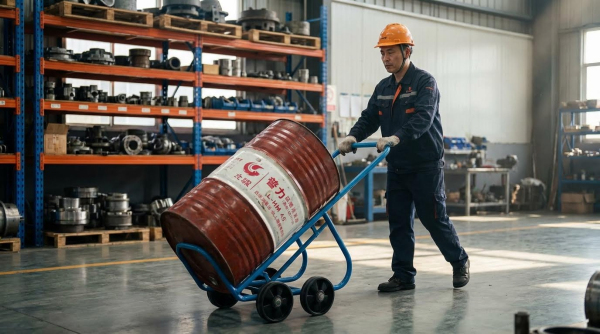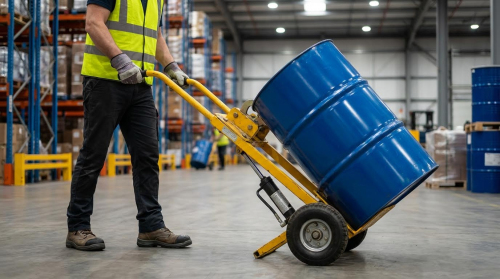
Learning how to operate an electric forklift safely starts with consistent pre‑shift checks, disciplined driving habits, and correct battery handling. This guide walks operators and safety managers through practical, standards‑aligned steps to reduce incidents, protect equipment, and keep productivity high in any warehouse or industrial facility.
Core Controls And Pre‑Shift Safety Checks
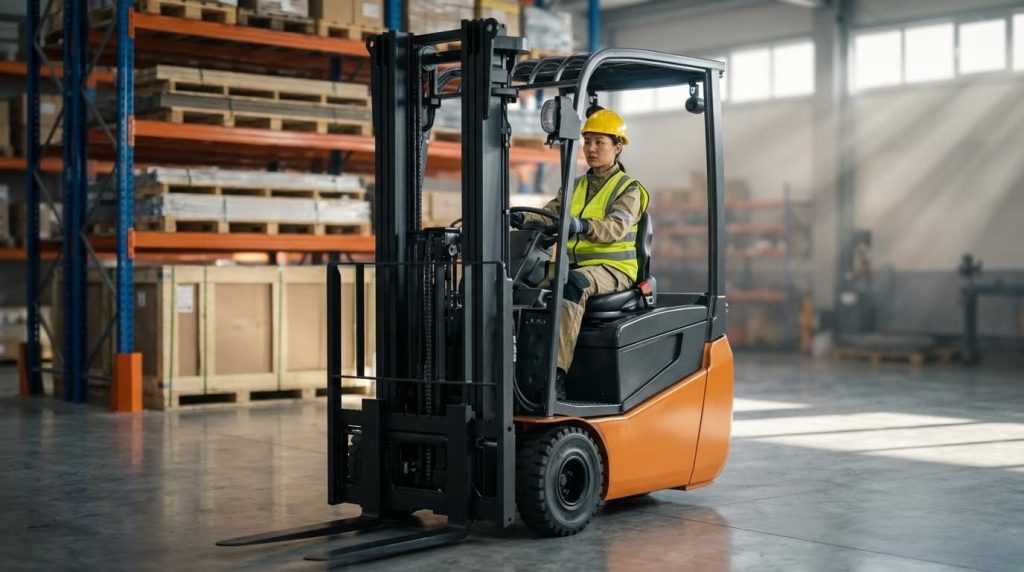
Core controls and pre‑shift safety checks are the foundation of how to operate an electric forklift safely, preventing incidents before the truck even moves. This section explains what every operator must understand and verify at the start of each shift.
Primary electric forklift controls and displays
Primary electric forklift controls and displays tell the operator what the truck is doing and allow safe, precise control of travel, lifting, and braking. Knowing each control’s function is step one in learning how to operate an electric forklift.
- Steering wheel: Rear‑wheel steering – Enables tight turning in narrow aisles; watch tail‑swing near pedestrians and racking.
- Travel control: Directional switch or pedal for forward/reverse – Always come to a full stop before changing direction to avoid drivetrain shock and loss of control.
- Service brake and parking brake: Foot pedal plus hand or foot parking brake – Service brake for normal stops, parking brake for secure hold during parking and charging.
- Lift/hoist control: Lever or joystick to raise/lower forks – Used only when the truck is stationary to prevent mast instability.
- Tilt control: Lever to tilt mast forward/back – Back‑tilt stabilizes loads against the backrest; forward tilt only at low height when placing loads.
- Side‑shift/attachments (if fitted): Controls for side‑shift, clamp, or rotator – Allow fine positioning without re‑steering, reducing rack and pallet damage.
- Horn and warning devices: Horn, backup alarm, and sometimes blue/red spotlights – Alert pedestrians at intersections, blind corners, and during reversing.
- Display panel/gauges: Battery discharge indicator, hour meter, warning lights – Show remaining battery capacity and fault warnings so you can plan charging and maintenance.
- Seat and seat belt: Adjustable seat with restraint – Keeps the operator inside the protective envelope in case of a tipover.
- Overhead guard and load backrest: Fixed safety structures – Protect from falling objects and keep loads from sliding back toward the operator.
How to familiarize new operators with controls
Walk each trainee through every lever, switch, and indicator with the truck powered but stationary. Have them point and name each control, then perform low‑speed practice movements in an open, marked area.
💡 Field Engineer’s Note: On many electric forklifts, the brake pedal also triggers regenerative braking. New operators often “jab” the pedal, causing jerky stops and spill risks; coach them to use smooth, progressive pressure for stable load handling and longer component life.
Daily pre‑operation inspection steps
Daily pre‑operation inspection steps are structured checks you perform at the start of each shift to confirm the truck is mechanically safe and compliant before use. This is a critical part of how to operate an electric forklift under OSHA‑style programs.
Use a consistent checklist and inspect the truck with power off (visual checks) and then power on (operational checks). Document all findings, and remove the truck from service if any safety‑critical defect is found.
| Check Area | What To Inspect | Typical Issues | Operational Impact |
|---|---|---|---|
| Documentation & labels | Operator manual, capacity plate, safety decals | Missing, illegible, wrong attachment data | Risk of overloading and misuse; operator lacks correct reference data |
| General cleanliness | Operator compartment, steps, floor plate | Grease, debris, loose objects | Slip/trip hazards; objects can jam pedals or controls |
| Overhead guard & backrest | Cracks, deformation, secure mounting | Bent members, missing bolts | Reduced protection from falling objects |
| Mast & carriage | Rails, rollers, carriage plate | Visible damage, misalignment | Poor tracking, binding, risk of mast failure under load |
| Lift chains & hoses | Chain tension, pins, hydraulic hoses | Rust, kinks, leaks, missing guards | Chain or hose failure can cause sudden load drop |
| Forks | Heel wear, cracks, locking pins | Thin heel, bent blade, missing pins | Reduced capacity; fork can fail or slide out of carriage |
| Tires | Tread, chunking, inflation (pneumatic) | Cuts, flat spots, low pressure | Reduced stability and braking; uneven mast tilt |
| Battery & cables | Casing, cables, connectors, restraints | Cracks, frayed cables, loose hold‑downs | Risk of short circuits, loss of power, or battery movement during braking |
| Hydraulic fluid level | Sight glass or dipstick | Low level, milky fluid | Slow or erratic lifting; cavitation damage |
| Seat & seat belt | Latch, webbing, retractor | Torn belt, inoperative latch | Operator can be thrown or crushed in a tipover |
- Visual walk‑around (power off): Start at the mast and move clockwise – Prevents missed items and builds a repeatable routine.
- Check for leaks: Under the truck and around mast – Oil on the floor indicates hydraulic or gearbox issues that can worsen under load.
- Battery condition: Look for damaged cases and loose connectors – Reduces risk of electrical faults or fire during operation.
- Tires and wheels: Inspect all four corners – Uneven wear can tilt the mast and reduce rated capacity.
- Forks and attachments: Confirm correct locking and no visible cracks – Prevents fork drop or attachment separation while elevated.
- Operator compartment: Remove trash and loose tools – Prevents interference with pedals and steering.
After the visual check, perform an operational inspection with power on, as recommended in safety guidance. Test the accelerator, steering, brakes, drive and tilt controls, hoist and lowering control, horn, lights, and backup alarm, and listen for unusual noises or vibrations that indicate mechanical problems. Operational inspection steps must be completed before putting the truck into service.
- Document results: Use a daily checklist or pre‑trip book – Creates a traceable record and supports maintenance planning.
- Tag and report defects: Remove unsafe trucks from service – Prevents operators from using equipment with known hazards.
💡 Field Engineer’s Note: In busy warehouses, operators often rush inspections. Enforce a hard rule: if you find fresh oil or hydraulic fluid on the floor under the mast, the truck is grounded until maintenance clears it—this single rule has prevented many load‑drop incidents.
Electric system and battery‑specific checks
Electric system and battery‑specific checks focus on cables, connectors, restraints, and charge status to ensure reliable power and reduce fire, arc, and acid hazards. They are a non‑negotiable part of how to operate an electric forklift safely every shift.
Electric forklifts rely on high‑capacity traction batteries, so you must visually inspect the battery and related components before moving the truck. Guidance for electric forklifts emphasizes checking cables and connectors for frayed or exposed wires, confirming battery restraints are secure, checking electrolyte levels with proper PPE, and verifying the hood latch is functioning correctly. Electric‑specific pre‑operation checks reduce the risk of shocks and battery movement during operation.
| Battery/Electrical Item | What To Check Daily | Hazard If Ignored | Operational Impact |
|---|---|---|---|
| Battery charge level | Battery discharge indicator on display | Deep discharge, unexpected power loss | Shortened battery life; truck may stop mid‑lift or in aisles |
| Cables & connectors | Insulation, plugs, strain relief | Short circuits, arcing, fire risk | Intermittent power, error codes, possible truck shutdown |
| Battery restraints | Hold‑down brackets, locking pins | Battery shifting during braking or turns | Change in center of gravity; damage to cables or truck frame |
| Electrolyte level (lead‑acid) | Cell levels after charging, vent caps | Plate exposure, overheating | Reduced capacity and cycle life; potential for battery failure |
| Battery case & hood | Cracks, corrosion, latch function | Acid leaks, unsecured covers | Slip and corrosion hazards; cover can open during operation |
| Charging connector & cables | Damage at plug and strain points | Arcing during connection/disconnection | Unsafe charging; downtime while repairs are made |
- Wear correct PPE: Use face shield or goggles, rubber gloves, and apron for electrolyte checks – Protects skin and eyes from sulfuric acid used in lead‑acid batteries.
- Inspect cables and plugs: Look for frayed or exposed wires – Prevents electrical shocks and sparks during operation or charging.
- Confirm restraints: Check that the battery is clamped or pinned in place – Stops the heavy battery (often >1,000 kg) from shifting and destabilizing the truck.
- Check indicators and alarms: Verify battery and fault lights – Early warnings let you schedule charging instead of running to zero.
- Plan charging windows: Use breaks and shift changes for opportunity charging – Maintains adequate state of charge so the truck can complete its duty cycle.
Safety guidance stresses that batteries should be monitored regularly, avoiding complete depletion, and maintained by qualified personnel only to prevent injuries or equipment damage. Battery management and maintenance recommendations include inspecting terminals, cleaning connections, and checking electrolyte levels in serviceable batteries.
Lead‑acid vs. lithium‑ion quick considerations
Lead‑acid batteries require regular electrolyte checks, equalization charges, and ventilated charging areas due to hydrogen gas. Lithium‑ion packs are sealed and lower maintenance but still need connector inspections and correct charger matching.
💡 Field Engineer’s Note: In cold rooms and freezers, voltage sag appears faster on older batteries. Set a higher “minimum return to charger” threshold for these trucks; running them to near‑empty in sub‑zero areas accelerates capacity loss and increases mid‑shift breakdowns in aisles.
Safe Driving, Load Handling, And Stability
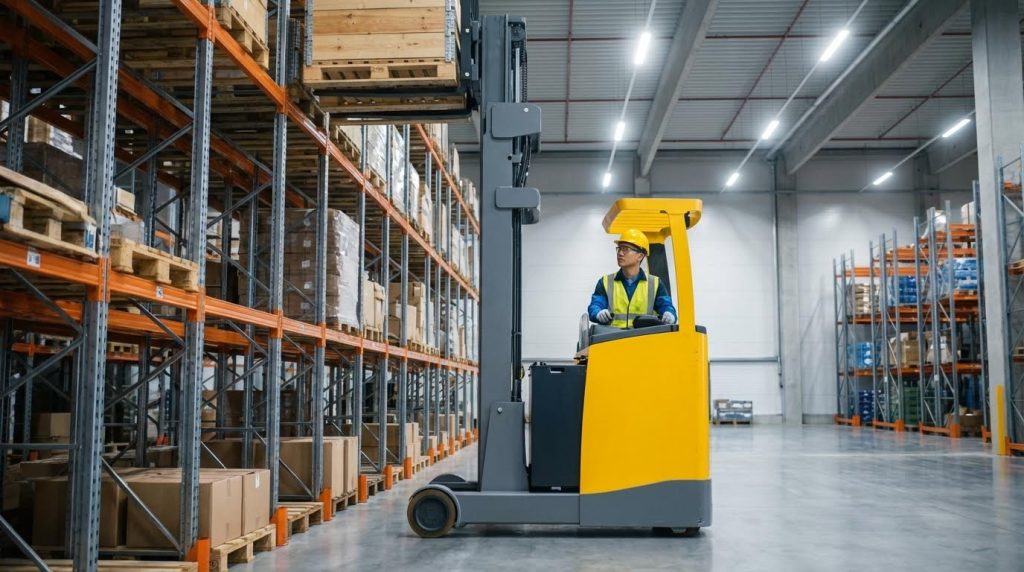
This section explains how to operate an electric forklift safely while traveling, lifting, and working on slopes so you avoid collisions, falling loads, and tipovers in your facility.
- Goal: Control speed, steering, and mast – Prevents loss of control and protects pedestrians.
- Goal: Handle loads within the rated capacity – Maintains stability and protects your racking and product.
- Goal: Respect ramps and the stability triangle – Reduces risk of side and forward tipover.
Traveling, steering, and speed management
Safe traveling, steering, and speed management mean you always move at a speed and in a manner that lets you stop safely and maintain full control of the electric forklift.
- Mount/dismount correctly: Use three points of contact, clean hands and shoes, and never jump – Reduces slips when getting on/off the truck.
- Check your path: Look in all directions before moving and always in the direction of travel – Prevents collisions with people, racks, and doors.
- Control speed: Travel only as fast as you can safely stop; slow on wet or slippery floors and in tight aisles – Prevents skids and loss of steering.
- Use the horn: Sound the horn at cross aisles, blind corners, and when vision is obstructed – Warns pedestrians and other trucks.
- Keep distance: Maintain roughly three truck lengths from other forklifts – Gives enough stopping distance if the lead truck brakes suddenly.
- Smooth steering: Turn with slow, steady steering inputs and reduced speed – Limits lateral forces that can cause tipover.
- Direction changes: Come to a complete stop before changing from forward to reverse or back – Protects drive motors and prevents uncontrolled lurching.
- Reverse safely: Look in the direction of travel, use horn and warning lights, and use spotters or mirrors if needed – Controls the high risk of backing accidents.
- Respect traffic rules: Obey site speed limits, yield to emergency vehicles, and never overtake at intersections or in blind spots – Keeps truck traffic predictable and safer.
- Stay clear of hazards: Avoid loose objects, potholes, dock edges, and unsecured dockboards – Prevents load shift and truck instability.
| Driving Situation | Recommended Action | Operational Impact |
|---|---|---|
| Approaching cross aisle or blind corner | Slow to walking speed and sound horn | Pedestrians and other trucks get warning before you appear |
| Wet or dusty floor | Reduce speed and avoid sharp steering | Less risk of skidding or sliding into racks |
| Reversing in a congested area | Use horn, lights, and spotter or mirrors | Improves visibility behind the truck and reduces strike risk |
| Following another forklift | Keep about three truck lengths gap | Space to stop if the front truck brakes hard |
| Crossing rail tracks | Cross diagonally and slowly | Reduces shocks to the mast and load |
Regulators require operators to travel at speeds that allow safe stopping under all conditions and to slow down on wet floors and turns when operating powered industrial trucks. Understanding these rules is a core part of how to operate an electric forklift safely in any warehouse layout.
💡 Field Engineer’s Note: In narrow aisles under 3.0 m wide, many near-misses come from tail swing. Always visualize the rear end path of the truck, not just the forks, before you turn.
When and where to park during short stops
For short stops, park only in authorized areas on hard, level ground. Lower the forks fully, neutralize controls, apply the parking brake, and shut off power. Never block fire aisles, stairways, exits, or access to fire equipment. If you must park on a slope, block the wheels to prevent roll-away. A truck is considered “unattended” if you are more than about 7.5 m away or out of sight, and in that case full parking procedures must be followed. These practices align with powered industrial truck parking guidance for safe facilities. Parking requirements help prevent unintended movement and unauthorized use.
Load handling, mast operation, and visibility
Safe load handling means you keep every lift within the truck’s rated capacity, use the mast correctly, and maintain clear visibility before moving or stacking.
- Know the capacity: Check the nameplate for rated capacity at a given load center – Prevents overloading that can cause forward tipover.
- Fork spacing: Adjust forks as wide as possible under the load – Spreads weight and reduces pallet breakage.
- Center the load: Keep the load centered and against the backrest – Reduces the effective load center and increases stability.
- Lift only when stopped: Raise or lower loads only when the truck is stationary – Avoids dynamic instability from moving mast and chassis together.
- Tilt back to travel: Slightly tilt the mast back to stabilize the load against the backrest – Helps prevent the load sliding or falling forward.
- Keep low while traveling: Travel with forks about 100–150 mm (up to ~150 mm / 6 in) above the floor – Lowers the combined center of gravity.
- Stacking and destacking: Approach square to the rack, stop, then lift to height, level the forks, and move slowly – Reduces rack impacts and pallet damage.
- Unstable or tall loads: Use straps, shrink-wrap, or attachments; travel slower and avoid sudden moves – Prevents product from toppling.
- Visibility first: If the load blocks your view, drive in reverse with the load trailing when safe – Maintains a clear line of sight.
- Use visibility aids: Use mirrors, spotters, and adequate lighting in low-light areas – Compensates for blind spots around the mast.
| Load Handling Task | Key Action | Operational Impact |
|---|---|---|
| Picking a pallet from floor level | Level forks, insert fully, spread forks wide, then lift | Reduces pallet board breakage and uneven loading |
| Traveling with load in warehouse | Forks 100–150 mm off floor, mast slightly back | Improves stability and clears minor floor defects |
| Placing pallet in racking at 4–6 m height | Stop, lift to height, level forks, inch forward slowly | Prevents pushing racking or dislodging adjacent pallets |
| Handling poorly wrapped or top-heavy load | Secure load, reduce speed, avoid sharp turns | Minimizes risk of product falling from height |
| Load blocks forward view | Drive in reverse when layout and pedestrians allow | Keeps operator’s view clear along travel path |
Safe forklift operation guidelines state that loads should only be raised when the truck is stationary, kept low during travel, and always within the rated capacity, with forks as far apart as possible and the load tilted back against the backrest to maintain stability and prevent falling loads. These practices are central to how to operate an electric forklift safely in busy, high-bay warehouses.
Visibility is equally critical. Operators must maintain a clear view of the path, use horns at obstructed locations, and rely on spotters, mirrors, or extra lighting where general lighting is low, especially near dock edges and doorways to prevent collisions and dock falls.
💡 Field Engineer’s Note: In cold stores or dusty environments, mast channels and chains can bind slightly. Always lift and lower in short test strokes before handling tall loads at 6–8 m to feel for rough spots.
How to approach docks, doors, and elevators
When approaching loading docks and doors, slow down and keep loads low. Stay well back from dock edges; many facilities mark a yellow warning strip 0.6–1.0 m from the edge to cue operators. Ensure dockboards or bridge plates are secured before crossing. For elevators, approach slowly, enter squarely after the elevator is leveled, and set the brake once inside. These steps follow safe travel practices for powered industrial trucks and significantly reduce fall and crush hazards at transfer points. Safe travel guidance emphasizes extra caution in these transition zones.
Ramps, tipover risks, and stability triangle
Ramps, tipover risks, and the stability triangle relate to how the forklift’s center of gravity moves when you drive on slopes, turn, or lift, and how to keep it inside the safety zone.
- Understand the stability triangle: The truck’s support points form a triangle; the combined center of gravity of truck plus load must stay inside it – Prevents side and forward tipovers.
- Respect capacity on slopes: A load that is safe on level ground can become unsafe on a ramp – Gravity shifts the center of mass forward or sideways.
- Travel orientation on ramps (loaded): Drive forward up the ramp with load upgrade; drive in reverse down the ramp with load upgrade – Keeps the heavy load uphill and reduces forward tipover risk.
- Travel orientation on ramps (unloaded): Keep forks downgrade when unladen – Maintains better traction and steering control.
- No turning on grades: Never turn on a slope – Side forces plus slope can push the center of gravity outside the triangle.
- Slow on grades: Ascend and descend slowly with smooth braking – Prevents momentum from carrying the truck past its stability limits.
- Fork height on ramps: Keep forks low, just clearing the surface – Reduces the height of the combined center of gravity.
- Seat belt and posture: Always wear the seat belt and stay within the operator compartment – Protects you if a tipover occurs.
- Tipover response (sit-down trucks): If a tip starts, stay in the truck, hold the wheel, and brace with feet – Staying inside the protective frame is safer than jumping.
| Ramp / Slope Scenario | Required Technique | Operational Impact |
|---|---|---|
| Loaded truck going up ramp | Drive forward, load upgrade, low forks | Reduces risk of truck flipping backward or losing load |
| Loaded truck going down ramp | Back down slowly, load upgrade | Keeps heavy mass uphill and within stability triangle |
| Unloaded truck on ramp | Travel with forks downgrade | Improves traction and steering on drive wheels |
| Need to change direction on slope | Do it on level ground only | Avoids combining turning forces with slope-induced instability |
| Unexpected side tip starting | Stay seated, hold wheel, brace feet | Uses overhead guard and frame as protection zone |
Guidance for powered industrial trucks specifies that loaded trucks must be driven forward up ramps with the load upgrade and in reverse down ramps with the load upgrade, that unloaded trucks should keep forks downgrade, and that turning on grades is prohibited to prevent lateral tipovers when using ramps and inclines. For sit-down counterbalanced trucks, operators are instructed to remain in the seat, hold the steering wheel, and brace their feet if a tipover occurs, rather than attempting to jump clear.
💡 Field Engineer’s Note: Many indoor ramps are steeper than they look—often 8–12%. Before assigning an electric forklift to a route, test the ramp with a full-rated load and verify the truck can start, stop, and hold position without wheel spin.
Practical checklist for ramps and stability
Before using any ramp with an electric forklift, confirm the surface is clean, dry, and free of loose material. Verify the gradient is within the truck manufacturer’s rated gradeability. Always approach straight, never diagonally. With a load, keep it uphill and low; without a load, keep forks downgrade. Do not park on ramps, but if you must stop briefly, hold the truck with the service brake and, where possible, the parking brake, never by “riding” the inching pedal or traction control. These practices align with established ramp and tipover prevention guidance for powered industrial trucks and are essential to how to operate an electric forklift safely in multi-level facilities.
Battery Charging, Maintenance, And TCO Factors
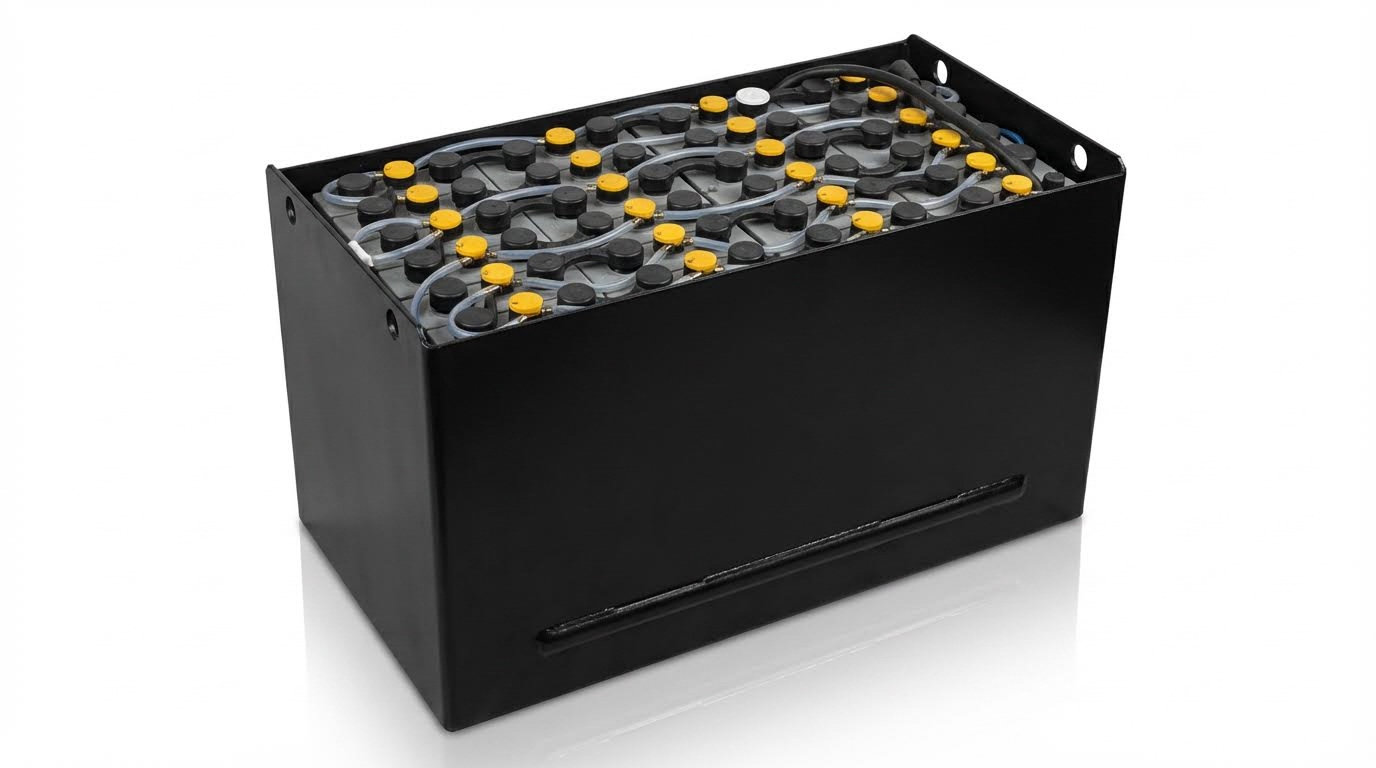
Battery charging, maintenance, and total cost of ownership (TCO) determine how economically and safely you can run electric forklifts across multi‑shift operations. If you want to master how to operate an electric forklift efficiently, you must treat the battery as a critical asset, not a consumable.
Safe battery charging areas and procedures
Safe battery charging areas and procedures prevent fires, explosions, and acid burns while your electric forklifts are parked and connected to chargers.
- Designated area only: Charge batteries only in marked charging bays – keeps sparks, pedestrians, and other equipment away from a high‑risk zone.
- Fire protection and spill response: Provide suitable extinguishers, water for neutralizing spills, and soda ash or similar neutralizer – controls fires and acid leaks before they spread.
- Eyewash and safety shower: Install an eyewash that can run for at least 15 minutes – meets good‑practice guidance for sulfuric‑acid exposure.
- Ventilation for hydrogen gas: Ensure strong natural or mechanical ventilation above charging stands – prevents hydrogen accumulation and explosion risk during gassing.
- No ignition sources: Prohibit smoking, open flames, grinding, or arcing tools in the charging zone – removes ignition sources from a flammable atmosphere.
- Trained personnel only: Allow only trained staff to connect, disconnect, and top up batteries – reduces mistakes with acid, cables, and ventilation.
| Charging Area Requirement | What It Involves | Operational Impact |
|---|---|---|
| Fire protection | Dry chemical, CO₂, or foam extinguisher sized for electrical/chemical fires | Limits downtime and damage if a battery or charger ignites |
| Spill neutralization | Soda ash or equivalent, plus ample water supply | Lets staff quickly neutralize and wash down acid splashes |
| Ventilation | Air changes sized to the number of batteries and chargers | Prevents hydrogen build‑up and allows safe multi‑battery charging |
| Eyewash station | Hands‑free operation, 15‑minute continuous flow | Enables immediate response to eye/face splashes during battery work |
| Physical layout | Level floor, wheel stops, clear aisle markings | Prevents roll‑away and impacts while trucks are plugged in |
- Step 1: Park and secure the truck – set parking brake, lower forks, neutralize controls to prevent unintended movement.
- Step 2: Open battery compartment and check ventilation – open covers so heat and hydrogen can escape.
- Step 3: Put on PPE (goggles/face shield, gloves, apron) – protects against acid splashes during cable connection or watering.
- Step 4: Inspect cables and connectors – damaged insulation or loose lugs can arc and start fires.
- Step 5: Connect charger with power off – prevents live connection arcs at the plug.
- Step 6: Switch on charger and verify correct mode – avoids overcharging or wrong profile that shortens battery life.
- Step 7: After charging, check electrolyte level and top up with water if required – maintains plate coverage and capacity.
- Step 8: Turn off charger, then disconnect cables – again, reduces arcing and connector damage.
Why charging areas matter when learning how to operate an electric forklift
Many “how to operate an electric forklift” guides focus only on driving. In real facilities, most serious electric‑truck incidents come from poor charging‑area design: inadequate ventilation, no eyewash, or untrained staff handling acid.
💡 Field Engineer’s Note: In cold rooms or high‑humidity docks, condensation on battery tops can create stray leakage paths and corrosion. Keep charging areas dry, wipe battery tops regularly, and avoid placing chargers where wash‑down water can spray onto live equipment.
Battery care, life cycles, and Li‑ion options
Battery care, life cycles, and Li‑ion options determine how many years of reliable shifts you get from each pack and what your real cost per operating hour is.
- Cycle life basics: A typical lead‑acid traction battery lasts around 2,000 full charge/discharge cycles under normal use – roughly five years in single‑shift duty if treated correctly.
- Avoid deep discharge: Do not routinely run below the recommended state of charge – deep discharge warps plates and shortens life.
- Avoid chronic undercharge: Ending shifts half‑charged and never equalizing – leads to sulfation and loss of capacity.
- Temperature control: Extreme heat accelerates grid corrosion, extreme cold cuts available capacity – both hurt productivity and life.
- Li‑ion advantages: Lithium‑ion packs support opportunity charging and higher usable depth of discharge – ideal for multi‑shift, high‑throughput operations.
| Battery Type | Typical Life (Shifts/Cycles) | Maintenance Needs | Best For… |
|---|---|---|---|
| Lead‑acid traction | ≈ 2,000 cycles under normal conditions | Regular watering, equalization, terminal cleaning | Single‑shift or predictable 8‑hour duty with planned charging windows |
| Lead‑acid in harsh use | Reduced vs. 2,000 cycles if over/undercharged | More frequent checks, strict charging discipline | Sites that push batteries hard but cannot yet move to Li‑ion |
| Lithium‑ion | Higher effective cycles (varies by chemistry) | Minimal routine maintenance | Multi‑shift, opportunity‑charging, or high‑energy applications |
From a TCO point of view, the battery is often the single most expensive “wear item” on an electric forklift. Poor care can destroy a pack years early, effectively doubling your cost per operating hour.
- Step 1: Monitor state of charge during the shift – plan opportunity charging in natural breaks to avoid deep discharge.
- Step 2: Keep terminals and connectors clean and tight – reduces resistance, heat, and wasted energy.
- Step 3: Follow the manufacturer’s watering schedule – prevents exposed plates and capacity loss.
- Step 4: Schedule equalize charges as specified – balances cells and mitigates sulfation in lead‑acid batteries.
- Step 5: Track battery hours and cycles – lets you forecast replacement and compare TCO between lead‑acid and Li‑ion.
How battery choice affects how to operate an electric forklift day‑to‑day
With lead‑acid, operators usually run one full shift, then swap or charge, avoiding frequent short “opportunity” charges. With scissor platform lift, short top‑ups during breaks are normal, so supervisors can plan tighter multi‑shift schedules without battery swaps.
💡 Field Engineer’s Note: When you upgrade a fleet from lead‑acid to manual pallet jack, do not keep the old charging rules in your SOPs. Operators trained to “never opportunity charge” will under‑use drum dolly capability and you will not see the expected TCO or uptime gains.
Final Safety Procedures And Training Takeaways

This section turns daily habits into a simple, repeatable system so every operator knows exactly how to operate an electric forklift safely, every shift, in any facility layout.
Core end-of-shift and parking safety rules
End-of-shift parking and shutdown must leave the forklift stable, de‑energized, and clear of all pedestrian and emergency access routes.
- Lower forks fully: Always lower load‑engaging means to the floor – prevents someone walking into raised forks or a dropped load.
- Neutralize all controls: Return travel, lift, and tilt levers to neutral – avoids unintended motion if power is restored.
- Set parking brake: Apply the brake firmly – stops slow creep on smooth or slightly sloped floors.
- Shut off power: Turn off the key or main switch – prevents unauthorized use and saves battery charge.
- Block wheels on inclines: Use chocks on any slope – adds a mechanical backup to the parking brake.
- Use only authorized parking areas: Never block fire aisles, stairs, doors, or exits – keeps evacuation and emergency access clear.
Safety rules for unattended trucks define when extra precautions are mandatory. A powered industrial truck is considered “unattended” if the operator is 7.6 m (25 ft) away or out of direct view, so full parking procedures apply, including forks down, power off, and brakes set for parked and unattended status.
Checklist: safe parking in under 30 seconds
1) Stop on firm, level ground. 2) Neutralize controls. 3) Lower forks flat. 4) Set parking brake. 5) Turn off power. 6) Chock wheels on any incline. 7) Confirm you are not blocking doors, fire equipment, or walkways.
Non‑negotiable travel, speed, and visibility practices
Safe travel rules limit speed, control tail swing, and protect pedestrians, especially where sightlines are poor or floors are slippery.
- Control speed for stopping distance: Drive only as fast as you can safely stop in your current conditions – critical on wet or dusty concrete.
- Slow on turns and ramps: Reduce speed and steer smoothly – cuts lateral forces that cause tipovers.
- Maintain a clear view: Always look in the direction of travel – avoids backing into pedestrians or racking.
- Use the horn proactively: Sound at intersections, blind corners, and when reversing – warns pedestrians before you arrive.
- Respect following distance: Keep about three truck lengths from other trucks – gives space to brake without collision.
- Yield to emergency vehicles: Stop and let them pass – aligns with internal traffic rules and OSHA expectations.
- No horseplay or stunt driving: Zero tolerance – nearly all “stunts” end in impacts, dropped loads, or rollovers.
Forklifts must travel at speeds that allow them to stop safely under all conditions, with reduced speed on wet or slippery floors and during turns for speed and travel limits. Operators must look in all directions before moving, keep limbs inside the truck, and use established walkways and guardrails to separate pedestrians from forklift routes for safe travel practices.
💡 Field Engineer’s Note: In narrow aisles under 3.0 m wide, most electric forklifts need near‑walking speed to prevent rear‑end tail swing from clipping uprights or pedestrians stepping out of rack bays.
Standardized load handling and ramp protocol
Load handling rules must standardize fork position, mast tilt, and ramp behavior so stability and capacity are preserved in every move.
- Respect the data plate: Never exceed rated capacity at the stated load center – prevents mast and axle overload.
- Spread the forks: Adjust forks as wide as the pallet allows – reduces bending stress and side‑to‑side rocking.
- Lift only when stopped: Raise loads with the truck stationary – avoids combined dynamic and static stresses.
- Tilt back to stabilize: Slight back tilt against the backrest – keeps the center of gravity inside the stability triangle.
- Travel low: Keep loads about 100–150 mm (up to 150 mm ≈ 6 in) off the floor – improves visibility and reduces tipover leverage.
- Ramps with load uphill: On grades, keep the load on the uphill side; no turning on ramps – prevents lateral and longitudinal tipovers.
Loaded trucks must travel up ramps with the load upgrade and down ramps in reverse with the load upgrade, while unloaded trucks keep forks downgrade and must never turn on grades for ramp and incline rules. Before lifting, operators must verify that the load does not exceed capacity, adjust forks, raise only while stationary, and keep loads no more than about 150 mm (6 in) from the ground while traveling, with the load uphill on ramps to reduce tipover risk for structured load-handling procedures.
Tipover survival protocol (sit‑down electric)
If a sit‑down counterbalanced truck starts to tip, operators must stay in the truck, hold tight to the steering wheel, and brace their feet; they should not jump, and seatbelts must already be fastened to keep them within the protective frame for tipover response.
Battery charging, maintenance, and shutdown handover
Battery safety procedures must protect people from acid and hydrogen while maximizing battery life and readiness for the next shift.
- Use only designated charging areas: Charge where ventilation, fire protection, and eyewash are installed – controls hydrogen, heat, and acid risks.
- Apply PPE for battery work: Use face shield, goggles, acid‑resistant gloves and apron – prevents severe sulfuric acid burns.
- Secure the truck before charging: Park, brake, power off – prevents unintended movement during cable connection.
- Keep battery covers open: Open during charging if specified – improves heat dissipation and gas venting.
- Avoid sparks and metal tools: Keep metallic objects away from uncovered batteries – reduces short‑circuit and ignition hazards.
- Top up water after charge: Check electrolyte after charging, not before – prevents acid boil‑over.
- Monitor cycles and condition: Track charge/discharge cycles and performance – feeds into TCO and replacement planning.
Battery charging areas must provide fire protection, an eyewash station with a 15‑minute flow, proper ventilation to prevent hydrogen accumulation, neutralizing materials, and suitable extinguishers, while banning smoking, open flames, and sparks for charging area requirements. Batteries must be charged only in designated areas by trained personnel, with the truck parked and brakes applied, PPE worn, vent caps functioning, covers open for heat dissipation, tools kept away, and water added after charging as needed for charging procedures. Under normal conditions, batteries last roughly 2,000 charge/discharge cycles, and overcharging, undercharging, or deep discharging must be avoided to extend life, with spent batteries recycled as hazardous waste where applicable for life cycle expectations.
💡 Field Engineer’s Note: For multi‑shift fleets, opportunity charging during breaks only works if operators plug in every time; without discipline, you see voltage sag by mid‑shift and rushed, unsafe behavior just to “limp back” to the charger.
Embedding training, checklists, and audits into daily work
Training must turn into routine behavior through checklists, supervision, and periodic refreshers focused on how to operate an electric forklift safely in your exact facility.
- Standardize pre‑shift checks: Use a daily electric forklift checklist – catches defects before they become incidents.
- Require documented inspections: Record findings in a pre‑trip book – creates traceability and maintenance triggers.
- Enforce three‑point contact: Train mounting/dismounting with hands and feet placed securely – reduces slips and falls at the truck.
- Refresh travel and horn use rules: Reinforce horn use at intersections and when backing – protects pedestrians in noisy environments.
- Simulate ramp and dock scenarios: Practice inclines and dockboard approaches in training – builds muscle memory before real loads.
- Audit parking and charging behavior: Supervisors spot‑check end‑of‑shift habits – keeps procedures from slipping over time.
- Remove unsafe trucks from service: Teach operators to lock out and report defects – prevents “just one more run” with faulty equipment.
Daily visual and operational checks should cover leaks, tires, battery status, forks, mast, overhead guard, seat belt, labels, horn, gauges, lights, controls, and parking brake, with all findings documented in a Forklift Pre‑Trip Book for pre‑operational checks and documentation. Any powered industrial truck not in safe operating condition must be removed from service until defects are corrected, with preventive maintenance performed per manufacturer schedules and trucks kept clean using non‑combustible solvents with appropriate ventilation and fire precautions for removal from service and maintenance expectations.
When you train operators on how to operate an electric forklift, tie every rule back to these closing themes: inspect before use, control speed and visibility, respect capacity and ramps, park and charge correctly, and never operate a defective truck.

Final Safety Procedures And Training Takeaways
Safe electric forklift operation depends on disciplined routines, not one‑time training. Pre‑shift inspections, correct use of controls, and strict ramp and load rules all protect the stability triangle and keep the center of gravity where it belongs. When operators respect capacity plates, travel with low, tilted‑back loads, and follow upgrade rules on ramps, they turn abstract physics into real‑world protection against tipovers and falling loads.
Battery practices carry equal weight. Designated, ventilated charging areas, PPE, and correct charge cycles cut fire and acid risk while extending battery life and lowering total cost of ownership. Poor charging habits usually show up later as mid‑shift breakdowns, rushed driving, and avoidable incidents.
The most effective sites turn these principles into checklists, audits, and clear consequences. Supervisors must verify inspections, parking, and charging behavior. Operators must lock out unsafe trucks without fear of blame. As you expand your fleet with equipment from Atomoving, build procedures around these core ideas: inspect before use, drive so you can always stop safely, keep loads within rated geometry, treat the battery as a critical asset, and embed refresher training into your calendar. That system will keep people safe and trucks productive shift after shift.
Frequently Asked Questions
How to Operate an Electric Forklift Safely?
Operating an electric forklift involves specific steps to ensure safety and efficiency. Always travel in a rearward direction, whether the forklift is loaded or empty. Lower the forks and position them under the load, then lift the forks to raise the load from the ground. Move slowly and maintain a steady speed that suits the load size and considers other personnel working in the area. Safe Operating Procedures.
Do You Need Training to Operate an Electric Forklift?
Yes, proper training is essential to operate an electric forklift safely. Training typically includes formal instruction, practical training, and a performance evaluation. You can complete the formal instruction requirement online at your own pace. Certification ensures you understand the equipment and safety protocols. Forklift Certification Guide.
Should You Push or Pull an Electric Forklift?
For manual pallet jacks, pushing is generally safer and requires less energy compared to pulling, which can strain the lower back. However, electric forklifts are typically operated in a pulling position using a controller. This method provides better control and minimizes physical strain on the operator. Pallet Jack Operation Tips.