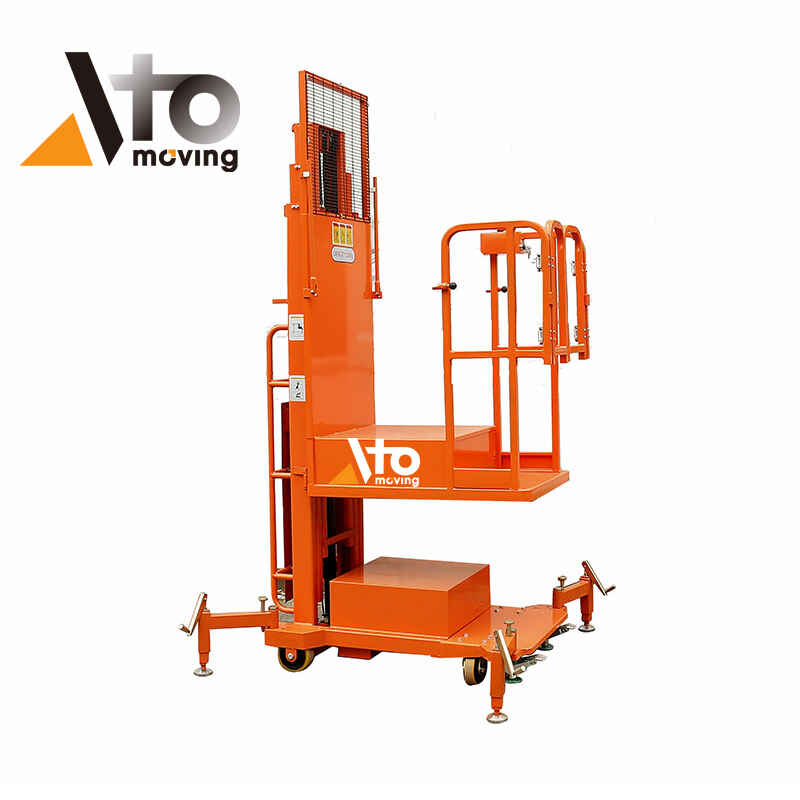
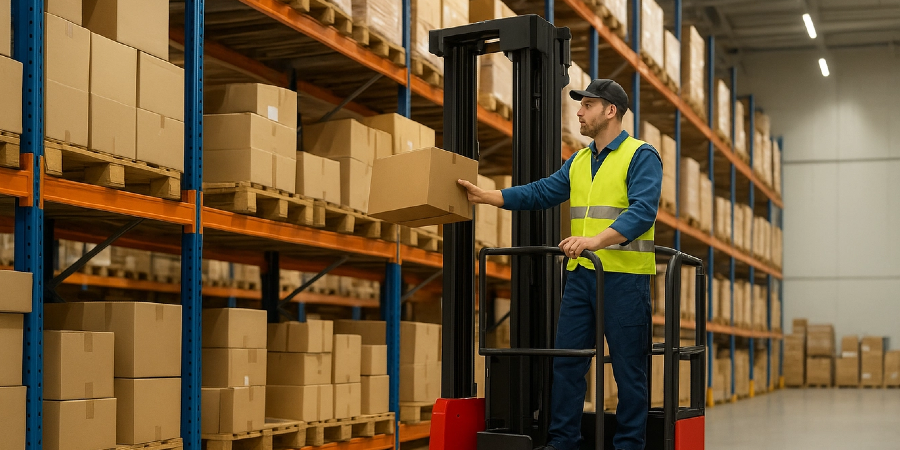
Warehouse cherry picker machines are electric lifting platforms that raise both operator and load into racking to improve high-level picking efficiency. This guide explains how to use a cherry picker machine warehouse safely, covering engineering limits, training, inspections, and typical applications. You will see how height, capacity, and power choices affect stability, lifecycle cost, and productivity in real warehouse operations.
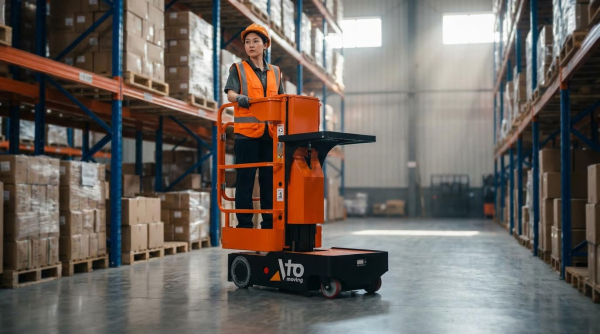
What Cherry Picker Machines Do In Warehouses
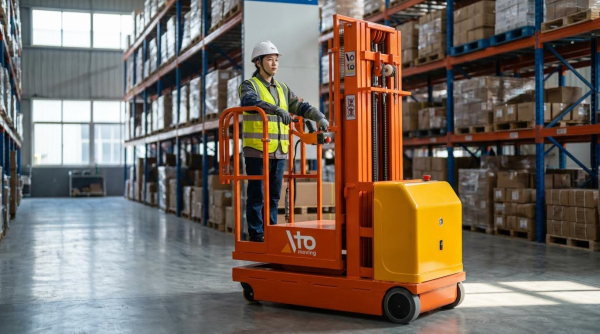
A warehouse order picker in a warehouse is a powered lift that raises both operator and load into racking to pick or store goods at height. In modern facilities, a cherry picker machine warehouse setup improves vertical storage density, picking accuracy, and safety when accessing levels from roughly 4.5 m up to 11 m or more.
Definition, classes, and typical specs
In warehouses, a cherry picker is an electric order picker or MEWP that lifts the operator with the load to specific rack locations for case or piece picking. It combines vertical lifting, horizontal travel, and precise positioning in narrow aisles.
- Definition: Electric order picker / MEWP that lifts operator and pallet or cage – Enables safe picking directly from rack beams.
- Typical height range: About 4.5–11 m working height – Covers most pallet racking up to very high bay systems.
- Typical capacity: Around 1,000–1,500 kg including operator and load – Sized for one operator plus a pallet or picking cage.
- Warehouse class: Usually Class II electric narrow aisle truck under OSHA – Optimized for tight aisles and racking work.
- Power source: Primarily battery-electric for indoor use – Low noise and zero local exhaust for enclosed warehouses.
- Primary tasks: Order picking, replenishment, cycle counting, light maintenance – Maximizes utilization of the same machine across tasks.
| Spec Category | Typical Range / Feature | Operational Impact in a Cherry Picker Machine Warehouse |
|---|---|---|
| Lift height | 4.5–11 m | Reaches 3–6 rack levels in a standard warehouse, enabling high-density vertical storage. |
| Rated capacity | 1,000–1,500 kg (incl. operator) | Supports one operator plus pallet or cage without exceeding stability limits. |
| Truck class | Class II electric narrow aisle | Designed for aisles narrower than many counterbalance trucks, increasing usable pallet positions. |
| Power type | Battery-electric | Suited for indoor duty cycles with low noise and no exhaust fumes. |
| Typical applications | Order picking, replenishment, cycle counting | Aligns with e-commerce and high-SKU operations where case and piece picking dominate. |
| Working environment | Indoor racking aisles | Optimized for smooth floors and controlled climates, not rough outdoor yards. |
Cherry pickers used as MEWPs can also work up to about 6–20 m in some designs, supporting light maintenance and inventory work at higher elevations in larger facilities. Electric variants are preferred indoors because they reduce emissions and noise, which is critical for enclosed warehouse operations. Higher-reach MEWP-style cherry pickers are common in tall warehouses.
💡 Field Engineer’s Note: When you specify lift height for a cherry picker machine warehouse project, always add at least 500–700 mm over your top beam level for safe reach and maneuvering room; anything tighter slows picking and tempts operators into unsafe stretching.
How cherry pickers compare to other warehouse trucks
Compared with reach trucks or turret trucks, cherry pickers lift the operator with the load, which is ideal for case and piece picking rather than full pallet handling. They trade some pallet throughput for much better picking accuracy and ergonomics at each slot.
Core components and safety-critical features
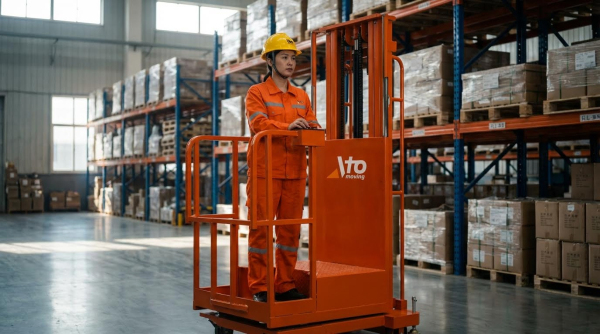
Warehouse cherry pickers are built around a drive chassis, mast or lifting structure, operator platform, and electric/hydraulic systems, all equipped with multiple engineered safety layers. Understanding these components helps you judge whether a machine is fit for your specific racking layout and duty cycle.
- Drive and steering unit: Electric traction motor, drive axle, and steering system – Provides precise low-speed control in narrow aisles.
- Mast / lift structure: Mast sections, chains, and hydraulic cylinders – Raises and lowers the platform smoothly while maintaining rigidity.
- Operator platform: Guardrails, gates, controls, and anchorage points – Protects the operator and supports fall protection systems.
- Control system: Joysticks, steering wheel/knob, and electronic controllers – Coordinates drive, lift, and braking for safe, predictable response.
- Power system: Battery pack and charger – Determines run time, charging windows, and overall lifecycle cost.
- Hydraulic subsystem: Pump, valves, hoses, and cylinders – Drives lifting and lowering while maintaining load control.
| Component / Feature | Function | Safety or Operational Impact |
|---|---|---|
| Guardrailed platform | Encloses operator at height | Reduces fall risk when combined with harness and lanyard. |
| Deadman pedal / enable switch | Requires constant pressure for movement | Stops travel or lift if the operator steps off or loses control. |
| Emergency stop buttons | Instantly cuts power to motion circuits | Allows rapid shutdown in case of entrapment or malfunction. |
| Emergency lowering system | Ground-level or manual descent controls | Enables rescue if the platform controls fail or power is lost. |
| Interlocks and alarms | Prevent unsafe movements or overloads | Mitigate tip-over and crush hazards in tight racking. |
| Hydraulic integrity (hoses, fittings) | Transfers pressure to lift cylinders | Leak-free system maintains stable lifting and predictable descent. |
| Battery and charger management | Supplies electrical energy | Proper charging and maintenance avoid mid-shift failures and extend service life. |
The hydraulic subsystem must maintain leak-free hoses, correct torque on fittings, and smooth cylinder operation to ensure predictable lifting performance. Technicians check hose routing, bend radius, and clamp condition, while clean oil with the right viscosity and good filtration improves response time and component longevity. Hydraulic health directly affects safety and uptime.
Structural integrity checks cover the chassis, mast or boom sections, welds, and platform guardrails, looking for cracks, deformation, corrosion, or loose fasteners at high-stress points. Any anomaly should trigger immediate removal from service and inspection by a competent person to prevent catastrophic failure at height. Formal structural assessments are a key part of safe operation.
- Pre-use inspection: Visual and functional checks on structure, hydraulics, electrics, and safety devices – Catches defects before they create an incident.
- Tires and wheels: Correct size, condition, and pressure – Directly influence traction, braking, and lateral stability.
- Alarms and interlocks: Tilt, overload, and motion alarms – Warn operators before stability limits are exceeded.
- Battery management: SOC checks, correct charging, clean terminals – Prevents unexpected shutdowns while elevated.
- Emergency planning: Ground controls and rescue procedures – Ensures a stuck platform can be lowered quickly and safely.
Daily pre-use inspections in a cherry picker machine warehouse should cover leaks, damaged hoses, cracked welds, loose fasteners, tire condition, and the integrity of platforms and guardrails. Functional tests verify both ground and platform controls, emergency lowering, alarms, interlocks, and the deadman switch before the unit is released for service. Structured pre-use checks and emergency plans sharply reduce incident risk.
💡 Field Engineer’s Note: In real warehouses, most “mystery” mast or control faults on cherry pickers trace back to weak batteries or dirty terminals; enforcing basic battery checks at the start of each shift eliminates a surprising amount of downtime and mid-aisle breakdowns.
Why tire and wheel choices matter more than you think
Even on smooth warehouse floors, incorrect tire size or ply rating can change the machine’s effective center of gravity and braking performance. Verifying that tires match the manufacturer’s specification before returning a repaired unit to service is a simple but critical stability safeguard.
Engineering, Safety Rules, And Operator Training
Safe use of any warehouse order picker machine warehouse operation depends on understanding stability physics, following OSHA/ANSI-style rules, and running serious, structured operator training and evaluations. This section links engineering limits to day-to-day behaviors.
Stability limits, load charts, and narrow aisle risks
Stability for a order picking machines warehouse fleet is governed by the truck’s geometry, load position, platform height, and floor conditions, all summarized in the manufacturer’s capacity and load charts. Ignore those charts and you are gambling with tip-over risk.
- Stability Triangle: The truck’s center of gravity must stay inside the stability triangle – prevents tip-over when lifting or steering.
- Rated Capacity: Capacity is defined for a specific load center and height – keeps you from overloading at high lift.
- Dynamic Effects: Braking, turning, or hitting bumps shifts the center of gravity – small impacts at 8 m become big forces at the base.
- Floor Conditions: Uneven, cracked, or sloped floors reduce stability – even a 2–3% slope can matter at full height.
- Operator Position: Leaning or climbing the rails changes load distribution – adds an unplanned moment arm at height.
Stability limits and operating hazards for aerial platform depend on load distribution, outreach, platform height, and ground conditions, with main hazards including tip-over, crush injuries, falls, and collisions. Overloading or driving on uneven surfaces sharply increases these risks, especially in narrow aisles where clearance is tight and escape paths are limited.
| Stability Factor | Typical Engineering Limit / Practice | Operational Impact in Warehouse |
|---|---|---|
| Rated capacity | Up to about 1,000–1,500 kg including operator and load | Controls how many cartons or totes you can pick per lift without exceeding design limits |
| Working height | Commonly 4.5–11 m in racking; some MEWPs up to 20 m | Higher levels mean slower travel and stricter floor and load discipline |
| Travel when elevated | Reduced speed only, straight line, smooth floor | Prevents lateral instability and sudden CG shifts in narrow aisles |
| Floor gradient | Effectively 0% inside warehouse; avoid ramps at height | Even slight slopes can pull CG toward one wheel set, increasing tip risk |
| Aisle width | Narrow aisle / VNA designed just wider than truck chassis | Leaves minimal clearance; any sway, mis-steer, or rack impact can be critical |
| Guidance system | Rail or wire guidance in very narrow aisles | Keeps truck centered and reduces steering errors that lead to rack strikes |
In a scissor platform warehouse, narrow aisles multiply risk because there is less lateral escape distance if the platform sways or the truck drifts toward racking. Best practice is to use guidance systems in very narrow aisles to maintain stability and minimize collisions with racking or pedestrians, especially when the platform is elevated and visibility is limited.
- Rail/Wire Guidance: Keeps the truck centered automatically – reduces steering mistakes in 1.6–1.8 m aisles.
- Speed Limiting When Elevated: The control system reduces travel speed at height – cuts dynamic load shifts.
- No Turning at Height: Turning is restricted or strongly discouraged when the platform is raised – prevents lateral tip-over.
- Clear Aisle Housekeeping: No pallets, wrap, or debris in aisles – avoids sudden wheel impacts that jolt the mast.
- Load Profile Control: Long or bulky loads are limited or centered – stops overhanging cartons from striking racks.
💡 Field Engineer’s Note: If you see wheel marks or chipped concrete near racking in a scissor platform lift warehouse, treat that zone as a stability red flag. Check floor flatness, slow the travel speed at height, and audit whether operators are turning or braking hard while elevated.
How operators should read and use load charts
Operators must match three things on the load chart: platform height, load center, and rated capacity. They should verify that the actual pallet or carton stack matches the assumed load center and that any attachments, deck extensions, or added tools are included in the total weight. If the chart does not list a combination of height and load, they must treat it as not allowed, not “probably OK.”
OSHA/ANSI compliance, PPE, and fall protection
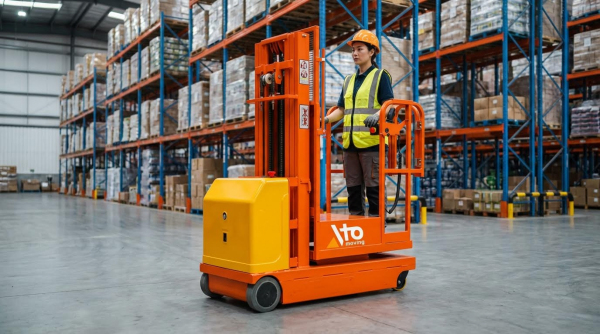
Regulatory-style compliance for a hydraulic pallet truck warehouse centers on aerial work platform and powered industrial truck rules, mandatory fall protection, and consistent PPE use. Only trained, authorized personnel may operate these machines under OSHA-type requirements, and employers must provide compliant safety training and supervision. Only trained and authorized personnel are permitted to operate aerial lift equipment.
- Regulatory Framework: Rules mirror OSHA powered industrial truck and MEWP standards plus local OHSA / CSA or similar regulations – defines legal minimums. Training covers relevant legislation and standards.
- Formal Training Required: Classroom plus hands-on instruction and evaluation before operation – no “learn on the job” driving. Employers are responsible for providing safety training.
- Fall Protection Mandatory: Full-body harness with lanyard anchored to approved point on the platform – prevents fatal falls if someone trips or climbs the rails.
- Pre-Operational Inspection: Check structural, hydraulic, electrical, and control systems before each shift – catches failures before people go up. Pre-operational inspection includes stability and fuel source checks; Daily pre-use inspections cover structure, hydraulics, electrics, controls, and safety devices.
- Hazard Identification: Operators learn to spot overhead obstructions, pedestrian traffic, pinch points, and unstable loads – turns rules into real-time decisions. Training includes hazard identification and workplace inspections.
| Requirement Area | What Must Be Done | Operational Impact in a Cherry Picker Machine Warehouse |
|---|---|---|
| Authorization | Only trained and certified operators may use MEWPs | Reduces incident rate; simplifies incident investigations and liability control |
| Pre-use inspection | Daily check of structure, hydraulics, electrics, controls, safety devices | Prevents use of unsafe machines and reduces unplanned breakdowns |
| PPE | Safety shoes, hi-vis, hard hat where required, gloves, eye protection | Protects against dropped objects, collisions, and sharp packaging |
| Fall protection | Full-body harness and lanyard attached to approved anchor on platform | Mitigates falls from height during picking or maintenance |
| Emergency planning | Documented rescue procedures and drills for power loss or medical events | Ensures stranded operators can be lowered quickly and safely |
Fall protection is non-negotiable when an operator is raised with the platform. Training requirements for warehouse cherry pickers specify that operators must wear full-body harnesses anchored to approved points on the platform and understand emergency lowering procedures and fall protection protocols as part of their formal instruction.
- Harness Fit and Inspection: Operators check webbing, stitching, and hardware each shift – damaged gear goes out of service.
- Correct Anchorage: Lanyard attaches only to designated anchor points, never to guardrails – guardrails are not engineered as fall arrest anchors.
- Lanyard Length: Use the shortest practical lanyard – limits free-fall distance and swing fall inside the platform envelope.
- No Climbing: Standing on rails or boxes is banned – keeps the center of mass inside the guardrail system.
- Rescue Plan: Ground staff know how to use base controls and manual lowering – avoids leaving someone suspended or stranded at height. Emergency plans include ground rescue and manual lowering procedures.
💡 Field Engineer’s Note: During audits I often find harnesses clipped to the nearest rail because the anchor point is “hard to reach.” Fix this by repositioning approved anchors where operators naturally stand, and retrain until every person can demonstrate a correct tie-off with eyes closed.
Typical PPE package for indoor warehouse cherry picker work
A practical PPE set usually includes safety footwear with toe protection, high-visibility vest or jacket, light work gloves, safety glasses, and a full-body harness with energy-absorbing lanyard. Where overhead work or mixed traffic with heavy pallets exists, a hard hat may also be required. Site rules should specify exactly which items are mandatory by task and area.
Training structure, evaluations, and re-certification
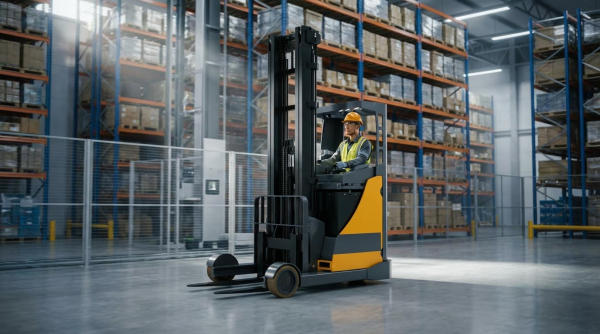
Effective training for a drum dolly warehouse follows a structured path: theory, hands-on practice, formal evaluation, and periodic re-certification. This aligns with OSHA-style requirements that only trained and authorized personnel operate aerial lifts and industrial trucks. OSHA requires employers to provide safety training and ensure operator competency.
- Classroom / Theory: Covers controls, stability, load charts, hazards, and legislation – gives operators the “why” behind every rule.
- Hands-On Familiarization: Supervised driving, lifting, and positioning with real loads – builds muscle memory and respect for inertia.
- Workplace-Specific Training: Adapts generic training to local aisles, racking, and traffic patterns – turns theory into site-safe practice.
- Formal Evaluation: Practical test plus written or verbal quiz – proves the operator can apply knowledge under pressure.
- Re-Certification: Periodic refreshers and re-tests, especially after incidents or near misses – corrects drift and bad habits.
Operator certification requirements for cherry pickers specify that operators need formal training and certification before use, covering safe operation, hazard assessment, and equipment selection, while employers must ensure only competent, medically fit persons operate MEWPs and that training records remain current. Supervisors also need specific training to plan work at height and enforce site rules.
| Training Stage | Key Content | Best For… |
|---|---|---|
| Theory / Classroom | Stability principles, load charts, PPE, regulations, hazard identification | New hires and cross-training staff moving into order-picking roles |
| Practical Operation | Starting, stopping, elevating, steering in aisles, emergency lowering | Building confidence before solo operation in live warehouse traffic |
| Site-Specific Induction | Local traffic routes, WMS workflows, restricted zones, emergency exits | Operators transferring between buildings or layouts |
| Evaluation & Sign-Off | Observed driving test and knowledge check | Documented authorization for compliance and insurance purposes |
| Refresher / Re-certification | Updates on incidents, new equipment, or changed procedures | Maintaining consistent safety culture over multi-year periods |
- Pre-Operational Checks in Training: Programs teach operators to inspect stability, fuel or battery condition, and safety systems before use – turns inspection into a habit, not a formality. Pre-operational inspection is a core training topic.
- Dynamic Forces: Training explains how speed, turning, and braking affect load stability – helps operators understand why slow and smooth is safer. Dynamic forces and load stability are included in telehandler and aerial lift training.
- Practical Evaluation: Operators must demonstrate safe handling under various conditions, not just pass a written test – filters out people who freeze or rush under stress. Typical Warehouse Uses And Equipment Selection
This section explains how a cherry picker machine warehouse operation uses these lifts day-to-day and how to pick the right height, capacity, power, and guidance options for safe, efficient work.
Core applications and WMS integration
Cherry picker machines in warehouses mainly support person-up order picking, inventory control, and light maintenance inside racking, tightly integrated with your WMS and scanning devices for accuracy and traceability.
In a modern warehouse order picker warehouse, the unit lifts both operator and pallet or cage to the pick face so workers can handle cartons or eaches directly from the rack. Typical electric order-picking cherry pickers work between about 4.5 m and 11 m, covering low- to high-level picking in standard pallet racking and very narrow aisle (VNA) layouts. They are widely used for e‑commerce piece picking, replenishing fast-moving pick faces, cycle counting, and light maintenance such as replacing labels or checking sprinkler clearances inside the rack structure. For multi-purpose work at higher elevations, MEWP-type cherry pickers can reach roughly 6–20 m and are used for cycle counts, bulky or non-conveyable SKUs, and building maintenance inside the warehouse shell. Electric cherry pickers with battery power are preferred indoors for low noise and zero emissions.
Core Warehouse Application Typical Working Height Range Key Features Needed Operational Impact Case / piece picking in racking 4.5–11 m Person-up platform, pallet or cage, precise lift/drive control Enables fast, ergonomic picking in a order picking machines warehouse with minimal travel time per line. Inventory cycle counting 4.5–11 m (order picker) or 6–20 m (MEWP) Stable platform, WMS terminal, barcode/RFID scanner Improves inventory accuracy without shutting aisles, supports lean stock audits. Replenishing forward pick faces 4.5–9 m Good residual capacity, fine positioning, guardrails Reduces forklift touches and allows one operator to top up pick faces safely. Bulky / non-conveyable SKU picking 6–20 m (MEWP type) Larger platform, higher capacity, strong guardrails Allows direct handling of large, awkward items stored high in rack or on mezzanines. Light maintenance in racking zone 6–20 m MEWP platform, full-body harness anchor points Provides safe access for lights, sprinklers, signage without scaffolding. To keep data and material flows synchronized, many operators connect the cherry picker to the warehouse management system via onboard terminals or handheld devices. The WMS sends tasks and locations wirelessly, while barcode or RFID readers capture each pick or count, so the digital inventory matches what the operator actually touches. This tight integration cuts mis-picks, improves traceability, and reduces the time operators spend looking for locations.
- Person-up picking: Operator and load rise together – Eliminates separate lifting of pallets and reduces double handling.
- Cycle counting from the platform: Scan labels at height – Improves inventory accuracy without extra equipment.
- Light maintenance access: Use MEWPs instead of ladders – Reduces fall risk and setup time.
- Live WMS connection: Onboard terminal and scanners – Guides operators and records every move in real time.
How WMS integration changes daily cherry picker workflows
With RF or tablet-based WMS, the cherry picker operator receives a sequenced pick path, slot coordinates, and quantities. Each scan confirms the correct SKU and updates inventory instantly, which is critical in high-SKU e‑commerce environments where manual paper lists would create too many errors and delays.
💡 Field Engineer’s Note: When you add WMS terminals and scanners to cherry pickers, budget space and power on the platform and verify screen visibility at full height—glare and poor mounting often cause operators to lean or twist, which increases fall and musculoskeletal risks.
Choosing height, capacity, power, and guidance options
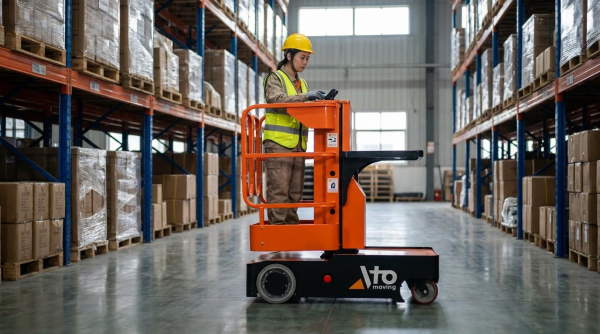
Choosing the right cherry picker machine warehouse configuration means matching platform height, capacity, power source, and guidance systems to your racking layout, aisle width, and pick profile.
From an engineering standpoint, the first filter is working height. You need a platform height that safely reaches the top beam plus at least 1.0 m for guardrails and operator reach, while still fitting under any roof or service obstructions. For typical pallet racking in the 6–11 m range, an electric order picker with about 9–11 m maximum platform height covers most SKUs. For very tall buildings or roof work up to around 20 m, a MEWP-type cherry picker is more appropriate. Load capacity must account for the operator, tools, and the heaviest expected pick or load container. Many warehouse cherry pickers support roughly 1,000–1,500 kg combined, but you must check the manufacturer’s load chart and derating at height rather than relying on nominal values.
Selection Factor Typical Options / Ranges Engineering Considerations Best For… Maximum working height Order picker: ~4.5–11 m; MEWP: ~6–20 m Must exceed top beam height while maintaining stability margins. Matching to building clear height and highest storage level. Rated capacity (platform + load) Approx. 1,000–1,500 kg total Check load charts; capacity usually reduces at maximum height. Ensuring safe handling of heavy cartons, totes, or maintenance tools. Power source Battery-electric for indoor; engine not recommended indoors Electric avoids emissions and reduces noise in enclosed spaces. Good battery management is essential. Multi-shift indoor operations and food, pharma, or e‑commerce warehouses. Aisle guidance Wire, rail, or free-range steering Guidance improves stability and reduces rack impacts in very narrow aisles. High-bay VNA picking with aisles near 1.5–1.8 m wide. Platform size and layout Narrow order picker deck vs larger MEWP platform Larger decks handle bulkier SKUs but need more aisle clearance. Operations handling large cartons or irregular items at height. Duty cycle and battery size Single- vs multi-shift packs Heavier picking at height increases energy use and charging needs. High-throughput cherry picker machine warehouse operations. Indoor warehouses nearly always use battery-electric cherry pickers because they avoid exhaust fumes and cut noise, improving air quality and communication. Battery management routines—daily state-of-charge checks, correct charging, and terminal maintenance—are critical to avoid mid-shift failures and to extend battery life. In high-intensity operations, you may need larger capacity packs or spare batteries with fast-change systems.
- Height selection: Size for your highest pick face plus safety margin – Prevents operators from stretching or standing on objects at height.
- Capacity selection: Include operator, tools, and worst-case load – Respects stability limits and reduces tip-over risk.
- Power selection: Choose electric for indoor work – Improves air quality and supports long, predictable duty cycles.
- Guidance selection: Add wire or rail guidance in narrow aisles – Reduces rack damage and operator steering fatigue.
Checking fit with your racking and floors
Before final selection, verify the cherry picker’s overall height, wheel loadings, and turning radius against your rack clearances and floor slab specification. Very narrow aisles and older slabs may require guidance systems or load spreading to keep within design limits.
💡 Field Engineer’s Note: When you push platform heights beyond about 10–11 m in a cherry picker machine warehouse, even small floor unevenness or rack impacts feel amplified to the operator—invest in floor flatness, guidance, and conservative travel speeds at height to keep people confident and productive.
Final Thoughts On Safe, Efficient Cherry Picker Use
Safe cherry picker work in warehouses comes from matching engineering limits, equipment choice, and operator behavior as one system. Geometry, capacity, and floor quality define the stability envelope. Load charts, guidance systems, and speed limits keep the center of gravity inside that envelope during real picking cycles. Daily structural and hydraulic checks then protect against hidden failures at height.
OSHA-style rules, PPE, and fall protection turn this engineering into repeatable habits. Formal training, site-specific induction, and regular re-certification make sure operators understand why slow, smooth movements and correct tie-off matter. WMS integration and clear workflows then convert that safe platform into reliable productivity, with fewer mis-picks and less unplanned downtime.
For operations teams, the best practice is clear. Specify height, capacity, and power based on your top beam, heaviest load, and duty cycle, favoring battery-electric units indoors. Add rail or wire guidance in narrow aisles, and enforce strict pre-use inspections and harness use. For engineering and safety leaders, treat floor flatness, load charts, and training records as critical control documents. When you follow these principles consistently, a cherry picker fleet from suppliers such as Atomoving will deliver high storage density, fast picking, and a strong safety record in the same package.
Frequently Asked Questions
What is a cherry picker in a warehouse?
A cherry picker, also known as a boom lift or mobile elevating work platform (MEWP), is a type of aerial lift used in warehouses to reach high shelves or perform maintenance tasks at height. Unlike forklifts, which are primarily designed for lifting pallets, cherry pickers provide access to hard-to-reach areas with their extendable arms Aerial Work Platform Guide.
Can you use a cherry picker on uneven ground in a warehouse?
Some cherry pickers are designed to operate on slopes or uneven surfaces, such as rough terrain models with stabilizing features. However, it’s critical to ensure the ground is stable enough to support the machine and its load. For indoor warehouse use, electric or compact models are typically preferred for smoother floors Cherry Picker Guide.
Do you need training to operate a cherry picker in a warehouse?
Yes, proper training and certification are essential to safely operate a cherry picker. While smaller models may not always require a formal license, larger or more complex equipment often does. Training ensures compliance with safety regulations and reduces the risk of accidents IPAF Training Info.
What are the alternatives to using a cherry picker in a warehouse?
Alternatives to cherry pickers include scissor lifts for vertical-only access and spider lifts for restricted spaces. Scissor lifts are ideal for tight indoor environments, while spider lifts can navigate fragile floors or rough terrain. The choice depends on the specific needs of the task, such as height requirements and available space Spider Lift Options.