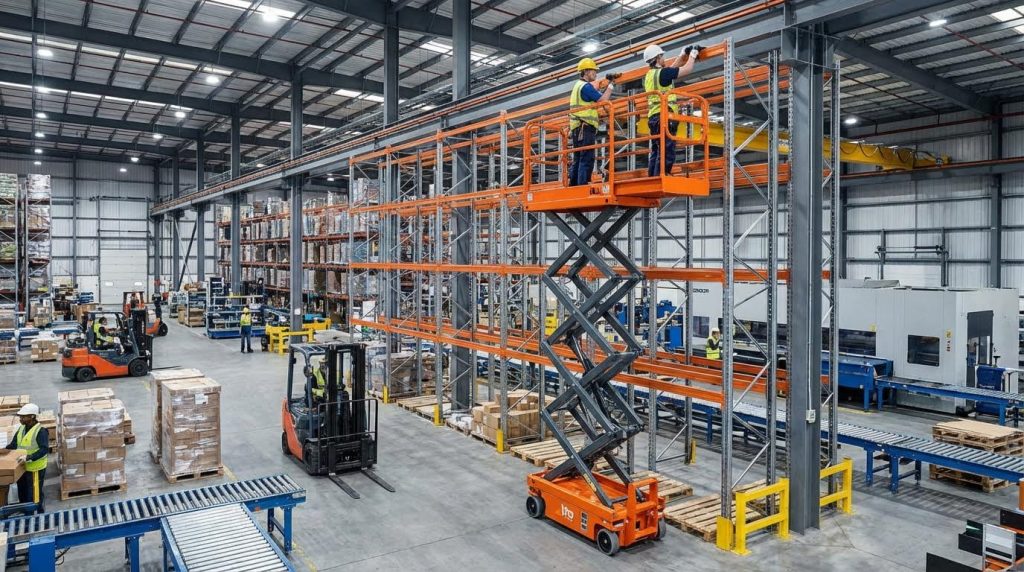
Knowing exactly which publications must be kept on the aerial platform is critical for legal compliance, safe operation, and passing audits. This guide breaks down the required manuals, plates, decals, inspection records, and training documents you must control on every unit. You will see what has to be physically on the platform, what can stay in site files, and how poor labeling or missing paperwork directly increases fall, tip-over, and electrocution risk. Use it as a practical checklist to keep your fleet compliant and your operators protected.
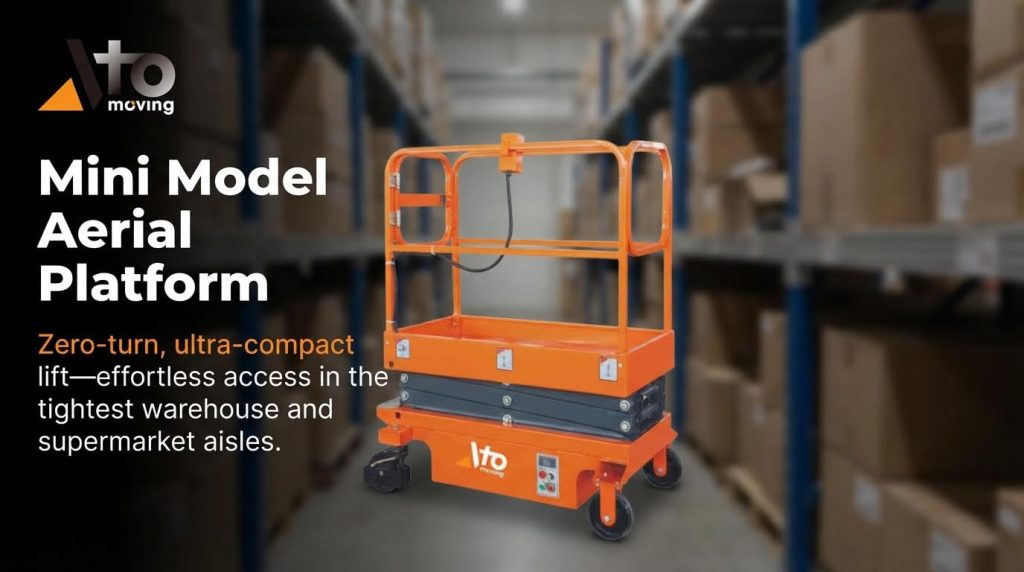
Core Publications And Labels Required On The Platform

Core publications and labels required on an aerial platform are the operator’s manual, configuration/capacity information, ANSI/OSHA compliance plates, and safety decals that stay readable and accessible on the machine at all times. This is the baseline answer to which publications must be kept on the aerial platform for legal use.
| Required Item On Platform | Key Contents | Storage / Location | Operational Impact |
|---|---|---|---|
| Operator’s manual | Normal and emergency operation, start/stop, positioning, capacities, occupants, configuration limits | Weather-resistant compartment on the unit, accessible from platform or base | Gives the operator exact limits and procedures, reducing misuse and tip-over risk per regulatory requirements. |
| Configuration / capacity charts | Capacities for all boom positions, outreach, extensions, wind limits, outrigger conditions | Decals or plates near platform controls and on base console | Prevents overloading in “reduced capacity” positions and with partial outrigger deployment. |
| ANSI compliance plate | Standard complied with, rated capacity, max platform height, hydraulic pressure, line voltage, cautions | Fixed metal or durable plate on chassis or turret | Proves design compliance and gives hard limits for height, pressure, and electrical rating for inspectors. |
| Safety and control decals | Warning pictograms, fall protection reminders, power line approach limits, function labels | Adjacent to each control lever/button, entry points, guardrails | Gives fast, language-independent cues that reduce wrong-control activation and electrocution risk. |
| Inspection / checklist documents (site practice) | Daily pre-use checklist, fault notes, lockout indication | Often kept in a weatherproof tube or box on the chassis | Supports proof of inspection and keeps unsafe units out of service. |
💡 Field Engineer’s Note: If I can’t read every plate and decal at arm’s length from the platform controls, I treat the machine as non-compliant and pull it from service until markings are restored.
Operator’s manual and configuration instructions
The operator’s manual and configuration instructions must be stored on the aerial platform in a weather-resistant compartment and must describe operation, emergency procedures, and all rated capacities for each allowed configuration. This is the core answer to which publications must be kept on the aerial platform from a day-to-day operator standpoint.
| Manual / Publication | Minimum Technical Content | Where It Must Be | Operational Impact |
|---|---|---|---|
| Operator’s manual | Normal operation, emergency lowering, start-up/shutdown, travel, positioning, hazard warnings | On the unit, in a weather-resistant container, accessible before and during use as required | Allows any trained operator to verify correct procedures on the spot, especially in emergencies. |
| Configuration instructions | Permitted configurations (e.g., jib extended/retracted), number of occupants, tools allowed, wind limits | Within the manual and often repeated as decals near controls | Prevents using “full capacity” figures in reduced-capacity positions. |
| Capacity data | Rated platform load in kg, including people, tools, and materials, for each configuration | Manual plus capacity plate/decals at control stations | Makes it clear when a load or crew size is unsafe at a given outreach or height. |
| Maintenance and inspection instructions | Intervals, test items, torque specs, hydraulic settings, inspection forms | In the same on-board manual or service supplement | Guides technicians so repairs and inspections restore original design performance. |
- Weather-resistant storage: Manual must be in a sealed box or compartment – keeps pages legible in rain, dust, and hydraulic oil, so operators can actually use it on site.
- Emergency procedures section: Must clearly describe loss-of-power, emergency stop, and auxiliary lowering – cuts response time when a platform is stuck at height.
- Configuration clarity: Alternate jibs, baskets, or extensions must have separate capacity listings – avoids assuming the “best case” capacity when a heavier or larger attachment is fitted.
- Occupant and tool limits: Manual must define maximum people and total load in kg – prevents creeping overload as more tools get added.
- Language and layout: Clear diagrams and pictograms for controls and emergency systems – helps under stress, when operators do not have time to read long text.
How to check if the on-board manual is compliant
Open the compartment and confirm: the manual matches the platform model and serial range, includes configuration-specific capacities, and covers emergency lowering. If pages are missing, illegible, or for a different model, treat the unit as non-compliant and remove it from service until the correct manual is installed.
💡 Field Engineer’s Note: On multi-configuration booms, I always cross-check the manual against the capacity decal. If the manual mentions an attachment that is not on the plate, I stop the job until engineering confirms the correct chart.
ANSI/OSHA plates, decals, and safety markings
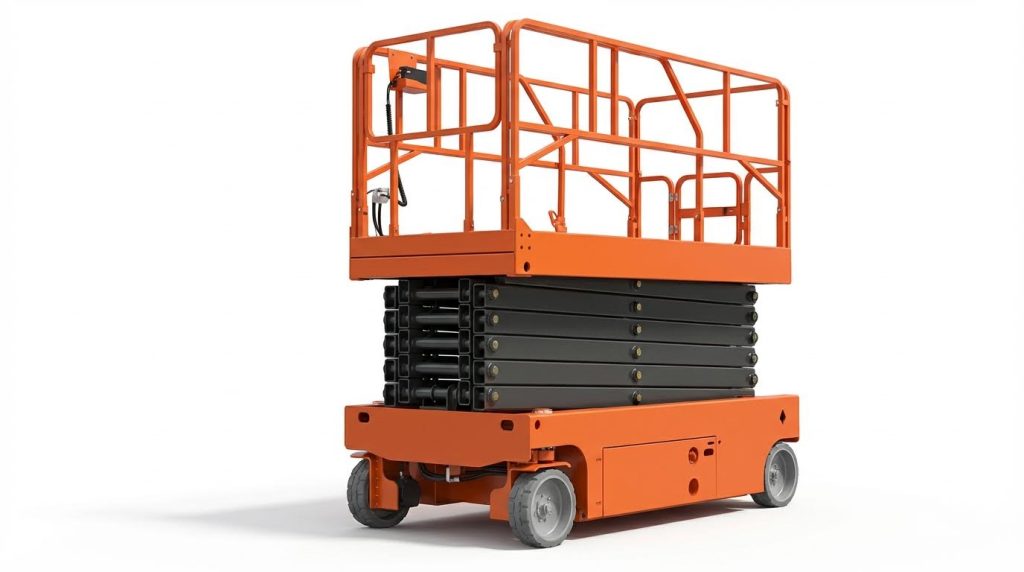
ANSI/OSHA plates, decals, and safety markings must be permanently fixed to the scissor platform, list key design data and warnings, and remain legible at arm’s length for the life of the machine. These markings translate standards into daily operator limits.
| Marking Type | Key Data / Message | Regulatory Basis | Operational Impact |
|---|---|---|---|
| ANSI compliance plate (pre‑1999 units) | Conformance to ANSI A92.x standard applicable to the platform type and year | Must show which historical ANSI A92 version applies for units placed in service before 23 Dec 1999 per regulation | Allows inspectors to verify the correct design code for older machines. |
| ANSI compliance plate (post‑1999 units) | Conformance to updated ANSI/SIA A92.x standards | Required for units placed in service on or after 23 Dec 1999 with specified A92 editions | Confirms the machine meets modern stability, control, and structural rules. |
| Data plate / capacity plate | Rated capacity at max platform height (kg), max platform height (m), max hydraulic/pneumatic pressure, rated line voltage, basic cautions | Explicitly listed as required data on plates for aerial devices by regulation | Gives the hard, non-negotiable operating envelope for load, height, and system pressure. |
| Configuration / capacity charts | Capacities for all boom angles, outreach, and extension combinations; wind limits; outrigger status | Required where alternate configurations are possible, including cautions and restrictions for each configuration | Prevents overload when operating with partial extension or in higher wind. |
| Safety warning decals | Fall protection required, tip-over warnings, crush/pinch-point symbols, no climbing on guardrails | Derived from OSHA and ANSI requirements for guarding and fall protection for aerial lifts | Reminds workers to wear harnesses and avoid unsafe body positions. |
| Power line approach decals | Minimum approach distances for different kV ranges, “DANGER – ELECTROCUTION HAZARD” | Support electrical safety order compliance when working near energized conductors and related rules | Helps operators visually judge whether they are inside a prohibited zone. |
| Control function labels | Drive, steer, lift, swing, jib, platform rotate, emergency stop, auxiliary lower | Controls must be clearly marked, with upper and lower controls identified per OSHA | Reduces wrong-move incidents, especially when multiple levers are close together. |
- Material and durability: Plates/decals should be anodized aluminium or industrial plastic with UV-resistant inks – keeps markings legible despite sun, rain, and hydraulic oil exposure as durability is explicitly required.
- Placement near controls: Capacity charts and key warnings must be visible from the operator’s normal standing position – so the operator does not have to leave the controls to read them.
- Legibility standard: Inspections should confirm markings are readable at arm’s length – if faded, peeling, or painted over, the platform should be removed from service until restored.
- Standard version traceability: Compliance plate must show the exact ANSI A92 edition – this matters when inspectors evaluate legacy machines against the correct design code.
- Alignment with engineering: After structural repairs or retrofits, capacity plates and charts must match current engineering approvals – avoids using outdated load data on a modified structure.
Quick field checklist for plates and decals
Walk around the unit and confirm: one ANSI/standard plate with model and capacities; one main capacity plate with load and height data; configuration charts if multiple positions exist; clear control labels at all stations; visible power line and fall protection warnings. If any are missing or unreadable, tag the unit out until replaced.
💡 Field Engineer’s Note: Faded decals usually show up first on sun-facing sides. I keep a decal kit in the service truck and replace the worst ones immediately, then schedule a full marking refresh before the next annual inspection.
Technical Content, Design, And Maintenance Of Labels
The labels and plates on an aerial platform are engineered safety devices that communicate limits, hazards, and configurations; if any are missing, wrong, or unreadable, the machine is effectively out of compliance and should not operate.
For anyone asking which publications must be kept on the aerial platform, the same engineering logic applies to labels: the information on the metal plates and decals is the “always-on” version of the manuals, condensed into critical numbers, warnings, and diagrams that operators can see in seconds.
Data required on capacity plates and charts
Capacity plates and configuration charts must display the key engineered limits of the aerial platform—height, load, pressure, voltage, and configuration-specific capacities—so operators cannot accidentally overload or mis-configure the machine during work at height.
| Required Data Item | Typical Content / Example | Where It Appears | Operational Impact |
|---|---|---|---|
| Rated platform capacity at max height | e.g. 230 kg at 12 m | Main ANSI/OSHA compliance plate | Prevents overload when boom is fully extended; critical for stability margin. |
| Maximum platform travel / height | e.g. 15 m platform height | Compliance plate and capacity chart | Lets planners confirm reach against job height and power-line clearances. |
| Hydraulic / pneumatic max operating pressure | e.g. 210 bar hydraulic system | Compliance plate near power unit | Guides maintenance; exceeding this risks hose burst or cylinder failure. Data display requirements on plates |
| Rated line voltage (insulated units) | e.g. 46 kV rating | Compliance plate and boom labels | Defines safe use near energized conductors; misuse here can be fatal. Rated line voltage requirement |
| Basic operating instructions | Start/stop, emergency lowering, control logic | Main plate near controls | Gives a quick “mini manual” for safe operation and shutdown. |
| Basic cautions / restrictions | e.g. “Do not use without outriggers fully deployed” | Compliance plate and warning decals | Links configurations (outriggers, jacks) directly to safe capacity. Cautions and restrictions on plates |
| Alternate configuration capacities | Tables or diagrams for different outreach / boom angles | Capacity charts / schematics on chassis or in platform | Prevents using “best case” capacity in a “worst case” boom position. Capacity charts and configuration markings |
| Standards compliance statement | e.g. Complies with ANSI A92.5-1992 | Standards plate on chassis | Shows which design standard the unit was built to, pre- or post-1999. Marking requirements for pre/post-1999 |
Regulations require that plates on aerial platforms include, where applicable, rated capacity at maximum platform height, maximum platform travel height, hydraulic or pneumatic pressure limits, basic cautions, basic operating instructions, and rated line voltage. Data display requirements on plates
Where the platform can work in multiple configurations, separate charts or schematics must show the permitted capacity for each boom angle, outreach, or extension, plus any wind or outrigger restrictions. If these charts are missing or unreadable, the platform must be removed from service until restored. Capacity charts and configuration markings
- Single rated capacity: One clear number at maximum height – prevents operators from assuming “more is okay” at full extension.
- Configuration-specific ratings: Separate entries for each boom or outrigger position – stops misuse when outriggers are only partially deployed.
- Hydraulic pressure limit: Maximum safe system pressure – gives technicians a hard limit during troubleshooting and pump adjustment.
- Voltage rating (insulated booms): Maximum line voltage – ties directly into electrical test documentation and approach distances.
- Standard reference (ANSI/OSHA): Marked compliance standard – tells inspectors and engineers which rule set governs repairs or modifications.
How capacity charts interact with manuals and other publications
The operator’s manual and configuration instructions must describe rated platform capacity and all alternate configurations, while the capacity plates and charts repeat the critical values at the machine. Together, they answer which publications must be kept on the aerial platform and ensure the numbers on paper match the metal plate and decals. Manual and configuration requirements
💡 Field Engineer’s Note: When you change a hydraulic component and adjust relief pressure, immediately compare the new pressure setting to the value on the plate. If your gauge reading is higher, you have just invalidated the stamped capacity until you re-verify the stability calculations.
Durability, materials, and placement of decals
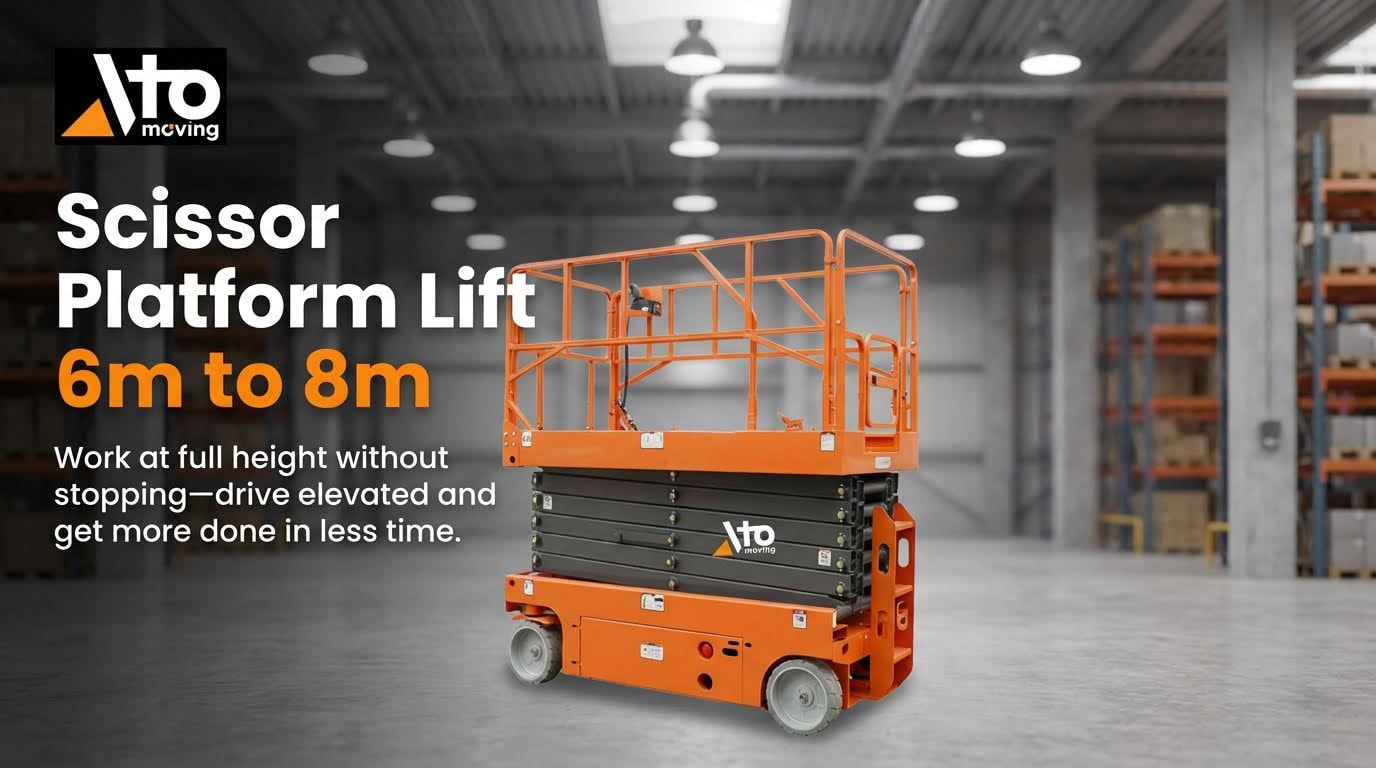
Labels and decals on aerial work platforms must use durable materials, UV-stable inks, and fuel/oil-resistant adhesives, and they must be positioned where operators can read them at arm’s length from the control position.
| Label Type | Preferred Material / Construction | Typical Location | Operational Impact |
|---|---|---|---|
| Compliance / data plates | Anodized aluminum, engraved or etched | Chassis, near ground controls | Survives decades of weather and washing; keeps core data readable for inspectors. Durability of labels |
| Capacity charts / schematics | Polycarbonate overlay or laminated print | Near control stations or on boom base | Resists abrasion from gloves and tools; prevents loss of configuration data. |
| Warning decals / pictograms | High-performance vinyl with UV-resistant inks | Guardrails, control panels, boom sections | Maintains color and symbol clarity in sun and rain, supporting quick hazard recognition. |
| Control function labels | Printed overlays or engraved tags | Upper and lower control panels | Ensures operators do not confuse lift/drive/steer controls in emergencies. Controls must be clearly marked |
Regulatory guidance states that plates and decals must withstand rain, temperature changes, hydraulic oil, and abrasion without losing legibility for several years, and inspections must confirm that all required labels are present, secure, and readable at arm’s length. Durability of labels
- Weather resistance: UV-stable inks and anodized surfaces – prevents fading that can erase capacity or warning data within a few seasons.
- Chemical resistance: Oil- and solvent-resistant adhesives – stops decals from peeling after hydraulic leaks or cleaning.
- Mechanical resistance: Hard-coated or laminated faces – keeps text readable despite repeated glove contact and tool impacts.
- Correct sight lines: Labels at eye level from the control position – ensures the operator can read instructions without leaving the safe stance.
- Logical grouping: Warnings next to the relevant hazard – links the message directly to the pinch point, crush zone, or control lever.
Typical critical warning and control decals
Common required decals include fall protection reminders, power line approach limits, pinch-point warnings, and control labels for lift, drive, steer, emergency stop, and auxiliary lowering. Missing or illegible decals compromise compliance and can justify removing the unit from service. Safety warnings and control decals
💡 Field Engineer’s Note: On units stored outdoors, expect south-facing decals to fail first from UV exposure. During inspection, always compare sun-exposed sides to shaded sides; if one is marginal, plan a full decal kit replacement, not just a single sticker.
Updating markings after repairs, rebuilds, or retrofits

Any repair, rebuild, or retrofit that affects capacity, configuration, or electrical rating requires a formal update of plates, charts, and decals so that on-machine markings always match the current engineered capability.
| Change Event | Potential Impact on Labels | Required Actions | Operational Impact |
|---|---|---|---|
| Structural repair or boom replacement | May alter load path or stiffness | Re-verify capacity and update plates/charts if ratings change; document in maintenance records. Assembly and maintenance by qualified personnel | Prevents legacy plate data from overstating safe load after major repairs. |
| Hydraulic system modification | Different cylinders, pumps, or relief settings | Check against hydraulic pressure data on plate; adjust labels if system spec changes. Hydraulic pressure data on plates | Avoids unmarked higher speeds or forces that could destabilize the platform. |
| Electrical / insulation upgrade | New dielectric components or rating | Update rated line voltage markings and keep electrical test documentation aligned. Electrical testing standards | Ensures operators do not rely on an obsolete voltage rating around live conductors. |
| Retrofit of attachments or platforms | Changes mass and center of gravity | Engineer must re-calculate and issue new capacity charts and warning decals. | Prevents attachments from silently eroding stability margins. |
| Standard update / recertification | Reclassification under newer standard | Install new compliance plate referencing the current ANSI/EN standard. | Aligns the unit with current inspection criteria and documentation. |
- Engineer involvement: Major modifications require a qualified engineer or similar authority – so that new labels reflect real calculations, not guesswork.
- Documentation tie-in: Maintenance records must reference when plates or decals changed – gives inspectors a clear history during annual checks.
- Out-of-service rule: If markings are missing or wrong, lock out the unit – operators must never run on “tribal knowledge” instead of hard data.
- Consistency with manuals: Updated labels must match the operator’s manual on the machine – avoids conflicts between what the book says and what the plate shows.
Linking label updates to inspection tags and records
Annual inspection tags, logbooks, and control registers should record any changes to capacity plates, charts, or decals. This keeps field documentation synchronized with on-machine markings and supports questions about which publications must be kept on the Inspection Records, Training Proof, And Electrical Test Files
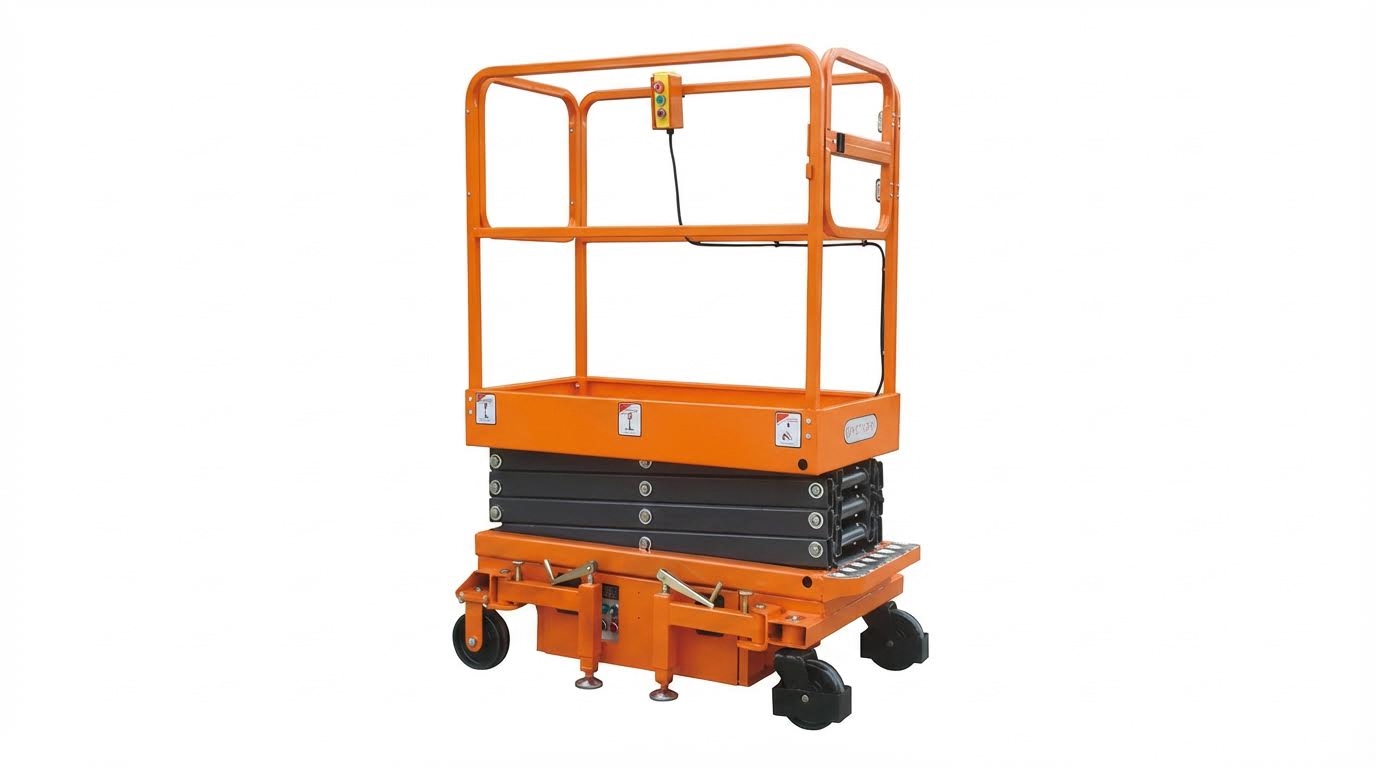
Inspection records, training proof, and electrical test files are the backbone of proving which publications must be kept on the aerial platform and in site files to satisfy ANSI/OSHA and local authorities. You need daily checklists and logbooks on or with the machine, annual inspection tags on the unit, and training, permit, and electrical test records available for auditors and safety officers. These documents show the platform is inspected, operators are competent, and any insulating functions are tested and safe.
Daily checklists, logbooks, and annual inspection tags
Daily checklists, logbooks, and annual inspection tags document that the aerial platform is structurally sound, controls are working, and inspections are current before anyone leaves the ground. They are the first documents inspectors ask for when deciding which publications must be kept on the aerial platform versus in the office. Without them, a lift should be locked out immediately.
| Document / Label | Where It Must Be | Key Data To Capture | Minimum Frequency | Operational Impact |
|---|---|---|---|---|
| Daily pre-use checklist | With the platform (paper in weatherproof sleeve or electronic record) | Date/time, unit ID, inspector name, structural condition, controls test, emergency systems, tires/outriggers, safety devices, defects and actions | Start of each shift or before first use that day | Prevents use of a faulty lift; many safety programs require removing from service if checklist is missing or incomplete. Source |
| Daily control test record | Logged with daily checklist | Verification that lift, drive, steer, emergency stop, and auxiliary controls operate correctly | Daily before use | Meets OSHA expectation that boom platform controls are tested daily to ensure safe working condition. Source |
| Logbook / control register | On the platform or in the site equipment file, but readily available | Commissioning data, periodic checks, repairs, incidents, first check report, inspector signatures | Updated whenever inspections or maintenance occur | Provides life history of the machine; many EU-style regimes require a control register for MEWPs. Source |
| Annual inspection tag | Physically fixed to the platform in a visible location | Date of annual inspection, inspector/organization, next due date, reference to full report | Every 12 months (or more often if site policy requires) | Instant visual proof the unit had a documented annual inspection by a qualified person. Source |
| Professional Engineer (PE) certification letter (if OEM data missing) | In equipment technical file; copy often travels with machine | Statement that unit complies with relevant standards, basis of calculation or test, limits of use | Once per major evaluation or rebuild | Allows continued use of older or modified units when manufacturer is unavailable, provided a PE certifies compliance. Source |
- Standardized daily checklist: A simple, repeatable form – reduces missed items and gives auditors consistent evidence of pre-use inspections.
- Weatherproof storage: Use a sealed box on the chassis – keeps checklists and logbooks readable despite rain, dust, and hydraulic oil spray.
- Defect and lockout recording: Require a tick-box for “Removed from service?” – forces the inspector to decide and document when a defect is serious.
- Annual tag plus full report: Tag on the machine, report in the office – operators see the tag; safety managers keep the detailed evidence.
- Cross-link to maintenance records: Put work order numbers on checklists – proves that recorded defects were actually corrected, not ignored.
What should a solid daily aerial platform checklist cover?
A robust pre-use checklist should cover: structural members and welds, platform and guardrails, tires/tracks and outriggers, hydraulic leaks, power source, all controls and emergency lowering, fall protection anchor points, decals and plates legibility, and surrounding work area hazards. This aligns with manufacturer instructions and documented pre-use inspection expectations. Source
💡 Field Engineer’s Note: If your daily checklist books are always “clean,” you probably have a paperwork culture, not a safety culture. Randomly audit 10% of checklists against actual machine condition; if you find unreported leaks or worn tires, retrain or reassign the inspectors.
Operator training certificates and site-specific permits

Operator training certificates and site-specific permits prove that only competent, authorized people use the scissor platform in that particular environment. They complement the question of which publications must be kept on the aerial platform by covering the human side: who may operate it, under what conditions, and with which PPE and fall protection measures.
| Record Type | Who It Identifies | Key Information Required | Where Kept | Operational Impact |
|---|---|---|---|---|
| Operator training certificate | Individual operator | Operator name, training provider, platform class/type, theory and practical completion dates, expiry date | On person or accessible on-site; copies in training files | Demonstrates that only trained personnel operate aerial lifts, as required by OSHA and safety programs. Source |
| Site-specific MEWP permit / authorization | Operator and specific job or area | Job location, hazards (traffic, overhead power, ground conditions), lift type, valid dates, supervisor approval | Project safety file; copy at job box or access control point | Shows that local risks have been assessed and controls agreed before work starts. Source |
| Fall protection / PPE training proof | Operator and occupants | Training in harness use, lanyard selection, anchorage on MEWPs, rescue plan awareness | Central training records; sometimes checked at site entry | Supports requirement that workers using aerial lifts are trained in PPE, especially safety belts and harnesses. Source |
| Instruction / safety program records | All employees exposed to MEWPs | Instruction per manufacturer’s manual and safety programs like injury and illness prevention | Safety department files | Shows that workers were instructed according to manufacturer operating instructions and formal safety programs. Source |
| License / authorization for vehicle use | Operators of truck- or van-mounted platforms | Driving license class, employer authorization, any local road-permit conditions | HR / fleet records and sometimes in vehicle file | Prevents unlicensed drivers from moving vehicle-mounted lifts on public or site roads. Source |
- Link operators to specific equipment: Record which classes (scissor, boom, vehicle-mounted) each operator is trained on – prevents someone trained on a 6 m scissor from jumping into a 28 m boom without competence.
- Expire and renew training: Use clear expiry dates – forces periodic refreshers, especially after standards or site rules change.
- Integrate with access control: Tie MEWP authorization into badge or permit-to-work systems – stops untrained workers from simply taking keys from a hook.
- Document PPE competency: Keep proof that operators know how to wear harnesses and connect to approved anchor points – aligns with requirements for fall arrest or restraint systems on aerial lifts. Source
- Site-specific hazard sign-off: Use permits that mention power lines, traffic, slopes, and weather – proves you considered local hazards, not just generic risks.
💡 Field Engineer’s Note: During audits, the fastest way to fail is a mismatch: operator has a generic lift card, but no proof for that exact MEWP type or site conditions. Align your training matrix with the fleet list and job types at least once per quarter.
Electrical test documentation for insulated aerial platforms
Electrical test documentation for insulated scissor platform lift proves the boom and basket still provide the dielectric protection assumed in your risk assessment. For any work near energized conductors, these records are as critical as the operator’s manual when deciding which publications must be kept on the aerial platform and in central files.
| Electrical Record Type | Applies To | Key Test Data | Relevant Standard / Basis | Operational Impact |
|---|---|---|---|---|
| Dielectric test certificate | Insulated booms and platforms used near energized lines | Test voltage, leakage current, test date, environmental conditions, pass/fail criteria, test method | ANSI A92.2 electrical test requirements, including acceptance test methods | Demonstrates that the insulating portion has been tested and remains effective for high-voltage work. Source |
| Electrical safety order compliance record | All work near energized conductors (high or low voltage) | Applicable voltage range, approach distances, grounding practices, protective devices used | High-voltage and low-voltage electrical safety orders | Shows planning and execution complied with voltage-specific approach and grounding rules. Source |
| Insulation integrity statement | Insulated aerial lifts | Confirmation that insulated components were not altered in ways that reduce insulating value | OSHA requirement that insulated portions not be modified | Protects against unauthorized repairs that compromise dielectric protection. Source |
| Periodic verification / test booklet | Platforms subject to EU-style periodic checks | Dates and results of structural and, where applicable, electrical tests | National legislation and periodic verification rules | Serves as a running log proving the machine passed required verification milestones. Source |
- Keep test certificates with the unit file: Store dielectric test records with the platform’s main documentation – so planners and supervisors can verify suitability before assigning high-voltage work.
- Link tests to annual inspections: Align electrical test schedules with annual mechanical inspections – minimizes downtime and ensures tags and certificates never drift out of sync.
- Record exact test parameters: Capture voltage level and leakage
Final Compliance Checks And Documentation Strategy
Final compliance checks for aerial platforms mean verifying, before every job and audit, which publications must be kept on the aerial platform, which records stay on-site, and how both sets stay current and legible.
Document / Label Where It Must Be Kept Key Content To Verify Check Frequency Operational Impact Operator’s manual Weather-resistant compartment on the platform Normal/emergency operation, start/stop, positioning, rated capacity, occupants, configurations At commissioning, then every inspection Ensures operators can confirm safe use and limits at the platform itself. Regulatory requirement Configuration / capacity charts On platform near controls Capacities for all boom/extension/outrigger configurations, wind limits, restrictions Every service, after any repair or retrofit Prevents overload in reduced-capacity setups such as partial outrigger deployment. Required charts ANSI/OSHA compliance plate Base or turntable, visible from ground Applicable ANSI standard, rated capacity, max height, system pressure, cautions, line voltage (if any) At commissioning, then visually at each inspection Shows the unit’s design basis and limits for inspectors and engineers. Plate data Warning and control decals At all controls and hazard points Fall protection, power line limits, pinch points, function labels, emergency lowering Daily pre-use and periodic inspections Maintains intuitive, language-light safety guidance at the point of use. Decal requirements Daily inspection checklist / logbook Weatherproof folder or box on platform or machine Date, time, inspector, defects, corrective actions, lockout notes Each shift before use Provides traceable proof that the lift was safe before each day’s work. Checklist requirement Annual inspection tag Fixed on the platform or base, clearly visible Inspection date, next due date, inspector identity, pass/fail At least every 12 months Allows any user to confirm the unit is within its annual safety window. Tag requirement Electrical test records (insulated units) Maintenance file; summary on tag if applicable Test voltage, leakage current, method, date, pass/fail, applicable standard Per manufacturer / standard (often annual) Demonstrates insulation integrity for high-voltage work. Dielectric tests Operator training certificates Site safety file; copies available on-site Operator ID, equipment class, provider, dates Per company policy and expiry Proves only trained, authorized people operate the platform. Training records Maintenance and repair records Central maintenance system or equipment file Services performed, parts replaced, dates, responsible technician Every maintenance event Supports decisions on derating, rebuilds, and decal updates. Maintenance records Defining exactly which publications must be kept on the aerial platform
The core answer to which publications must be kept on the scissor platform is: the full operator’s manual, any configuration or capacity charts, and all mandatory plates and decals that communicate safe operating limits and compliance data.
- Operator’s manual on board: The platform must carry a complete operator’s manual in a weather-resistant compartment, covering normal and emergency operation, capacity, occupants, and configurations – so the operator can verify safe use at any time. Manual requirement
- Configuration and capacity publications: Platforms with multiple configurations must have clear charts or schematics on the machine showing capacity for each permitted boom, outreach, or extension setup – preventing overload when the geometry changes. Chart requirement
- Compliance plates as “permanent publications”: Plates showing applicable ANSI standards, rated capacity at maximum height, maximum platform height, hydraulic or pneumatic pressure, basic cautions, and rated line voltage (if any) must be mounted on the device – serving as the machine’s identity card. Plate content
- Safety and control decals: Pictogram and text labels for fall protection, approach distances to power lines, pinch points, and all control functions must stay present and legible – so even unfamiliar operators can recognize hazards instantly. Decal requirement
- On-board inspection log or checklist: Many regulators and facility procedures require a daily checklist and logbook stored with the platform – so inspectors can see recent defect history without chasing paperwork. Daily log
Minimum on-platform documentation package
As a practical minimum, every aerial work platform should leave the workshop with: (1) the current operator’s manual in a sealed box; (2) all required plates and decals fitted and legible; (3) current capacity/configuration charts; and (4) a blank daily checklist/logbook ready for use.
💡 Field Engineer’s Note: Treat missing or water-damaged manuals the same way you treat a failed emergency stop test: the platform stays out of service until a correct, legible replacement manual is installed on the machine.
Structuring a site-wide documentation and compliance strategy
An effective documentation strategy for scissor platform lifts combines on-board publications, central records, and scheduled audits, so that manuals, plates, inspections, and training proof all stay aligned with the actual condition and configuration of each unit.
- Create a unit-specific documentation file: Assign each platform a unique ID and keep a digital and physical file with its manuals, EC declaration (if applicable), control register, inspection reports, and repair history – so any change is traceable over the whole life of the machine. Documentation requirements
- Standardize daily and annual checks: Use one company-wide checklist aligned with the manufacturer’s instructions and regulatory items, and link it to a yearly inspection program – so nothing falls between daily walkarounds and formal annual inspections. Pre-use inspection protocols
- Tie training records to equipment IDs: Maintain a matrix linking each trained operator to the classes of platforms they are authorized to use, and store certificates with site safety documentation – so supervisors can prove competence during audits. Training requirements
- Include high-voltage and PPE documentation: For insulated platforms or electrical work, maintain dielectric test certificates and electrical safety compliance records, plus PPE training and harness-use documentation – to close the loop between equipment capability and user protection. Electrical and PPE rules
- Plan for legacy and non-CE equipment: For older or non-CE-marked units, keep the inspection logbook, national test booklets, and any Professional Engineer letters that certify compliance in the absence of original data – so inspectors see a clear technical basis for continued use. Non-CE documentation
How often to review your documentation system
Review the whole aerial platform documentation system at least annually, or whenever standards, company procedures, or major equipment configurations change. Include random spot checks of on-board manuals and decals during routine safety walks.
💡 Field Engineer’s Note: The most efficient fleets treat documentation the same way they treat load testing: it is a scheduled, budgeted activity, not a last-minute scramble when an inspector arrives on site.
Final pre-audit and pre-job compliance checklist
A final pre-audit or pre-job compliance check confirms that required publications on the aerial platform, inspection records, and training proof are all present, current, and consistent with the physical machine and the planned work.
- Confirm on-platform publications: Open the manual box and physically check that the operator’s manual matches the exact model and configuration, and that all plates, capacity charts, and decals are present and legible at arm’s length.
- Cross-check data consistency: Verify that rated capacity, maximum platform height, and special limitations on plates and charts match the operator’s manual and any engineering or PE letters on file – to avoid conflicting limits.
- Verify inspection currency: Check that the daily checklist is completed for the current shift and that the annual inspection tag is still within its 12‑month validity window, with no overdue corrective actions in the log.
- Validate operator authorization: Ensure operators scheduled for the job have valid training certificates for the correct platform type and, where required, site-specific permits or fall protection plans on file.
- Confirm special-case documentation: For high-voltage or complex lifts, confirm that dielectric test records, site-specific safety plans, and any engineered lift procedures are available and communicated to the crew.
Simple pre-job documentation walkaround
Before starting work, walk once around the platform with this sequence: (1) read the compliance plate; (2) scan all decals; (3) open the manual box; (4) check the daily checklist and annual tag; and (5) confirm the operator’s name against training records.
💡 Field Engineer’s Note: When you find a mismatch between the plate data and the manual, always defer to the most conservative value and lock the unit out until an engineer or manufacturer resolves the discrepancy in writing.

Manuals, plates, decals, and records form a single safety system on every aerial work platform. The manual and configuration charts define the engineered limits. Plates and decals bring those limits to the operator’s eye line in real time. Checklists, logbooks, and training files prove that people and machines stay within those limits every day.
When any link fails, risk rises fast. A missing chart invites overload at full outreach. Faded power-line decals invite a strike. An out-of-date dielectric test can turn an “insulated” unit into a live conductor. Weak documentation also gives auditors a clear reason to shut work down.
The best practice is simple and strict. Treat unreadable labels, absent manuals, or missing records as critical defects. Lock the platform out until you restore the correct information and update the file. Standardize checklists, tag systems, and training so every unit in the fleet follows the same pattern.
Operations and engineering teams should review on-board publications and central records at least annually and after any repair or retrofit. Align all markings with current engineering data and regulatory rules. This disciplined approach keeps Atomoving aerial platforms safe to use, easy to audit, and ready for high-risk work without last-minute paperwork gaps.
Frequently Asked Questions
What publications must be kept on an aerial platform?
For safety and compliance, certain key documents should always be kept on an aerial platform. These include the operator’s manual for the specific model, which outlines operational instructions and safety guidelines. Additionally, maintenance logs and inspection records must be present to ensure the equipment is regularly serviced and in safe working condition. OSHA or other regulatory standards may also require documentation such as a risk assessment or emergency procedures guide. For more information on regulatory requirements, refer to OSHA Guidelines.
What are the main components of an aerial work platform?
An aerial work platform typically consists of three primary components. First, there is the base structure, which is often mounted on wheels or tracks for mobility. Second, an extendable arm or lifting mechanism allows the platform to reach various heights. Finally, there is the work platform itself, where operators stand to perform tasks. This design ensures versatility and mobility, making aerial platforms ideal for material handling and maintenance jobs at height. For additional details, see Aerial Platform Components.