This guide explains when you do and don’t need a formal licence for walkie stackers, and what training is still legally required. If you are asking “do you need a licence for a walkie stacker”, the answer depends on how your law classifies pedestrian-operated trucks, but in every jurisdiction competent, documented training is mandatory to control risk.
How Walkie Stackers Are Classified And Regulated
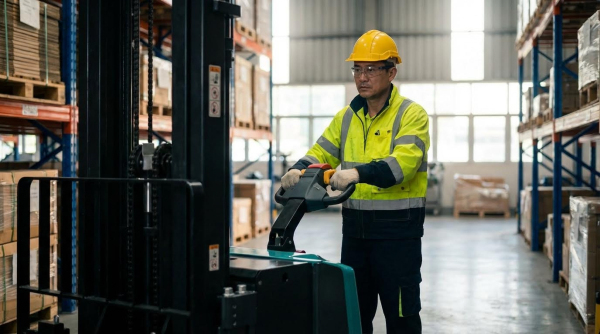
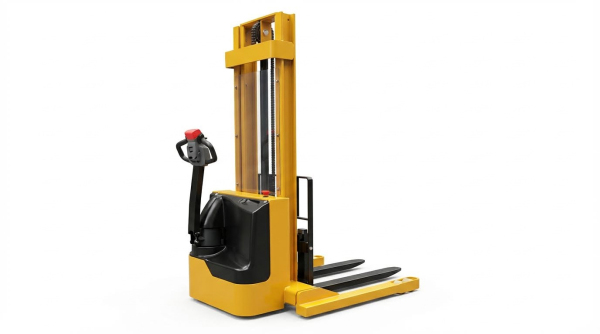
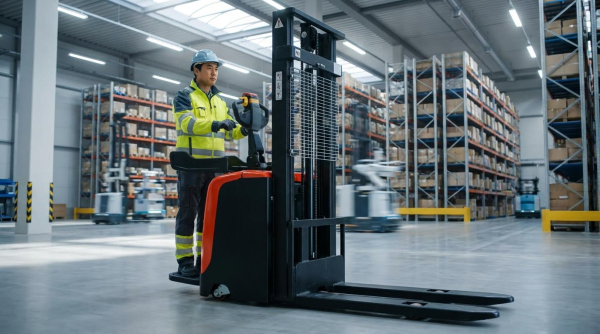
Walkie stackers sit in a grey area between forklifts and pallet jacks, so “do you need a licence for a walkie stacker” depends on how your law classifies pedestrian-operated lift trucks and what training it mandates.
Across most jurisdictions, walkie stackers are treated as powered industrial trucks or pedestrian-operated lift trucks, not ride-on forklifts. This usually removes the need for a national high-risk forklift licence, but it never removes the need for formal, documented operator training and competency.
| Aspect | Typical Walkie Stacker Status | Operational Impact |
|---|---|---|
| Equipment type | Pedestrian-operated, powered industrial truck | Operator walks behind or alongside; lower speed, shared with pedestrians |
| Licence requirement | No national HRW forklift licence in many regions | Site-based certification and VOC still required before use |
| Key standards (examples) | OSHA 29 CFR 1910.178, AS 2359.2, CSA B335, ISO 3691-5 | Define training, design, safe use, and inspection rules |
| Typical capacity | Around 1,000–2,000 kg at ground level | Suited to palletised loads in warehouses and loading areas |
| Typical lift height | About 1,500–5,500 mm | Covers low to medium racking; stability and floor quality become critical at height |
💡 Field Engineer’s Note: Regulators often relax licensing when operators are on foot, but insurers do not. In serious incidents, lack of documented training on that exact walkie stacker model is one of the first things investigators question.
Pedestrian Truck Vs Forklift: Legal Definitions
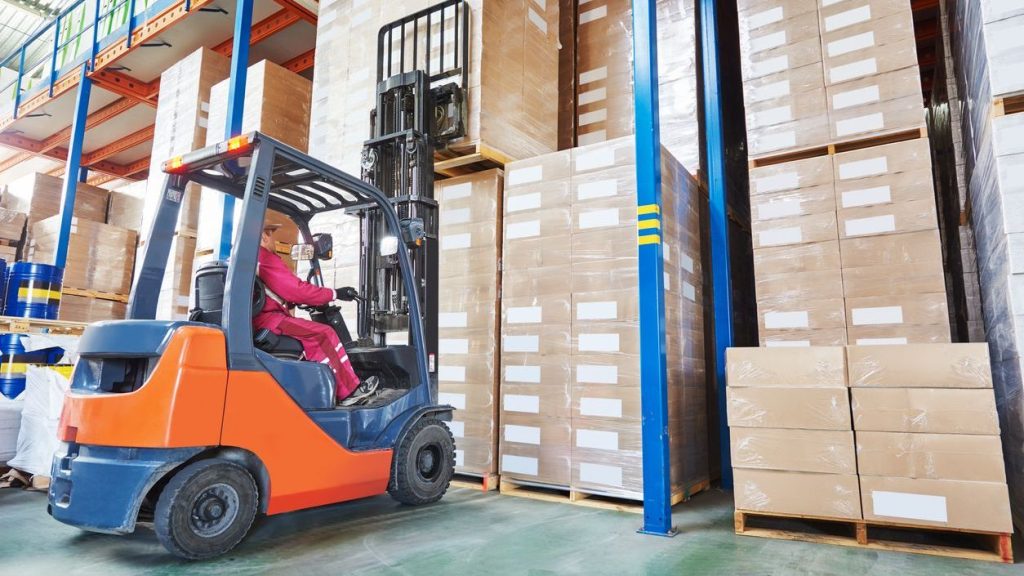
Walkie stackers are legally defined as pedestrian-operated lift trucks or powered industrial trucks, while traditional forklifts are ride-on trucks that nearly always trigger formal licensing.
Under many safety frameworks, walkie stackers fall under the broader “powered industrial truck” umbrella. For example, in the US they sit within the electric PIT designations in OSHA 29 CFR 1910.178, which requires operator training, evaluation, and certification, even though the operator walks rather than rides. In Australia and Canada, they are described as pedestrian-operated lift trucks and referenced in standards such as AS 2359.2 and CSA B335, rather than in the high-risk work (HRW) forklift licence classes. This classification difference is exactly why people ask “do you need a licence for a walkie stacker” so often.
| Feature | Pedestrian Walkie Stacker | Ride‑on Forklift | Operational Impact |
|---|---|---|---|
| Operator position | On foot, using tiller/handle | Seated or standing on truck | Lower speed, more interaction with pedestrians |
| Regulatory label | Pedestrian-operated lift truck / powered industrial truck | Forklift truck / powered industrial truck | Different licence thresholds, similar duty of care |
| Typical capacity | ~1,000–2,000 kg | ~1,500–5,000+ kg | Walkies suit lighter warehouse loads |
| Typical environment | Indoor, smooth floors, tight aisles | Indoor/outdoor, docks, yards | Walkies optimise short internal moves |
| Primary controls | Tiller with deadman and reverse button | Steering wheel, hydraulic levers, pedals | Training content differs, but risk level remains high |
- Key point: Walkie stacker = pedestrian truck – usually no national forklift licence, but full powered truck rules still apply.
- Key point: Forklift = ride‑on powered truck – almost always a formal licence plus site induction.
Why regulators separate pedestrian and ride‑on trucks
Ride‑on trucks reach higher speeds and masses, so they carry higher kinetic energy in a collision. Pedestrian trucks move slower, but they operate closer to people and racking. That is why the law may ease licensing but not training or maintenance duties.
When A Formal License Is And Isn’t Required
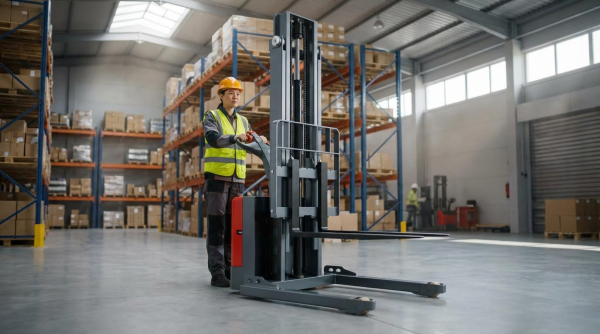
In most regions, you do not need a national forklift licence to operate a walkie stacker, but you always need structured training, assessment, and site authorisation.
In Australia, walkie stackers are treated as pedestrian-operated lift trucks and do not require a National High Risk Work (HRW) Licence, provided the operator remains on foot. However, employers and PCBUs must still train operators and verify competency in line with AS 2359.2 and local work health and safety laws. In Canada, walkie stacker training is typically aligned with CSA B335 and OHSA Regulation 851, again without issuing a national licence card. In the US, OSHA does not issue licences but requires that employers provide formal instruction, practical training, and evaluation for powered industrial trucks, including walkie stackers, before allowing unsupervised use.
| Jurisdiction (example) | National forklift licence needed for walkie stacker? | What is still mandatory? | Best For… |
|---|---|---|---|
| Australia | Typically no HRW licence if operator is on foot | Training and assessment aligned with AS 2359.2; employer-issued authorisation | Warehouses wanting internal certification without HRW licence overhead |
| Canada | No national licence; provincial OH&S rules apply | Training to CSA B335 and OHSA Reg 851; documented evaluation and refresher | Sites needing proof of due diligence in audits |
| United States | No government licence; OSHA requires employer certification | Formal instruction, practical training, and evaluation under 29 CFR 1910.178 | Any facility using electric pedestrian stackers |
- Rule of thumb: No national licence ≠ no rules – you still need theory training, a practical test, and written sign‑off.
- Employer duty: Control who is “authorised” – only trained, competent staff should have access to walkie stackers.
Common triggers that force re‑training
Incidents or near misses, observed unsafe behaviour, changes in layout or racking height, new walkie stacker models, or shifts to heavier pallets all justify immediate refresher training and a new Verification of Competency (VOC).
💡 Field Engineer’s Note: From a risk perspective, insurers and prosecutors treat an untrained walkie stacker operator almost the same as an unlicensed forklift driver. If something goes wrong, “no HRW licence needed” is not a defence against poor training.
Key Standards: OSHA, AS 2359, CSA B335, ISO 3691-5
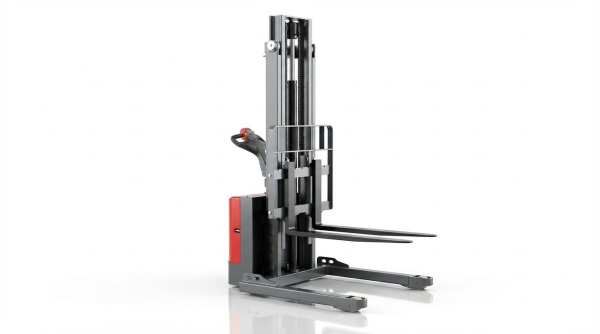
Walkie stackers are controlled through a web of design, operation, and training standards such as OSHA 1910.178, AS 2359.2, CSA B335, and ISO 3691‑5, which together define what “competent and safe operation” looks like.
In the US, OSHA 29 CFR 1910.178 treats walkie stackers as powered industrial trucks and requires daily inspections, formal operator training, and three‑yearly refresher or earlier if unsafe use is observed. In Australia, training programs reference AS 2359.2, which sets expectations for industrial truck operation, pre‑use checks, load handling, shutdown, and battery care. Canadian providers align with CSA B335, which covers truck design, safe operation, and operator training. ISO 3691‑5 focuses specifically on pedestrian-controlled trucks, including stability and safety requirements on smooth, level floors and typical capacity limits around 1,000 kg for battery-powered pedestrian units.
| Standard | Scope for Walkie Stackers | What it means in practice |
|---|---|---|
| OSHA 29 CFR 1910.178 | Powered industrial trucks, including electric walkie stackers | Mandatory training, evaluation, and regular refresher; daily inspections before use |
| AS 2359.2 | Operation of industrial trucks in Australia | Covers operator competence, routine checks, load handling, shutdown, and battery maintenance |
| CSA B335 | Powered industrial truck design, operation, and training in Canada | Defines content for theory and practical training, and employer responsibilities |
| ISO 3691‑5 | Pedestrian‑controlled industrial trucks, safety requirements | Sets design and stability criteria; typical ~1,000 kg rated capacity for battery pedestrian units |
- Design rules: Stability, braking, visibility, and control layout – reduce tip‑over and collision risk.
- Training rules: Theory, practical, and evaluation structure – give a clear template for your in‑house program.
- Inspection rules: Daily checks plus periodic structural reviews – catch cracks, bent forks, and hydraulic faults before failure.
How this links back to “do you need a licence for a walkie stacker”
These standards do not always talk about a “licence card”, but they do define training, assessment, and competency. Regulators then use them as the benchmark: if your training and records match these standards, you can usually show you met your duty of care even without a formal forklift licence.
💡 Field Engineer’s Note: When specifying training, quote the standard in your purchase order (for example, “operator training to AS 2359.2 / CSA B335”). It gives trainers a clear benchmark and protects you when auditors review your “competent person” evidence.
Training, Competency, And Safety Engineering
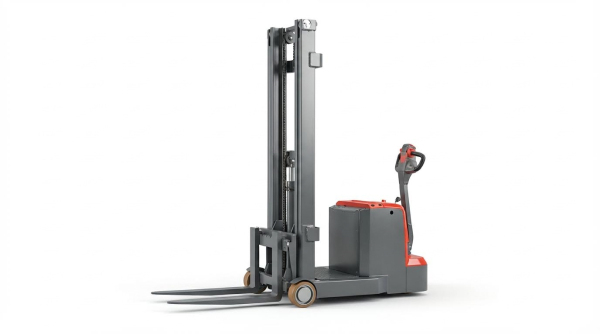
Training for walkie stackers turns the legal question “do you need a licence for a walkie stacker” into something more practical: documented competency, sound engineering knowledge, and repeatable safe behaviour on your specific site.
Even where no formal high-risk licence is required, regulators still expect structured theory, hands-on practice, and ongoing verification of competency backed by records and periodic refreshers.
Core Theory: Stability, Load Moment, Data Plates
Core theory for walkie stacker operators explains why a truck that is “within capacity” on paper can still tip, drop a load, or crush a pedestrian in real life.
- Stability triangle: Operators learn how the combined centre of gravity of truck plus load must stay inside the support polygon – prevents sudden sideways or forward tip-overs.
- Load moment: Training explains that capacity is force × distance, not just weight – stops operators lifting a light but long load that overloads the mast.
- Data plate use: Operators read the rated capacity at different lift heights (e.g. 1,000–2,000 kg up to 5,500 mm) – ensures every lift is checked against the actual rating.
- Truck classification: Walkie stackers are treated as pedestrian-powered industrial trucks – clarifies they still need formal training even if no national licence card is issued.
- Accident patterns: Theory covers common events like falling pallets, run-overs, and loss of steering – helps operators recognise early warning signs and unsafe setups.
Why theory matters even for “simple” walkie stackers
Because operators walk beside the truck, they underestimate the stored energy in a 1,500 kg pallet at 4,000 mm. Basic physics on leverage and impact forces makes the risks real and memorable, especially for new staff or those moving from manual pallet jacks.
💡 Field Engineer’s Note: I have seen more near-misses from operators misreading data plates than from pure “bad driving.” Make them physically point to the capacity at a given height during training; it locks the habit in.
Practical Skills: Maneuvering, Stacking, And Slopes
Practical walkie stacker training turns theory into muscle memory: smooth control of a 1,000–2,000 kg load, tight-aisle maneuvering, and disciplined behaviour on slopes and around pedestrians.
- Controlled travel: Operators practice smooth acceleration, deceleration, and turning – reduces mast sway and pallet shift in narrow aisles.
- Fork positioning: Training enforces forks fully under the pallet and centred – avoids broken boards and off-centre loads that twist the mast.
- Travel height: Unloaded forks run as low as practical; loaded forks typically around 300–400 mm with mast slightly tilted back – keeps the combined centre of gravity low and stable.
- Pedestrian interaction: Operators learn to stop, sound the horn, and creep at intersections – prevents run-overs in blind corners and racking tunnels.
- Slopes and ramps: Training covers maximum gradient limits and correct orientation (load uphill, walk to the side where possible) – reduces rollback and runaway incidents on ramps.
- Step 1: Conduct a walk-around of the route – checks for tight spots, slopes, and floor damage before moving a load.
- Step 2: Pick up the pallet square and low – prevents twisting forces on the mast and forks.
- Step 3: Raise to 300–400 mm and tilt back slightly – locks the load against the backrest and lowers tip risk.
- Step 4: Travel at walking speed with clear visibility – gives time to react to pedestrians and obstacles.
- Step 5: Stop square to the rack and stack with small, controlled corrections – avoids racking strikes and falling pallets.
Common bad habits to target in assessments
Look for “riding” the truck, travelling with forks raised above 400 mm, cutting corners too tight, turning on slopes, and pulling pallets with tips only half under the load. These are early signs that refresher training is needed, even if the operator has a current certificate.
💡 Field Engineer’s Note: On sites with mixed equipment, I recommend painting a simple line on posts at 400 mm height. During training you tell operators: “Travel below the line.” It is a cheap visual cue that cuts down on high-fork travel.
Inspections, Structural Integrity, And Hydraulics
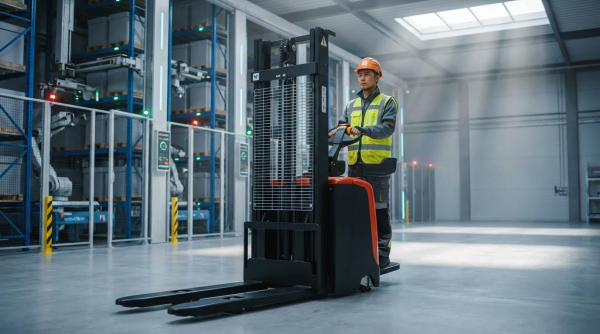
Inspection and basic engineering checks are part of competency: a trained operator must spot structural and hydraulic issues before they turn into dropped loads or uncontrolled movements.
- Daily pre-use checks: Operators inspect wheels, brakes, steering, horn, emergency stop, guards, and warning devices – catches functional failures before the shift starts.
- Fork condition: Training covers bent blades, cracked welds, and reduced heel thickness – prevents catastrophic fork failure under a 1,000–2,000 kg load.
- Mast and chassis: Operators look for twisted sections, cracked welds, or impact damage – identifies trucks that must be taken out of service for engineering inspection.
- Hydraulic performance: Trainees learn to recognise sluggish lifting, creeping descent, or jerky motion – flags low oil, air in the system, or worn valves and seals.
- Battery and charging: Training includes isolating the truck, checking cables and connectors, and using ventilated areas – avoids fires, arcing, and mid-shift breakdowns.
- Step 1: Park safely and key off before inspection – prevents unexpected movement while you are beside the truck.
- Step 2: Walk around checking structure and forks – spots obvious damage from previous shifts.
- Step 3: Check controls, braking, and steering under no load – confirms the truck responds predictably.
- Step 4: Lift a test load briefly and observe mast and hydraulics – reveals leaks, creep, or unusual noises.
- Step 5: Tag out and report defects immediately – ensures no one else uses an unsafe truck.
When should an operator stop using the truck immediately?
Any visible fork bend, cracked weld, uncontrolled mast descent, steering that binds, inoperative brakes, or hydraulic oil on the floor are red flags. Competent operators are trained that productivity never outweighs the need to tag out unsafe equipment.
💡 Field Engineer’s Note: I advise sites to integrate operators into annual structural inspections. When technicians measure fork heel thickness and mast wear, let operators watch; it builds respect for inspection limits and makes “out of service” tags easier to accept.
Across all of this, the real answer to “do you need a licence for a walkie stacker” is that regulators care less about a plastic card and more about whether your operators can prove they understand stability, can drive and stack safely, and can identify defects before something fails.
Choosing Training And Procedures For Your Site
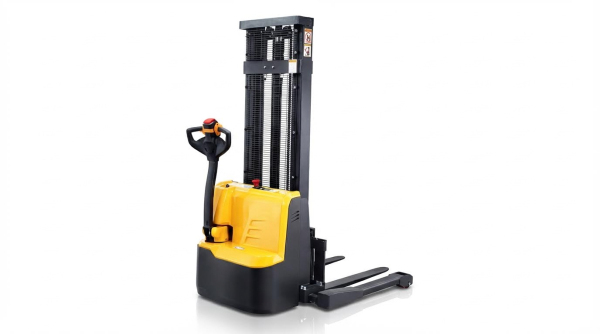
Choosing training and procedures for your site means matching walkie stacker training, records, and refresher cycles to your laws, equipment, and risk profile so you can answer “do you need a licence for a walkie stacker” with clear evidence of control.
Even where no formal high-risk licence exists, regulators still expect documented training, Verification of Competency (VOC), and safe operating procedures that reflect your specific layouts, gradients, and load types. The goal is simple: prove your operators are competent on your machines, in your environment.
Matching Programs To Jurisdiction And Equipment
Matching programs to jurisdiction and equipment means aligning your walkie stacker training content with local standards and the exact truck models, lift heights, loads, and surfaces used on your site.
This is how you turn the question “do you need a licence for a walkie stacker” into “we don’t need a national licence, but we have equivalent or better internal controls.” You do that by mapping legal requirements to your actual trucks and tasks.
| Region / Law Context | Typical Legal Position | Relevant Standards / Rules | Training Focus | Operational Impact |
|---|---|---|---|---|
| Australia | No national HRW licence for walkie stackers; still need trained, competent operators | AS 2359.2 industrial trucks; WHS laws | Truck checks, load handling, shutdown, battery care as reflected in structured courses | Use site-specific training to demonstrate compliance without an HRW licence |
| Canada | No national forklift licence; provincial OHSA requires training and evaluation | CSA B335; OHSA Reg. 851 | Design, safe operation, operator training, hazard controls | Show due diligence in audits and after incidents using CSA-based programs |
| USA | No driver-style licence; OSHA requires PIT training, evaluation, and certification | OSHA 29 CFR 1910.178 for powered industrial trucks | Formal instruction, practical training, evaluation, refresher every 3 years or after unsafe use | Internal “licence card” system satisfies OSHA if training is documented |
For equipment matching, you must align the training program with the walkie stacker’s key parameters: lift height (about 1,500–5,500 mm), rated capacity (about 1,000–2,000 kg at ground level), power source, and surface limits such as smooth, hard floors only. This ensures operators understand what the data plate means in real aisles, on your gradients, and with your pallet types.
- Equipment type: Pedestrian walkie stacker, walkie reach, or straddle – Determines stability limits and turning radius.
- Rated capacity and lift height: As shown on data plate – Defines safe load weights at different lift heights.
- Battery system: Lead-acid or lithium-ion – Changes charging rules, PPE, and ventilation needs.
- Surface and aisle width: Smooth, level floors and adequate clearance – Prevents tip-overs and structure impacts.
How to map a generic course to your site
Start with a standard walkie stacker course that covers theory (stability, loads, hazards) and practical skills (driving, stacking, pre-use checks). Then layer in site rules: speed limits, one-way aisles, exclusion zones, local gradients, and load types such as stillages or long pallets. Finally, verify on the actual truck model your people will use.
💡 Field Engineer’s Note: When I audit sites, the biggest gap is not “no licence” but “wrong licence”: operators trained on a low-lift 1,500 mm stacker using a 5,000 mm reach unit in tight 2.3 m aisles. Always tie your training scope to the exact maximum lift height and narrowest aisle on site.
Records, VOC, Refresher Training, And Audits
Records, VOC, refresher training, and audits turn a one-off walkie stacker course into an ongoing system that proves competence every time someone asks “do you need a licence for a walkie stacker here?”.
Regulators and insurers look for a traceable trail: who you trained, how you assessed them, when you refreshed them, and how you checked that procedures still match reality. That is what protects you after an incident.
| Element | What It Includes | Typical Interval / Trigger | Operational Impact |
|---|---|---|---|
| Training records | Attendance, theory and practical results, certificates as used in structured programs | Created after each course; kept for several years | Evidence that operators were trained on a specific date and truck type |
| Verification of Competency (VOC) | Short theory check plus on-truck assessment on your site | On hiring, role change, or at set intervals (often about 1 year) | Confirms skills haven’t degraded and covers site-specific rules |
| Refresher training | Condensed theory and practical focusing on gaps and new risks | Certificate expiry, incidents, near misses, unsafe behaviour, or equipment/layout change | Keeps behaviour aligned with current standards and site conditions |
| Internal audits | Review of SOPs, checklists, training matrix, and observation of work | Yearly or after major incidents | Identifies gaps before regulators or insurers do |
- Training records: Keep copies of certificates plus raw results – Shows real assessment, not just attendance.
- VOC forms: Include truck model, attachments, and assessor name – Ties competence to specific equipment.
- Refresher triggers: Expiry, new truck model, layout change, or repeated near misses – Links training to actual risk.
- Audit checklist: Cover pre-use checks, battery charging, traffic management, and load types – Ensures procedures match what operators really do.
Designing a simple VOC form
List the walkie stacker model, rated capacity, and lift height. Add tick-boxes for pre-use inspection, travelling, turning, stacking, unstacking, and parking/shutdown. Include a comments box for site-specific hazards such as 5° ramps or drive-in racking. Finish with pass/fail and an action plan if the operator needs coaching.
💡 Field Engineer’s Note: In investigations, I have seen sites with excellent training but no refresher or VOC trail lose cases because they could not prove current competence. A one-page VOC every 12 months per operator is cheap insurance compared with a single serious incident.
Final Thoughts On Compliance And Risk Management
Walkie stackers may sit below formal forklift licence thresholds, but they do not sit below serious risk. A 1,000–2,000 kg pallet at 5,000 mm carries enough energy to collapse racking, crush a person, or overturn a truck if operators misjudge stability or load moment. That is why standards like OSHA 1910.178, AS 2359.2, CSA B335, and ISO 3691‑5 focus on training quality, inspections, and engineering controls rather than plastic licence cards.
The safest sites treat walkie stackers as high-consequence equipment. They teach operators core physics, enforce disciplined driving and stacking, and build strong habits around pre-use checks, defect reporting, and tag-out. They also align training with actual truck models, lift heights, floor conditions, and pallet types, then lock this in with VOC, refreshers, and audits.
Your best practice is clear: assume regulators and insurers will judge you on competency, records, and engineering controls, not on whether a national licence is technically required. Build a system that could defend itself after a serious incident. If you can show that every operator on every Atomoving walkie stacker is trained, assessed, and current for that exact task and environment, you have effectively answered the licence question and reduced real-world risk.
Frequently Asked Questions
Do You Need a License to Operate a Walkie Stacker?
Yes, you need certification to operate a walkie stacker. According to OSHA guidelines, all powered industrial truck operators, including those using walkie stackers, must undergo formal instruction and hands-on evaluation. OSHA Safety Training provides detailed information on this requirement.
Does a Walkie Stacker Count as a Forklift?
Yes, a walkie stacker is considered a type of forklift. It is specifically designed for moving and lifting palletized goods in warehouses and storage facilities. These machines are compact, versatile, and operated by walking behind them. For more details on different forklift types, check out this Forklift Types Guide.
What is Another Name for a Walkie Stacker?
A walkie stacker is also commonly referred to as a walk-behind forklift, pedestrian forklift, or electric pallet truck. These names reflect its design and function in material handling operations. More information can be found at Heavy Lift Forklifts.