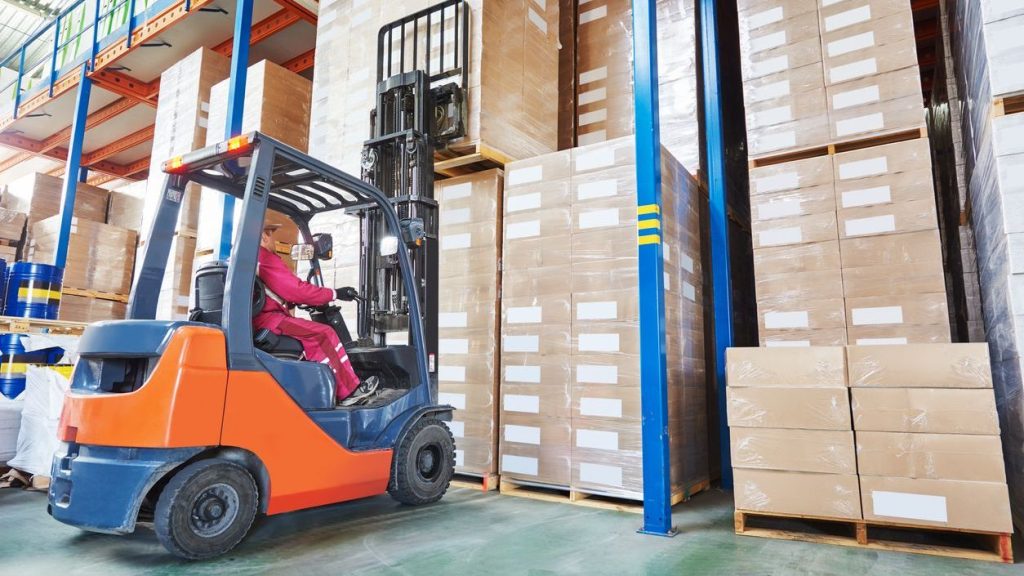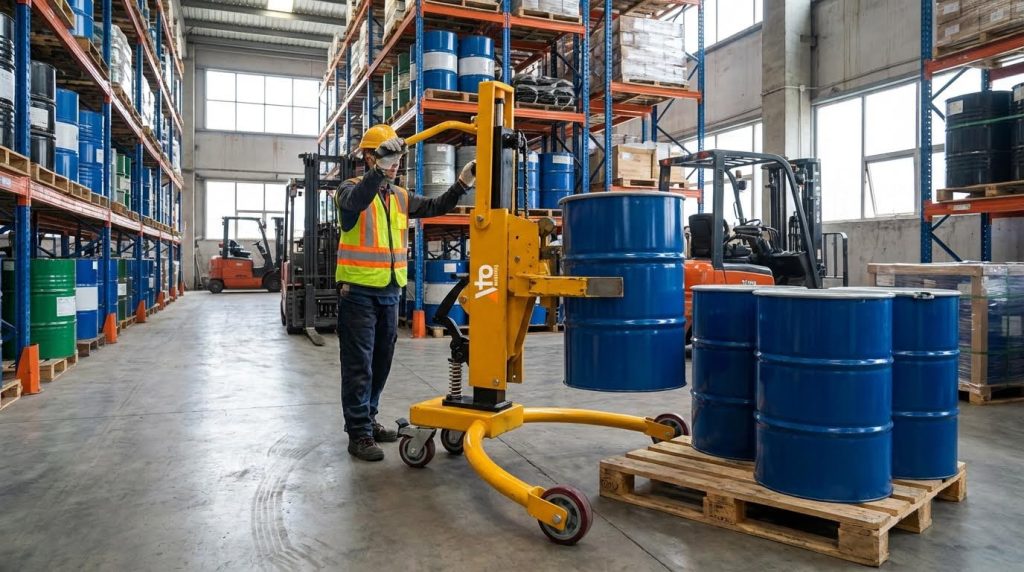
This guide explains how many drums fit safely on a pallet for common 20–25 L and 55–64 gallon (≈200 L) containers, and why. You will see standard layouts, load limits, and safety margins so you can answer questions like “how many 55 gallon drums fit on a drum dolly” with engineering-backed confidence.
Core Drum And Pallet Layouts For Common Sizes
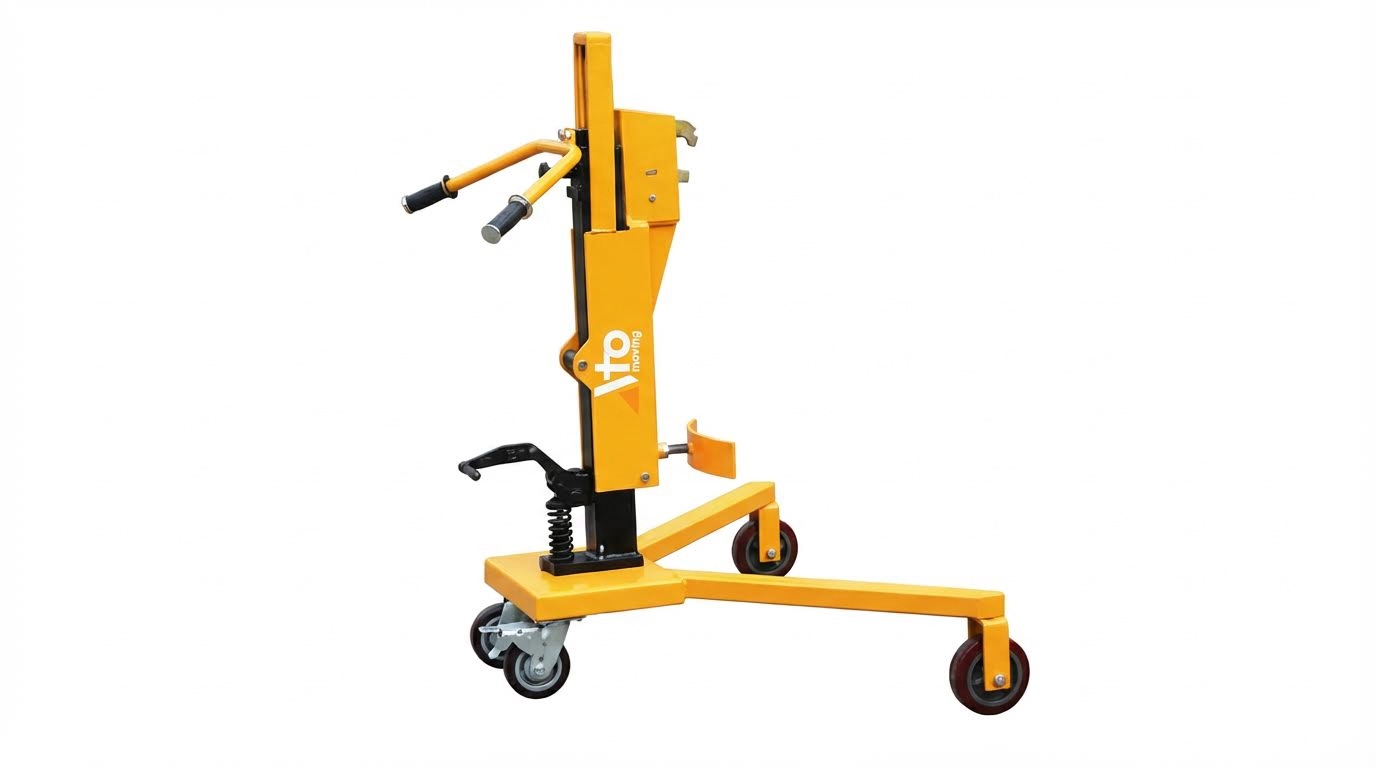
Core drum and pallet layouts define how many drums fit safely on each pallet size, balancing footprint, clearances, and handling limits. This section gives fast, engineering-grade answers for common drum sizes from 20 L to 55–64 gallons.
💡 Field Engineer’s Note: Always validate “catalog” capacities with your actual liquid density and pallet condition. A pallet that survives four water-filled drums in testing may struggle with 1.5 specific gravity product on worn deck boards.
Standard pallet sizes and drum footprints
Standard pallet sizes and drum footprints set the hard geometric limits on how many drums you can place per layer. You cannot “cheat” drum diameter or pallet edge clearances without sacrificing stability and compliance.
| Item | Typical Dimension / Capacity | Operational Impact |
|---|---|---|
| Standard pallet – regional “Euro style” | 1,000 × 1,200 mm floor pallet | Common in export and general warehousing; typically holds 3–4 × 55-gallon drums depending on overhang policy for 55-gallon layouts |
| Standard pallet – 4-drum square layout | ≈1,219 × 1,219 mm recommended for four 55-gallon drums | Provides a clean 2 × 2 pattern with adequate edge clearance and deck support for circular drum bases for 4-drum pallets |
| Minimum pallet for four 55-gallon drums | ≈1,168 × 1,168 mm | Still fits 2 × 2 drums but with tighter clearances; requires good drum roundness and careful handling for minimum sizes |
| 55-gallon (≈208 L) steel drum footprint | Diameter ≈ 584 mm; height ≈ 880–900 mm | Requires 25–50 mm lateral clearance between drums to allow for out-of-round and safe handling gaps for clearances |
| Recommended drum-to-drum clearance | ≈25–50 mm | Prevents metal-to-metal rubbing, allows for label visibility, and tolerates manufacturing variations for clearance guidance |
| Spill pallet – 4-drum steel unit | ≈1,245 × 1,245 × 356 mm; ≈1,090 kg rated load | Provides integrated containment and a fixed 4-drum pattern for hazardous liquids storage for spill pallet layouts |
Why drum diameter dominates pallet layout
Drum height affects stacking height and center of gravity, but drum diameter sets how many drums you can fit per pallet layer. Once you know the drum outer diameter and your minimum clearance, you can quickly sketch 2 × 2 or 3 × 1 patterns and see if they fit within the pallet footprint.
Typical layouts for 20–25 L drums
Typical layouts for 20–25 L drums on a 1,000 × 1,200 mm pallet use 18 drums per layer, often stacked up to three layers when the drum stacking rating allows it. These smaller containers use interlocking features to transfer vertical loads safely.
| Drum Size & Type | Standard Pallet Footprint | Typical Layout Per Layer | Max Layers (When Rated) | Best For… |
|---|---|---|---|---|
| 20–25 L plastic drums with interlocking head/foot | 1,000 × 1,200 mm pallet | 18 drums per layer in tight grid pattern for 18-drum layout | Up to 3 layers when stacking rating is confirmed for layer counts | High-density storage of chemicals, additives, or food ingredients where vertical space is available |
| 20 L drum – single stack height | 1,000 × 1,200 mm pallet | 18 drums per layer | Single stack ≈ 1,468 mm overall height for height data | Facilities with low racking beams or height-restricted mezzanines |
| 25 L drum – single stack height | 1,000 × 1,200 mm pallet | 18 drums per layer | Single stack ≈ 1,576 mm overall height for height data | Slightly taller loads that still clear standard 2.6–2.8 m doorways when double stacked in containers |
| 20 L drum – double stack | 1,000 × 1,200 mm pallet | 18 drums per layer | Double stack ≈ 2,963 mm overall height for double stacks | Containerized export where maximizing cube utilization is critical |
| 25 L drum – double stack | 1,000 × 1,200 mm pallet | 18 drums per layer | Double stack ≈ 3,152 mm overall height for 25 L double stacks | High-bay warehouses with clear heights above 8–10 m and racking designed for tall loads |
- Interlocking design: Head/foot geometry engages at eight contact points – this spreads compressive load and reduces bulging in lower drums during stacking. See stacking performance
- Layer count: Respect the manufacturer’s stacking rating – exceeding it can cause creep, ovalisation, and eventual leakage under long-term load.
- Slip sheets: Use thin HDPE or cardboard slip sheets between layers – they improve friction and distribute point loads from upper drum feet.
How to estimate pallet height for 20–25 L drums
Add the drum height multiplied by the number of layers, plus pallet thickness (typically 120–150 mm) and any slip sheets. Compare the result with door, rack beam, and container clear heights to avoid surprise collisions.
Typical layouts for 55–64 gallon drums
Typical layouts for 55–64 gallon drums use three to four drums per pallet layer, with four on a true 1,219 × 1,219 mm pallet and three on a narrower 1,000 × 1,200 mm pallet when overhang is not allowed. This is the core answer behind “how many 55 gallon drums fit on a pallet.”
| Scenario | Pallet Size | Layout | Drums Per Pallet Layer | Operational Impact |
|---|---|---|---|---|
| Standard floor pallet – conservative layout | 1,000 × 1,200 mm | Row of 3 drums without overhang for 3-drum guidance | 3 | Maximizes safety margin on narrower pallets; easier fork entry and drum access |
| Larger pallet for 4-drum square layout | ≈1,143 × 1,270 mm (45 × 50 in) | 2 × 2 square pattern with minimal gaps for 4-drum pattern | 4 | Answers the core question “how many 55 gallon drums fit on a pallet” in heavy-duty export and process plants |
| Recommended square pallet for four drums | 1,219 × 1,219 mm | 2 × 2 pattern with 25–50 mm clearances for recommended pallet | 4 | Industry-standard answer for four 55–64 gallon drums per pallet with good edge support |
| Minimum square pallet for four drums | ≈1,168 × 1,168 mm | 2 × 2 pattern with tight fit for minimum square pallet | 4 | Use where space is constrained and handling is controlled (short moves, flat floors) |
| Spill pallet – 2-drum poly | ≈1,300 × 750 × 440 mm | Single row of 2 drums for 2-drum units | 2 | Used in decanting areas and satellite accumulation points with integrated containment |
| Spill pallet – 4-drum steel | ≈1,245 × 1,245 × 356 mm | 2 × 2 pattern in containment well for 4-drum containment | 4 | Combines the common four-drum layout with regulatory secondary containment volume |
- Practical answer – how many 55 gallon drums fit on a pallet: On a proper 1,219 × 1,219 mm pallet or dedicated 4-drum containment pallet, the standard answer is four 55–64 gallon drums per pallet layer.
- Conservative alternative: On a 1,000 × 1,200 mm pallet with strict “no overhang” policy, engineers often limit layouts to three drums per pallet layer for stability. See 3-drum capacity
- Layer count for 55–64 gallon drums: Many facilities keep to one layer per pallet – this lowers center of gravity and simplifies tie-down and spill
Engineering Factors That Limit Drums Per Pallet
Engineering limits on drums per pallet come from pallet load ratings, stability and clearances, and how you secure the load to meet regulations. These factors often matter more than “free space” on the deck.
When you ask how many 55 gallon drums fit on a pallet, the safe answer is usually three or four per pallet, one layer high, depending on pallet size and handling method. Anything beyond that must pass checks on weight, center of gravity, and securing strength under real transport forces.
Static, dynamic, and racking load ratings
Static, dynamic, and racking load ratings define how much weight a pallet can safely carry on the floor, in motion, and in racks, which directly caps drums per pallet.
Engineers distinguish three load cases before signing off a drum layout on a pallet. Static load is the weight a pallet carries when parked on a solid floor. Dynamic load is what the pallet endures while a forklift or pallet truck moves it. Racking load applies when the pallet sits supported only along two opposite edges in a rack, which is the most demanding case for the pallet deck and stringers. Engineering guidance stresses that facilities often choose fewer drums per pallet than the theoretical maximum to preserve a safety margin in all three conditions.
Load Type Definition Typical Engineering Limit Effect Operational Impact Static load Weight on a stationary pallet on the floor Usually highest rating; can support multiple layers if floor-stored May allow two-high pallet stacks of lighter 20–25 L drums when rated Dynamic load Weight while handled by forklift / pallet jack Lower than static; limits total pallet mass during transport Restricts how many full drums can move at once without overstressing pallet Racking load Weight when pallet is supported on two opposite edges in a rack Often lowest rating; governs safe drum count in high-bay storage May force fewer drums or prohibit heavy liquids in racks For 55-gallon (≈208 L) drums weighing roughly 200–300 kg each depending on specific gravity, four drums can put 800–1,200 kg on a pallet. That approaches or exceeds many racking ratings, even when static ratings look comfortable. This is why floor-stored spill pallets for four drums often show capacities around 1,090–1,250 kg, while 1–2 drum units are rated far lower per pallet footprint. Containment pallet data illustrates how capacity scales with drum count and footprint.
For smaller 20–25 L drums, 18 drums per layer on a 1,000 × 1,200 mm pallet are common, with up to three layers when the drum and pallet ratings allow it. That still requires checking dynamic loads because 54 filled containers can create a high combined mass even though each unit is light. Stacking performance data shows how engineered interlocking drums support multi-layer loads safely.
💡 Field Engineer’s Note: When racking ratings are missing or unclear, treat the pallet as “floor use only” and cap layouts to what dynamic handling can safely support. Never assume static floor ratings apply in racks.
Stability, clearances, and center of gravity
Stability, clearances, and center of gravity usually decide the real-world limit on drums per pallet, even when load ratings still look acceptable on paper.
A standard 55-gallon drum is roughly 584 mm in diameter and 880–900 mm tall. Engineers generally keep at least 25–50 mm lateral clearance between drums to account for out-of-round shells and handling tolerances. Dimensional guidance also emphasizes the need for adequate deck board support under the circular base.
Factor Typical Value / Practice Why It Limits Drum Count Best For… Drum diameter (55-gal) ≈584 mm Four drums need ≈1,200 mm in both directions plus edge clearance Designing 2×2 layouts on 1,219 × 1,219 mm pallets Drum height (55-gal) ≈880–900 mm Higher center of gravity increases tipping risk, especially on slopes Setting max pallet stack height in racks and staging areas Drum-to-drum clearance 25–50 mm recommended Reduces contact damage and allows for ovality; slightly cuts theoretical count Safe layouts for high-frequency forklift handling Edge clearance Typically 25–75 mm Prevents overhang and rim damage; improves forklift pick stability Operations with fast loading/unloading cycles This is why, when people ask how many 55 gallon drums fit on a pallet, engineers often answer “three on a 1,000 × 1,200 mm pallet, four on a true 1,219 × 1,219 mm pallet” rather than just quoting deck area. A standard 1,000 × 1,200 mm pallet typically holds three drums without overhang, while a larger 45 × 50 inch pallet can take four in a square pattern. Pallet capacity guidance notes that operations usually keep these to one layer for stability.
For 20–25 L drums with interlocking heads and bases, stability comes from both footprint and vertical engagement. On a 1,000 × 1,200 mm pallet, 18 drums per layer with three layers can reach heights around 2,963–3,152 mm in double stacks. The engineered interlock distributes loads across multiple contact points, which reduces bulging and keeps the center of gravity well controlled even at these heights. Stack height data shows how this geometry enables safe tall stacks that would be risky with plain cylindrical drums.
How center of gravity affects forklift handling
As you add drum layers, the combined center of gravity rises. On uneven floors or ramps, that higher center of gravity shifts sideways faster when the truck turns or brakes. This can cause pallet tilt or even truck instability long before you hit the pallet’s rated static load. Keeping 55-gallon drums to one layer per pallet is a simple way to keep the center of gravity low and predictable during transport.
💡 Field Engineer’s Note: If your operators complain that 4-drum pallets “feel top-heavy” on turns, treat that as a hard limit—even if calculations say it is acceptable. Operator feedback is an early-warning sensor for marginal stability.
Securing methods and regulatory compliance
Securing methods and regulatory rules often force you to use fewer drums per pallet than geometry alone would allow, especially for hazardous or flammable liquids.
Regulations such as OSHA rules, NFPA 30 for flammable and combustible liquids, and transport codes like 49 CFR and European standards require drum loads to withstand acceleration, braking, cornering, and impact without shifting or leaking. For grouped 55-gallon drums, secondary containment rules often require sump capacity equal to at least 110% of the largest drum volume, which is about 60.5 gallons (≈230 L) for one drum in a set. Containment guidance shows how multi-drum pallets scale sump volume up to 1,600 L for larger arrays.
- Shrink wrap: Full-height wrap around drums and pallet – Improves lateral stability but relies on correct film tension and pattern.
- Steel or composite strapping: Bands over drum tops and around pallet – Provides mechanical restraint with predictable strength when tensioned correctly.
- Corner boards / edge guards: Protect drum chimes and wrap – Spread strap loads and reduce risk of rim damage or film tearing.
- Spill pallets / sumps: Integrated containment under drums – Ensures compliance with secondary containment rules for hazardous liquids.
Composite strapping with high-strength synthetic fibers offers better tension retention and corrosion resistance than traditional steel. That helps loads stay tight through vibration and temperature swings. However, even the best securing system cannot fix an overloaded or poorly rated pallet. Many engineered spill pallets for four 55-gallon drums therefore publish clear maximum loads, typically around 1,090–1,250 kg for four-drum units and roughly 400–650 kg for one- and two-drum units, to match both containment and structural needs. Published ratings are the ceiling, not a target to exceed.
Fire protection rules also restrict how high you can stack pallets of drums. For steel drums with liquids up to specific gravity 1.5, tested conditions may allow stacks up to about 4.2 m, but guidance typically reduces that to around 3 m or three pallet-high stacks when liquids are heavier or ambient temperatures exceed 30 °C. Stacking and fire rules effectively cap the number of drums per pallet position in a rack, even if the floor and pallet could carry more weight.
Typical securing checklist before shipping drums
Before releasing a pallet of drums, verify: 1) pallet load within static/dynamic rating; 2) no drum overhang; 3) wrap pattern covers at least 75% of drum height; 4) straps are tensioned and locked; 5) containment capacity meets 110% rule where required; 6) labels remain visible and unobscured by wrap or straps.
💡 Field Engineer’s Note: If you must ask “is this okay without straps, just shrink wrap?”, the answer for hazardous liquids is almost always no. Assume inspectors and insurers will judge your layout under worst-case braking and impact, not best-case handling.
Designing Drum Palletization For Your Facility
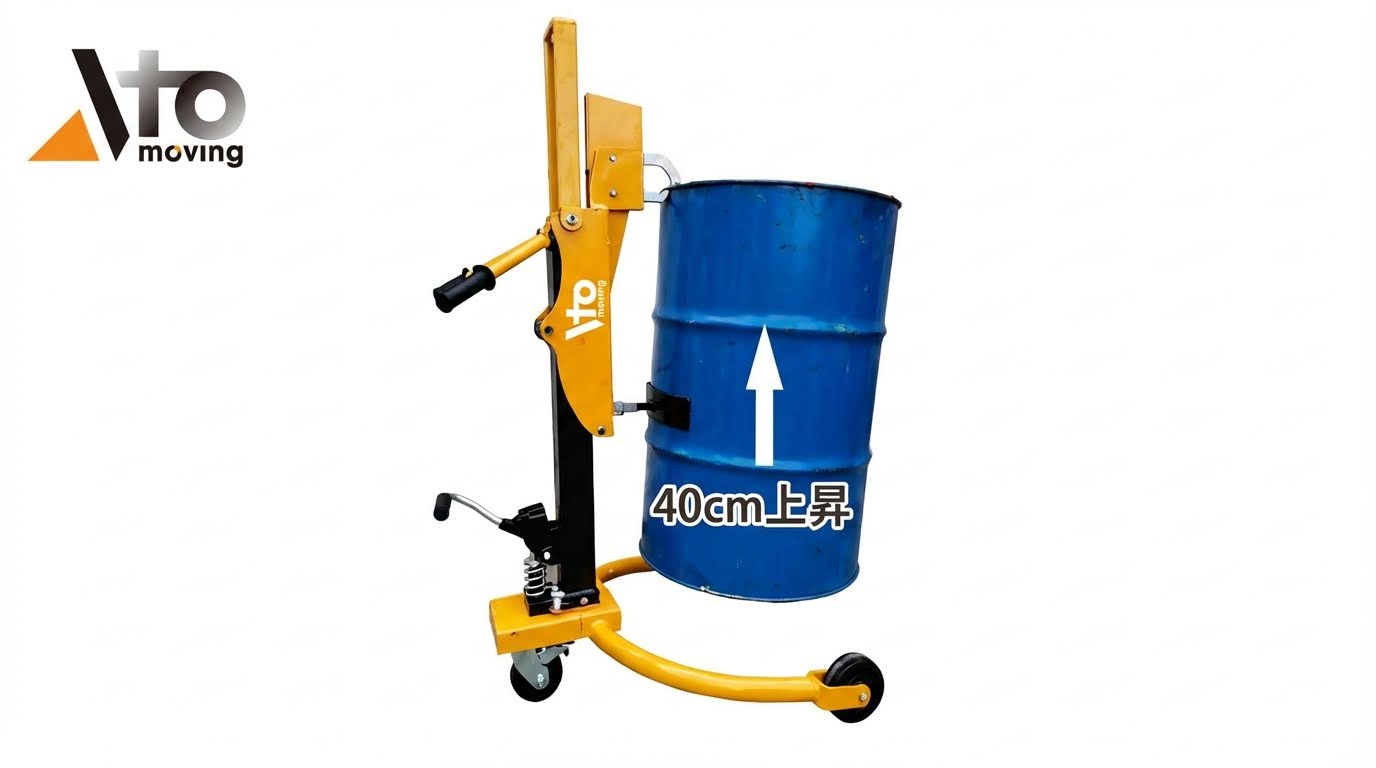
Designing drum palletization for your facility means matching pallet layouts to your actual equipment, aisles, and container flows so loads stay stable, compliant, and fast to move. This is where “how many 55 gallon drums fit on a pallet” meets real-world constraints.
Matching layouts to forklifts, AGVs, and aisles
Matching drum layouts to forklifts, AGVs, and aisles means choosing pallet sizes and drum counts that your trucks and robots can move safely within existing clearances.
- Forklift type and capacity: Check rated load at max lift height – Prevents overloading when moving 800–1,200 kg drum pallets.
- AGV fork window and pallet entry: Use pallets with 4-way entry and 90–110 mm underside clearance – Ensures reliable AGV pick-up and drop-off.
- Aisle width vs turning radius: Align drum count per pallet with turning space – Reduces three-point turns and impact risk.
- Floor flatness and gradients: Limit pallet height and weight on sloped or uneven floors – Improves stability and steering control.
- Dock and container interfaces: Confirm drum pallet height with dock levelers and container floors – Avoids snagging and tipping at thresholds.
For 55-gallon (≈208 L) drums, you usually choose between three drums on a 1,000 × 1,200 mm pallet or four drums on a larger, roughly 1,168–1,219 mm square pallet. Three drums on a 1,000 × 1,200 mm pallet avoid overhang and keep the load narrower for tighter aisles according to engineering guidance. A 1,219 × 1,219 mm pallet is preferred when you need a 2 × 2 pattern with four drums and edge clearance for safer handling per drum pallet capacity guidelines.
Configuration Pallet Size (mm) Drums per Pallet Typical Total Load (water-like, kg) Operational Impact 3 × 55-gallon drums 1,000 × 1,200 3 ≈600–660 Narrower load for tight aisles; no overhang on standard Euro-style pallets. 4 × 55-gallon drums (square) ≈1,219 × 1,219 4 ≈800–880 Maximizes drums per move; needs wider aisles and more robust pallet support. 4 × 55-gallon drums (minimum square) ≈1,168 × 1,168 4 ≈800–880 Tight edge clearances; suitable only where pallet condition and handling are controlled. 18 × 20–25 L drums per layer 1,000 × 1,200 18 / layer Varies with layers High piece count per pallet; ideal for AGV lanes and dense storage when stacking ratings allow. AGVs place extra constraints on pallet geometry. Four-way entry and tight dimensional tolerances under the pallet (≈90–110 mm clearance) are recommended for reliable AGV fork insertion and travel paths based on AGV compatibility guidance.
💡 Field Engineer’s Note: When aisles are marginal, I often drop from four to three 55-gallon drums per pallet. Losing one drum per move is cheaper than repairing racking, drums, or AGVs after side-swipes in 2.5–2.8 m aisles.
How aisle width drives your choice of 3 vs 4 drums per pallet
Standard counterbalance forklifts typically need roughly pallet length + 1,000–1,200 mm to turn safely. A 1,000 × 1,200 mm pallet with three drums stays closer to 1,000 mm in one direction, making it more agile in 2.5–2.7 m aisles than a 1,219 × 1,219 mm four-drum pallet. If you retrofit AGVs later, the smaller footprint often integrates more easily into existing aisle grids.
Container loading patterns and warehouse throughput
Container loading patterns and warehouse throughput are linked: how many drums you put on each pallet determines how many pallets, moves, and total drums you can push through docks and containers per shift.
For export, the “how many 55 gallon drums fit on a pallet” question expands to “how many drums fit in a container with that pallet choice.” For example, using pallets with four 55-gallon drums, a 20-foot container can load eight pallets per layer, giving 32 drums per layer; two layers yield 48–64 drums depending on stacking and weight limits as container loading patterns show. A 40-foot container typically carries 64–88 drums depending on density and pallet layers.
Container Type Pallet Layout Drums per Pallet Pallet Layers Approx. Drums per Container Best For… 20-foot 8 pallets per layer 4 × 55-gallon 1–2 ≈32–64 Standard export where floor loading and stacking rules allow. 40-foot Varies with pallet size 4 × 55-gallon 1–2 ≈64–88 High-volume lanes; balance drum count vs gross weight limits. 20-foot More, smaller pallets 3 × 55-gallon 1 Lower drum count than 4-drum pallets Where stability and manual access trump maximum packing density. 20- or 40-foot 1,000 × 1,200 with 18 × 20–25 L drums/layer 18 / layer Up to 3 layers (rating dependent) Very high small-drum counts Fine-grained order picking; high SKU mixes. - Inbound vs outbound flow: Choose layouts that minimize re-palletizing between production, storage, and shipping – Cuts double-handling and damage.
- Stacking policy: Confirm whether drums can stack one or two pallets high in the warehouse – Directly affects total drums per square meter.
- Dock cycle time: Use higher drum counts per pallet only if forklifts or AGVs can cycle fast enough – Avoids dock congestion.
- Hazard class and containment: For hazardous liquids, integrate spill pallets and sump volume into layouts – Maintains compliance while keeping throughput realistic.
- Digital planning: Use digital twins to simulate paths and congestion with different drum-per-pallet options – Reveals bottlenecks before you cut new rack or paint floor lines.
Digital twin tools already model standard 1,219 × 1,219 mm pallets, 1–4 drum spill pallets, and larger 6- or 10-drum platforms, allowing engineers to test forklift paths, AGV routes, and emergency egress before committing to a layout change as digital twin case studies describe.
Quick design checklist for high-throughput drum palletization
- Step 1: Fix primary drum size (e.g., 55-gallon, 20–25 L) – Everything else (pallet and aisle strategy) hangs off this.
- Step 2: Select pallet size and drum count (3 vs 4 drums; 18 small drums per layer) – Balance density with maneuverability.
- Step 3: Validate forklift and AGV limits at target pallet weight – Protects against overload and mast instability.
- Step 4: Simulate container and truck loading patterns – Ensures export counts and gross weights work on paper.
- Step 5: Lock in securing and containment method (wrap, straps, spill pallets) – Keeps loads compliant across modes.
When considering material handling equipment, a manual pallet jack can be useful for moving pallets with drums. Additionally, a drum cart or drum dolly can assist in maneuvering individual drums. For lifting operations, a barrel lifter may be employed to handle heavy drums safely.
Final Engineering Guidelines For Drum-On-Pallet Layouts
Final engineering guidelines for drum-on-pallet layouts focus on answering how many 55 gallon drums fit on a pallet while still protecting stability, floor ratings, and regulatory compliance across your whole handling system.
- Start From The Drum, Not The Pallet: Always confirm drum diameter, height, and stacking rating – this defines the safe maximum drums per pallet before you even look at floor space.
- Use Proven Counts As Hard Upper Limits: For 55-gallon (≈200 L) drums, treat 3–4 drums per pallet as the practical ceiling depending on pallet size and containment needs – this keeps layouts aligned with real-world handling practice.
- Match Layout To Pallet Footprint: Reserve ≈1,219 × 1,219 mm pallets for four-drum 2×2 patterns, and 1,000 × 1,200 mm pallets for three-drum layouts – this avoids overhang and weak edge support.
- Respect Load Ratings With Margin: Compare total pallet load (drum tare + product) to pallet static, dynamic, and racking ratings – leave 10–20% headroom to tolerate impact loads and uneven floors.
- Limit Vertical Stacks For Heavy Liquids: Keep full 55-gallon drum stacks to three-high or less unless you have documented test data and compliant fire protection – this reduces overturning and rack failure risk.
- Prioritize One Layer For 55-Gallon Drums On Floor Pallets: Use single-layer layouts whenever drums move frequently or travel long distances by forklift – this dramatically improves stability during braking and turning.
- Engineer Clearances Intentionally: Maintain 25–50 mm lateral clearance between drums and a few tens of millimetres from pallet edges – this absorbs manufacturing tolerances and out-of-round drums without creating pinch points.
- Align Layouts With Forklift Geometry: Check that fork length, carriage width, and mast tilt can handle your drum footprint – this prevents corner crushing and accidental drum contact with mast or guard.
- Design For Aisle Width And Turning Radius: Confirm that a loaded pallet of drums can turn within your narrowest aisle and pass through doors – this avoids on-the-fly re-stacking and unsafe tight maneuvers.
- Separate Spill Containment From Transport Pallets: Use dedicated spill pallets in storage zones and standard pallets for transport where possible – this optimizes sump capacity without oversizing every handling pallet.
- Choose Securing Methods To Match Risk: Combine stretch wrap, strapping, and corner boards for long-haul or export loads – this keeps columnar drum stacks intact under vibration and emergency maneuvers.
- Lock In A Standard Pattern Per Drum Family: Define one approved pattern for each drum size (e.g., 3× 55-gallon, 18× 20–25 L) – this avoids improvised layouts that quietly exceed pallet ratings.
- Check Container Utilization At System Level: Model how pallet layouts translate into container counts (20 ft and 40 ft) – this prevents “efficient” pallets that waste container volume or breach axle loads.
- Integrate AGV Requirements Early: For AGVs, standardize pallet heights, entry openings, and drum overhang to within a few millimetres – this prevents AGV forks from clipping drums or missing pockets.
- Document Limits In Work Instructions: Put maximum drums per pallet, max stack height, and approved securing methods directly into SOPs – this converts engineering assumptions into operator behavior.
Drum Type / Use Case Typical Pallet Size (mm) Recommended Drums Per Pallet Vertical Stacking Guidance Operational Impact Standard 55-gallon (≈200 L) drums – general floor storage 1,000 × 1,200 3 drums Usually 1 layer only for routine handling Maximizes safety and stability when forklifts move pallets frequently. Standard 55-gallon drums – square pattern ≈1,219 × 1,219 4 drums (2×2 layout) Often limited to 1 layer in busy traffic zones Answers “how many 55 gallon drums fit on a pallet” for full 2×2 layouts while avoiding overhang. 20–25 L interlocking drums – warehouse storage 1,000 × 1,200 18 drums per layer Up to 3 layers if drum stacking rating confirms High density storage while keeping center of gravity low and predictable. Hazardous liquids on spill pallets – 55-gallon drums ≈1,245 × 1,245 (4-drum spill pallet) 4 drums Typically single layer per spill pallet Meets secondary containment volume while preserving access for inspection and firefighting. Export loads – 55-gallon drums in 20 ft container Standard pallets sized to container plan 4 drums per pallet typical Usually 1 pallet layer per floor position Balances drum count per container with secure blocking and bracing. 💡 Field Engineer’s Note: When you push to four 55-gallon drums on a pallet, tiny floor slopes or soft asphalt matter a lot more. Test fully loaded pallets in your worst aisle or ramp before approving layouts, and lock those results into your maximum stack-height rules.
Quick Reference: Safe Answer To “How Many 55 Gallon Drums Fit On A Pallet?”
For most facilities, the defensible engineering answer to “how many 55 gallon drums fit on a pallet” is:
- 3 drums on a 1,000 × 1,200 mm pallet with no overhang, single layer.
- 4 drums on a ≈1,219 × 1,219 mm pallet or 4-drum spill pallet, normally single layer.
Go beyond these numbers only when you have verified pallet ratings, documented stability tests, and compliant fire protection and containment designs.

Final Engineering Guidelines For Drum-On-Pallet Layouts
Safe drum-on-pallet layouts come from treating geometry, load ratings, and securing as one linked system. Drum diameter and height fix how many units fit per layer and how high you can stack before the center of gravity becomes risky. Pallet static, dynamic, and racking ratings then cap total weight, especially for four 55-gallon drums that can push 1,200 kg on a single deck.
Clearances close the gap between theory and practice. Keeping 25–50 mm between drums and away from pallet edges protects labels, tolerates out-of-round shells, and gives forklift operators a stable target. One-layer layouts for 55-gallon drums on 1,000 × 1,200 mm or 1,219 × 1,219 mm pallets keep the center of gravity low and handling predictable on slopes, docks, and rough floors.
Regulatory rules and securing methods finally decide what you can ship. Wrap, strapping, corner boards, and spill pallets must work together so loads survive braking, impact, and fire-code constraints. The practical best practice is simple: standardize three-drum layouts on 1,000 × 1,200 mm pallets and four-drum 2×2 patterns on 1,219 × 1,219 mm or 4-drum spill pallets, then document these limits in SOPs. Validate them in your worst aisles and ramps with your own trucks, AGVs, and Atomoving handling gear before calling the design finished.
Frequently Asked Questions
How many 55-gallon drums fit on a pallet?
A standard pallet can typically hold up to four 55-gallon drums when arranged carefully. This configuration ensures the drums fit securely without overhang, making it ideal for shipping and storage. Pallet Drum Guide.
What factors determine how many drums fit on a pallet?
The number of drums that fit depends on the pallet size, drum dimensions, and weight distribution. For example, 48×48-inch pallets are commonly used because they accommodate four 55-gallon drums perfectly. Always ensure the load is balanced to prevent tipping during transport. Drum Pallet Tips.
Can smaller or larger drums fit on the same pallet?
Yes, smaller drums allow more units per pallet, while larger drums reduce the count. For instance, 30-gallon drums fit about 15 per pallet, whereas 110-gallon drums only fit two. Proper planning ensures efficient use of space. Drum Size Guide.