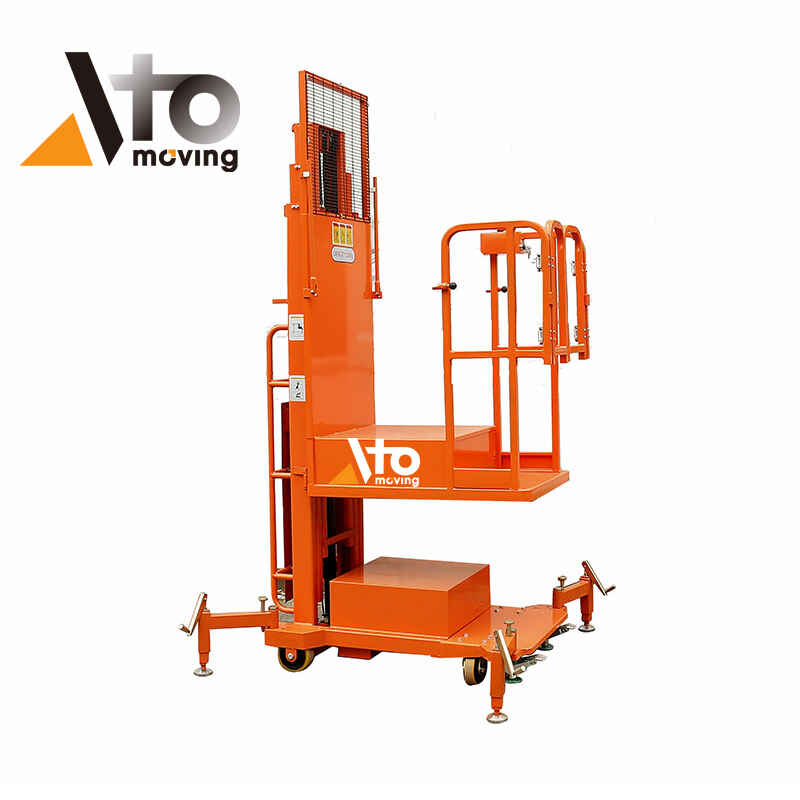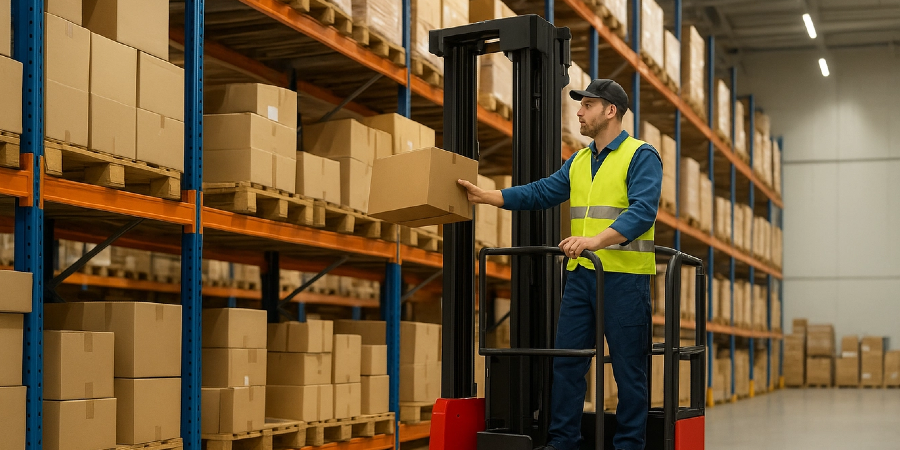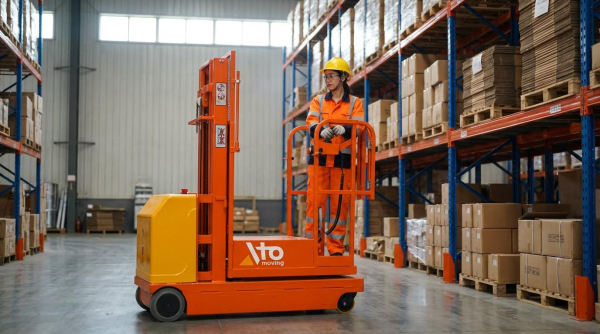
A warehouse order picker is a powered industrial vehicle that lifts both operator and load to pick items efficiently from racking while working safely in tight aisles. This guide explains how picker truck configurations, load ratings, and aisle design interact so you can specify the right machine, protect operators, and maximize storage density in your facility.
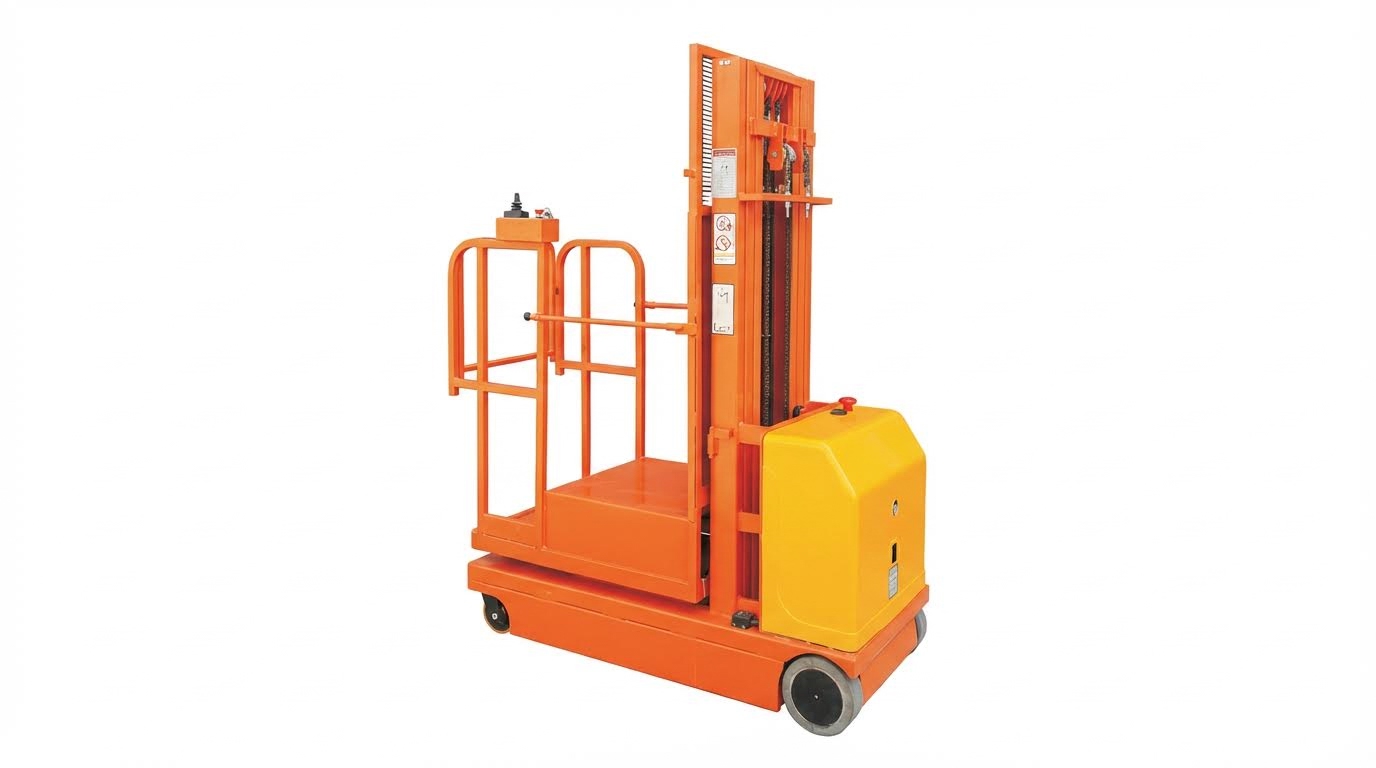
Core Functions And Configurations Of Picker Trucks
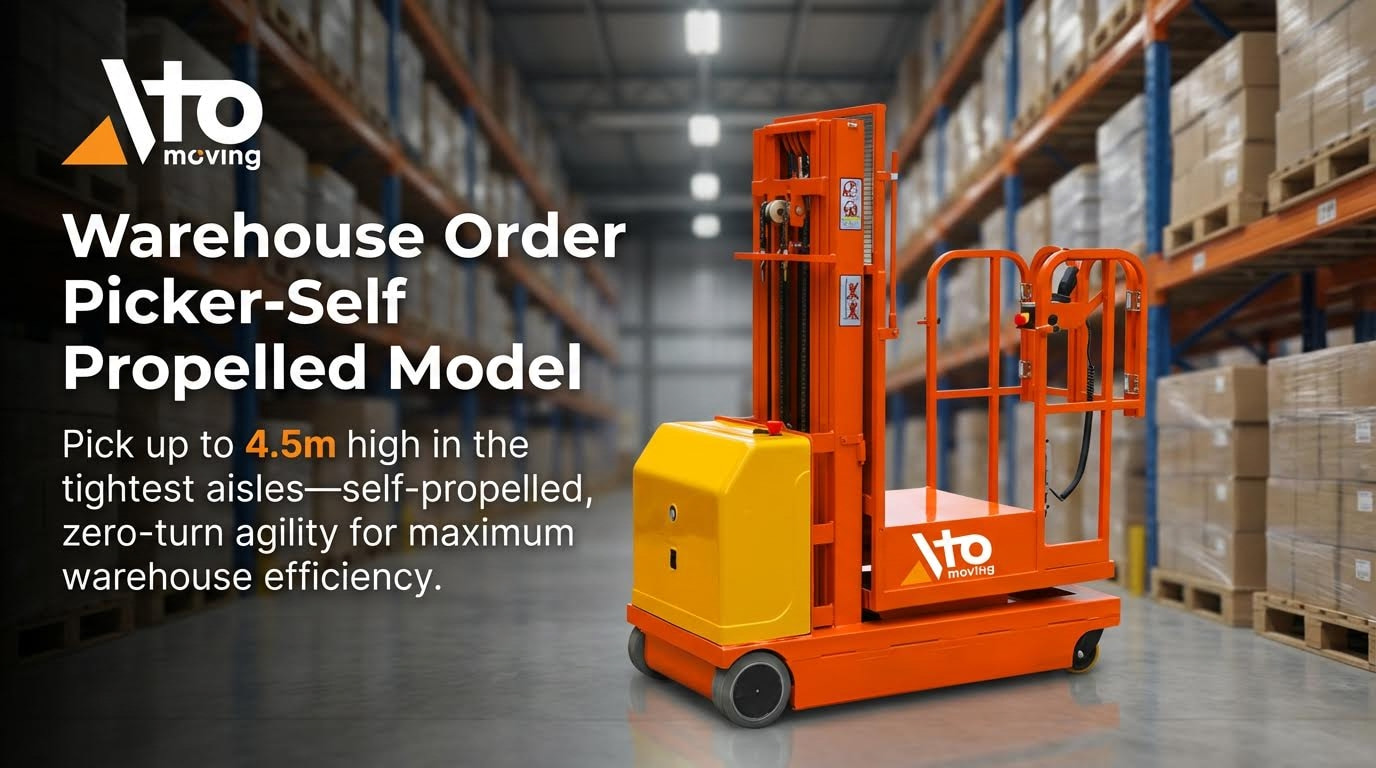
This section explains how a warehouse order picker is configured for different pick heights, capacities, and duty-cycles so you can match machine geometry and power to your SKU profile, shift pattern, and aisle design.
Low-, medium- and high-level picker designs
Warehouse picker trucks are grouped into low-, medium-, and high-level designs based mainly on maximum pick height and the racking strategy they support. Understanding these bands prevents over‑ or under‑specifying equipment for your ceiling height and SKU velocity.
| Picker Type | Typical Pick Height (m) | Typical Application | Operational Impact |
|---|---|---|---|
| Low-level picker | 3.0–4.5 m (≈10–15 ft) | Floor level + 1–2 beam levels | Fast case picking in low-bay or under 6 m clear height racks for facilities under 6 m |
| Medium-level picker | 4.5–7.5 m (≈15–25 ft) | 3–4 racking levels | Boosts storage density without full VNA infrastructure; good for mixed‑velocity SKUs by adding extra levels |
| High-level picker | 9.0–12.0+ m (≈30–40+ ft) | High-bay, very narrow aisle | Maximizes cubic utilization; requires very flat floors and guidance systems for stability at >9 m |
- Low-level warehouse picker truck: Operator rides low, usually with 120 mm pallet lift only – ideal for fast, horizontal case picking on ground and first level.
- Medium-level picker: Operator platform and forks elevate to mid-bay – supports 3–4 beam levels without full high-bay build cost.
- High-level picker: Tall mast, guided in narrow aisles – accesses 9–12 m racking while keeping truck footprint compact.
How to choose between low-, medium-, and high-level designs
Start from building clear height and racking plan. If your clear height is under about 6 m, a low-level warehouse picker truck often gives the best ROI. Between roughly 6–9 m, medium-level units add extra levels without the cost of very narrow aisle infrastructure. Above that, high-level pickers or turret-style variants are usually justified by the storage density gains. Also factor in operator training requirements, as high-level machines demand stricter procedures and certification.
💡 Field Engineer’s Note: Once pick height exceeds about 6–7 m, even small floor unevenness and mast sway become very noticeable to operators. Plan for higher floor flatness classes and consider guidance systems early in the project instead of “patching” comfort and productivity issues later.
Key specs: capacity, lift height, and fork geometry
Key specs for a order picking machines are rated capacity, lift height, and fork geometry because these directly control what loads you can handle, at what level, and in which aisle and pallet designs.
| Spec | Typical Values From Sources | What It Controls | Operational Impact |
|---|---|---|---|
| Rated capacity | 2,000–3,000 kg for picker trucks on low-level models | Max pallet or load weight at specified load centre | Ensures safe handling of 1,000–1,500 kg pallets with margin for packaging and variability. |
| Lift height – pallet forks (low-level) | ≈120 mm fork lift for ground-level handling | Ability to pick and place pallets on floor or low beams | Just enough to clear pallet bottom boards and dock plates; not for stacking. |
| Lift height – operator platform (medium/high) | ≈3–6 m for many order picker lifts in standard ranges | Highest racking level you can pick from | Defines number of beam levels; directly drives storage density. |
| Fork length | 800–1,500 mm typical range on picker forks | Compatible pallet or load depth | Must match pallet length; too long increases aisle conflicts, too short reduces stability. |
| Fork width (single fork) | 200–300 mm typical for many models | Contact area under pallet stringers or load | Affects point loading on pallets and racking beams; wider spreads load better. |
| Overall truck width | ≈750 mm on some low-level pickers used in narrow aisles | Minimum aisle width and cross-aisle access | Determines if you can operate in sub‑2.5 m aisles with safety clearance. |
- Capacity vs. height: The higher you lift the platform or pallet, the more conservative you must be with load weight – stability and mast deflection limit “real” capacity at height.
- Fork length selection: Match fork length to pallet length plus 50–100 mm margin – enough insertion for stability without hitting back-of-rack bracing.
- Fork thickness and taper: Thinner, tapered forks enter tight pallets more easily – reduces pallet damage and operator effort in dense racking.
How to check pallet compatibility with fork geometry
Measure pallet length and width in millimetres, then confirm that fork length is at least 80–90% of pallet length to avoid excessive overhang. For common 1,200 mm deep pallets, 1,150–1,200 mm forks are typical. Check that fork spread matches the pallet entry openings, and that fork thickness clears the bottom deck boards. In retrofit projects, always test with the worst pallets in your pool, not the best.
💡 Field Engineer’s Note: In many retrofits, the limiting factor is not capacity but fork geometry and beam spacing. A 2,000 kg-rated warehouse picker truck can still struggle if fork length and spread do not match legacy pallets or drive‑in racks, so always run on‑site fit tests before bulk ordering trucks.
Powertrain, batteries, and duty-cycle considerations
Powertrain and battery configuration on a semi electric order picker must match your duty-cycle, shift pattern, and aisle layout to avoid mid-shift shutdowns, overheating, or sluggish performance at peak times.
| Powertrain / Battery Spec | Typical Data From Sources | Duty-Cycle Impact | Best For… |
|---|---|---|---|
| Battery voltage & capacity | 24 V / 375 Ah on some low-level pickers across models | Defines run time and acceleration capability | Single-shift, low- to medium-intensity picking with planned charging windows. |
| Battery life | ≈5–7 years with proper maintenance under typical use | Affects lifecycle cost and reliability | Budgeting for replacements in 5-year capex cycles. |
| Truck weight (unladen) | ≈807–824 kg on some 2,000–3,000 kg low-level models depending on capacity | Influences floor loading and traction | Light enough for mezzanines yet heavy enough for grip on smooth concrete. |
| Service interval | Every 1,000 operating hours on some models for scheduled maintenance | Defines planned downtime windows | Helps align PM with shift rotations and peak seasons. |
- Electric powertrain: Modern warehouse picker trucks use electric traction and lift motors – zero local emissions and fine speed control in tight aisles.
- Battery sizing: Undersized Ah capacity causes voltage sag late in the shift – slower lift speeds and higher operator frustration in the last 2–3 hours.
- Charging strategy: Decide between conventional overnight charging, fast charging, or battery exchange – this must match your number of shifts and break patterns.
- Maintenance tasks: Monthly checks of forks, hydraulics, tyres, and lubrication are recommended to keep uptime high and extend component life on order picker fleets.
Basic duty-cycle sizing checklist
First, calculate average operating hours per truck per day, then multiply by working days per year to estimate annual hours. Compare this to the 1,000 h service interval to plan PM slots. Next, map peak picking windows (for example, 09:00–12:00 and 14:00–17:00) and ensure batteries can comfortably cover those periods with at least 20–30% state-of-charge remaining. Finally, confirm that your charging infrastructure (number of chargers and electrical capacity) can recover batteries to full charge during off-shift periods or breaks.
💡 Field Engineer’s Note: In high-intensity e‑commerce operations, the bottleneck is often charger availability, not battery capacity. When specifying a new warehouse picker truck fleet, design the charging room and power supply in parallel with the truck spec, or you risk trucks queuing for chargers during the only quiet hour of the day.
Load Ratings, Stability, And Aisle Geometry
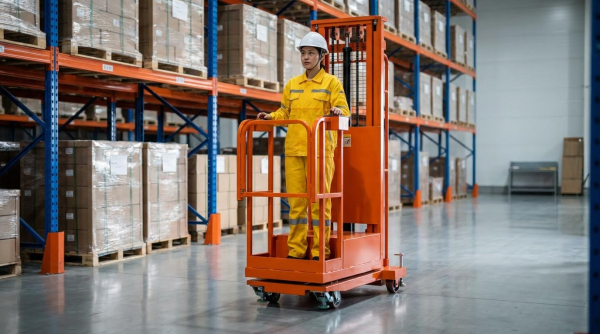
This section explains how load ratings, stability, and aisle geometry interact so you can specify a warehouse order picker that is safe, productive, and matched to your warehouse layout.
Understanding rated capacity vs. actual load
Rated capacity tells you the maximum load under ideal conditions, but actual safe load on a warehouse order picker is usually lower once you add real pallets, lift height, and attachments.
- Rated capacity: Many warehouse order picker trucks list nominal capacities in the 2,000–3,000 kg range – but this is at a defined load centre and low lift height. For example, some order pickers are rated 2,000–3,000 kg at low lift height and standard forks. Technical data example
- Load centre distance: Capacity assumes the load weight is centred at a specific distance from the fork heel (commonly 500–600 mm) – long pallets or overhanging loads shift the centre forward and reduce stability.
- Lift height effect: Many electric order pickers work between 3–6 m lift range – the higher you go, the more conservative you must be with weight to keep the truck stable. Typical lift ranges
- Attachment impact: Platform extensions, carton clamps, or special forks add dead weight – this eats into the net payload available for product.
- Dynamic loading: Braking, turning, and uneven floors create extra forces – so the “paper” capacity is not what you should plan to use in fast-paced picking.
| Parameter | Typical Value | Operational Impact |
|---|---|---|
| Rated capacity (low-level picker) | 2,000–3,000 kg | Safe for heavy pallets at floor level; must be derated at height. Example range |
| Typical lift height band | 3,000–6,000 mm | Higher racking increases storage density but tightens stability margins. Typical band |
| Fork length range | 800–1,500 mm | Longer forks handle deeper pallets but push the load centre forward and reduce effective capacity. Fork data |
- Safe working load planning: Design your racking and SKU placement so typical pallet weights sit at 70–80% of rated capacity at the relevant lift height – this gives margin for load variation and operator error.
- Heavier SKUs down low: Place the heaviest pallets in lower bays and closer to main aisles – this reduces time spent moving near capacity at higher, less stable elevations.
How to read a capacity plate on a picker truck
The capacity plate normally lists rated capacity (kg), load centre (mm), and one or more lift heights. Always match your heaviest pallet plus any pallet overhang to a line on that plate. If your actual load length or height exceeds the values shown, treat the printed capacity as too high and derate in your internal rules.
💡 Field Engineer’s Note: In real projects, I treat catalogue capacities as “marketing numbers” and then derate again for fast-turn aisles, slopes near docks, and any racking over 6 m. That extra 10–20% margin has prevented more than one near-tip when operators brake hard with a tall, poorly wrapped pallet.
Turning radius, right-angle stack, and aisle width
Turning radius and right-angle stack define the minimum aisle width your semi electric order picker needs, which directly drives storage density and traffic safety.
For a typical low-level warehouse picker truck, you might see an overall width around 750 mm and a turning radius about 2,374 mm. Example dimensions But what really matters for layout is the right-angle stack dimension and how you convert that into aisle width.
| Term | What it is | Why it matters in aisles |
|---|---|---|
| Turning radius (Wa) | Minimum radius the truck needs to turn 180°; e.g. ~2,374 mm for some order pickers | Base input to aisle-width formulas; larger Wa means wider aisles. Example spec |
| Right-angle stack (Ast) | Space needed to turn and enter a rack at 90° with a given load | Directly used to size rack-to-rack aisle width for that truck type. Guide |
| Safety clearance (a) | Extra margin beyond truck + load envelope; often 200 mm | Prevents pallet, rack, and truck contact during turns. Formula source |
For powered pallet trucks, reach trucks, and low-level order pickers, one widely used formula for right-angle stacking is: Ast = Wa + √((l6 − x)² + (b12 / 2)²) + a. Here Wa is truck turning radius, l6 load length, b12 load width, x load distance, and a is safety clearance, often taken as 200 mm. Formula reference
- Conventional aisles: 12 ft (≈3.65 m) aisles are common for standard forklifts – easy to drive, but low storage density. Conventional ranges
- Narrow aisles: Reducing aisles to about 2.75 m (9 ft) can add 20–30% more pallet positions versus 3.65 m (12 ft). Capacity impact
- Very narrow aisles (VNA): Aisles around 1.5–1.8 m (5–6 ft) can add 40–50% more storage versus conventional – but they require specialised order pickers or turret trucks. VNA data
Worked example: sizing an aisle for a picker truck
Assume a warehouse picker truck has a turning radius Wa of 2,374 mm, handles a 1,200 mm long pallet (l6), 1,000 mm wide (b12), with a 200 mm load distance x and 200 mm safety clearance a. Using Ast = Wa + √((l6 − x)² + (b12 / 2)²) + a, you can approximate the minimum clear aisle. Once you have Ast, add any extra space you want for pedestrians or two-way traffic.
💡 Field Engineer’s Note: In brownfield warehouses I often accept what looks like “wasted” 100–150 mm in aisle width. That tiny extra band absorbs real-world drift from broken pallets, racking misalignment, and operator fatigue, and it dramatically cuts rack and truck damage over the first year.
Floor flatness, visibility, and safety compliance
Floor flatness, visibility, and safety compliance set the real operating limit for a order picking machines, especially at higher lift heights and in narrow aisles.
As aisles get narrower and racking gets taller, floor quality becomes critical. Industry guidance links aisle class to specific flatness and levelness values: conventional aisles around 3.6–4.0 m wide work with floor flatness around FF25+ and levelness FL20+, while narrow aisles near 2.4–3.0 m need about FF35+ and FL25+. Very narrow aisles as tight as 1.5–2.0 m typically require FF50+ and FL25+ to keep trucks stable at height. Floor requirements
| Aisle type | Typical width | Floor requirement | Operational impact for picker trucks |
|---|---|---|---|
| Conventional | ≈3.6–4.0 m | FF25+, FL20+ | More forgiving for general warehouse picker truck use; less mast sway at moderate heights. Criteria |
| Narrow aisle | ≈2.4–3.0 m | FF35+, FL25+ | Requires better slabs; unevenness can cause noticeable platform movement at 5–6 m. |
| Very narrow aisle (VNA) | ≈1.5–2.0 m | FF50+, FL25+ | Critical for high-level order pickers to avoid mast oscillation and operator discomfort at 9–12 m. |
- Lighting and visibility: Consistent, bright lighting across aisles reduces collisions and mis-picks – LED with good uniformity is recommended for picker applications. Lighting guidance
- Signage and markings: Clear, high-contrast aisle labels, rack signs, and floor markings guide operators – this cuts hesitation and near-misses in busy pick zones. Signage practices
- Traffic management: One-way aisles, speed limits, and right-of-way rules reduce conflict points between picker trucks and pedestrians – especially important in mixed-use pick/pack zones. Traffic strategies
Regulatory compliance also affects aisle design. Safety regulations and fire codes often require minimum pedestrian egress widths; for example, some guidance calls for at least 1,118 mm (44 in) clear width for emergency egress aisles, with more space where occupant loads are high or fire department access is needed. Safety notes Always confirm final aisle plans with the local fire authority before you lock in racking and picker truck specifications.
Checking floor suitability before buying picker trucks
Before you commit to a high-level warehouse picker truck, have a floor survey done for FF/FL values in the proposed aisles. Compare the results to the aisle class you are targeting. If the slab does not meet the requirement, budget for grinding, topping, or limiting lift height in that zone.
💡 Field Engineer’s Note: Many “mystery” stability complaints with new picker trucks traced back to marginal floors and poor lighting, not the truck itself. Fixing a few low spots and upgrading LEDs often stabilised operators’ confidence more than any spec change on the equipment.
Matching Picker Trucks To Warehouse Layouts
Matching a warehouse order picker to your warehouse layout means balancing lift height, aisle width, and storage density so the truck can move, turn, and pick safely at full productivity. This section shows how to align racking, aisles, and environments with the right picker configuration.
Configuring racking, aisles, and storage density
Configuring racking, aisles, and storage density starts with the picker truck’s turning geometry and lift height, then backs into the narrowest safe aisle that still meets fire and egress rules.
- Start from the truck, not the rack: Use the order picking machines’ turning radius and load dimensions to size aisles – this prevents layouts that “look good on paper” but are impossible to drive.
- Use right-angle stack formulas: Apply the manufacturer’s right‑angle stack or formula-based value to set minimum aisle width – this protects mast, racks, and product during 90° turns.
- Balance density vs. access: Narrower aisles increase pallet positions but reduce passing room – you gain storage but must manage traffic and congestion.
- Design for actual load size: Base calculations on the largest pallet or cage (length and width), not a “typical” one – this avoids side-swipe impacts on oversize SKUs.
- Respect safety and egress codes: Keep separate pedestrian escape routes and fire access clear – this maintains compliance and safe evacuation paths.
For powered pallet, reach, and low-level order picking trucks, aisle width is typically calculated using a right-angle stack formula: the right‑angle stack dimension combines truck turning radius, load length, load width, and a safety allowance. One common form is Ast = Wa + √((l6 − x)² + (b12/2)²) + a, where Wa is turning radius, l6 load length, b12 load width, x load distance, and a a safety clearance often taken as 200 mm. This formula-based approach is widely used.
Once minimum workable aisle width is known, you can trade aisle width against storage density. Narrowing aisles from about 3.7 m conventional to around 2.7 m narrow can increase storage capacity roughly 20–30%. Moving to very narrow aisles (about 1.5–1.8 m) can add 40–50% more pallet positions compared with conventional layouts. These gains come directly from reclaimed aisle space.
| Aisle Type | Typical Clear Aisle Width | Relative Storage Capacity | Typical Picker / Truck Type | Operational Impact |
|---|---|---|---|---|
| Conventional | ≈ 3.7–4.0 m | Baseline (0%) | Counterbalance, basic low-level warehouse picker truck | Easy driving and passing, lower storage density. |
| Narrow Aisle (NA) | ≈ 2.7–3.0 m | +20–30% | Low-/medium-level order picker, reach truck | Higher density; tighter turning, more precise drivers. |
| Very Narrow Aisle (VNA) | ≈ 1.5–1.8 m | +40–50% | Guided high-level picker, turret truck | Maximum density; usually one-way traffic and guidance. |
Floor quality must also match aisle type. Conventional aisles can often run on FF25+ / FL20+ floors, while narrow aisles typically need about FF35+ / FL25+. Very narrow aisles with high-level picking demand approximately FF50+ flatness and FL25+ levelness to keep masts stable at height. Higher masts always require tighter floor tolerances.
How to quickly sanity-check an aisle width
1) Take the warehouse picker truck’s published turning radius Wa. 2) Add half the pallet width plus a small margin. 3) Add at least 200 mm safety clearance. If your planned aisle is narrower than this rough sum, revisit the layout or truck choice.
- Plan traffic patterns: Use one-way travel in tight aisles and define overtaking zones – this reduces deadlocks and collision risk.
- Separate picking and replenishment where possible: Put replenishment in wider cross-aisles – this keeps pick aisles flowing at peak times.
- Optimise pick paths: Slot fast movers near aisle ends and main travel corridors – this cuts driving distance per order line.
💡 Field Engineer’s Note: When you push aisles below about 2.7 m with medium- or high-level pickers, even small floor humps or slab joints can “steer” the truck into uprights. Always survey floor flatness before committing to narrow or VNA designs; grinding a bad strip later is far more expensive than getting it right upfront.
Application-specific variants and environments
Application-specific variants and environments determine whether you choose low-, medium-, or high-level warehouse picker trucks, plus options like cold-store, outdoor, or VNA turret designs.
Order pickers are broadly classed by lift height: low-level units typically reach about 3.0–4.5 m (10–15 ft), medium-level around 4.5–7.5 m (15–25 ft), and high-level machines can access roughly 9–12+ m (30–40+ ft). This height banding is a practical basis for matching to your building.
| Picker Type | Typical Lift Height Range | Best-Fit Facility | Warehouse Layout Implications | Operational Impact |
|---|---|---|---|---|
| Low-level order picker | ≈ 3–4.5 m | Ceiling < 6 m, case picking from ground + 1–2 levels | Can work in conventional or moderate NA aisles; less demanding floor tolerances. | Simple layout; good for high-throughput, low vertical density. |
| Medium-level order picker | ≈ 4.5–7.5 m | 3–4 beam levels, standard warehouse heights | Often paired with narrow aisles; needs better floor flatness and clear travel paths. | Higher cubic utilisation without full VNA investment. |
| High-level order picker / turret | ≈ 9–12+ m | High-bay DCs, tall buildings | Usually VNA with guidance, very tight floor specs, one-way aisles. | Maximum storage density; layout is “locked in” to the truck type. |
Specialised variants further tighten the link between truck and layout. Turret-style machines can work in aisles as narrow as about 1.5 m, rotating forks left/right to access both rack faces without turning the chassis. Other variants include cold storage, outdoor, and double-deep configurations.
- Turret / VNA pickers: Need very narrow, straight aisles with guidance systems – maximise storage but demand precise building tolerances.
- Order picker pallet trucks: Combine pallet truck and low-level picker in one – ideal for mixed full-pallet and case-pick layouts.
- Cold-storage pickers: Use components and hydraulics rated for sub-zero temperatures – require condensation management zones and door layouts that limit warm air ingress.
- Outdoor pickers: Need wider turning space, drainage, and robust surfacing – layouts must account for slopes and weather-exposed staging areas.
- Double-deep pickers: Serve two pallets deep – racking and aisle design must allow mast reach and visibility to the back pallet.
Where a basic warehouse picker truck fits best
A low-level warehouse picker truck with around 2,000–3,000 kg capacity and modest lift height (for example, 120 mm pallet lift on a horizontal picker plus 3–4 m operator elevation) suits conventional or slightly narrowed aisles. With overall widths around 750 mm and turning radii near 2,374 mm, these trucks are comfortable in aisles sized using the formula-based right-angle stack plus at least 200 mm clearance. Typical specs include 2,000–3,000 kg capacity, 24 V / 375 Ah batteries, and truck weights around 800 kg.
Environmental and safety constraints also influence layout. Cold stores often use higher vertical density and narrower aisles to offset expensive chilled volume. Outdoor or mixed indoor–outdoor operations need more generous turning areas, robust drainage, and clear separation between pedestrian and vehicle routes. Pedestrian egress aisles must maintain at least about 1,120 mm clear width, and local fire authorities may require extra clearance in main travel aisles for access and hose deployment. Always verify the final layout against fire and building codes.
- Traffic control: Use one-way systems, marked intersections, and defined speed limits – this lets multiple picker trucks share tight aisles safely.
- Lighting and connectivity: Ensure even LED lighting and strong Wi‑Fi coverage – this supports safe high-level picking and real-time WMS guidance.
- Seasonal flexibility: Choose modular racking and demountable barriers – this allows quick reconfiguration of aisles for peak trading periods.
💡 Field Engineer’s Note: When designing for high-level warehouse picker trucks, I always walk the proposed pick paths and imagine a 10–12 m mast in the air. Any tight corner, low-hanging service, or dark zone at ground level becomes a serious risk when the operator platform is elevated and visibility is reduced. Fix those layout issues on paper before you pour concrete or install racking.
Final Considerations For Specifying Picker Trucks
Picker truck selection is not just about headline capacity or lift height. Geometry, stability, power, and floor quality all work together to define real, safe performance. If any element is wrong, you lose productivity or create risk.
Start with your building, racking plan, and pallet sizes. Use turning radius and right-angle stack to fix aisle widths, then choose low-, medium-, or high-level machines that can work inside those limits. Always derate catalogue capacities for real pallets, lift height, and attachments, and keep heavy SKUs in lower, more stable bays.
Match batteries and charging to your duty-cycle so trucks do not slow down late in the shift. Check floor flatness against your chosen aisle class before you commit to narrow or VNA designs. Good lighting, clear markings, and firm traffic rules then complete the safety envelope.
Operations and engineering teams should treat picker trucks, racking, and floors as one system. Define performance and safety targets first, then work back to truck specification with suppliers such as Atomoving. This systems approach delivers higher storage density, stable high-level picking, and predictable lifecycle cost without compromising operator safety.
Frequently Asked Questions
What is a warehouse picker truck?
A warehouse picker truck, also known as an order picker, is a type of material handling equipment used to retrieve items from warehouse shelves. It allows operators to elevate themselves to higher storage racks for picking orders efficiently. These trucks are essential in large warehouses where goods are stored at various heights. Order Picker Guide.
Is operating a warehouse picker truck physically demanding?
Operating a warehouse picker truck can be physically demanding. Operators often walk 6 to 10 miles per day on hard concrete floors and may need to lift heavy loads. The role requires constant movement and high-reach maneuvers, which can be exhausting over time. Warehouse Work Challenges.
What are the main duties of a warehouse picker truck operator?
The main duties of a warehouse picker truck operator include safely and efficiently retrieving items from warehouse shelves, operating the picker truck, and ensuring accurate order fulfillment. Operators must also handle materials carefully to avoid damage. Order Picker Duties.